Meaning
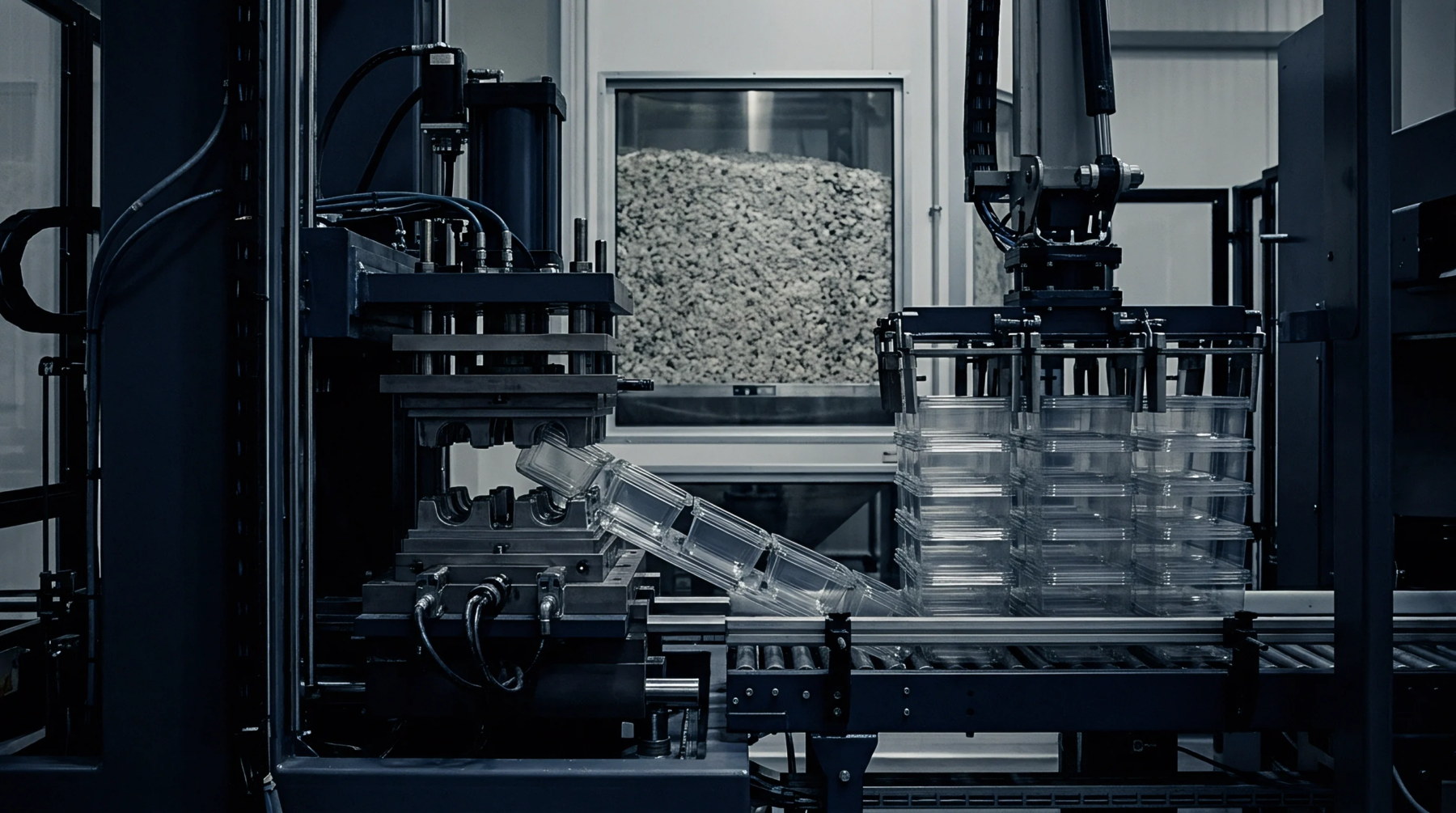
A mechanical displacement technique uses a shaped tool to push heated polymer sheet into a female mould cavity before vacuum or air pressure completes the forming process. Through plug assist thermoforming, producers control material distribution across deep or complex part geometries that standard vacuum forming often fails to fill evenly. The setup typically resides on the platen movement assembly where the plug descends during the cycle to force sheet material toward the corners of the tool.
Accurate timing of the entry prevents the plastic from cooling prematurely against the cold mould surface while also reducing wall thinning in the base area. Thinning usually occurs when high stretch ratios cause the heated sheet to pull excessively from the edges. A primary goal involves achieving uniform thickness in the finished tray or cup which improves the structural integrity of the final product.
Variations in resin grade or sheet extrusion quality change how the material flows around the plug surface. Proper temperature settings across the heating station ensure the sheet maintains sufficient ductility for deep drawing. When the process runs correctly, it creates an even distribution of the polymer mass throughout the entire depth of the cavity.
Tooling Geometry
High draw ratios demand specific plug profiles that mimic the interior shape of the product without making direct contact with the edges of the mould. This equipment requires careful calibration of the stroke depth to avoid mark-off or uneven crystallization of the polymer. The surface finish of the plug impacts the release characteristics of the sheet during the initial stretch phase.
Aluminum or syntactic foam components provide the necessary thermal properties to maintain consistent heat transfer during high speed production. Each tool design accounts for the shrinkage rate of the specific plastic grade used in the run. If the plug hits the sheet too slowly, the material cools and forms thick webs instead of reaching the corners of the part.
Fast entry speeds prevent these defects but require precise synchronization with the vacuum timing.
Process Dynamics
Variations in the sag or drape of the sheet under heat dictate the force applied by the plug during the downstroke. Control software regulates the pressure exerted by the hydraulic or pneumatic actuators to ensure the material stays under tension without tearing. Constant monitoring of the cycle time prevents excess heat buildup in the plug which would alter the cooling rate of the part.
Because the cooling phase determines the final dimensions, operators adjust the dwell time based on the gauge of the sheet being processed. Virgin resin usually allows for predictable stretching while regrind content introduces instability that changes the required plug force. Excessive regrind levels force a decrease in production speeds to compensate for material inconsistency.
Forming Economics
Consistent operation of this system reduces scrap rates by minimizing the reject volume caused by thin wall spots or cracked corners. Higher output per hour follows when the tool setup creates stable dimensions across large production batches. Energy consumption per part drops as the forming speed rises to meet standard cycle targets.
Material optimization remains a goal because the method allows for thinner initial gauges while maintaining the same structural load capacity of the final part. Mechanical precision in the actuator settings keeps the production line running without frequent adjustments. Effective plug assist thermoforming lowers the total unit cost by maximizing the yield of usable parts from every sheet of raw material.