Meaning
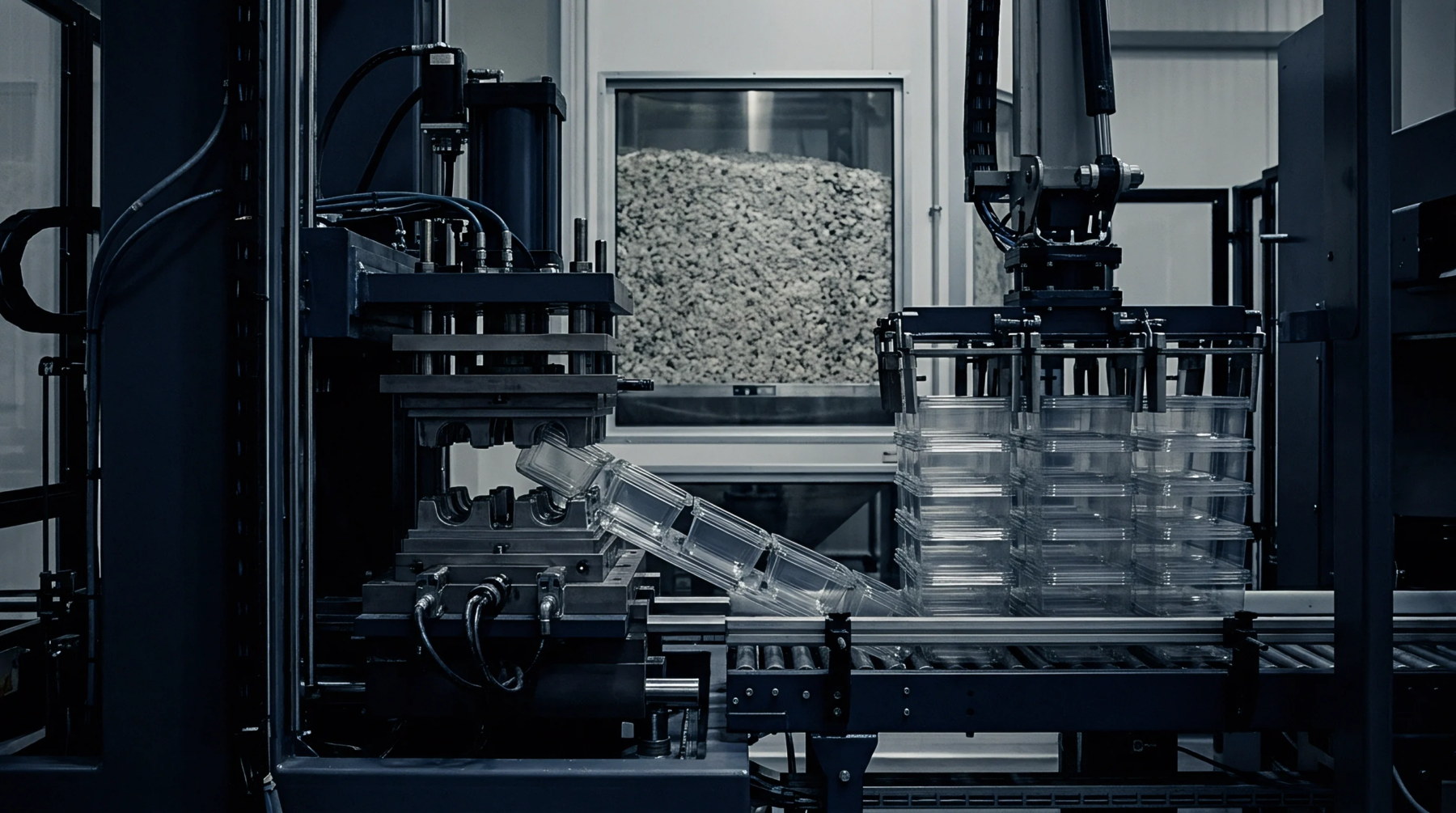
Mechanical displacement technology governs the pre-stretching of thermoplastic sheets into a female mould cavity before the application of vacuum or air pressure. This plug assist process allows for precise distribution of wall thickness in deep-draw vacuum forming applications. Uniform material thinning occurs because the mechanical force pushes the softened plastic into the corners and deep profiles before the vacuum seals the sheet against the mould surface.
Production lines employ this method to prevent webbing or excessive thinning at the deepest points of complex geometries. Without this control, standard thermoforming often results in uneven part density or structural failures in regions furthest from the clamping frame.
Forming Mechanics
Controlled downward movement of a heated, solid shape forces the polymer into the female mould prior to final pneumatic shaping. Force applied by the plug determines how much material moves from the flange area into the sidewalls and base of the finished part. Engineers calculate the plug geometry based on the shrinkage rate of the specific resin and the draw ratio of the final component.
If the plug diameter is too wide, it traps air and causes chilling marks or surface defects. A narrow plug increases the risk of punctures or localized stretching beyond the limit of the material. Effective setups adjust the depth of the stroke to stop just short of the base of the mould to ensure the vacuum can effectively pull the plastic into the final detail.
Thermal Consistency
Proper operation depends on the precise delta between the plug temperature and the glass transition temperature of the sheet. Tools heated to a temperature slightly below the polymer melt point prevent the plastic from hardening prematurely upon contact. Cold plugs pull heat from the resin rapidly, creating frozen zones that refuse to stretch into the mould corners, while excessively hot plugs cause the material to stick or drag.
Operators monitor these thermal gradients to maintain cycle times and dimensional stability across large production batches. Maintaining a consistent plug surface condition prevents cosmetic blemishes or irregular thickness distribution that would otherwise scrap a high-value moulded part.
Resin Economics
Virgin material behaves differently than regrind under the stress of rapid mechanical displacement during the forming cycle. Increased concentrations of regrind often reduce the tensile strength of the sheet, causing the plug to tear the material if the stroke speed is too high. Manufacturers adjust the plug velocity and the timing of the vacuum assist to compensate for the higher melt flow rates found in reprocessed plastic batches.
Controlling the plug force minimizes the volume of trim waste produced during the trimming step, improving the overall part yield per sheet. This process variable represents the physical limit of how much geometry a moulder can pull from a single sheet without compromising the structural integrity of the final product.