Instrumented Drop Fracture Morphology in Sub Zero Peroxide Visbroken Polypropylene Thin Wall Packaging
Controlled rheology visbreaking lowers sub-zero polypropylene drop toughness by removing high molecular weight tie chains, demanding elastomer modification to prevent brittle container shatter.
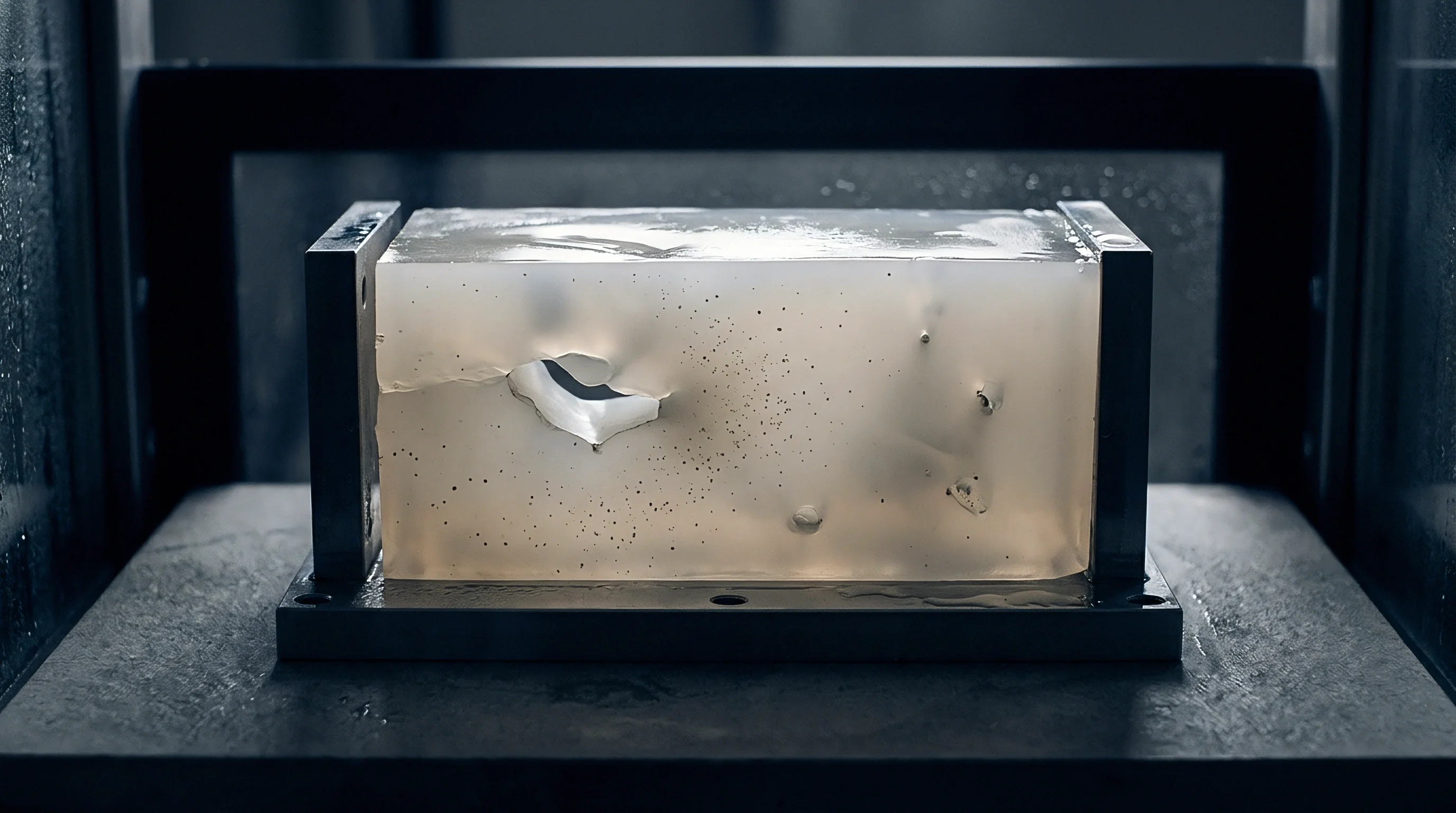
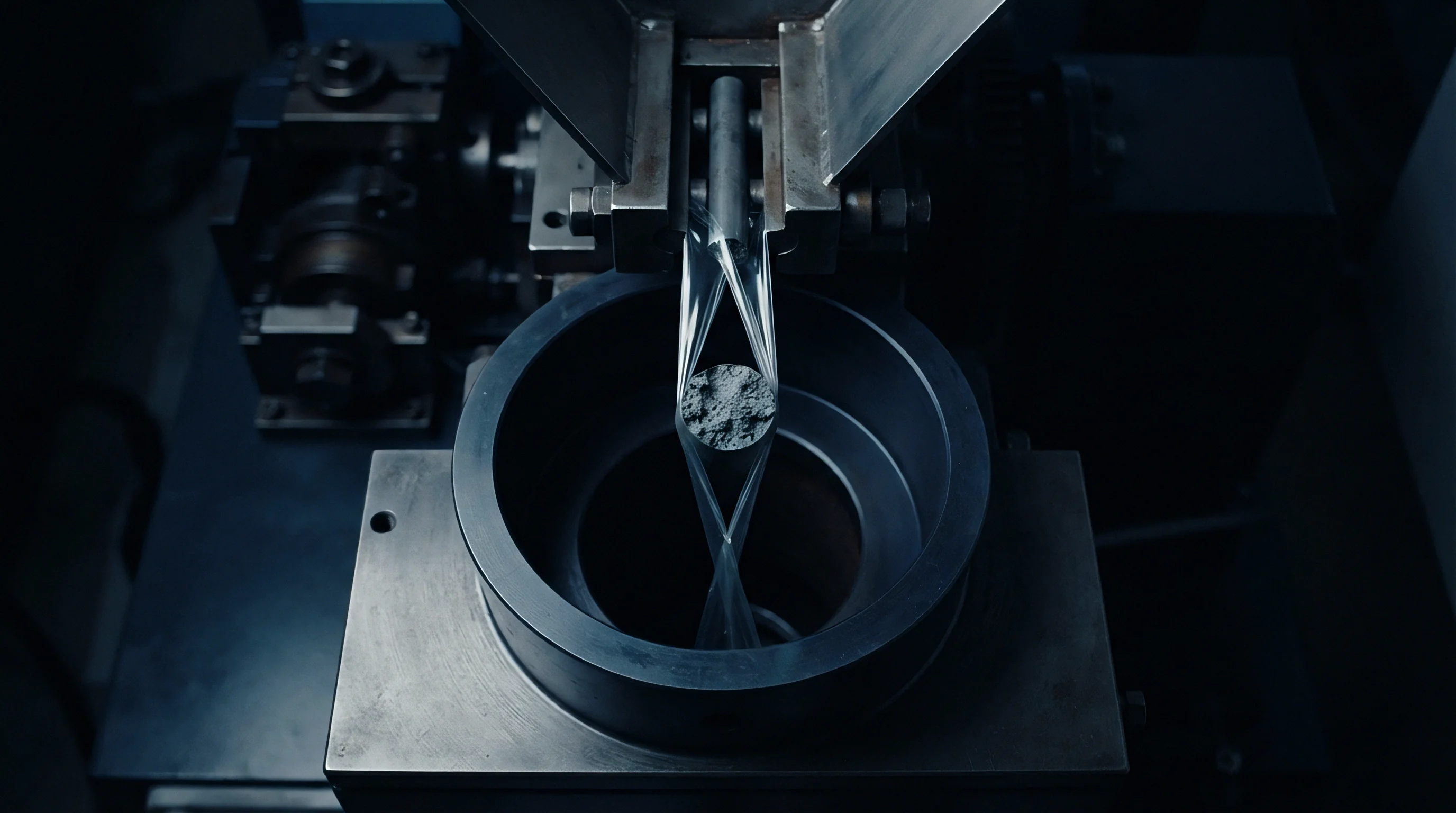
Scission
Polypropylene homopolymer and random copolymer grades designed for ultra-thin wall packaging rely on thermal-chemical degradation during extrusion to achieve high melt throughput. High-speed injection molders filling thin container rims down to 0.4 millimeters wall thickness require melt flow rates between 40 and 100 grams per ten minutes. Standard reactor-grade polypropylenes leave the polymerization reactor with broad molecular weight distributions and melt flow rates of 1.5 to 4.0 grams per ten minutes under standard ISO 1133 test conditions (230 degrees Celsius and 2.16 kilograms mass).
Long polymer chains create high melt viscosity, orientation stress, and warpage during fast cavity filling. Controlled peroxide degradation in a post-reactor compounding pass breaks down these long chains.

Peroxide Free Radical Shear Breakdown in Extrusion
Controlled rheology polypropylene uses organic peroxides like 2,5-dimethyl-2,5-di(tert-butylperoxy)hexane added in twin-screw extrusion at 200 to 240 degrees Celsius. Thermal homolytic cleavage of the peroxide O-O bond creates alkoxy radicals that pull hydrogen atoms from tertiary carbon atoms along the polypropylene backbone. The resulting tertiary macroradicals undergo beta-scission, splitting long polymer molecules into active radical fragments and end-unsaturated chains.
Higher peroxide loadings elevate melt flow while narrowing the molecular weight ratio (Mw/Mn) from an initial 6.0 to 8.0 range down to 2.5 to 3.2.
| Visbreaking Stage | Peroxide Addition (ppm) | Melt Flow Rate (g/10 min) | Polydispersity Index (Mw/Mn) | Notched Izod at 23°C (kJ/m²) | Notched Izod at -20°C (kJ/m²) | Ductile to Brittle Transition (°C) |
|---|---|---|---|---|---|---|
| Reactor Base Grade | 0 | 3.2 | 6.8 | 4.5 | 1.8 | +4 |
| Light Visbreaking | 150 | 12.0 | 4.2 | 3.8 | 1.5 | +8 |
| Medium Visbreaking | 450 | 35.0 | 3.1 | 2.9 | 1.2 | +14 |
| Severe Visbreaking | 900 | 75.0 | 2.6 | 2.1 | 0.9 | +22 |
Molecular Weight Tail Depletion and Tie Molecule Density
Polymer toughness at sub-zero temperatures depends on tie molecules spanning amorphous zones to anchor adjacent crystallites. Chains longer than one hundred thousand grams per mole form these bridges during primary crystallization. Beta-scission selectively breaks these high molecular weight fractions because longer chains present a larger collision target for radical abstraction during compounding.
Trimming this high molecular weight tail lowers tie-molecule density between lamellae. Once the thin-wall package drops below the glass transition temperature of the matrix (around minus 2 to 5 degrees Celsius), the depleted amorphous matrix can no longer absorb impact energy through local plastic deformation.
Peroxide degradation eliminates long polymer chains and lowers melt elasticity without increasing sub-zero impact resistance.
Compounding mills frequently market high melt flow visbroken grades as drop-in solutions for cold-chain packaging without supplying complete gel permeation chromatography profiles. Resins subjected to severe chain scission fill thin molds easily at low injection pressure, but the resulting container bases shatter under light mechanical impacts at sub-zero storage temperatures.

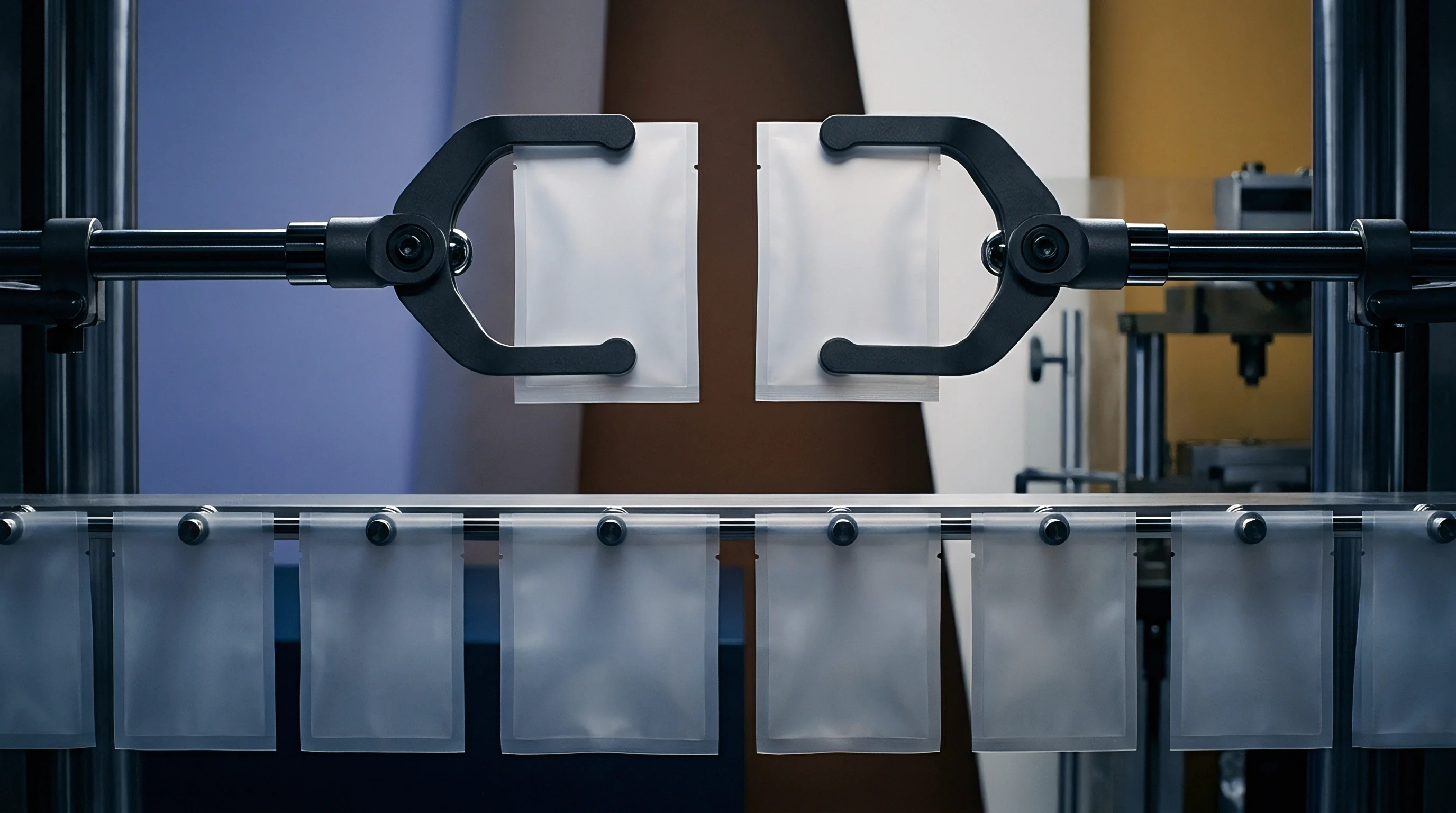
Impulse
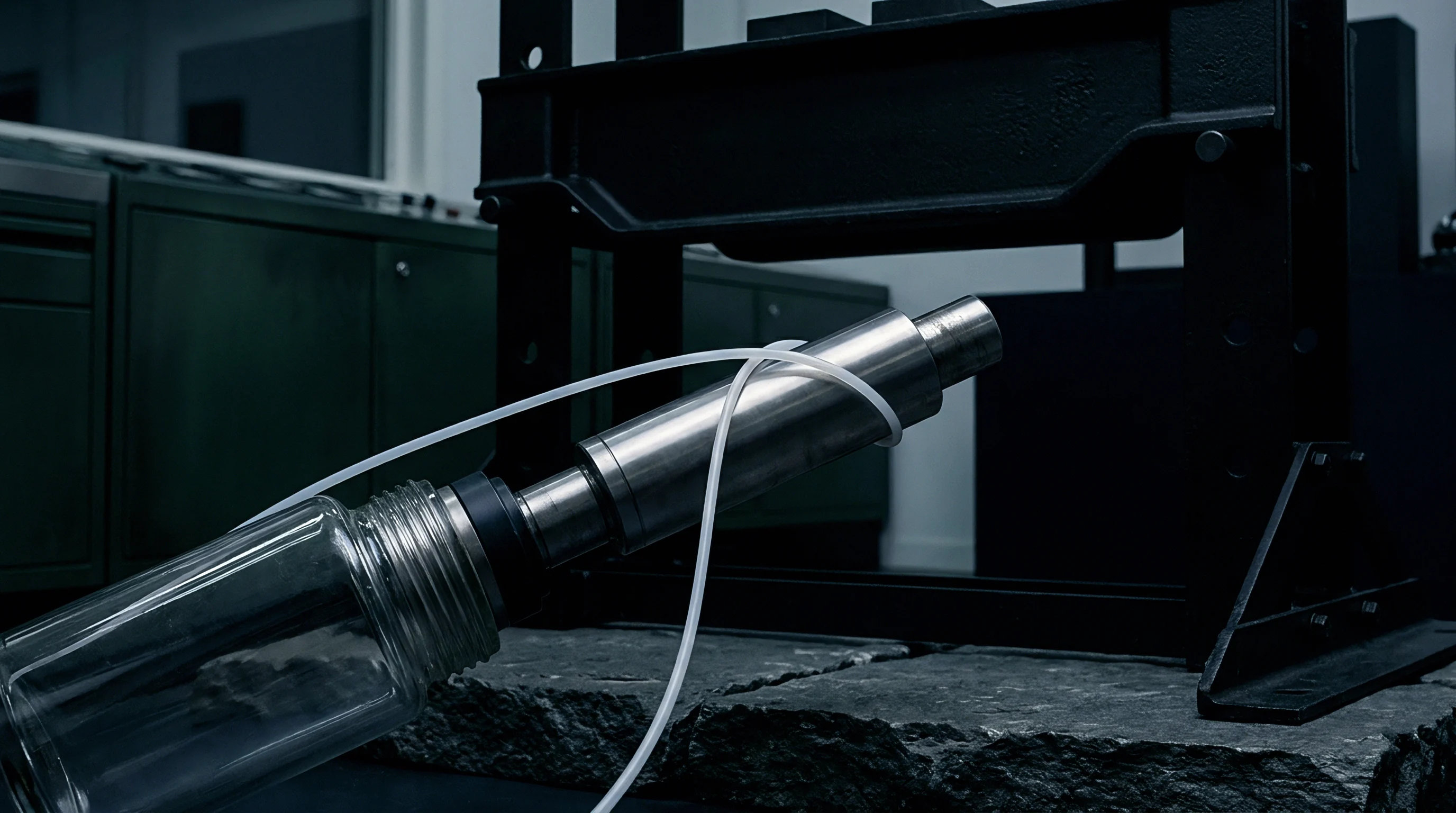
High-speed puncture testing measures dynamic fracture behavior in rigid packaging panels under drop conditions. Standard Charpy or Izod notched pendulum tests record energy absorbed by thick specimens at low deformation rates, which misses the bi-axial stress states developed during a real drop of a frozen container. Instrumented drop weight equipment running under ISO 6603-2 and ASTM D3763 records force continuously as a hemispherical striker with a piezo-electric load cell drives through a clamped plaque or container wall at 2.2 to 4.4 meters per second.

Force Displacement Profile Analysis at Sub Zero Temperatures
Data acquisition during falling dart testing generates a load-displacement curve that separates elastic deformation, plastic yield, and crack propagation. At room temperature, impact traces for polypropylene impact copolymers show a smooth ramp to peak yield force followed by plastic flow and stable crack growth. At minus 20 degrees Celsius, the profile changes completely: load drops vertically right at peak force as the striker drives through the glass-state polymer, propagating cracks through micro-stress concentrators before chains can uncoil.
Total energy absorbed during dynamic puncture splits into initiation energy (measured up to peak force) and propagation energy (measured from peak force down to zero load). The ratio of propagation energy to total energy gives the ductility index for the test piece. Visbroken homopolymers tested below zero yield ductility index values under 0.15, showing that post-peak structural response is almost entirely catastrophic crack growth.
At -20°C, polypropylene homopolymers with a polydispersity index below 2.8 exhibit less than 1.2 Joules of total impact energy during a 2.0 meter per second drop.

Energy Partitioning and Ductile to Brittle Transition Thresholds
Temperature sweeps on instrumented drop rigs pinpoint where fracture behavior switches from ductile puncture to brittle shattering. Compounding ethylene-propylene rubber micro-domains or metallocene ethylene-octene elastomers into visbroken polypropylene preserves crack-pinning mechanisms during sub-zero drops. Because the elastomer phase stays rubbery down to minus 50 degrees Celsius, it triggers local shear yield bands that dissipate kinetic energy before brittle cracks spread across the panel.
- Ductile puncture mode panel exhibits stable plastic yield with circumferential necking and plastic deformation extending several millimeters beyond the striker contact area without loose fragment ejection.
- Brittle shatter failure specimen snaps along linear radial cleavage planes with zero plastic deformation around the impact core, creating sharp needle-like shards that disconnect completely from the container wall.
- Star-crack fragmentation fracture surfaces exhibit multiple radiating split lines stemming from an un-yielded central puncture point, indicating incomplete shear-band initiation during striker engagement.
- Hinge-line tearing container wall deforms plastically along primary flow lines but splits cleanly along localized orientation boundaries under secondary bending moments.
| Resin System Architecture | MFR 230°C/2.16kg (g/10 min) | Peak Force (N) | Initiation Energy (J) | Propagation Energy (J) | Total Energy (J) | Ductility Index (Ep/Et) |
|---|---|---|---|---|---|---|
| Visbroken Homopolymer | 65.0 | 210 | 0.85 | 0.08 | 0.93 | 0.09 |
| Visbroken Random Copolymer (3.5% C2) | 45.0 | 280 | 1.25 | 0.22 | 1.47 | 0.15 |
| Visbroken Impact Copolymer (12% Ethylene) | 35.0 | 460 | 2.10 | 1.80 | 3.90 | 0.46 |
| CR-PP Homopolymer + 15% Metallocene POE | 50.0 | 510 | 2.40 | 2.85 | 5.25 | 0.54 |
Contracts for freezer-grade packaging resins frequently mandate ISO 6603-2 drop performance thresholds ~ requiring at least 3.5 Joules of total impact energy at minus 20 degrees Celsius and a minimum ductility index of 0.40 ~ which automatically screens out brittle-failing lots.
Fractography
Examining the microstructure of sub-zero failure zones shows how the material collapses step by step. Scanning electron microscopy of fracture surfaces highlights clear topographical regions marking the transition from early stress concentration to fast crack propagation. At sub-zero temperatures and high loading rates, large-scale chain disentanglement is suppressed in visbroken polypropylene, driving fracture directly along spherulite boundaries or crystallite interfaces.
How Does Rubber Phase Dispersion Inhibit Brittle Crack Growth?
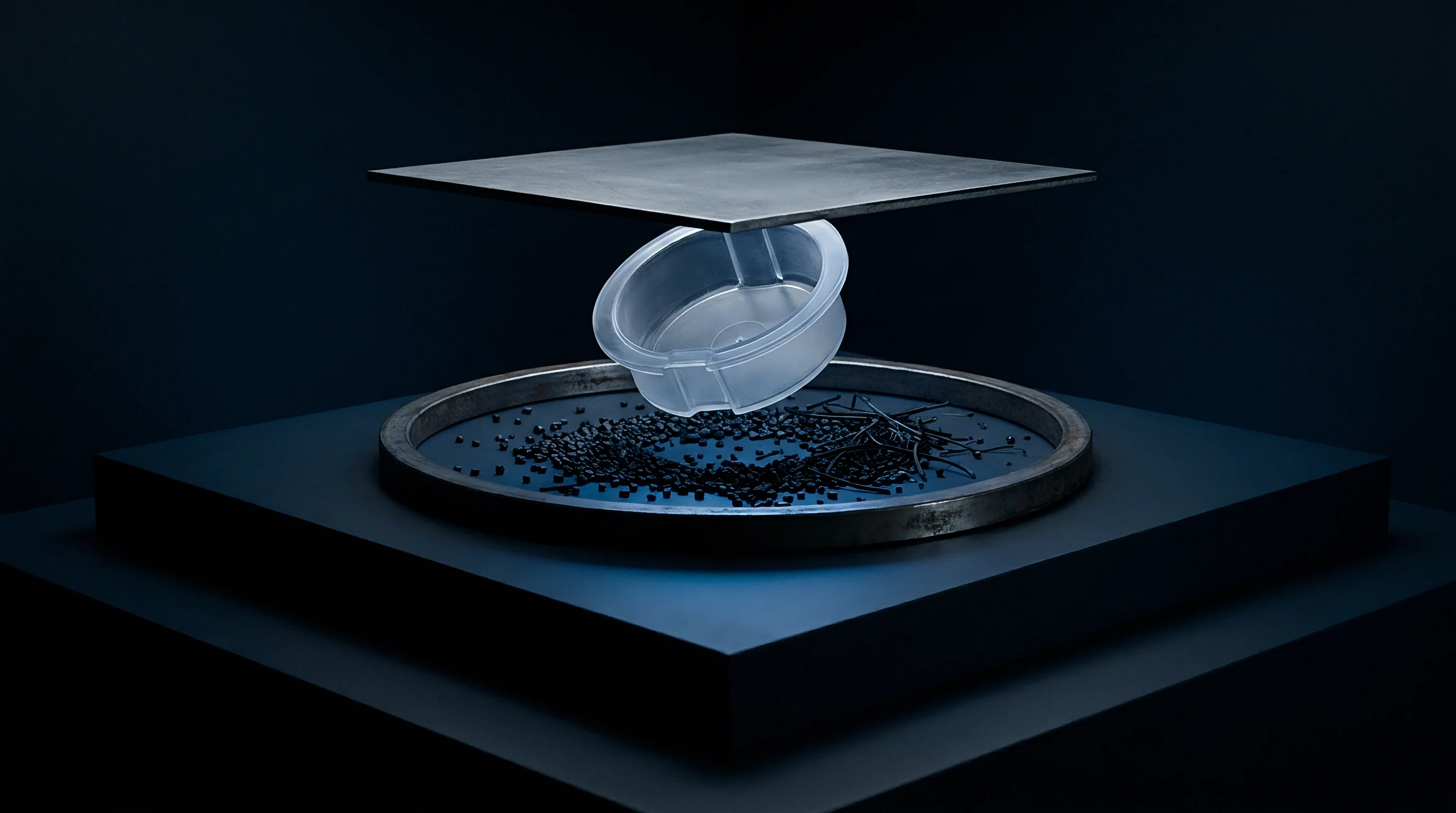
Dispersing discrete elastomeric domains within visbroken polypropylene interrupts brittle crack growth by altering stress distribution ahead of the crack tip. When a crack hits a soft ethylene-propylene rubber particle measuring 0.5 to 1.5 micrometers in diameter, triaxial stress induces micro-void cavitation inside or around the rubber droplet. This cavitation relieves local triaxial tension, shifting stress toward shear yield and promoting localized plastic deformation.
Tensile energy dissipates through dense shear bands, changing potential brittle cleavage into ductile deformation.
ISO 6603-2 defines peak deflection thresholds that disqualify lots where energy absorption drops prior to crack propagation.
Rubber domains larger than three micrometers act as stress concentrators rather than craze initiators, speeding up sub-zero panel failure. Compounding lines running with insufficient specific mechanical energy input leave coarse rubber agglomerates that separate from the matrix during frozen drop impacts.
Spherulitic Boundary Cleavage and Stress Whitening Mechanics
Polarized light microscopy shows that crack paths in low-impact visbroken homopolymers follow inter-spherulitic boundaries. Cooling rates in thin-wall molds exceed several hundred degrees Celsius per second, forming dense populations of small alpha-spherulites. Under freezing impact conditions, cleavage moves quickly through amorphous inter-spherulitic regions that lack the high molecular weight tie molecules needed to hold the network together.
- Mirror initiation zone smooth, featureless surface immediately surrounding the failure origin where microscopic crack growth proceeds slowly under sub-critical stress fields.
- Mist and hackle region textured, rough surface morphology featuring secondary parabolic river markings where crack speed approaches the speed of transverse sound waves in frozen polypropylene.
- Stress-whitening halo dense zone of micro-cavitation and localized fibrillar crazing surrounding ductile deformation zones, appearing opaque white due to light scattering off micro-voids.
- Inter-lamellar cleavage plane flat, crystalline fracture facet produced when crack propagation breaks weak van der Waals bonds between adjacent folded polymer chains without plastic yield.
Choosing an unmodified visbroken homopolymer to save fifty dollars per metric ton on resin costs often results in shattered container sidewalls, contamination claims, and rejected shipments at cold-storage hubs.


Tool
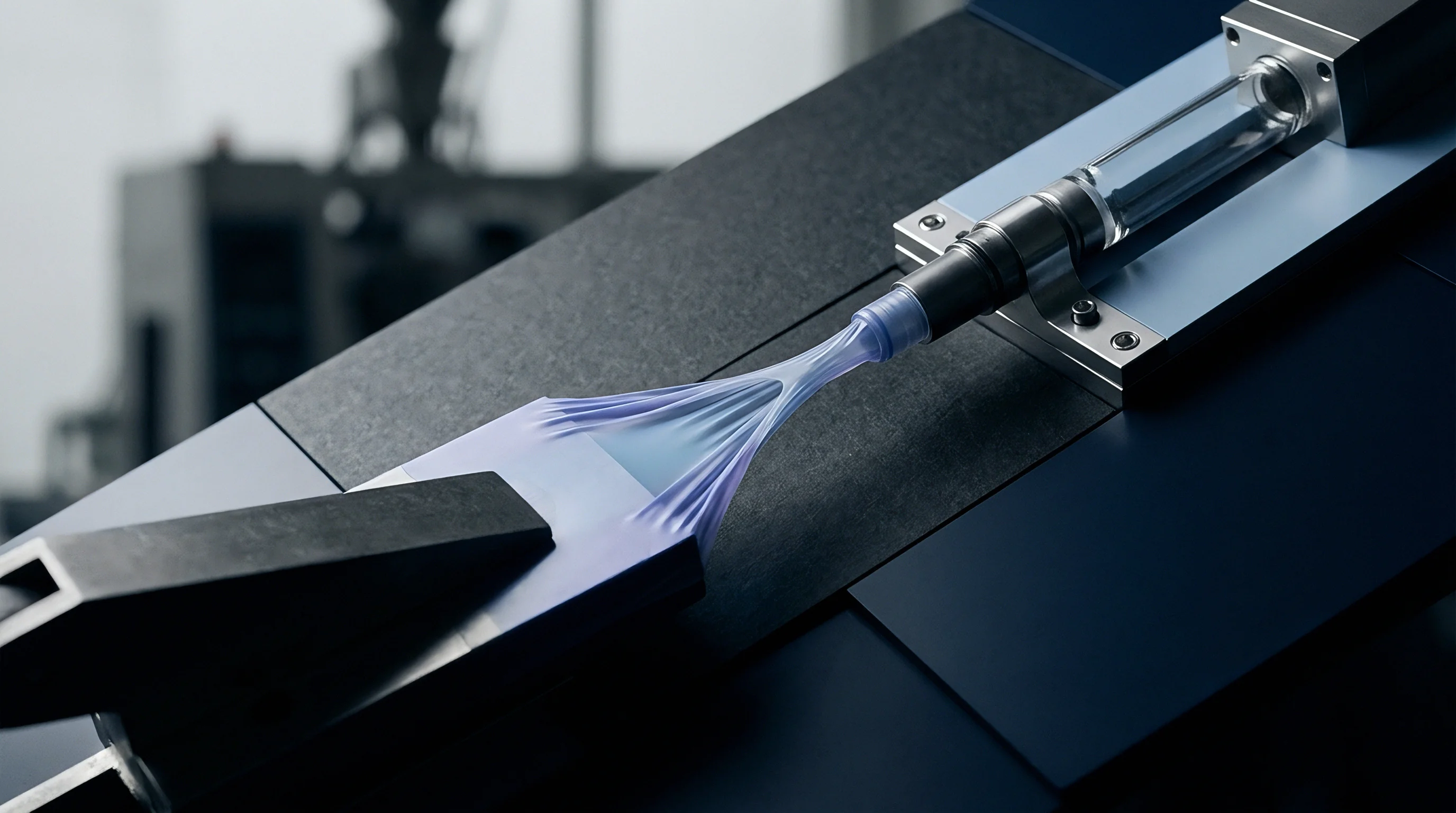
Tool design and cooling rates dictate crystal morphology and residual orientation stress in thin-wall packaging. Ultra-thin molds with length-to-thickness flow ratios exceeding 250-to-1 demand injection speeds above 300 millimeters per second and filling pressures over 150 bar. These high flow rates generate strong wall shear stress in the melt, stretching polymer chains along the primary flow direction next to cold cavity surfaces.
Skin Core Morphological Gradient in High Speed Injection
Cross-sections of thin-wall containers reveal a distinct three-layer morphology. Immediate contact with mold walls chilled to 15 degrees Celsius freezes the outer layer into an amorphous or highly oriented microcrystalline skin. Beneath it lies an intermediate shear layer where chains crystallize under high stress into oriented shish-kebab structures.
The central core cools more slowly under low shear, giving unoriented, isotropic spherulites time to nucleate and grow.
In visbroken polypropylenes, short chains in the core relax rapidly, lowering orientation there. Higher molecular weight fractions in the shear layer remain trapped in extended conformations. During sub-zero drop tests, cracks run along the interface between this oriented shear layer and the isotropic core because of differences in elastic modulus and thermal expansion.
Thinner container walls increase local cooling rates during molding and suppress large spherulite growth that accelerates brittle cracking.

Mold Temperature and Shear Induced Crystallization Effects
Adjusting tool parameters helps minimize residual molecular orientation and improves multi-axial impact strength at low temperatures. Raising mold coolant temperature from 12 to 40 degrees Celsius slows surface quenching, giving oriented chains in the skin and shear zones time to relax before crystallization locks them in. Lower orientation stress makes mechanical properties more isotropic, increasing cold-drop resistance at corners and base radii.
- Mount high-frequency pressure transducers in container mold cavities at both the main gate and the furthest rim flow location.
- Adjust injection velocity profiles to establish a flat melt-front velocity that eliminates deceleration spikes along thin container walls.
- Increase mold coolant temperatures in ten-degree increments while monitoring part ejection rigidity to maximize molecular relaxation time.
- Set packing pressure to match cavity sealing time, preventing back-flow without over-packing the gate area.
- Measure sub-zero drop fracture behavior across produced samples after forty-eight hours of room-temperature crystalline annealing.
Cooler mold temperatures shorten cycle times, but they lock in residual orientation stress that makes frozen containers prone to shattering during handling.

Audit
Evaluating visbroken polypropylene requires more than reviewing single-point melt flow certificates of analysis. Suppliers sometimes adjust peroxide dosing to convert off-spec reactor lots into target melt flow packaging grades. Two incoming resin lots can show identical melt flow readings of 65 grams per ten minutes at 230 degrees Celsius under 2.16 kilograms mass, yet differ significantly in polydispersity index, residual peroxide content, and sub-zero impact resistance.

Incoming Batch Verification and Melt Flow Spread Tolerances
Quality assurance at converting plants should include testing on incoming railcar or bag shipments. High-pressure capillary rheology across shear rates from 100 to 10,000 inverse seconds reveals differences in melt elasticity and shear thinning that single-point melt flow tests miss. Resins treated with heavy peroxide additions display low zero-shear viscosity and reduced shear thinning, indicating a loss of long polymer chains.
| Material Parameter | Testing Standard | Acceptable Target Range | Rejection Threshold | Operational Risk |
|---|---|---|---|---|
| Melt Flow Rate (230°C/2.16kg) | ISO 1133 | 60.0 to 68.0 g/10 min | > 72.0 or < 56.0 g/10 min | Short shots or flash during molding |
| Polydispersity Index (Mw/Mn) | ISO 16014 / GPC | 2.8 to 3.4 | < 2.5 or > 4.0 | Sub-zero brittle drop shatter |
| Active Peroxide Residuals | HPLC / Titration | < 15 ppm | > 50 ppm | Post-molding chain scission and odor |
| Instrumented Drop Energy (-20°C) | ISO 6603-2 | > 4.2 Joules | < 2.5 Joules | Cold-chain transport container failure |
| Volatile Organic Compounds | GC-MS Headspace | < 250 ppm Total VOC | > 500 ppm Total VOC | Food contact organoleptic failure |
Worked Economic Construction for Sub Zero Packaging Yields
Comparing resins on true unit cost requires balancing raw material price against internal scrap rates and field returns. Consider a plant producing 50 million thin-wall frozen food containers a year (12 grams each, consuming 600 tonnes of resin). Option A relies on a low-cost chemically visbroken homopolymer at $1,250 per metric ton ($0.0150 resin cost per container).
Option B uses a metallocene elastomer-modified impact grade at $1,480 per metric ton ($0.0177 resin cost per container).
Under simulated winter transit conditions, Option A exhibits a 3.2 percent in-plant cold drop failure rate, generating $38,400 per year in scrap regrind, sorting labor, and lost inventory. Subsequent cold-chain returns add an 0.8 percent field failure rate, generating $200,000 in administrative chargebacks ($0.50 per damaged unit across 400,000 containers). Total annual failure costs for Option A reach $238,400.
Option B increases upfront resin costs by $138,000 per year but brings total cold-drop failures below 0.05 percent, eliminating field penalties and delivering a net annual savings of $95,200.
The exact threshold of active peroxide residues that triggers long-term environmental stress cracking in thin-wall polypropylene lids stored at freezing temperatures remains open to ongoing laboratory investigation.