Modeling Non-Isothermal Degradation Kinetics in Mixed Post-Consumer Polypropylene Streams during High-Speed Extrusion
Non-isothermal kinetic models predict thermal-mechanical degradation in high-speed extrusion, allowing targeted stabilizer dosing to prevent molecular collapse.


Viscosity
Capillary rheometer traces at apparent shear rates above 1000 reciprocal seconds reveal immediate structural breakdown in recycled polypropylene. Post-consumer polymer lots carry thermal histories, residual organic peroxides, and variable catalyst ash that accelerate molecular weight truncation during processing. When screw speeds shift from 300 rpm to 900 rpm in high-throughput compounding, the melt temperature routinely overshoots setpoints by 25 to 45 degrees Celsius.
This internal heat generation triggers immediate beta-scission along the tertiary carbon backbone of the propylene units.

Capillary Flow Divergence across Mixed Polyolefin Fractions
Incoming flake blends containing five to twelve percent polyethylene contamination exhibit distinct non-Newtonian flow anomalies. At low shear rates below 100 reciprocal seconds, the immiscible polyethylene domains increase melt elasticity and swell ratios at the die exit. At high-speed processing shear rates between 2000 and 8000 reciprocal seconds, intense mechanical shearing strips the phase boundaries and forces severe chain orientation.
The composite melt experiences an apparent viscosity drop that traditional single-point melt flow rate testing under ISO 1133 at 230 degrees Celsius with a 2.16-kilogram load fails to register.
Local shear generates immense friction. This mechanical energy dissipation converts directly into thermal energy inside the screw channels. The polymer melt reacts to this combined thermal and mechanical load through simultaneous radical generation and stabilizer depletion.
Virgin polypropylene homopolymer maintains stable viscosity curves up to 240 degrees Celsius under nitrogen atmospheres. Post-consumer streams initiate rapid radical cascade reactions at 195 degrees Celsius when processing without fresh antioxidant top-ups.
Melt flow shifts exceeding twenty percent across an extrusion run signal catastrophic antioxidant exhaustion inside the compounding barrel.

Sources of Rheological Instability in Recycled Flake
Variations in post-consumer feedstock composition induce severe processing instability during high-speed plastication.
- Tertiary Carbon Radicals form rapidly along the polypropylene chain segments under high shear, initiating immediate molecular weight reduction through beta-scission mechanisms.
- Residual Pro-Oxidant Contaminants including transition metal catalytic fines from legacy polymerization runs accelerate hydroperoxide decomposition at lower temperatures.
- Polyethylene Entanglements alter the relaxation time spectrum of the blend, generating localized stress concentrations within the high-shear mixing elements.
- Incipient Carbonyl Groups formed during prior consumer lifecycles act as weak thermal links that cleave during secondary processing passes.
Melt strength collapses immediately. When high-speed extrusion lines experience this unpredicted viscosity collapse, parison sag in blow molding or edge-weave instabilities in cast film lines create immediate dimensional rejections across entire production shifts.

Conversion
Thermogravimetric measurements across non-isothermal heating programs between 5 and 40 Kelvin per minute supply the raw mass-loss data required for kinetic calculation. Virgin polymer degradation curves display a single, sharp mass-loss step. Post-consumer polyolefin streams display broad, multi-step mass-loss profiles reflecting mixed resin grades, varied molecular weights, and degraded fractions.

Which Isoconversional Model Captures Post-Consumer Melt Instability?
Model-free isoconversional methods allow the calculation of activation energy as a direct function of the extent of reaction without assuming a specific reaction model. The Flynn-Wall-Ozawa approach and the Kissinger-Akahira-Sunose formulation provide reliable frameworks for analyzing non-isothermal decomposition data. The differential Friedman method tracks the instantaneous rate of mass loss directly, offering heightened sensitivity to competing degradation mechanisms.
Radicals propagate without pause. The apparent activation energy for post-consumer polypropylene decreases sharply during initial mass conversion stages below 0.15. This drop reflects the rapid decomposition of existing hydroperoxides and low-molecular-weight fractions that accumulated during previous service cycles.
Once these fractions volatilize, the activation energy plateaus into the baseline scission regime of the primary polymer matrix.
An activation energy dip below 120 kilojoules per mole at ten percent conversion indicates severe prior oxidative degradation in recycled feedstock.
| Feedstock Composition | Conversion Level | Apparent Activation Energy (kJ/mol) | Pre-Exponential Factor ln(A/s) | Correlation Coefficient R2 |
|---|---|---|---|---|
| Virgin PP Homopolymer | 0.10 | 185.4 | 36.2 | 0.998 |
| Virgin PP Homopolymer | 0.50 | 212.8 | 41.5 | 0.995 |
| PCR PP (98% Pure) | 0.10 | 132.1 | 25.8 | 0.982 |
| PCR PP (98% Pure) | 0.50 | 178.6 | 34.1 | 0.989 |
| PCR PP / HDPE (85/15 Blend) | 0.10 | 114.3 | 22.4 | 0.974 |
| PCR PP / HDPE (85/15 Blend) | 0.50 | 164.2 | 31.7 | 0.981 |
Secondary peaks indicate contamination. Analytical differential scanning calorimetry traces collected alongside thermogravimetry resolve secondary melting endotherms between 125 and 132 degrees Celsius, confirming high-density polyethylene cross-contamination. These contaminated matrices deviate from classic single-mechanism kinetics, presenting an unresolved problem regarding whether variable activation energy functions can accurately predict degradation rates inside dynamic extrusion screws across wide screw-speed operating envelopes.
Barrel
Twin-screw compounders operating at screw speeds above 600 rpm subject polymer streams to severe mechanical stress within narrow flight gaps. Screw configurations engineered with aggressive kneading blocks generate significant localized pressure and shear fields. Under these conditions, mechanical energy input exceeds the thermal dissipation capacity of barrel cooling jackets, shifting the internal process toward adiabatic operation.
Will High Screw Speed Accelerate Peroxide Decomposition?
Viscous dissipation raises the internal melt temperature far beyond the setpoint displayed on machine controllers. Machine thermocouples set into barrel walls measure steel temperatures rather than true core polymer melt conditions. An immersion probe reading taken at the discharge die often registers temperatures 35 degrees higher than the final barrel heating zone.
Thermal sensors miss internal cores. Residence time contracts drastically. The accelerated passage of the polymer through the extruder limits the duration of thermal exposure, yet the peak temperature spikes accelerate degradation reaction rates exponentially according to the Arrhenius relationship.
The balance between shortened residence time and elevated peak melt temperature dictates net polymer degradation.
- Solid Bed Conveying compacts post-consumer flakes and subjects low-melting contaminants to early frictional shear before the primary melting zone.
- Kneading Block Dispersion generates localized shear rates exceeding 5000 reciprocal seconds, breaking weak peroxide bonds and initiating primary macro-radicals.
- Decompression Zone Degassing removes volatile scission byproducts, shifting the degradation equilibrium forward while removing short-chain hydrocarbon fragments.
- Die Pressurization subjects the depleted stabilization matrix to secondary thermal saturation under pressures reaching 80 to 140 bar.
Viscous heat drives reaction rates. Compounders operating high-speed equipment frequently argue that minimal residence times protect recycled polymers from thermal breakdown, ignoring the exponential kinetic acceleration caused by unmonitored adiabatic temperature spikes within mixing zones.
| Screw Speed (rpm) | Barrel Setpoint (°C) | Actual Melt Temp (°C) | Mean Residence Time (s) | MFR Shift (230°C / 2.16 kg) |
|---|---|---|---|---|
| 300 | 210 | 218 | 48.2 | +8.5% |
| 600 | 210 | 234 | 26.1 | +24.2% |
| 900 | 210 | 249 | 18.4 | +58.7% |
| 1200 | 210 | 262 | 14.1 | +112.4% |


Fraction
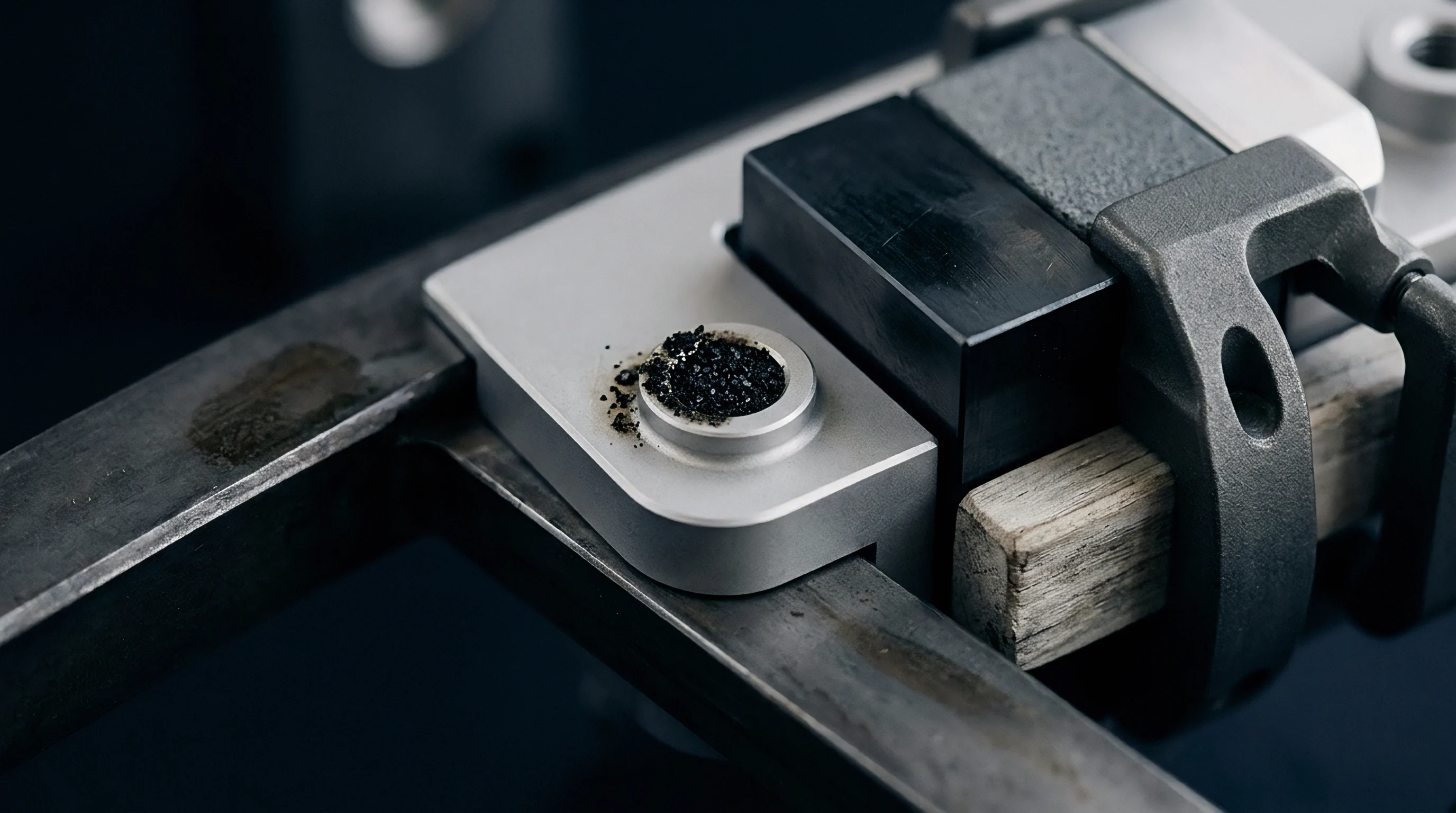
Polyethylene co-contamination fundamentally alters the radical degradation cascade of recycled polypropylene streams. In pure polypropylene, radical formation resolves almost entirely through beta-scission, cleaving chains and increasing the melt flow rate. In polyethylene chains, alkyl radicals undergo intermolecular and intramolecular radical combination, driving long-chain branching and cross-linking reactions.
Radical Competition in Binary Polyolefin Systems
When high-speed extrusion forces intimate mixing of these two polymers, cross-reactions occur at the phase interfaces. Polypropylene macroradicals abstract hydrogens from adjacent polyethylene backbones, altering the natural termination pathways of both species. This radical exchange produces cross-linked block-type structures alongside fragmented polypropylene segments.
Cross-linking alters the flow profile. The resulting compound exhibits high polydispersity and inconsistent shear-thinning characteristics. The presence of five to fifteen percent post-consumer high-density polyethylene dampens the overall melt flow increase expected from pure polypropylene degradation, masking the true extent of chain damage under standard incoming inspection tests.
Purchase specifications referencing ISO 1043 designations must define allowable cross-polymer contamination limits below two percent to prevent unrecoverable embrittlement.

Additive Stabilization Guidelines for Mixed Streams
Formulating stabilization packages for contaminated post-consumer streams requires active balancing of radical scavengers and hydroperoxide decomposers.
- Hindered Phenolic Antioxidants act as primary radical scavengers, donating hydrogen atoms to alkylperoxyl radicals before hydrogen abstraction occurs along the tertiary carbon backbone.
- Secondary Phosphite Stabilizers react directly with hydroperoxide intermediates during high-shear compounding, reducing them to stable alcohols and preventing auto-catalytic scission cycles.
- Acid Scavengers like synthetic hydrotalcites or calcium stearate neutralize residual halogenated catalyst residues that survive mechanical recycling wash lines.
- Hydroxylamine Processing Aids provide immediate radical trapping in high-speed extrusion zones where standard phosphite reaction rates are too slow for the brief residence window.
Chain scission dominates the melt. Standard procurement contracts without explicit stipulations regarding total polyethylene fraction, oxidative induction time under ISO 11357-6, and gel content thresholds leave buyers legally unprotected against embrittled lots that satisfy melt flow criteria while failing downstream impact tests.
| HDPE Fraction (%) | Initial MFR (g/10 min) | Extruded MFR (g/10 min) | Charpy Notched Impact at 23°C (kJ/m2) | Tensile Modulus under ISO 527 (MPa) |
|---|---|---|---|---|
| 0 | 12.1 | 24.8 | 2.8 | 1450 |
| 5 | 11.4 | 19.6 | 3.4 | 1380 |
| 10 | 10.8 | 16.2 | 4.1 | 1290 |
| 20 | 9.5 | 12.8 | 5.2 | 1140 |
Yield
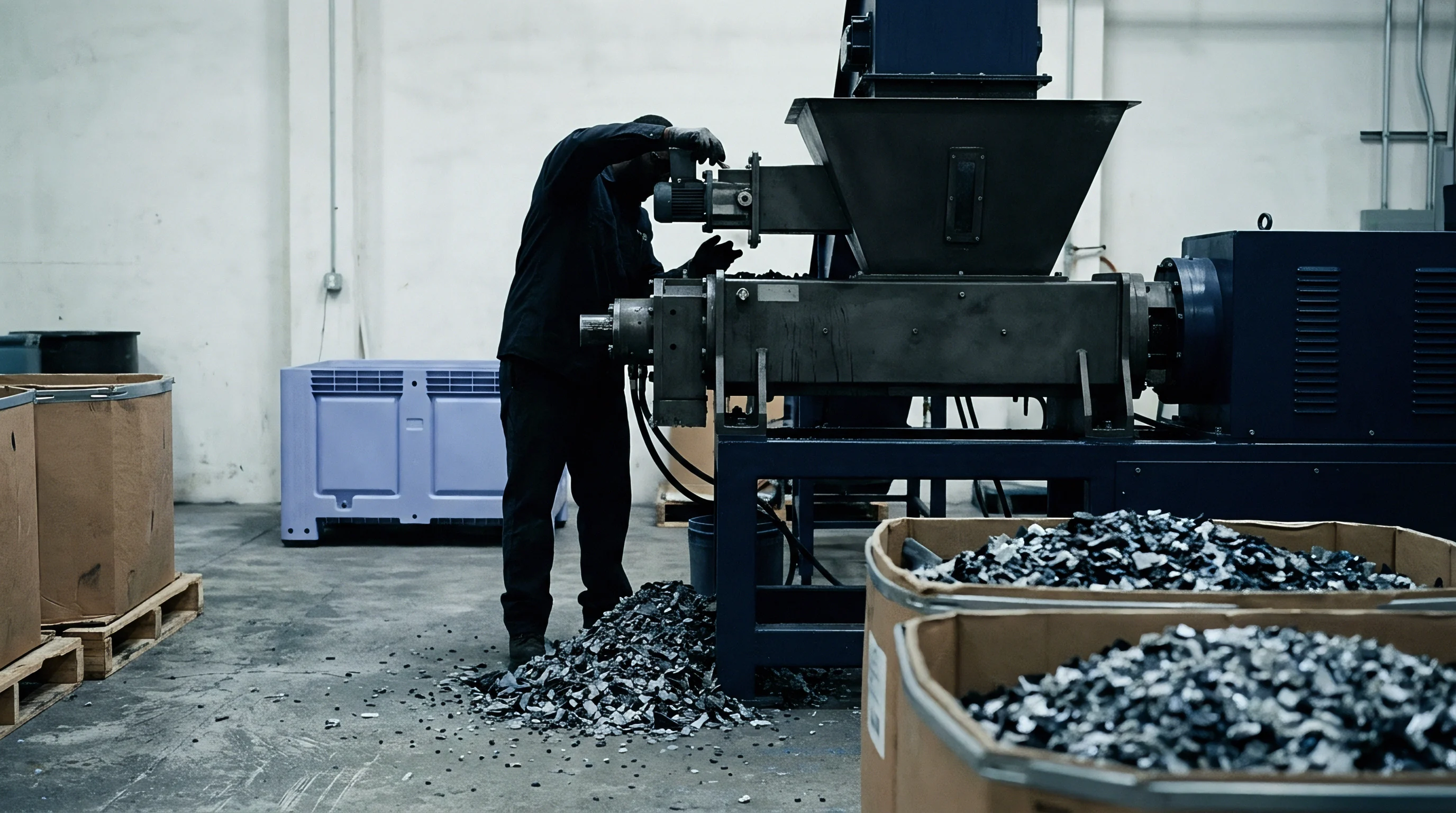
Net operational output in compounding compounding halls depends directly on maintaining melt stability at high throughput rates. Calculating degradation kinetics enables compounding engineers to establish accurate process windows that balance machine throughput against polymer mechanical retention. Sunk capital vanishes in purge.
Running an extruder beyond the kinetic stabilization threshold degrades polymer chains so severely that finished parts fail minimum quality metrics, converting profitable production runs into unsellable regrind.

Balancing Line Throughput against Pellet Degradation Costs
High-speed compounding lines running 40-tonne lots of mixed post-consumer polypropylene face distinct economic trade-offs. Increasing screw speed from 400 rpm to 1000 rpm raises output from 600 kilograms per hour to 1400 kilograms per hour, reducing the machine-hour cost per processed tonne. This increased shear input accelerates antioxidant consumption, necessitating a 0.35 percent increase in the baseline primary and secondary stabilization additive package to prevent severe melt flow drift.
Pellet moisture complicates thermal transfer. When incoming flake lots contain volatile moisture or ink solvents, high melt temperatures inside the barrel trigger secondary chain degradation pathways that antioxidant packages cannot arrest. The pressure profile fluctuates.
Operating extrusion lines within a verified kinetic processing window preserves polymer physical properties and ensures uniform mold filling during downstream injection molding operations.
Higher screw speeds demand enriched stabilizer packages to offset mechanical radical generation.