Quantifying Heat Seal Degradation from Erucamide Migration in Multilayer Polyethylene Films
Erucamide migration above 0.22 µg/cm² on polyethylene sealant layers suppresses chain interdiffusion during welding, elevating SIT and causing adhesive heat seal failures.

Kinetics
Molecules of cis-13-docosenamide move through the amorphous regions of polyethylene via passive mass transport driven by concentration gradients. Polyethylene resins consist of coexisting crystalline folds and disordered amorphous domains. High-density polyethylene forms tight crystalline lamellae that exclude foreign molecules, while low-density polyethylene contains branched structures with substantial free volume.
The slip agent erucamide ~ bearing a polar amide head group attached to a twenty-two-carbon monounsaturated tail ~ has limited solubility inside non-polar polyolefin matrices.
When erucamide is compounded into molten polyethylene at temperatures between 180°C and 240°C, the additive dissolves fully in the melt. As blown or cast film extrusions cool below the melt temperature (Tm), crystallization begins. Polyethylene chains fold into spherulites, expelling incompatible erucamide molecules from the growing crystalline lattice into the remaining amorphous phase.
This phase separation raises local erucamide concentration within the amorphous volume above its thermodynamic saturation limit. Supersaturation pushes the additive toward the film surface, where it precipitates as a thin molecular layer.
The equilibrium saturation limit of erucamide in linear low-density polyethylene at 23°C ranges between 350 ppm and 450 ppm depending on short-chain branching distribution.
Fickian diffusion mechanics govern the rate at which erucamide moves through the amorphous network to reach the interface. The fundamental differential equation describing one-dimensional mass transport across the film thickness (x) over time (t) follows Fick’s second law:
fracpartial Cpartial t = D fracpartial2 Cpartial x2
The diffusion coefficient (D) varies with temperature, matrix density, polymer chain mobility, and additive molecular volume. Higher storage temperatures supply thermal energy that increases polymer chain segmental motion, accelerating diffusion rates. Below the glass transition temperature (Tg), motion halts.
At ambient storage temperatures between 20°C and 40°C, erucamide moves steadily through low-density resins, reaching surface equilibrium within 48 to 168 hours.

Thermodynamic Solubility Limits in Polyolefin Matrices
Polyethylene resins dissolve fatty acid amides only within the fractional volume of their non-crystalline regions. Resin density acts as an indirect measure of amorphous content: conventional Low-Density Polyethylene (LDPE, density 0.918 ~ 0.924 g/cm³) contains roughly 45% to 55% amorphous volume, permitting higher additive solubility than High-Density Polyethylene (HDPE, density 0.950 ~ 0.965 g/cm³), which retains less than 30% amorphous fraction. Crystallites reject fatty amides.
Linear Low-Density Polyethylene (LLDPE) produced with Ziegler-Natta catalysts exhibits a broad composition distribution. Highly branched chains dissolve erucamide readily, while linear fractions crystallize rapidly. Metallocene-catalyzed LLDPE (mLLDPE) displays a uniform short-chain branching distribution.
This narrow intermolecular distribution reduces the volume of the highly amorphous fraction, causing mLLDPE to reach erucamide supersaturation faster than conventional LLDPE at identical nominal densities and additive loadings. As a result, erucamide migrates to the surface faster in mLLDPE film layers, establishing lower friction coefficients within hours rather than days.

Temperature Dependent Fickian Diffusion Dynamics
Thermal energy increases polymer chain segment mobility, expanding the free volume through which small additive molecules step. The relationship between the diffusion coefficient (D) and absolute temperature (T) follows an Arrhenius relationship:
D = D0 expleft(-fracEaR Tright)
Here, D0 represents the pre-exponential factor, Ea is the activation energy for additive diffusion within the specific polyolefin matrix, R is the universal gas constant (8.314 J/mol·K), and T is absolute temperature in Kelvin. For erucamide in LLDPE, typical activation energy values range from 75 kJ/mol to 95 kJ/mol. Storing films at 40°C instead of 20°C increases the diffusion coefficient by a factor of 4 to 6, drastically reducing the time required for surface bloom accumulation.
| Polyethylene Resin Grade | Resin Density (g/cm³) | Crystallinity (%) | Diffusion Coeff D at 23°C (cm²/s) | Diffusion Coeff D at 40°C (cm²/s) | Equilibrium Saturation at 23°C (ppm) |
|---|---|---|---|---|---|
| LDPE (Autoclave) | 0.921 | 46.5 | 1.8 × 10⁻¹⁰ | 8.4 × 10⁻¹⁰ | 520 |
| Ziegler-Natta LLDPE (Butene) | 0.918 | 48.0 | 1.4 × 10⁻¹⁰ | 6.9 × 10⁻¹⁰ | 410 |
| mLLDPE (Hexene Copolymer) | 0.916 | 44.2 | 2.2 × 10⁻¹⁰ | 1.1 × 10⁻⁹ | 340 |
| mLLDPE (Octene Copolymer) | 0.920 | 51.5 | 1.1 × 10⁻¹⁰ | 5.5 × 10⁻¹⁰ | 310 |
| HDPE (Bimodal Pipe Grade) | 0.954 | 72.0 | 1.2 × 10⁻¹¹ | 7.8 × 10⁻¹¹ | 95 |

Crystallinity and Branching Architecture Effects
Densely packed polymer crystallites create impassable barriers for migrating additives, forcing transport paths through narrow amorphous channels. Path tortuosity increases at higher resin crystallinities, lowering the effective diffusion rate across the film thickness. Comonomer type (butene, hexene, or octene) alters short-chain branch length, shaping amorphous domain architecture.
Longer side chains in octene-based LLDPE yield larger free-volume pockets that hold erucamide molecules, slightly reducing net migration velocity compared to short-chain butene copolymers.
Post-extrusion cooling rates determine final spherulite size and total percent crystallinity. Rapid quenching on a chilled casting roll produces smaller spherulites and a higher amorphous fraction, delaying supersaturation and slowing initial migration kinetics. Slow cooling during blown film bubble formation permits maximum crystal growth, forcing erucamide out of the bulk matrix rapidly.
Processing conditions thus set the diffusion timeline before film rolls ever reach the warehouse floor.
The kinetic framework governing erucamide transport leaves an open question for film converters: how does continuous mechanical flexing or tension during slitting alter local amorphous volume and modify long-term diffusion rates in stored rolls?

Interface
Thermal welding of flexible packaging structures relies on the rapid interpenetration of molten polymer chains across the contact zone. Heat sealing jaws clamp two film layers together under pressure, heating the sealant layers above their melting temperature. Polymer chains gain mobility, disentangle from their native melt state, and cross the boundary plane to entangle with chains from the opposing layer.
Interfacial strength develops through this macromolecular diffusion process.
Excessive erucamide migration deposits a dense organic layer directly at the heat seal contact plane. When surface erucamide concentrations exceed roughly 0.15 to 0.25 micrograms per square centimeter (μg/cm2), the additive layer acts as a physical barrier. During the brief dwell time of a high-speed packaging machine (typically 0.1 to 0.5 seconds), applied thermal energy must melt and solubilize or displace this interfacial erucamide deposit before polyolefin chains can interdiffuse.
Surface amide deposits act as thermal barriers.
Chain entanglement establishes bond strength. When erucamide remains trapped at the molten interface, it separates continuous polyolefin chain networks. Upon cooling, the trapped erucamide recrystallizes into weak domains within the seal matrix, creating microscopic planes of structural weakness.
Under peel force testing, failure shifts from cohesive ducting of the film layer to clean adhesive separation along the contaminated interface.
Macromolecular Interdiffusion Barrier Mechanics
Heat sealing establishes a molten boundary where long polyethylene chains entangle under applied clamping pressure. The depth of chain penetration (χ) across the interface over dwell time (t) follows the reptation motion model introduced by Pierre-Gilles de Gennes:
χ(t) propto left( fractτr right)1/4
Where τr represents the ultimate polymer chain relaxation time. The presence of surface erucamide alters this relationship by introducing an incompatible low-molecular-weight fluid layer at t = 0. The fatty amide melt acts as an entropic barrier, reducing the thermodynamic driving force for polyolefin chain mixing across the boundary.
Polymer chains require extra energy and time to pierce the additive layer, delaying the onset of interdiffusion (tinitiation).
An accumulation of erucamide exceeding 0.40 micrograms per square centimeter on an mLLDPE surface elevates the required heat seal initiation temperature by up to 14°C.
Thermal Seal Initiation and Hot Tack Suppression
Weld strength during the immediate millisecond cooling phase following jaw release depends on uninhibited chain entanglements. Hot tack strength measures the capacity of a freshly sealed joint to resist peeling forces while still semi-molten. Erucamide acts as a lubricant and weak boundary layer within this molten joint.
High surface concentrations drop hot tack peak force significantly, causing pouch failures on vertical form-fill-seal (VFFS) machinery immediately after product drop.
The Seal Initiation Temperature (SIT) ~ defined as the minimum temperature required to achieve a designated seal strength (typically 5 N/25mm or 8.9 N/m) ~ shifts upward as erucamide surface coverage increases. Packaging operations running near the lower edge of their thermal sealing window experience immediate seal failure when converting film lots with heavy surface bloom.
Interfacial failure modes manifest in distinct physical forms during mechanical testing of sealed packaging films:
- Adhesive Interfacial Delamination occurs when the seal peels cleanly apart at the original contact interface at low forces, leaving specular surfaces free of ducting due to complete lack of polymer chain interdiffusion.
- Peel-Initiated Micro-Voiding develops when localized clusters of erucamide crystals create non-bonded pockets, acting as micro-notch stress concentrators that propagate rapid tearing across the weld line under dynamic loading.
- Low-Force Cohesive Shear Failure happens when erucamide dissolves into the immediate surface melt zone during heating but recrystallizes into weak boundary layers upon rapid cooling, reducing the ultimate tensile peel force of the bonded structure.
- Hot Tack Melt Separation manifests as immediate opening of the sealed seam under gravity filling loads, caused by interfacial lubrication from liquid fatty amide prior to matrix solidification.
| Surface Erucamide Density (µg/cm²) | Dynamic COF (ASTM D1894) | Seal Initiation Temp SIT (°C) | Hot Tack Peak Force at 115°C (N/25mm) | Ultimate Seal Strength at 130°C (N/25mm) | Primary Failure Mode (ASTM F88) |
|---|---|---|---|---|---|
| 0.05 | 0.48 | 102 | 4.2 | 38.5 | Film Tear / Elongation |
| 0.12 | 0.28 | 104 | 3.9 | 37.2 | Film Ducting / Weld Tear |
| 0.22 | 0.19 | 108 | 3.1 | 31.0 | Cohesive Weld Separation |
| 0.38 | 0.14 | 114 | 1.8 | 22.4 | Adhesive Interfacial Peel |
| 0.55 | 0.11 | 118 | 0.8 | 14.1 | Clean Interfacial Separation |
Ignoring surface migration kinetics during recipe design leads directly to line stoppages, converted pouch burst failures on transit lines, and total scrap write-offs of filled retail goods.
Bloom
Surface accumulation of fatty acid amides transforms smooth polyethylene film into a micro-crystalline landscape. As erucamide molecules diffuse out of the bulk polymer phase, they collect at the polymer-air interface. Upon reaching local saturation at the surface, the molecules self-assemble into thin crystalline plates.
This visible or sub-visible surface deposit is known as bloom.
Multilayer coextrusion structures alter additive distribution compared to monolayer films. A typical three-layer flexible packaging structure comprises an outer print layer (A), a central structural core layer (B), and an inner sealant layer (C). Compounders often isolate erucamide addition to the core layer or sealant layer during extrusion.
Additives do not remain confined to their dosing layer. Chemical potential differences force erucamide to diffuse across internal polymer-polymer interfaces, seeking concentration equilibrium throughout the entire multilayer structure.
Interlayer migration complicates slip management. Dosing erucamide exclusively into a central core layer creates a slow-release reservoir. The additive diffuses outward into both outer functional layers over time.
If the inner sealant layer consists of mLLDPE with high affinity for rapid exudation, erucamide blooms aggressively onto the sealant surface, compromising seal performance despite zero initial additive loading in that specific layer’s feed hopper.
Coextrusion Layer Distribution and Migration Equilibria
Layer thickness dictates total additive capacity. In a 50-micrometer (µm) three-layer film structured with a 10 µm sealant / 30 µm core / 10 µm outer layer ratio (1:3:1), the bulk core layer contains 60% of the total film mass. Dosing 2,000 ppm erucamide into the core while leaving outer layers un-dosed yields a total net film concentration of 1,200 ppm erucamide.
Over a storage window of 7 to 14 days at ambient conditions, erucamide redistributes proportionally across all three layers. Thermodynamics dictates that at equilibrium, the chemical potential (μi) of the additive must be equal across all phases:
μsealant = μcore = μouter
Because the sealant layer’s amorphous structure may possess a lower solubility limit than the core resin, erucamide reaches supersaturation in the sealant layer first, triggering localized surface bloom.
Does Interlayer Migration Deplete the Core Additive Reservoir?
Concentration gradients between structural layers drive continuous additive movement until chemical potential balances across all coextruded boundaries. Dosing the core layer establishes a storage reservoir that continually replaces erucamide lost from outer surface layers due to evaporation, abrasion, or absorption into packaged contents. Surface wipe-off or friction tests temporarily reduce surface amide levels, but internal diffusion from the core reservoir restores the surface crystal layer within 24 to 48 hours.
This persistent replenishment mechanism maintains low friction coefficients over months of storage, but simultaneously perpetuates long-term heat seal degradation. The core reservoir continues to pump fatty acid amide into the sealant layer until total bulk concentration drops below the ambient solubility threshold.

Winding Pressure and Roll Storage Environmental Exposure
Roll geometry compresses film layers together under tension during post-extrusion storage. Tight winding creates high radial pressure inside the mill roll, reaching up to 1.5 to 3.0 MPa near the core. This contact pressure forces the outer surface layer of one wrap into intimate physical contact with the inner sealant surface layer of the adjacent wrap.
Surface-to-surface transfer occurs readily under pressure. Erucamide blooming on the outer print layer transfers directly onto the non-bloomed sealant surface of the adjacent film layer (and vice versa). Storage temperatures inside converting warehouses frequently cycle between 15°C at night and 38°C during peak summer days.
Thermal cycling accelerates both internal Fickian diffusion and surface crystal recrystallization, resulting in irregular, blotchy bloom patterns that create localized spot failures across heat-sealed seams.
Placing slip additives exclusively in core layers does not prevent heat seal interference, because cross-layer chemical potential equalization drives migration across all layers.
Core-dosing fails to protect seal integrity under basic thermodynamic phase equilibrium laws.
Bench
Quantifying additive accumulation requires analytical precision capable of distinguishing bulk concentration from surface-bound deposits. Solvent extraction of an entire film sample followed by chromatographic analysis yields total bulk dosage (in ppm or mg/kg), but fails to indicate how much erucamide resides at the critical heat seal interface. Surface-specific analytical tools isolate and measure localized amide mass density (μg/cm2).
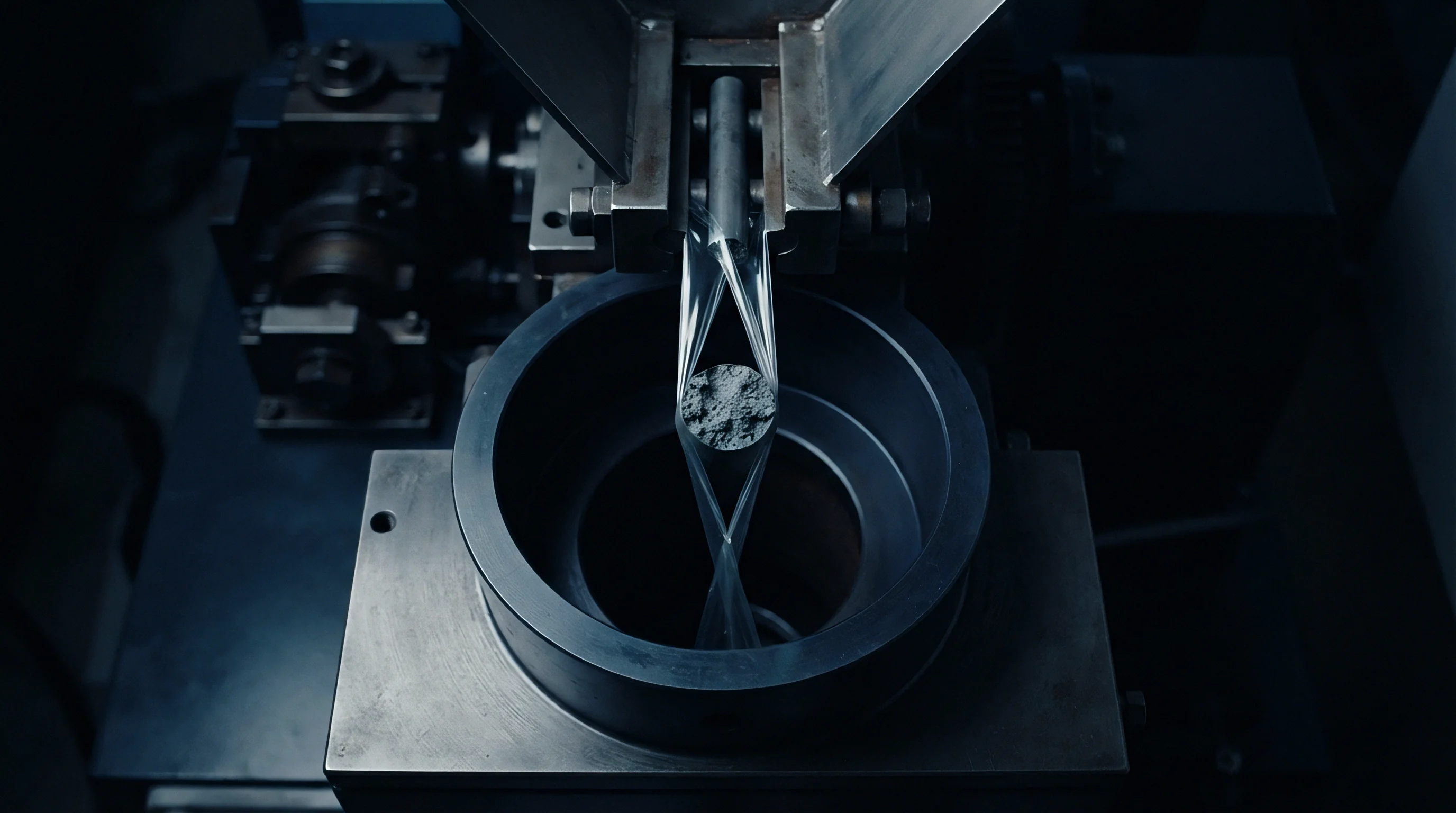
Attenuated Total Reflectance Fourier-Transform Infrared Spectroscopy (ATR-FTIR) serves as the primary non-destructive method for surface slip quantification. Infrared light passes through a high-refractive-index crystal (typically Zinc Selenide, ZnSe, or Diamond) in tight contact with the film surface. The evanescent wave penetrates into the film to a depth (dp) typically between 0.5 µm and 2.0 µm, defined by the radiation wavelength (λ), crystal angle of incidence (thη), and refractive indices of crystal (n1) and sample (n2):
dp = fracλ2π n1 sqrtsin2thη – (n2/n1)2
The amide group of erucamide exhibits characteristic infrared absorption bands: the carbonyl C=O stretching vibration (Amide I band) appears sharp at approximately 1640 cm⁻¹, while the N-H bending vibration (Amide II band) sits near 1550 cm⁻¹. Polyethylene exhibits strong C-H bending absorption at 1463 cm⁻¹ and 720 cm⁻¹. Calculating the absorbance peak area ratio (A1640 / A1463) cancels out contact variations, yielding a direct spectroscopic signal proportional to surface erucamide concentration.
Spectroscopic Quantification via ATR FTIR Peak Ratios
Accurate ATR-FTIR quantification relies on calibration curves established using gravimetric solvent extraction or spin-coated reference standards. Standard hexane or hot isopropanol surface washes strip only top surface-bloomed additives without dissolving the underlying polyolefin matrix. Gas Chromatography with Flame Ionization Detection (GC-FID) or Mass Spectrometry (GC-MS) quantifies the extracted wash solution to establish exact mass per unit area (μg/cm2).
Plotting these absolute values against ATR-FTIR peak area ratios yields a linear calibration curve.
The technique specifically probes functional group densities within the top optical penetration depth of the surface.
Step-by-step procedure for quantifying surface erucamide density on flexible packaging film via ATR-FTIR spectroscopy:
- Cut a clean 50 mm × 50 mm film specimen from the center of the web, handling edges only with clean powder-free nitrile gloves to prevent fatty acid contamination.
- Clean the Germanium or Diamond ATR crystal surface using optical-grade methanol and perform a background single-beam spectrum collection in air.
- Mount the film specimen onto the ATR crystal with the sealant layer facing the crystal face, applying a standardized clamping torque of 0.6 N·m to ensure uniform physical optical contact.
- Acquire the FTIR absorption spectrum across the 4000 cm⁻¹ to 600 cm⁻¹ range at 4 cm⁻¹ spectral resolution using a minimum of 32 co-added scans.
- Perform baseline correction across the spectral windows of 1700 ~ 1500 cm⁻¹ and 1500 ~ 1400 cm⁻¹.
- Integrate the net absorbance peak area for the Amide I band (A1640, integrated from 1660 to 1620 cm⁻¹) and the Polyethylene reference band (A1463, integrated from 1480 to 1440 cm⁻¹).
- Calculate the surface absorbance ratio (R = A1640 / A1463).
- Determine absolute surface amide density (σ, in µg/cm²) using the pre-calibrated linear regression equation σ = (m × R) + b, where m is the calibration slope and b is the intercept.

Standard Mechanical Testing Procedures for Seal Integrity
Standardized peel testing measures the energy needed to separate bonded flexible substrate layers. ASTM F88 defines standard test methods for seal strength of flexible barrier materials. Samples cut into 25.4 mm (1.0 inch) wide strips are clamped in a universal testing machine (tensile tester) and pulled apart at a constant grip separation rate of 250 to 300 mm/min.
The resulting force-displacement curve identifies peak force (N/25mm) and structural failure mode.
Hot tack testing follows ASTM F1921. An automated hot tack instrument seals film strips under precise temperature, pressure, and dwell time parameters, then immediately applies an aggressive peeling force within milliseconds after jaw opening. Peak force recorded during this semi-molten state directly reflects real-world performance on high-speed VFFS packaging lines.
Static and dynamic coefficients of friction follow ASTM D1894. A weighted sled (200 g) wrapped with film pulls across another film surface at 150 mm/min. Comparing static COF (initial breakaway force) and dynamic COF (kinetic sliding force) against surface erucamide values obtained via ATR-FTIR confirms whether a film lot achieves required slip behavior without exceeding maximum allowable surface erucamide thresholds for seal integrity.
As a practical rule of thumb, keeping surface erucamide levels below the threshold where dynamic friction drops flat prevents heat seal strength losses.

Yield
Formulation strategies balancing low friction coefficients with robust heat seals determine the commercial viability of flexible packaging structures. Grade selection fixes feedstock cost per metric tonne and sets scrap rates downstream. Standard erucamide costs approximately $4.50 to $6.50 per kilogram as a pure chemical, typically delivered as a 5% or 10% masterbatch in an LDPE carrier matrix priced at $2.20 to $3.10 per kilogram delivered.
Alternative additive chemistries offer altered migration profiles at distinct price points. Oleamide (cis-9-octadecenamide, C18) possesses a shorter carbon chain, migrating rapidly to lower COF within hours, but exhibits volatility during high-temperature processing and blooms excessively over time. Behenamide (docosanamide, C22 saturated) migrates slowly, preserving long-term shelf-life friction stability.
Secondary amides like stearyl erucamide or erucyl erucamide feature higher molecular weights (~500 ~ 600 g/mol), slowing Fickian diffusion rates dramatically to protect heat seal windows over extended multi-month storage periods.
Non-migrating slip agents bypass diffusion kinetics entirely. Crosslinked polymethylsilsesquioxane (silicone) beads or inorganic spherical silica particles (1 to 5 µm diameter) act as physical micro-spacers, reducing contact surface area without forming chemical surface films. Non-migrating slip agents preserve seal performance.

Additive Chemistry Selection and Comparative Economics
Choosing an appropriate slip agent demands evaluating structural chain length, saturation, and resin compatibility. While primary amides present low initial masterbatch purchasing costs, their high scrap rate potential on converting lines elevates total finished part cost. Non-migrating siloxane masterbatches carry a raw material cost premium up to 400% higher than erucamide masterbatch per kilogram, but yield zero seal degradation scrap, proving more economical on high-value barrier laminate lines.
| Slip Additive Package Chemistry | Typical Masterbatch Cost ($/kg) | Recommended Active Dosage (ppm) | Time to COF < 0.25 at 23°C | Thermal Stability Max Temp (°C) | Heat Seal Window Degradation Risk |
|---|---|---|---|---|---|
| Oleamide (C18 Unsat Primary Amide) | 2.40 ~ 2.90 | 500 ~ 1,000 | 4 ~ 12 hours | 200 | High (Severe SIT elevation) |
| Erucamide (C22 Unsat Primary Amide) | 2.80 ~ 3.40 | 700 ~ 1,500 | 24 ~ 72 hours | 240 | Moderate-High (Time-dependent) |
| Erucyl Erucamide (Secondary Amide) | 6.50 ~ 8.20 | 1,200 ~ 2,500 | 5 ~ 10 days | 280 | Low-Moderate (Controlled migration) |
| Organic Siloxane Polymer (Crosslinked) | 12.50 ~ 16.00 | 5,000 ~ 15,000 | Immediate (0 hours) | 320 | Zero (Non-migrating physical slip) |
| Synthetic Spherical Silica (Inorganic) | 4.20 ~ 5.80 | 2,000 ~ 4,000 | Immediate (0 hours) | >400 | Zero (Antiblock function primarily) |

Contractual Quality Standards and Incoming Inspection
Converting plants protect operational throughput by imposing clear analytical thresholds on incoming resin shipments. Procurement contracts specifying slip-modified polyolefins require unambiguous verification limits tied to internationally recognized test standards.
Quality assurance programs require incoming resin lots to carry a Certificate of Analysis (CoA) matching narrow spectral and mechanical criteria before silos receive material:
- Bulk Additive Quantification Standards mandate testing incoming pellet shipments via solvent extraction followed by GC-FID according to ASTM D6980, setting total erucamide content tolerances to ±100 ppm of target specification.
- Surface Concentration Limits establish maximum allowable ATR-FTIR peak ratio values (A1640/A1463 le 0.18) corresponding to a maximum surface density of 0.20 µg/cm² after 7 days of conditioning at 23°C / 50% RH.
- Heat Seal Qualification Protocols demand that converted film samples undergo heat seal strength testing per ASTM F88, requiring ultimate peel strength to maintain ge 30 N/25mm at 120°C sealing temperature under 0.3 MPa jaw pressure with 0.5s dwell time.
- Storage Aging Verification Clauses state that film rolls held in converted inventory for 60 days at ambient conditions below 35°C must retain a minimum hot tack force of 3.0 N/25mm measured per ASTM F1921.
Standard procurement contracts append an explicit quality assurance clause: “The supplying compounder guarantees that bulk slip additive concentration will not exceed 1,200 ppm total erucamide, and surface bloom density on the sealant layer will not exceed 0.22 µg/cm² via ATR-FTIR test method within 30 days of shipment release, failure of which obligates full financial credit for returned converted rolls.”