Meaning
Food contact safety protocols include en 13130 as a European regulatory framework for testing polymer additives that might migrate into consumables during manufacturing or storage. This standard defines the precise analytical procedures required to determine the specific migration limits of substances from plastics into food simulants. Laboratories perform solvent extractions to quantify monomer release and chemical degradation products that occur under controlled thermal conditions.
Compliance stops at the boundary of testing migration from food packaging plastics into water, oil, or acid based food simulants.
Migration Variable
Processing parameters like mold temperature or residence time influence the chemical stability of resins during conversion. When these factors drift outside operational windows, en 13130 identifies if monomers or catalysts leach from the finished geometry. A datasheet value represents the maximum theoretical release for a virgin pellet under optimal laboratory conditions.
Moulders must verify that their specific thermal history during injection does not accelerate compound degradation beyond the limit. Excessive shear heat forces premature aging in polymer chains, which increases the density of extractable molecules trapped within the matrix. A part specification mandates this testing to prevent unintended chemical transfer, whereas a raw material datasheet only provides the safety ceiling for the base resin.
Regrind economics often conflict with these thresholds, as repeated melt cycles consume heat stabilizers and heighten the risk of exceeding established migration values.
Analytical Protocol
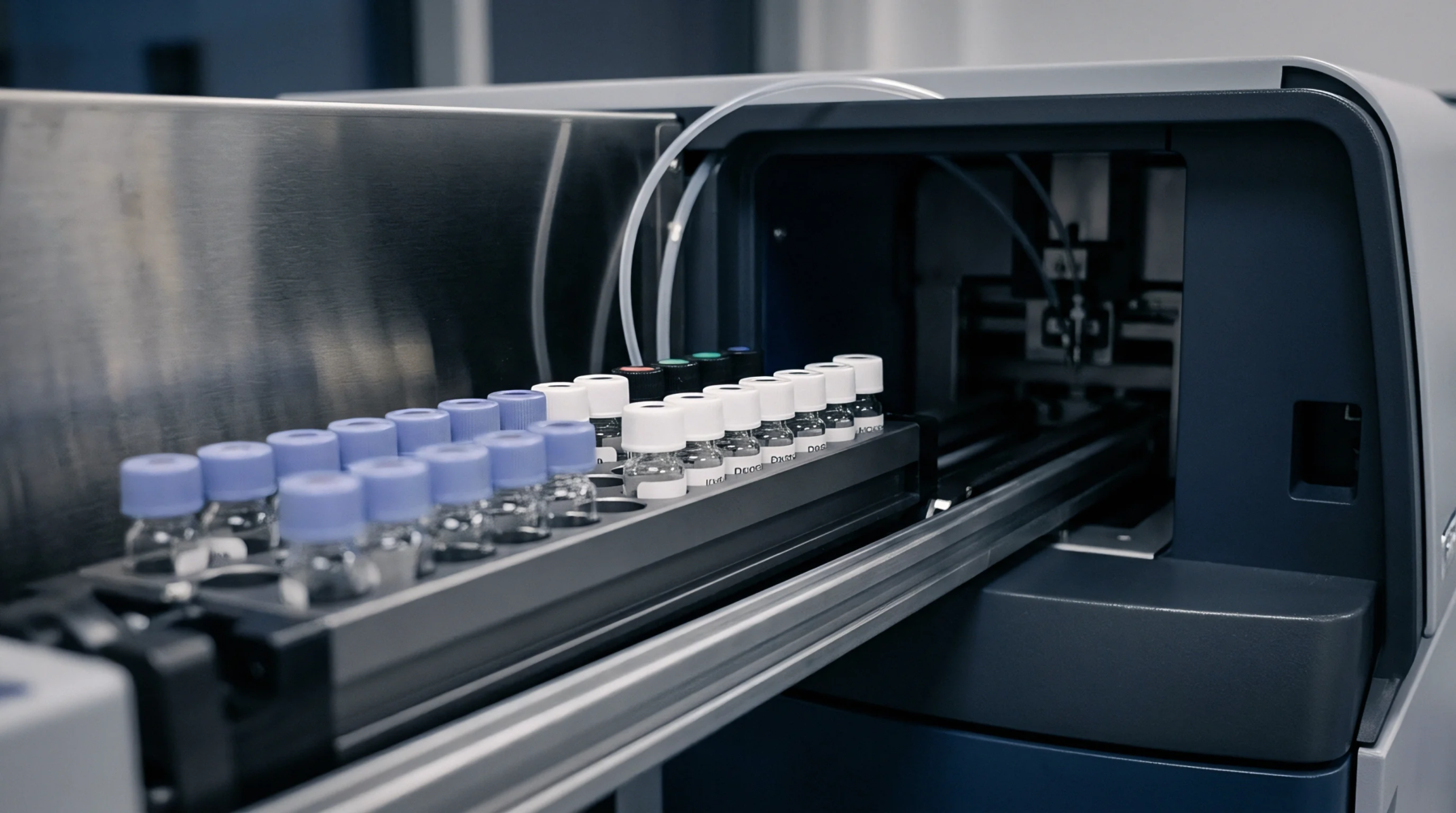
Measuring concentrations requires high performance liquid chromatography or gas chromatography paired with mass spectrometry to isolate specific additive fragments. Chemists submerge test specimens in standardized simulants for defined durations at elevated temperatures that mimic shelf life exposure. These trials confirm that the material chemistry remains inert even when packaging surface area relative to food volume is high.
Calculating the migration mass involves an exact surface to volume ratio correction to avoid overestimating local concentration gradients. Precise calibration of the extraction environment determines whether the polymer retains its structural integrity or releases restricted chemical components. Validation depends on these measured outcomes rather than manufacturer guarantees about material formulation.
Regulatory Compliance
Authorities require manufacturers to declare that production output stays beneath these safety thresholds to maintain legal eligibility for food packaging markets. Achieving this conformity protects the processor from liabilities linked to chemical contamination of grocery items. Consistent documentation of these test results keeps a production facility in good standing with market health inspectors.
Failure to meet these criteria forces a complete rework of the cooling system or a change in the resin formulation to ensure additive retention. Every batch of packaging produced for contact with edible goods carries a statistical burden of proof that en 13130 provides through rigorous physical testing. Constant monitoring of these chemical outputs limits the potential for toxicological impact on the final consumer.