
Selecting Food Simulants under EU Regulation Ten Eleven
Annex III assigns simulants by food chemistry, demanding vegetable oil or qualified solvent substitutes whenever plastics touch free surface fats.
Annex III assigns simulants by food chemistry, demanding vegetable oil or qualified solvent substitutes whenever plastics touch free surface fats.

Standardized MS deconvolution requires a 10:1 S/N ratio against oligomer humps to reliably clear recycled polyolefins at the 0.01 mg/kg migration limit.

Resolving non-intentionally added substances in recycled polyolefins requires orthogonal chromatography to separate oligomeric humps from trace mutagens.

Predictive response factors convert high-resolution screening areas into calibrated contaminant concentrations, preventing false food-contact compliance approvals.

Deriving mass spectrometry screening thresholds for polyester migrants requires lowering toxicological limits by real surface-to-volume and response uncertainty factors.

Electrospray ionization efficiency modeling converts untargeted peak areas into verified migrant concentrations, preventing false food-contact compliance filings.

Polyolefin migration compliance demands simulant-specific exposure verification and mass-spectrometric screening for unlisted oligomeric hydrocarbons.

Semi-quantifying unidentified migrants requires applying empirical detector uncertainty factors to surrogate peak areas to prevent false-negative safety files.

Non-target screening by high-resolution mass spectrometry identifies and triages polymer degradation NIAS against the ten ppb food migration threshold.

Specific migration limits restrict migrant transfer from plastics into food, verified via standardized simulants, time-temperature windows, and area ratios.

Analytical migration report verification requires aligning production lot numbers, food simulants, exposure regimes, and detection limits with customs entries.

Analytical measurement uncertainty in post-consumer resin testing establishes the statistical confidence band required to defend compliance limits at borders.

Non-linear kinetic swelling in recycled polyolefins invalidates standard migration models, requiring empirical swelling corrections to prevent compliance failures.

Composite compliance testing of post-consumer polyolefins fails without cryogenic milling and Gy sampling models to eliminate massive fundamental error.

Non-targeted screening uses high-resolution mass spectrometry and analytical evaluation thresholds to isolate and assess unassigned migrating plastic additives.

Non-linear simulant swelling invalidates standard Fickian migration models at elevated temperatures, requiring direct vegetable oil testing over solvent screening.

Multicavity tooling induces thermal and shear gradients that skew dual-use additive blooming, demanding cavity-discrete migration testing for compliance.

Accurate HRMS oligomer quantification in recycled polyolefins requires class-matched surrogate calibrants to achieve the 10 ppb food contact threshold.

Unidentified migrants in post-consumer resins require derivation against Cramer Class III (90 µg/day) or genotoxic thresholds (0.15 µg/day) for compliance.
Chromatographic screening couples cryogenic extraction, orthogonal GC and LC separation, and high-resolution MS to quantify NIAS against toxicological limits.

Mass spectrometry screening quantifies non-intentionally added polyolefin migrants, converting raw chemical spectra into defensible food contact compliance dossiers.

High-tension roll winding generates multi-megapascal radial stress that accelerates solid-state NIAS diffusion across polymer contacts, peaking near the core.

Surrogate response factors vary by four orders of magnitude in electrospray screening, requiring conservative statistical multipliers for valid risk decisions.

Verify laminate declarations by checking finished layer chemistry, primary aromatic amine cure completion, and simulant test parameters against batch lots.

Parameterizing diffusion coefficients in multi-layer barrier audits relies on calibrated Piringer parameters and explicit boundary condition validation.

Non-intentionally added substance quantification requires high-resolution mass spectrometry screening paired with toxicological threshold evaluation for safe compliance.
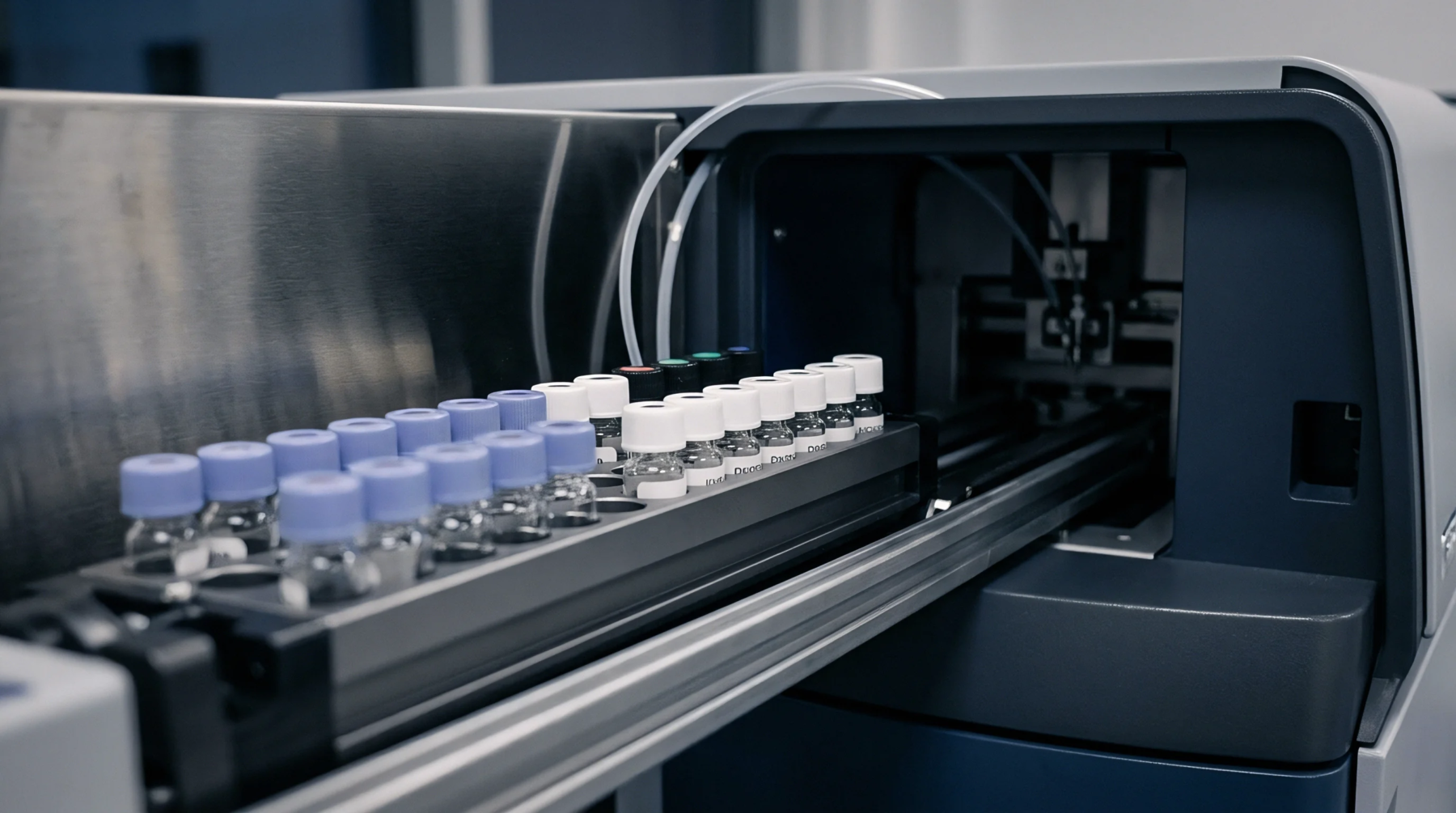
Dynamic matrix correction recalibrates uncharacterized polyolefin migrant peak areas against co-extracted simulant lipids to prevent underreporting migration limits.

Compliance files require measuring migration against specific limits, adjusting for dual-use direct food additive allowances, and verifying raw material data.

Analytical verification of NIAS in multi-layer barrier films requires high-resolution mass spectrometry screening backed by toxicological threshold classification.

Automated baseline correction with airPLS and spectral deconvolution resolves coeluting NIAS peaks in polymers down to the 10 ppb toxicological threshold.
Expertise is a utility, not a secret. sentiention™ publishes its working knowledge as open reference: intelligence layer covering the materials it sources, the markets it enters, and the reference that serves both.