Electrospray Ionization Efficiency Prediction Methods for Polymeric Migrants
Electrospray ionization efficiency modeling converts untargeted peak areas into verified migrant concentrations, preventing false food-contact compliance filings.


Bench
Liquid chromatography coupled to electrospray ionization high-resolution mass spectrometry provides the primary analytical route for characterizing non-intentionally added substances and unlisted polymeric additives in food-contact plastics. High-resolution instrumentation detects trace migrants without prior targeted isolation. The signal intensity generated in an electrospray source reflects ionization efficiency rather than absolute chemical concentration.
When authentic calibration standards remain commercially unavailable, quantitation defaults to surrogate standards. This analytical shortcut introduces severe numerical distortions.
Signals deceive without calibrants. Analytical chemists routinely observe response factor variations exceeding three orders of magnitude across structurally diverse migrant classes. A single surrogate calibrant, such as caffeine or 2-(methylthio)benzothiazole, applied universally across an untargeted run miscalculates migrant concentrations by factors ranging from 0.001 to 1,000.
Under European Union packaging compliance rules, an analytical screening limit of 0.01 milligrams per kilogram applies to unlisted substances migrating from plastic layers behind a functional barrier. An uncalibrated response factor underestimating an analyte by two orders of magnitude converts an illegal migration of 0.50 milligrams per kilogram into an apparently compliant reading of 0.005 milligrams per kilogram.

Non-Targeted Screening Realities
Analytical laboratories face hundreds of chromatographic peaks during migration testing of complex multilayer films, polyurethanes, and polyolefin masterbatches. Processing aids, thermal breakdown products, slip agents like erucamide, and cyclic condensation oligomers elute across the entire chromatographic gradient. Polymeric migrant identification relies on accurate mass determination and fragmentation matching against spectral libraries.
- Ionization suppression alters analyte detection when co-eluting oligomeric matrices draw charge away from trace migrants during droplet formation.
- Surrogate mismatch occurs when analytical chemists calculate concentrations using calibrants whose proton affinities diverge sharply from the target migrants. This error multiplies across complex extracts.
- False compliance reporting arises when poor ionizers yield peak areas below the reporting threshold despite physical migration exceeding specific migration limits.
Linear polyamides, cyclic polyamide oligomers, cyclic polybutylene terephthalate oligomers, and hindered amine light stabilizers possess fundamentally different ionization characteristics. Polyamide cyclic trimers ionize with high efficiency in positive electrospray mode due to strong proton affinities along amide backbones. Cyclic polyester oligomers lacking basic functional groups ionize poorly, forming weak ammonium or sodium adducts.
Measuring both classes against a single bisphenol derivative yields fictitious concentration profiles.
A ten-day migration test into three percent acetic acid at sixty degrees Celsius yields response factors that vary by three orders of magnitude between linear and cyclic polyamide oligomers.
Quantitation accuracy dictates toxicological safety assessments. The baseline drifts. Without predictive ionization corrections, semi-quantitative screening reports deliver arbitrary figures.
Regulatory authorities reviewing technical dossiers increasingly challenge untargeted screening datasets that lack empirical or computational response factor justification.

Thresholds and Toxicological Baselines
Commission Regulation 10/2011 establishes specific migration limits for authorized starting substances alongside strict toxicity limits for unlisted degradation products. Article 19 instructs packaging converters and food packagers to assess non-intentionally added substances according to internationally recognized scientific principles. Toxicological evaluation rests on the Threshold of Toxicological Concern concept, categorizing compounds into Cramer Classes I, II, or III.
Cramer Class III substances carry a human exposure threshold of 0.09 milligrams per person per day, translating to an analytical concentration threshold of 0.01 milligrams per kilogram in food for infant packaging or general consumption. Any substance demonstrating potential genotoxicity triggers an action limit of 0.00015 milligrams per person per day. Computational prediction of electrospray ionization efficiency allows analytical laboratories to convert raw peak areas into semi-quantitative concentrations with defined statistical error bands.
This mathematical adjustment enables reliable comparison against toxicological thresholds.
Errors compound without standards. Underestimating migrant concentrations through uncalibrated ionization leads directly to batch rejections at import terminals, formal product recalls across distributing member states, and complete commercial liability for unlisted toxicological risk.


Charge
Electrospray ionization converts solution-phase analytes into gas-phase ions through nebulization, solvent evaporation, and droplet fission. Droplet shrinkage governs the final transition. The underlying ionization behavior depends on the physical properties of the migrant and the composition of the mobile phase.
Two distinct physical pathways explain ion release from charged droplets. The Ion Evaporation Model governs low-molecular-weight migrants with masses below 1,000 Daltons, where solvated ions desorb directly from droplet surfaces once electrostatic field strength reaches approximately one volt per nanometer. The Charge Residue Model governs larger polymeric oligomers, where successive evaporation cycles strip away solvent until residual droplet charges transfer directly onto the polymer skeleton.
Migrants competing for surface positions during droplet evaporation experience distinct ionization efficiencies.

Mechanisms of Electrospray Droplet Desolvation
Surface activity dominates the competition for droplet charge. Analytes with high hydrophobicity, measured by the octanol-water partition coefficient, migrate preferentially to the droplet-air interface. Polar species remain trapped within the aqueous droplet interior.
Protons distribute unevenly. Gas-phase basicity and proton affinity dictate positive mode ionization efficiency, while gas-phase acidity governs negative mode deprotonation. A migrant possessing a high proton affinity captures available hydronium ions efficiently during desolvation.
Analytes lacking localized basic nitrogen or oxygen centers rely on alkali metal adduction, which produces lower signal stability and split ion channels.
| Migrant Class | Representative Analyte | Log P Range | Proton Affinity (kJ/mol) | Observed Log IE Range | Predominant Adduct |
|---|---|---|---|---|---|
| Slip Additive | Erucamide | 6.8 to 7.8 | 890 to 930 | 2.8 to 3.5 | + |
| Polyamide Oligomer | Caprolactam cyclic dimer | 0.5 to 1.2 | 915 to 955 | 2.1 to 2.7 | + |
| Polyester Oligomer | PET cyclic trimer | 2.1 to 3.2 | 820 to 860 | -0.5 to 0.4 | + |
| Phenolic Antioxidant | Irganox 1010 | 18.5 to 22.0 | 810 to 850 | 0.1 to 0.9 | + |
| Phosphite Degradation | Oxidized Irgafos 168 | 14.0 to 16.5 | 830 to 870 | 0.8 to 1.6 | + |
Solvent drops shrink rapidly. Charge density governs evaporation. As seen in analytical testing, erucamide displays an ionization efficiency three orders of magnitude higher than polyethylene terephthalate cyclic trimer.
Erucamide combines high hydrophobicity with a localized basic amide nitrogen, ensuring rapid surface partition and efficient proton capture. Polyethylene terephthalate cyclic trimers exhibit poor proton affinity and ionize through sodium adduction, yielding broad peaks with poor detector response.

Solvent Composition and Mobile Phase Modifiers
Chromatographic gradients alter electrospray ionization efficiency across an analytical sequence. Mobile phases transition from aqueous buffers containing 0.1 percent formic acid to organic eluents such as acetonitrile or methanol. Solvent composition shifts ionization.
High organic fractions reduce surface tension, accelerating droplet fission and lowering the energy barrier for ion evaporation.
Analyte elution volume determines the actual ionization background. A migrant eluting at 90 percent acetonitrile experiences an electrospray response up to twenty times higher than an identical compound eluting at 15 percent acetonitrile. Volatile mobile phase additives dictate adduct formation.
Formic acid promotes protonated molecules, while ammonium acetate fosters ammonium adducts, suppressing unwanted sodium clustering.
Molecules concentrated at the droplet surface ionize ahead of polar species trapped within the aqueous core.
Molecular geometry alters basicity. Analytes bearing aliphatic chains and localized basic centers consistently outcompete neutral aromatic migrants for surface ion transfer during solvent evaporation.


Model
Predictive computational tools bridge the divide between non-targeted chromatographic peak areas and true analytical concentrations. Quantitative Structure-Property Relationships correlate empirical electrospray ionization efficiencies with molecular descriptors calculated directly from chemical structures. These calculations allow the conversion of raw peak areas into semi-quantitative concentration ranges without authentic standards.
Linear Free Energy Relationships establish the baseline approach. These equations combine Abraham solvation descriptors, including excess molar refraction, dipolarity, hydrogen bond acidity, hydrogen bond basicity, and hexadecane-water partition coefficients. While effective for simple monofunctional compounds, linear equations struggle with complex polymeric migrants featuring branched structures, macrocyclic rings, and multi-functional ester networks.

Quantitative Structure Ionization Relationships
Modern predictive platforms incorporate two-dimensional and three-dimensional molecular descriptors alongside quantum chemical calculations. Descriptors calculate surface area, topological polar surface area, and molecular volume. Quantum chemical software derives surface screening charge distributions through density functional theory.
Computational descriptor suites classify molecular attributes across distinct physical categories.
- Constitutional features track atomic counts, molecular weights, ring counts, and aromatic proportions across migrant backbones.
- Electronic properties calculate dipole moments, highest occupied molecular orbital energies, and localized partial atomic charges.
- Solvation indices determine water-octanol partition coefficients, accessible surface areas, and hydrogen-bonding capabilities.
- Conformation coordinates establish steric hindrance parameters, radius of gyration, and molecular volume projections.
Algorithms correlate chemical features. Integrating quantum mechanical parameters enhances prediction accuracy for compounds undergoing competitive adduction. Density functional calculations quantify proton affinity across multiple basic sites within macrocyclic polyamide oligomers, predicting the exact site of proton attachment.

What Governs Response Factor Divergence across Oligomers?
Steric constraints and spatial charge shielding alter ionization behavior between cyclic and linear molecules of identical monomer composition. Linear polyamide oligomers possess terminal carboxyl and amine functionalities, exposing primary basic sites to incoming protons. Cyclic equivalents feature continuous amide links locked into ring geometries.
Caprolactam cyclic dimer forms a rigid twelve-membered ring that restricts solvent access while concentrating electron density across opposing carbonyl and amine groups. Higher cyclic oligomers, such as the cyclic tetramer and hexamer, demonstrate conformational flexibility that permits transannular hydrogen bonding. This internal bonding reduces gas-phase basicity, dropping ionization efficiency below values predicted from linear polyamide calibration lines.
Polyester cyclic oligomers lack amine groups entirely, relying on ester oxygens that hold low proton affinities and depend upon trace alkali metals present in analytical mobile phases.
| Algorithm Architecture | Descriptor Set | Cross-Validation R2 | Root Mean Square Error | Predictions Within 3-Fold Band (%) | Predictions Within 10-Fold Band (%) |
|---|---|---|---|---|---|
| Multi-Linear Regression | Abraham Descriptors | 0.54 | 0.89 | 42.5 | 76.2 |
| Support Vector Regression | PaDEL 2D Descriptors | 0.68 | 0.74 | 58.1 | 88.4 |
| Random Forest | Mordred 2D + 3D | 0.79 | 0.58 | 71.4 | 94.6 |
| Gradient Boosted Trees | Quantum DFT + Solvation | 0.83 | 0.51 | 78.2 | 96.8 |
| Artificial Neural Network | Graph Convolutional Matrix | 0.81 | 0.54 | 75.6 | 95.2 |
| Validation metrics derived from external test sets comprising 450 industrial additives, polymer degradation products, and cyclic migrants measured under standard reversed-phase electrospray conditions. | |||||
Gradient boosted tree algorithms yield the lowest root mean square errors across diverse migrant test sets. Combining quantum mechanical descriptors with solvent gradient parameters achieves prediction accuracies where over 78 percent of predicted response factors fall within a three-fold error window of true values. Single surrogate semi-quantification generates errors spanning two to three orders of magnitude.
Replacing arbitrary surrogate factors with predicted values contracts quantification uncertainty into an actionable analytical range.

Algorithmic Performance in Machine Learning Approaches
Predictive architectures rely heavily on tree-based ensemble methods. Random Forest and extreme gradient boosting algorithms capture nonlinear interactions between migrant hydrophobicity and eluent organic fractions. Graph neural networks directly process chemical structures as molecular graphs, bypassing manual descriptor calculations.
Validation against chemical spaces specific to plastics remains essential. Models trained exclusively on drug discovery libraries fail when applied to low-polarity polymer additives, such as Irganox 1076 or oxidized Irgafos 168. Industrial additives inhabit chemical spaces characterized by high molecular weights, extreme lipophilicity, and repetitive aliphatic chains absent from clinical drug databases.
Calibrating algorithms against curated sets of packaging migrants protects models from domain extrapolation errors.
Whether machine learning models trained on broad pharmaceutical libraries can maintain low prediction errors for high-molecular-weight multi-ester cyclic migrants remains an open question across analytical laboratories.

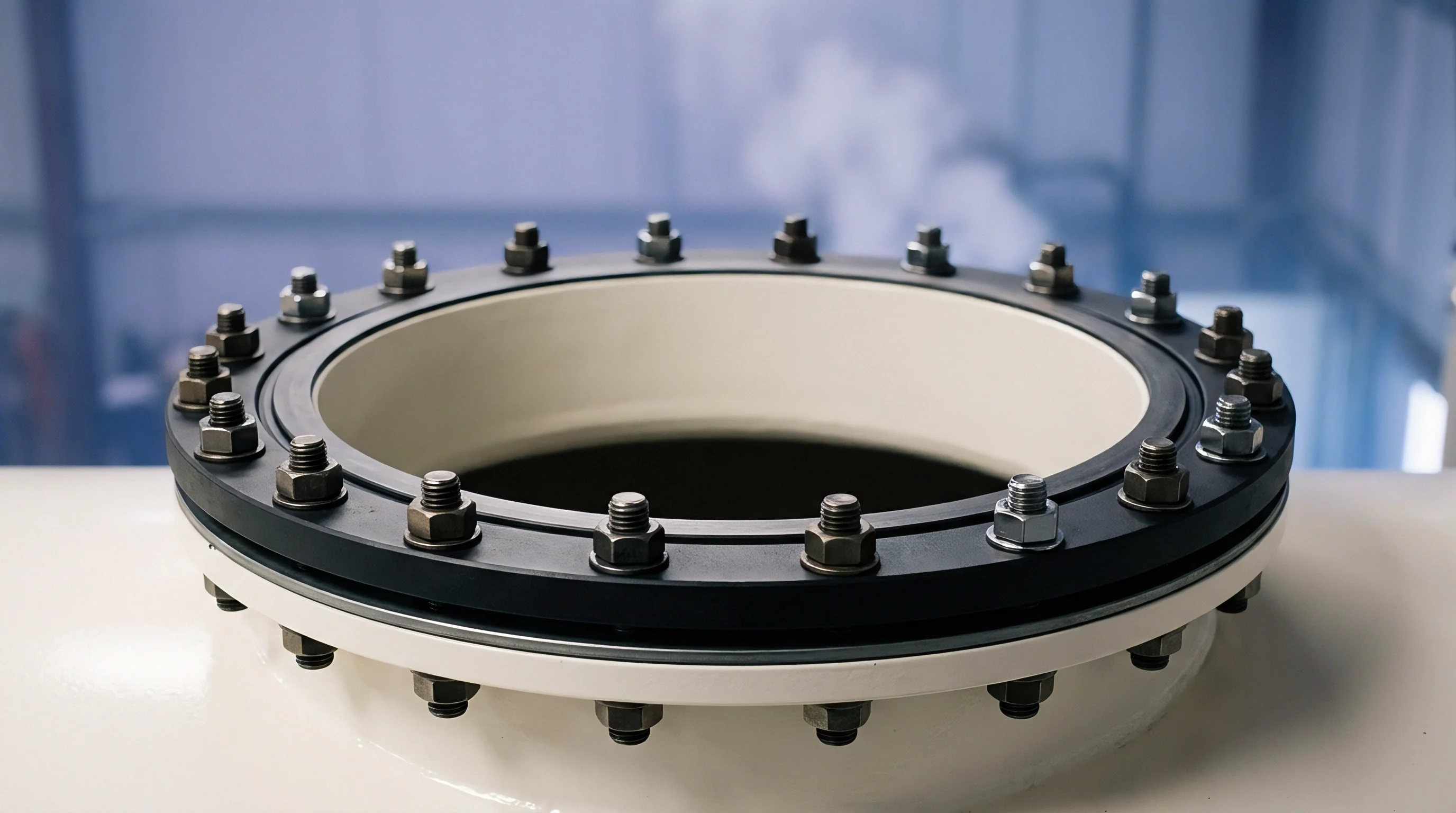
Clamp
Applying predicted ionization efficiencies to food-contact compliance requires rigorous integration with standardized migration testing protocols. European standards EN 1186 and EN 13130 specify migration contact conditions using certified food simulants. Simulant choice directly influences non-targeted extract complexity and ionization matrix effects.
Aqueous simulants extract polar migrants cleanly. Simulant A, consisting of ten percent ethanol, and Simulant B, consisting of three percent acetic acid, isolate cyclic monomers, residual catalysts, and hydrophilic breakdown products. Simulant D1, consisting of fifty percent ethanol, and Simulant D2, utilizing vegetable oil or chemical alternatives such as ninety-five percent ethanol and isooctane, dissolve heavy plastic additives, slip agents, and oligomeric waxes.
Isooctane extracts co-elute substantial paraffin fractions that suppress electrospray ionization sources.

Food Contact Simulants and Extraction Matrices
Extract testing requires distinct sample preparation workflows depending on simulant volatility. Aqueous and alcoholic simulants allow direct injection or nitrogen blow-down concentration. Vegetable oil extracts require solvent partition or solid-phase extraction, introducing recovery variations that compound electrospray ionization uncertainty.
Co-extracted polymer components suppress target signals. Polyolefin extracts contain low-molecular-weight polymer waxes that compete for droplet surface positions, attenuating the ionization efficiency of trace antioxidant migrants. Correcting for electrospray response factors without accounting for matrix suppression causes significant quantification errors.
Analytical protocols must combine in silico response factor modeling with post-column infusion experiments to verify matrix suppression factors across chromatographic run times.
| Migrant Compound | Extraction Simulant | True Concentration (mg/kg) | Single-Surrogate Estimate (mg/kg) | Predicted IE Estimate (mg/kg) | Regulatory Status Threshold (mg/kg) |
|---|---|---|---|---|---|
| PA 6 Cyclic Monomer | 3% Acetic Acid | 4.20 | 0.35 | 3.80 | 5.00 (Specific Limit) |
| PET Cyclic Dimer | 50% Ethanol | 0.08 | 0.004 | 0.07 | 0.01 (Screening Limit) |
| Erucamide | 95% Ethanol | 1.10 | 18.40 | 1.35 | No limit (Authorized) |
| Irgafos 168 Oxide | Isooctane | 0.25 | 0.03 | 0.21 | No limit (Evaluation required) |
True concentrations stay hidden. The empirical figures demonstrate that single-surrogate semi-quantification produces severe non-compliance risks. In the case of polyethylene terephthalate cyclic dimer in fifty percent ethanol, single-surrogate quantification using a standard caffeine reference generated an apparent migration level of 0.004 milligrams per kilogram, appearing safely below the 0.01 milligram per kilogram threshold.
The true concentration stood at 0.08 milligrams per kilogram, violating regulatory safety provisions. The predicted ionization model placed the migrant at 0.07 milligrams per kilogram, correctly flagging the threshold breach.

Is in Silico Ionization Prediction Sufficient for Dossiers?
Packaging compliance files demand documented verification showing that non-targeted migrants remain within toxicological boundaries. Analytical screening dossiers frequently face technical challenges from enforcement auditors when calculations depend entirely on uncalibrated instrument responses. Integrating validated predictive models strengthens technical compliance documentation under European regulations.
Auditors verify predictive workflows through structured verification requirements.
- Descriptor validity verification establishes that all chemical migrants fall strictly within the applicability domain of the underlying QSPR or machine learning algorithm.
- Conservative uncertainty bounding applies the lower ninety-fifth percentile confidence limit of predicted ionization efficiency to prevent migrant underestimation.
- Matrix suppression documentation confirms that post-column infusion testing validates solvent-to-analyte ionization ratios throughout the chromatographic run.
Regulators penalize false negatives. Applying the lower confidence interval of predicted response factors establishes a conservative concentration estimate. When this conservative figure satisfies the Threshold of Toxicological Concern, the declaration of conformity holds solid regulatory authority.
Article 16 of Regulation 1935/2004 obligates manufacturers to maintain supporting documentation demonstrating compliance with safety thresholds under all foreseeable conditions of use.
Incorporating a clause specifying EN 13130 validation parameters alongside predicted response factor error bands forces suppliers to warrant migrant concentrations within verified safety margins.


Audit
Declarations of conformity summarize complex chemical testing into binary compliance statements. Technical auditors review supporting documents behind declarations, scrutinizing the analytical methods applied to non-intentionally added substances. An untargeted screening report attached to a resin dossier must state exact quantification assumptions.
Auditors demand underlying arithmetic. When an analytical laboratory screens a multi-material barrier laminate and reports all unidentified peaks against internal deuterated standards, the compliance chain fractures. Without compound-specific response factor corrections or validated in silico ionization efficiency predictions, the reported values represent arbitrary instrument units rather than legal concentrations.
Importers signing customs entries carry full legal accountability for analytical omissions within technical files.
Screening reports that quantify dozens of unknown peaks against a single internal standard systematically misrepresent actual toxicological exposure.
Customs authorities and national food safety agencies conduct market surveillance utilizing high-resolution screening libraries. Border inspection posts across Rotterdam, Antwerp, and Hamburg flag food-contact articles whose declarations fail to account for cyclic oligomer migration. When regulatory laboratories identify cyclic polyester oligomers or polyurethane degradation products at concentrations exceeding safety thresholds, import clearances are denied immediately.

Declaration Verification and Analytical Scope
Reviewing supplier test documentation requires verifying the scope of chemical testing against finished article specifications. Base resin manufacturers often certify neat polymer granules, omitting slip additives, color masterbatch carriers, printing ink solvents, and laminating adhesives introduced downstream. Downstream conversion processes generate the majority of non-intentionally added substances through thermal degradation and adhesive curing.
Declarations crumble on scrutiny. Converting facilities frequently provide documentation referencing overall migration testing according to EN 1186 while ignoring specific migration screening for oligomeric species. Overall migration limits verify gross inertness at sixty milligrams per kilogram, but provide zero assurance regarding specific toxic migrants regulated at parts-per-billion levels.
An audit must confirm that non-targeted liquid chromatography testing covers all finished article components with calibrated or computationally corrected response factors.

Customs Scrutiny and Regulatory Friction
European Rapid Alert System for Food and Feed notifications document hundreds of packaging import rejections linked to unauthorized migrants and excessive specific migration. The administrative cost of clearing detained shipments exceeds the initial expense of rigorous analytical qualification. When customs authorities detain containers, demurrage charges, re-testing fees, and supply chain disruptions escalate rapidly.
Customs inspectors seize discrepancies. Importers must defend their technical documentation before regulatory authorities by demonstrating verified safety margins. If analytical files rely on unadjusted surrogate screening, technical defenses fail.
Suppliers frequently maintain that uncalibrated screening against a single external standard represents standard trade practice across accredited commercial laboratories.