Recycled Plastic Food Contact Compliance and Non Intentionally Added Substance Testing Methods
Recycled plastic food contact compliance requires rigorous surrogate challenge testing, non-target NIAS screening, and lot-traced migration verification.
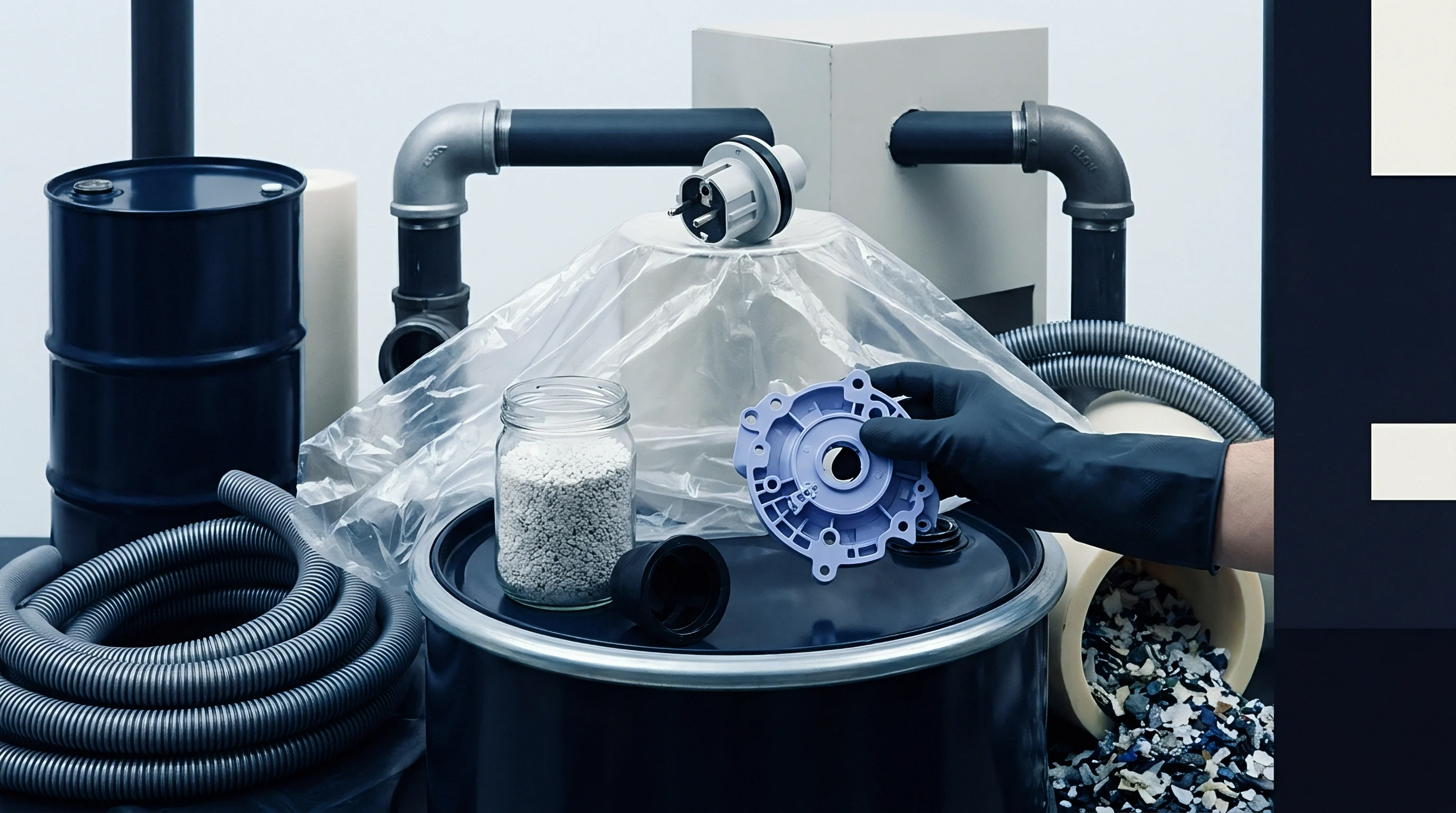

Flake
Post-consumer resins arrive with variable contamination profiles carried over from original packaging applications, household storage, or thermal breakdown during earlier recycling. Mechanical recycling plants shred bales into washed post-consumer material, but washing alone cannot pull out low-molecular-weight compounds absorbed deep into the polymer matrix. Polyethylene terephthalate has low gas permeability and minimal solubility for organic additives, yielding cleaner recycled streams than polyolefins.
High-density polyethylene and polypropylene feature more open polymer networks, absorbing hydrophobic compounds, fragrance ingredients, pesticide residues, and ink solvents during their primary lifecycle.
Cleaner input streams directly reduce downstream liability.
Re-extrusion heat alters polymer backbones and degrades residual additive packages. Primary antioxidants like hindered phenols break down into quinone methides and oxidized species, while phosphite secondary antioxidants convert into phosphate esters and alkyl phenols. Side reactions inside the extruder form cross-linked gels alongside low-molecular-weight oligomers spanning three hundred to one thousand Daltons.
These mobile oligomer fractions act as non-intentionally added substances, diffusing far faster than the parent polymer chains.
| Polymer Matrix | Primary Contaminant Origin | Dominant Chemical Classes | Diffusion Potential |
|---|---|---|---|
| Post-Consumer PET | Flavor compounds, bottle caps, labels | Limonene, terephthalic acid oligomers, acetaldehyde | Low |
| High-Density Polyethylene | Personal care packaging, detergent bottles | Terpenes, synthetic musks, lubricant residues | High |
| Polypropylene | Food trays, non-food household containers | Branched alkanes, printing ink photoinitiators | Moderate to High |
| Polystyrene | Food service containers, insulation foam | Styrene monomer, ethylbenzene, brominated flame retardants | High |
Post-consumer resins frequently absorb non-food chemicals. Printing inks applied to outer packaging surfaces transfer to the food contact layer when tightly wound film rolls sit in storage. Solvent residues like toluene, ethyl acetate, and isopropyl alcohol migrate through set-off mechanisms into unprinted inner layers before mechanical recycling begins.
Near-infrared flake sorters separate non-food containers from food-grade input streams, though sorting efficiency falls below ninety-eight percent when labels mask resin signatures.
Recycled polyolefins carry broader contaminant spectrums than polyethylene terephthalate due to high matrix absorption.
Contaminant levels fluctuate with regional collection networks, consumer handling habits, and seasonal household chemical usage patterns. Batch blending dampens major concentration spikes but disperses low-level degradation products across full production lots. Converters must verify that volatile organic burdens in mixed mechanical flake stay below toxicological action thresholds before thermal decontamination.
Purification
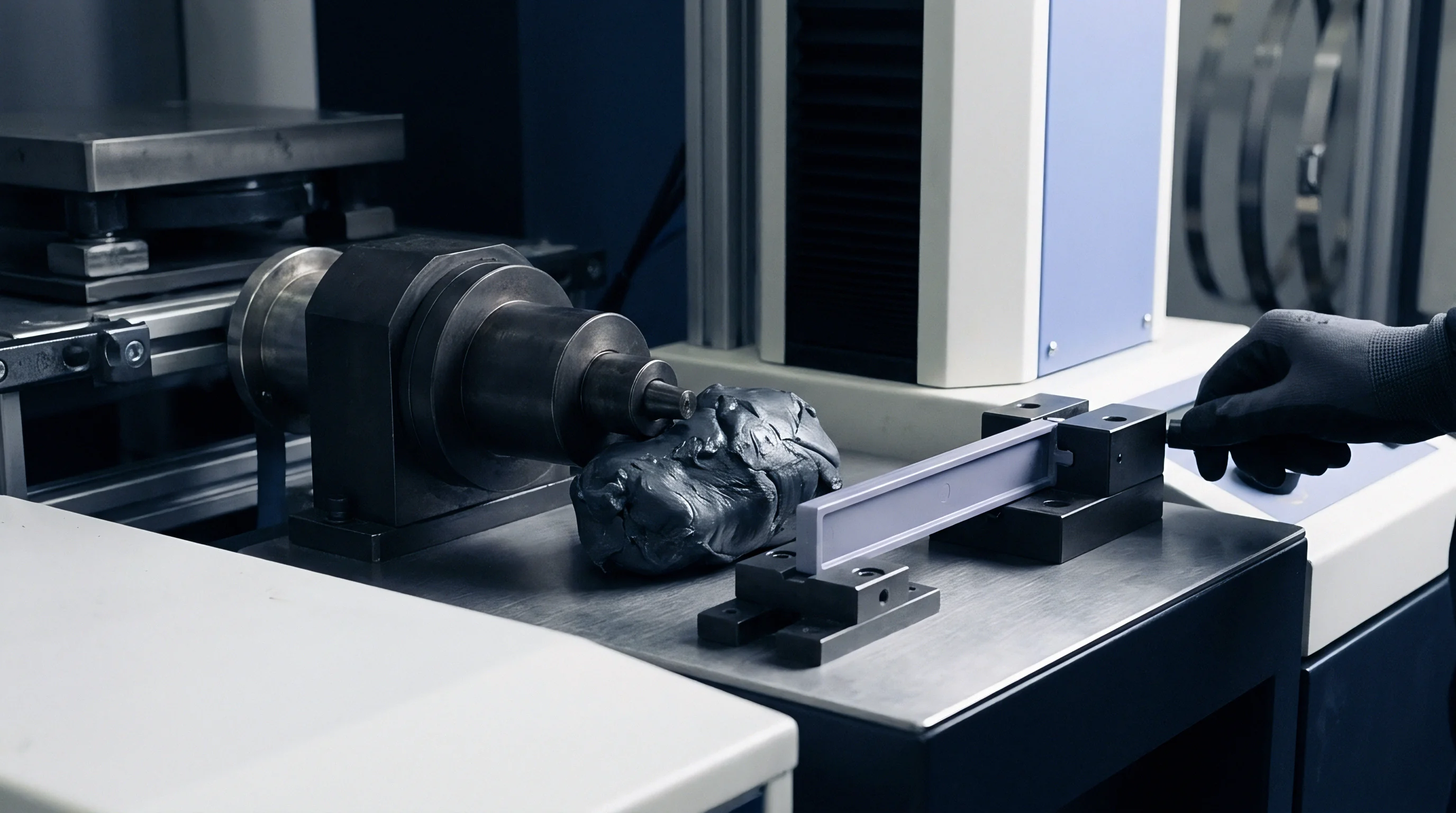
Decontamination technologies rely on high-temperature vacuum stripping, solid-state polymerization, and twin-screw devolatilization to drive volatile organics out of melted or solid polymer matrices. Processors evaluate decontamination efficiency through challenge tests using surrogate chemical cocktails. Guidelines under Regulation EU 2022 1616 and United States Food and Drug Administration No-Objection Letters prescribe surrogate compounds representing diverse polarities and molecular weights.
Vacuum devolatilization effectively strips out these volatile organic fractions.

Surrogate Chemical Cocktails for Process Validation
Validation testing requires surrogate selection that mirrors worst-case contamination scenarios from post-consumer collection.
- Toluene represents low-molecular-weight volatile non-polar compounds, evaluating the degassing capability of vacuum extraction systems.
- Chlorobenzene functions as a volatile polar marker, testing extraction efficiency against polar solvent residues.
- Phenylcyclohexane models medium-volatility non-polar contaminants, representing fragrance additives and industrial lubricants.
- Benzophenone acts as a medium-volatility polar surrogate, simulating photoinitiators and printing ink components absorbed from outer packaging.
- Methyl stearate serves as a high-molecular-weight non-volatile fatty acid ester, evaluating solid-state polymerization stripping limits.
Challenge tests involve spiking virgin polymer or pre-washed post-consumer flake with surrogate chemicals at concentrations between one hundred and one thousand milligrams per kilogram. This spiked feed passes through the industrial decontamination system under standard operating parameters, including vacuum pressure, residence time, and temperature settings. Gas chromatography paired with mass spectrometry measures surrogate levels before and after treatment to calculate log-reduction factors.
Annex II of Regulation EU 2022 1616 renders decontamination process validation invalid if surrogate challenge testing falls below ninety-nine percent removal efficiency for volatile markers.
Because high-molecular-weight migrants resist stripping, supercritical carbon dioxide extraction provides alternative purification pathways for polyolefins, dissolving low-polarity contaminants without thermally degrading the polymer matrix. Extraction efficacy depends on operating pressure, fluid density, and contact duration inside the extraction vessel. When processing temperatures exceed thermal stability limits, secondary degradation produces unsaturated aldehydes and carboxylic acids, creating fresh non-intentionally added substances during the purification step itself.
Decontamination machinery reaches ninety-nine percent removal of post-consumer volatile compounds, leaving legal responsibility for downstream thermal degradation with the packaging converter.


Assay
Spectroscopic and chromatographic techniques determine volatile, semi-volatile, and non-volatile chemical fractions in recycled plastics. Gas chromatography coupled with flame ionization detection or mass spectrometry quantifies volatile organics up to five hundred Daltons. Liquid chromatography coupled with high-resolution mass spectrometry, using electrospray ionization and quadrupole time-of-flight analyzers, identifies non-volatile oligomers, antioxidants, and transformation products up to one thousand Daltons.
Data integrity ultimately determines compliance status.

Which Analytical Workflow Uncovers Unknown Polymer Degradation Products?
Non-target screening workflows combine targeted mass spectral libraries with structure-elucidation algorithms to identify untargeted mass peaks.
- Solvent Extraction dissolves or swells the recycled resin matrix using dichloromethane, hexane, or ethanol to release bound organic migrants.
- Target Screening compares retention times and mass fragments against reference standard libraries containing common additives and known contaminants.
- Non-Target Screening captures full-scan high-resolution mass spectra to assign accurate masses and empirical formulas to unknown chromatographic peaks.
- Toxicological Classification categorizes identified structures into Cramer Classes using software algorithms to assign Threshold of Toxicological Concern values.
Gas chromatography separates volatile organics, while mass spectrometers identify unknown fragments. High-resolution mass spectrometry calculates elemental compositions from accurate mass measurements within two parts per million error margins. Quantification of unidentified non-intentionally added substances presents analytical challenges due to varying detector response factors across chemical classes, so laboratories apply semi-quantitative estimation methods using internal standards such as deuterated naphthalene or triphenyl phosphate.
Consider a recycling process producing polyethylene terephthalate sheet containing an unidentified semi-volatile compound detected by gas chromatography mass spectrometry. If peak area suggests an estimated concentration of zero point zero three milligrams per kilogram based on a toluene internal standard, applying an analytical uncertainty factor of ten to account for response factor variations raises the calculated concentration to zero point three milligrams per kilogram. Assuming standard surface-to-volume exposure ratios of six square decimeters per kilogram of food, this concentration exceeds the ten parts per billion toxicological threshold for unknown compounds, demanding formal structural identification and toxicity evaluation.
Non-targeted screening signals requiring identity confirmation double when extraction solvents swell the polymer matrix during sample preparation.
ToxTree algorithms flag structural alerts, highlighting predicted oxidation structures that form when processing temperatures exceed polymer additive thermal stability windows.

Exposure
Contact testing simulates real-world interactions between recycled plastic layers and packaged food matrices over defined shelf-life durations. Testing protocols defined in standards EN 1186 and EN 13130 specify standardized food simulants and temperature regimes based on intended end-use applications. Aqueous, acidic, alcoholic, and fatty foods extract different chemical profiles from recycled matrices based on polarity match and swelling behavior.
These simulants pull mobile oligomer fractions out of the matrix.
| Simulant Code | Simulant Composition | Target Food Category | Standard Test Conditions |
|---|---|---|---|
| Simulant A | 10% Ethanol (v/v) | Aqueous foods | 10 days at 40 °C / 10 days at 60 °C |
| Simulant B | 3% Acetic acid (w/v) | Acidic foods (pH below 4.5) | 10 days at 40 °C / 10 days at 60 °C |
| Simulant C | 20% Ethanol (v/v) | Alcoholic foods up to 20% alcohol | 10 days at 40 °C / 10 days at 60 °C |
| Simulant D2 | Vegetable oil or Isooctane | Fatty foods and free fats | 10 days at 40 °C / 2 days at 60 °C |
| Simulant E | Poly(2,6-diphenyl-p-phenylene oxide) / Tenax | Dry foods | 10 days at 40 °C / 10 days at 60 °C |
Overall migration limits cap total non-volatile substance transfer at ten milligrams per square decimeter of plastic surface area. Specific Migration Limits apply to authorized additives listed in Regulation EU 10 2011 Annex I, such as bisphenol A at zero point zero five milligrams per kilogram and terephthalic acid at seven point five milligrams per kilogram. Non-intentionally added substances missing specific statutory limits must satisfy the general safety mandates of Regulation EC 1935 2004 Article 3.
Toxicological evaluation of unidentified migrants utilizes the Threshold of Toxicological Concern framework. Cramer Class I compounds display low oral toxicity with an exposure threshold of one thousand eight hundred micrograms per person per day. Cramer Class III compounds possess structural features suggesting significant toxicity, carrying an exposure threshold of ninety micrograms per person per day.
Genotoxic structural alerts, such as unhindered aromatic amines or epoxides, impose a strict safety limit of zero point zero one five micrograms per person per day, translating to a zero point zero one part per million concentration limit in packaged food.
Unidentified non-intentionally added substances trigger toxicological evaluation when exceeding ten parts per billion in ten percent ethanol after ten days at sixty degrees Celsius.
Repeat-use plastic articles undergo three consecutive migration test cycles using fresh simulant for each exposure period. Chemical migration values measured during the third test cycle must not exceed the levels observed in the first test cycle, and must remain below established specific migration limits. Section 4.2 of EN 13130-1 mandates the substitution of vegetable oil with substitute simulants when fat absorption alters material integrity during test cycles.

Audit
Conformity documentation bridges laboratory measurements with downstream supply chain liabilities. Declarations of Compliance issued under Regulation EU 10 2011 Annex IV must explicitly disclose dual-use additives, restricted substances subject to specific migration limits, and non-intentionally added substance risk assessment summaries. Functional barrier claims require validation proving that outer recycled plastic layers cannot transfer migrants into food at levels exceeding zero point zero one milligrams per kilogram.
Compliance certificates depend on clear batch lot traceability.
Reviewing recycled polymer compliance files follows a systematic verification path to ensure technical validity prior to commercial release.
- Verify that the recycling process holds valid authorization under Regulation EU 2022 1616 or a published FDA No-Objection Letter covering the specific resin type and input source.
- Check that surrogate challenge test reports confirm at least ninety-nine percent decontamination efficiency for volatile and semi-volatile markers across operational ranges.
- Examine non-target screening gas chromatography and liquid chromatography test reports to confirm analytical detection limits reached zero point zero one milligrams per kilogram.
- Validate surface-to-volume ratio calculations applied during migration testing against actual final packaging geometry and fill volumes.
- Confirm that dual-use food additives listed in Regulation EC 1333 2008 or Regulation EC 1334 2008 are declared to prevent food formulation limit breaches.
- Match batch numbers on incoming resin delivery notes against the specific lot numbers cited on supporting analytical test certificates.
Polyethylene terephthalate virgin cap layers act as effective functional barriers when layer thickness exceeds twenty micrometers under ambient storage conditions. Polyolefins, however, fail to form functional barriers due to high gas and solute diffusion rates, permitting internal migrants to cross multi-layer structures over extended storage periods.
Misinterpreting functional barrier thickness leads to unverified migrant breakthrough, triggering product withdrawals and mandatory customs notifications across destination ports.

Enforcement
Customs authorities and market surveillance agencies inspect imported plastic packaging for compliance with food contact regulations through random sampling and documentation checks at entry ports. Non-compliant shipments lacking complete Declarations of Compliance face immediate container detention, re-export mandates, or destruction at the importer’s expense. Rapid Alert System for Food and Feed notifications publish border rejections and market withdrawals, damaging brand reputation and triggering mandatory supply chain audits across operating regions.
Chemical purity ultimately dictates market access.
| Non-Compliance Mechanism | Laboratory Detection Basis | Regulatory Action | Financial Impact Range |
|---|---|---|---|
| Undisclosed NIAS Migration | High-resolution MS peak exceeding 10 ppb threshold | Product recall, RASFF notification | High to Severe |
| Invalid Decontamination File | Surrogate challenge removal efficiency below 99% | Decertification of recycling line | Severe |
| OML Threshold Breach | Gravimetric residue above 10 mg/dm² in Simulant D2 | Import refusal, container seizure | Moderate to High |
| Incomplete Declaration File | Missing dual-use additive or lot traceability data | Customs hold, administrative fine | Low to Moderate |
Port authorities execute random sampling, while Extended Producer Responsibility schemes modulate packaging fees based on post-consumer recycled content and proven recyclability metrics. High packaging eco-fees apply when recycled resin integration lacks full food contact compliance certification, removing financial incentives for sustainable packaging adoption. Importers of record carry sole legal and financial responsibility for regulatory fines, product recall execution, and waste disposal costs resulting from invalid compliance claims.
Supply contracts containing strict indemnification clauses transfer testing fees, container demurrage costs, and legal liabilities back to recycled resin producers when post-shipment laboratory assays reveal unauthorized contaminants. Material qualification data remains valid only while raw material collection streams maintain verified purity baselines.