Standard Test Methods for Measuring Volatiles in Recycled PET Flake
Accurate rPET flake volatile testing pairs ASTM D6980 sensor drying for moisture with ASTM F2013 headspace gas chromatography for acetaldehyde and solvents.

Fractions
Post-consumer polyethylene terephthalate arrives at processing plants with several distinct volatile populations distributed through the polymer flakes: surface wash water, atmospheric moisture dissolved in amorphous regions, thermal degradation byproducts, and absorbed legacy chemicals. Lumping these together under a single loss-on-drying metric can cause severe extrusion failures. Above 250 degrees Celsius, water molecules actively cleave ester linkages, dropping intrinsic viscosity and driving melt surges.
Meanwhile, organic volatiles dictate food-contact compliance, package organoleptics, and vacuum pump fouling rates. Separating moisture from volatile organic compounds is therefore critical when setting purchase specifications for incoming flake.
Extrusion processors evaluate five main chemical classifications in incoming clear and light-blue flake lots:
- Entrapped Moisture sits within the polymer chain network at concentrations between 0.2 percent and 0.8 percent by weight in untreated atmospheric flake, driving hydrolytic cleavage. Because this internal fraction desorbs slowly through solid-state diffusion, it requires elevated temperatures and low dew point air prior to melt processing.
- Surface Moisture coats flake faces after wet granulation and mechanical drying, ranging from 0.5 percent to 2.5 percent by weight depending on centrifuge efficiency ~ with unwashed fines carrying even higher loads. This surface liquid flashes into steam inside feed throats, causing vapor locks in starve-fed extruders.
- Residual Acetaldehyde forms via thermal decomposition during original bottle preform injection molding, remaining at 2 to 8 parts per million inside bottle sidewalls. Because beverage bottlers enforce strict acetaldehyde ceilings, thermal history largely sets the baseline concentrations across different flake sources.
- Post-Consumer Solutes soak into polymer walls through long contact with flavored drinks, household chemicals, or cosmetics. Limonene from citrus beverages serves as the main marker here; levels above 10 parts per million introduce sour off-odors during sheet thermoforming.
- Polymerization Oligomers are cyclic trimers and short-chain fragments left from initial resin synthesis, making up 0.8 percent to 1.5 percent of total mass. Under vacuum degassing, cyclic trimers vaporize and then condense as a white powder along exhaust ducting, clogging vacuum lines during pelletizing.
Residual post-consumer flavor compounds cling to non-polar flake surfaces, whereas internal moisture remains trapped within the amorphous polymer matrix.
Standard gravimetric methods bake samples at 105 degrees Celsius or 150 degrees Celsius to measure overall weight loss over time. But these ovens register moisture loss and volatile organic emissions indiscriminately, treating every vaporized gram the same. A test reading of 0.35 percent mass loss cannot distinguish whether flake needs longer residence in a desiccant dryer due to water, or if it carries volatile contaminants that render it unfit for food packaging.
Accepting raw material on gravimetric loss alone risks letting unvented organic volatiles flash off inside injection nozzles, forming gas bubbles in preforms and triggering blowouts on the blow-molding wheel.
Heat
Accurate moisture measurement requires separating water evaporation from thermal polymer degradation. Polyethylene terephthalate begins degrading thermally above 200 degrees Celsius, generating water, carbon dioxide, and acetaldehyde as secondary breakdown products. Test temperatures must therefore be kept high enough to drive off water vapor while staying low enough to prevent thermal scission of the polymer backbone.
Standard moisture analysis methods isolate water using chemical reactions, selective capacitive sensors, or cold condensation traps.
Incoming inspection labs rely on three main international standards to evaluate water in recycled flake:
| Test Standard | Measurement Mechanism | Operating Temperature | Sample Mass | Lower Detection Limit | Test Duration |
|---|---|---|---|---|---|
| ASTM D6980 | Relative humidity sensor | 180 to 200 degrees Celsius | 5 to 15 grams | 10 parts per million | 12 to 20 minutes |
| ISO 15512 Method B | Water vaporization coulometry | 160 to 180 degrees Celsius | 1 to 3 grams | 5 parts per million | 10 to 15 minutes |
| ASTM D7191 | Capacitive relative humidity sensor | 170 to 190 degrees Celsius | 5 to 10 grams | 10 parts per million | 15 to 25 minutes |
| ASTM D4019 | Phosphorus pentoxide cell | 170 to 180 degrees Celsius | 2 to 5 grams | 20 parts per million | 15 to 30 minutes |
Coulometric titration under ISO 15512 Method B heats the sample in an external chamber using dry nitrogen carrier gas flowing at 50 to 100 milliliters per minute. The gas carries the liberated moisture into an electrolytic cell containing iodide ions, sulfur dioxide, and an organic base. Water reacts stoichiometrically with iodine, so current consumed across platinum electrodes measures the exact mass of water via Faraday’s law.
Because this reaction ignores hydrocarbons, limonene, and cyclic oligomers, titration remains the benchmark method for lab settlement audits.
Does Desorption Heating Induce Secondary Chain Scission?
Thermal desorption in moisture analyzer ovens can decompose polyester chains if run too hot. Exposing ground flake to 220 degrees Celsius for twenty minutes releases absorbed water, but it also triggers hydrolytic and thermal cleavage of ester bonds. This cracking produces secondary water and low-molecular aldehydes in the test chamber, falsely inflating the moisture reading.
Testing clear flake at 175 degrees Celsius instead of 205 degrees Celsius minimizes decomposition bias while fully liberating trapped amorphous water within fourteen minutes.
Compliance with ASTM D6980 across incoming flake lots prevents moisture-induced molecular weight drop during solid-state polymerization.
Capacitive relative humidity instruments under ASTM D6980 measure moisture without chemical reagents. The analyzer features an automated furnace, a sealed test chamber, and a thin-film ceramic capacitive sensor selective to water vapor. As carrier gas moves water vapor past the sensor, the instrument measures shifts in the dielectric constant.
A five-point calibration against certified capillary water standards ensures precision. Quality managers favor these units on the factory floor because they avoid toxic Karl Fischer reagents while delivering automated results within fifteen minutes.
High moisture readings on certificates of analysis often reflect post-grind warehouse humidity rather than washing line centrifuge failure.

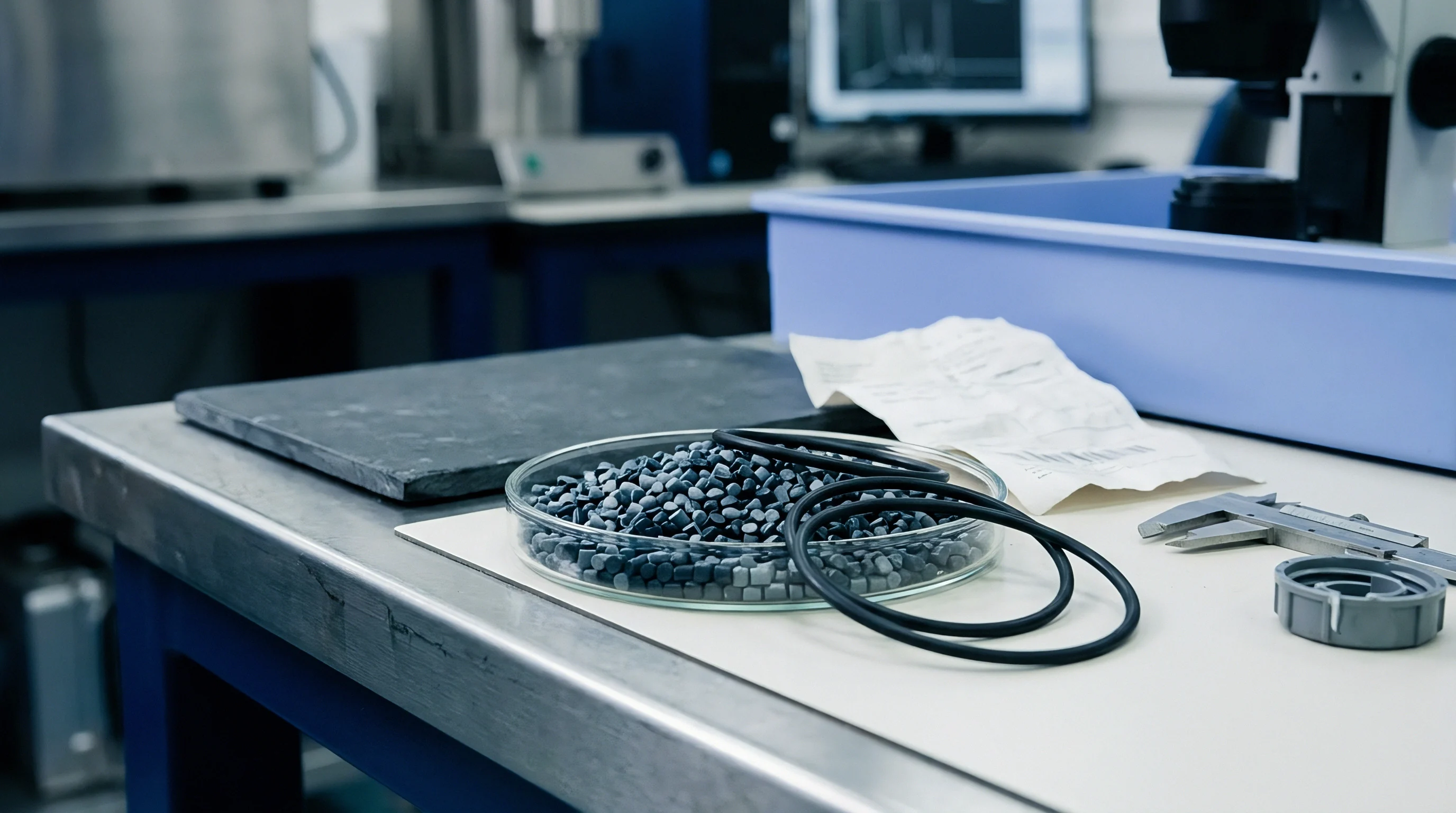
Column
Gas chromatography separates complex organic vapors desorbing from recycled flake. While bottle washing facilities clear away exterior dirt, sugar residues, and adhesives, small molecules migrate deep into bottle walls during commercial storage. These absorbed compounds volatilize inside extrusion barrels, driving yellowing, optical haze, and acrid odors.
Gas chromatography paired with flame ionization detection or mass spectrometry isolates each migrant to determine its identity and exact mass concentration.
Processors target acetaldehyde, aroma chemicals, and industrial solvents to keep within safe conversion limits:
| Analyte Compound | Test Protocol | Equilibration Temperature | Incubation Time | Column Stationary Phase | Upper Quality Limit |
|---|---|---|---|---|---|
| Acetaldehyde | ASTM F2013 | 150 degrees Celsius | 60 minutes | Porapak Q or DB-Wax | 1.5 parts per million |
| Limonene | ASTM D4526 | 140 degrees Celsius | 45 minutes | 5 percent Phenyl Polysiloxane | 5.0 parts per million |
| Ethylene Glycol | Modified ASTM D4526 | 160 degrees Celsius | 60 minutes | Polyethylene Glycol (Wax) | 10.0 parts per million |
| Benzene | EPA 8260 Headspace | 120 degrees Celsius | 30 minutes | 624-type Capillary | 0.5 parts per million |
| Toluene | EPA 8260 Headspace | 120 degrees Celsius | 30 minutes | 624-type Capillary | 2.0 parts per million |
Acetaldehyde quantification under ASTM F2013 uses static headspace extraction. Two grams of cryogenically ground flake are sealed in a twenty-milliliter glass vial with a PTFE-faced butyl septum and incubated at 150 degrees Celsius for sixty minutes to reach thermodynamic equilibrium between solid and vapor phases. An automated sampler then pierces the septum, drawing one milliliter of pressurized headspace vapor and injecting it onto a capillary column where the detector measures ionization current.

What Chromatographic Parameters Separate Trace Aldehydes?
Polar stationary phases resolve low-boiling aldehydes from baseline solvent peaks. A polyethylene glycol column measuring thirty meters in length, 0.32 millimeters in internal diameter, and 0.5 micrometers in film thickness separates acetaldehyde from methanol, ethanol, and acetone within six minutes. Helium carrier gas flows at 2.0 milliliters per minute under constant pressure.
The oven holds at 50 degrees Celsius for two minutes before ramping at 15 degrees Celsius per minute to 180 degrees Celsius. Flame ionization detectors burn the column effluent in a hydrogen-air flame, picking up carbon ions down to 0.1 parts per million with linear response across four orders of magnitude.
Static headspace gas chromatography operating at 150 degrees Celsius for sixty minutes detects residual acetaldehyde down to 0.5 parts per million in cleared flake samples.
Food safety authorities evaluate post-consumer plastics intended for food contact through non-intentionally added substance (NIAS) screenings, applying standards comparable to pharmaceutical packaging. If contamination alters melt behavior, post-consumer PET can also clog spinnerets when flushed into fiber spin packs at synthetic textile mills. Dynamic headspace testing sweeps heated sample tubes with continuous nitrogen, trapping trace organic migrants on Tenax adsorbent beds prior to thermal desorption into a GC-MS.
This approach flags pesticide residues, motor oil hydrocarbons, and cleaning solvents stemming from consumer misuse.
The standard test sequence for validating organic purity in recycled flake proceeds through specific stages:
- Dry nitrogen purges twenty-milliliter vials containing cryogenically milled flake to displace atmospheric oxygen.
- Thermal equilibration proceeds inside heating carousels for sixty minutes at 150 degrees Celsius.
- A heated transfer line carries gaseous samples directly into split injection ports at 200 degrees Celsius.
- Flame ionization detectors record retention times and peak areas against external multi-point calibration standards.
Whether secondary oligomeric condensation products skew flame ionization peak integration during extended chromatographic holds remains an open question in analytical laboratories.
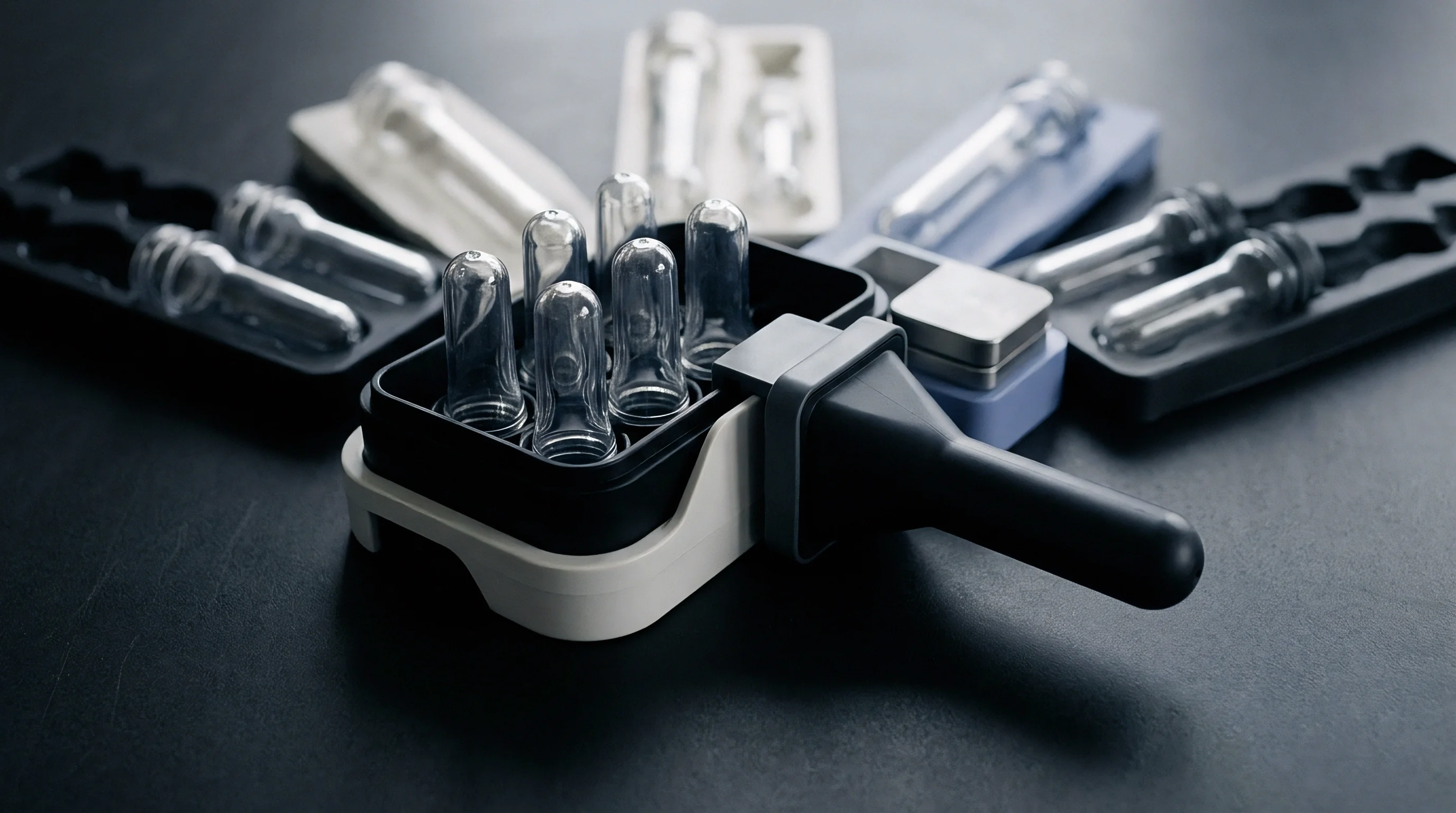
Sieve
Flake geometry directly alters volatile release rates during lab testing. Recycled PET flake spans a wide size range, from large sidewall pieces measuring twelve millimeters across down to shredded fines under five hundred micrometers. Because fines have high surface-area-to-volume ratios, they absorb ambient water rapidly while losing light volatiles prematurely in storage.
Sorption kinetics depend heavily on geometry: thick neck finish fragments hold internal volatiles tightly, needing longer heating cycles to release core acetaldehyde and moisture.
Particle classification per ASTM D1921 divides incoming flake into distinct size fractions:
| Sieve Fraction | Particle Size Range | Mass Fraction in Bale Grind | Surface Moisture per ASTM D6980 | Acetaldehyde per ASTM F2013 | Intrinsic Viscosity Loss in Melt |
|---|---|---|---|---|---|
| Coarse Flake | Greater than 9.5 mm | 15 to 25 percent | 0.45 percent | 2.8 parts per million | 0.03 dL/g |
| Target Flake | 3.35 mm to 9.5 mm | 65 to 75 percent | 0.72 percent | 1.9 parts per million | 0.04 dL/g |
| Mid Fines | 1.0 mm to 3.35 mm | 5 to 10 percent | 1.85 percent | 1.2 parts per million | 0.12 dL/g |
| Dust and Fines | Less than 1.0 mm | 1 to 3 percent | 4.20 percent | 0.8 parts per million | 0.28 dL/g |
Sampling per ASTM D1898 requires stratified collection across bulk transport containers. Technicians insert multi-stage concentric probe samplers diagonally through bulk bags, drawing core samples from top, middle, and bottom tiers. Sampling only from discharge chutes introduces heavy bias, as vibration during road transport settles fines toward the bottom ~ and fines carry disproportionate surface contamination.
Collected material must be passed through a rotary sample divider to yield representative fifty-gram test splits.
Finer flake fractions accumulate disproportionate shares of surface wash residues and ground adhesive debris.
Incoming inspection procedures evaluate loads using four main qualification steps:
- Gross Sample Splitting uses spinning rifflers instead of manual cone-and-quartering to avoid operator bias. Because hand splitting segregates fines, automated rifflers maintain proper fine-to-coarse proportions across analytical aliquots.
- Cryogenic Milling Preparation chills flake samples in liquid nitrogen prior to milling through a one-millimeter screen for chromatographic analysis. Ambient grinding heat drives off low-boiling acetaldehyde and limonene; cold milling locks these volatiles in the matrix until the test vial is sealed.
- Bulk Density Verification measures settled flake per ASTM D1895 Method A in a graduated cylinder. Lots below three hundred kilograms per cubic meter convey poorly and create uneven airflow in drying hoppers, usually signaling high amounts of curved flake.
- Color Metric Assessment measures CIE L , a , and b values on ground flake plaques to check wash efficiency. Elevated yellowness indicates thermal degradation during mechanical drying, often occurring when wash lines run drying air above 160 degrees Celsius.
A sample pulled from a stagnant hopper surface rarely reflects the true volatile distribution inside the processing core.
Contract
Commercial procurement contracts depend on verifiable analytical limits for moisture and volatile organic chemicals. A delivery containing 0.9 percent moisture consumes extra thermal energy in desiccant hoppers, pushing up kilowatt-hour expenses per processed pound. High volatile loads accelerate vacuum pump failure and trigger hydrolytic IV drops that snap extruded sheet on thermoforming lines.
Buyers penalize off-spec shipments, using material specifications to set clear acceptance tiers linked to standardized lab methods.
Consider a commercial purchase agreement covering a forty-metric-ton shipment of clear flake delivered at 1,200 dollars per metric ton. The baseline contract specifies maximum moisture of 0.70 percent per ASTM D6980 and maximum acetaldehyde of 2.0 parts per million per ASTM F2013. Testing upon arrival reveals 1.15 percent moisture and 4.2 parts per million acetaldehyde.
The extra water amounts to 180 kilograms of non-polymer weight across the forty-ton delivery, beyond introducing processing risks during drying.
Processors use tiered commercial deductions to adjust landed invoices based on lab results:
| Quality Metric | Governing Standard | Target Range | Tolerated Deviation | Rejection Ceiling | Settlement Action |
|---|---|---|---|---|---|
| Moisture Content | ASTM D6980 | Under 0.70 percent | 0.71 to 1.00 percent | Above 1.20 percent | $25 per ton surcharge per 0.1% over target |
| Acetaldehyde Concentration | ASTM F2013 | Under 1.5 ppm | 1.6 to 2.5 ppm | Above 3.5 ppm | $40 per ton downgrade or outright rejection |
| Limonene Content | ASTM D4526 | Under 3.0 ppm | 3.1 to 6.0 ppm | Above 8.0 ppm | Divert from food contact with $150 per ton credit |
| Total Volatiles | ASTM D4019 / Headspace | Under 0.85 percent | 0.86 to 1.10 percent | Above 1.30 percent | $35 per ton reprocessing fee |
| Fines Fraction (Under 1mm) | ASTM D1921 | Under 1.5 percent | 1.6 to 3.0 percent | Above 4.0 percent | Weight deduction equal to measured fines fraction |
The operational cost of off-spec volatiles shows up quickly in higher energy bills and scrap rates. Take a twenty-metric-ton lot processed through solid-state polymerization, assuming a baseline target IV of 0.82 deciliters per gram and an initial moisture reading of 0.95 percent against a 0.60 percent specification. Desorbing the excess water extends rotary vacuum dryer cycles from four hours to six and a half hours, drawing an additional 1,400 kilowatt-hours of heating and vacuum power.
At commercial utility rates of fourteen cents per kilowatt-hour, energy costs rise by 196 dollars for that single lot. If unremoved moisture enters the melt extruder, intrinsic viscosity drops to 0.73 deciliters per gram, producing out-of-spec sheet that requires regrind reprocessing at a fifteen percent operational loss.
Incoming inspection dossiers protect converters during settlement disputes. Retaining sealed split samples in vapor-tight foil laminate bags prevents moisture gain while samples travel to referee laboratories. When certified tests confirm out-of-spec volatile levels, procurement teams can execute formal price adjustments or reject shipments before material reaches main storage silos.
Section 8.4 of typical master supply agreements specifies that referee lab results run under ISO 15512 Method B govern billing disputes, binding both parties to coulometric water determination over factory-floor moisture balance readings.