Analytical Verification Methods for Non Intentionally Added Substances in Recycled Plastics
Non-target mass spectrometry combined with toxicological threshold evaluation verifies that recycled plastic packaging meets mandatory food-contact safety limits.


Scrap
Post-consumer resin streams carry chemical residues from prior contents, industrial washing solutions, thermal degradation products, and cross-contamination during waste collection. Converting post-consumer polyolefins and polyethylene terephthalate into food-grade packaging requires careful characterization of non-intentionally added substances. These unintended constituents range from breakdown products generated when heat and mechanical shear fracture the polymer backbone to oxidized antioxidants, ink residues, photoinitiators, oligomers, and volatile organic compounds trapped in the matrix.
Polymer degradation accumulates across collection, re-melting, and pelletization. In polypropylene and polyethylene, thermo-mechanical processing causes chain scission and cross-linking, producing low molecular weight alkanes, alkenes, ketones, and aldehydes. Secondary oxidation of primary phenolic antioxidants, like tris(2,4-di-tert-butylphenyl) phosphite, regularly yields 2,4-di-tert-butylphenol and oxidized phosphate derivatives during extrusion.
Post-consumer polyethylene terephthalate under high thermal stress forms cyclic oligomers, acetaldehyde, and 2-methyl-1,3-dioxolane, fundamentally degrading polymer integrity.
Contaminant carryover from non-food packaging poses serious compliance issues. Collection streams mix personal care bottles, household chemical containers, and agrochemical packaging in with food containers. Solvents, fragrances like limonene and alpha-pinene, ester plasticizers, and flame retardants migrate deep into polyolefin walls during use.
Secondary washing and vacuum degassing strip away surface volatiles, but non-volatile and semi-volatile migrants frequently remain embedded in the bulk polymer matrix.
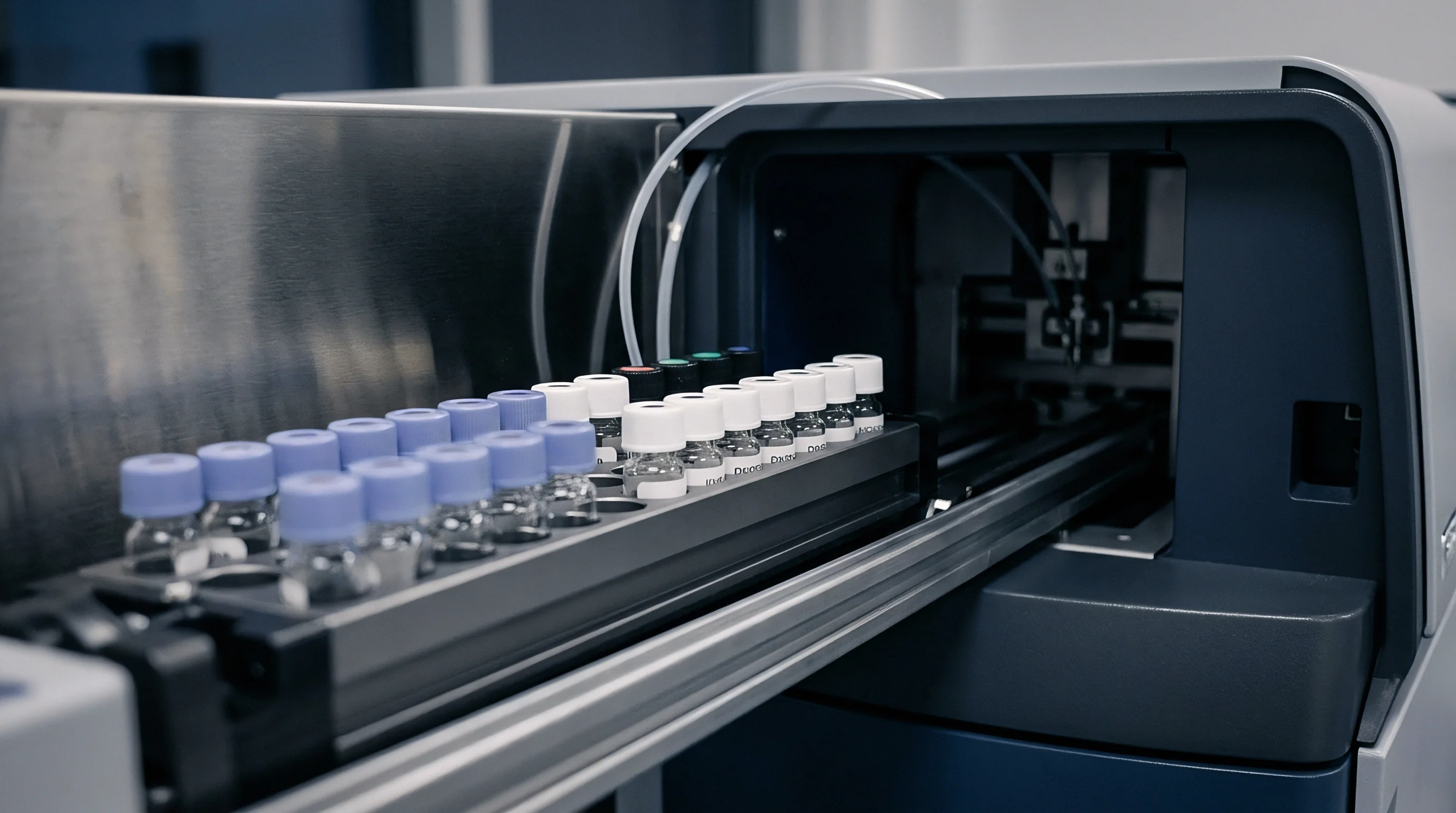
Polymer Degradation Pathways and Unintended Chemical Generation
Thermal extrusion of post-consumer resins generates characteristic breakdown products tied directly to base polymer chemistry. Polyolefins undergo radical-mediated oxidative degradation under repeated heat cycles. Peroxy radicals pull hydrogen atoms from the polymer chain to create hydroperoxides, which then split into alkoxy radicals.
These short-lived intermediates undergo beta-scission, yielding unsaturated aldehydes, methyl ketones, and organic acids that generate off-odors and raise potential toxicological concerns.
Additives introduced during initial compounding generate secondary reaction products under heat and shear. Hindered phenolic antioxidants degrade into quinones and substituted phenols. Slip agents like erucamide and oleamide hydrolyze or oxidatively cleave into free fatty acids and long-chain amides.
Adhesives and inks from post-consumer labels introduce photoinitiators like isopropylthioxanthone and benzophenone, along with acrylate monomer residues that survive washing operations.
Thermal processing of post-consumer polypropylene above 230 degrees Celsius accelerates the breakdown of tris(2,4-di-tert-butylphenyl) phosphite into 2,4-di-tert-butylphenol at concentration levels exceeding 50 milligrams per kilogram.
Legacy additives form another major category of unintended constituents. Post-consumer resins gathered from older waste streams often contain substances now restricted under packaging legislation. Phthalate plasticizers like dibutyl phthalate and bis(2-ethylhexyl) phthalate, brominated flame retardants from industrial containers, heavy metal residues from legacy pigments, and per- and polyfluoroalkyl substances used as processing aids persist in recycled flake stocks.
Tracking these down requires analytical screening built specifically for high-mass compounds and inorganic residues.

Contaminant Classification in Post Consumer Resin Streams
Evaluating chemical safety across post-consumer resin batches calls for a structured classification of detected contaminants based on molecular origin and toxicological profile.
- Volatile Organic Odorants arise from degraded food residues, fragrance absorption, and short-chain oxidation products that evaporate readily during processing or storage.
- Semi Volatile Additive Degradation Compounds form through the thermal cleavage of antioxidants, UV stabilizers, and slip agents during re-granulation.
- Non Volatile Polymer Oligomers consist of cyclic and linear low molecular weight units produced by thermal shear and transesterification reactions inside the extruder barrel.
- Legacy Environmental Contaminants comprise restricted plasticizers, flame retardants, and fluorinated processing aids introduced from non-food waste fraction inputs.
Matrix interactions complicate extraction. Standard washing removes surface contamination, but absorption during consumer use leaves steep concentration gradients deep within the plastic. Mechanical recyclers rely on high-vacuum degassing and melt filtration to draw off volatile species, yet semi-volatile compounds and non-volatile oligomers stay behind in the final pelletized output.
| Chemical Family | Source Material | Representative Marker | Degradation Mechanism |
|---|---|---|---|
| Phenolic Breakdown Residues | Secondary Antioxidants | 2,4-Di-tert-butylphenol | Thermal cleavage of phosphite stabilizers |
| Volatile Aromatics | Solvents and Printing Inks | Toluene and Ethylbenzene | Incomplete degassing of ink matrices |
| Cyclic PET Oligomers | Polyethylene Terephthalate | PET Trimers and Tetramers | Thermal transesterification during re-melt |
| Fatty Acid Amides | Slip Additives and Lubricants | Erucamide and Oleamide | Hydrolysis and oxidative degradation |
| Photoinitiators | UV-Cured Printing Inks | Benzophenone | Set-off contamination on film surfaces |
Vacuum degassing removes volatile fractions below three hundred Daltons during pelletization, but heavier semi-volatile migrants and oligomers remain bound in the resin.


Spectrometry
Identifying unknown organic constituents in recycled plastics requires hyphenated mass spectrometry that can separate, ionize, and measure compounds across wide molecular weight and polarity ranges. Analytical setups pair gas chromatography and liquid chromatography with high-resolution mass spectrometers. Full-scan acquisition allows chemists to detect non-target compounds without needing prior knowledge of what is present in the polymer sample.
Sample preparation dictates the analytical window for non-target screening. Solvent extraction isolates migrants from the solid polymer using solvents like dichloromethane, hexane, ethanol, or acetone under controlled temperatures. Microwave-assisted extraction and pressurized liquid extraction speed up additive dissolution while minimizing thermal decomposition.
Baseline noise depends heavily on solvent purity.
Gas chromatography coupled to time-of-flight high-resolution mass spectrometry handles volatile and semi-volatile substances boiling below four hundred degrees Celsius. Electron ionization generates reproducible spectra suitable for searching standard libraries, while complementary chemical ionization preserves intact molecular ions to confirm exact molecular weights for unknown peaks.
Liquid chromatography coupled to quadrupole time-of-flight or Orbitrap mass spectrometry resolves non-volatile compounds, heavy oligomers, and polar thermal degradation products. Electrospray ionization in positive and negative modes captures species that decompose at GC inlet temperatures. High-resolution accurate mass measurements yield empirical formulas within a mass accuracy tolerance of under two parts per million.

Sample Preparation Strategies and Solvent Extraction Efficiencies
Isolating target and non-target substances from recycled polymer matrices requires extraction parameters that maximize recovery without dissolving the underlying polymer backbone. Dissolving the polymer completely followed by targeted precipitation recovers embedded migrants thoroughly, but introduces high oligomer concentrations that foul mass spectrometer sources. Solvent extraction under mild swelling conditions yields a cleaner extract suited for routine screening.
Polyolefins swell readily in non-polar solvents like dichloromethane and hexane below forty degrees Celsius. Polyethylene terephthalate requires polar aromatic or chlorinated solvents, or extraction with ethanol or acetonitrile mixtures at elevated temperatures to access trapped oligomers. Pressurized liquid extraction holds solvents above their atmospheric boiling points under pressure, cutting extraction times from hours to minutes while fully extracting semi-volatile additives.
- Mill the recycled polymer pellets under cryogenic conditions using liquid nitrogen to yield a uniform powder with a particle size below five hundred micrometers.
- Weigh exactly two grams of the cryogenic powder into a clean glass extraction vessel and add twenty milliliters of high-purity dichloromethane.
- Perform microwave-assisted extraction at sixty degrees Celsius for thirty minutes with continuous magnetic stirring.
- Filter the extract through a zero point two micrometer polytetrafluoroethylene syringe filter to remove insoluble polymer particles and concentrate the filtrate under a gentle nitrogen stream.
Headspace solid-phase microextraction collects volatile organic compounds and odorants without solvent contact. A coated fused-silica fiber in the vial headspace adsorbs volatile migrants released as the sample is heated, and desorption in the GC injection port deposits them straight onto the column. This direct headspace route bypasses solvent peak masking, giving clean signals for low molecular weight hydrocarbons, aldehydes, and residual monomers.

Do Full Scan Workflows Detect Unidentified Mass Peaks?
Untargeted full-scan high-resolution mass spectrometry reveals hundreds of distinct peaks in post-consumer polyolefin extracts. Deconvolution software separates co-eluting peaks and assigns monoisotopic mass values across complex spectra, while automated database searches match fragmentation patterns against reference libraries to propose tentative structures.
Testing under EN 13130 guidelines without prior solvent extraction validation forfeits analytical recovery data for polar non-volatile additives.
Tentative identification based on spectral library matches leaves meaningful uncertainty. Commercial libraries catalog common industrial chemicals, but lack entries for complex degradation intermediates and novel reaction products. Verifying an identity requires checking high-resolution accurate mass, isotopic fine structure, and collision-induced dissociation spectra, with chromatographic retention index models serving as a secondary check.
Quantifying non-target substances remains a central hurdle when reference standards are unavailable. Instrument response factors vary widely across chemical classes in both electrospray and electron ionization modes, so surrogate internal standards introduce quantitative uncertainty that can span an order of magnitude. Laboratories manage this by applying the lowest observed response factor within a class to produce conservative, upper-bound semi-quantitative estimates.
| Analytical Workflow | Target Volatility | Extraction Technique | Limit of Detection | Primary Target Compounds |
|---|---|---|---|---|
| Headspace GC-MS | High Volatility (VOCs) | Thermal Desorption / SPME | 0.005 mg/kg | Solvents, Monomers, Light Aldehydes |
| GC-QTOF-MS (EI/CI) | Semi-Volatiles (SVOCs) | Microwave-Assisted Dichloromethane | 0.010 mg/kg | Antioxidant Breakdown, Photoinitiators |
| LC-QTOF-MS (ESI+/-) | Non-Volatiles (NVOCs) | Pressurized Liquid Extraction | 0.010 mg/kg | Oligomers, Hindered Amine Stabilizers |
| ICP-MS | Inorganic Elements | Closed-Vessel Nitric Acid Digestion | 0.001 mg/kg | Heavy Metals, Catalyst Residues |
Inductively coupled plasma mass spectrometry covers inorganic elements missed by organic screening. Microwave digestion in concentrated nitric acid and hydrogen peroxide breaks down the polymer matrix to release heavy metals, catalyst residues, and inorganic pigment components. ICP-MS detects toxic metals including lead, cadmium, mercury, and chromium down to sub-ppb levels, confirming compliance with heavy metal caps under packaging waste regulations.
Direct solvent extraction reports frequently diverge from results based on total polymer dissolution. Solvent extraction isolates the soluble migrant fraction that can diffuse under normal conditions, whereas total dissolution frees every encapsulated species, including additives that remain permanently trapped in practical use. Distinguishing total content from migratable content determines whether a resin batch actually clears food contact thresholds.
Surrogate standards track recovery efficiency, while standard addition accounts for matrix suppression in liquid chromatography sources. Co-eluting polymer oligomers often alter ionization efficiency by suppressing or enhancing analyte signals. Adding isotopically labeled standards before extraction allows reliable quantitative recovery calculations across variable post-consumer resin batches.
High-resolution mass spectrometers running above thirty thousand resolving power (FWHM) split isobaric compounds that share a nominal mass but carry different elemental formulas. Resolving these overlapping peaks against background hydrocarbon noise permits unambiguous formula assignment for breakdown products containing nitrogen, sulfur, or oxygen.
Establishing standardized response factors for unknown cyclic PET oligomers without commercial reference standards remains an open technical challenge for packaging compliance.


Partition
Evaluating whether non-intentionally added substances pose a risk to consumers requires measuring or modeling their migration from the polymer matrix into food or simulants. Migration follows Fickian diffusion, governed by the migrant’s diffusion coefficient in the polymer, the thermodynamic partition coefficient between polymer and simulant, temperature, and contact time. Mathematical migration modeling applies standardized physical parameters to estimate upper-bound migration levels without running extended laboratory immersion tests.
Diffusion rates depend heavily on polymer morphology, temperature, and migrant molecular size. Low-density polyethylene has flexible, mobile polymer chains that allow low molecular weight compounds to diffuse rapidly at room temperature. Polyethylene terephthalate exists in a glassy state below its glass transition temperature, sharply restricting diffusion.
Diffusion coefficients drop exponentially as migrant molecular volume increases, leaving heavy oligomers effectively immobile in rigid matrices.
Food simulants defined under European Regulation EU 10/2011 replicate the extraction properties of specific food groups. Ten percent ethanol in water (Simulant A) models aqueous foods. Three percent acetic acid (Simulant B) simulates acidic products.
Twenty percent ethanol (Simulant C) and fifty percent ethanol (Simulant D1) represent alcoholic foods and oil-in-water emulsions. Vegetable oil or synthetic fatty acid mixtures (Simulant D2) cover fatty foodstuffs, while modified polyphenylene oxide, or Tenax (Simulant E), simulates dry food contact.

Toxicological Evaluation and Threshold Assignment
Chemical safety evaluation requires assigning toxicological thresholds to every migrant detected from recycled packaging. Where full toxicological profiles exist, specific migration limits govern compliance. For unknown or un-evaluated non-intentionally added substances lacking toxicity data, toxicological risk assessment relies on the Threshold of Toxicological Concern concept.
The Threshold of Toxicological Concern framework defines human exposure limits below which adverse health effects are considered improbable. Chemical structures are categorized into Cramer Classes based on their functional groups and metabolic reactivity.
Cramer Class I covers simple structures metabolized via well-characterized pathways, carrying a threshold of one thousand eight hundred micrograms per person per day. Cramer Class II covers intermediate structures. Cramer Class III comprises complex molecules, aromatic amines, or structural alerts for organ toxicity, assigned a tighter threshold of ninety micrograms per person per day.
High-potency mutagens carrying genotoxic structural alerts receive an absolute exposure limit of zero point one five micrograms per person per day, which translates to a ten parts per billion migration cap in food based on standard consumption assumptions.
Structure-activity relationship models forecast toxicity parameters for non-target compounds that lack experimental toxicological data. Computational tools evaluate molecular descriptors to flag mutagenic, carcinogenic, or endocrine-disrupting potential. If an alert is triggered, analytical testing must prove that migration stays below the ten parts per billion limit.
Assigning toxicological risk categories to unidentified chromatographic features requires a clear analytical screening sequence.
- Extract high-resolution accurate mass features from chromatographic datasets and determine empirical molecular formulas.
- Search chemical structure databases to identify potential candidate structures matching the accurate mass and fragmentation spectrum.
- Evaluate structural features using automated structural activity relationship software to screen for genotoxic and carcinogenic alerts.
- Assign the default ten parts per billion toxicological evaluation limit to any compound containing unconfirmed structural alerts or lacking explicit structural identification.
Simulant D2 exposure at elevated temperature swelling polyolefin matrices overestimates real migration rates into fatty foodstuffs.
Mathematical modeling using established diffusion equations provides conservative upper-bound migration estimates. Parameter models like the Piringer model calculate diffusion coefficients from polymer type, absolute temperature, and migrant molecular weight. Upper-bound models assume the partition coefficient favors complete solubility in the simulant to simulate worst-case exposure.
When modeled migration sits safely below applicable toxicological thresholds, physical migration testing can often be omitted from the dossier.
Repeated-use packaging requires tracking migration dynamics across consecutive exposures. Standard protocols run three successive contact cycles using fresh simulant on the same sample, with compliance judged on the migration measured in the third pass. An increase in migration over successive passes signals polymer degradation or simulant uptake, resulting in compliance failure.
Higher polymer density increases structural resistance to migrant diffusion, meaning diffusion estimates generated for low-density resins cannot support high-density material declarations.


Dossier
Demonstrating food-contact compliance for packaging made from recycled plastics requires a complete technical dossier. A valid file connects feedstock characterization, process qualification, decontamination efficiency data, and finished-article migration results. Regulatory authorities inspect these dossiers during audits to confirm that post-consumer resins match the safety profile of virgin polymers.
Decontamination processes must pass challenge testing to prove they reliably extract chemical contaminants absorbed during consumer use. Challenge tests involve spiking virgin or recycled flake with surrogate compounds that represent distinct volatility and polarity profiles. Standard surrogates include volatile non-polar compounds like toluene, volatile polar compounds like chlorobenzene, semi-volatile non-polar species like phenylcyclohexane, semi-volatile polar substances like methyl salicylate, and non-volatile markers like benzophenone or methyl stearate.
The spiked flake runs through the commercial decontamination and extrusion line under standard operating conditions, with gas chromatography measuring surrogate levels before and after processing to establish decontamination efficiency. Regulatory frameworks, including European Regulation EU 2022/1616 and United States Food and Drug Administration guidelines, require efficiency rates exceeding ninety-nine point five percent across core surrogate classes before granting authorization.

Technical Dossier Requirements for Post Consumer Recycled Resins
A complete technical dossier for food-contact recycled plastic must compile analytical evidence and operational records spanning the entire conversion process.
- Feedstock Specifications define input waste stream sources, collection geography, sorting parameters, and maximum allowable non-food container fraction thresholds.
- Decontamination Qualification Reports present third-party surrogate challenge test data, establishing decontamination efficiency percentages across standard chemical surrogate classes.
- Continuous Quality Control Logs record operational parameters, including vacuum pressure, melt temperature, residence time, and online volatile organic compound monitoring data.
- Non Target Screening Reports summarize full-scan GC-MS and LC-MS analytical screening results, confirming the absence of un-evaluated NIAS above safety thresholds.
- Specific and Overall Migration Test Certificates document laboratory testing results in official food simulants under standard contact time and temperature conditions.
Declarations of Conformity must clearly state the scope of regulatory compliance achieved and outline any operational constraints on finished articles. A declaration for high-density polyethylene pellets needs to link back to the decontamination authorization number, state maximum allowable operating temperatures, and indicate whether the resin is cleared for fatty food contact, acidic foods, or short-term thermal processing.
A supplier declaration claiming full food-contact compliance without supporting surrogate challenge test data transfers all regulatory liability directly to the downstream importer.
Traceability provides essential legal protection for buyers. Chain-of-custody documentation must track resin batches from incoming flake through decontamination, pelletization, conversion, and final assembly. Batch numbers on gaylords and shipping manifests must map directly to the corresponding quality control files and screening certificates.
| Surrogate Compound | Boiling Point | Polarity Class | Target Removal Efficiency | Analytical Detection Method |
|---|---|---|---|---|
| Toluene | 110.6 °C | Volatile Non-Polar | 99.5 % | Headspace GC-MS |
| Chlorobenzene | 131.6 °C | Volatile Polar | 99.5 % | Headspace GC-MS |
| Phenylcyclohexane | 240.0 °C | Semi-Volatile Non-Polar | 99.0 % | Direct Injection GC-FID/MS |
| Methyl Salicylate | 222.0 °C | Semi-Volatile Polar | 99.0 % | Direct Injection GC-MS |
| Benzophenone | 305.4 °C | Non-Volatile Polar | 98.0 % | LC-MS / GC-MS |
Reviewing converter dossiers requires checking whether analytical limits of quantification match toxicological evaluation limits. Laboratories operating with high quantification limits can easily report non-detectable levels for dangerous contaminants simply because their equipment lacks the sensitivity to detect low-level migrants. A valid test report specifies limits of detection reaching at least zero point zero one milligrams per kilogram for non-evaluated constituents.
Functional barriers offer another compliance pathway by physically isolating recycled resin from food contact surfaces. Co-extruded multilayer structures place virgin polymer or an impermeable barrier resin between the recycled core and the contact layer. Verification requires measuring diffusion rates through the barrier layer to ensure NIAS migration from the core stays below regulatory thresholds across the package’s shelf life.
Standard supply contract clause 14.2 requiring batch-specific non-target GC-MS screening reports before shipment shifts financial responsibility for customs rejection from buyer to recycler.


Dispute
Non-compliant recycled plastic packaging carries heavy commercial and financial consequences. Border authorities regularly hold imported packaging materials and recycled resins that arrive with incomplete compliance paperwork or fail analytical screening. Customs detentions lead directly to warehouse demurrage, disrupted production schedules, and product recall liabilities that mount quickly on large orders.
Inter-laboratory analytical variance remains a persistent commercial obstacle. Laboratories using different extraction solvents, instrument parameters, or spectral deconvolution software often produce conflicting results from identical resin samples. A batch cleared by an in-house supplier laboratory can easily fail compliance checks at an accredited destination facility due to differing limits of quantification or response factor assumptions for non-target peaks.
Unverified declarations create severe exposure at customs. Importers of record carry full legal responsibility for placing food contact materials on the market. If enforcement authorities detect unlawful NIAS migration in finished packaging, the importer faces mandatory product withdrawals, inventory destruction, and administrative penalties under packaging waste and chemical safety laws.
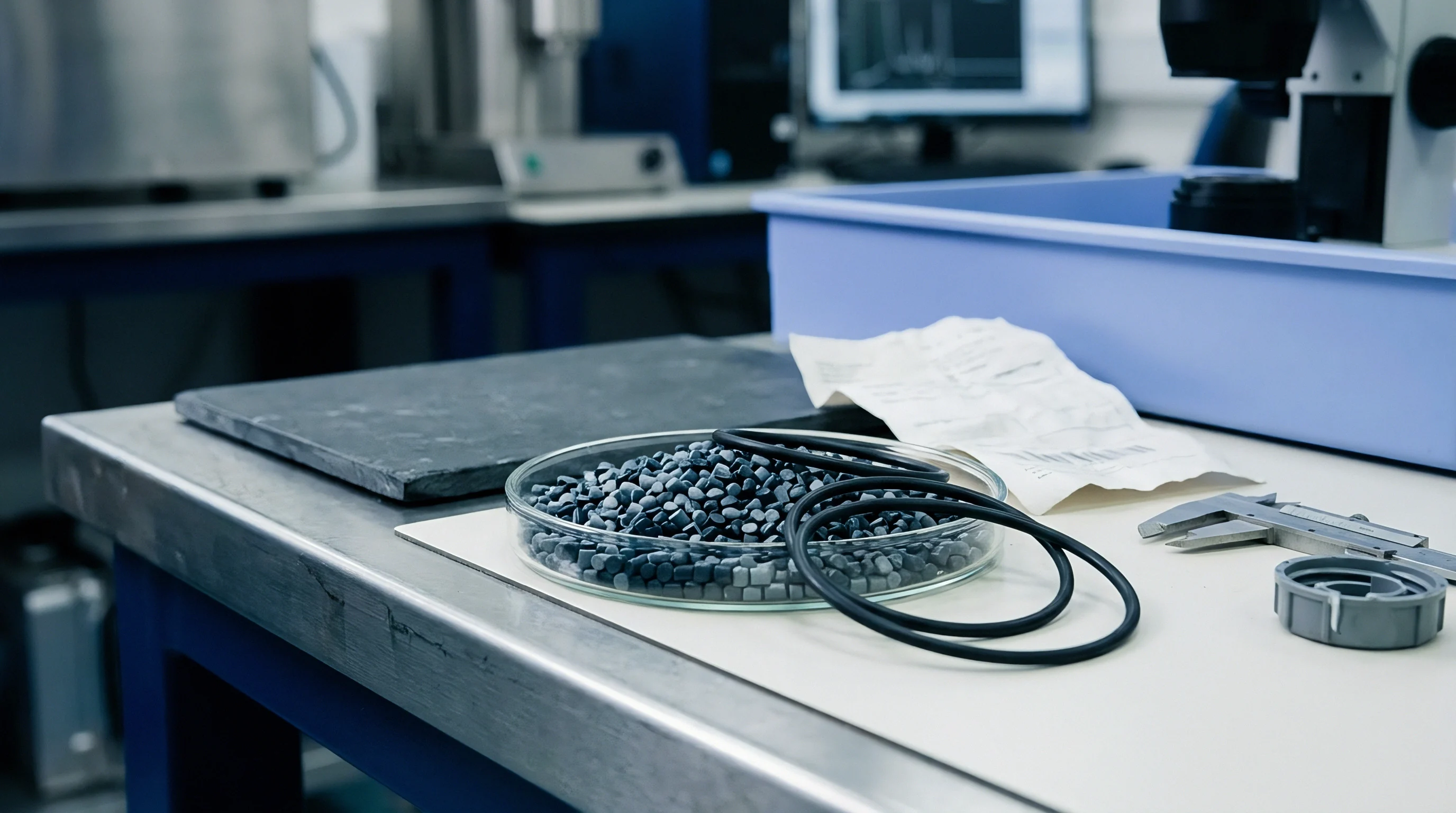
Commercial Risk Breakdown in Post Consumer Resin Sourcing
Evaluating financial exposure requires modeling landed cost risks across an entire manufacturing lot. A failed migration test on a fifty-ton shipment of post-consumer polyolefins stops converting lines immediately and invalidates all finished downstream inventory.
Inter-laboratory analytical variance across European testing facilities regularly generates compliance disputes before commercial resin volumes ship. Discrepancies arise most often when quantifying semi-volatile antioxidant breakdown products in recycled polypropylene. One laboratory using total polymer dissolution might measure 2,4-di-tert-butylphenol at thirty milligrams per kilogram, triggering toxicological concern, while another using surface extraction reports less than five milligrams per kilogram.
Demurrage fees escalate quickly. Container storage fees at shipping terminals compound daily while disputed materials await re-testing or regulatory decisions. Full re-testing takes weeks for sample preparation, chromatographic runs, mass spectral deconvolution, and toxicological review.
Port storage charges during an extended dispute can easily outstrip the original invoice value of the resin container.
Packaging tax frameworks create additional financial exposure around recycled content verification. National plastic packaging taxes impose substantial levies per ton on packaging containing less than thirty percent verified recycled content. Producers must prove both the exact recycled percentage and full chemical safety compliance.
Using non-compliant post-consumer resin forfeits tax exemptions, leaving producers on the hook for full tax rates alongside material replacement costs.
Procurement contracts require explicit technical parameters for non-intentionally added substances. Purchase specifications should cap total volatile organic compounds, define mandatory decontamination efficiencies, and require full-scan mass spectrometry screening for each production lot. Contracts must also allocate clear financial liability for testing fees, demurrage, and scrap disposal when shipments fail destination verification.
Benchmarking atmospheric headspace extraction against pressurized fluid extraction for heavy polycyclic aromatic hydrocarbons yields an analytical recovery variance of around fourteen percent.
An unaccredited screening report that failed to detect 2,4-di-tert-butylphenol migration in a twenty-ton shipment of post-consumer polypropylene resin resulted in twenty-two thousand euros in re-testing and warehouse demurrage charges.