
Screening Benzophenone Derivatives in Recycled Polyolefin Food Packaging Resins
Screening benzophenone in recycled polyolefin resins requires solvent extraction, GC-MS/MS quantification, and diffusion modeling to prove migration safety.
Screening benzophenone in recycled polyolefin resins requires solvent extraction, GC-MS/MS quantification, and diffusion modeling to prove migration safety.
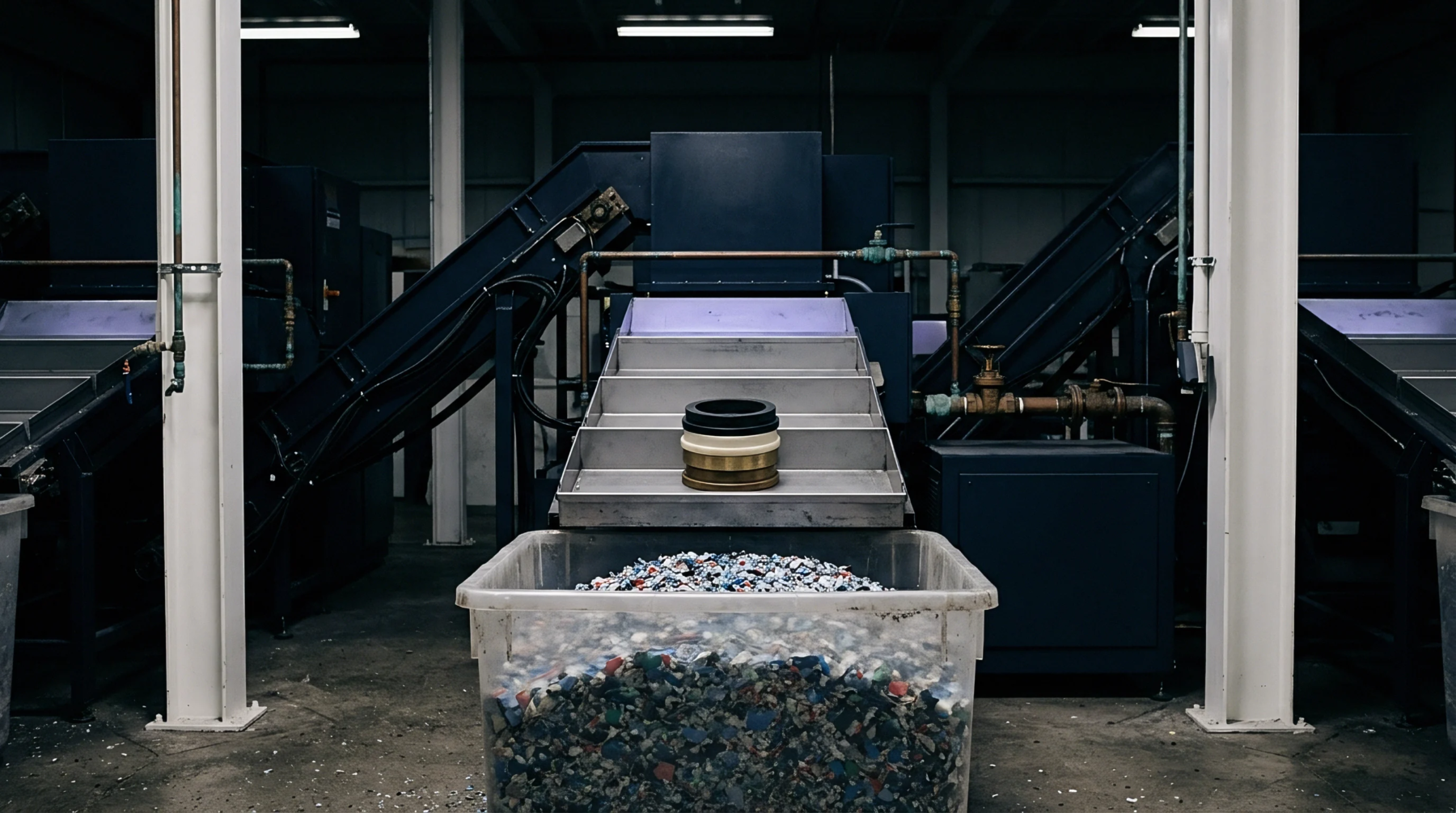
Surrogate selection for polyolefin challenge testing requires five distinct volatility and polarity classes to validate core matrix decontamination.

Auditing converter food contact declarations requires cross-referencing batch test reports, simulant conditions, dual-use additives, and NIAS screening data.

Ionization efficiency models eliminate thousand-fold semi-quantitative errors in untargeted packaging screening, ensuring defensible non-intentionally added substance compliance.

Analytical verification of NIAS in multi-layer barrier films requires high-resolution mass spectrometry screening backed by toxicological threshold classification.

LC-MS/MS screening of cyclic ester oligomers in PET packaging ensures NIAS compliance and protects food contact declarations from border enforcement rejections.

High-resolution mass spectrometry screening paired with surrogate semi-quantification establishes food-contact compliance for post-consumer polyolefins.

High temperature polymer NIAS screening requires combined GC MS and LC HRMS untargeted profiling to detect melt degradation products above ten ppb.

Untargeted screening by GC-MS and LC-HRMS combined with Threshold of Toxicological Concern metrics establishes legal food-contact safety for recycled polyolefins.

Quantitation of UV ink breakdown fragments in recycled films demands target GC-MS/LC-MS extraction paired with non-target screening for degradation products.

Relative response factor adjustments eliminate false-pass compliance screening for non-intentionally added substances in polyolefin recyclate packaging dossiers.

Screening polymeric minor assembly additives requires precise cryo-milling, solvent extraction, and mass spectrometry to confirm regulatory compliance limits.
Verify photoinitiator compliance in recycled HDPE via GC-MS/MS extraction and ten-day migration testing under 10 ppb thresholds before signing declarations.

Standardized relative response factor uncertainty distributions correct non-target screening thresholds, preventing under-quantification of polymer migrants.

Semi-quantitative response factors for unknown polymer migrants require response factor distribution analysis and empirical safety multipliers to prevent toxicological underestimation.

Clearance of imported food packaging requires matching exact batch lot numbers across invoices, declarations of conformity, and ISO 17025 accredited migration test reports.

Reconciling supplier additive disclosures with NIAS risk assessments requires non-targeted screening, TTC calculations, and confidential third-party audits.

Cramer structural classification sets exposure thresholds for unlisted packaging migrants, turning molecular features into defensible specific migration limits.

Computational prediction of LC-ESI relative response factors reduces semi-quantification errors for uncharacterized food contact migrants.

Calculating mass spectrometry relative response factors for uncharacterized cyclic ester oligomers requires ionization efficiency modeling to prevent migration underestimation.

Managing recycled plastic compliance under EU waste rules requires challenge-tested decontamination, accredited migration testing, and audited traceability dossiers.

Base polymer declarations certify monomer purity at the reactor gate but omit all converter additives, breakdown products, and finished article migration limits.

Verifying non-intentionally added substances in recycled plastics demands high-resolution mass spectrometry screening, toxicological threshold mapping, and batch-specific compliance dossiers.

Recycled polyolefin NIAS compliance requires high-resolution mass spectrometry screening paired with Cramer structural toxicological limits down to 0.15 ppb.

Non-target mass spectrometry combined with toxicological threshold evaluation verifies that recycled plastic packaging meets mandatory food-contact safety limits.
Border rejection notifications provide empirical chemical failure data to screen foreign packaging suppliers, update lot sampling rates, and enforce contract indemnities.
Expertise is a utility, not a secret. sentiention™ publishes its working knowledge as open reference: intelligence layer covering the materials it sources, the markets it enters, and the reference that serves both.