
Cramer Decision Tree Toxicological Threshold Assignments for Post Consumer Polyolefins
Post-consumer polyolefin NIAS default to Cramer Class III at 15 ppb unless exact molecular identification proves Class I or non-genotoxic status.
Post-consumer polyolefin NIAS default to Cramer Class III at 15 ppb unless exact molecular identification proves Class I or non-genotoxic status.

Recycled polyolefin screening couples non-targeted GC and LC mass spectrometry with TTC toxicological limits to clear unknown migrants for food packaging.

Radiocarbon dating cannot verify chemically recycled fossil polyethylene because post-consumer fossil plastic contains zero carbon-14.

Exemption from European plastic packaging taxes requires third-party accredited EN 15343 chain-of-custody records linking batch resins to post-consumer waste.

Analytical screening thresholds require adjustment for packaging surface-to-volume ratios, extraction concentration, and ionization response variations.

Verify food contact compliance by aligning accredited migration data, batch traceability, and full component declarations before cargo arrival.
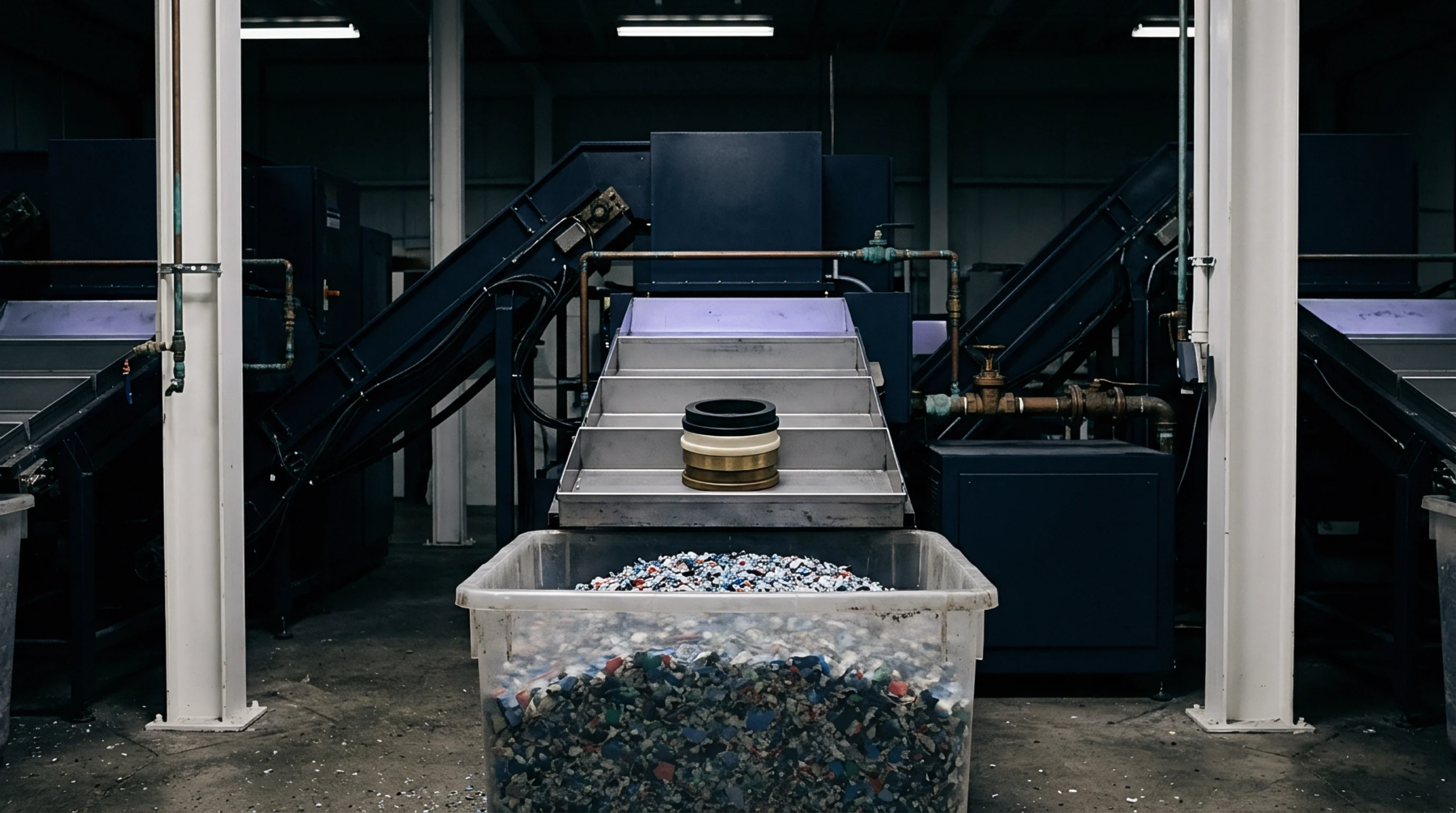
Composite compliance testing of post-consumer polyolefins fails without cryogenic milling and Gy sampling models to eliminate massive fundamental error.

Polyolefin melt stripping caps photoinitiator removal near 50%, leaving unlisted residues that routinely exceed the 10 ppb migration limit in fatty foods.
Decontamination efficiency validation and non-target mass spectrometry quantify NIAS limits to secure food-contact declarations for recycled PET.

Accurate HRMS oligomer quantification in recycled polyolefins requires class-matched surrogate calibrants to achieve the 10 ppb food contact threshold.

Calibrating analytical evaluation thresholds for genotoxic benzophenone photolysis in recycled polyethylene requires setting LC-HRMS screening limits to 0.05 ppb.
Expertise is a utility, not a secret. sentiention™ publishes its working knowledge as open reference: intelligence layer covering the materials it sources, the markets it enters, and the reference that serves both.