
Recycled Content Claims Priced into a Packaging Tax Line
Recycled content tax claims require lot-specific EN 15343 audit trails and migration reports to withstand customs audits and avoid retroactive landed tax liabilities.
Recycled content tax claims require lot-specific EN 15343 audit trails and migration reports to withstand customs audits and avoid retroactive landed tax liabilities.

Analytical screening for recycled polyolefin food contact articles requires mass spectrometry thresholds below 10 ppb to prove compliance under EU rules.

Recycled packaging tax exemptions demand verifiable post-consumer batch evidence, leaving mass balance certificates vulnerable to customs duty clawbacks.

Non-target mass spectrometry combined with toxicological threshold evaluation verifies that recycled plastic packaging meets mandatory food-contact safety limits.

Recycled polyolefin NIAS compliance requires high-resolution mass spectrometry screening paired with Cramer structural toxicological limits down to 0.15 ppb.

Verify post-consumer polyolefin food-contact safety by combining high-resolution untargeted GC/LC-MS screening with TTC toxicological evaluation down to 10 ppb.

Deriving standardized toxicological concern thresholds for unidentified recycled polyolefin oligomers requires splitting migrated mass at 1000 Daltons and applying Cramer Class III limits to the bioavailable fraction.

Recycled film compliance requires high-resolution screening and toxicological risk assessment of photoinitiator fragments formed during extrusion re-granulation.

Standardized relative response factors eliminate analytical divergence when quantifying cyclic PET oligomers without authentic standards in recycled food contact resin.

Legacy contaminant quantification in post-consumer polyolefins requires combining total solvent extraction with specific migration testing to manage commercial and regulatory risks.

Sub-1000 Da polyolefin bioaccessibility requires preparative SEC isolation, micellar digestion extraction, GCxGC-HRMS identification, and compliance validation.

Quantifying semi-volatile photoinitiators in recycled polyolefins requires matrix-matched standard addition to counter 40% measurement uncertainty.

Determining food simulants for recycled polyolefin migration requires matching contaminant polarity to lipophilic or aqueous media while preventing solvent swelling distortion.

Toxicological threshold scoring maps unidentified polymer migrates to Cramer exposure limits, mandating genotoxic screening below 0.00015 mg/kg food.

Verifying chemical recycled polymer mass balance ledgers requires physical boundary mass-loss accounting, yield deductions, and batch-level credit transfer documentation.
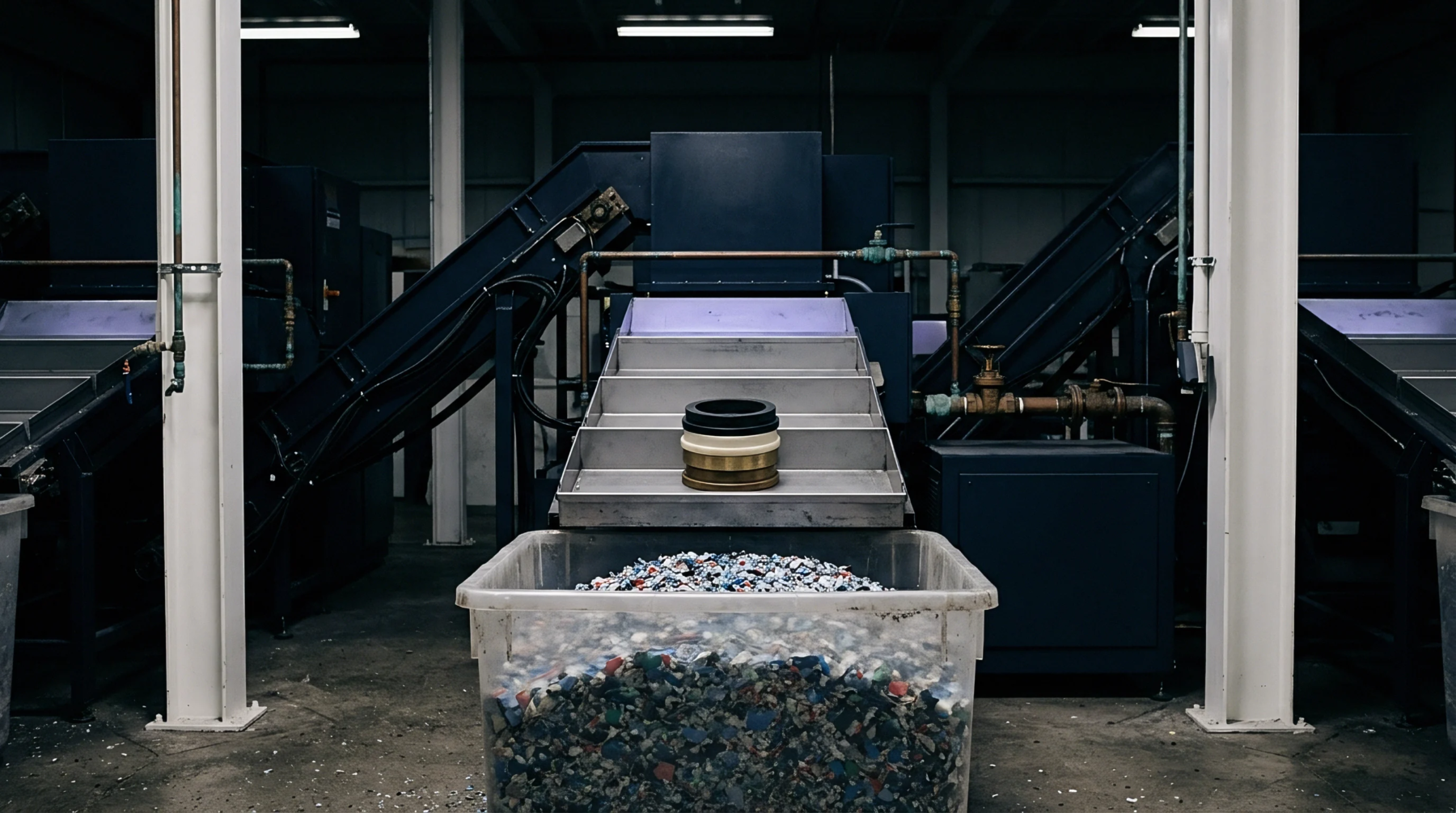
Polyolefin food contact validation requires surrogate challenge testing demonstrating matrix devolatilization down to safe migration thresholds under worst-case parameters.

Establishing non-target screening limits requires dividing toxicological thresholds by lower-bound relative response factors to ensure reliable detection.

Quantifying photoinitiator residues in recycled polyolefins demands solvent extraction and mass spectrometry to verify migration limits under European food contact rules.

Unidentified extraction peaks in recycled polyolefins require GC-MS/LC-HRMS screening and TTC toxicological evaluation to secure cross-border compliance.

Deriving toxicological thresholds for uncharacterized benzophenone degradants in PCR polyolefins requires gas chromatography high resolution mass spectrometry AET screening.

Unidentified migrants in food-contact PET above 10 ppb require structural elucidation, Cramer classification, or mutagenicity testing to establish safety.

Non-target unknown peaks in recycled polyolefin screening are quantified using uncertainty-adjusted relative response factors and evaluated against a 10 ppb genotoxicity threshold.

Recycled polyolefin food contact compliance demands targeted screening for photoinitiators to prevent set-off contaminants from exceeding specific migration limits.

Resolving unknown photoinitiator residues in recycled polyolefins demands coupled GC-MS and LC-HRMS screening anchored to a ten microgram per kilogram migration threshold.

Closed loop polyolefin recycling relies on calculated purge rates and non-target screening to hold non-intentionally added substance migration under limits.

Apply 0.01 mg/kg food screening thresholds to non-target polyolefin extracts using high-resolution mass spectrometry and response factor uncertainty multipliers.

Mitigate HRMS response factor uncertainty in rPET compliance by replacing single surrogates with class-matched standards and predictive ionization algorithms.
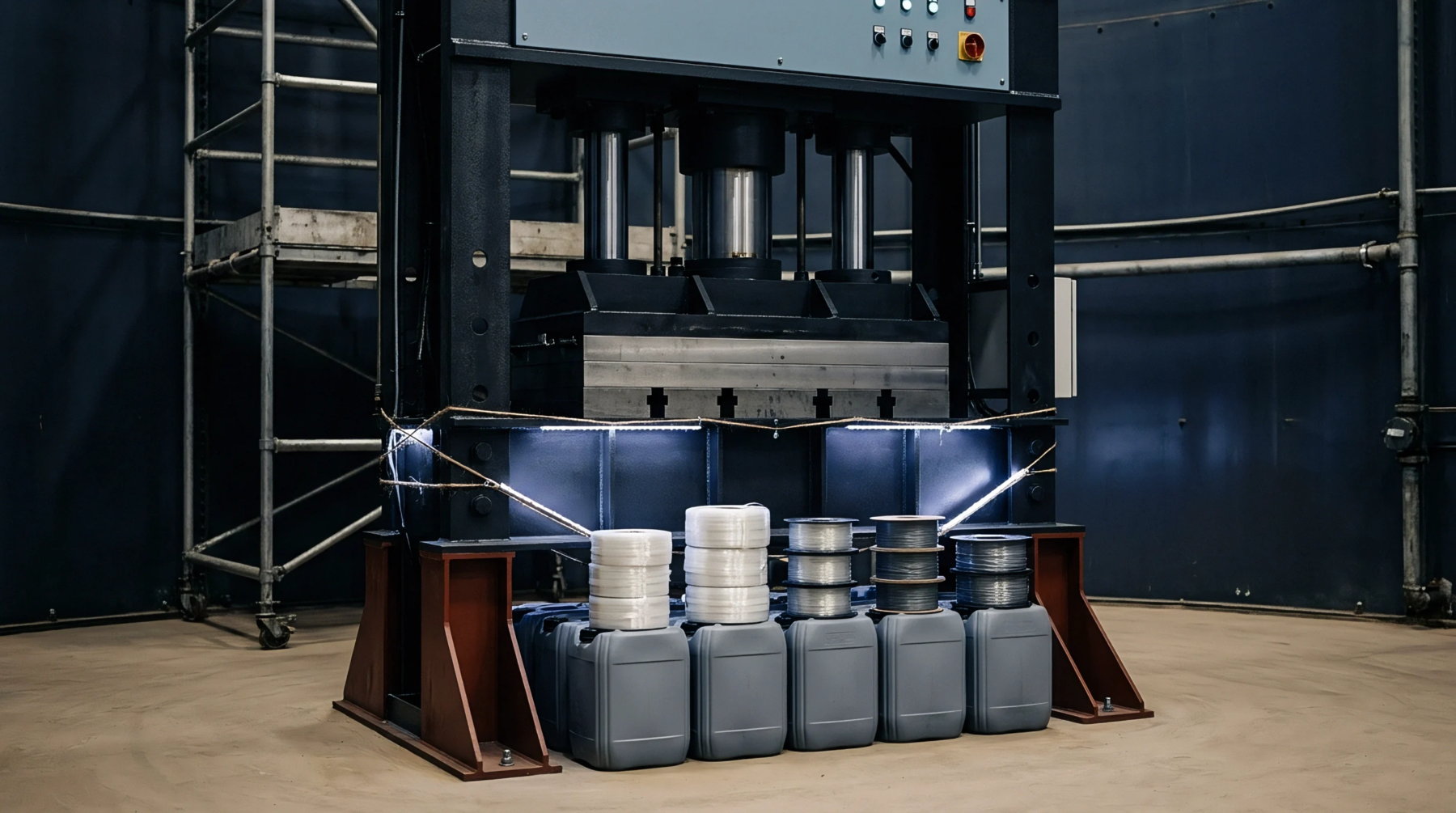
Verify photoinitiator compliance in recycled HDPE via GC-MS/MS extraction and ten-day migration testing under 10 ppb thresholds before signing declarations.
Resolving mineral oil saturated hydrocarbons from polyolefin oligomers demands online liquid chromatographic cleanup combined with two-dimensional gas spectrometry.

Deriving ionization efficiency models corrects electrospray response variations in non-targeted NIAS screening, preventing false negatives in recycled resin audits.
Expertise is a utility, not a secret. sentiention™ publishes its working knowledge as open reference: intelligence layer covering the materials it sources, the markets it enters, and the reference that serves both.