Resolving Analytical Detection Limits and Toxicological Thresholds for Unknown Recycled Polyolefin Photoinitiator Residues
Resolving unknown photoinitiator residues in recycled polyolefins demands coupled GC-MS and LC-HRMS screening anchored to a ten microgram per kilogram migration threshold.


Residue
Ultraviolet-curing inks on polyolefin packaging films leave behind complex photochemically cured formulations that survive mechanical recycling. Post-consumer flexible packaging made from high-density polyethylene and polypropylene retains photoinitiators intended to generate free radicals under UV light. During ink curing on original converting lines, these photoinitiators split into active free radicals that cross-link acrylic resins.
Unreacted parent compounds, cleavage fragments, photodecomposition products, and thermal degradation byproducts all remain trapped in the polymer matrix. When post-consumer packaging is sorted and recycled, washing and extrusion redistribute these volatile and semi-volatile chemicals throughout the resin batch.
Photoinitiators function through two primary mechanisms depending on how they generate radicals. Type I photoinitiators undergo unimolecular alpha-cleavage upon light absorption, breaking specific carbon-carbon or carbon-phosphorus bonds to yield two free radicals. Type II systems act through bimolecular reactions, absorbing radiation to enter an excited triplet state before abstracting a hydrogen atom from a donor molecule ~ typically a tertiary amine co-initiator.
Both pathways leave residual parent molecules and derivative compounds inside post-consumer plastic flakes. Thermal stress during melt re-granulation at 190 degrees Celsius to 240 degrees Celsius accelerates the breakdown of these residues, generating secondary non-intentionally added substances that complicate downstream safety evaluations.
Alpha-hydroxyketones, including 1-hydroxycyclohexyl phenyl ketone and 2-hydroxy-2-methyl-1-phenylpropan-1-one, are widespread Type I photoinitiators in flexographic and offset inks. Their cleavage yields benzoyl and hydroxyalkyl radicals. Benzoyl radicals recombine or abstract hydrogen to form benzaldehyde, benzoic acid, and alkylbenzenes, while hydroxyalkyl radicals degrade into acetone or cyclohexanone.
Acylphosphine oxides, such as ethyl (2,4,6-trimethylbenzoyl) phenylphosphinate and bis(2,4,6-trimethylbenzoyl)phenylphosphine oxide, provide rapid surface and deep-layer curing in thick polyolefin ink films. Thermal processing of acylphosphine oxides forms 2,4,6-trimethylbenzaldehyde and oxidized phosphine species, including methylphenylphosphinic acid. These polar cleavage products have molecular weights below 300 Daltons, which allows them to migrate through polyolefin crystalline domains into food simulants.
Polyolefin de-inking processes reduce surface contamination while leaving dissolved photoinitiators intact within the crystalline matrix.
Type II photoinitiator systems rely on aromatic ketones such as benzophenone, 4-methylbenzophenone, and isopropylthioxanthone paired with amine synergists like ethyl 4-dimethylaminobenzoate. Benzophenone transfers energy through an excited triplet state, generating benzhydrol and pinacol dimers through self-recombination. Isopropylthioxanthone yields thioxanthone oxides and alkylated derivatives.
Amine co-initiators decompose into volatile aliphatic amines and substituted aromatic aldehydes, introducing off-odors and toxicological hazards to recycled resin pellets. Polyolefin recyclate sourced from post-consumer flexible films routinely exhibits total photoinitiator residue concentrations between 0.5 milligrams per kilogram and 45 milligrams per kilogram, far exceeding specific migration limits established for direct food-contact materials.
The chemical structures of primary photoinitiator cleavage products and their secondary thermal transformation products dictate their migration potential and analytical behavior:
- Benzophenone Transformation Compounds yield 4-methylbenzophenone and benzhydrol through hydrogen abstraction, migrating readily because of moderate octanol-water partition coefficients.
- Thioxanthone Derivatives form isopropylthioxanthone sulfoxides during melt extrusion, showing altered mass spectrometry ionization efficiency compared to parent structures.
- Acylphosphine Oxide Fragments decompose into 2,4,6-trimethylbenzoic acid and dimethylphosphine oxides, causing polar chromatographic interference during liquid chromatography screening.
- Amine Synergist Byproducts generate 4-dimethylaminobenzoic acid and ethylformanilide, both of which show high specific migration rates into aqueous and acidic food simulants.
Melt extrusion degassing and vacuum stripping aim to remove low-boiling photoinitiators from post-consumer flakes. However, testing of decontaminated resin shows that while high-vacuum degassing removes volatile compounds like benzaldehyde, intermediate molecular weight photoinitiators and high-boiling cleavage products remain embedded in the polymer matrix.

Melt
Post-consumer polyolefin flakes bring surface contaminants directly into high-temperature processing equipment, where volatile compounds migrate into the polymer core. Processing recycled high-density polyethylene and polypropylene exposes the melt to temperatures above 200 degrees Celsius and high shear forces inside single or twin-screw extruders. Heat and shear redistribute ink residues throughout the polymer phase: surface-bound photoinitiators dissolve into amorphous regions of the molten polyolefin, turning localized surface ink into uniform mass contamination across the resin.
Diffusion kinetics dictate how photoinitiators move through polyolefin melts and solid plaques. High-density polyethylene has a crystalline fraction between 60 percent and 70 percent, compared to 40 percent to 50 percent for low-density polyethylene and 50 percent to 60 percent for polypropylene. Because chemical migration occurs exclusively through the amorphous phase, high processing temperatures increase the free volume between amorphous polymer chains and lower the activation energy required for diffusion.
Small molecules like 2-hydroxy-2-methyl-1-phenylpropan-1-one move rapidly through the molten polymer, reaching thermodynamic equilibrium across the melt stream within seconds.
Thermal degradation during melt reprocessing follows radical chain reaction mechanisms initiated by hydroperoxides in aged post-consumer plastic. These hydroperoxides break down thermally into alkoxy and hydroxy radicals, which attack residual photoinitiators, cleaving functional groups and generating oxidized derivatives. Under thermal stress, polypropylene undergoes chain scission to yield tertiary alkyl radicals that react with aromatic photoinitiator fragments.
High-density polyethylene experiences competing cross-linking and chain scission, changing the free volume available for contaminant transport once the polymer cools.
Evaluating post-consumer recyclate requires looking at how de-inking wash systems interact with ink formulations before thermal processing. Industrial de-inking relies on hot alkaline aqueous washes with surfactants to strip cured ink films from polyolefin flakes. Standard washing at 80 degrees Celsius with 1 percent to 2 percent sodium hydroxide removes surface pigments and uncross-linked binders, but cured photoinitiator networks resist aqueous dissolution.
Furthermore, organic solvents in printing inks swell the polyolefin surface during original conversion, driving photoinitiators deep into subsurface polymer layers long before collection and recycling.
Vacuum degassing during extrusion acts as the primary physical decontamination step in super-clean recycling systems evaluated under EU regulatory frameworks. Multi-stage degassing extruders running at pressures below 5 mbar pull out low-molecular-weight volatile organics. Decontamination efficiency drops as molecular weight and boiling point rise: compounds with molecular weights above 200 Daltons or boiling points above 300 degrees Celsius show minimal volatilization during standard residence times of 30 to 90 seconds.
Polymeric aminobenzoates and multi-functional photoinitiators do not volatilize at all, carrying straight through into the final recycled pellets.
Mass spectra showing unidentified aromatic ketone fragments require immediate semi-quantification against the nearest structural surrogate.
Melt filtration catches solid gels, unmelted polymer fragments, and aluminum foil down to mesh sizes of 50 to 100 micrometers, but filter screens cannot retain dissolved chemical species. These contaminants pass straight through, distributing evenly across the pelletized output. In fact, high shear forces across fine filter meshes temporarily boost local melt temperatures by 10 to 20 degrees Celsius, accelerating the thermal breakdown of sensitive structures like polymeric hydroxyketones.
Batch-to-batch variability creates large swings in baseline contaminant levels. Collection streams mix food-grade containers with non-food detergent bottles, industrial sacks, and heavily printed outer wraps. Printed flexible packaging alone carries ink loadings between 1 percent and 3 percent by weight.
Blending just 10 percent printed film scrap into a rigid container recycling stream introduces enough photoinitiator residue to push total specific migration values above regulatory limits. Managing this variation requires continuous analytical screening of every incoming resin lot before compounding.
A simple rule of thumb holds that complete surface de-inking never guarantees chemical purity inside the recycled polymer matrix.


Sensitivity
Quantifying unknown non-intentionally added substances in recycled polymers requires instruments capable of low microgram per kilogram detection. Detection limits must align with toxicological evaluation thresholds so non-target compounds are caught before resin reaches food-contact applications. Compliance testing for recycled polyolefins means resolving low concentrations of unknown photoinitiators against a dense background of polymer oligomers, synthetic antioxidants, slip agents, and degradation products.
Standard screening workflows pair solvent extraction with gas and liquid chromatography coupled to high-resolution mass spectrometry.
Sample preparation controls both analytical recovery and detection limits. Dissolving the polyolefin matrix completely before precipitating the polymer extracts contaminants far more effectively than surface leaching. This requires refluxing resin in toluene or xylene at 110 degrees Celsius, then adding cold methanol or acetone to precipitate high-molecular-weight polymer chains.
Filtering the supernatant leaves a clean extract containing low-molecular-weight additives and ink residues. Solvent evaporation steps must stay below 35 degrees Celsius under nitrogen flow to avoid losing volatile photoinitiators.
Gas chromatography with high-resolution time-of-flight mass spectrometry (GC-QTOF-MS) using electron and chemical ionization identifies volatile and semi-volatile photoinitiators. Electron ionization at 70 electronvolts produces structural fragmentation patterns matched against spectral libraries like NIST or Wiley. Chemical ionization with methane or isobutane preserves molecular ions, helping assign formulas to unknown cleavage products.
GC-amenable target compounds include benzophenone, 4-methylbenzophenone, isopropylthioxanthone, 2-hydroxy-2-methyl-1-phenylpropan-1-one, and alkylated benzaldehydes.
Liquid chromatography coupled with electrospray ionization high-resolution mass spectrometry (LC-ESI-HRMS) handles thermally labile, high-molecular-weight, and highly polar photoinitiators that decompose in gas chromatography inlets. Reversed-phase separation on C18 columns using water-acetonitrile gradients with 0.1 percent formic acid separates polymeric photoinitiators, acylphosphine oxides, and amine co-initiators. Mass spectrometers operating at resolving powers above 140,000 at m/z 200 deliver accurate mass measurements within 1 part per million, giving definitive elemental compositions for unknown non-target peaks.
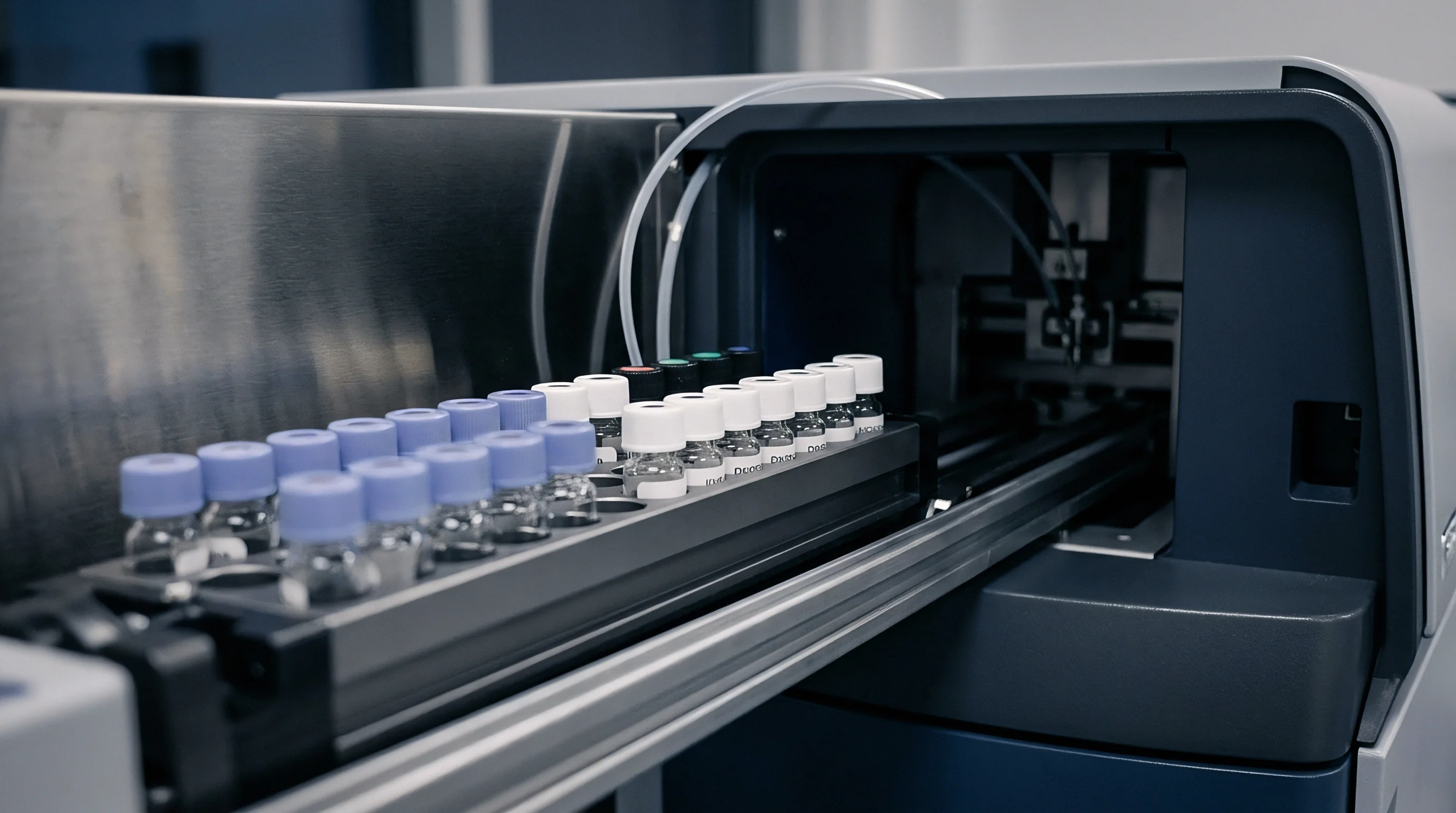
Which Analytical Standard Resolves Unknown Photoinitiators in Post Consumer Resin?
Non-target screening relies on semi-quantification because reference standards for novel photoinitiator breakdown products are not commercially available. Semi-quantification estimates unknown concentrations by comparing peak areas to internal standards added before sample prep. Choice of standard introduces measurement uncertainty due to varying ionization efficiencies across chemical classes.
Using deuterated benzophenone (benzophenone-d10) for gas chromatography and 13C-labeled surrogate compounds for liquid chromatography mitigates matrix ionization suppression, yielding concentration estimates accurate within a factor of two to three.
The table below presents operational specifications, target photoinitiator classes, and screening detection limits for standard analytical workflows applied to recycled polyolefins:
| Methodology | Extraction Solvent | Detection System | Target Chemical Classes | Screening Limit (mg/kg resin) |
|---|---|---|---|---|
| Screening detection limits reflect analytical sensitivity calculated at a signal-to-noise ratio of 10:1 using standard polyolefin film thicknesses of 100 micrometers. | ||||
Matrix suppression is a major hurdle in LC-MS analysis of polyolefin extracts. Polyolefin oligomers ~ especially cyclic and linear alkanes from C12 to C35 ~ co-extract with photoinitiators and enter the electrospray ionization source simultaneously, reducing analyte signal intensity by up to 80 percent. Running extracts through solid-phase extraction cleanup with silica gel or polymeric reversed-phase cartridges retains non-polar polymer oligomers while eluting polar and semi-polar photoinitiators, restoring sensitivity.
Determining the analytical limit of quantification (LOQ) requires validating method recovery in representative polyolefin matrices. Spiking virgin high-density polyethylene and polypropylene with known photoinitiator standards establishes baseline performance. Acceptable recovery must fall between 70 percent and 120 percent with a relative standard deviation below 15 percent.
Calculating the screening detection limit (SDL) for unknown peaks assumes a conservative lower-bound response factor so unidentified chemicals are not underestimated during toxicological review.
A systematic analytical protocol for identifying unknown photoinitiator residues follows a structured sequence of laboratory operations:
- Milling polyolefin resin pellets under liquid nitrogen to achieve a uniform particle size below 500 micrometers.
- Extracting 2.0 grams of cryogenic powder using dichloromethane in a sealed microwave extraction vessel at 60 degrees Celsius for 30 minutes.
- Spiking the extract with internal standards including benzophenone-d10 and triphenylphosphate at 0.1 milligrams per kilogram equivalents.
- Injecting extracts into parallel GC-QTOF-MS and LC-Orbitrap-MS systems operating in full-scan high-resolution acquisition mode.
- Filtering spectral data against polymer additive databases and executing automated elemental composition calculations for unassigned peaks.
- Semi-quantifying all non-target peaks exhibiting signal intensities above the 0.01 milligram per kilogram analytical threshold against internal standard response factors.
The core analytical dilemma remains whether a low-intensity chromatographic peak represents a non-hazardous compound with poor ionization efficiency or a highly potent toxicant with high ionization efficiency, leaving the true margin of safety uncertain.

Toxicology
Evaluating the safety of unidentified chromatographic peaks relies on conservative exposure assumptions and structured hazard frameworks. When unknown photoinitiators and cleavage fragments show up in recycled polyolefins intended for food contact, standard substance-specific toxicity testing is impossible without pure reference materials. Risk assessment defaults to the Threshold of Toxicological Concern (TTC) concept, establishing human exposure limits below which significant health risks are improbable.
The Threshold of Toxicological Concern categorizes organic chemicals based on the Cramer decision tree. Cramer Class I covers simple structures with predictable metabolic pathways indicating low oral toxicity. Cramer Class II addresses intermediate structures.
Cramer Class III includes complex chemical structures with functional groups suggesting toxicity, reactivity, or a lack of metabolic clearance data. Because photoinitiators generally feature aromatic rings, keto groups, phosphine oxides, or nitrogen substituents, both parent compounds and cleavage products fall into Cramer Class III or carry genotoxicity alerts.
Genotoxic evaluation requires strict exposure cutoffs due to the non-threshold nature of DNA damage. The TTC threshold for potential genotoxic substances is set at 0.15 micrograms per person per day, corresponding to a 10 to the minus 6 lifetime excess cancer risk. Translating this daily intake to food packaging assumptions (1.0 kilogram of food packaged in 6.0 square decimeters of plastic per day) yields a maximum tolerable food concentration of 0.00025 milligrams per kilogram (0.25 micrograms per kilogram).
This value serves as the action threshold for any unknown non-target compound whose structure suggests genotoxic potential, such as unreacted alkylating agents or aromatic amines.
For non-genotoxic unknown photoinitiators classified as Cramer Class III, the established TTC human exposure threshold is 90 micrograms per person per day. Applying standard European packaging surface-to-volume conversions (1.0 kilogram of food contact per 6.0 square decimeters, consumed daily by a 60-kilogram adult) translates 90 micrograms daily into a specific migration limit threshold of 0.05 milligrams per kilogram of food (50 micrograms per kilogram). If an unknown photoinitiator residue migrates below 0.05 milligrams per kilogram, non-genotoxic safety is established without needing chemical identification.
Specific migration testing of post-consumer polyolefin plaque into ethanol ninety-five percent at sixty degrees Celsius for ten days sets the baseline screening threshold.
Quantitative Structure-Activity Relationship (QSAR) in silico tools like Derek Nexus, VEGA, and Toxtree predict toxicity when mass spectrometry gives partial structural data. High-resolution mass spectrometry suggests candidate formulas based on exact mass and fragment patterns. Running candidates through QSAR models flags potential mutagenicity, carcinogenicity, skin sensitization, or organ toxicity.
If QSAR models reveal no genotoxic structural alerts, the analytical screening threshold rises from the 0.00025 milligram per kilogram genotoxic cutoff to the 0.05 milligram per kilogram Cramer Class III cutoff, fundamentally changing compliance decisions.
The table below summarizes Threshold of Toxicological Concern tiers, daily exposure limits, equivalent migration limits in food, and actionable screening thresholds for unknown photoinitiator residues:
| TTC Assessment Category | Daily Human Intake Limit (µg/person/day) | Equivalent Food Migration Limit (mg/kg food) | Actionable Analytical Threshold (mg/kg resin) | Required Compliance Action |
|---|---|---|---|---|
Calculating toxicological risk from post-consumer resin requires evaluating mixture toxicity. Recycled polyolefins contain multiple photoinitiators and degradation products at the same time. Applying single-compound TTC thresholds independently to twenty separate unknown peaks ignores cumulative exposure.
Risk assessment uses dose addition for compounds acting through similar mechanisms: summing migration values for all unidentified Cramer Class III photoinitiators ensures combined exposure stays under the 90 microgram per person per day limit.
Evaluating toxicological thresholds requires assessing compliance against explicit regulatory specifications:
- Genotoxic Substance Screening mandates that any unidentified chromatographic peak exceeding 0.00025 milligrams per kilogram food equivalent must undergo positive structural identification or be assumed genotoxic, resulting in compliance failure under Regulation EU 10/2011 Article 19.
- Functional Barrier Efficacy demands proof that internal polymer layers restrict the migration of non-evaluated photoinitiators below the 0.01 milligram per kilogram threshold established under Regulation EU 10/2011 Article 13.
- Specific Migration Limits for authorized photoinitiators, such as 0.6 milligrams per kilogram for benzophenone, apply strictly to the parent molecule and cannot be used to clear structurally modified breakdown products.
- Margin of Safety Calculations for non-target compounds require dividing the benchmark dose lower confidence limit by estimated dietary exposure, demanding a minimum margin of safety of 10,000 for genotoxic substances and 100 for non-genotoxic endpoints.
Under European Union Regulation 2022/1616 Article 14, the converter must explicitly certify that the recycling process reduces unknown non-intentionally added substances to levels where specific migration into food does not exceed 0.01 milligrams per kilogram, unless a comprehensive toxicological dossier establishes safety at higher concentrations.

Proof
Compliance documentation for recycled plastics links analytical screening data directly to specific production lots and processing logs. Placing a recycled polyolefin article into food-contact markets requires a chain of legal and technical documentation that traces raw post-consumer feedstock, decontamination efficiency, analytical screening results, and final migration testing. A declaration of compliance that relies on generic raw material specifications rather than batch-specific analytical proof leaves converters vulnerable to regulatory enforcement and product recalls.
Regulatory frameworks governing recycled food-contact plastics demand strict verification of decontamination processes. European Union Regulation 2022/1616 mandates that all recycled plastic materials placed on the market must originate from suitable decontamination technologies evaluated by the European Food Safety Authority or operated under registered novel technology schemes. The converter must maintain a detailed compliance dossier containing challenge test data.
Challenge trials spike virgin polyolefins with high concentrations of surrogate contaminants, including benzophenone, toluene, chlorobenzene, and phenylcyclohexane, demonstrating that the recycling process achieves at least a 99.9 percent reduction in chemical concentration.
Declarations of compliance must specify the operating scope and boundaries of validity for the supplied resin. A compliant declaration detailing recycled polyolefin pellets must record:
- The registration number of the decontamination technology and recycling plant under the EU RECYC register.
- The specific percentage of post-consumer recycled content incorporated into the final resin blend.
- The maximum allowable contact temperature and duration for the final packaged food product.
- The food simulant types for which migration compliance has been demonstrated, including specific restrictions for fatty foods requiring Simulant D2 (vegetable oil or 95 percent ethanol).
- The screening detection limits achieved during non-target mass spectrometry testing for non-intentionally added substances.
- The calculated total concentration of residual photoinitiators and cleavage fragments expressed in milligrams per kilogram of polymer.
Analytical proof of functional barrier efficacy provides an alternative compliance pathway for multi-layer packaging structures incorporating recycled polyolefins. Placing a layer of virgin polyolefin, ethylene vinyl alcohol, or silicon oxide between the recycled polyolefin layer and the food contact surface creates a physical barrier to migration. Proving functional barrier performance requires mathematical migration modeling using Fickian diffusion equations or physical migration testing using worst-case food simulants.
Modeling parameters must utilize validated diffusion coefficients for specific photoinitiators at the maximum intended storage temperature.
Regulation EU 2022/1616 Article 14 obligates converters to verify that non-intentionally added substances remain below toxicological action levels.
Specific migration testing validates analytical models by measuring compound transport into food simulants under standardized time and temperature conditions. Standard testing conditions for long-term storage at ambient temperature require exposing test plaques to Simulant A (10 percent ethanol), Simulant B (3 percent acetic acid), and Simulant D2 (95 percent ethanol or vegetable oil) for 10 days at 60 degrees Celsius. Simulant E (poly(2,6-diphenyl-p-phenylene oxide), known commercially as Tenax) serves as the standard medium for dry food contact applications.
Testing repeated-use articles requires three consecutive migration exposures using fresh simulant, with compliance determined based on the migration measured during the third exposure period.
Auditing third-party laboratory reports requires examining the exact testing parameters and extraction recovery factors applied during analysis. Test reports that report non-detectable levels without specifying the limit of detection or screening detection limit fail to provide legal proof of compliance. Laboratories must document the precise analytical standards used, internal standard recovery percentages, calibration ranges, and mass spectrometer resolution settings.
A test report indicating “photoinitiators: non-detected” at a detection limit of 0.1 milligrams per kilogram fails to demonstrate compliance with the 0.01 milligram per kilogram functional barrier threshold or the 0.00025 milligram per kilogram genotoxicity action limit.
Integrating non-compliant recycled polyolefin resin into food packaging triggers immediate legal liability across the packaging supply chain. Regulatory authorities conducting market surveillance utilize high-resolution non-target screening to detect un-declared photoinitiators. When border inspections or national control laboratories identify photoinitiator migration exceeding regulatory action levels, enforcement authorities issue public notifications through alert systems, mandate immediate product withdrawals from retail shelves, seize inventory at customs entry points, and issue financial penalties against the designated importer of record.

Valuation
Financial modeling for post-consumer resin integration weighs testing expenditure against tax penalties and market withdrawal risks. Integrating recycled polyolefins into commercial packaging involves a complex balance between raw material pricing, compliance verification costs, regulatory tax structures, and potential product liability exposure. Brand owners and packaging converters adopt recycled plastics to meet corporate sustainability goals and avoid virgin plastic packaging taxes imposed by national jurisdictions.
Failing to manage analytical verification costs converts expected tax savings into severe operational losses.
Virgin polyolefin resins maintain a pricing baseline governed by petrochemical feedstocks, monomer production capacity, and regional logistics. High-grade post-consumer polyolefin resin suitable for food contact commands a significant price premium over virgin resin due to the extensive sorting, washing, super-clean extrusion, and analytical testing protocols involved in its production. De-inked, food-grade post-consumer high-density polyethylene pellets routinely cost 30 percent to 60 percent more per metric ton than prime virgin HDPE.
This raw material premium reduces the direct economic incentive for incorporating recycled content unless offset by packaging tax exemptions.
Plastic packaging taxes enacted across multiple European jurisdictions penalize packaging containing less than 30 percent certified post-consumer recycled content. Standard tax rates average 800 Euros per metric ton of virgin plastic packaging placed on the market. Incorporating certified recycled polyolefins eliminates tax liabilities, creating a financial incentive to utilize post-consumer resin.
To claim tax exemptions, converters must maintain rigorous compliance dossiers proving both the recycled content percentage and the chemical safety of the finished packaging material.
Analytical compliance testing represents a direct recurring operating expense that scales with batch volume and supply chain complexity. High-resolution non-target screening using coupled GC-QTOF-MS and LC-Orbitrap-MS systems costs between 1,500 Euros and 3,500 Euros per resin sample. A commercial converter processing 500 metric tons of recycled polyolefin pellets per month divided into 20 distinct manufacturing lots incurs analytical testing expenses between 30,000 Euros and 70,000 Euros monthly to maintain batch-level compliance verification.
Neglecting lot-level testing to reduce laboratory expenditure exposes the converter to massive financial liabilities if contaminated resin enters production streams.
The table below provides a comparative cost structure analysis illustrating raw material expenditure, compliance testing investments, tax liabilities, and risk exposure profiles across three distinct post-consumer polyolefin sourcing strategies:
| Sourcing Strategy | Raw Resin Cost (€/Metric Ton) | Analytical Testing Cost (€/Metric Ton) | Plastic Packaging Tax (€/Metric Ton) | Total Landed Material Cost (€/Metric Ton) | Financial Risk Profile |
|---|---|---|---|---|---|
Quantifying the financial impact of a product recall demonstrates the economic necessity of rigorous analytical screening. The direct costs of withdrawing non-compliant food packaging from commercial distribution networks include freight logistics, warehouse storage, product destruction fees, legal representation, and administrative enforcement fines. Indirect costs, such as brand equity damage, customer contract terminations, and increased insurance premiums, often exceed direct withdrawal costs by a factor of five.
A single market recall incident resulting from migrated photoinitiator residues can easily generate total financial losses between 2.0 million Euros and 15.0 million Euros.
Supply agreements between resin recyclers, packaging converters, and brand owners must incorporate clear indemnification clauses allocating financial responsibility for chemical non-compliance. Standard purchase contracts mandate that resin suppliers provide lot-specific declarations of compliance backed by accredited third-party analytical reports. Supply contracts must specify that if post-consumer resin contains un-declared photoinitiators exceeding 0.01 milligrams per kilogram migration equivalents, the supplier carries full financial liability for rejected inventory, downtime production costs, and downstream customer indemnification claims.
Procurement desks must structure long-term supply agreements that tie resin pricing directly to verifiable chemical purity metrics. Setting clear specifications for maximum allowable total photoinitiator residues (for example, requiring total aromatic ketones to remain below 1.0 milligram per kilogram of solid resin) creates an enforceable commercial benchmark. Establishing rigorous batch acceptance criteria ensures that the financial benefits of integrating post-consumer polyolefins are protected against analytical non-compliance and regulatory intervention.