Analytical Workflows for Structural Identification of Unknown Migrants in Recycled Polymers
Non-targeted GC-QTOF and LC-Orbitrap screening workflows isolate and structurally identify unknown migrants in recycled plastics to ensure food contact regulatory compliance.

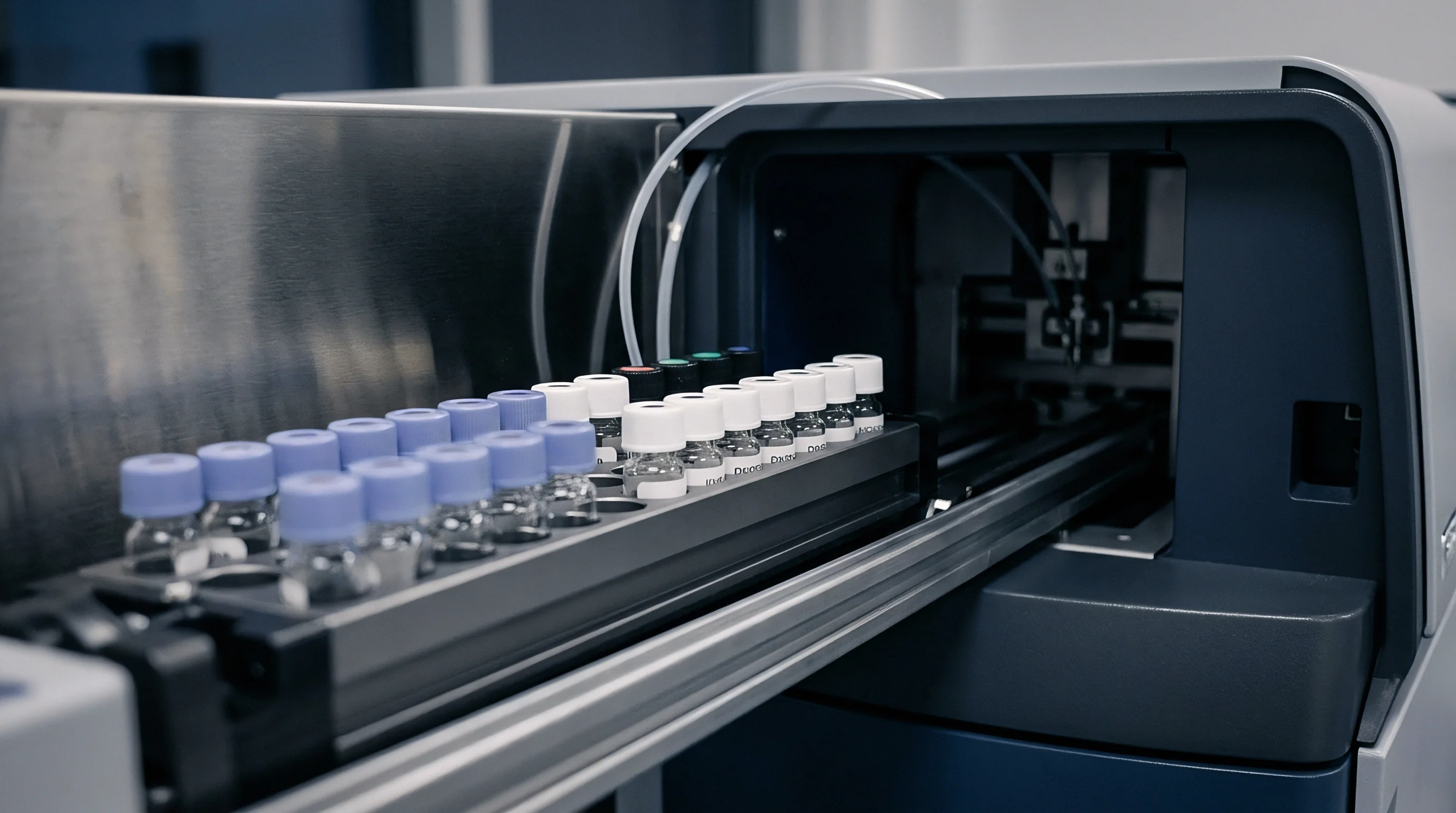
Screen
Sample Preparation and Extraction Protocols
Post-consumer resin carries an untraced chemical history. Reclaimed polyolefins and polyesters retain additives, polymer degradants, consumer residues, and volatile contaminants from prior use cycles. Laboratory characterization begins by isolating these migrants from the bulk polymer matrix without introducing thermal artifacts or losing volatile species.
Mechanical comminution converts rigid plastic pellets or flake into uniform powders with particle sizes under five hundred micrometers. Cryogenic milling under liquid nitrogen prevents local heating that drives off low-boiling compounds or degrades heat-sensitive antioxidants like Irgafos 168.
Solvent extraction methods target specific polarities and molecular mass ranges. Direct solvent extraction using refluxing dichloromethane or chloroform isolates additives, oligomers, and synthetic impurities from polyethylene and polypropylene matrices. Microwave-assisted extraction reduces solvent volumes and extraction durations from hours to minutes, keeping temperature controlled to prevent polymer depolymerization.
Ultrasonic bath extraction at room temperature targets surface-adsorbed species while minimizing matrix dissolution. Testing laboratories select extraction solvents based on swelling behavior; toluene swells polyolefins to release internal migrants, whereas methanol extracts surface residues without dissolving the polymer backbone.
- Cryogenic grinding of post-consumer pellet stock to sub-millimeter particle size maximizes extraction surface area while preventing thermal oxidation during preparation.
- Soxhlet extraction with dichloromethane isolates non-volatile additives and degradation products within six hours of solvent reflux.
- Evaporation under dry nitrogen stream concentrates volatile analytes without causing loss of low boiling point unknowns.
- Reconstitution in high purity mobile phase prepares the sample extract for immediate chromatographic injection.

Simulant Selection for Polyolefin and Polyester Recyclates
Migration characterization mirrors real-world contact through regulated food simulants under defined time and temperature regimes. European standard EN 1186 dictates simulant selection based on target food contact types. Simulant A (ten percent ethanol) models aqueous foods, Simulant B (three percent acetic acid) targets acidic environments, and Simulant D2 (vegetable oil or synthetic triglycerides) represents fatty food matrices.
Polyethylene terephthalate recyclates tested for hot-fill applications undergo exposure to Simulant D2 or fifty percent ethanol for ten days at sixty degrees Celsius. Dry food contact assessments utilize poly(2,6-diphenyl-p-phenylene oxide), commercially designated as Tenax, as Simulant E.
Fifty percent ethanol at sixty degrees Celsius for ten days mobilizes polar and non-polar migrants from recycled polyolefins.
Solvent purity alters background thresholds directly. Gas chromatography blank runs isolate ambient lab contamination, tube phthalates, and septum bleed from authentic polymer migrants. Exhaustive extraction yields total substance content, whereas migration exposure measures kinetic transport across the polymer boundary into the contact medium.
Analytical chemists compare total extract profiles against simulant migration profiles to calculate partition coefficients and diffusion constants. High migration values in fatty food simulants reflect the lipophilic nature of primary polymer additives and secondary oxidation products.
Residual solvent peaks may stem from ambient laboratory air rather than from the recycled resin batches themselves.

Resolution

Gas Chromatography and Mass Spectrometry for Volatile Migrants
Chromatographic separation resolves complex mixtures of unknown migrants into isolated chemical entities prior to mass detection. Volatile and semi-volatile compounds migrate rapidly through polyolefin networks during conversion and end-use storage. Static headspace coupled to gas chromatography isolates volatile organic compounds, including residual monomers like styrene, solvent residues, and short-chain oxidation products.
Headspace extraction temperatures above one hundred degrees Celsius drive volatile migrants into the vapor phase while keeping solid polymer matrices inside the vial.
Comprehensive two-dimensional gas chromatography paired with time-of-flight mass spectrometry separates co-eluting unknown migrants that single-column systems miss. The primary non-polar column separates compounds by boiling point, while the secondary polar column separates species by polarity within seconds. This orthogonal separation resolves complex hydrocarbon humps originating from post-consumer recycled polyolefins into discrete series of alkanes, alkenes, cycloalkanes, and alkylated aromatics.
Electron ionization at seventy electronvolts produces reproducible mass fragmentation patterns suitable for matching against public and proprietary spectral libraries.
| Technique | Target Compound Class | Mass Range (Da) | Typical Ionization Mode | Limit of Detection |
|---|---|---|---|---|
| HS-GC-MS | Volatiles, residual solvents, monomer residues | 30 to 300 | Electron Ionization (EI) | 0.5 ppb to 5 ppb |
| GC-QTOF-MS | Semi-volatiles, fragrance residues, degradation products | 50 to 1000 | EI / Chemical Ionization (CI) | 0.1 ppb to 1 ppb |
| LC-Orbitrap-MS | Non-volatiles, plastic additives, polyester oligomers | 100 to 3000 | ESI (+) / ESI (-) / APCI | 0.01 ppb to 0.1 ppb |
| Py-GC-MS | Polymer backbone, high molecular weight additives | 50 to 800 | Electron Ionization (EI) | 10 ppb to 100 ppb |
| Detection limits measured using standard 6 dm² surface area to 1 kg food contact ratio under Regulation EU 10/2011. | ||||
Liquid Chromatography and High-Resolution Mass Spectrometry for Non-Volatiles
Non-volatile additives and high molecular weight degradation products demand liquid chromatographic separation. Revers-phase ultra-high performance liquid chromatography utilizing C18 or phenyl-hexyl stationary phases isolates polar antioxidants, light stabilizers, slip agents, and oligomeric species. Mobile phase gradients transitioning from acidified water to acetonitrile or isopropanol elute compounds across a wide polarity spectrum within fifteen-minute run cycles.
Additive degradation products require gentle ionization techniques to preserve protonated or deprotonated molecular ions.
Electrospray ionization in positive and negative polarity modes converts liquid analytes into gas-phase ions. Positive mode ionizes basic nitrogenous additives like hindered amine light stabilizers, whereas negative mode targets acidic phenolic antioxidants such as Irganox 1010 and its partial oxidation products. High-resolution quadrupole time-of-flight and Orbitrap mass spectrometers provide mass resolving power exceeding one hundred thousand full width at half maximum.
Accurate mass measurements within one part per million uncertainty allow precise calculation of elemental compositions for completely unknown chemical structures.
- Matrix Ion Suppression co-eluting polymer oligomers reduce ionisation efficiency for trace unknown migrants by up to eighty percent during electrospray ionization.
- Incomplete Chromatographic Separation overlapping peak profiles mask isomer structures, leading to incorrect mass fragment assignment in gas chromatography.
- Fragment Ion Recombination high collision energies in tandem mass spectrometry create secondary fragments that alter spectral library match scores.
Mass accuracy limits formula assignment ambiguity. Retention index systems based on n-alkanes for gas chromatography and homologous alkylbenzene series for liquid chromatography normalize retention times across different analytical benches. Chromatographic retention matching provides an independent validation parameter alongside accurate mass data.
Mass accuracy alone narrows molecular formulas but fails to distinguish geometric isomers without retention data.


Deconvolution

How Do Accurate Mass Data Disambiguate NIAS Structures?
Matrix interference masks trace target analytes. High-resolution mass spectrometry output from post-consumer recycled extracts contains thousands of individual chromatographic peaks, ion adducts, background signals, and instrument noise. Automated deconvolution software groups co-eluting spectral peaks based on retention time alignment, peak shape correlation, and isotopic mass spacing.
Deconvolution algorithms extract clean component spectra from raw data files, isolating true migrant signals from background baseline drift.
Accurate mass measurements yield candidate molecular formulas based on nitrogen rule constraints, valence neutral checks, and element ratio filtering. Isotopic fine structure analysis differentiates elements with similar nominal mass differences, such as sulfur and oxygen species. Tandem mass spectrometry via collision-induced dissociation breaks precursor ions into diagnostic fragment patterns.
Chemical structure elucidation software matches observed fragment spectra against in-silico fragmentation trees generated from chemical structure databases.
| Cramer Structural Class | TTC Human Exposure Threshold (µg/person/day) | Equivalent Food Concentration (ppb) | Required Analytical LOQ (mg/kg food) |
|---|---|---|---|
| Class I (Low Toxicity) | 1800 | 3000 | 3.00 |
| Class II (Moderate Toxicity) | 540 | 900 | 0.90 |
| Class III (High Toxicity) | 90 | 150 | 0.15 |
| Organophosphorus Species | 18 | 30 | 0.03 |
| Genotoxic / Carcinogenic Exclusions | 0.15 | 0.25 | 0.00025 |

Spectral Libraries and Structure Elucidation Algorithms
Public databases contain mass spectra for commercial additives, but post-consumer recycled plastics introduce secondary reaction products unavailable in commercial libraries. Thermal processing of antioxidants like Irgafos 168 produces oxidized phosphate derivatives, quinone intermediates, and chlorinated fragments when recycled resins contained polyvinyl chloride impurities during melt re-extrusion. Identification workflows employ custom spectral libraries compiled from thermal degradation studies of pure additive standards.
High resolution mass spectrometry without retention index matching yields candidate formulas rather than confirmed chemical structures.
Threshold of Toxicological Concern frameworks evaluate structural risks when authentic reference standards remain commercially unavailable. ToxTree and OECD QSAR Toolbox software classify unknown migrant structures according to the Cramer decision tree. Cramer Class I compounds represent low toxicity profiles, whereas Cramer Class III structures contain chemical moieties associated with significant toxicity or reactivity.
Unidentified non-intentionally added substances without confirmed structural assignments fall default into the ten parts per billion screening threshold, requiring analytical limits of quantitation capable of detecting zero point zero one milligrams per kilogram of food equivalent.
Whether non-targeted screening workflows can reliably quantify unknown migrants without authentic reference standards remains an open analytical challenge across European testing laboratories.


Thimble

Quantitative Limits and Response Factor Variance
Quantitative migration analysis requires assigning absolute concentration values to identified unknown migrants. Detector response factors vary by compound class up to an order of magnitude in electrospray mass spectrometry. Quantifying an unknown non-listed substance against a non-structurally matched internal standard introduces measurement uncertainty bands ranging from twenty percent to five hundred percent of the true concentration value.
Analytical laboratories evaluate response factor variations by injecting multi-compound additive calibration sets. Phenolic antioxidants yield significantly lower ionization response factors in positive electrospray mode compared to basic amine light stabilizers. Analytical reports must state which internal standard carried the quantitation calculation for each unassigned peak profile.
Quantitative results reported without standard deviation metrics or response factor corrections distort risk calculations during final compliance reviews.

Derivation of Target Quantitation Thresholds
Target quantitation limits derive directly from packaging surface-to-volume assumptions. Standard European regulatory assumptions assign six square decimeters of packaging surface area to one kilogram of contained foodstuff. Consider a recycled high-density polyethylene food contact container with a wall thickness of one millimeter and a contact area of two square decimeters holding three hundred grams of aqueous food simulant.
To evaluate an unknown migrant against the regulatory ten parts per billion (0.01 mg/kg) functional barrier limit, the absolute analytical sensitivity in the extract vial must be derived. One kilogram of food containing ten micrograms of migrant corresponds to ten micrograms per liter of simulant. Solvent extraction concentrates a ten-gram polymer sample into one milliliter of final test extract, achieving a ten-fold concentration factor.
The liquid chromatograph must achieve a limit of quantitation of one microgram per milliliter for target analytes. If an unknown compound exhibits an ionization efficiency five times lower than the surrogate standard 2,6-di-tert-butyl-4-methylphenol, an unadjusted peak area reading yields an apparent concentration of two parts per billion when the actual migrant concentration sits at ten parts per billion.
Correcting raw peak areas using conservative response factor multipliers prevents false-negative safety declarations, especially as unassigned chromatographic peaks can delay customs clearance. Laboratories apply a ten-fold uncertainty factor to raw chromatographic peak areas when evaluating unknown compounds against Threshold of Toxicological Concern limits in post-consumer polyolefin streams.


Conformity

Article 19 Safety Assessments under European Plastics Regulation
Regulation EU 10/2011 Article 19 obligates business operators to conduct safety assessments for non-listed substances and non-intentionally added substances in food contact plastics. Standard positive lists cover intentional additives, monomeric units, and initial processing aids. Recycled polymer streams contain secondary reaction products, degradation compounds, and environmental contaminants absent from Annex I authorized substance tables.
Compliance dossiers must contain explicit toxicological justifications for every migrant detected above the ten parts per billion threshold.
Converter entities verify that resin suppliers furnish complete documentation chains. Declarations of compliance covering virgin resins prove insufficient when applied to post-consumer recycled content. Auditing teams examine supporting analytical test reports to confirm that non-targeted screening covered both volatile GC-extractable and non-volatile LC-extractable compound fractions.
Verification files lacking raw chromatographic data, extraction details, or toxicological evaluations under Article 19 fail regulatory compliance audits.
Article 19 of Regulation EU 10/2011 places legal responsibility for unlisted migrant safety directly on the business operator placing packaging on the market.
- Chemical Identity Documentation precise CAS numbers and IUPAC designations for all declared additives and known degradation products in the recycled resin blend.
- Migration Testing Evidence analytical reports stating specific simulants, contact durations, exposure temperatures, and surface-to-volume ratios used during verification.
- Toxicological Risk Evaluation written toxicological assessments under Article 19 for all non-listed migrants detected above ten parts per billion.
- Decontamination Process Qualification EFSA opinion reference numbers or challenge test validation reports proving recycling technology cleaning efficiency.

Challenge Test Data and Decontamination Verification
European Regulation EU 2022/1616 lays down strict rules for recycled plastic materials intended for food contact. Mechanical recycling processes must obtain formal authorization based on decontamination efficiency evaluations. Challenge tests validate decontamination process performance by spiking virgin polymer flake with model surrogate contaminants representing diverse chemical functionalities.
Surrogate chemicals include volatile non-polar toluene, semi-volatile polar chlorobenzene, non-volatile non-polar phenylcyclohexane, and high molecular weight benzophenone. The decontamination technology must achieve a minimum three-log reduction (99.9% removal efficiency) for all surrogate compounds during continuous processing. Process monitoring tracks temperature, vacuum pressure, residence time, and gas stripping flow rates to ensure processing conditions match challenge test parameters continuously.
Decontamination failure allows surrogate residues to persist in finished recycled resin lots.
Incorporating Annex IV Section 6 compliance statements in the declaration of conformity shifts legal responsibility for uncharacterized NIAS directly back to the resin recycler, avoiding transferred liability to importers from unverified declarations.


Tariff

Landed Cost Metrics for Non-Targeted Screening
Recycled flake contains secondary thermal degradants. Incorporating post-consumer recycled resin into packaging lines alters landed cost calculations through testing fees, batch qualification delays, and extended quality control holding periods. Non-targeted screening workflows using combined GC-QTOF and LC-Orbitrap high-resolution mass spectrometry add significant upfront laboratory expense per resin batch.
| Batch Weight (Metric Tonnes) | Full NIAS Screening Cost (€) | Testing Cost per Tonne (€) | Customs Hold Duration (Days) | Recall Exposure per Batch (€) |
|---|---|---|---|---|
| 5 | 4,500 | 900.00 | 14 | 45,000 |
| 20 | 4,500 | 225.00 | 14 | 180,000 |
| 50 | 5,200 | 104.00 | 14 | 450,000 |
| 100 | 6,000 | 60.00 | 14 | 900,000 |
Small resin lots bear higher relative compliance overhead. A five-tonne lot of recycled polyethylene terephthalate pellets incurs nine hundred Euros per tonne in analytical characterization expenses alone. Scaling batch sizes to one hundred tonnes dilutes analytical overhead to sixty Euros per tonne, but increases financial exposure if a batch fails chemical migration testing after delivery.
Quality managers balance lot sizes against quarantine warehouse costs and analytical turnaround windows.
Recycling loops accumulate degradation products from primary antioxidants that standard target screening protocols miss.

Commercial Liability and Import Border Rejections
National enforcement authorities test imported plastic packaging at port entry points using rapid non-targeted screening workflows. Detection of unauthorized non-listed migrants, aromatic amines, or heavy metal catalysts triggers immediate EU Rapid Alert System for Food and Feed notifications. Border rejections result in mandatory container re-exportation, incineration at importer expense, or permanent confiscation of non-compliant inventory.
Supply agreements protect buyers by linking resin purchase payments directly to independent analytical verification reports. Purchase contracts incorporate specific indemnification clauses covering product recall costs, port demurrage fees, and regulatory fines resulting from undeclared chemical migrants. Importers who accept generic quality certificates without lot-specific high-resolution screening data remain fully liable for market withdrawals and regulatory enforcement actions under national food contact legislation.
Skipping comprehensive NIAS deconvolution exposes resin importers to border rejections, mandatory inventory destruction, and loss of food-contact certification across whole market regions.