Meaning
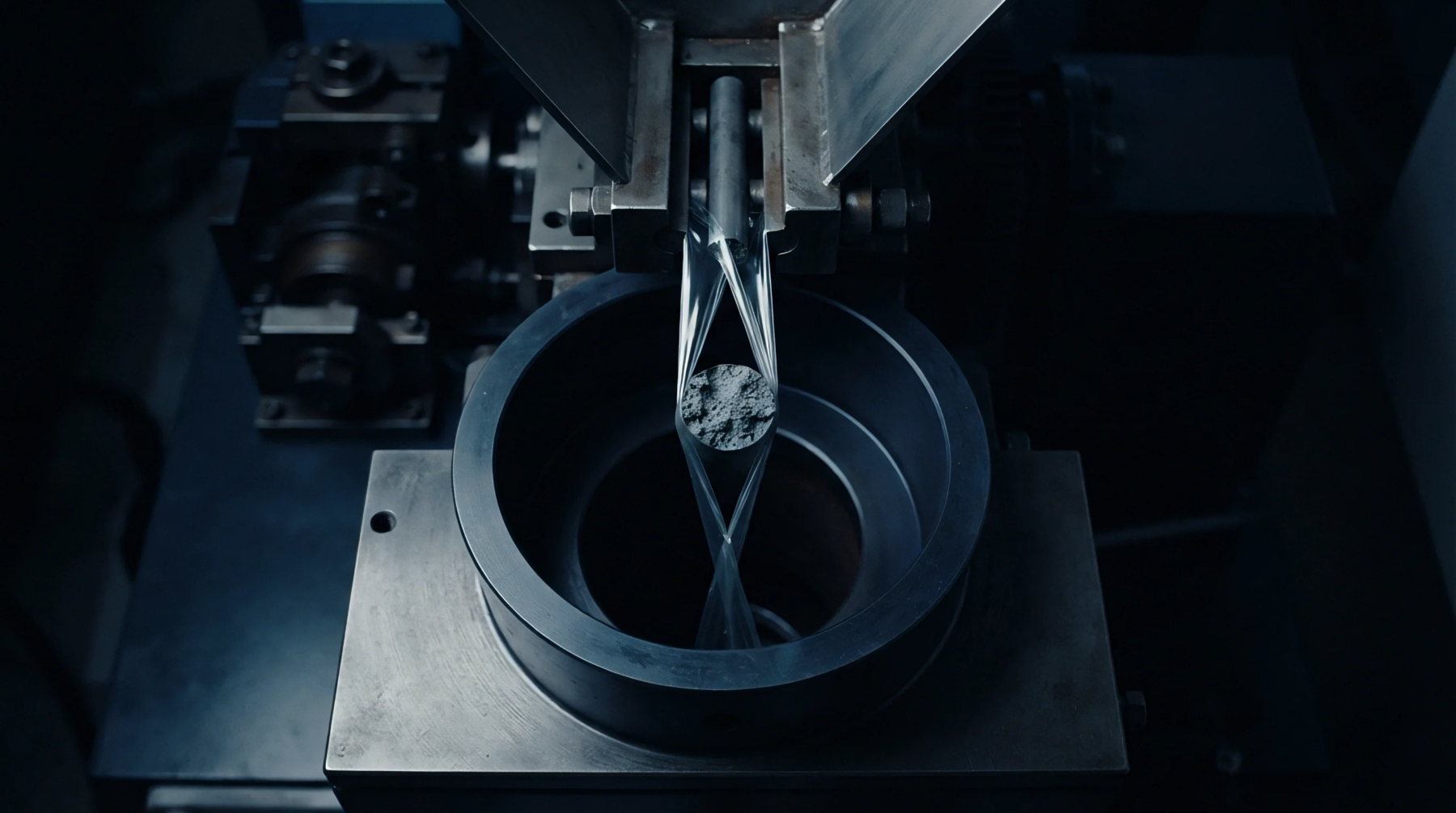
Advanced mass spectrometry methods employ multiple sequential stages of mass selection and fragmentation to identify and quantify chemical compounds within complex matrices. Utilizing tandem mass spectrometry allows polymer chemists to determine the structural composition of trace additives, plasticizers, and degradation products in plastic parts. This high-sensitivity technique separates target ions from background noise, enabling the detection of contaminants even at parts-per-billion concentrations.
Spectral Method
Ionization processes produce molecular ions that are selected by the first mass analyzer according to their mass-to-charge ratio. These precursor ions are then accelerated into a collision cell, where they fragment upon colliding with an inert gas like helium or nitrogen. The resulting product ions are analyzed by a second mass analyzer, creating a distinct fragmentation pattern that represents the chemical fingerprint of the original molecule.
This continuous selection process ensures that only the target ions are analyzed, reducing false positives.
Molecular Fragmentation
Structural identification of unknown contaminants relies on the characteristic cleavage of molecular bonds during the collision-induced dissociation phase. Because different chemical families break apart in predictable ways, analyzing these fragment ions allows researchers to reconstruct the molecular structure of unknown additives or degradation products. This analytical capability is invaluable for reverse-engineering competitor compounds and for investigating part failures caused by material contamination.
Polymer Profiling
Sourcing departments and quality managers use these multi-stage spectrometry tools to verify the composition of recycled resins and to monitor the degradation of plastics during processing. Identifying trace degradation compounds helps optimize the processing window, ensuring that the polymer melt is not exposed to temperatures that would compromise its molecular integrity. This monitoring maintains the mechanical and chemical stability of the molded products.