Mechanisms of Functional Barrier Penetration by Degradation Products in Recycled Food Containers
Functional barriers prevent degradation product migration when virgin layer thickness delays chemical breakthrough beyond the container commercial shelf life.


Yield
During extrusion, mechanical recycling subjects post-consumer polymers to repeated thermal spikes that cleave the polymer backbone. Polyolefins and polyesters experience intense heat, mechanical stress, and ambient oxygen inside melt filters and pelletizing screws. These stressors trigger radical reactions that generate low molecular weight compounds, cyclic oligomers, and oxidized polar species.
As these breakdown products accumulate, they alter the resin’s chemical profile and introduce mobile species capable of migrating into food contact layers.

Thermomechanical Chain Scission Dynamics
Melt processing subjects polyesters and polyolefins to severe shear, homolytically cleaving long polymer chains into alkyl free radicals. In polyethylene terephthalate, thermal stress drives intra- and intermolecular transesterification along with beta-scission at ester linkages, producing vinyl ester and carboxyl end groups alongside cyclic oligomers (monomers, dimers, and trimers of ethylene terephthalate). In polyolefins like high-density polyethylene and polypropylene, thermal oxidation follows autoxidation cascades: hydroperoxides form at tertiary carbon centers before decomposing into alkoxy radicals, which undergo beta-scission to yield short-chain aliphatic aldehydes, ketones, carboxylic acids, and alkanes.
Processing conditions dictate how many scission products form. Temperatures above two hundred fifty degrees Celsius accelerate thermal cleavage by increasing free radical concentrations in the melt. Polypropylene subjected to five consecutive extrusion passes shows a three-fold increase in carbonyl index alongside a drop in average molecular weight.
These lower molecular weight fragments disrupt matrix integrity, depressing melt viscosity and producing a high concentration of potential migrants. This abundance of small molecules steepens the chemical potential gradient across any functional capping layer over the recycled core.

Generation of Low Molecular Weight Volatiles
Primary decomposition pathways yield secondary compounds like aldehydes and ketones. Recycled polyethylene terephthalate degrades thermally into acetaldehyde and formaldehyde, as well as benzene, toluene, and 2-methyl-1,3-dioxolane. Acetaldehyde levels in mechanically recycled PET flakes typically range from five to thirty milligrams per kilogram before vacuum decontamination.
While high decontamination temperatures lower volatile content, subsequent injection molding regenerates these target compounds as unstable end groups break down.
Mechanical recycling loops accumulate thermal breakdown products that continuously lower the thermodynamic lag time of functional inner layers.
Polyolefin degradation produces distinct volatile profiles rich in branched alkanes, alkenes, and oxygenated species. Thermal breakdown of antioxidant additives like hindered phenols and phosphites yields secondary oxidation products, including 2,6-di-tert-butyl-4-methylphenol derivatives and oxidized phosphite esters. Meanwhile, residual printing inks, adhesives, and prior food contaminants in the waste stream undergo secondary thermal reactions during extrusion, generating non-intentionally added substances with molecular masses from fifty to five hundred Daltons ~ small enough to diffuse rapidly through polymer matrices at ambient storage temperatures.
Recycled high-density polyethylene crates processed under aggressive shear accumulate complex mixtures of volatile organic compounds. Gas chromatography coupled with mass spectrometry reveals over two hundred distinct non-intentionally added substances in un-decontaminated post-consumer polyolefins. Linear aldehydes ~ specifically hexanal, octanal, and nonanal ~ impart off-odors at concentrations below five parts per billion in aqueous food simulants.
These products serve as chemical markers of thermal history, reflecting the extent of polymer degradation and highlighting potential migration risks across functional barriers.
| Base Resin Matrix | Primary Degradation Pathway | Dominant Degradation Products | Molecular Weight Range (Da) | Typical Matrix Concentration (mg/kg) |
|---|---|---|---|---|
| Recycled PET (rPET) | Thermal ester cleavage & transesterification | Acetaldehyde, terephthalic acid cyclic trimers, vinyl esters | 44 ~ 576 | 5.0 ~ 45.0 |
| Recycled HDPE (rHDPE) | Thermo-oxidative radical autoxidation | Hexanal, octanal, branched alkanes, oxidized phosphites | 72 ~ 350 | 12.0 ~ 120.0 |
| Recycled PP (rPP) | Beta-scission at tertiary carbons | 2,4-Dimethyl-1-heptene, methyl ketones, hindered phenol residues | 84 ~ 420 | 18.0 ~ 210.0 |

Post-Consumer Contaminant Accumulation
Contaminants enter recycling streams via consumer misuse, labels, adhesives, and printing inks. Solvents, limonene from detergent residues, fatty acid esters, and wash-water additives absorb into the polymer matrix during primary use and sorting. Washing removes surface dirt, but absorbed compounds stay trapped in amorphous regions.
Thermal re-processing then distributes these contaminants uniformly throughout the resin pellet batch, converting localized surface contamination into systemic bulk contamination.
Mechanical recycling loops lacking deep vacuum decontamination retain significant levels of these absorbed species. Limonene in recycled high-density polyethylene milk bottles often persists at one to fifteen milligrams per kilogram post-pelletization. Acting as a plasticizer, limonene increases free volume within the polyolefin matrix, accelerating the diffusion of co-existing degradation species.
This contaminant buildup lowers the threshold concentration needed for migrants to cross inner virgin capping layers, shortening barrier life under real-world storage conditions.
Although vacuum decontamination equipment is designed to strip low molecular weight species down to non-detectable levels, analytical testing shows that high molecular weight oligomers, oxidized additive fragments, and non-volatile thermal breakdown products remain largely unaffected by vacuum stripping due to their low vapor pressures.


Sieve
Polymer morphology governs how migrant molecules move through continuous solid matrices. Diffusive transport relies on the random thermal motion of chain segments, which creates transient voids within the bulk structure. Small degradation products jump between these voids whenever thermal energy exceeds the activation energy of diffusion.
The size, shape, and distribution of these micro-voids determine whether a degradation product remains trapped in the recycled core or migrates toward the food contact surface.

Free Volume Theory and Micro-Void Kinetics
Free volume is the unoccupied space within a polymer matrix available for segment motion and penetrant transport. Fractional free volume increases sharply above the glass transition temperature, where thermal energy triggers cooperative chain segment movement. Degradation products use these transient free volume pockets to step through the matrix, with diffusion rates scaling with the ratio of migrant molecular volume to average void size.
Crystalline domains act as impermeable barriers, forcing migrants to take tortuous paths through surrounding amorphous phases. High-density polyethylene, with fifty to seventy percent crystallinity, displays lower diffusion coefficients for aliphatic migrants than low-density polyethylene at forty percent crystallinity. However, compact degradation products like acetaldehyde and formaldehyde have cross-sectional diameters under three Angstroms.
These small dimensions permit rapid passage through amorphous channels in semi-crystalline polymers, bypassing tortuosity constraints even at room temperature.
Diffusion rates scale exponentially with temperature. Rising ambient temperatures increase chain mobility, creating larger, more frequent free volume voids. This thermal expansion of the matrix sieve lowers the kinetic barrier to movement, allowing larger cyclic oligomers and oxidized additive fragments to penetrate the structure.
Under thermal stress, chain relaxation dynamics continuously reshape the local sieve architecture, shifting transport mechanics from Fickian diffusion to anomalous non-Fickian transport during extended hot-fill operations.

Molecular Weight Cutoffs for Matrix Transport
Transport rates through polymer matrices depend heavily on migrant molecular weight and spatial cross-section. Small molecules under one hundred Daltons permeate polyolefin layers rapidly, reaching thermodynamic equilibrium within hours. Medium molecular weight compounds between one hundred and one thousand Daltons exhibit diffusion coefficients that decay according to power-law relationships with molecular mass.
Above one thousand Daltons, compounds show negligible diffusion at room temperature unless the host polymer undergoes severe swelling or chemical degradation.
Cyclic PET oligomers present a distinct transport challenge because of their rigid ring geometries. The cyclic trimer of ethylene terephthalate (molecular weight five hundred seventy-six Daltons) has a low diffusion coefficient in virgin PET at twenty-three degrees Celsius. Inside recycled PET, however, low molecular weight cleavage products cause local plasticization that expands matrix free volume and shifts the threshold for oligomer transport.
Small degradation products effectively enlarge the functional pore dimensions of the matrix sieve.
Amorphous regions govern mass transfer rates. Because polyolefins have glass transition temperatures below zero degrees Celsius, their amorphous segments remain rubbery at standard storage temperatures, undergoing rapid segmental motions that yield high diffusion coefficients for organic degradation products. PET, by contrast, has a glass transition temperature near seventy-eight degrees Celsius and remains glassy at room temperature.
In glassy polymers, restricted chain motion limits free volume, keeping diffusion coefficients low for migrants with molecular weights above two hundred Daltons.

Polymer-Migrant Interaction Mechanics
Chemical affinity between degradation products and host polymers alters transport kinetics. Polar species like short-chain organic acids and aldehydes dissolve poorly in non-polar polyolefin matrices, driving high thermodynamic activity coefficients. This elevated activity forces polar migrants toward matrix boundaries, accelerating their migration into polar food simulants.
Conversely, non-polar species like aliphatic hydrocarbons dissolve readily in polyolefin structures, resulting in lower activity coefficients but higher retention within the core layer.
When food simulants contact the inner surface of a package, small simulant molecules penetrate the polymer matrix. Organic solvents, ethanol solutions, and vegetable oils cause localized swelling, disrupting inter-chain forces and increasing free volume. This swelling depresses the glass transition temperature of the packaging layer, plasticizing the matrix and accelerating the transport of trapped degradation species.
Under wet or fatty food contact, environmental plasticization turns an effective dry-food barrier into a permeable layer.
Amorphous regions absorb liquid food components rapidly, driving physical expansion. Swelling kinetics depend on how closely the solubility parameters of the food contact medium match those of the capping layer resin. Isooctane and vegetable oils penetrate polyolefin capping layers within hours, boosting the diffusion coefficients of internal degradation species by two to three orders of magnitude.
This interaction weakens the matrix sieve, permitting higher molecular weight migrants to pass into the food.
What analytical techniques can reliably quantify local free volume changes at the microscale interface between recycled cores and virgin functional barriers during active thermal processing?

Laminate
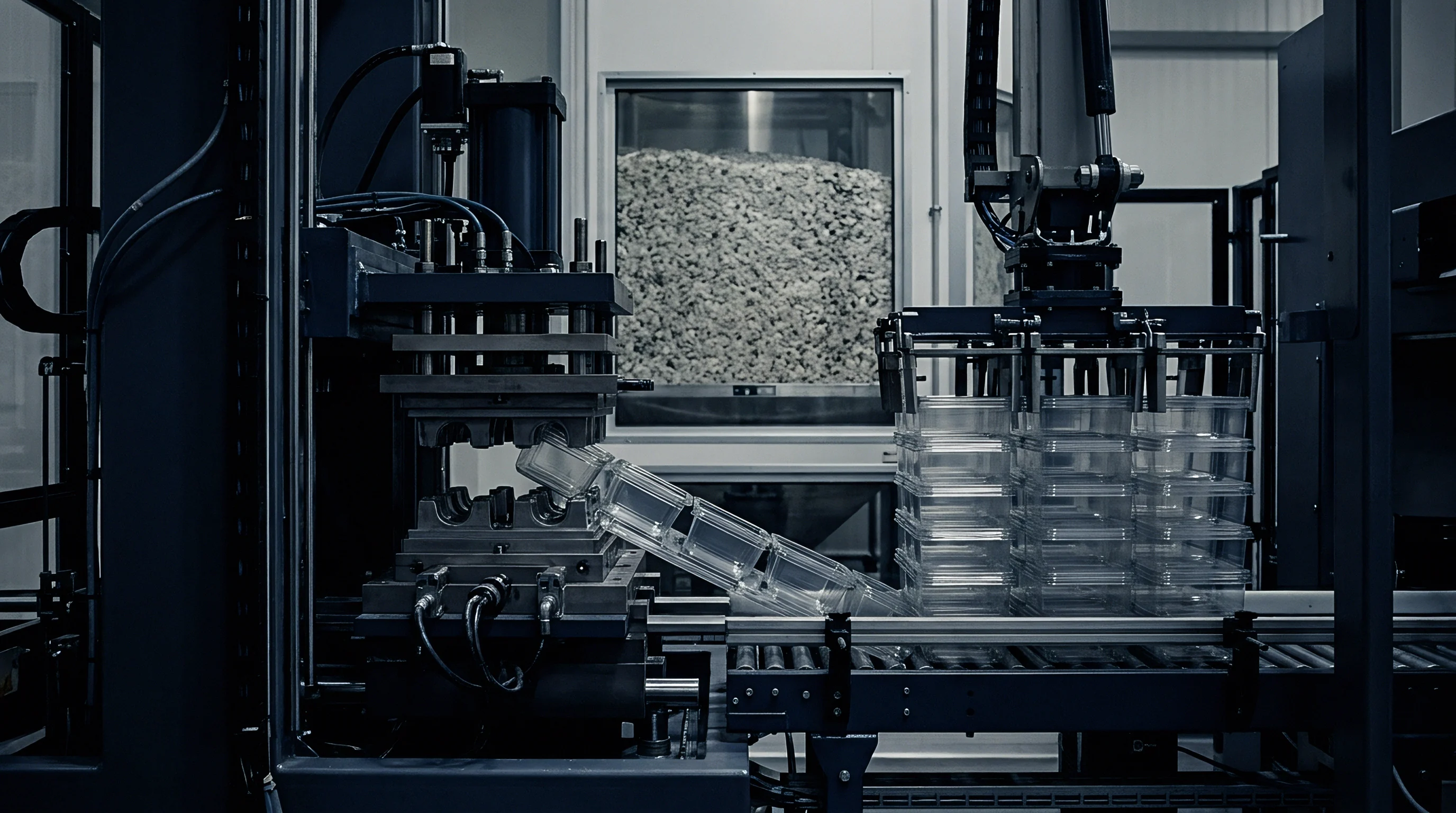
Multi-layer coextrusion structures separate recycled core resins from direct contact with packaged contents. Coextruded packaging typically relies on an A-B-A or A-B structure, where layer B contains the post-consumer recycled polymer and layer A is a virgin polymer serving as the functional barrier. The performance of this virgin capping layer hinges on maintaining physical continuity, uniform thickness, and strong interfacial bonding across the entire package.

Coextrusion Architecture and Layer Interfaces
Coextrusion feedblocks merge distinct melt streams into layered structures before they enter the die. Viscosity and elasticity mismatches between recycled core resins and virgin capping polymers trigger interfacial instabilities during extrusion. A lower-viscosity resin can encapsulate the higher-viscosity core stream, resulting in non-uniform layer distribution across the package width.
Similarly, interfacial wave instabilities cause localized thinning of the virgin capping layer, dropping local barrier thickness below design tolerances.
Interfacial integrity depends on chemical compatibility between virgin capping resins and recycled core materials. If rPET forms the core and a polyolefin forms the contact layer, direct adhesion fails without a tie layer. Ethylene-acrylic acid copolymers or maleic anhydride-grafted polyolefins are coextruded to bond these dissimilar materials.
However, thermal stress during conversion can trigger phase separation at tie-layer interfaces, creating micro-voids that collect volatile degradation products. These interfacial voids then act as reservoirs that drive migration through localized thin spots in the inner virgin barrier.
Layer thickness uniformity determines overall barrier lifetime. Thin virgin skin layers ~ designed at five to ten micrometers ~ are highly susceptible to gauge variation during thermoforming. Deep-draw packaging geometries stretch multi-layer structures unevenly, thinning the functional barrier at corner radii by up to eighty percent compared to flat sheet dimensions.
This localized thinning shortens the diffusion path, accelerating breakthrough of core degradation products into the package cavity.
Pinholes, Micro-Fissures, and Physical Defect Pathways
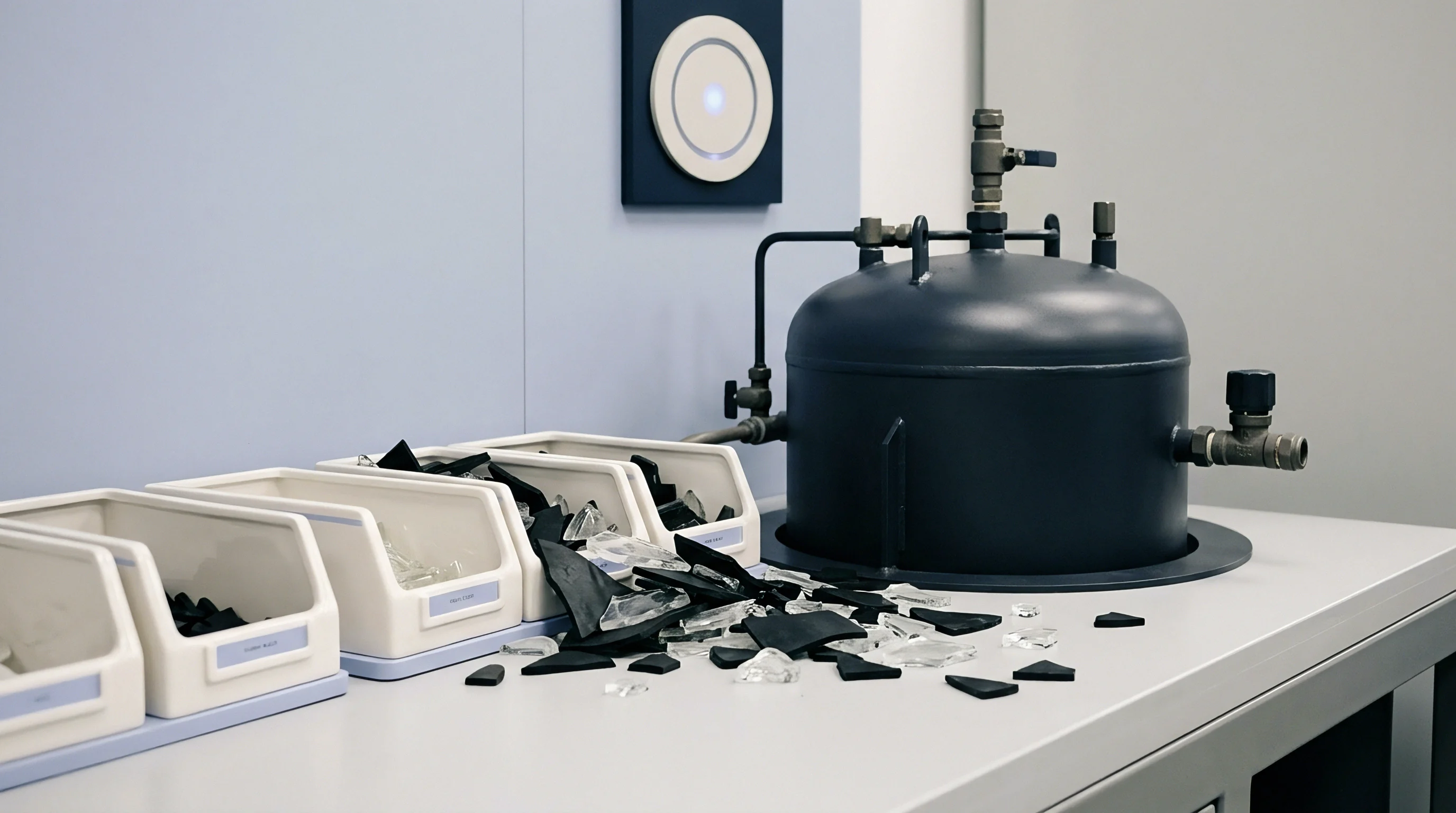
Inclusions in recycled resins create physical breach pathways through functional capping layers. Post-consumer recycled plastics often contain unmelted high-temperature polymers, aluminum fragments, silica particles, and cross-linked gels. During sheet extrusion or blow molding, these rigid particles pass through the die and create localized stress concentrations within thin virgin capping layers.
Mechanical stretching during thermoforming then causes the virgin polymer to tear around these rigid inclusions, creating micro-fissures and pinholes that pierce the barrier entirely.
Pinholes eliminate diffusive resistance, converting mass transfer from molecular diffusion to convective pore flow. A single micro-fissure five micrometers wide bypasses the diffusive path through a thirty-micrometer virgin layer, letting volatile degradation products like hexanal and acetaldehyde escape directly into the package headspace. Because defect-driven transport exceeds diffusive transport by several orders of magnitude, packaged food contaminates rapidly regardless of the virgin polymer’s intrinsic matrix properties.
Gel formation in recycled polyolefins represents another structural failure mode. Oxidation during primary use and re-processing forms cross-linked gel particles that fail to melt homogeneously during extrusion. These gels disrupt laminar flow, producing optical defects and dimples across the capping layer interface.
Under mechanical stress or flexural fatigue during transit, the rigid gel boundaries detach from the surrounding ductile matrix, forming micro-void networks that allow rapid migrant transport across the barrier.
| Barrier Architecture | Failure Mode | Structural Root Cause | Impact on Migration Rates |
|---|---|---|---|
| Virgin Polyolefin Capping Layer (10 µm) | Thermoforming Gauge Thinning | Excessive draw ratios at package corners during forming | 300% to 800% increase in migrant flux rates |
| rPET Core / EVOH Barrier / PE Contact Layer | Interfacial Delamination | Tie layer thermal degradation and moisture absorption | Accumulation of volatile degradation species in delamination pockets |
| Virgin HDPE Skin / rHDPE Core | Particulate Pinhole Breach | Rigid non-melting contaminants in recycled resin matrix | Direct convective transport bypasses diffusive resistance entirely |
| Multilayer Coextruded Polyolefin Sheet | Environmental Solvent Swelling | Fatty food simulant absorption into amorphous capping phase | 100-fold to 1000-fold increase in core migrant diffusion coefficients |

Swelling Kinetics under Food Simulant Contact
Food contact media penetrate inner capping layers at rates governed by chemical compatibility and temperature. Aqueous simulants, such as ten percent ethanol and three percent acetic acid, show minimal interaction with polyolefin inner layers, preserving baseline matrix density and diffusion resistance. By contrast, fatty food simulants ~ like vegetable oil, polyisobutene, and fifty percent ethanol ~ dissolve into polyolefin capping matrices and induce rapid swelling.
Absorbed simulant molecules expand free volume, lowering the glass transition temperature and increasing chain segment mobility.
Fatty simulants accelerate swelling kinetics. As simulant molecules penetrate the virgin capping layer, they weaken cohesive inter-chain forces, expanding free volume pockets throughout the polymer structure. This swelling wave advances from the food contact surface inward toward the recycled core.
Once the swelling front reaches the core interface, the diffusion coefficient of degradation products stored within the virgin layer jumps dramatically. The swollen layer loses its barrier capability, allowing medium molecular weight oligomers and oxidized additive products to migrate freely into the food.
Dynamic swelling shifts the transport regime from pure Fickian diffusion to Case II transport, where mass transfer kinetics depend on polymer chain relaxation speeds rather than concentration gradients alone. High temperatures ~ such as those encountered during hot-fill operations at ninety degrees Celsius or microwave heating ~ accelerate simulant absorption. Consequently, virgin functional barriers designed for ambient dry-food storage can fail rapidly when exposed to fatty liquids under hot-fill conditions.
Selecting an inadequate barrier thickness or ignoring gauge variation during deep-draw thermoforming exposes packaged foods to core degradation products ~ leading to regulatory non-compliance, product recalls, and forfeiture of market access.


Breakthrough
Transient mass transfer precedes steady-state chemical migration across functional barriers. Once a package is filled, degradation products in the recycled core begin diffusing into the virgin inner capping layer. The time required for migrants to cross this inner layer and reach the food contact surface is defined as the lag time.
Understanding lag-time dynamics makes it possible to predict barrier longevity under specific storage conditions.
Lag-Time Mathematical Modeling
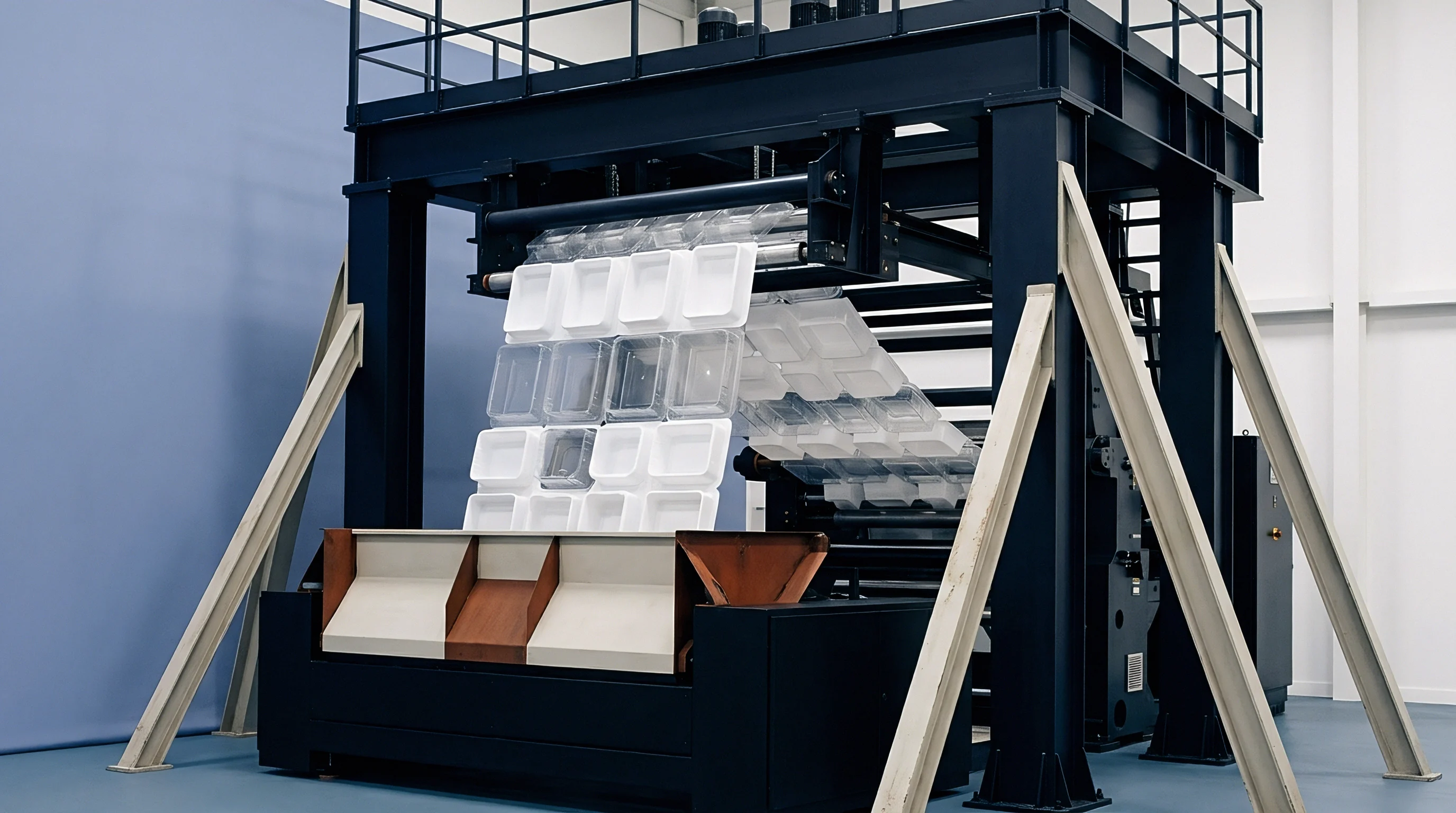
Mathematical modeling of functional barrier transport relies on Fick’s second law of diffusion, which governs non-steady-state concentration profiles over time. Crank’s analytical solution for one-dimensional diffusion across a clean, isotropic capping layer defines lag time (tlag) as a function of barrier thickness (l) and the migrant diffusion coefficient within the barrier (DP):
tlag = fracl26 DP
This relationship shows that barrier lag time scales with the square of layer thickness. Doubling the virgin capping layer quadruples the time required for core degradation products to reach the food contact surface. Conversely, localized thinning sharply reduces lag time, accelerating chemical breakthrough.
Diffusion coefficients (DP) depend on temperature, migrant molecular weight, and polymer matrix structure. Estimation models like the Piringer model calculate DP using empirical polymer-specific parameters (AP’), temperature (T), and migrant relative molecular mass (Mr):
DP = D0 · expleft( AP’ – α · Mr2/3 – fracEAR T right)
Here, AP’ represents the diffusive resistance of the host polymer, α is a scaling constant, EA is the activation energy for diffusion, R is the universal gas constant, and T is absolute temperature in Kelvin. Glassy polymers like PET have low AP’ values, yielding small diffusion coefficients and long lag times. Rubbery polyolefins possess high AP’ values, resulting in high diffusion coefficients and short lag times for low molecular weight degradation products.
Consider a multi-layer packaging system consisting of an rPET core shielded by a virgin rPET inner layer with a diffusion coefficient of 1.0 × 10⁻¹⁴ cm2/s for acetaldehyde at twenty-three degrees Celsius. Applying Crank’s lag-time formulation to a twenty-micrometer functional capping layer yields a calculated lag time of sixty-six days before measurable breakthrough occurs at the inner contact surface.

Worked Case: Thickness Sensitivity Analysis
To illustrate the operational sensitivity of functional barrier performance, consider a multi-layer container storing aqueous food at twenty-three degrees Celsius with a target degradation product of molecular weight one hundred fifty Daltons (such as hexanal in rHDPE). The diffusion coefficient (DP) of hexanal in virgin HDPE at twenty-three degrees Celsius is established at 2.0 × 10⁻¹⁰ cm2/s. Evaluating three barrier thickness scenarios ~ five, fifteen, and thirty micrometers ~ shows the impact of gauge:
For the five-micrometer barrier (l = 5 × 10⁻⁴ cm):
tlag = frac(5 × 10⁻⁴)26 × (2.0 × 10-10) = frac2.5 × 10-71.2 × 10-9 = 208.3 seconds ≈ 3.47 miνtes
For the fifteen-micrometer barrier (l = 15 × 10-4 cm):
tlag = frac(15 × 10-4)26 × (2.0 × 10-10) = frac2.25 × 10-61.2 × 10-9 = 1875 seconds ≈ 31.25 miνtes
For the thirty-micrometer barrier (l = 30 × 10-4 cm):
tlag = frac(30 × 10-4)26 × (2.0 × 10-10) = frac9.0 × 10-61.2 × 10-9 = 7500 seconds ≈ 125 miνtes ≈ 2.08 hours
These calculations show that in rubbery polyolefins, thin virgin capping layers offer only brief lag times for low molecular weight degradation products. Over commercial shelf lives exceeding six months at ambient temperatures, polyolefin functional layers under fifty micrometers fail to prevent core migrants from reaching packaged contents, necessitating thicker capping layers or high-barrier surface treatments such as silicon oxide coatings.

Arrhenius Temperature Scaling Effects
Temperature shifts dramatically alter migration kinetics through functional barriers. The temperature dependence of the diffusion coefficient follows an Arrhenius relationship:
DP(T) = D0 · expleft( -fracEAR T right)
Activation energies (EA) for organic degradation products diffusing through polyolefins range from forty to ninety kilojoules per mole. Increasing storage temperature from twenty to forty degrees Celsius boosts the diffusion coefficient by a factor of four to eight, depending on migrant size. Consequently, a barrier designed for a two-year lag time under refrigeration at four degrees Celsius may suffer breakthrough within twenty days if exposed to elevated room temperatures during distribution.
Hot-fill processing introduces severe thermal stress. Filling containers at ninety degrees Celsius elevates matrix temperature instantly, lowering chain relaxation resistance and driving diffusion coefficients up by three orders of magnitude. Under these conditions, core degradation products cross the capping layer within minutes, rendering static pre-fill lag-time calculations irrelevant unless hot-fill transient dynamics are integrated into compliance models.
Crystallinity restricts overall migrant mobility, but thermal shifts near phase transitions alter matrix morphology in semi-crystalline polymers. Heating polypropylene near its alpha-relaxation temperature unlocks amorphous segment mobility, accelerating migrant transport across capping layers well below the bulk melting point.
Which Analytical Detection Thresholds Govern Functional Barrier Integrity Failure?
Analytical resolution determines whether a functional barrier is classified as intact or compromised. High-sensitivity protocols rely on gas or liquid chromatography coupled with high-resolution mass spectrometry. These systems detect migrant breakthrough at trace levels, with quantification limits extending down to 0.01 milligrams per kilogram of food simulant (ten parts per billion).
Targeted analytical methods screen for known degradation products, including acetaldehyde, 2-methyl-1,3-dioxolane, hexanal, and specific oligomeric series. Non-targeted screening evaluates full mass spectra profiles to spot unexpected non-intentionally added substances that permeate the capping layer. When unassigned chromatographic peaks exceed the ten parts per billion threshold, the capping layer loses its legal designation as an effective functional barrier under European regulatory standards.
Detection sensitivity depends on the choice of food simulant. Tenax, used for dry food simulation, absorbs volatile degradation species efficiently, yielding low detection limits during thermal extraction. Liquid simulants require liquid-liquid or solid-phase microextraction pre-concentration, introducing recovery variations that can obscure early breakthrough.
Analytical workflows therefore require strict recovery verification across all target volatility ranges to confirm true lag-time limits.
Thick capping layers extend breakthrough times, but they cannot halt thermodynamic equilibration indefinitely once penetrants breach the barrier interface.


Conformity
Compliance under Regulation EU 10/2011 requires empirical testing alongside theoretical diffusion modeling. Article 13 defines a functional barrier legally, permitting non-listed recycled substances behind a barrier provided their migration into food stays below 0.01 milligrams per kilogram. This strict threshold applies to all non-mutagenic, non-carcinogenic, and non-reprotoxic compounds, demanding rigorous analytical validation for every production batch placed on the market.

Non-Intentionally Added Substances Screening Protocols
Screening for non-intentionally added substances requires advanced chromatographic workflows combining volatile, semi-volatile, and non-volatile extraction methods. Headspace gas chromatography coupled with mass spectrometry isolates volatile breakdown products like aldehydes, alkanes, and residual solvents. Direct injection gas chromatography with flame ionization or mass spectrometry targets semi-volatile species, including antioxidant oxidation products, plasticizer residues, and ink degradation compounds.
Non-volatile species, including cyclic oligomers and high molecular weight photo-initiator fragments, require liquid chromatography coupled to electrospray ionization quadrupole time-of-flight mass spectrometry. This high-resolution technique delivers accurate mass measurements to assign elemental formulas to unknown degradation products crossing the capping layer. Chromatographic peaks exceeding ten parts per billion must undergo toxicological evaluation or structure-activity relationship modeling (such as the Cramer decision tree) to confirm the absence of genotoxic potential.
Screening protocols demand rigorous blank controls and recovery standards. Matrix interference from swollen polymer components can suppress ionization signals during mass spectrometry, leading to underestimated migrant levels. Calibration curves built with isotope-labeled internal standards compensate for matrix effects, ensuring accurate quantification of trace degradation products migrating through virgin functional barriers.
Regulatory Limits and Specific Migration Thresholds
Food contact regulations enforce strict numerical limits to protect consumer health. Overall migration limits cap the total quantity of non-volatile substances transferred from a material into food simulants at ten milligrams per square decimeter of contact area. Specific migration limits apply to individual chemical entities based on toxicological evaluation, ranging from zero point zero five milligrams per kilogram for certain heavy metals and monomer residues to higher limits for approved additives.
Under Article 13 of Regulation EU 10/2011, carcinogenic, mutagenic, or reprotoxic substances cannot be used behind a functional barrier at any concentration. Packaging lines must ensure core recycled resins do not contain these substances or demonstrate that barrier performance prevents their transfer entirely, with detection limits verified at or below 0.01 milligrams per kilogram. Confirming non-detectability at this level requires large sample volumes, low-noise instrumentation, and rigorous method validation.
| Regulatory Parameter | Applicable Standard / Article | Testing Simulant & Environment | Target Limit Value | Compliance Action Threshold |
|---|---|---|---|---|
| Functional Barrier Max Migration | Regulation (EU) 10/2011 Article 13 | Simulants A, B, D2 (10 days at 60°C) | 0.01 mg/kg (10 ppb) | Any uncharacterized mass peak > 10 ppb invalidates barrier status |
| Overall Migration Limit (OML) | EN 1186 Test Series | 3% Acetic Acid, 10% Ethanol, Vegetable Oil | 10 mg/dm² of surface area | Gravimetric residue weight > 10 mg/dm² fails lot clearance |
| Specific Migration Limit (SML) – Acetaldehyde | Regulation (EU) 10/2011 Annex I | Simulant E (Tenax) or Water (10 days at 40°C) | 6.0 mg/kg | Gas chromatography peak area exceeding 6 ppm standard fails lot |
| Genotoxic Hazard Threshold | EFSA Scientific Opinion Guidelines | Total Migration Extract Concentrates | 0.00015 mg/kg (0.15 ppb) | Positive Ames test or structural alert requires total substance removal |
Testing parameters mirror worst-case foreseeable use. Compliance testing for long-term ambient storage exposes the barrier to Simulant A (ten percent ethanol), Simulant B (three percent acetic acid), and Simulant D2 (vegetable oil) for ten days at sixty degrees Celsius ~ an accelerated regime simulating shelf lives beyond one year at room temperature. For hot-fill or microwave applications, exposure conditions escalate to two hours at one hundred degrees Celsius or oil contact at one hundred seventy-five degrees Celsius, placing severe stress on barrier performance.

Traceability and Quality Assurance Records
Declarations of Compliance must document the supply chain lineage, production history, and analytical testing supporting any multi-layer container using recycled resins. A valid declaration details the packaging structure, specifying polymer grades, layer thickness ratios, and the position of functional barrier layers within the multi-layer wall.
Supporting compliance files must include accredited laboratory test reports linking analytical migration data directly to manufactured resin lot numbers. Documentation must also record coextrusion operating conditions ~ specifically barrel temperature profiles, melt filtration levels, and inline layer thickness logs ~ to confirm that production containers match the physical dimensions and structural integrity of qualified test samples.
Quality assurance programs under Regulation EC 2023/2006 require continuous batch monitoring for recycled resin purity and functional barrier continuity. Real-time optical sensors measure layer thickness across coextruded sheet, automatically rejecting material if virgin capping layer thickness drops below calculated lag-time safety margins. Batch records, raw material declarations, and migration test dossiers must be retained for regulatory audit for at least five years after distribution.
- Raw Material Qualification ~ Receive incoming recycled resin pellets accompanied by batch-specific decontamination certificates and volatile impurity screening reports confirming baseline contamination remains within processing limits.
- Coextrusion Line Calibration ~ Adjust feedblock ratio valves and melt pump speeds to maintain virgin capping layer gauge thickness at or above thirty micrometers across the full width of the melt curtain.
- Inline Layer Integrity Monitoring ~ Scan moving coextruded sheet continuously using high-resolution optical infrared sensors to measure capping layer thickness uniformity and flag localized thinning immediately.
- Accelerated Simulant Exposure Testing ~ Sample finished thermoformed containers from each production lot for ten-day migration testing at sixty degrees Celsius in ethanol and vegetable oil simulants.
- High-Resolution Mass Spectrometry Screening ~ Extract simulant samples and run targeted GC-MS and LC-QTOF-MS analyses to confirm total non-listed degradation product migration stays strictly below ten parts per billion.
- Dossier Archiving and Release ~ Compile laboratory test reports, inline gauge logs, and raw material declarations into the permanent Declaration of Compliance dossier before shipping finished containers to food packers.
Supply contracts typically specify that “the seller warrants that virgin functional capping layers shall maintain structural continuity without pinhole defects exceeding two micrometers, ensuring core degradation product migration remains below 0.01 milligrams per kilogram across the entire commercial shelf life under Regulation EU 10/2011 Article 13.”