Thermal Degradation Kinetics and Side Reaction Water Compensation in Polyhydroxyalkanoates
Controlling thermal and hydrolytic degradation in polyhydroxyalkanoates requires drying under 200 ppm water, active vacuum devolatilization, and targeted carboxyl scavenging.

Melt
Inside an extruder barrel held at 180 degrees Celsius, polyhydroxybutyrate compounds lose molecular weight from 550 kg/mol down to 210 kg/mol over 120 seconds. This depolymerization alters melt flow before the polymer exits the die. The processing window for polyhydroxyalkanoates (PHAs) is unusually narrow because the crystalline melting point sits right next to the onset of thermal degradation.
Poly(3-hydroxybutyrate) (PHB) melts at roughly 175 degrees Celsius, yet measurable thermal scission begins at 180 degrees Celsius. Incorporating 3-hydroxyvalerate (HV) units into the backbone lowers the melting point to 145 degrees Celsius at a 12 mol percent HV fraction, widening that window. Still, with ester linkages remaining unstable under mechanical shear and heat, compounders struggle to hold melt viscosity steady during conversion.
Rheological measurements show zero-shear viscosity dropping almost immediately under continued melt exposure. After four minutes at 185 degrees Celsius, the storage modulus of an unstabilized PHB resin drops by over eighty percent. As chains fragment, the molecular weight distribution shifts, losing the high-molecular-weight tail that provides melt strength.
In thin-walled injection molding or blown film applications, that loss leads directly to die droop, parison sag, or bubble instability.
Unstabilized polyhydroxybutyrate resins lose more than eighty percent of their original storage modulus within four minutes of melt exposure at standard processing temperatures.
Processing equipment needs careful setup to minimize dwell times and shear heating. Slight clearance variations between screw flights and the barrel wall create localized hot spots that trigger runaway degradation. On a 30 mm twin-screw extruder, barrel temperature deviations of just four degrees Celsius doubled the rate of viscosity loss.
Operating reliably requires active cooling zones and screw profiles that limit heavy mixing once the polymer has fully fluidized.

Thermomechanical Window Boundaries
Above 185 degrees Celsius, ester linkages in poly(3-hydroxybutyrate-co-3-hydroxyvalerate) (PHBV) break down through non-radical thermal elimination. If residence times stretch past two minutes, the stability margin collapses. Processing PHB homopolymers requires staying strictly between 175 and 182 degrees Celsius, where slight temperature fluctuations quickly change polymer chain lengths.
Adding comonomers such as 3-hydroxyhexanoate (HHx) or 4-hydroxybutyrate (4HB) disrupts backbone crystallinity, lowering melting enthalpy and bringing target melt temperatures down to 140 to 160 degrees Celsius. Running at lower melt temperatures preserves molecular weight and protects molded parts from losing ductility prematurely.
The primary failure modes seen during processing underline why thermal and shear conditions must be tightly controlled along the screw profile:
- Unzipping Chain Scission breaks polymer chains into volatile crotonic acid oligomers, forming internal voids and trapping gas inside the barrel.
- Melt Elasticity Collapse destroys melt strength, causing heavy parison sag in blow molding and edge weave during flat cast film extrusion.
- Carboxyl Group Accumulation drives up melt acidity, triggering secondary autocatalytic cleavage that speeds up breakdown further.
- Thermal Discoloration creates conjugated double bonds on degraded chain ends, shifting clear or translucent resin to a dark amber or brown.
- Die Swell Compression alters elastic recovery after the die, making profile dimensions nearly impossible to hold without active cooling.
Melt Rheology Instability in Extrusion
Viscosity loss in continuous extrusion destabilizes die pressure, causing flow surges and uneven gauge across extruded sheet. As molecular weight drops, the relaxation time of the melt decreases. At continuous shear rates between 100 and 1000 inverse seconds, standard homopolymer grades show drastic shear-thinning that reflects actual structural degradation during testing rather than normal non-Newtonian flow.
Limiting this drop requires low-shear screw geometries. Deep-flighted feed zones, neutral conveying elements, and wide-clearance mixers reduce viscous dissipation. Barrel temperatures should run on an inverted profile ~ peaking in the transition zone where melting happens, then cooling down toward the die to pull heat out of the melt before discharge.
Attributing lost melt strength entirely to poor pre-drying overlooks the polymer’s baseline thermal instability.

Kinetics
Thermal degradation in polyhydroxyalkanoates occurs almost entirely via random chain scission through a six-membered cyclic transition state. This cis-elimination cleaves the ester bond, yielding an oligomer with a crotonic (or alkenoic) acid end and a matching carboxyl end group. It requires no oxygen or radical initiators, driven purely by heat and backbone geometry.
The rate of molecular weight loss follows first-order kinetics relative to ester linkage concentration along the backbone. Early on, because ester linkage concentration changes very little, tracking carboxyl end-group accumulation shows pseudo-zero-order kinetics. Activation energy for PHB homopolymers ranges from 110 kJ/mol to 128 kJ/mol, depending on residual catalyst levels and extraction purity.
The rate equation for non-isothermal thermal scission is expressed as:
fracdαdt = A expleft(-fracEaRTright) (1-α)n
where α is conversion degree, A is the pre-exponential factor, Ea is activation energy, R is the universal gas constant, T is absolute temperature, and n is reaction order (typically n = 1).

Six-Membered Ring Reaction Pathways
Intramolecular elimination depends on how the carbonyl oxygen aligns with the beta-hydrogen on the adjacent monomer unit. When thermal energy allows the carbonyl oxygen to reach and abstract that beta-hydrogen, the cyclic transition state forms, transferring the hydrogen and breaking the carbon-oxygen bond simultaneously.
This leaves fragments with terminal vinyl unsaturation and terminal carboxylic acid groups. Left unbuffered, these new carboxylic acid groups act as weak acid catalysts that speed up secondary degradation throughout the melt.
Differences in PHA monomer geometry change how easily the carbonyl group can reach that beta-hydrogen, shifting the activation energy required for cis-elimination:
| Polymer Architecture | Comonomer Ratio (mol%) | Activation Energy Ea (kJ/mol) | Pre-exponential Factor A (1/s) | Degradation Onset Td (deg C) |
|---|---|---|---|---|
| PHB Homopolymer | 0.0 | 112.5 | 2.4 x 10^11 | 182.0 |
| PHBV Copolymer | 5.0 HV | 118.2 | 4.1 x 10^11 | 188.5 |
| PHBV Copolymer | 12.0 HV | 124.7 | 8.9 x 10^11 | 194.0 |
| P4HB Homopolymer | 100.0 4HB | 142.1 | 1.5 x 10^13 | 245.0 |
| P(3HB-co-3HHx) | 10.0 HHx | 121.3 | 5.6 x 10^11 | 191.0 |
Activation Energy and Arrhenius Modeling
Activation energies measured by non-isothermal TGA using Flynn-Wall-Ozawa and Kissing-Akahira-Sunose methods show that comonomer units raise the degradation energy barrier. Replacing methyl groups with ethyl (HV) or propyl (HHx) side chains increases steric hindrance at the beta-carbon, slowing down cyclic transition state formation.
P4HB is far more thermally stable than PHB because its backbone lacks beta-hydrogens on the ester alkoxy side, ruling out the six-membered ring mechanism. Breakdown in P4HB requires higher-energy pathways like radical scission or intermolecular transesterification, pushing degradation onset past 240 degrees Celsius.
Polyhydroxybutyrate degradation exhibits an activation energy of 112.5 kJ/mol under non-isothermal conditions measured between 180 and 220 degrees Celsius.

Autocatalytic End-Group Cleavage Dynamics
The carboxylic acid end groups created during cis-elimination are not passive in the melt. They protonate nearby ester carbonyls, lowering the energy barrier for further ester cleavage. This creates an autocatalytic loop that turns linear degradation exponential if residence times drag out.
Doubling the initial carboxylic acid end-group concentration from 20 mmol/kg to 40 mmol/kg cuts molecular weight half-life by thirty-five percent at 180 degrees Celsius. Keeping initial carboxyl levels low in raw resin shipments is critical to avoiding rapid viscosity loss during processing.
How much carboxyl end-group buildup speeds up secondary cleavage under active shear remains a key open question in continuous process modeling.

Venting
Moisture in the processing zone triggers rapid hydrolytic cleavage alongside thermal degradation. At melt temperatures, water acts as a nucleophile, attacking the electron-deficient carbonyl carbon in ester linkages. Each hydrolyzed bond breaks the chain, leaving one hydroxyl and one carboxyl end group.
Unlike thermal scission, hydrolytic cleavage happens quickly at temperatures as low as 160 degrees Celsius.
When moisture enters the barrel, two degradation pathways reinforce each other. Absorbed water causes initial hydrolytic breakdown. Meanwhile, condensation reactions between degraded fragments produce more water inside the melt: carboxylic acids from thermal elimination react with terminal hydroxyls to form ester bonds, releasing water as a byproduct.
That water feeds back into hydrolysis, speeding up chain loss.
Multi-stage vacuum venting pulls generated water vapor, crotonic acid, and light oligomers out of the melt before it exits the die.

Hydrolytic Cleavage versus Thermal Scission
Hydrolytic degradation scales directly with melt moisture. Above 0.05 wt% (500 ppm) water, hydrolysis overtakes thermal cis-elimination, causing intrinsic viscosity to drop precipitously within thirty seconds of melting.
Suppressing hydrolysis requires desiccant-drying raw resin below 0.02 wt% (200 ppm) moisture prior to processing. Standard hot-air dryers fail because ambient moisture hydrolyzes pellet surfaces during pre-heating. Process specs call for desiccant vacuum dryers operating at a dew point below -40 degrees Celsius.
| Initial Moisture Content (ppm) | Hydrolytic Rate Constant Kh (1/min) | Mw Retention after 3 min (%) | Carboxyl Generation Rate (mmol/kg/min) | Melt Flow Index (g/10 min at 190 deg C) |
|---|---|---|---|---|
| 100 | 0.012 | 94.2 | 2.1 | 12.4 |
| 250 | 0.038 | 83.5 | 5.8 | 24.8 |
| 500 | 0.095 | 62.1 | 14.2 | 58.0 |
| 1000 | 0.240 | 31.4 | 38.6 | 145.0 |
| 2000 | 0.580 | 8.7 | 92.1 | > 300.0 |
How Does Water Generation Accelerate Viscosity Decay?
Water generated through secondary esterification shifts the equilibrium toward further chain breakdown. As thermal cis-elimination builds up carboxylic acids, condensation with available hydroxyl groups picks up significantly around 180 degrees Celsius.
Each mole of ester formed by condensation releases a mole of water straight into the melt stream. Without active vacuum venting, that moisture cannot escape, creating localized zones where water concentration tops 1000 ppm even if dry pellets were fed into the hopper. The trapped water hydrolyzes adjacent chains, accelerating degradation.
ISO 1133 testing demonstrates that PHA resins containing over 250 ppm moisture exhibit melt volume-flow rate increases exceeding one hundred percent during five-minute heat retention trials.
Devolatilization and Condensation Removal
Twin-screw extruders set up for PHA compounding use multi-stage devolatilization zones with atmospheric and high-vacuum vents. An initial atmospheric vent lets surface moisture flash off, while downstream vacuum ports extract volatile degradation products and water formed in the melt.
Getting effective devolatilization during startup requires following a specific sequence:
- Preheat barrel zones to operating temperatures while maintaining a nitrogen purge through the hopper to prevent oxidation.
- Feed pellets under isolated feeder vacuum so ambient moisture is not drawn into the primary melt zone.
- Open the atmospheric vent once a solid melt seal forms over the reverse-pumping block.
- Pull deep vacuum down to -0.95 bar at the primary vent port, watching sight glasses for crotonic acid condensate buildup.
- Adjust downstream vacuum levels to pull out volatile oligomers without drawing melt into the vacuum manifold.
If vacuum extraction falls short, vaporized crotonic acid and water re-condense in cooler transition zones, causing voiding, foaming, and rejected batches.
Reactivity
Countering degradation during processing requires active chemical stabilization inside the screw profile. Reactive additives supply functional groups that react quickly with carboxylic acid, hydroxyl, or vinyl end groups. Capping these sites breaks the autocatalytic cycle and rebuilds molecular weight through chain extension or branching.
Multi-functional epoxides, carbodiimides, bis-oxazolines, and organic peroxides are the main additives used to stabilize PHAs. Each addresses specific reactive sites on degraded chains, altering melt rheology, end-group structure, and overall process stability.

Chain Extension Chemistry and Multi-Functional Epoxides
Oligomeric chain extenders carry epoxy groups grafted onto an acrylic backbone. These epoxy rings undergo nucleophilic ring-opening when targeted by carboxyl or hydroxyl end groups on broken PHA chains.
Reacting with a carboxylic acid produces a stable hydroxy-ester linkage, tying the polymer fragment to the extender without producing volatile byproducts. Because each extender molecule carries several epoxy groups, reacting with multiple chain ends links them back together, recovering molecular weight and introducing long-chain branching.
| Additive Class | Active Functional Group | Typical Dosage (wt%) | Primary Target Site | Side-Product Profile | |
|---|---|---|---|---|---|
| Epoxy Oligomer | Glycidyl Methacrylate | 0.25 – 1.00 | Carboxyl / Hydroxyl | Zero Side Products | |
| Polycarbodiimide | Carbodiimide (-N=C=N-) | 0.50 – 1.50 | Carboxyl Groups | N-Acylurea Formations | |
| Bis-Oxazoline | 2,2′-(1,3-Phenylenedi-2-oxazoline) | 0.30 – 0.80 | Carboxyl Groups | Amide-Ester Coupling | |
| Organic Peroxide | Dicumyl Peroxide | 0.05 – 0.20 | Backbone Hydrogen Extraction | Volatile Alcohols / Ketones |

Carbodiimide Carboxyl Scavenging Mechanisms
Polymeric carbodiimides act as fast carboxyl scavengers in polyester melts. The carbodiimide group reacts with carboxylic acid ends produced by thermal elimination to form an N-acylurea adduct, locking up the acidic protons that drive autocatalytic degradation.
By consuming carboxyl groups as quickly as thermal elimination generates them, carbodiimides stabilize molecular weight without causing gelation or uncontrolled crosslinking. Adding 0.8 wt% polycarbodiimide reduces viscosity decay at 180 degrees Celsius by sixty-two percent under standard processing shear.
Maintaining stoichiometric balance between carboxyl end-group generation rates and chain extender dosage levels prevents gel formation while recovering zero-shear melt viscosity.
Peroxide Crosslinking and Branching Kinetics
Organic peroxides like dicumyl peroxide (DCP) cleave homolytically at melt temperatures to form free radicals. These alkoxy radicals pull hydrogen atoms from the PHA backbone, leaving macro-radicals that recombine to form covalent carbon-carbon crosslinks between chains.
Peroxide addition raises storage modulus and zero-shear viscosity, building the melt elasticity needed for film blowing and structural foaming. However, over-dosing peroxide creates excessive macro-radicals, leading to gelation, lower elongation at break, and brittle molded parts.
Choosing the right additive system means balancing requirements across processing, environmental, and regulatory limits:
- Target Reaction Speed must fit barrel residence times, completing the reaction within 30 to 90 seconds.
- Side-Product Volatility must stay low to avoid voids, gas pockets, or die build-up during extrusion.
- Regulatory Food-Contact Approval dictates whether the compound can be used in flexible packaging or food service items.
- Effect on Biodegradation Rate must be minimal, preventing dense crosslinked networks that slow enzymatic breakdown in soil or water.
Dosing chain extender beyond stoichiometric equivalence leaves unreacted fractions that bloom to the part surface.

Yield
Uncontrolled degradation drives up scrap rates and unit costs. With polyhydroxyalkanoate resins priced between 4.50/kg and $7.20/kg, scrap from viscosity instability is a major cost driver in compounding operations. When melt flow index (MFI) drifts outside tolerance, full production lots become unusable, leading to financial losses or landfilled material.
Protecting melt stability through drying and reactive additives preserves resin value through processing. Calculating true compound costs requires factoring in physical property drop-off, scrap rates, additive expenses, and longer cycle times caused by slow crystallization.
Melt Flow Rate Drift and Scrap Arithmetic
Melt flow testing under ISO 1133 (190 degrees Celsius, 2.16 kg load) is the primary QC benchmark for incoming resin and finished compound. Typical injection molding specs require MFI to stay within plus or miνs fifteen percent of nominal grade targets.
Unstabilized resin processed with high moisture or excessive barrel heat can see MFI drift past two hundred percent. A base resin rated at 10 g/10 min can jump above 30 g/10 min after extrusion, leading to flash at parting lines, incomplete mold filling, and brittle parts due to degraded molecular weight.
Evaluating total financial impact comes down to tracking scrap against overall yield:
Scrap Cost per Tonne = Cresin × (1 – Yfirst) + Ccompounding × (1 – Yfirst) + Cdisposal
where $Cresin is raw material cost per tonne, Yfirst is first-pass yield fraction, Ccompounding is compounding conversion cost, and Cdisposal represents fees for non-recyclable degradation scrap.
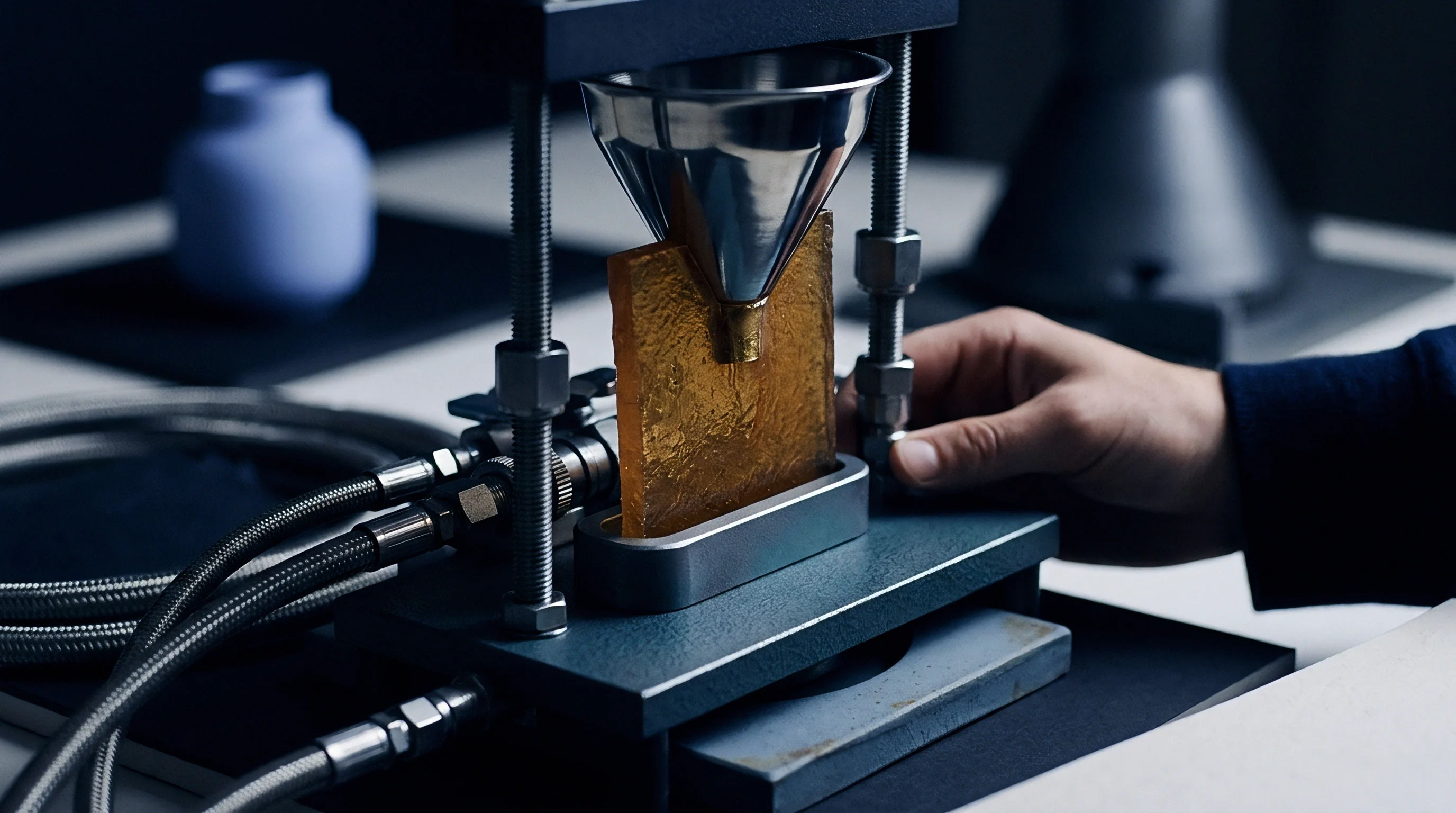
Commercial Specification Thresholds for Pellets
Resin specifications for supply contracts need clear thermal stability limits alongside basic mechanical targets. Requesting standard tensile and impact properties without defining melt stability leaves buyers exposed to resin lots that pass receiving inspection but degrade rapidly during production.
Tight incoming QC limits protect compounders against off-spec lots or poor drying upstream:
- Initial Moisture Threshold measured via Karl Fischer titration at 170 degrees Celsius must stay below 200 ppm when the container is opened.
- MFR Dwell Stability measured as the ratio of 15-minute dwell MFR to 5-minute dwell MFR at 180 degrees Celsius must remain below 1.25.
- Carboxyl Group Concentration determined via non-aqueous potentiometric titration must not exceed 25 mmol/kg on uncompounded neat resin pellets.
- Volatile Organic Content measured via headspace gas chromatography must show crotonic acid levels below 100 ppm.
Contracts should specify that resin exhibiting a melt volume-flow rate increase over twenty percent after five minutes of dwell time at 180 degrees Celsius can be rejected and returned at the supplier’s expense.