Analytical Screening Methods for Unintentional Additive Degradation Products in Finished Rigid Packaging
Analytical screening of additive degradation products in rigid packaging demands hyphenated mass spectrometry matched against finished container migration testing.


Pathways
Melt processing subjects primary antioxidants in polyolefins to severe oxidative shear. During twin-screw extrusion, injection molding, and blow molding, polymeric packaging materials experience intense thermal and mechanical stress. Processing high-density polyethylene at temperatures above 220°C triggers free radical cascades that rapidly consume phenolic antioxidants like pentaerythritol tetrakis(3-(3,5-di-tert-butyl-4-hydroxyphenyl)propionate) ~ commercially known as Irganox 1010.
As these antioxidant molecules sacrifice their structure to quench alkyl and peroxyl radicals, they form transformation products that stay embedded in the rigid polymer wall. Heat drives this breakdown, yielding volatile fragments and non-intentionally added substances that can migrate into packaged contents over time.
Tracing these degradation pathways requires looking closely at the specific reactions happening inside the processing barrel. Secondary organophosphite antioxidants like tris(2,4-di-tert-butylphenyl) phosphite, sold commercially as Irgafos 168, work by converting hydroperoxides into non-radical species. During this reaction, trivalent phosphorus oxidizes to pentavalent phosphorus, forming tris(2,4-di-tert-butylphenyl) phosphate.
Thermal breakdown goes beyond primary oxidation products, however. Extended heat exposure strips off tert-butyl groups through dealkylation, creating mono- and di-dealkylated phosphite and phosphate derivatives. Each step alters the molecular mass, volatility, polarity, and migration behavior of the additive fragment.
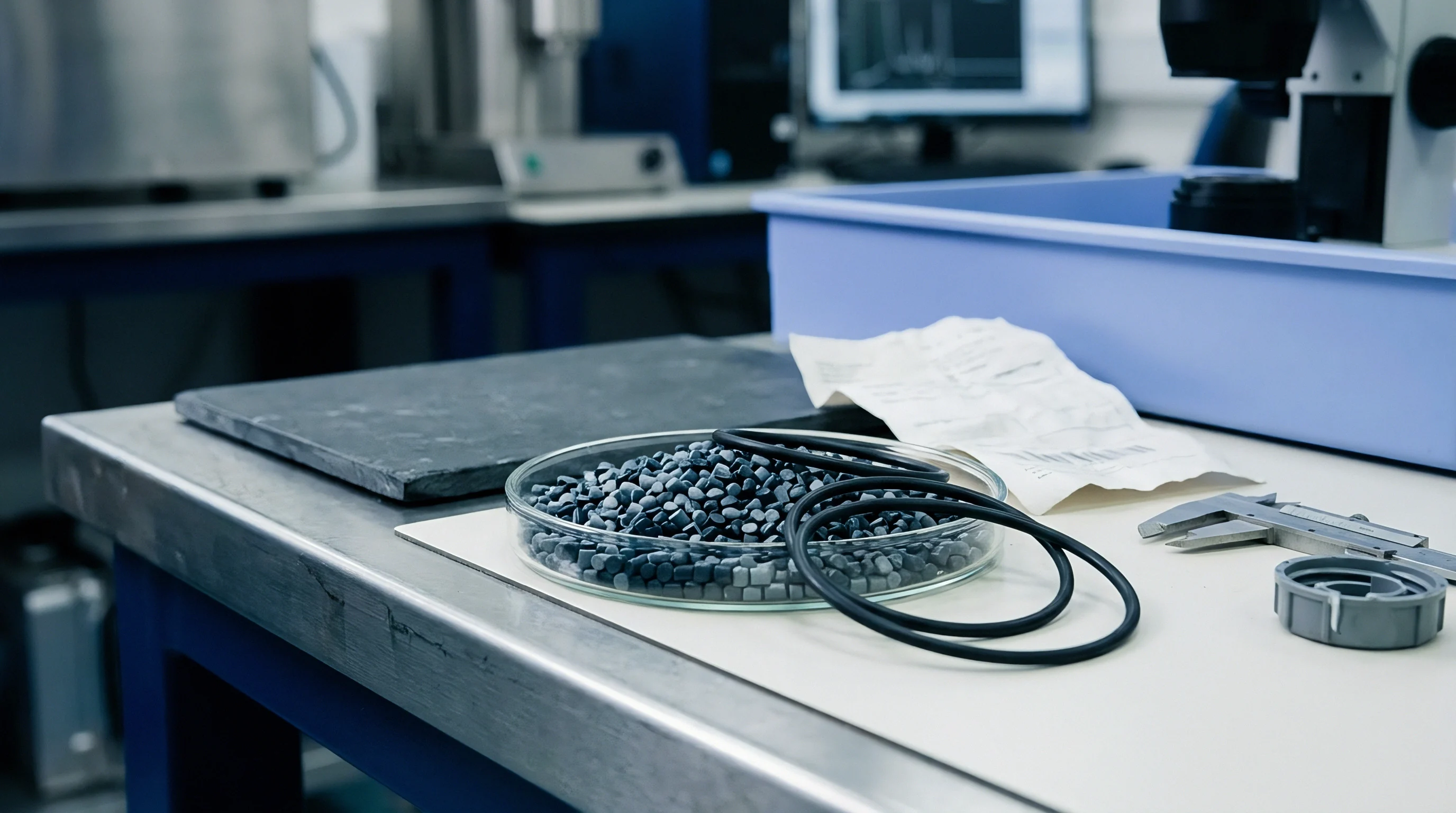
Thermal Stress during Polymer Extrusion
High temperatures during melt compounding cause rapid radical generation. Hindered phenolic antioxidants protect the polymer matrix by donating hydroxyl hydrogen atoms to reactive peroxyl radicals. This donation leaves behind a stable phenoxyl radical, which then dimerizes or reacts with further peroxyl radicals.
Irganox 1010 breaks down primarily via ester cleavage and quinone methide formation, yielding compounds like 3,5-di-tert-butyl-4-hydroxybenzaldehyde and 7,9-di-tert-butyl-1-oxaspiro deca-6,9-diene-2,8-dione, though standard target screening regularly misses unknown breakdown products like these.
Rigid polyolefins like polypropylene rely on complex stabilization packages that mix primary and secondary antioxidants, acid scavengers like calcium stearate, and nucleating agents. Processing high-density polyethylene or polypropylene at temperatures over 240°C speeds up quinone formation. These quinones yellow the polymer matrix and, because of their reduced molecular weight, migrate much faster than their parent molecules.
In finished container walls, secondary transformation products frequently outnumber intact parent additives by three to one.
Higher processing temperatures accelerate antioxidant depletion long before visible polymer discoloration occurs.

Hydrolytic Cleavage of Organophosphites
Moisture in raw resin flakes readily breaks ester bonds in secondary processing aids. Because organophosphite antioxidants are sensitive to hydrolysis, their functional efficiency can drop during storage and compounding. Ambient humidity or steam sterilisation drives step-wise hydrolysis in Irgafos 168, cleaving P-O-C bonds to release 2,4-di-tert-butylphenol.
This process generates polar degradation species; 2,4-di-tert-butylphenol itself has a lower molecular mass and higher solubility in alcohol-water food simulants than the parent phosphite, making it a common migrant in liquid packaging applications.
How quickly Irgafos 168 converts to 2,4-di-tert-butylphenol depends on resin residence time, moisture content, and melt temperature. High shear forces inside single- and twin-screw extruders accelerate hydrolysis whenever resin drying falls short. The resulting free phenol then acts as a precursor for secondary transformation products, including quinones and oxidized phenol dimers.
When rigid polypropylene containers undergo post-filling retort or steam sterilisation at 121°C, residual organophosphites in the container wall undergo near-complete hydrolytic cleavage within twenty minutes.
| Parent Additive | Chemical Structure Class | Primary Degradation Pathway | Major Transformation Product | CAS Number |
|---|---|---|---|---|
| Irgafos 168 | Organophosphite | Oxidation | Tris(2,4-di-tert-butylphenyl) phosphate | 95906-11-9 |
| Irgafos 168 | Organophosphite | Hydrolysis | 2,4-Di-tert-butylphenol | 96-76-4 |
| Irganox 1010 | Hindered Phenol | Oxidative Rearrangement | 7,9-Di-tert-butyl-1-oxaspiro deca-6,9-diene-2,8-dione | 82304-66-7 |
| Irganox 1010 | Hindered Phenol | Ester Hydrolysis / Cleavage | 3-(3,5-Di-tert-butyl-4-hydroxyphenyl)propionic acid | 20170-32-5 |
| Irganox 1076 | Hindered Phenol | Dealkylation / Thermal Cleavage | 3,5-Di-tert-butyl-4-hydroxybenzaldehyde | 1620-33-3 |
| Erucamide | Fatty Acid Amide | Photo-Oxidation / Thermal Stress | 13-Docosenamide oxidative cleavage fragments | 112-84-5 |

Secondary Oxidative Byproducts in Polyolefin Matrices
Free radical scavenging mechanisms give rise to quinone structures and complex transformation products. These secondary oxidation species form as primary phenolic degradation products undergo further atmospheric or radical-driven oxidation. For example, 7,9-di-tert-butyl-1-oxaspiro deca-6,9-diene-2,8-dione breaks down under ultraviolet light and oxygen into hydroxylated species and ring-opened carboxylic acids.
Being polar and low in molecular weight, these compounds carry high diffusion coefficients in polyolefin matrices and migrate rapidly into aqueous and fatty media.
Slip additives such as erucamide and oleamide present parallel oxidative challenges. Added to reduce friction during high-speed blow molding and cap assembly, fatty acid amides undergo double-bond oxidation at processing temperatures above 200°C. In erucamide, this degradation yields short-chain aldehydes, ketones, and epoxy fatty amides that introduce off-flavors into bottled water and dairy products. Routine screening programs focused only on parent additives miss these volatile, low-molecular-weight oxygenates entirely, leaving compliance files incomplete.
Ultraviolet stabilizers, including hindered amine light stabilizers (HALS) and benzotriazoles, produce distinct degradation profiles. HALS molecules like Tinuvin 770 undergo N-dealkylation and oxidation to form nitroxyl radicals and secondary amines. These basic fragments can then interact with acidic food simulants or acidic polymer degradation products, forming ionic complexes and tertiary adducts.
Reliable screening protocols have to account for these multi-step transformation cascades rather than relying on raw additive datasheets.
Unintentional degradation products accumulate during every heat cycle in rigid container production. Masterbatch compounding, resin pelletization, container extrusion, and regrind incorporation each add thermal stress. Because regrind material goes through multiple heat passes, secondary oxidation products build up to higher levels than in virgin resin.
Operations that incorporate up to thirty percent internal regrind show significant accumulation of low-molecular-weight phenolic fragments, meaning compliance management depends on tracking the full thermal history of the melt.
- Thermal Dealkylation Loss of tert-butyl groups from phenolic and phosphite structures under high shear creates volatile phenols with high diffusion coefficients.
- Hydrolytic Ester Cleavage Water vapor in un-dried resin cleaves ester linkages in primary antioxidants, yielding polar carboxylic acid fragments.
- Phosphite Oxidation Trivalent organophosphites convert to pentavalent phosphates, altering solubility parameters and simulant extraction dynamics.
- Fatty Amide Oxidation Unsaturated slip agents undergo double-bond cleavage, producing volatile aldehydes and epoxy compounds responsible for organoleptic failures.
- Nitroxyl Radical Formation Hindered amine light stabilizers oxidize into reactive nitroxyl species that form adducts with polymer degradation fragments.
Controlling additive breakdown requires optimizing barrel temperature profiles, shortening melt residence times, and introducing nitrogen blanketing during compounding. Even so, conversion steps cannot eliminate additive oxidation entirely ~ antioxidants have to react to protect the polymer spine. In the end, thermal history dictates which non-intentionally added substances remain in the final molded wall.


Vessel
Finished rigid packaging structures introduce unique geometric constraints during migration testing. Molded bottles, tubs, pails, and closures cannot simply be analyzed like flat films or uniform plaques. Variations in wall thickness across blow-molded bottle necks, base push-ups, and injection-molded caps create localized differences in crystallinity and additive concentration.
As a result, diffusion rates through thick injection-molded closures differ substantially from those through thin, stretched bottle walls, making direct physical testing essential.
The choice of sample preparation technique directly governs how efficiently degradation products are extracted. When analyzing finished containers, testing typically relies on total immersion, single-side contact cells, or direct filling. Total immersion exposes cut pieces of packaging to food simulants, extracting species from the inner and outer surfaces as well as cross-sectional edges.
That edge extraction overestimates migration by giving simulants direct access to the interior polymer matrix, bypassing the surface skin layer formed during rapid mold cooling.

Rigid Wall Mass Transfer Dynamics
Diffusional transport through high-density polyethylene depends heavily on polymer crystallinity. Higher density and crystallinity reduce free volume in the polymer matrix, slowing the mass transport of bulky additive fragments. Because diffusion coefficients scale inversely with molecular weight, small transformation products like 2,4-di-tert-butylphenol diffuse orders of magnitude faster through polyethylene than intact parent antioxidants like Irganox 1010.
Mathematical modeling of migration from rigid containers relies on Fickian diffusion equations, where the diffusion coefficient depends on temperature, polymer glass transition, solvent swelling, and migrant molecular volume. Food simulants like 50% ethanol or vegetable oil swell polyolefin matrices, accelerating migrant leaching. When testing rigid polypropylene tubs intended for hot-fill applications, test temperatures must reflect real-world use without causing artificial thermal deformation of the container.
Specific migration of 7,9-di-tert-butyl-1-oxaspiro deca-6,9-diene-2,8-dione remains below 0.01 mg/kg when testing rigid polypropylene articles in 10% ethanol after 10 days at 40°C.
Simulant Exposure Protocols for Molded Containers
Selecting the right test liquid requires matching the chemical polarity of the target food matrix. European Regulation EU 10/2011 defines standard food simulants: Simulant A (10% ethanol v/v) for aqueous foods, Simulant B (3% acetic acid w/v) for acidic foods, Simulant C (20% ethanol v/v) for alcoholic foods, Simulant D1 (50% ethanol v/v) for lipophilic foods and dairy products, Simulant D2 (vegetable oil) for fatty foods, and Simulant E (poly(2,6-diphenyl-p-phenylene oxide), known as Tenax) for dry foods. Blank runs are included to isolate background contamination.
Testing containers intended for repeat-use applications requires three consecutive migration periods using the same sample with fresh simulant batches each time. Compliance is evaluated based on the specific migration measured in the third test period. Additive degradation products near the container surface leach out rapidly during the first exposure, while deeper migrants diffuse out steadily over subsequent runs.
As a result, high initial migration of volatile fragments often drops below detection limits by the third cycle.
- Cut representative specimens from the side-wall, base, and closure areas of the finished rigid container, excluding severely distorted weld lines.
- Measure the internal surface area contacting food contents to establish the precise surface-area-to-volume ratio, defaulting to 6 dm² per kilogram of food when actual geometry is unspecified.
- Mount specimen pieces into stainless steel single-side migration cells to isolate the food-contact layer from outer surface printing inks or external handling contaminants.
- Fill migration cells with pre-conditioned food simulant pre-heated to the designated test temperature.
- Seal migration cells hermetically to prevent evaporative loss of volatile non-intentionally added substances during elevated temperature incubation.
- Place sealed cells into calibrated incubation ovens for ten days at 40°C for ambient long-term storage claims, or ten days at 60°C to simulate extended hot-fill and storage.
- Extract simulant volumes quantitatively post-incubation, record final volumes, and transfer aliquots to inert glass vials for chromatographic screening.
Standard solvent extractions designed for resin characterization cannot replace food simulant testing when generating compliance data. Total extraction using boiling dichloromethane or hexane dissolves or heavily swells the polymer, pulling out internal additive pools that would never migrate under normal conditions. What exhaustive solvent extraction does accomplish is quantifying total residual concentrations, providing upper-bound input data for diffusion modeling.
Matrix interferences during simulant analysis frequently complicate the detection of minor degradation fragments. Vegetable oil (Simulant D2), for instance, contains complex triglyceride structures that co-elute with semi-volatile degradation compounds during gas chromatography, requiring gel permeation chromatography clean-up or solid-phase extraction. Iso-octane and 95% ethanol serve as approved substitute fatty simulants under EU protocols, offering cleaner backgrounds that lower detection limits during non-target screening.
Screening dossiers submitted by converters frequently rely on resin pellet extraction data to argue container safety. That laboratory report covers virgin resin, not the finished rigid bottle. Downstream extrusion thermal profiles sit outside the operational control of resin suppliers.
Container converters must therefore perform analytical screening on the actual molded article to capture degradation products generated during final processing.

Detection
Analytical screening for non-intentionally added substances relies on broad-scope chromatographic hyphenation. Because additive degradation products range from volatile organic compounds and semi-volatile species to non-volatile oligomers and ionic fragments, no single technique can resolve them all. Comprehensive screening requires parallel workflows: Gas Chromatography coupled to Mass Spectrometry (GC-MS) for volatile and semi-volatile migrants, alongside Liquid Chromatography coupled to High-Resolution Accurate-Mass Spectrometry (LC-HRMS) for non-volatile polar compounds.
Sample preparation strategies must preserve volatile degradation products while concentrating trace-level non-target compounds. Headspace solid-phase microextraction (HS-SPME) and static headspace injection extract volatile aldehydes, alkanes, and alkylphenols directly from container wall shavings without solvent contamination. For semi-volatile compounds, liquid-liquid extraction or solid-phase extraction (SPE) concentrates aqueous food simulants (Simulants A, B, C, and D1) prior to instrument injection.

Gas Chromatography for Volatile Transformation Products
Volatile compounds with high vapor pressures migrate into headspace vials during thermal conditioning. Capillary gas chromatography using non-polar dimethylpolysiloxane (DB-1) or mid-polar 5% phenylarylene (DB-5MS) stationary phases separates these low-molecular-weight transformation products. Electron Ionization (EI) at 70 eV generates reproducible structural fragmentation patterns, enabling automated library matching against standard spectral databases such as NIST and Wiley to identify known target compounds.
Unidentified peaks require high-resolution GC-QTOF-MS analysis to establish precise molecular ion mass. Accurately determining mass defects allows calculating elemental compositions (carbon, hydrogen, oxygen, nitrogen, phosphorus, sulfur) within a mass tolerance of less than 3 parts per million (ppm). Chemical Ionization (CI) using methane or isobutane reagent gases provides soft ionization, preserving the protonated molecular ion ⁺ to confirm nominal molecular weights when 70 eV EI fragmentation destroys parent ions.
| Technique | Target Compound Class | Ionization / Sample Introduction | Molecular Mass Range (Da) | Typical Detection Limit (mg/kg) |
|---|---|---|---|---|
| HS-GC-MS | Volatile aldehydes, short phenols, alkanes | Static Headspace / SPME, EI | 30 – 300 | 0.001 – 0.005 |
| GC-MS (EI/CI) | Semi-volatile alkylphenols, esters, quinones | Direct Injection, EI / Positive CI | 100 – 800 | 0.005 – 0.010 |
| LC-ESI-QTOF-MS | Non-volatile oxidized antioxidants, HALS | Electrospray (+ / – ESI), HRMS | 150 – 2000 | 0.0005 – 0.005 |
| LC-APCI-QTOF-MS | Non-polar lipids, oligomers, neutral additives | Atmospheric Pressure Chemical Ionization | 200 – 1500 | 0.001 – 0.010 |

Liquid Chromatography High Resolution Mass Spectrometry
Non-volatile degradation fragments require liquid-phase separation coupled with accurate mass measurement. Reversed-phase liquid chromatography employing C18 or phenyl-hexyl stationary phases resolves polar transformation products, parent antioxidants, and high-molecular-weight degradation adducts. Ultra-High Performance Liquid Chromatography (UHPLC) systems operating at pressures up to 1200 bar produce narrow peak widths that resolve complex isomeric mixtures of oxidized phenolic antioxidants.
Electrospray Ionization (ESI) operating in positive and negative polarity modes ionizes polar non-target compounds. Positive mode ESI ionizes basic amine stabilizers, photoinitiators, and hydroxylated compounds via protonation ⁺ or ammonium adduct formation ⁺. Negative mode ESI ionizes acidic phenolic degradation products, alkyl sulfates, and carboxylic acids via deprotonation ⁻.
Atmospheric Pressure Chemical Ionization (APCI) acts as a complementary interface for less polar, non-ionizable neutral compounds that escape ESI detection.
Quadrupole Time-of-Flight (QTOF) and Orbitrap mass spectrometers enable structural elucidation through tandem mass spectrometry (MS/MS). Collision-Induced Dissociation (CID) fragments isolated precursor ions at specific collision energies. Comparing MS/MS fragment spectra against theoretical fragmentation pathways generated by software helps assign candidate structures to non-target peaks, provided the protocol combines accurate mass, isotopic pattern fit, and fragment assignments.
Compliance with Article 19 of Regulation EU 10/2011 obligates the converter to assess non-intentionally added substances for human health risks before commercial distribution.

Is Semi-Quantification Reliable for Unidentified Chromatographic Peaks?
Uncertainty in ion response factors introduces quantitative variance when reference standards are missing. While accurate quantification requires authentic reference standards of known purity, non-target screening routinely turns up compounds for which no commercial standards exist. Laboratories therefore resort to semi-quantification, measuring non-target peak areas against internal standards added to the extract, such as deuterated additives or structurally related analogs.
Mass spectrometry response factors vary widely across chemical classes. In LC-ESI-MS, ionization efficiencies between different functional groups can span three orders of magnitude. A concentration estimate based on a single internal standard like 2,4-di-tert-butyl-6-methylphenol can understate or overstate the true concentration of an unknown migrant by ten-fold.
When evaluating unidentified peaks for risk, this quantitative uncertainty must be absorbed by safety margins during exposure calculations.
Gas chromatography paired with Flame Ionization Detection (GC-FID) offers far more uniform response factors for carbon-containing hydrocarbons than mass spectrometry interfaces. Because FID operates on equimolar carbon response principles, semi-volatile non-target peaks can be semi-quantified using internal aliphatic hydrocarbon standards (such as n-hexadecane) with much lower uncertainty. GC-FID semi-quantification provides reliable concentration estimates for volatile and semi-volatile polyolefin degradation products down to 0.01 mg/kg in simulant extracts.
Non-target quinone derivatives frequently appear in resin batches where target-only GC-MS methods report zero non-compliant peaks. Standard screening that targets only listed additives misses secondary transformation products that emerge during reactive compounding. Broad-scope non-target workflows using high-resolution mass spectrometry remain essential for capturing these hidden migrants.
- Interrogate Blank Extracts Run procedural and simulant blanks parallel to packaging samples to subtract laboratory contaminants, solvent impurities, and system noise.
- Confirm Molecular Ion Mass Establish accurate mass for ⁺ or ⁻ ions within a 3 ppm window using QTOF-MS to narrow potential chemical formulas.
- Evaluate Isotopic Patterns Analyze chlorine, sulfur, nitrogen, and carbon isotope distributions to validate predicted chemical formulas.
- Analyze MS/MS Fragments Interpret product ion fragments generated across multiple collision energies to reconstruct the core chemical skeleton.
- Cross-Reference Databases Query mass spectral libraries, ChemSpider, PubChem, and the US EPA CompTox database using accurate mass and fragment data.
- Apply Retention Time Indexing Compare experimental gas chromatographic retention indices against alkane series data to filter candidate structural isomers.
Chromatographic resolution directly limits identification accuracy. Co-eluting compounds obscure individual mass spectra, generating composite fragment patterns that confound spectral deconvolution software. Chromatographic separation must therefore be optimized using targeted solvent gradients and specialized stationary phases before executing non-target identification routines; defensible analytical screening rests on clean baseline resolution.
Quality assurance mandates validating extraction recoveries across diverse chemical polarities. Spiking food simulants with surrogate standards (such as 13C-labeled 2,4-di-tert-butylphenol or deuterated Irganox 1010) prior to sample extraction measures recovery losses incurred during solvent evaporation and clean-up steps. Method recovery values between 70% and 120% validate semi-quantitative screening data, while lower recoveries demand correction factors when deriving final migration values.
Supply contracts for high-purity rigid packaging frequently incorporate mandatory analytical verification limits. A standard clause states: “The converter shall demonstrate via GC-MS and LC-HRMS non-target screening that total unidentified non-intentionally added substances migrating into food simulants do not exceed 0.01 mg/kg, with individual structural elucidation performed for any single peak exceeding 0.005 mg/kg.” This contractual threshold obligates converters to maintain continuous analytical vigilance over additive degradation behavior.

Evaluation
Risk assessment of unknown migrants requires assigning toxicological thresholds based on chemical structure. Detecting a non-intentionally added substance during analytical screening is only the first step in compliance verification; the measured concentration must then be evaluated against toxicological limits to determine safety for human consumption. When full toxicological data ~ such as subchronic oral toxicity studies or mutagenicity assays ~ are unavailable for a specific degradation product, toxicologists apply tiered threshold approaches.
The Threshold of Toxicological Concern (TTC) concept provides a pragmatic risk assessment tool for low-concentration migrants that lack empirical toxicity data. Developed by the European Food Safety Authority (EFSA) and the US FDA, TTC assigns human exposure thresholds below which toxicological risk remains negligible. Under this framework, chemical structures are categorized into Cramer Classes (Class I, II, or III) using decision trees based on functional groups, metabolic reactivity, and structural alerts for toxicity.

Threshold of Toxicological Concern Application
Establishing human intake limits for unstudied migrants relies on structural class defaults. Cramer Class I covers simple structures with efficient metabolic pathways and low oral toxicity, assigning an intake threshold of 1800 µg/person/day (equivalent to 30 µg/kg body weight/day). Cramer Class II covers structures of moderate toxicity, setting a threshold of 540 µg/person/day.
Cramer Class III encompasses complex structures, aromatic amines, organophosphorus compounds, and structural alerts for systemic toxicity, establishing a conservative threshold of 90 µg/person/day (1.5 µg/kg body weight/day).
Compounds exhibiting structural alerts for genotoxicity demand far lower thresholds. Because genotoxic carcinogens operate without a clear threshold dose, exposure to even minute quantities carries a theoretical risk of DNA damage. The TTC framework establishes a genotoxicity exposure limit of 0.15 µg/person/day (equivalent to 0.0025 µg/kg body weight/day).
Converting this daily intake value into a food concentration under the standard consumption model (1 kg of food packaged in 6 dm² of material) yields an analytical action threshold of 0.00015 mg/kg (0.15 ppb) in food.
| Evaluation Tier | Structural Category | TTC Human Exposure Limit (µg/person/day) | Equivalent Food Concentration (mg/kg) | Action Required for Peak Detection |
|---|---|---|---|---|
| Genotoxicity Alert | DNA Reactive / Electrophilic Structural Alert | 0.15 | 0.00015 | In vitro mutagenicity testing (Ames test) or structural exclusion |
| Cramer Class III | Complex Aromatic / Organophosphorus / Non-reactive | 90.0 | 0.09000 | Semi-quantification and structural assignment verification |
| Cramer Class II | Intermediate Complexity / Functionalized Ring Systems | 540.0 | 0.54000 | Routine semi-quantification against internal standards |
| Cramer Class I | Simple Linear Aliphatics / Common Metabolites | 1800.0 | 1.80000 | Basic target mass spectrometry tracking |
| EU 10/2011 Art. 19 | Unlisted NIAS Default Compliance Cap | 60.0 | 0.01000 | Mandatory toxicological risk assessment file assembly |

Structure Activity Relationship Profiling for Unknowns
Computational algorithms screen chemical structures for electrophilic sub-structures linked to DNA reactivity. Quantitative Structure-Activity Relationship (QSAR) models (such as Derek Nexus, Sarah Nexus, or OECD QSAR Toolbox) predict mutagenicity, carcinogenicity, and skin sensitization potentials directly from chemical drawings or SMILES strings. When screening flags an unknown peak as an alkylating agent, aromatic amine, or alpha,beta-unsaturated carbonyl compound, QSAR models highlight potential genotoxic alerts.
Analytical sensitivity defines the boundary between verified compliance and undetected exposure.
Determining whether a non-target peak requires structural elucidation depends on its measured concentration relative to the analytical limit of quantification. Under European food contact regulations, non-listed substances used behind a functional barrier must not migrate in detectable amounts, defined with a default threshold of 0.01 mg/kg. For non-intentionally added substances in direct food contact without functional barriers, Article 19 of Regulation EU 10/2011 obligates business operators to risk-assess all migrants using sound toxicological principles.
- Ames Test Verification Bacterial reverse mutation assays evaluate whether isolated degradation fragments induce gene mutations in Salmonella typhimurium strains.
- Structural Alert Profiling Automated QSAR software scans candidate chemical structures for electrophilic moieties associated with genetic toxicity.
- Cramer Classification Assignment Molecular structures pass through decision trees to categorize systemic toxicity risk into Class I, II, or III thresholds.
- Exposure Scenario Modeling Food consumption factors and packaging surface-to-volume ratios convert measured migration values into daily dietary exposure figures.
- Margin of Exposure Calculation Benchmark dose lower confidence limits (BMDL10) from toxicity studies divide estimated human intake to determine safety margins.
Applying TTC to unidentified chromatographic peaks presents practical challenges. If an analytical peak cannot be assigned a definitive structure, toxicologists cannot rule out genotoxic structural alerts, forcing risk assessors to default to the most conservative threshold of 0.00015 mg/kg (0.15 ppb). Achieving an analytical detection limit of 0.15 ppb in complex food simulants requires high-end LC-MS/MS instrumentation and sample pre-concentration protocols that exceed standard quality control budgets.
Disagreements persist between regulatory authorities and packaging converters regarding the acceptable level of quantitative uncertainty when using TTC for non-target screening. Chromatographic peak areas semi-quantified against mismatched internal standards carry confidence intervals that cross multiple Cramer class boundaries, leaving open the question of whether a migrant detected at 0.008 mg/kg genuinely complies with safety margins or exceeds genotoxicity exposure limits.


Dossier
Technical compliance files handed to importers frequently omit analytical evidence from non-target screening. Packaging supply chains involve resin producers, additive masterbatch compounders, converters, brand owners, and retail importers, and chemical composition details often degrade across each commercial handoff. Resin manufacturers provide Declarations of Conformity (DoC) listing authorized additives under Annex I of Regulation EU 10/2011, but these documents rarely mention transformation products generated during subsequent converting operations.
Audit practices reveal significant omissions in compliance documentation. Converters regularly sign declarations confirming compliance based entirely on raw material datasheets without testing the finished rigid container. When enforcement authorities sample packaging at border controls or on retail shelves, however, testing evaluates the finished container.
If screening reveals non-listed degradation products migrating above toxicological thresholds, the entity placing the article on the market carries sole legal liability regardless of supplier guarantees.

Declaration Coverage and Analytical Gaps
Declarations of conformity signed by converters often reference raw resin test reports rather than finished containers. A resin supplier’s report covers virgin polymer pellets extruded under laboratory conditions; it cannot prove compliance for an injection-molded container made with ten percent color masterbatch, five percent slip concentrate, and twenty percent regrind processed at high screw temperatures. Converter processing introduces new chemical species that require independent analytical verification.
Auditing a technical compliance file requires verifying the analytical data supporting the DoC signature. A complete technical dossier contains specific migration test reports specifying the precise lot numbers, food simulants used, exposure duration, temperature conditions, surface-to-volume assumptions, and limits of quantification. It must also include non-target screening reports for non-intentionally added substances, accompanied by documented toxicological evaluations for any detected degradation products.
Declarations of conformity remain legally invalid unless backed by analytical migration test reports reflecting the actual processing thermal history of the finished batch.

Batch Variance and Compliance Auditing
Extrusion thermal histories shift across production runs, altering the concentration of degradation products. Temperature spikes in extruder barrel zones, resin residence time extensions during line pauses, and variations in ambient humidity during flake storage all change the spectrum of non-intentionally added substances formed during manufacturing. A single analytical screening report run on a prototype line cannot guarantee compliance across continuous commercial production.
Establishing explicit semi-quantification boundaries within quality control specifications provides necessary operational clarity. Procurement contracts should dictate re-testing frequencies for additive degradation screening. Any change in raw resin supplier, masterbatch formulation, screw profile design, or maximum regrind percentage must mandate re-qualifying the finished rigid container through full non-target chromatographic screening.
Enforcement authorities routinely employ high-resolution mass spectrometry when inspecting imported food contact articles. Customs seizures and rapid alert notifications (such as the European RASFF portal) for packaging violations increasingly stem from migrating non-intentionally added substances, including unauthorized primary aromatic amines from pigment breakdown and photoinitiator fragments from cured inks. Product recalls triggered by migration failures generate severe financial liabilities, including inventory destruction costs, retailer chargebacks, brand damage, and administrative fines.
Failing to conduct analytical screening for unintentional additive degradation products leaves companies fully exposed to regulatory market bans. When an enforcement agency detects an unassessed degradation product migrating above 0.01 mg/kg without a supporting risk assessment file, inspectors mandate immediate withdrawal of the affected packaging batch from the market. The landed cost of non-compliance far exceeds the analytical investment required to establish comprehensive screening workflows across all finished rigid container lines.