Analytical NIAS Screening Protocols for High Temperature Injection Molded Components
High temperature polymer NIAS screening requires combined GC MS and LC HRMS untargeted profiling to detect melt degradation products above ten ppb.


Mold
Processing aromatic polyamides and fluoropolymers at melt temperatures exceeding three hundred degrees Celsius initiates complex thermal breakdown pathways inside the injection barrel. Heat levels needed to liquefy polyaryletherketones, polyphenylsulfone, and polyphthalamide resins alter polymer chain stability, triggering homolytic bond cleavage and oxidation reactions. Primary additives ~ including hindered phenol antioxidants, phosphite heat stabilizers, and organophosphorus flame retardants ~ partially degrade under these extreme conditions.
These chemical transformations produce non-intentionally added substances that remain trapped within the molded part matrix until exposure to food, solvents, or elevated service temperatures causes migration into contacting media.
Quantifying these migratory species demands analytical screening protocols specifically tailored to high temperature molding chemistries. Standard screening methods optimized for polyolefins fail to account for the specialized degradation pathways and high boiling point oligomers generated by engineering plastics. Residence time in the injection unit barrel directly influences the concentration and structural profile of non-intentionally added substances.
Extended dwell times at temperatures above three hundred twenty degrees Celsius accelerate secondary reactions, yielding volatile organic compounds, structural isomers, and cyclic oligomers that do not appear in raw resin technical datasheets.
Polymer processing temperatures exceeding the thermal oxidation threshold generate volatile degradation products that outgasp during high temperature contact cycles.

Thermal History and Melt Thermal Oxidation Pathways
Processing barrel residence times above three minutes convert primary hinder phenol antioxidants into secondary quinone methide structures. Mechanical shear imparted by the injection screw generates localized thermal spikes that exceed nominal zone temperature setpoints by twenty to forty degrees Celsius. Oxidative degradation proceeds through free radical mechanisms, forming hydroperoxides that dissociate into alkoxy and hydroxy radicals.
These reactive species attack the polymer backbone, resulting in chain scission, crosslinking, and low molecular weight oxygenated fragments.
Polyaryletherketones processed between three hundred seventy and four hundred degrees Celsius liberate trace aromatic monomers, including hydroquinone and 4,4′-difluorobenzophenone, alongside substituted ether-ketone oligomers. Polyphthalamides exposed to three hundred fifteen degrees Celsius undergo thermal hydrolysis and transamidation, yielding cyclic monomeric and oligomeric lactams. Fluoropolymers processed above three hundred forty degrees Celsius release volatile hydrogen fluoride and low molecular weight fluorinated alkanes that corrode mold tool steel and contaminate molded components.

Chemical Classes of Unintended Degradation Byproducts
Cleavage of main chain ether and amide bonds forms low molecular weight species capable of migrating into contact media. The chemical profile of non-intentionally added substances generated during high temperature injection molding splits into distinct analytical categories based on molecular weight, polarity, and volatility:
- Volatile Thermal Decomposition Products consist of low-boiling alkyl benzenes, substituted furans, cyclopentanone, and aliphatic nitriles generated by polymer chain end-group scission during thermal processing inside the barrel.
- Degraded Additive Fragments represent transformation products of phosphite processing stabilizers and hindered phenols, including 2,4-di-tert-butylphenol, oxidized Irgafos 168 phosphate, and tris(2,4-di-tert-butylphenyl) phosphite hydrolysis residues.
- Cyclic Polymer Oligomers emerge through back-biting and transesterification reactions during high temperature melting, yielding ring-structured monomers, dimers, trimers, and tetramers with molecular weights ranging from two hundred to twelve hundred Daltons.
- Mold Release Breakdown Residues comprise fluorinated fatty acids, siloxanes, and oxidized pentaerythritol tetrastearate species formed when high tool temperatures degrade internal and external release agents.
Identifying these substances requires distinguishing between intentional formulation ingredients and unintentional reaction side-products. Polymer additives specified on resin technical data sheets often transform entirely during molding, rendering the raw material declaration insufficient for food contact compliance files. Failing to identify thermal breakdown products during component qualification leads to unexpected migration non-compliance when finished parts undergo food simulant extraction testing under European Union Regulation 10/2011 or United States Food and Drug Administration food contact notification frameworks.


Extraction
Simulant selection for articles operating above one hundred degrees Celsius relies on modified polyphenylene oxide powder or fatty acid esters. Testing high temperature injection molded parts for non-intentionally added substances demands aggressive extraction media and elevated thermal cycles that reflect extreme end-use service conditions. Standard food simulants such as ten percent ethanol or three percent acetic acid fail to simulate dry heat exposure, hot fill processes, or prolonged contact with high-fat foodstuffs at elevated temperatures.
European standard EN 1186 and EN 13130 specify modified polyphenylene oxide, commercially designated as Tenax, as dry food simulant E for contact temperatures between one hundred and two hundred twenty5 degrees Celsius. Exposing test samples to Tenax at one hundred seventy-five degrees Celsius for two hours simulates extreme oven and microwave heating conditions. For liquid and fatty food contacts, ethanol ninety-five percent and isooctane serve as substitute simulants when vegetable oil media complicate subsequent chromatographic analysis.
Selecting solvent systems requires balancing extraction efficiency against the risk of polymer matrix dissolution or excessive swelling that introduces non-representative migrants into the analytical leachate.
| Polymer Family | Melt Temperature Range (°C) | Screening Solvent | High Temperature Simulant | Dominant Extractable Species |
|---|---|---|---|---|
| Polyphthalamide (PPA) | 310 – 330 | Dichloromethane / Ethanol | Tenax (MPPO) at 175°C | Cyclic polyamide oligomers, diamine degradation products |
| Polyphenylene Sulfide (PPS) | 300 – 320 | Isooctane / Acetone | Tenax (MPPO) at 175°C | Cyclic phenyl sulfide oligomers, dichlorobenzene isomers |
| Polyphenylsulfone (PPSU) | 350 – 380 | Dichloromethane | Simulant D2 (Olive Oil) at 121°C | 4,4′-Dichlorodiphenyl sulfone, bisphenol S traces |
| Polyaryletherketone (PEEK) | 370 – 400 | Hexane / Isopropanol | Tenax (MPPO) at 200°C | Hydroquinone traces, ether cleavage fragments |
Simulant Exposure Testing at Elevated Operating Temperatures
Polymeric articles subjected to dry heat applications undergo testing with porous polymer sorbents under controlled thermal regimes. Exposing high temperature molded valve bodies, kitchen appliance housings, or industrial food processing seals to Tenax requires specialized glass migration cells designed to maintain uniform contact without edge leakage. The standardized surface area to volume ratio dictates six square decimeters of plastic contact area per kilogram of food simulant, equivalent to six square decimeters per liter of liquid extraction medium.
The ten microgram per square decimeter default screening threshold rests on the standard European Commission food contact exposure assumptions involving a sixty kilogram adult consuming one kilogram of food per day contacting six square decimeters of plastic packaging. Shift this figure downward to one microgram per square decimeter if the application involves infant formula contact or repeated high temperature contact cycles where cumulative migration accelerates over extended operational lifespans. Testing repeat-use high temperature components requires executing three consecutive extraction cycles using fresh simulant for each exposure period, measuring chemical migration levels in the third extract to verify compliance over extended service lifetimes.

Exhaustive Solvent Extraction and Matrix Swelling Mechanics
Submerging molded samples in refluxing dichloromethane forces open tight crystalline domains to yield total extractable substance profiles. Exhaustive solvent extraction serves as an essential preliminary step in non-target screening, isolating all potential leachates present within the polymer network regardless of migration rates. Pressurized liquid extraction and microwave-assisted extraction accelerate solvent penetration into dense engineering thermoplastics, reducing extraction times from twenty-four hours to forty-five minutes.
- Mill the molded component under liquid nitrogen cooling to achieve a particle size distribution below five hundred micrometers, increasing geometric surface area.
- Weigh two grams of cryo-milled polymer powder into a high-pressure stainless steel extraction cell equipped with glass fiber filtration discs.
- Perform pressurized liquid extraction using a solvent mixture of dichloromethane and methanol in an eighty-to-twenty volume ratio at one hundred twenty degrees Celsius and one hundred50 bar pressure for three static cycles.
- Evaporate the collected extract under a gentle stream of high-purity nitrogen gas at thirty-five degrees Celsius to a final concentrated volume of one milliliter for subsequent chromatographic injection.
High molecular weight engineering polymers are often treated as chemically inert and free of extractable non-intentionally added substances. Analytical testing, however, consistently demonstrates that melt processing at three hundred fifty degrees Celsius generates low molecular weight thermal oxidation fragments that extract readily into lipid-simulating solvents.


Detection
High resolution mass spectrometers operating in full scan mode resolve complex chromatograms generated by high temperature polymer leachates. Comprehensive analytical screening protocols integrate gas chromatography coupled to mass spectrometry for volatile and semi-volatile migrants alongside liquid chromatography coupled to high resolution mass spectrometry for polar, non-volatile compounds. Combining complementary separation techniques ensures complete spectral coverage across the full molecular weight spectrum of potential non-intentionally added substances.
Electron ionization gas chromatography provides structural identification by matching experimental mass spectra against standardized chemical libraries such as the National Institute of Standards and Technology database. Liquid chromatography utilizes electrospray ionization and atmospheric pressure chemical ionization coupled to quadrupole time-of-flight or Orbitrap mass analyzers. These high resolution instruments deliver mass accuracy below three parts per million, allowing accurate determination of elemental chemical formulas for unknown chromatographic peaks without reliance on existing library spectra.
Analytical detection thresholds for non-characterized migratory species drop to ten parts per billion when gas chromatography fails to resolve isomeric structures.

Gas Chromatography Coupled to Time of Flight Mass Spectrometry
Electron ionization at seventy electronvolts fragments volatile substances into reproducible ion spectra suitable for library matching. Gas chromatography separation of non-intentionally added substances relies on capillary columns coated with five percent phenyl arylene methyl polysiloxane stationary phases. Temperature programming starts at forty degrees Celsius, holding for two minutes, followed by a ramp rate of ten degrees Celsius per minute to three hundred twenty degrees Celsius, maintaining the final temperature for fifteen minutes to elute high-boiling additive degradation residues.
Volatile degradation products originating from polyphthalamide processing, including cyclopentanone, hexamethylenediamine derivatives, and aliphatic dinitriles, chromatograph cleanly under these conditions. High temperature gas chromatography columns operating up to four hundred degrees Celsius extend detection capability to include ester-based slip agents, high molecular weight secondary antioxidants, and cyclic oligomers up to six hundred Daltons.
| Analytical System | Ionization Mode | Mass Accuracy (ppm) | Detection Limit (µg/kg) | Target Chromatographic Fractional Range |
|---|---|---|---|---|
| GC-QTOF-MS | Electron Ionization (70 eV) | < 3.0 | 2.0 | Volatile and semi-volatile compounds (C6 – C30) |
| GC-MS/MS | Chemical Ionization (Methane) | < 5.0 | 5.0 | Thermally stable non-polar migrants |
| LC-Orbitrap-MS | Electrospray Ionization (+/-) | < 1.5 | 0.5 | Polar non-volatile cyclic oligomers (MW 200 – 1200) |
| ICP-MS | Inductively Coupled Plasma | Not Applicable | 0.1 | Organometallic catalyst residues and heavy metals |
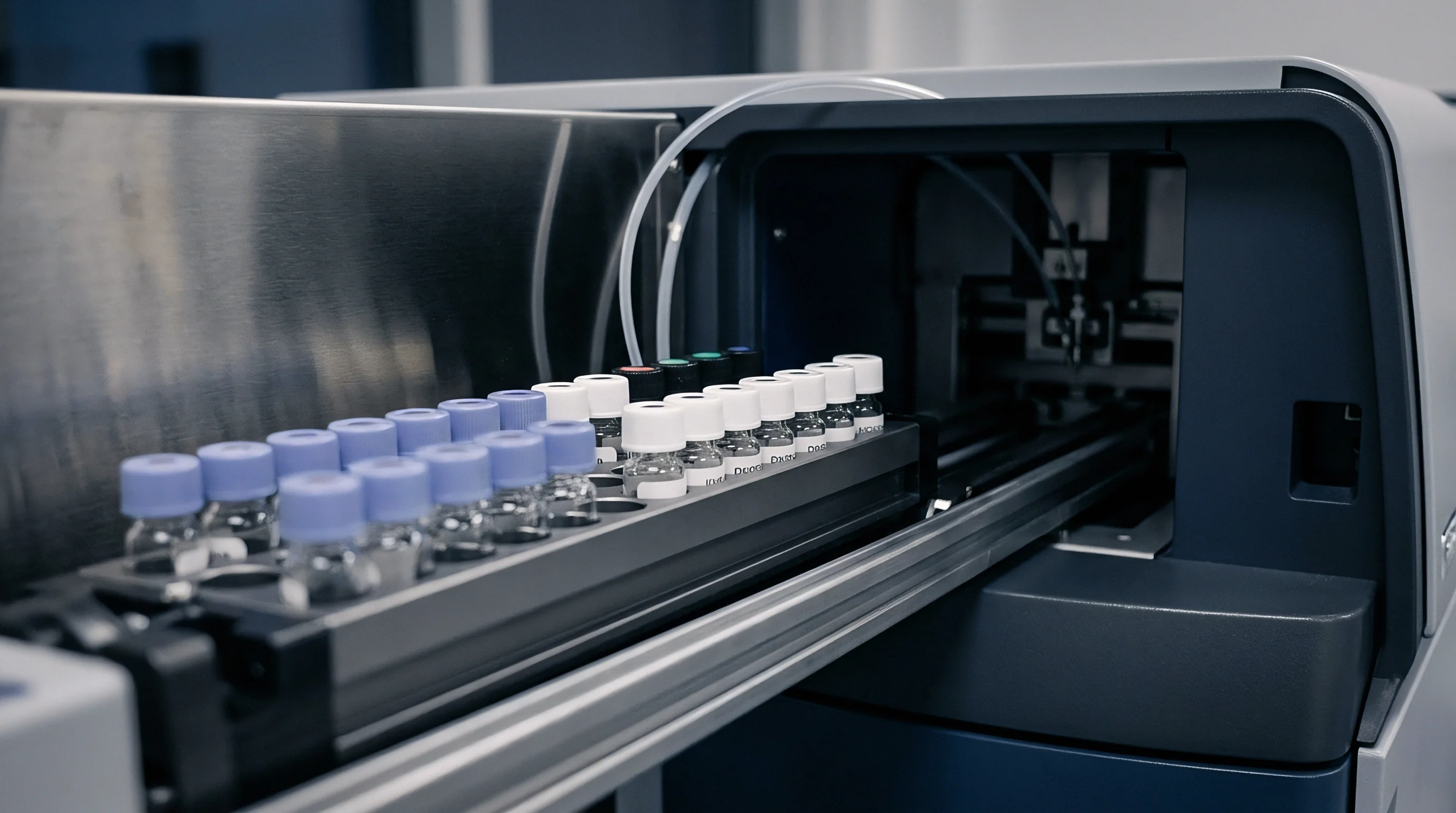
Liquid Chromatography High Resolution Mass Spectrometry Protocols
Electrospray ionization combined with quadrupole time of flight mass analyzers isolates polar oligomeric migrants without prior chemical derivatization. Reverse phase liquid chromatography utilizes C18 stationary phases with sub-two micrometer particle sizes to resolve homologous series of cyclic polyamide and polyaryletherketone oligomers. Mobile phases consist of water and acetonitrile modified with zero point one percent formic acid or five millimolar ammonium formate to facilitate ionization.
Full scan mass spectra acquired across a mass-to-charge range of fifty to fifteen hundred Daltons reveal intact protonated or ammonium adduct molecules. Collision-induced dissociation tandem mass spectrometry fragments selected precursor ions, generating structural detail regarding end-group functional groups and repeat unit arrangements. Inductively coupled plasma mass spectrometry complements organic detection by quantifying residual organometallic catalysts, such as titanium alkoxides or organotin compounds, down to sub-part-per-billion concentrations.
Quantifying detected peaks without authentic reference standards requires applying response factors derived from chemically structural surrogates, such as deuterated naphthalene for gas chromatography or triphenylphosphate for liquid chromatography. Response factor variation introduces substantial quantitative uncertainty, as individual compound ionization efficiencies vary by up to two orders of magnitude relative to the chosen internal standard. Which specific mass spectrometry ionization calibration method best mitigates quantitative response factor variance across uncharacterized cyclic oligomer classes?


Screening
Quantitative evaluation of non-intentionally added substances relies on toxicological thresholds established through structural activity relationships. Unknown chromatographic peaks identified during mass spectrometry analysis undergo toxicological hazard classification using the Threshold of Toxicological Concern framework endorsed by the European Food Safety Authority and the European Centre for Ecotoxicology and Toxicology of Chemicals. Compounds lacking specific toxicological data are evaluated based on chemical structure using in silico tools such as ToXTree or Derek Nexus.
Cramer structural classification categorizes non-genotoxic substances into three hazard tiers: Class I low toxicity with a human exposure threshold of eighteen hundred micrograms per person per day, Class II intermediate toxicity with five hundred forty micrograms per person per day, and Class III high toxicity with ninety micrograms per person per day. Any uncharacterized compound exhibiting structural alerts for potential genotoxicity or carcinogenicity falls under the default maximum threshold of zero point fifteen micrograms per person per day, corresponding to ten parts per billion in food.
Article 19 of Regulation EU 10/2011 obliges material suppliers to execute safety assessments for non-intentionally added substances present in food contact plastics.

When Does an Unidentified Peak Require Full Structure Elucidation?
Signal intensities exceeding the ten parts per billion threshold demand rigorous structural confirmation using accurate mass determination and isotope patterns. When chromatographic screening reveals an unknown peak whose calculated concentration exceeds zero point fifteen micrograms per kilogram of food simulant, laboratory protocols demand formal chemical identification prior to issuing compliance certificates.
The toxicological threshold of zero point fifteen micrograms per person per day for uncharacterized chromatogram peaks assumes Cramer Class III structural hazard potential combined with potential genotoxicity under EFSA guidance documents from 2019. Testing a component with a surface contact area of two square decimeters per kilogram of food alters this specific action threshold to seven point five micrograms per kilogram of food, whereas finding structural alerts for alkylating agents drops the acceptable migration threshold to zero.
Evaluating toxicological hazard follows a structured decision workflow:
- Structural Identification Assessment establishes exact molecular formulas using high resolution mass spectrometry mass accuracy and isotopic fine structure matching.
- In Silico Hazard Profiling screens identified chemical structures through quantitative structure activity relationship models to detect mutagenic, carcinogenic, or endocrine disrupting alerts.
- Threshold Assignment categorizes non-genotoxic species into Cramer Class I, II, or III tiers to determine applicable specific migration limits.
- Specific Risk Characterization compares estimated dietary exposure against calculated toxicological thresholds to confirm regulatory compliance.

Worked Calculation of Response Factor Variance in Non-Target Quantification
Consider a constructed calculation evaluating a ten thousand unit production lot of polyphenylsulfone valve bodies exposed to hot food simulant at one hundred twenty degrees Celsius. Assume each component possesses a surface area of one point five square decimeters contacting zero point five kilograms of food simulant. Gas chromatography mass spectrometry analysis detects an unidentified chromatographic peak at a retention time of fourteen point two minutes.
Assume the peak area yields an apparent concentration of eight parts per billion when calculated directly against a toluene internal standard response factor of one point zero. Applying an empirical response factor uncertainty range of zero point two to five point zero alters the true potential concentration of the migrant between one point six parts per billion and forty parts per billion. Assuming the worst-case response factor of zero point two elevates the calculated concentration to forty parts per billion, exceeding the ten parts per billion genotoxicity threshold and triggering mandatory structure elucidation.
Applying a safety margin factor of five to account for ionization variability confirms that the uncharacterized compound fails compliance screening until definitive structural identification proves the absence of genotoxic structural alerts.
Standard purchase order quality clauses specifying that components must comply with Regulation EU 10/2011 fail to legally protect downstream buyers unless the contract explicitly mandates non-intentionally added substance screening down to the ten parts per billion threshold backed by high resolution mass spectrometry analytical reports.


Proof
Linking finished component analytical results to upstream raw material resin declarations forms the foundation of regulatory defense. Demonstrating food contact compliance for high temperature injection molded parts requires assembling a comprehensive supporting dossier that bridges raw material chemical inputs, molder processing logs, and analytical test reports. European Union Regulation 2023/2006 on Good Manufacturing Practice mandates complete documentation traceability across every step of the manufacturing chain.
A Declaration of Conformity issued by an injection molder must explicitly state the operational boundaries under which compliance was verified, including maximum service temperatures, contact durations, and compatible food types. Declarations that cite raw polymer resin compliance without presenting finished component migration testing data fail regulatory audits, as the thermal processing step introduces new chemical entities not present in the virgin resin pellets.

Chain of Custody and Resin Specification Integration
Traceability frameworks connect raw polymer lot certificates directly to the specific thermal processing conditions recorded during molder operations. Resin lot certificates of analysis supply baseline data on intentional additives, residual monomer levels, and polymer viscosity grades. Combining resin documentation with molder barrel temperature profiles, screw speed logs, and residence time calculations establishes the thermal processing history of the batch.
Discrepancies between sample test lots and commercial production lots represent a primary failure mode during regulatory compliance audits. Molding components at higher barrel temperatures or longer cycle times than those used to produce test samples invalidates the analytical screening report. Establishing strict manufacturing process windows ensures that production components match the chemical safety profile established during initial laboratory qualification.

Supporting Conformity Files and Declaration Scope
European regulations mandate that finished component documentation clearly defines the intentional and non-intentional substance envelope. A robust supporting compliance file contains specific mandatory elements:
- Raw Material Declarations of Conformity provided by resin, colorant, and masterbatch suppliers covering all intentional chemical ingredients under Regulation EU 10/2011 Annex I.
- Molding Process Validation Records detailing barrel zone temperatures, melt residence times, screw rotation speeds, and tool temperatures during sample production runs.
- Analytical Migration Test Reports presenting non-target GC-MS and LC-HRMS screening results, total extractable mass determinations, and specific migration values with stated measurement uncertainties.
- Toxicological Assessment Files documenting structural alert evaluations, Cramer hazard classifications, and risk characterization calculations for detected non-intentionally added substances.
A testing report validly covers subsequent production runs only while molder barrel setpoints, resin formulations, and screw geometry remain strictly unchanged from sample qualification parameters.


Burden
Commercial exposure associated with unverified chemical migration extends beyond immediate testing expenditures. Qualified non-target analytical screening packages utilizing combined GC-QTOF-MS, LC-Orbitrap-MS, and toxicological hazard modeling command substantial laboratory service fees. Allocating compliance budgets demands balancing initial analytical investment against the catastrophic financial risk of product recalls, customs detentions, and brand damage resulting from non-compliant chemical migration.
Customs authorities across European Union entry ports systematically analyze high temperature plastic food contact articles under targeted market surveillance programs. Rapid Alert System for Food and Feed notifications show increasing enforcement focus on primary aromatic amines, formaldehyde outgassing, and uncharacterized organic migrants leaching from engineering plastic kitchenware and industrial processing components. Rejection at the port of entry results in immediate container seizure, mandatory shipment destruction, and mandatory notification of safety authorities across all member states.
Unresolved analytical peaks in food contact component reports trigger immediate customs detention at major European entry ports.

Analytical Cost Models and Laboratory Fee Structures
Allocating financial budgets for non-target screening requires distinguishing between standardized routine screening and advanced unknown identification workflows. Standard screening protocols utilizing basic gas chromatography single quadrupole mass spectrometry provide cost-effective baseline evaluations but miss high molecular weight, non-volatile cyclic oligomers. Comprehensive analytical screening packages capable of defending legal declarations require high resolution instrumentation and expert toxicological interpretation.
| Qualification Stage | Analytical Methodology | Typical Cost Range (EUR) | Turnaround Time (Business Days) | Regulatory Action Level |
|---|---|---|---|---|
| Exhaustive Screening | GC-MS and LC-MS Total Extraction | 2,200 – 3,500 | 10 – 15 | Total mass fraction extractables < 60 mg/kg |
| Simulant Migration | Tenax High Temp Exposure | 1,800 – 2,800 | 15 – 20 | Overall migration limit 10 mg/dm² |
| Unknown Identification | LC-Orbitrap High Resolution MS | 3,000 – 5,500 | 20 – 30 | Specific identification for peaks > 10 ppb |
| Toxicological Profiling | In Silico Cramer Hazard Profiling | 800 – 1,500 | 5 – 8 | Genotoxicity structural alert evaluation |

Customs Enforcement and Supply Chain Risk Allocation
Import authorities inspect physical shipments against accompanying documentation to block non-compliant food contact articles at port facilities. Standard industry estimates place the total non-intentionally added substance compound library coverage across combined electron ionization and electrospray databases at sixty-five percent of all thermal breakdown products generated by polyaryletherketones above three hundred eighty degrees Celsius. Laboratories cannot verify this percentage directly due to the absence of commercial reference standards for complex cyclic oligomer isomers.
Directing the laboratory to perform semi-quantitative analysis using standard addition of toluene and triphenylphosphate provides an operational hedge against under-reporting unknown peak concentrations.
Assigning regulatory liability within supply agreements requires explicit legal language governing analytical non-compliance. Sourcing contracts that fail to allocate testing costs, batch recall expenses, and customs delay charges leave importers fully exposed to financial losses when market surveillance authorities identify non-compliant non-intentionally added substance migration. Inserting contractual requirements for molder batch certification backed by accredited third-party analytical reports establishes clear financial accountability across international manufacturing supply chains.