Analytical Non-Targeted Screening Workflows for Unknown Migrants in Multilayer Packaging
Non-targeted screening workflows require orthogonal GC-MS and LC-HRMS platforms to detect volatile, non-volatile, and adhesive oligomer migrants down to an analytical evaluation threshold derived from toxicological thresholds of concern.
Foil

Multilayer Barrier Assemblies and Migrant Origins
High-barrier flexible packaging relies on bonded combinations of polymers, aluminium films, tie layers, structural adhesives, and external printing inks. Polyethylene terephthalate provides mechanical strength and print acceptance on outer surfaces, while polyethylene or polypropylene forms the inner food-contact sealing layer. An ethylene vinyl alcohol or aluminium web sits embedded between structural plies to halt oxygen and moisture ingress.
Each constituent layer introduces specific low-molecular-weight species capable of migrating into contact simulants. Monomers, polymerisation catalysts, antioxidants, slip additives, and thermal degradation products originate within the bulk resin matrices. Solvent residues, unreacted resin components, and secondary breakdown products emerge from polyurethane or acrylic laminating adhesives.
External printing inks contribute photoinitiators, acrylic monomers, plasticisers, and solvent degradation species. Mechanical rolling pressure transfers uncured ink components from printed outer faces directly onto inner food-contact sealant surfaces during storage.
Chemical transfer occurs through complex thermodynamic diffusion and mass transport mechanisms. Small molecules diffuse through inner polyolefin sealants based on molecular weight, shape, polarity, and polymer free volume. Temperature accelerates migrant velocity through the amorphous domains of polyolefin matrices.
Laminating adhesives deep within multilayer structures release volatile aromatic amines, cyclic polyester oligomers, and unreacted isocyanates over extended aging periods. Primary aromatic amines arise when residual aromatic diisocyanates react with moisture during ambient pouch storage. Thermal processes like retort processing at one hundred twenty-one degrees Celsius push secondary reaction products across structural boundaries that remain static under ambient conditions.
The degradation of phosphite antioxidants during high-temperature extrusion generates 2,4-di-tert-butylphenol and oxidized fragments. Slip additives such as erucamide undergo photo-oxidation, generating short-chain aldehydes and carboxylic acids. High-barrier films prevent outward atmospheric release, directing chemical diffusion toward the inner food matrix.
Characterizing the total migrant spectrum requires analytical procedures capable of capturing both intentionally added additives and non-intentionally added substances. European packaging regulations mandate strict compliance with specific migration limits for listed starting substances under Regulation EU 10 2011. Non-intentionally added substances remain unlisted, comprising reaction intermediates, degradation products, resin impurities, and set-off contaminants.
Article 19 of Regulation EU 10 2011 explicitly assigns risk assessment responsibility for non-intentionally added substances to the packaging manufacturer. The vast majority of migrating species in complex flexible structures fall into this unlisted category. Legacy targeted testing methods using specific calibration standards fail to capture unexpected chemical species.
Chromatographic screening profiles reveal dozens to hundreds of discrete mass spectrum signals requiring structural assignment and toxicological evaluation. Screening protocols must evaluate the complete mixture without relying on pre-existing chemical lists.
Mechanisms of Unintended Chemical Transfer
Set-off phenomena occur during continuous roll conversion before solvent evaporation and ink curing achieve complete equilibrium. Printed outer film surfaces press directly against inner food-contact sealants under heavy core tension on industrial spools. Volatile ink solvents, photoinitiators like isopropylthioxanthone, and acrylate monomers migrate directly into inner polyethylene contact layers within hours of winding.
Thermal exposure during warehouse storage accelerates set-off kinetics across tight film windings. Subsequent unwinding leaves persistent chemical residues embedded within sealants, bypassing internal film barrier layers completely. Direct mass transfer through boundary contact operates independently of traditional film permeability values, meaning testing protocols focused solely on polymer layer permeation miss set-off contamination entirely.
Adhesive curing dynamics generate a secondary source of unassigned migrants across multi-ply laminates. Polyurethane adhesives require aliphatic or aromatic diisocyanates reacting with polyols to form high-molecular-weight elastomer networks. Incomplete stoichiometry, improper mixing ratios, or high ambient humidity yield unreacted monomeric diisocyanates.
Ambient water vapor hydrolyzes residual diisocyanates into corresponding primary aromatic amines, including 4,4-methylenedianiline and 2,4-diaminotoluene. Polyurethane adhesives based on phthalic acid and diethylene glycol form cyclic polyester oligomers during synthesis. These cyclic species lack reactive end-groups, remaining inert within the cured adhesive matrix.
Low molecular weight cyclic oligomers diffuse rapidly through inner polyolefin sealants during thermal processing, appearing as dominant peak profiles in liquid chromatography screening runs. Solvent residues like ethyl acetate, ethanol, and methyl ethyl ketone remain trapped between barrier layers, migrating inward during retort operations.
Polymer processing additives undergo continuous chemical transformation during high-shear melt extrusion. Hindered phenol antioxidants protect polyolefins against thermal degradation during film blowing. Thermal oxidation converts Irganox 1010 into quinone methide structures and alkyl-substituted phenols.
Organophosphite antioxidants like Irgafos 168 oxidize rapidly into phosphates, releasing 2,4-di-tert-butylphenol into the polymer matrix. Light stabilizers, anti-static additives, and fatty acid amides decompose into complex mixtures of ketones, aldehydes, and organic acids under thermal stress. Recycled polyolefin layers introduce further complexity through legacy additives, consumer product residues, and secondary contaminants.
Screening workflows must account for continuous chemical evolution occurring within structural layers throughout processing and shelf life.
Physical barrier failure accelerates migrant transfer when thin inorganic coatings experience mechanical stress. Aluminium oxide and silicon oxide vapor-deposited layers provide exceptional gas barriers under static conditions. Flexural stress during pouch conversion, filling, and shipping creates micro-cracks across brittle oxide coatings.
These micro-fractures eliminate physical barrier resistance, allowing fast migrant transfer through localized defects. Solvents trapped behind oxide layers escape rapidly into inner contact surfaces once mechanical integrity breaks down. Analytical workflows evaluating barrier laminates require physical stress pre-conditioning prior to contact testing to capture real-world migrant rates.
Evaluating static flat sheet samples produces artificially low migrant concentrations that fail to reflect commercial transport realities.
Screening workflows for unknown migrants require complete coverage of structural chemical origins and transport mechanisms. Targeted quantitative assays cannot anticipate the structural diversity generated by degradation, side-reactions, set-off, and mechanical coating failure across complex film stacks. Analytical protocols must combine broad solvent extraction, non-discriminatory chromatographic separation, and high-resolution mass spectrometry to capture the full spectrum of potential migrants.
Downstream toxicological evaluation relies entirely on comprehensive chemical identification established at the analytical bench. Omitting whole chemical classes during initial screening invalidates subsequent safety assessments and regulatory compliance files.
Thermal processing drives cyclic adhesive oligomers through inner polyolefin layers that block migration under ambient storage.
Whether current screening libraries can systematically catch novel degradation adducts formed inside barrier interfaces remains an active topic of research across reference laboratories.

Extraction

Simulant Selection and Accelerated Contact Regimes
Laboratory evaluation of chemical transfer requires exposure protocols that match real-world food contact while preserving material geometry. Direct contact with actual food matrices presents severe analytical challenges due to fat, protein, and carbohydrate interferences that blind mass spectrometers. Official regulations prescribe standardized food simulants designed to mirror the solvating properties of food categories.
Ten percent ethanol represents aqueous foods, three percent acetic acid mimics acidic items, twenty percent ethanol models low-alcohol products, and fifty percent ethanol simulates oil-in-water emulsions. Poly(2,6-diphenyl-p-phenylene oxide), known commercially as Tenax, serves as the solid simulant for dry foods at elevated temperatures. Vegetable oil or fifty percent ethanol acts as the primary surrogate for fatty food matrices.
Simulant selection directly governs the chemical classes transferred out of flexible laminates into liquid analytical fractions. Aqueous simulants selectively extract polar migrants, including organic acids, primary aromatic amines, and short-chain alcohol residues. Fatty food simulants like fifty percent ethanol, iso-octane, or vegetable oil pull non-polar species, including oligomers, slip additives, plasticisers, and antioxidant breakdown products.
Standard exposure conditions specified in Regulation EU 10 2011 utilize standardized time and temperature profiles. Exposure for ten days at sixty degrees Celsius simulates long-term ambient storage exceeding thirty days. High-temperature short-term contact, such as two hours at one hundred seventy-five degrees Celsius, models hot-fill and thermal sterilization processes.
Accelerating contact conditions requires careful calibration to prevent physical modification of polymer structural layers.
Testing single-sided contact preserves the operational integrity of multilayer film structures during simulant exposure. Submerging double-sided film coupons exposes cut edges, allowing direct solvent attack on internal adhesive plies and outer printed surfaces. Cut-edge exposure generates artificial migrant profiles that never occur during real-world packaging applications.
Specialized migration cells clamp film sheets securely, exposing only the inner food-contact sealant layer to liquid simulants. Automated single-sided cell assemblies ensure precise surface-to-volume ratios, typically standardizing on six square decimeters of film per kilogram of liquid simulant. Preserving single-sided contact ensures that detected species migrated through the sealant layer via authentic diffusion mechanisms.

Distinguishing Migration from Bulk Polymer Solvation
Total solvent extraction differs fundamentally from migration testing across analytical screening workflows. Solvent extraction uses aggressive organic solvents like dichloromethane, tetrahydrofuran, or hexane under reflux or microwave heating to dissolve polymer matrices completely. Total extraction isolates every chemical component present within all laminate plies, including structural polymers, deep-layer adhesives, and outer inks.
Dissolving bulk materials provides a complete inventory of total additive formulation content. Total extraction ignores mass transfer resistance, diffusion coefficients, and physical barrier layers. This exhaustive approach overestimates real-world chemical transfer by orders of magnitude, extracting species that remain permanently trapped within internal film plies.
Solvent choice for migration testing must avoid swelling inner sealant polymers beyond realistic physical bounds. Ethanol at ninety-five percent concentration or pure iso-octane acts as an aggressive substitute simulant for fatty foods. High-concentration organic solvents penetrate amorphous polyethylene chains, swelling polymer matrices and dramatically increasing free volume.
Swelling lowers activation energy for diffusion, driving rapid migration of high-molecular-weight oligomers that remain immobile under real-world oil contact. Over-swelling alters internal morphology, dissolving adhesive layers through swollen sealant films. Laboratory testing confirmed this artifact when ninety-five percent ethanol extracted three hundred milligrams per square decimeter of polyurethane oligomers from a laminated pouch that yielded under five milligrams per square decimeter into vegetable oil under identical temperature regimes.
Calibrating exposure time and temperature prevents crossing critical thermal transition thresholds during migration testing. Exceeding the glass transition temperature or melting point of polyolefin sealant layers changes migrant diffusion rates completely. Heating low-density polyethylene sealants above eighty degrees Celsius mobilizes heavy polymer oligomers, generating massive chromatographic background noise.
Accelerated testing regimes must operate below the softening point of inner contact layers. Testing protocols for high-temperature applications like retort pouches require specialized pressure cells to maintain liquid phase simulants without melting structural polyolefin films. Temperature selection balances accelerating diffusion to practical laboratory timelines against maintaining true physical polymer boundaries.
Sample preparation procedures following simulant contact dictate analytical recovery of volatile and non-volatile migrants. Aqueous simulants like ten percent ethanol and three percent acetic acid require liquid-liquid extraction or solid-phase extraction to transfer migrants into volatile organic solvents for gas chromatography analysis. Solid-phase extraction cartridges packed with polymeric sorbents retain non-polar migrants while washing away inorganic matrix interferences.
Concentrating solvent extracts under nitrogen evaporation risks losing volatile non-intentionally added substances like residual solvents and short-chain aldehydes. Direct injection of aqueous simulants into liquid chromatography systems prevents volatile loss, preserving non-volatile species like cyclic adhesive oligomers. Analytical workflows must parallelize sample preparation paths to preserve volatile species alongside heavy non-volatile molecules.
Evaluating background contamination requires strict procedural blank controls during every extraction batch. Migrants detected at trace levels below ten parts per billion require discrimination against laboratory solvent impurities, septum bleed, plasticware leachable species, and ambient air contaminants. Processing pure simulant through identical migration cells, glassware, concentration steps, and analytical instruments creates a baseline reference spectrum.
Subtracting procedural blank signals from sample migration spectra eliminates false positive assignments. Trace screening workflows prove valid only when background interferences remain strictly quantified below five parts per billion across all analytical channels.
Accelerated contact temperatures above the polymer glass transition temperature alter diffusion rates and generate synthetic migrant profiles.
Selecting solvent exposure conditions below the thermal transition threshold of the inner food-contact layer maintains structural boundary integrity during migration testing.


Chromatography

Complementary Separation Platforms for Volatile and Non-Volatile Profiles
Capturing the full spectrum of migrants released from multilayer laminates requires orthogonal separation channels. Gas chromatography handles volatile and semi-volatile species, including residual solvents, unreacted monomers, photoinitiators, and thermal degradation products. Liquid chromatography separates high-molecular-weight, polar, thermally labile, and non-volatile species, including polyester cyclic oligomers, polyurethane adducts, and heavy antioxidants.
Relying on a single chromatographic platform leaves significant blind spots across the chemical spectrum. Gas chromatography cannot resolve heavy cyclic adhesive oligomers above six hundred Daltons due to thermal volatility limits. Liquid chromatography struggles to separate low-molecular-weight volatile solvents due to solvent-front elution interferences.
Comprehensive screening protocols run both platforms in parallel on every concentrated simulant extract.
Gas chromatography paired with mass spectrometry utilizes non-polar capillary columns to separate volatile components based on vapor pressure and polarity. Capillary columns featuring five percent phenyl methylpolysiloxane stationary phases deliver high peak capacity for complex volatile mixtures. Temperature programming starting at forty degrees Celsius holds initial volatile species, ramping gradually to three hundred twenty degrees Celsius to elute semi-volatile additives.
Electron ionization at seventy electronvolts generates reproducible mass spectra suitable for automated library searching against standard reference databases. Retention index calibration using an n-alkane series from C8 to C40 anchors peak assignments across variable column lengths and instrument configurations. Gas chromatography separation resolves structural isomers of alkylated phenols and fatty acid amides that elute as overlapping unresolved humps under liquid chromatography conditions.
High-performance liquid chromatography paired with high-resolution mass spectrometry resolves polar and non-volatile migrant fractions. Reverse-phase liquid chromatography employing C18 stationary phases provides excellent retention for polar additives, oligomers, and plasticisers. Gradient elution moving from high-water aqueous phases to pure acetonitrile or isopropanol separates complex homologous series of cyclic polyester oligomers.
Electrospray ionization operates in both positive and negative polarity modes to ionize diverse chemical structures. Positive electrospray ionization captures basic nitrogenous compounds, amine derivatives, and sodium-adducted oligomers. Negative electrospray ionization targets acidic species, phenolic antioxidants, alkyl sulfates, and fluorinated surfactants.
Atmospheric pressure chemical ionization complements electrospray ionization by ionizing moderately non-polar species like synthetic waxes and neutral fatty amides that exhibit weak electrospray response.
Integrating chromatographic performance parameters ensures complete recovery across diverse chemical structures. System suitability testing evaluates chromatographic resolution, peak shape, signal-to-noise ratios, and retention time stability before running screening sequences. Column drift and ion source contamination during long analytical sequences alter retention times and mass spectrometry sensitivity.
Injecting quality control reference mixtures containing volatile and non-volatile target compounds every ten samples monitors instrument performance. Chromatographic peak capacity must accommodate high mixture complexity without peak capacity saturation. Advanced multi-dimensional separation techniques, such as comprehensive two-dimensional gas chromatography, provide unmatched peak capacity, resolving hundreds of co-eluting non-intentionally added substances in heavily contaminated recycled polyolefin extracts.
| Parameter | Gas Chromatography (GC-MS) | Liquid Chromatography (LC-HRMS) |
|---|---|---|
| Migrant Target Scope | Volatiles, semi-volatiles, solvents, monomers, photoinitiators | Non-volatiles, polar species, oligomers, heavy additives |
| Molecular Weight Range | 30 to 600 Daltons | 100 to 3000 Daltons |
| Separation Column | 5% Phenyl methylpolysiloxane (30m x 0.25mm x 0.25µm) | C18 Reverse Phase (100mm x 2.1mm x 1.7µm) |
| Ionization Sources | Electron Ionization (70 eV), Chemical Ionization | Electrospray Ionization (+/-), APCI (+/-) |
| Mass Analyzer Type | Single Quadrupole, Time-of-Flight (TOF) | Quadrupole Time-of-Flight (Q-TOF), Orbitrap |
| Mass Accuracy Tolerance | Unit Mass (Quadrupole) or < 5 ppm (HRMS) | < 3 ppm (External/Internal Calibration) |

High-Resolution Mass Spectrometry and Atmospheric Ionisation
High-resolution mass spectrometry provides the accurate mass measurement required to determine empirical molecular formulas for unknown migrants. Quadrupole Time-of-Flight and Orbitrap mass analyzers achieve resolving powers exceeding seventy thousand at full width at half maximum. High resolving power separates isobaric mass spectral peaks that share identical nominal masses but possess distinct chemical formulas.
Distinguishing between isobaric structures like nitrogenous ink photoinitiators and oxygenated plasticizer fragments requires sub-part-per-million mass accuracy. Internal lock-mass calibration continuously corrects instrument drift, maintaining accurate mass measurement below three parts per million across long analytical runs. High mass accuracy limits candidate empirical formulas generated for an unknown spectral feature from hundreds down to a manageable handfull.
Isotopic pattern analysis provides a critical secondary filter for molecular formula assignment. High-resolution mass spectrometers capture fine isotopic structures, recording abundance ratios for carbon-13, nitrogen-15, oxygen-18, chlorine-37, and sulfur-34 isotopes. Comparing measured isotopic patterns against theoretical distributions generated from candidate formulas eliminates false chemical assignments.
Chlorine and bromine atoms display distinctive polyisotopic patterns due to high natural abundances of stable heavy isotopes. Halogenated flame retardants, ink contaminants, and chlorinated resin residues stand out immediately within complex mass spectra based on isotopic signature. Combining sub-ppm mass accuracy with isotopic pattern matching reduces empirical formula ambiguity significantly.
Tandem mass spectrometry fragmentation analysis uncovers internal chemical structures of unknown migrants. Collision-induced dissociation within tandem mass spectrometry systems accelerates parent ions into inert collision gas, producing characteristic fragment ions. Fragment ion spectra reveal structural sub-units, functional groups, and backbone linkages within unknown molecules.
Product ion spectra derived from cyclic polyester oligomers exhibit repeating mass losses corresponding to terephthalic acid and ethylene glycol units. Structural elucidation software matches observed fragment trees against mass spectral databases and theoretical fragmentation rules. High-energy collisional dissociation spectra acquired on Orbitrap platforms yield rich fragment information across low-abundance migrant peaks, enabling structural reconstruction without physical reference standards.
Data-dependent acquisition and data-independent acquisition represent two distinct strategies for collecting high-resolution tandem mass spectra. Data-dependent acquisition selects the most intense parent ions detected during a full-scan survey for subsequent collision-induced fragmentation. This targeted approach generates clean tandem mass spectra for dominant peak profiles but misses low-abundance non-intentionally added substances eluting beneath major additive peaks.
Data-independent acquisition fragments all ions within broad mass selection windows simultaneously across the entire chromatographic run. Sequential window acquisition of all theoretical fragment-ion mass spectra generates comprehensive fragment mapping for every detected species. Data-independent acquisition datasets allow retrospective data mining, enabling compliance teams to re-evaluate historical screening files for newly identified hazardous migrants without repeating laboratory contact exposures.
A mass accuracy threshold within five parts per million at a resolving power of seventy thousand is necessary to assign chemical formulas to unknown migrants below ten parts per billion.
Peak counts exceeded three hundred discrete chemical entities in food simulant D1 after ten days at sixty degrees Celsius during standard laminate screening.
Failing to deploy parallel gas and liquid separation platforms leaves non-volatile adhesive oligomers undetected, leading to regulatory rejection of the finished packaging material downstream.


Identification

Spectral Database Matching and EI Fragmentation Rules
Structural assignment of unknown peak features converts raw spectral data into verified chemical identities. Electron ionization gas chromatography spectra benefit from standard, highly reproducible fragmentation patterns generated at seventy electronvolts. Large commercial mass spectral libraries, including NIST 20 and Wiley 12, contain hundreds of thousands of standard reference spectra.
Automated search algorithms compare unknown mass spectra against database entries, returning match probability scores based on ion ratios and peak distributions. A high match score above eight hundred fifty out of one thousand indicates strong structural similarity. Library matching requires secondary confirmation using gas chromatography retention index values.
Comparing experimental retention indices against published alkane retention indices eliminates structurally dissimilar false positive hits displaying matching ion fragments.
Structural identification based solely on automated database matching presents substantial compliance risks. Commercial mass spectral libraries concentrate heavily on industrial chemicals, pharmaceuticals, and environmental pollutants. Specialist packaging additives, proprietary adhesive oligomers, and synthetic reaction side-products remain severely underrepresented in standard reference databases.
Relying uncritically on top-ranked library hits leads to misidentification of critical migrant species. A common error involves assigning generic hydrocarbon names to complex branched plasticisers or oxidized additive fragments that share non-specific aliphatic fragmentation ions. Mass spectrometry analysts must manually review spectrum assignments, verifying characteristic fragment ions, molecular ion peaks, and plausible fragmentation pathways before confirming identities.

Can Low-Resolution Mass Spectrometers Resolve Isomeric Adhesives?
Low-resolution mass spectrometers operating at unit mass resolution lack the selectivity required to differentiate structural isomers within complex adhesive formulations. Polyesters synthesized from diethylene glycol, phthalic acid, and adipic acid yield cyclic oligomers possessing identical nominal masses. Distinguishing linear and cyclic isomers requires accurate mass fragmentation trees and high chromatographic peak resolution.
Unit-mass single quadrupole instruments record identical nominal parent and fragment masses for isomeric species, blending distinct chemical entities into single unresolved mass signals. Distinguishing isomeric forms proves essential because structural isomers exhibit vastly different toxicological profiles and specific migration limits under European food contact rules.
High-resolution tandem mass spectrometry overcomes unit-mass limitations through accurate mass resolution of fragment pathways. Differentiating isomeric polyester oligomers relies on measuring exact mass differences corresponding to specific ester linkage fragmentations. High-resolution product ion scans separate isobaric fragment ions differing by fractions of a millidalton.
Chromatographic retention behavior on specialized stationary phases provides secondary evidence for isomer discrimination. Branched isomers elute consistently earlier than linear counterparts on non-polar stationary phases due to reduced surface area interactions. Structural assignment of isomeric adhesive migrants demands combining high chromatographic peak capacity, accurate tandem mass fragmentation, and synthetic reference standard comparison where available.

Mass Accuracy and Formula Attribution in HRMS
Assigning molecular formulas to accurate mass signals acquired on high-resolution liquid chromatography systems follows rigorous filtering procedures. Accurate mass measurements alone generate multiple chemical formulas within a five part-per-million error window above three hundred Daltons. Formula attribution algorithms apply element count limits based on common organic structural rules, restricting elements to carbon, hydrogen, nitrogen, oxygen, phosphorus, sulfur, and halogens.
Nitrogen rule filtering, double bond equivalent calculations, and valence state checks eliminate chemically impossible formula combinations. Comparing experimental isotopic patterns against theoretical isotopic abundances narrows candidate formula lists to a few highly probable structures.
Confidence levels for non-targeted structural identification adhere to standardized international frameworks. The Schymanski scale categorizes identification confidence across five distinct levels based on analytical evidence. Level 1 represents confirmed structures verified against authentic reference standards using matching accurate mass, retention time, and tandem mass spectra.
Level 2 covers probable structures supported by high-matching library spectra or clear diagnostic fragmentation trees. Level 3 designates tentative candidates where specific molecular structures remain unconfirmed but functional groups, chemical classes, or isomer families are clearly defined. Level 4 indicates unambiguous molecular formula assignment derived from accurate mass and isotopic data without structural detail.
Level 5 represents exact mass features that cannot be assigned a formula due to low signal intensity or bad isotopic patterns.
| Level | Classification | Required Analytical Evidence | Compliance Actionable Status |
|---|---|---|---|
| Level 1 | Confirmed Structure | Matching accurate mass, retention time, and MS/MS spectrum with authentic standard | Fully validated for quantitative risk assessment |
| Level 2 | Probable Structure | Matching spectral database entry or unambiguous diagnostic MS/MS fragment tree | Acceptable for semi-quantitative TTC risk assessment |
| Level 3 | Tentative Candidate | Evidence for chemical class, functional group, or cyclic oligomer family | Requires group-based toxicological evaluation |
| Level 4 | Molecular Formula | Accurate mass and isotopic pattern assignment without structural confirmation | Triggers default toxicological threshold assignment |
| Level 5 | Exact Mass Feature | Reproducible mass feature lacking isotope pattern or fragmentation data | Monitored peak; non-actionable structure |
Identification workflows for unknown packaging migrants encounter frequent technical failure modes that derail compliance files.
- Automated spectral over-reliance introduces structural misidentifications by accepting top-ranked library hits without verifying chemical plausibility or retention index matches.
- Blank subtraction errors strip true trace migrants out of analytical datasets when procedural solvents or cell gaskets contain identical chemical additives.
- Ionization suppression failures obscure co-eluting non-intentionally added substances under heavy additive peaks in complex electrospray ionization mass spectra.
- Isomeric misassignments group toxic aromatic amine derivatives together with non-toxic aliphatic isomers due to insufficient chromatographic resolution.
Adhesive oligomers represent one of the most difficult structural identification challenges in flexible film screening. Polyurethane adhesives form complex mixtures of linear, cyclic, and hydroxyl-terminated oligomers during curing. Linear oligomers exhibit repeating mass increments corresponding to diisocyanate and glycol monomers.
Cyclic polyester oligomers lack terminal functional groups, exhibiting high chemical stability and rapid diffusion rates through polyolefin sealants. Elucidating cyclic oligomer structures requires tandem mass spectrometry to break the stable ring backbone, producing characteristic end-group fragment series. Without high-resolution fragmentation, cyclic species are easily misidentified as linear structural analogs, underestimating their potential to diffuse into food matrices.
Structural assignment of unknown migrants provides the necessary foundation for safety evaluations. Assigning chemical structures allows toxicologists to evaluate hazard potential, identify structural alerts for genotoxicity, and establish safe exposure thresholds. Analytical screening files lacking confirmed Level 1 or Level 2 identifications for major migrant peaks fail regulatory audit requirements.
Compliance dossiers relying on Level 4 or Level 5 accurate mass features must apply maximum conservative default toxicity thresholds, imposing severe commercial penalties on packaging materials.
Library search hit lists without mass spectrum fragmentation analysis frequently mismatch branched plasticizer isomers.
Unidentified peak features below twenty parts per billion are often characterized as inert synthesis side-products presenting zero toxicological concern to end consumers.


Quantification
Semi-Quantitative Calibration and Response Factor Variations
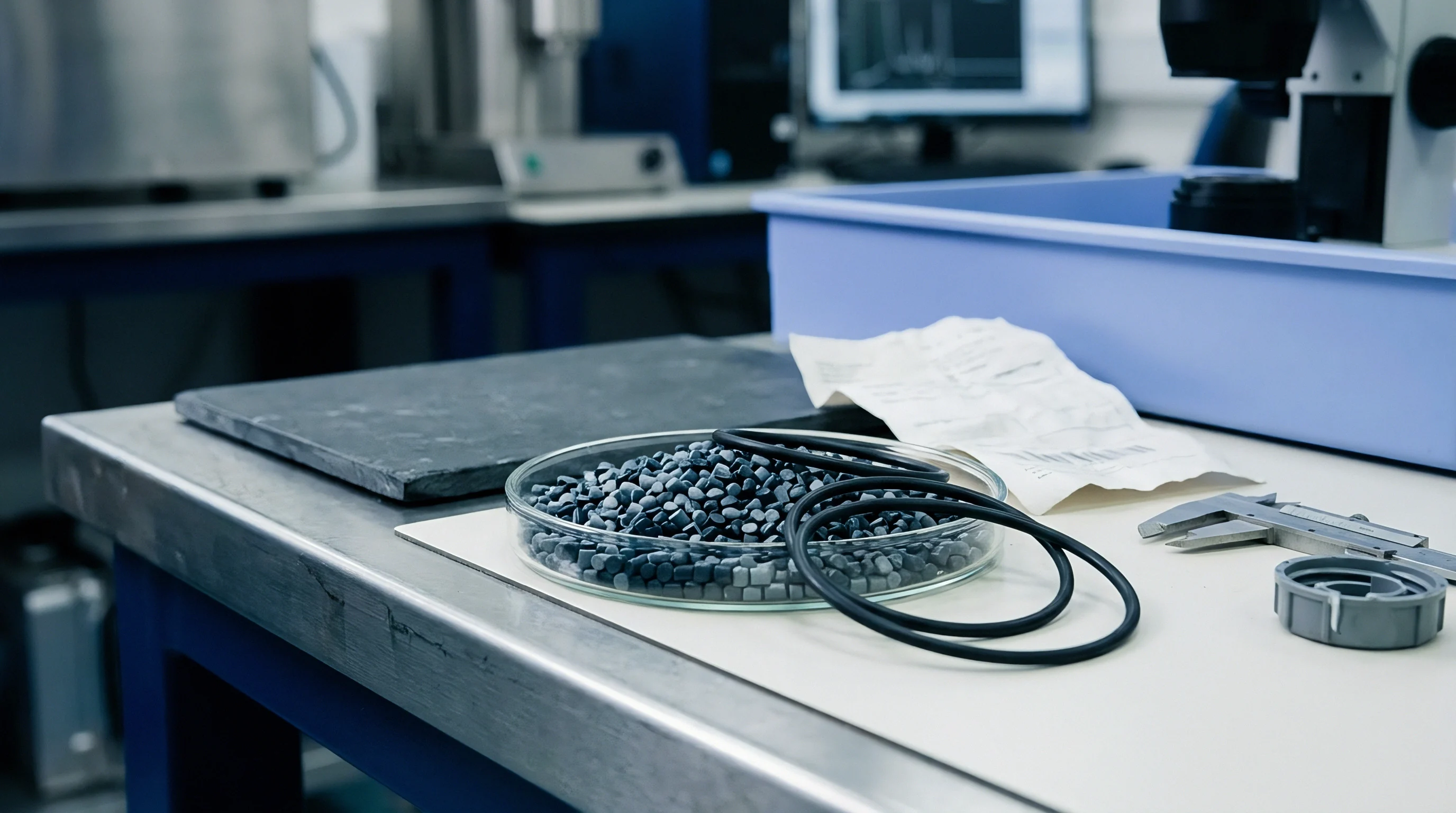
Translating chromatographic peak areas into mass concentration values requires calibrated measurement strategies when reference standards are unavailable for unknown migrants. Non-targeted screening workflows encounter hundreds of discrete peak signals representing unassigned structures. Purchasing authentic reference standards for every detected feature is physically and economically impossible.
Non-targeted screening relies on semi-quantitative strategies using internal surrogate standards added to simulant extracts at known concentrations. Peak areas of unknown migrants are normalized against the peak area of an internal standard, converting arbitrary detector signals into estimated mass concentrations expressed as surrogate equivalents.
Mass spectrometry detector response factors vary dramatically across different chemical structures and functional groups. Electron ionization gas chromatography mass spectrometry displays relatively consistent response factors across non-polar hydrocarbons, but oxygenated, halogenated, or basic compounds exhibit variable ionization efficiencies. Electrospray ionization liquid chromatography mass spectrometry exhibits extreme response factor variations spanning up to three orders of magnitude.
A basic amine derivative generates intense electrospray signals at low concentrations, while a neutral cyclic polyester oligomer produces weak ionization signals at high concentrations. Quantifying a neutral oligomer against a basic internal surrogate standard underestimates the true migrant concentration by a factor of ten to one hundred.
Mitigating response factor variability requires selecting structural surrogate standards that match the primary chemical classes present within packaging materials. Analytical sequences spiked with a mix of internal standards, including deuterated plasticisers, alkyl phenols, fatty acid amides, and aromatic amines, improve semi-quantitative accuracy. Unknown peaks are assigned to specific chemical classes based on retention time and spectral features, then quantified using the response factor of the corresponding class-specific surrogate standard.
Calculating conservative concentration estimates involves applying the lowest response factor observed within a chemical class. This conservative approach overestimates unknown migrant concentrations, ensuring safety margins during downstream toxicological evaluations.
The Analytical Evaluation Threshold and Cramer Classification
The Analytical Evaluation Threshold defines the minimum migrant concentration above which an unknown peak feature must undergo structural identification and toxicological evaluation. Deriving the evaluation threshold bridges analytical sensitivity limits with toxicological safety limits. The Toxicological Threshold of Concern concept establishes safe human exposure levels for chemicals lacking specific toxicity data, based on structural classification.
Cramer structural trees categorize substances into Class I low toxicity, Class II intermediate toxicity, and Class III high toxicity. The human exposure threshold for Cramer Class I substances is set at eighteen hundred micrograms per person per day, while Cramer Class III substances are limited to ninety micrograms per person per day. Potential genotoxins carry a conservative safety threshold of 1.5 micrograms per person per day.
Deriving the Analytical Evaluation Threshold converts toxicological exposure thresholds into liquid concentration values suitable for laboratory measurement. The equation incorporates human daily food consumption, packaging surface-to-volume ratio, extract concentration factors, and analytical uncertainty parameters:
AET = (TTC Body Weight) / (Food Consumption Surface to Volume Ratio Concentration Factor)
Standard regulatory assumptions assign a body weight of sixty kilograms, a daily food consumption of one kilogram, and a surface-to-volume ratio of six square decimeters per kilogram of food. When extracts are concentrated ten-fold during sample preparation, the analytical evaluation threshold concentration shifts proportionally. An uncertainty factor accounts for potential response factor variation between unknown migrants and internal surrogate standards.
Incorporating a tenfold uncertainty factor lowers the operational evaluation threshold, ensuring that weakly ionizing unknown species present at toxicologically relevant concentrations are captured during chromatographic screening.
Calculating the operational threshold for a potential genotoxin illustrates the extreme analytical sensitivity required for non-targeted screening. Applying the genotoxic threshold of 1.5 micrograms per person per day assuming one kilogram daily food consumption yields a target food concentration of 1.5 parts per billion or 0.0015 milligrams per kilogram. Incorporating a tenfold extract concentration factor and a two-fold analytical uncertainty factor sets the required laboratory instrument detection threshold at 0.15 parts per billion in concentrated simulant extract.
Mass spectrometry screening workflows must demonstrate verified limits of detection below this threshold to validate claims that unassigned peaks present no genotoxic risk.
Validating screening sensitivity requires structured verification procedures before analyzing client samples.
- Surrogate recovery assessment tracks internal standard losses across extraction, concentration, and instrumental measurement steps.
- Response factor range profiling measures detector response variance across a ten-compound calibration mix spanning different polarities.
- Instrumental detection limit verification confirms signal-to-noise ratios exceed ten-to-one at the derived analytical evaluation threshold.
- Blank baseline characterization guarantees background noise signals remain three-fold lower than the evaluation threshold.
Toxicological evaluation of semi-quantified unknown migrants applies a hierarchical decision tree based on structural assignment confidence. Peaks exceeding the analytical evaluation threshold carrying Level 1 or Level 2 structural identification undergo automated structural alert screening for genotoxicity using quantitative structure-activity relationship software tools like Derek Nexus or ToXTree. Structural alerts for aromatic amine formation, alkylating agents, or epoxide groups mandate immediate toxicological testing or chemical substitution.
Peaks lacking structural alerts are evaluated against the toxicological threshold of concern assigned to their Cramer class. Unassigned Level 4 or Level 5 peak features exceeding the analytical evaluation threshold must be conservatively evaluated against the 1.5 microgram per day genotoxic threshold, triggering structural elucidation effort or physical material modification.
Applying a single non-deuterated internal standard to quantify cyclic polyester oligomers in food simulant D1 underestimated true mass migration by seventy-two percent compared to direct quantification against isolated cyclic standards.
Contractual terms stipulating compliance with Regulation EU 10 2011 require full toxicological evaluation for every non-listed substance migrating above ten parts per billion.
Standard procurement specifications referencing Article 19 of Regulation EC 1935 2004 obligate converters to provide documented toxicological justification for all detected peaks exceeding the analytical evaluation threshold.


Receipt

Conformity Dossier Assembly and Supporting Analytical Files
Transforming raw non-targeted screening data into legally defensible compliance files requires structured documentation workflows. Regulatory authorities auditing packaging materials reject simple cover letters declaring general food contact suitability. A valid Declaration of Conformity must connect specific finished material lot numbers to raw analytical screening reports, toxicological evaluations, and raw mass spectrometry data files.
The supporting compliance dossier acts as the legal defense file demonstrating due diligence under European food contact regulations. Upstream material suppliers, film converters, and packaging buyers hold shared documentation responsibilities across the supply chain. Gaps in the documentation chain transfer complete legal liability directly to the entity that places the finished packaged food onto the consumer market.
Assembling a complete non-targeted screening conformity file requires structured data compilation across multiple technical domains. The complete dossier must contain raw chromatographic data files, mass spectrometry library search reports, formula attribution confidence scores, analytical evaluation threshold derivations, and signed toxicological evaluation summaries. Including raw instrument data allows third-party auditors and regulatory inspectors to verify baseline integrations, peak alignments, and mass spectrum assignments independently.
Declarations relying on summarized analytical reports that omit raw screening data fail compliance verification audits conducted by European national enforcement authorities.
- Verify that the specific Declaration of Conformity lists every constituent structural ply, adhesive resin formulation, and printing ink series comprising the finished laminate.
- Cross-examine analytical migration reports to confirm exposure simulants, contact times, and temperatures match the intended food packaging application boundaries.
- Audit the analytical evaluation threshold calculation to ensure the applied toxicological threshold of concern matches the structural identification confidence levels reported for unassigned peaks.
- Validate that all detected non-listed substances migrating above ten parts per billion carry documented toxicological safety justifications signed by a qualified toxicologist.
Downstream packaging buyers face significant commercial risks when accepting incomplete supplier declarations. Upstream film converters frequently issue generic declarations claiming compliance with Regulation EU 10 2011 based entirely on raw material supplier datasheets. Raw material datasheets declare constituent resin listings but omit secondary reaction products, adhesive oligomers, set-off contaminants, and processing degradation species generated during film conversion.
The finished converter remains legally responsible for evaluating non-intentionally added substances present in the final converted laminate structure. Packaging buyers must demand certified non-targeted screening test reports performed directly on finished converted film lots prior to commercial launch.

Supply Chain Duty Distribution and Enforcement Reality
Legal responsibility for non-intentionally added substance compliance distributes across every step of the packaging supply chain. Polymer manufacturers must provide functional declarations identifying intentionally added additives, dual-use additives, and known side-reaction impurities. Adhesive and ink formulators must communicate potential degradation products and cyclic oligomer structures to film converters without disclosing proprietary trade secret formulas.
Film converters integrate material input data, conduct single-sided migration screening on finished laminates, and perform safety assessments under Article 19 of Regulation EU 10 2011. Food packers verify that the operational boundary limits established in the converter’s declaration match the actual contact conditions of their food processing lines.
Enforcement authorities across European member states execute coordinated market surveillance programs targeting non-intentionally added substances in food packaging. Border inspection posts and national food safety agencies utilize high-resolution mass spectrometry screening protocols to verify compliance claims. Surveillance sampling focuses heavily on high-risk packaging formats, including high-temperature retort pouches, printed flexible laminates, and recycled plastic materials.
Unannounced market sampling programs test finished food packaging collected directly from retail shelves. Detecting unassessed non-listed migrants above the ten parts per billion threshold triggers rapid alert notifications, product withdrawals, and border rejections across the European Union.
Commercial contracts between brand owners and packaging converters must incorporate explicit compliance clauses governing non-targeted screening evidence. Contracts must specify mandatory screening protocols, approved analytical laboratories, analytical evaluation threshold sensitivity requirements, and document retention obligations. Retaining physical film samples, extraction concentrates, and raw analytical datasets for a minimum of five years post-production provides vital evidence during downstream product liability disputes.
Quantifying financial indemnification for product recalls resulting from undeclared migrant contamination enforces compliance rigor across upstream conversion supply chains.
Integrating non-targeted screening workflows into routine procurement and quality assurance operations transforms regulatory compliance from a passive paperwork exercise into an active quality verification control. Rigorous analytical screening identifies material degradation issues, adhesive curing failures, and set-off contamination prior to commercial distribution. Establishing detailed analytical conformity dossiers protects packaging brand owners, ensures consumer safety, and secures market access across international regulatory jurisdictions.
Enforcement authorities reviewing compliance documentation examine the analytical limits of detection alongside raw mass spectrometry files to confirm that non-intentionally added substance screening covered both volatile and non-volatile chemical classes.