
Determining Non Target Screening Thresholds for Recycled Polyolefins
Determining non target screening thresholds requires deriving analytical detection limits from toxicological thresholds divided by GC and LC response uncertainty factors.
Determining non target screening thresholds requires deriving analytical detection limits from toxicological thresholds divided by GC and LC response uncertainty factors.

Screening unknown volatile migrants demands thermal liberation, high-resolution spectral deconvolution, worst-case mass balance, and toxicological hazard assignment against threshold limits.
Apply 0.01 mg/kg food screening thresholds to non-target polyolefin extracts using high-resolution mass spectrometry and response factor uncertainty multipliers.

Deriving toxicological thresholds for uncharacterized benzophenone degradants in PCR polyolefins requires gas chromatography high resolution mass spectrometry AET screening.

Toxicological threshold scoring maps unidentified polymer migrates to Cramer exposure limits, mandating genotoxic screening below 0.00015 mg/kg food.
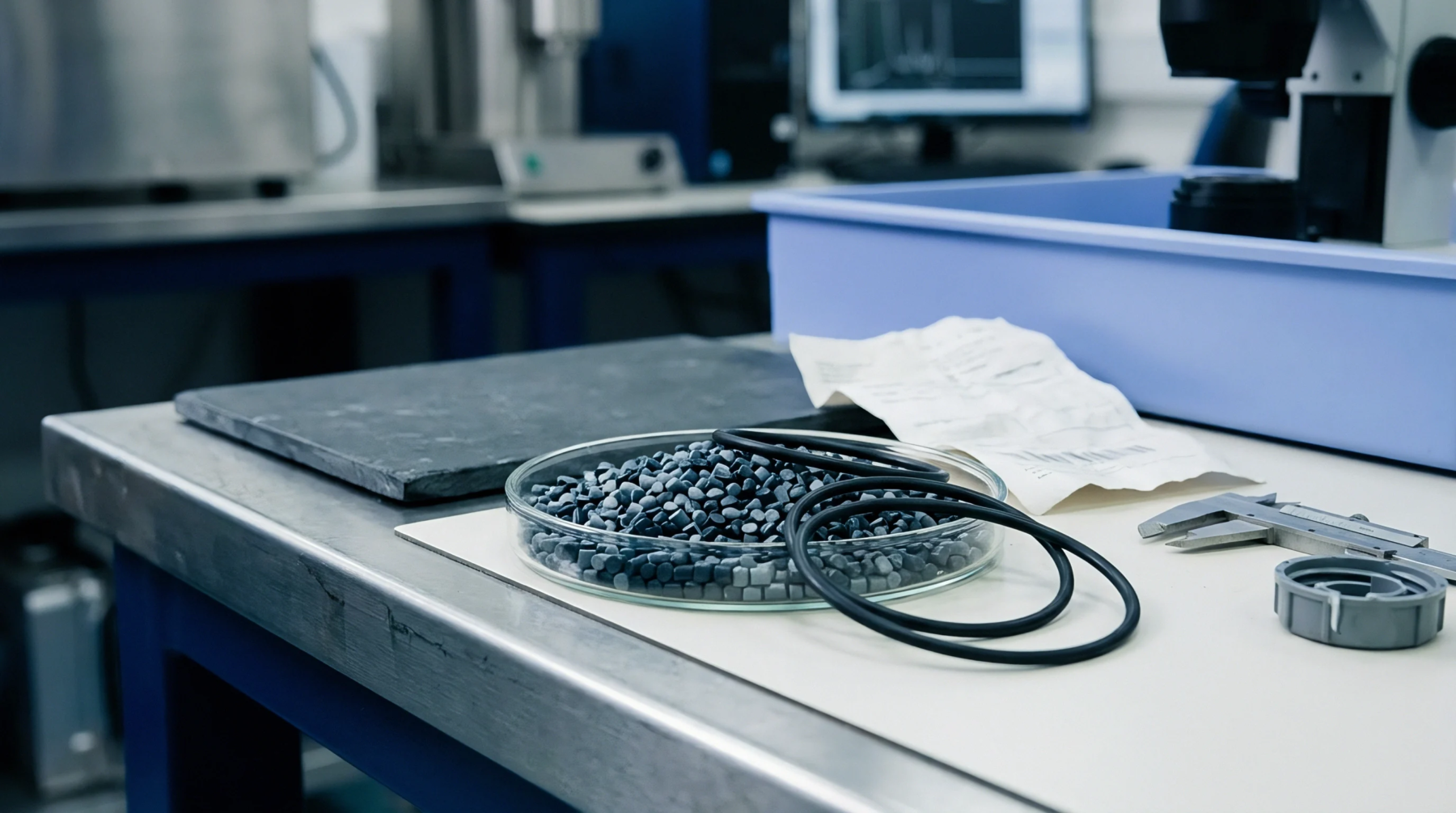
Mass spectrometry NIAS risk analysis quantifies unknown contaminants in recovered polypropylene using TTC thresholds to defend food-contact compliance dossiers.

Verifying non-intentionally added substances in recycled plastics demands high-resolution mass spectrometry screening, toxicological threshold mapping, and batch-specific compliance dossiers.
Expertise is a utility, not a secret. sentiention™ publishes its working knowledge as open reference: intelligence layer covering the materials it sources, the markets it enters, and the reference that serves both.