
Evaluating Hydrocarbon Oligomer Migration in Flexible Polyethylene Packaging
Evaluating oligomer migration in polyethylene packaging requires measuring C12-C45 POSH fractions via HPLC-GC-FID against specific migration limits.
Evaluating oligomer migration in polyethylene packaging requires measuring C12-C45 POSH fractions via HPLC-GC-FID against specific migration limits.

Polyolefin migration compliance requires batch-specific testing for low molecular weight hydrocarbons using accredited simulants, exact temperatures, and GC-MS.

Unknown polyolefin NIAS quantification relies on statistical 95th-percentile multiplicative correction factors applied against surrogate calibration standards.

Polyolefin migration dossiers require dual GC-MS and LC-HRMS non-target screening backed by class-specific surrogate quantification to clear customs audits.

Semi-quantitative LC-MS screening of bio-based cyclic esters requires probabilistic uncertainty propagation to prevent toxicological misclassification.

LC-MS/MS screening of cyclic ester oligomers in PET packaging ensures NIAS compliance and protects food contact declarations from border enforcement rejections.

Untargeted screening by GC-MS and LC-HRMS combined with Threshold of Toxicological Concern metrics establishes legal food-contact safety for recycled polyolefins.

Relative response factor adjustments eliminate false-pass compliance screening for non-intentionally added substances in polyolefin recyclate packaging dossiers.
Deriving ionization efficiency models corrects electrospray response variations in non-targeted NIAS screening, preventing false negatives in recycled resin audits.

Deriving valid PET non-target screening thresholds requires adjusting the 10 ppb toxicological limit by an empirical mass spectrometry response uncertainty factor.

Standardized relative response factor uncertainty distributions correct non-target screening thresholds, preventing under-quantification of polymer migrants.

Closed loop polyolefin recycling relies on calculated purge rates and non-target screening to hold non-intentionally added substance migration under limits.

Non-targeted screening workflows require orthogonal GC-MS and LC-HRMS platforms to detect volatile, non-volatile, and adhesive oligomer migrants down to an analytical evaluation threshold derived from toxicological thresholds of concern.

Reconciling supplier additive disclosures with NIAS risk assessments requires non-targeted screening, TTC calculations, and confidential third-party audits.

European food contact polymer compliance mandates measuring total migration below 10 mg/dm² and specific migration limits using exact simulants and conditions.

Quantifying polyolefin oligomers relies on silver nitrate silica cleanup, epoxidation of olefins, and LC-GC-FID UCM hump integration against alkane markers.

Non-intentionally added substance mass spectrometry protocols require combined GC-HRMS and LC-HRMS screening below 10 ppb to verify recycled polyolefin food safety.
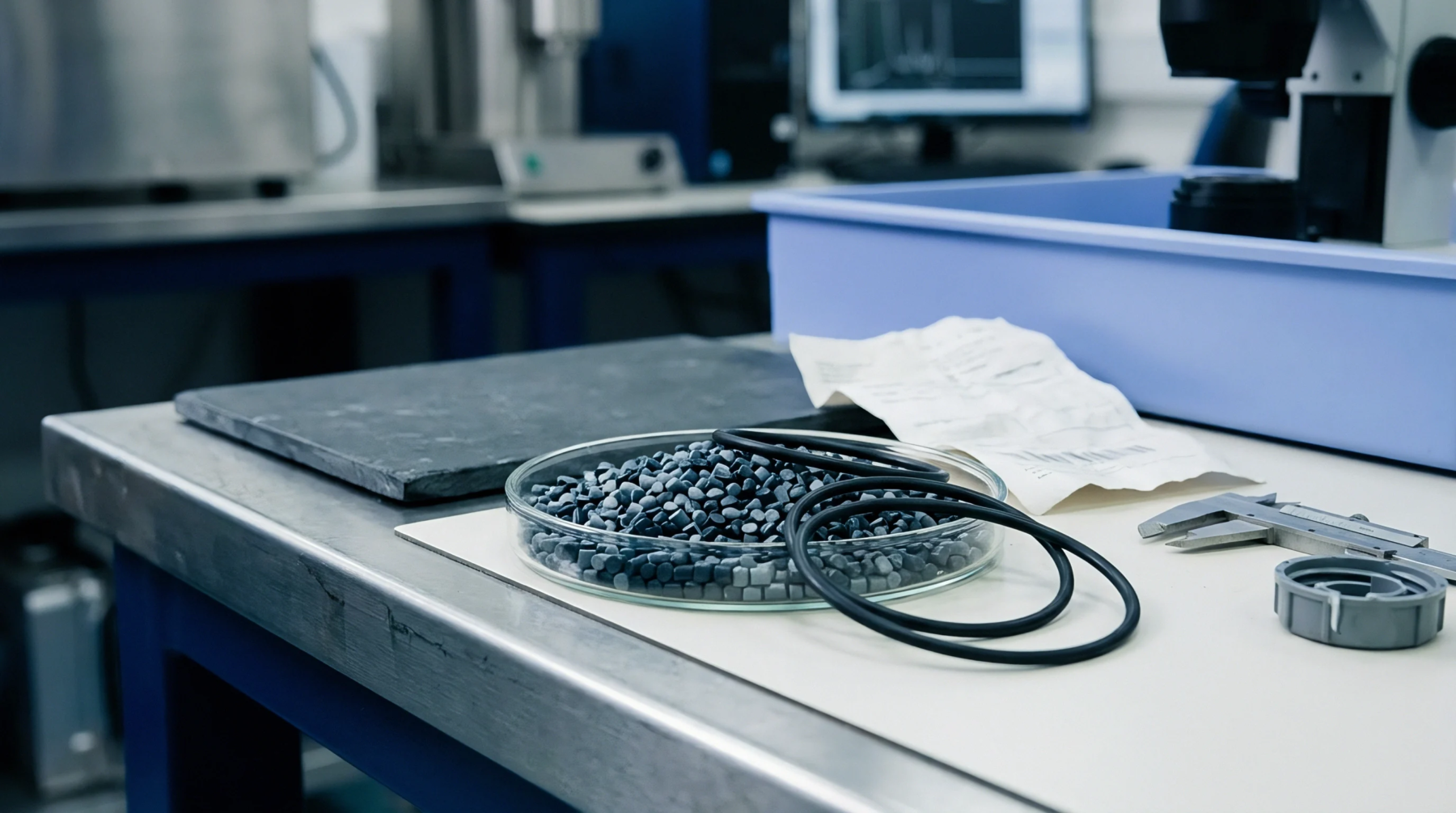
Mass spectrometry NIAS risk analysis quantifies unknown contaminants in recovered polypropylene using TTC thresholds to defend food-contact compliance dossiers.

Deriving polyolefin hydrocarbon hump compliance requires LC-GC-FID fraction isolation and Cramer Class derivation to set verifiable limits against migration test data.

Non-target HRMS screening combined with toxicological threshold evaluation provides the empirical basis for verifying recycled plastic safety before market entry.
Expertise is a utility, not a secret. sentiention™ publishes its working knowledge as open reference: intelligence layer covering the materials it sources, the markets it enters, and the reference that serves both.