Toxicological Evaluation Protocols for Chemical Migrants in Post Consumer Resins
Post consumer resin compliance requires analytical screening of migrants paired with toxicological evaluation using threshold of toxicological concern models.
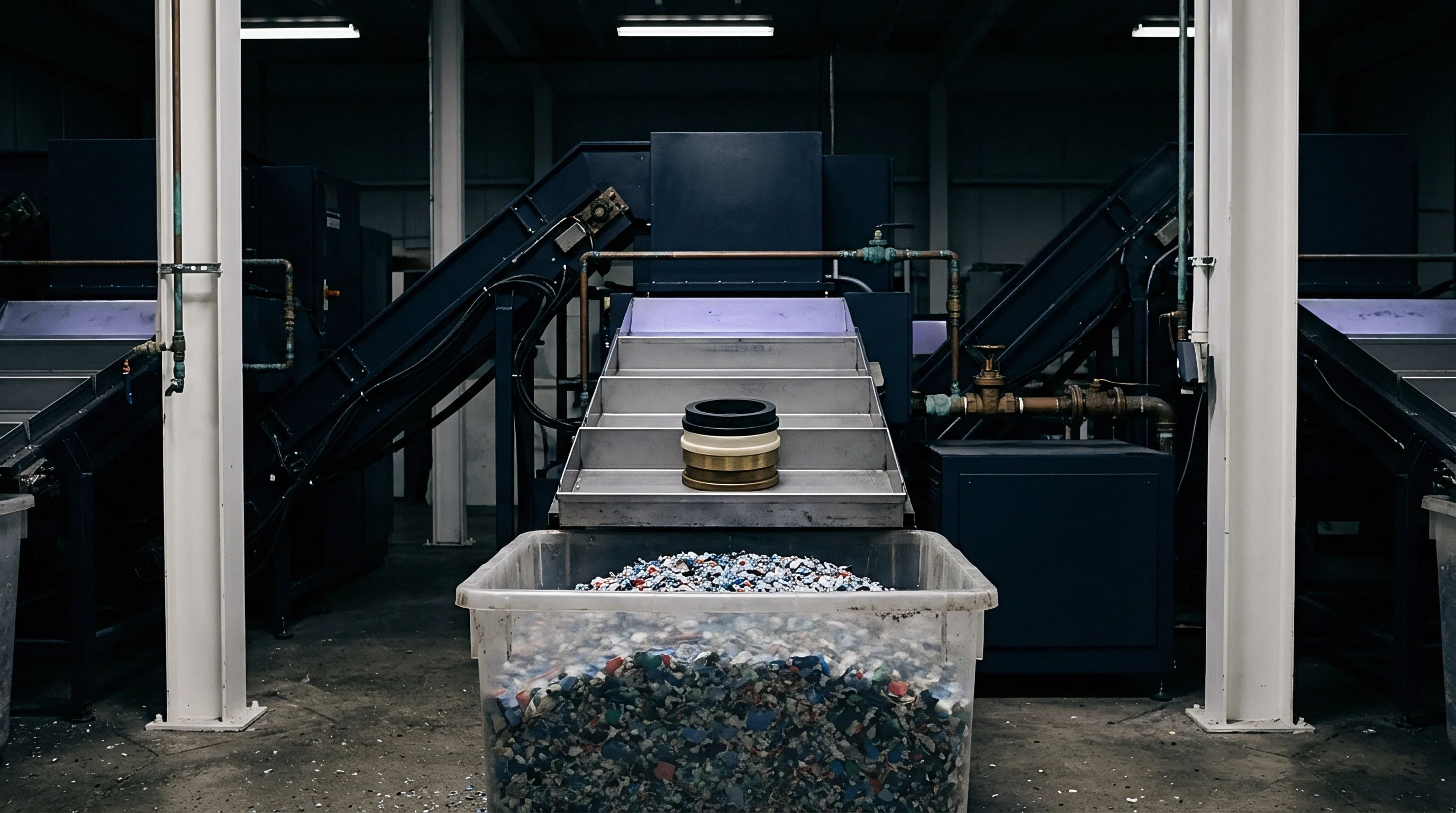

Pellet
Recycled polymers fed into food packaging lines retain chemical traces of their earlier service lives, environmental exposure, and previous heat cycles. Optical and mechanical sorting separates bulk resins like polyethylene terephthalate, high-density polyethylene, and polypropylene, but secondary contaminants diffuse into amorphous zones of the plastic while consumers handle them. Residues from non-food packaging, household pesticides, automotive fluids, and industrial cleaners penetrate the polymer walls.
Where collection systems run without deposit-return mandates, cross-mingling with general municipal waste drives up contamination rates.
Thermal stress during mechanical recycling opens additional degradation routes. Re-extruding polyolefins shears polymer backbones through thermo-mechanical degradation, producing alkanes, alkenes, and branched oligomeric fractions. Polyethylene terephthalate breaks down under heat into acetyldehyde, ethylene glycol, and cyclic aromatic ester oligomers.
Historic additives also present immediate compliance risks under current chemical regulations: flame retardants, phthalate plasticizers, and organotin heat stabilizers from durable goods routinely slip into post-consumer wash lines via unseparated industrial scrap.
| Polymer Matrix | Contaminant Class | Primary Source Route | Flake Concentration (mg/kg) |
|---|---|---|---|
| Recycled Polyethylene Terephthalate | Aromatic Ester Oligomers | Polymer thermal degradation | 150 – 1200 |
| Recycled High-Density Polyethylene | Linear Alkanes and Alkenes | Polyolefin chain scission | 300 – 2500 |
| Recycled Polypropylene | Substituted Terpenes and Fragrances | Personal care packaging absorption | 10 – 450 |
| Post-Consumer Mixed Polyolefins | Legacy Phthalate Plasticizers | Cross-contaminated flexible packaging | 5 – 85 |
Chemical migrants in post-consumer resin fall into intentionally added substances and non-intentionally added substances. Intentionally added compounds comprise residual antioxidants, slip agents, and processing aids surviving from the virgin formulation. Non-intentionally added substances cover reaction intermediates, thermal breakdown fragments, and absorbed environmental residues.
When mechanical sorting misses non-food containers, hazardous industrial and household formulations carry straight over into the polyolefin wash lines.
Volatile organic contaminants evaporate rapidly during high-vacuum melt re-extrusion while high-molecular-weight degradation products remain entrapped in polyolefin matrices.

Legacy Additives and Degradation Products
Older plastic formulations regularly carried chemical additives now restricted or banned under modern packaging safety laws. Polyvinyl chloride bottle clearers formulated with organotin stabilizers pollute polyolefin streams, releasing toxic alkyltin species into recovered flakes. Electronic housings treated with flame retardants cross-contaminate post-consumer polypropylene containers when electronic scrap enters municipal packaging collections.
Extrusion temperatures running above two hundred degrees Celsius consume phenolic antioxidants, leaving quinone oxidation products that discolor finished pellets and introduce reactive migrant species.
Low-molecular-weight oligomers make up the bulk of non-intentionally added substances found in recycled polyolefins. Thermal scission of polyethylene yields linear and cyclic hydrocarbon series between ten and forty carbon atoms, while polypropylene degradation generates branched iso-alkanes that elute as an unresolved complex mixture under standard chromatographic runs. These oligomeric fractions migrate across container walls directly into fatty food matrices, complicating toxicological qualification for bottle and sheet converters.

Cross Contamination Mechanics
Sorting errors allow non-food packaging to enter wash plants alongside food-grade feedstock. Blow-molded high-density polyethylene bottles for household chemicals absorb volatile solvents, motor lubricants, and pesticide actives during storage, driving contaminants deep into the bulk polymer matrix. Conventional caustic hot washing strips away exterior surface grime, but leaves the internal solvent burden undisturbed within the solid plastic matrix.
Contaminant loading also shifts sharply across municipal collection catchment areas.
- Legacy Organotin Stabilizers leaching from unseparated industrial PVC streams cause direct endocrine disruption at microgram thresholds.
- Automotive Chemical Residues absorbed into post-consumer high-density polyethylene containers resist standard aqueous washing procedures.
- Polymer Thermal Degradation Products generated during re-extrusion yield reactive unsaturated hydrocarbons and oxidized species.
- Printed Ink Solvents migrating through container sidewalls during collection contaminate underlying polyolefin flake batches.
Vacuum degassing during re-extrusion pulls out volatile fractions, but high-molecular-weight degradation products stay bound within the polymer melt.


Volatility
Chemical migration into contact media follows the diffusion rate of individual compounds across the polymer network. Transport physics obeys Fickian diffusion models, where molecular size, resin crystallinity, and system temperature dictate the net migrant flux. Low-density polyethylene possesses high segmental mobility, permitting non-polar organic compounds to migrate readily even at room temperature.
High-density polyethylene and polypropylene feature tighter crystalline morphology, lowering diffusion coefficients by one to two orders of magnitude relative to low-density matrices.
Polyethylene terephthalate maintains a high glass transition temperature around seventy-eight degrees Celsius. Under ambient storage, its rigid polyester chains form an effective physical barrier against organic migrants larger than three hundred Daltons. Hot-filling and microwave heating relax the polymer chains, increasing diffusion coefficients exponentially along Arrhenius pathways.
By contrast, migrants under two hundred Daltons diffuse through polyolefins even under refrigeration.
Overall migration from recycled polyolefins into 10% ethanol after 10 days at 40°C remains below 10 mg/dm² when processing temperatures exceed 220°C under 10 mbar vacuum.
Diffusion Modeling and Transport Dynamics
Mathematical modeling of mass transfer relies on Fickian equations parameterized with polymer-specific matrices and migrant molecular mass. Regulatory agencies accept conservative diffusion equations to calculate worst-case migration limits without direct testing. Calculations take the initial migrant concentration in the container wall, the packaging surface-to-food volume ratio, contact time, and temperature.
The partition coefficient between the plastic and the food simulant then determines equilibrium concentrations at the package contact boundary.
Non-polar food simulants draw lipophilic migrants out of polyolefins far more aggressively than water-based simulants. Mineral oil saturated hydrocarbons and mineral oil aromatic hydrocarbons migrate quickly into edible oils, dairy fats, and dry fatty food simulants. While partition coefficients favor retention in the plastic during contact with aqueous foods, fatty matrices draw non-polar compounds across the phase boundary.
Polyolefins hold these compounds against water contact, but shed them readily into lipid systems.

Simulant Selection and Contact Conditions
Standard testing uses liquid and solid media calibrated to replicate the solvent properties of commercial food groups under European packaging rules. Simulant A specifies ten percent ethanol for aqueous foods. Simulant B uses three percent acetic acid to evaluate acidic contact.
Simulant C covers twenty percent ethanol for alcoholic goods. Simulant D2 employs vegetable oil, synthetic triglycerides, or solvent alternatives such as isooctane and ninety-five percent ethanol to model fatty food interactions. Simulant E relies on poly(2,6-diphenyl-p-phenylene oxide), known as Tenax, for dry foodstuffs.
| Intended Food Contact Profile | Designated Food Simulant | Standard Exposure Time | Standard Exposure Temperature |
|---|---|---|---|
| Refrigerated Long-Term Storage | Simulant A, B, or D2 | 10 days | 20 °C |
| Ambient Long-Term Storage | Simulant A, B, C, or D2 | 10 days | 40 °C |
| Hot-Fill Applications (up to 100°C) | Simulant A, B, or D2 | 2 hours | 70 °C |
| High-Temperature Processing (Sterilization) | Simulant D2 or Tenax (Simulant E) | 1 hour | 121 °C |
| Conditions compiled in accordance with testing parameters set out in Regulation (EU) 10/2011 Annex III and Annex V. | |||
Overall migration testing quantifies the total non-volatile mass transferred from packaging into food simulants. The statutory overall migration limit is fixed at ten milligrams per square decimeter of package surface area, or sixty milligrams of total migrants per kilogram of food. Specific migration testing targets single chemical substances that carry individual toxicological thresholds on regulatory positive lists.
Small migrants move through flexible polyolefin chains, whereas rigid polyester backbones impede chemical diffusion during ambient shelf life.


Assay
Assaying post-consumer resin requires spectroscopic and chromatographic methods sensitive enough to isolate trace chemical species from the polymer bulk. Gas chromatography paired with mass spectrometry identifies volatile and semi-volatile migrants boiling below four hundred degrees Celsius. Headspace solid-phase microextraction captures volatile degradation products, residual monomers, and fragrance residues directly from resin pellets without requiring prior solvent dissolution.
Liquid chromatography coupled to high-resolution time-of-flight mass spectrometry targets non-volatile, high-molecular-weight, and polar substances. This configuration screens for oxidized antioxidants, oligomer distributions, and non-volatile ink ingredients. High-resolution instruments achieve exact mass accuracy within five parts per million, allowing chemists to resolve isotopic patterns and assign molecular formulas to uncharacterized peaks extracted from recycled pellets.

Chromatographic Separation Technologies
Gas and liquid phases separate distinct fractions by boiling point, polarity, and hydrodynamic volume. Gas chromatography on non-polar capillary columns resolves linear and branched hydrocarbon series in recovered polyolefins. Flame ionization detection delivers uniform carbon response factors, providing reliable total quantification for mineral oil saturated hydrocarbons and mineral oil aromatic hydrocarbons.
For overlapping migrant peaks that elute as humps on single columns, comprehensive two-dimensional gas chromatography provides the required resolving power.
Liquid chromatography runs reverse-phase C18 columns with electrospray ionization to isolate polar migrants. Quadrupole time-of-flight detectors record full-scan spectra across broad mass-to-charge windows for comparison against mass spectral reference libraries. When peaks show no library match, tandem mass spectrometry fragmentation patterns provide the data needed for de novo structural elucidation.

Does Non Target Screening Satisfy Regulatory Burden?
High-resolution mass spectrometry gathers broad spectral profiles, but identification confidence drops when library match scores fall below verified thresholds. Non-target screening scans resin extracts for unlisted compounds without predefined target lists, frequently revealing hundreds of unassigned peaks in post-consumer polyolefins. Quantifying these uncharacterized migrants creates practical difficulties because authentic reference standards do not exist for bespoke degradation products.
Response factor variability across distinct chemical families can introduce quantification errors of an order of magnitude when relying on single surrogate standards. Laboratories therefore adopt conservative quantification models, using the standard with the highest response factor to calculate worst-case migrant concentrations and protect against underestimating hazardous unknowns.
- Perform solvent extraction on post-consumer resin flakes using dichloromethane at reflux for six hours.
- Inject concentrated extract into gas chromatography coupled with high-resolution time-of-flight mass spectrometry.
- Align mass spectral peaks against reference databases to establish tentative structural identifications.
- Determine response factors using internal standards to establish semi-quantitative concentration values.
- Compare calculated concentrations against the threshold of toxicological concern based on Cramer structural classes.
Analytical laboratories debate whether toxicological clearance can proceed when semi-quantitative mass spectrometry response factors vary by an order of magnitude across unknown chemical structures.

Hazard
Toxicological profiling establishes safe migration ceilings based on human exposure benchmarks and chemical structural alerts. Specific Migration Limits listed in Annex I of Regulation (EU) 10/2011 originate from toxicological assessments issued by food safety authorities, whereas migrants lacking dedicated toxicological dossiers require generic risk assessment frameworks to define permissible limits.
The Threshold of Toxicological Concern approach assesses low-concentration dietary exposure to non-particulate organic molecules. Structural decision trees assign migrants to one of three Cramer classes based on their functional groups and anticipated metabolic fate. Cramer Class I covers low oral toxicity substances, with an exposure ceiling of eighteen hundred micrograms per person per day.
Cramer Class II addresses intermediate risks, capped at five hundred forty micrograms per person per day. Cramer Class III covers complex or reactive functional arrangements, restricting intake to ninety micrograms per person per day.
Regulation (EU) 10/2011 Annex I restricts specific migration of bisphenol A to 0.04 mg/kg food, rendering non-compliant post-consumer batches illegal for food contact application.

Structural Classification and Cramer Decision Trees
Molecules are categorized by the functional groups that dictate oral toxicity. Structural algorithms classify organic migrants into Cramer tiers by examining bond arrangements, heteroatom presence, and aromatic ring patterns. Unbranched alkanes and simple aliphatic esters sort into Cramer Class I; aromatic ethers, ketones, and branched aliphatic chains fall into Cramer Class III.
Organophosphates and motifs indicating potential genotoxicity are handled outside standard Cramer tiers under dedicated, lower thresholds.
Unidentified migrants found in recycled resin default to the most protective hazard classification until toxicological data indicates otherwise. Genotoxic carcinogens represent the highest hazard level, capped at a dietary Threshold of Toxicological Concern of 0.15 micrograms per person per day. For a sixty-kilogram adult consuming one kilogram of packaged food daily, this corresponds to a migration limit of 0.00015 milligrams per kilogram.
Non-target mass spectrometry methods must reach detection limits below this concentration to rule out genotoxic concerns.

Genotoxicity Assay Protocols
Screening for mutagenicity and clastogenicity establishes whether an unidentified migrant damages DNA. Biological testing subjects concentrated resin extracts to a tiered series of in vitro assays. The Ames test, run under OECD Test Guideline 471, checks for point mutations across five Salmonella typhimurium and Escherichia coli strains.
In vitro mammalian cell micronucleus testing under OECD Test Guideline 487 identifies structural and numerical chromosome damage resulting from exposure.
Clear negative results across a complete in vitro testing battery demonstrate that complex extracts containing unidentified migrants lack DNA-reactive activity. Once genotoxicity is eliminated, evaluators can apply the Cramer Class III ceiling of ninety micrograms per person per day. A positive genotoxicity result halts resin qualification, forcing process redesign or batch rejection.
Consider a practical risk assessment scenario for an unknown organic migrant isolated from a forty-tonne batch of post-consumer high-density polyethylene intended for one-liter milk packaging. Assume each container weighs thirty grams, providing a contact surface area of six square decimeters per kilogram of milk. Quantitative liquid chromatography mass spectrometry yields an estimated migrant concentration of 0.005 milligrams per kilogram in ten percent ethanol simulant after ten days at forty degrees Celsius.
Standard dietary exposure assumptions assign one kilogram of packaged milk consumption per individual daily.
Evaluating this measured migration level against Cramer structural rules reveals two distinct compliance pathways depending on chemical structure elucidation. If tandem mass spectrometry confirms the migrant lacks genotoxic structural alerts, the compound falls into Cramer Class III, establishing a maximum safe dietary migration threshold of 0.09 milligrams per kilogram of food. The measured concentration of 0.005 milligrams per kilogram represents five percent of this safe limit, permitting material clearance for food packaging conversion.
If structural analysis reveals an alkylating functional group, the genotoxic threshold of 0.00015 milligrams per kilogram applies. The measured concentration exceeds this genotoxic limit by thirty-three fold. The entire forty-tonne resin lot fails compliance and requires secondary purification or diversion to non-food applications.
An uncorrected misclassification of an unknown migrant as non-genotoxic exposes packaging distributors to market recalls, regulatory enforcement actions, and mandatory destruction of non-compliant inventory.


Chain
Demonstrating post-consumer resin safety requires validating recycling decontamination plants through standardized challenge testing. Mechanical processes destined for food-grade output must secure regulatory clearance from agencies like the European Food Safety Authority or the United States Food and Drug Administration. Decontamination reactors use elevated temperatures, extended residence profiles, and deep vacuum to pull volatile and semi-volatile contaminants out of flake feedstocks.
Challenge protocols test decontamination efficiency by deliberately spiking virgin flake with high concentrations of model chemical surrogates representing specific physical behaviors: volatile non-polar, volatile polar, non-volatile non-polar, and non-volatile polar. Toluene represents volatile non-polar solvents; chlorobenzene models semi-volatile halogenated aromatics; benzophenone serves as a non-volatile polar marker; and methyl stearate provides a high-molecular-weight lipophilic reference.
Unidentified mass spectrometry signals above the toxicological evaluation threshold force a conservative exposure assumption matching genotoxic carcinogens.

Surrogate Challenge Testing Protocols
Inoculating virgin polymer flakes with model chemical contaminants measures decontamination reactor efficiency across distinct volatility and polarity ranges. Virgin flakes absorb surrogate cocktails to target levels between five hundred and two thousand milligrams per kilogram. This spiked resin then passes through commercial washing, drying, vacuum degassing, and solid-state polymerization units run under worst-case parameters.
Comparing surrogate levels before and after processing yields the decontamination efficiency percentage for each chemical class.
European process clearances require decontamination efficiencies high enough to pull peak historical contamination loads down below toxicological migration limits. High-density polyethylene recycling lines lacking solid-state polymerization achieve lower decontamination rates for heavy, non-volatile surrogates than polyethylene terephthalate vacuum systems. A qualified system must maintain contaminant removal rates despite swings in feedstock quality.
Regulatory Clearance Dossiers
Filing for regulatory approval requires comprehensive proof of cleaning performance under worst-case plant settings. Technical dossiers bundle overall decontamination efficiencies, challenge test analytical data, raw flake specifications, and facility quality controls. European Union Regulation 2022 1616 governs food-contact recycling systems across the bloc, requiring formal scientific evaluations for individual decontamination technologies.
| Surrogate Chemical | Molecular Mass (g/mol) | Chemical Category Profile | Target Process Decontamination Efficiency (%) |
|---|---|---|---|
| Toluene | 92.14 | Volatile Non-Polar Solvent | > 99.5 |
| Chlorobenzene | 112.56 | Semi-Volatile Halogenated Aromatic | > 99.0 |
| Phenylcyclohexane | 160.26 | Semi-Volatile Hydrocarbon | > 98.0 |
| Benzophenone | 182.22 | Non-Volatile Polar UV Absorber | > 95.0 |
| Methyl Stearate | 298.50 | High-Molecular Fatty Acid Ester | > 90.0 |
Recycling facilities run process sensors to confirm operational stability across daily production runs, monitoring reactor temperature, vacuum levels, gas purge rates, and residence times. Testing frequency depends on quality management system design. Traceability databases tie finished pellet lots to raw flake shipments, allowing operators to isolate inventory quickly if an upstream contamination spike occurs.
- Surrogate Inoculation Verification requires measuring model contaminant spikes in virgin resin prior to reactor processing.
- Reactor Residence Monitoring demands continuous validation of temperature and vacuum parameters during solid-state polymerization.
- Batch Traceability Auditing confirms that input flake lots originate exclusively from approved collection schemes.
- Analytical Limit Confirmation verifies that non-target screening methods maintain detection limits below 0.00015 mg/kg.
A specific procurement clause demanding batch challenge test certificates shifts financial liability for non-compliant migration directly to the resin producer.

Exposure
Assessing real-world toxicological risk requires converting laboratory migration numbers into daily dietary exposure figures. Food packaging evaluations calculate migrant transfer into food products based on standard intake models. European safety rules apply a baseline scenario where a sixty-kilogram adult consumes one kilogram of packaged food per day from a container with a surface-to-volume ratio of six square decimeters per kilogram, applying safety factors to protect variable diets and vulnerable populations.
Estimated Daily Intake calculations combine analytical migration values with food consumption coefficients and packaging market penetration figures. Determining intake involves multiplying the migrant concentration in food by the daily consumption volume, then dividing by standard adult body weight. Evaluators check this figure against established toxicological reference limits, including Tolerable Daily Intake and Acceptable Daily Intake, to confirm toxicological acceptability.

Dietary Intake Calculations and Contact Ratios
Regulatory exposure models convert migrant levels found in food simulants into projected daily consumer intake. Container dimensions alter this exposure profile: small packaging carries a high surface-to-volume ratio, driving up migrant concentrations per kilogram of product compared to bulk drums. A one-hundred-milliliter portion pack presents a surface-to-volume ratio above fifteen square decimeters per kilogram, compounding migrant transfer into the contents.
Consumption factors scale exposure calculations against real-world eating habits for given food categories. In regions where daily vegetable oil intake is minimal, fatty food consumption factors lower calculated intake values for lipophilic migrants. Compliance certificates for post-consumer polymers outline specific food restrictions, maximum fill temperatures, and allowable contact durations to keep migration within legal bounds.

Conformity Declaration Integrity and Supply Chain Transfer
Documentation passing through the conversion chain defines the legal and operational limits verified by resin suppliers and packagers. Regulation 10 2011 Annex IV requires written Declarations of Compliance for all plastic materials entering food contact service. Polymer manufacturers must disclose restricted substances, dual-use additives, and non-intentionally added substance evaluations in their supporting technical dossiers.
Importers handling post-consumer resin within regulated markets retain primary legal accountability for product safety. Enforcement authorities audit compliance files, requesting underlying analytical reports generated by ISO 17025 accredited laboratories. Full analytical profiling ~ encompassing overall migration, non-target screening, and genotoxicity assays ~ costs between five thousand and twenty thousand Euros per resin lot.
Missing or defective documentation discovered during an agency audit halts product distribution and voids certificates of conformity across the supply chain.
When chemical migration limits and toxicological evaluation thresholds align across independent laboratory validations, post-consumer resin enters commercial packaging applications with verified toxicological safety.