Determining Hydrolytic Degradation Thresholds in Virgin Resin Feedstocks
Hydrolytic degradation thresholds require drying virgin polyesters below 0.02 percent and polyamides below 0.10 percent water before melt processing.

Moisture
Virgin condensation polymers hold both bound and unbound water throughout their molecular matrices. When these feedstocks are heated above their glass transition and melting points, that liquid water flashes into reactive vapor, attacking vulnerable covalent linkages along the polymer backbone. Polyethylene terephthalate, polybutylene terephthalate, polyamide, and polycarbonate are the primary resin families susceptible to this breakdown during melt processing.
Atmospheric exposure introduces ambient humidity to pellet surfaces within minutes of breaking a package seal. Surface moisture adsorbs rapidly through hydrogen bonding with polar functional groups, while internal moisture diffuses into the amorphous regions of the resin matrix over extended storage. Because hygroscopic resins reach dynamic equilibrium with surrounding air, ambient temperature and relative humidity directly establish the baseline water content of virgin feedstock before it reaches the hopper.
Polycondensates undergo equilibrium chain scission when liquid water or vapor contacts the polymer melt during high-temperature extrusion.
Determining the safe moisture threshold for any given resin grade requires mapping water concentration against molecular weight loss across the run. Polyethylene terephthalate demands moisture levels below 0.02 percent by weight ~ equivalent to 200 parts per million ~ to prevent sharp drops in intrinsic viscosity. Polyamide 66 tolerates up to 0.10 percent by weight because amide hydrolysis is chemically reversible, though running past that limit still causes brittleness and surface voiding.
Extruding wet pellets causes an immediate loss of melt pressure and viscosity. Water acts as a nucleophile, cleaving ester, carbonate, or amide bonds to shorten polymer chains and broaden molecular weight distribution. This uncontrolled chain scission degrades impact strength, tensile yield, and flexural modulus in molded parts.
Measuring incoming moisture before thermal exposure defines the workable processing window for each virgin lot.
Pellets carrying only surface water dry far faster than those with deep internal moisture. Absorption kinetics follow Fickian diffusion models, where diffusion rates double for roughly every ten-degree Celsius rise in ambient temperature. Virgin stock held in unconditioned warehouses through summer months absorbs structural moisture that standard drying cycles cannot pull out without longer dwell times at low dew points.
Processing virgin feedstock strictly below its critical water limit prevents cosmetic splay and ensures mechanical integrity across the finished product’s service life.

Steam
Phase transitions inside the injection barrel create localized vapor pockets that shear polymer chains. As virgin resin moves from the feed zone into the transition zone, barrel heat superheats ambient water trapped within pellet pores. The resulting volumetric expansion is explosive, fracturing the surrounding molten matrix.
Barrel temperatures between 240 degrees Celsius and 300 degrees Celsius turn liquid water into high-pressure steam within milliseconds. Vapor bubbles caught in the melt stream flatten against the mold cavity walls, leaving silver streaking, cosmetic splay, and internal micro-cavities that compromise tensile performance.
| Polymer Family | Processing Temp Range (C) | Max Water Content (wt%) | Primary Cleavage Linkage | Mechanical Property Impact |
|---|---|---|---|---|
| Polyethylene Terephthalate (PET) | 270 – 300 | 0.005 – 0.020 | Ester Bond | Impact strength drop, brittle fracture |
| Polybutylene Terephthalate (PBT) | 240 – 270 | 0.010 – 0.030 | Ester Bond | Tensile yield reduction, elongation drop |
| Polyamide 66 (PA66) | 275 – 305 | 0.050 – 0.150 | Amide Bond | Viscosity loss, flash formation, porosity |
| Polycarbonate (PC) | 280 – 320 | 0.010 – 0.020 | Carbonate Linkage | Loss of optical clarity, ductile-brittle transition |
| Polylactic Acid (PLA) | 190 – 220 | 0.010 – 0.025 | Ester Bond | Severe molecular weight drop, flow instability |
Extended residence time in the barrel magnifies hydrolytic damage. A virgin polycarbonate sitting in a hot barrel for six minutes at 0.04 percent water content loses twice as much molecular weight as the same lot processed on a two-minute cycle. Under high pressure, thermal energy severs carbonate linkages quickly wherever moisture sits against the polymer backbone.
Excess barrel residence time at elevated processing temperatures amplifies hydrolytic damage even inside partially dried virgin feedstocks.
Shear from the rotating screw breaks superheated vapor bubbles into fine dispersions, spreading reactive hydroxyl radicals throughout the melt. This uniform scission suppresses localized structural recovery and drops melt pressure across the nozzle tip.
Overlooking water phase dynamics leads directly to cosmetic scrap, load failure in structural parts, and shortened component service life.

Chemistry
Degradation kinetics depend directly on backbone structure. In polyesters, nucleophilic attack by water breaks ester linkages via a second-order reaction. This splits high-molecular-weight chains into shorter segments, generating one carboxylic acid end-group and one hydroxyl end-group for every ester bond cleaved.
Carboxylic acid groups formed during initial hydrolysis act autocatalytically, lowering the activation energy for subsequent chain cleavage. This drives exponential degradation rates once moisture climbs past the resin grade’s chemical equilibrium limit.
Kinetic Mechanisms across Resin Classes
Polyamides undergo reversible hydrolytic cleavage at amide linkages. Hydrolysis converts amide groups back into amine and carboxylic acid end-groups, setting up an equilibrium between chain cleavage and thermal polycondensation. Processing insufficiently dried polyamides shifts this balance toward scission, whereas processing excessively dry resin below 0.02 percent moisture can induce chain extension, driving melt viscosity above workable limits.
Polycarbonates hydrolyze at carbonate linkages, forming bisphenol A structures and releasing carbon dioxide gas. The liberated gas leaves micro-voids in molded parts that act as stress concentrators during impact. Polylactic acid, an aliphatic polyester, hydrolyzes faster than aromatic polyesters because its open aliphatic chain presents lower steric hindrance to attacking water molecules.
Polyethylene terephthalate processed at 285 degrees Celsius with a moisture content of 0.04 percent experiences a 35 percent drop in intrinsic viscosity within two minutes of barrel residence time.
Structural degradation shows up across physical, thermal, and rheological parameters during post-molding inspection.
- Intrinsic Viscosity Loss indicates severe reduction in average molecular weight, directly reducing toughness and fatigue resistance in structural components.
- Carboxylic Acid Accumulation increases terminal acid group concentration, accelerating future degradation when parts operate in warm, humid environments.
- Melt Volume Rate Elevation signals lower molecular weight through rapid melt flow, causing tool flashing and process instability during molding.
- Ductile to Brittle Transition Shift moves the failure mode from energy-absorbing plastic deformation to sudden brittle fracture under low-energy impacts.
Does the chemical rate constant of hydrolysis depend more on processing temperature or residual water content?

Bench
Measuring trace water demands analytical precision down to the parts-per-million range. Standard loss-on-drying balances record gross weight loss upon heating, which frequently mistakes volatile additives, low-molecular-weight oligomers, or plasticizers for moisture. Defensible verification requires chemical titration or high-accuracy physical methods.
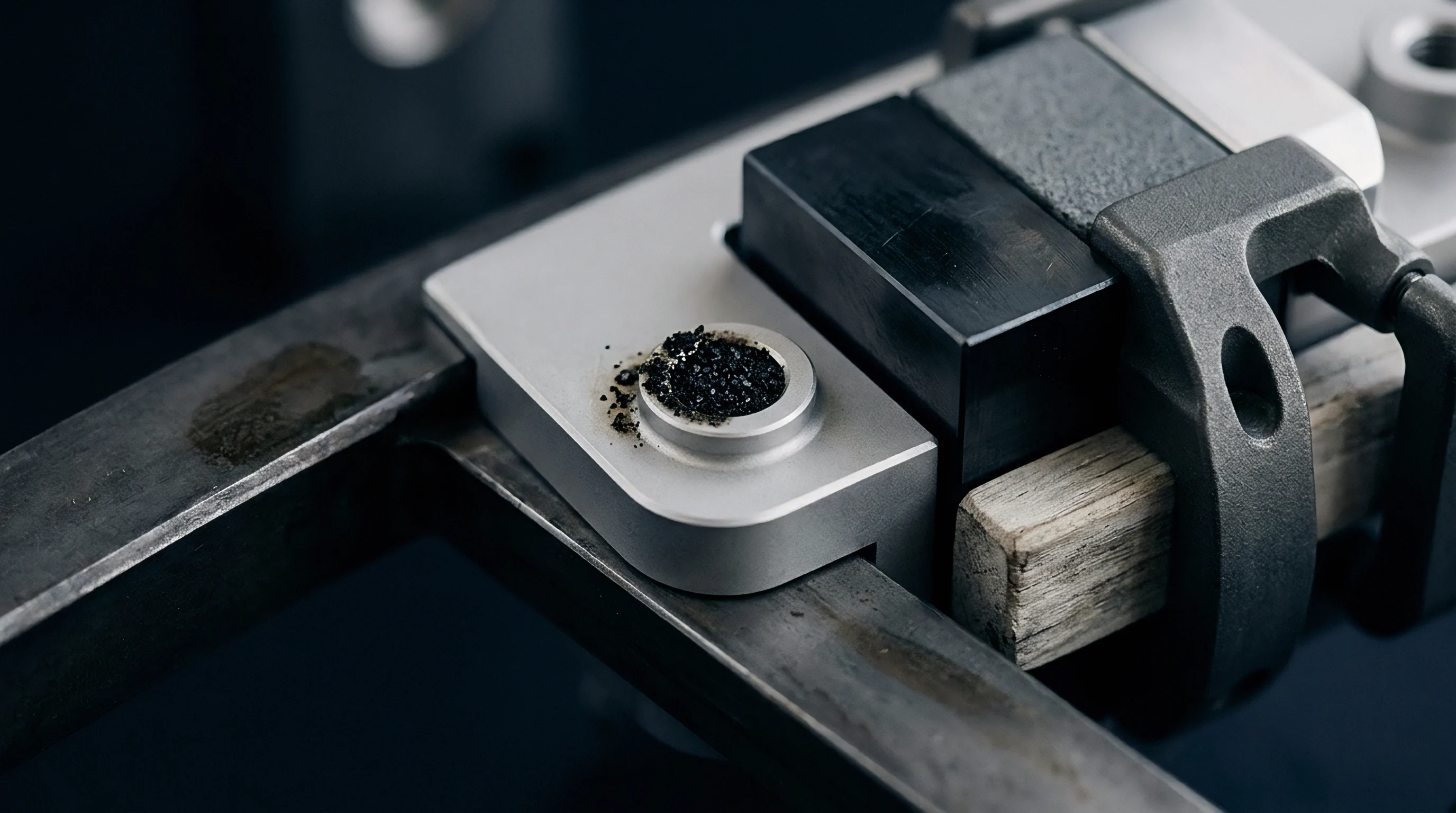
Vaporization Karl Fischer titration per ISO 15512 Method B isolates water by heating resin pellets in a sealed oven under dry nitrogen flow. The carrier gas routes evaporated moisture into a titration cell where coulometrically generated iodine quantifies water mass without interference from volatile organics.
Can Solution Viscosity Outperform Melt Rheology Tests?
Capillary viscometry determines intrinsic viscosity by dissolving virgin pellets in solvent systems such as phenol-dichlorobenzene mixtures. Comparing intrinsic viscosity before and after molding isolates the molecular weight drop caused by hydrolytic scission. Melt volume-flow rate testing under ISO 1133 offers a faster shop-floor alternative, where a shift in melt flow ratio across two residence times reveals moisture-driven degradation.
- Sample virgin resin pellets directly from sealed octabin bags using a clean thief sampler to extract material from three depth levels.
- Transfer twenty grams of sampled pellets into an airtight glass vial to prevent moisture absorption from ambient air during transport to the test apparatus.
- Calibrate the Karl Fischer titration unit using certified water standards to verify measurement accuracy within plus or minus five parts per million.
- Set the oven vaporization temperature according to the resin specific melting point, using 160 degrees Celsius for polyamide and 220 degrees Celsius for polyethylene terephthalate.
- Inject the nitrogen carrier gas stream containing evaporated water into the reaction vessel and record the final titrant mass consumed.
- Compare measured water concentration against the material specification threshold before releasing the resin batch to production hoppers.
Verification testing confirms whether incoming raw lots meet specified purity limits before compounding or molding begins.
| Test Method | Governing Standard | Primary Measurement Target | Detection Limit | Operational Suitability |
|---|---|---|---|---|
| Vaporization Karl Fischer Titration | ISO 15512 Method B | Absolute water mass | 10 ppm | Incoming material acceptance testing |
| Solution Intrinsic Viscosity (IV) | ASTM D4603 | Molecular weight distribution | 0.01 dL/g | Laboratory verification of degradation |
| Melt Volume-Flow Rate Ratio (MVR) | ISO 1133 Method B | Melt viscosity change | 0.1 cm3/10min | Fast floor-side process verification |
| Gel Permeation Chromatography (GPC) | ASTM D5296 | Absolute Mw and Mn distribution | 100 g/mol | Failure analysis research and development |
ASTM D4066 specifies that polyamide feedstocks delivered in sealed moisture-barrier bags shall contain no more than 0.20 percent water content upon arrival at the processing facility.

Transit
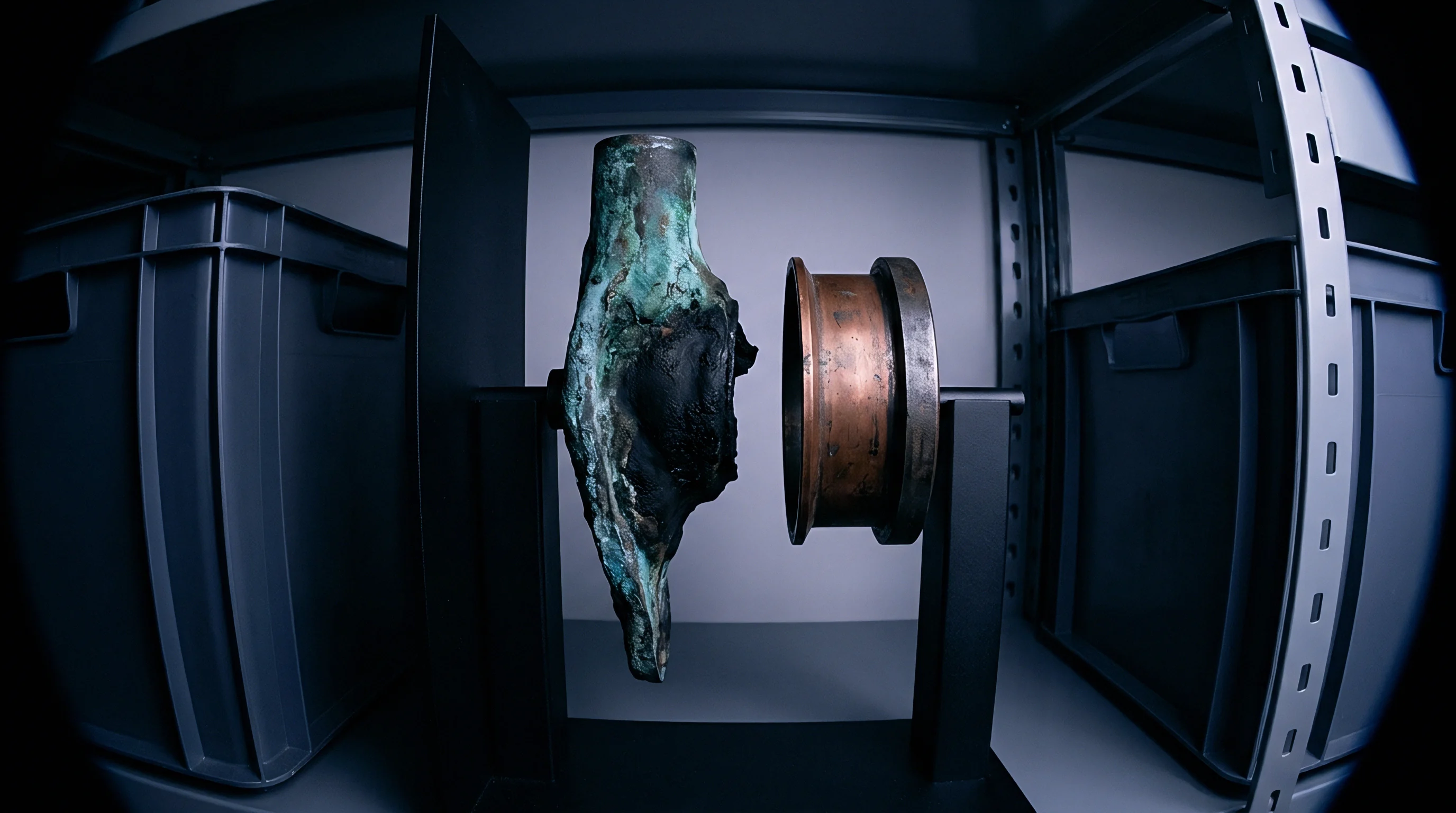
Packaging serves as the primary barrier against atmospheric moisture uptake during ocean and overland freight. Virgin resin ships in foil-lined multi-wall bags, heavy polyethylene octabin liners, or nitrogen-blanketed bulk railcars. Aluminum foil laminates deliver near-zero water vapor transmission rates, protecting material for up to twelve months under standard warehouse storage.
Standard polyethylene liners have measurable water vapor transmission rates, allowing moisture to reach outer pellet layers during transit along humid shipping lanes. Discharging cold, dry resin into unconditioned storage silos also causes immediate surface condensation whenever warm plant air contacts the pellets.
Drying Parameter Execution and Control
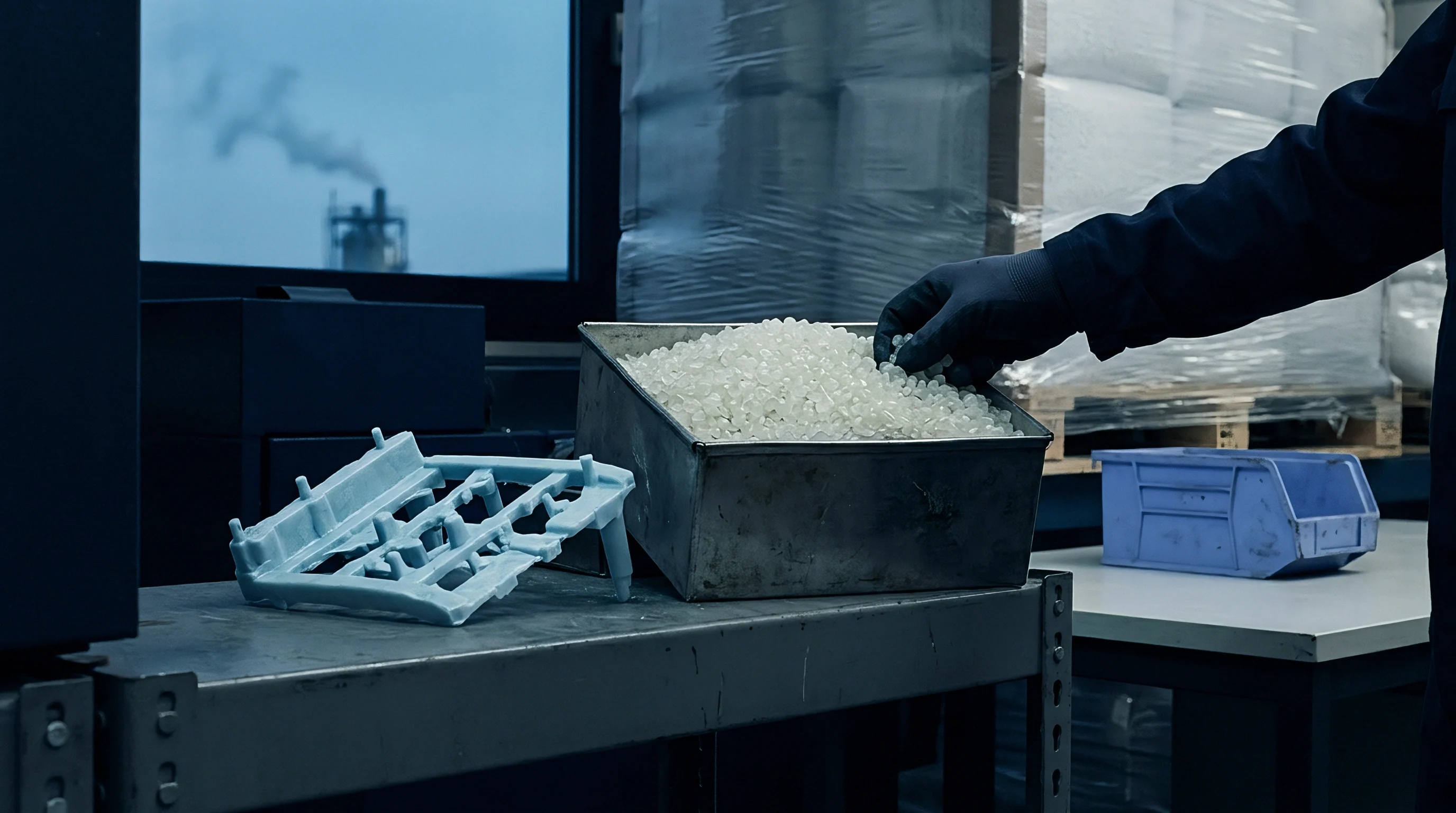
Desiccant dryers pull internal moisture by circulating hot, dry air through insulated hopper beds. The desiccant core strips moisture from the return stream to maintain process dew points between minus 30 degrees Celsius and minus 50 degrees Celsius. Inadequate dew point monitoring allows wet air to recirculate, heating pellets without extracting bound water and accelerating hydrolysis inside the drying hopper.
- Dew Point Control maintains air dryness entering the dryer hopper below minus 40 degrees Celsius to drive rapid moisture diffusion out of pellet cores.
- Airflow Rate Balancing supplies minimum two cubic feet per minute per pound per hour of resin processing throughput to ensure uniform heat transfer.
- Residence Time Management holds pellets at drying temperature for three to four hours for polyesters and four to six hours for polyamides.
- Hopper Temperature Regulation prevents resin sintering and additive migration while providing sufficient energy to break polymer-water chemical bonds.
ASTM D4066 sets the maximum allowable moisture for polyamide delivered in sealed barrier packaging at 0.20 percent by weight upon delivery.
Quality failures attributed to wet incoming bags often stem instead from unconditioned warehouse storage or open octabin exposure allowing ambient moisture absorption prior to processing.
Ledger
Commercial valuation of virgin resin depends on final mechanical yield. Processing hydrolytically degraded resin creates structural flaws that fail automated mechanical checks or downstream assembly steps. Material scrap, machine downtime, and dryer utility costs compound the net cost per unit.
Consider a run of 50 metric tonnes of virgin polybutylene terephthalate priced at 3,200 USD per tonne. Running this material at 0.05 percent moisture drops tensile strength by 25 percent, resulting in an 8 percent part reject rate at quality control. Scrapped parts lose 70 percent of their original material value, recovering only 960 USD per tonne as regrind.
| Cost Component | Standard Processed Lot | Degraded Processed Lot | Financial Variance |
|---|---|---|---|
| Feedstock Volume (Tonnes) | 50.0 | 50.0 | 0.0 USD |
| Feedstock Purchase Cost (USD) | 160,000 USD | 160,000 USD | 0.0 USD |
| Drying Energy Cost (USD) | 1,850 USD | 850 USD (Under-dried) | +1,000 USD |
| Part Scrap Rate (%) | 0.5% | 8.0% | +7.5% |
| Good Parts Revenue Yield (USD) | 238,800 USD | 220,800 USD | -18,000 USD |
| Scrap Salvage Value (USD) | 240 USD | 3,840 USD | +3,600 USD |
| Net Operational Ledger Balance | +77,190 USD | +63,790 USD | -13,400 USD loss |
Cutting 1,000 USD from dryer utility spend generates 13,400 USD in net operational losses on a single 50-tonne lot. Parts that pass into field service with hydrolytic damage risk warranty claims, recalls, and liabilities that dwarf the initial processing costs. Systematic moisture verification and disciplined drying protect margins and keep molded parts within specification.