Resolving Non-Equilibrium Secondary Crystallization Density Drift in Transoceanic Polyethylene Resin Shipments
Thermal conditioning and standard thermal history resets eliminate density drift errors, securing accurate mold shrinkage during polyethylene resin converting.


Kinetics
When pellets exit underwater pelletizing systems, they are far from thermodynamic equilibrium. Polymer chains in semi-crystalline polyethylene ~ such as high-density polyethylene with a target base density of 0.952 g/cm³ or linear low-density hexene copolymers at 0.918 g/cm³ ~ quench at rates exceeding 20 °C per second during underwater cutting. That rapid solidification freezes amorphous tie-molecules into non-relaxed conformations, leaving initial lamellar crystallite thicknesses between 8 nm and 12 nm.
Because chain packing dictates final density, thermal exposure during transit reactivates these delayed crystallization mechanics at ambient or elevated temperatures.

Lamellar Thickening and Amorphous Phase Ordering
Thermodynamic forces constantly push semi-crystalline polymers toward lower free energy states. Following primary crystallization, solid-state secondary crystallization proceeds through two physical mechanisms: mobile tie-molecules in interlamellar amorphous zones reorganize into short-range order, and existing folded-chain lamellae gradually thicken longitudinally. Above the alpha-relaxation point ~ between 30 °C and 40 °C depending on short-chain branching distribution ~ increased chain mobility in the amorphous matrix allows reptation-driven folding to resume.
As lamellae thicken from initial quenched values toward thermodynamic equilibrium ~ reaching 16 nm or 20 nm ~ crystalline volume grows relative to the amorphous fraction. Crystalline polyethylene regions have a density of approximately 1.000 g/cm³, compared to roughly 0.855 g/cm³ for the disordered amorphous phase. Shifting just three volume percent from amorphous to crystalline phase increases overall polymer density by about 0.004 g/cm³.
This structural change occurs entirely in the solid state, without altering total molecular weight or molecular weight distribution.
Density values for high-density polyethylene increase by up to 0.0035 g/cm³ following forty days of ocean storage at 45 °C.

Morphological Differences across Polyethylene Densities
Unimodal high-density polyethylene grades undergo rapid secondary crystallization because their linear backbones offer little steric hindrance. By contrast, bimodal high-density polyethylene ~ designed with high molecular weight chains carrying concentrated short-chain branches in the long-chain fraction ~ crystallizes more slowly. The dense network of interlamellar tie-molecules and entanglements in bimodal resins acts as a structural anchor, slowing chain reptation and lamellar reorganization during low-temperature thermal exposure.
In linear low-density polyethylene synthesized with 1-octene or 1-hexene comonomers, comonomer exclusion from the crystalline lattice limits maximum secondary lamellar growth while permitting local amorphous ordering.
| Polymer Grade / Architecture | Initial Density (ISO 1183) (g/cm³) | 40-Day Ambient Aged (35 °C) (g/cm³) | Equatorial Hold Aged (50 °C) (g/cm³) | DSC Peak Melting Shift (ISO 11357-3) (°C) |
|---|---|---|---|---|
| Unimodal HDPE Blow Molding (0.3 MFR) | 0.9520 | 0.9542 | 0.9558 | +2.1 |
| Bimodal HDPE Pipe Grade (0.05 MFR) | 0.9490 | 0.9501 | 0.9512 | +0.9 |
| MDPE Film Grade (0.9 MFR) | 0.9380 | 0.9395 | 0.9411 | +1.4 |
| LLDPE C6 Cast Film (2.0 MFR) | 0.9180 | 0.9191 | 0.9204 | +0.7 |
This morphological shift in the pellets changes how the material responds thermally during conversion, leading to several specific operational effects:
- Density elevation shifts baseline resin values beyond specified Certificate of Analysis tolerances prior to converting operations.
- Enthalpic melting peaks determined via differential scanning calorimetry per ISO 11357-3 shift upward by 1 °C to 3 °C, requiring higher total energy input during plasticization.
- Solids conveying friction inside extruder feed throat sections alters due to modified surface hardness and altered pellet packing fraction.
- Yield stress amplification in solid-state testing increases tensile modulus while slightly reducing notched Izod impact resistance per ISO 179.
Post-pelletization density drift remains a natural thermodynamic relaxation outside manufacturing quality controls.


Hold
Cargo spaces inside transoceanic ocean vessels undergo extreme temperature variations during equatorial voyages. Closed dry-van containers exposed to direct solar radiation on upper decks record deck-level air temperatures exceeding 65 °C, while internal air temperatures surrounding sea-bulk bags routinely stabilize between 45 °C and 55 °C for weeks. These sustained thermal conditions create an ideal environment for accelerated solid-state annealing of bulk polyethylene resin pellets during 30 to 50 day transoceanic voyages.

Why Does Equatorial Transit Accelerate Densification?
Ocean routes connecting manufacturing hubs in the Middle East or Asia to discharge ports in Europe or the Americas traverse tropical climate zones where time-temperature superposition principles govern secondary crystallization rates. A polymer batch stored at 23 °C requires roughly 300 days to achieve a density increase of 0.0030 g/cm³, whereas exposure to 50 °C inside an ocean container compresses this thermodynamic maturation timeline into 15 to 20 days.
A container’s thermal mass generates non-uniform density profiles across a single shipment. Resin located within 10 centimeters of corrugated steel container walls experiences diurnal heat cycles ranging from 25 °C at night to 60 °C during solar noon. Pellets buried deep within the core of a 20-tonne sea-bulk bag warm slowly due to low polymer thermal conductivity (0.33 to 0.50 W/m·K), remaining at peak hold temperatures long after the vessel exits tropical waters.
The resulting cargo exhibits significant lot-to-lot and bag-to-bag property variation upon arrival at destination facilities.
| Shipping Format | Ocean Route Segment | Internal Air Peak Temp (°C) | Core Pellet Peak Temp (°C) | Secondary Crystallization Window (Days) |
|---|---|---|---|---|
| 20-Tonne Sea-Bulk Liner | Red Sea to US Gulf | 58.5 | 48.2 | 28 |
| 25 kg Bags on Pallets (Gaylord) | Red Sea to US Gulf | 62.1 | 54.0 | 34 |
| 20-Tonne Sea-Bulk Liner | East Asia to Antwerp | 46.0 | 39.1 | 14 |
| 25 kg Bags on Pallets (Gaylord) | East Asia to Antwerp | 49.2 | 43.5 | 18 |

Thermal Mass Dynamics in Sea-Bulk Containers
In 20-foot dry containers using full-width polyethylene sea-bulk liners, heat transfers into bulk shipments primarily via conduction through corrugated steel side walls. Outer pellet layers insulate the core: the outer 15% volume fraction undergoes maximum lamellar thickening, approaching near-complete secondary crystallization capacity, while the central 50% volume fraction experiences a slow thermal ramp resulting in moderate density elevation. When pneumatic equipment discharges the liner into a storage silo, these distinct thermal fractions blend together, yielding a bulk resin density higher than the original manufacturing certificate with elevated variance in melting enthalpy.
Thicker sea-bulk container liners mitigate solar radiation peaks far more effectively than standard palletized cardboard gaylords stored near container side walls.

Metrology
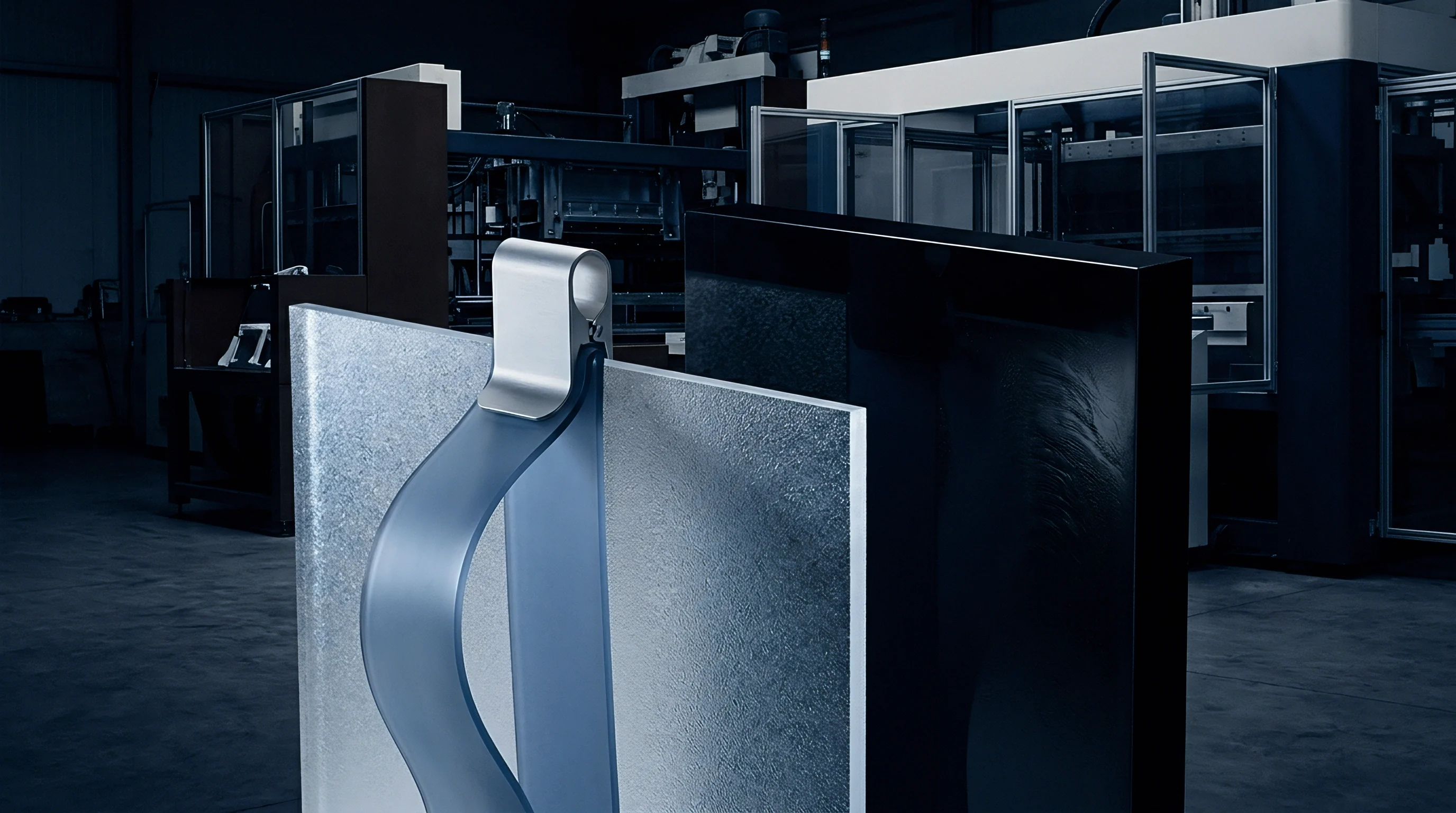
Analytical verification of polyethylene density requires precise distinction between thermodynamic structural drift and sample preparation artifacts. Testing resin directly in as-received condition yields the true physical density of the shipped pellets, reflecting transit thermal history. Testing resin after standardized conditioning erases thermal history, revealing the base material composition.
Confusion between these two measurement states causes unnecessary commercial disputes and inaccurate extrusion process setup.

Standard Density Measurement versus Thermal History
Both ISO 1183 Method A (immersion displacement) and Method C (density gradient column) specify testing precision to four decimal places (±0.0002 g/cm³), as does ASTM D1505 for gradient columns. When a laboratory receives an incoming sample from vessel discharge and measures density without erasing thermal history, the gradient column records the fully drifted, annealed state ~ frequently triggering false quality rejections.
To reset polymer thermal memory prior to baseline grading, ISO 17855-2 and ISO 293 mandate standardized thermal pre-treatment: heating the polymer above its peak melting point to 180 °C, holding for 10 minutes to eradicate crystalline nuclei and lamellar structures, and cooling at a strictly controlled rate of 15 °C per minute down to room temperature. This standardized cooling rate establishes a reproducible reference crystalline fraction. Comparing direct as-received density measurements with standardized thermal-reset density measurements quantifies the exact structural drift magnitude induced during ocean transit.
Certificates of analysis issued under ISO 1183 Method A at origin lose relevance once tropical hold exposure alters crystalline lamellar thickness.

Standardized Incoming Qualification Protocol
Incoming quality assurance protocols must isolate transit-induced physical crystallization from chemical off-specification events such as comonomer errors or degradation. The testing procedure executes as follows:
- Sample five distinct points across the container or bulk trailer using a thief sampler per ASTM D1898 guidelines.
- Divide each sample into two analytical aliquots inside clean, sealed glass vials.
- Test Aliquot A directly in as-received state using ISO 1183-1 Method A displacement pycnometry at 23 °C to capture post-transit physical density.
- Place Aliquot B into a standardized thermal conditioning press per ISO 17855-2, heating to 180 °C for 10 minutes followed by controlled cooling at 15 °C per minute to erase thermal history.
- Measure density on Aliquot B via ISO 1183-1 Method A to establish the base formulation reference density.
- Perform differential scanning calorimetry per ISO 11357-3 on both aliquots to quantify changes in heat of fusion (ΔH_f) and peak melting temperature (T_m).
- Compare Aliquot B density against the original manufacturer Certificate of Analysis baseline; matching values confirm acceptable polymer chemistry, assigning density shifts in Aliquot A entirely to ocean transit thermal history.
Whether international standards bodies will eventually mandate thermal history erasure prior to baseline Certificate of Analysis reporting remains an open debate among resin traders and converters.


Warp
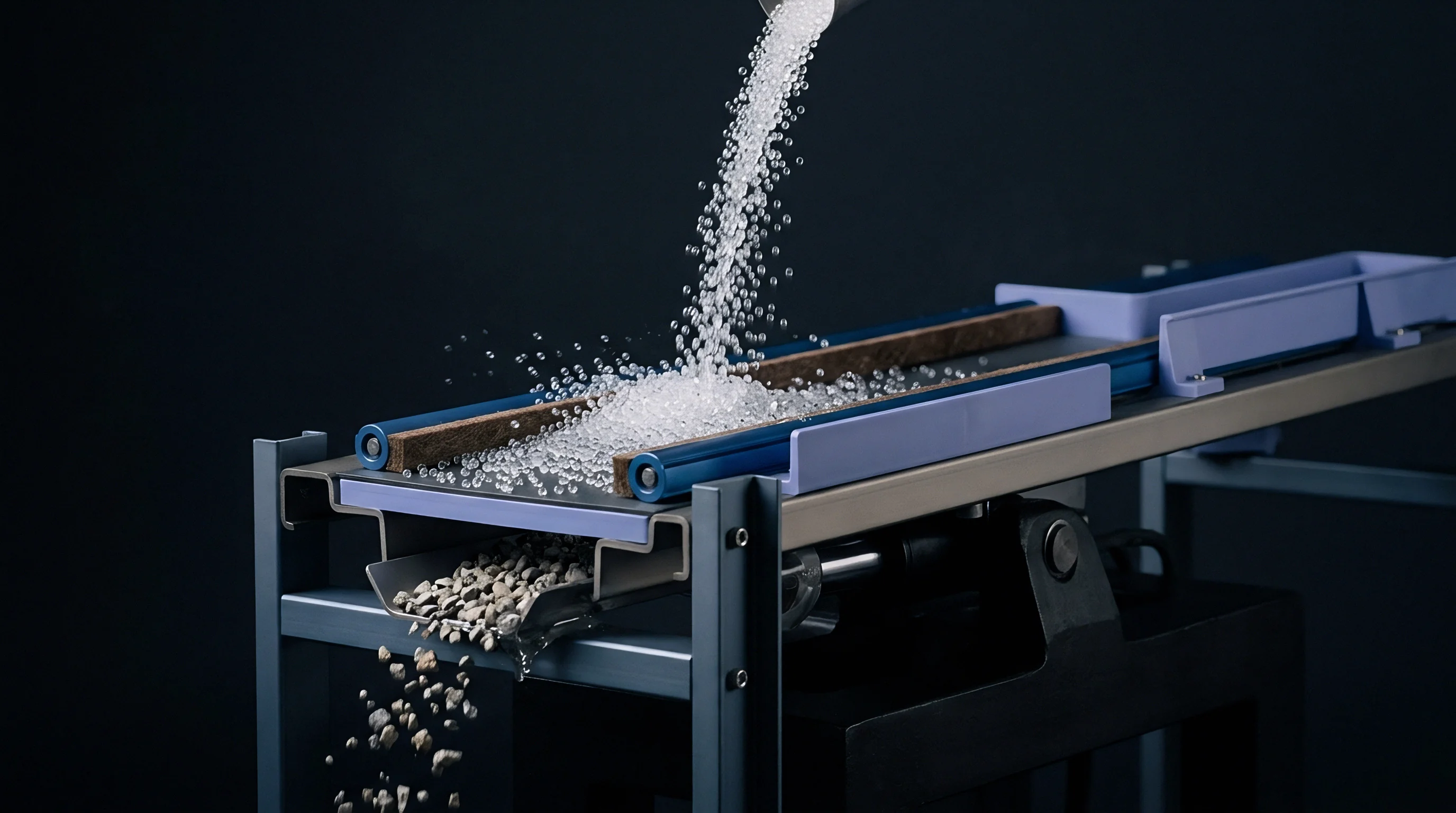
Converting unconditioned, density-drifted resin directly into finished plastic components severely impacts part dimensions and mechanical properties. Mold cavity dimensions are cut precisely to accommodate specific, predicted resin shrinkage rates calculated from target base densities. When high-density polyethylene with a nominal density of 0.9520 g/cm³ arrives at a converting plant exhibiting an actual physical density of 0.9558 g/cm³, linear mold shrinkage increases significantly beyond tool design limits.
Volumetric Shrinkage and Mold Cavity Tolerances
Volumetric shrinkage in semi-crystalline polymers correlates directly to the difference between melt density inside the cavity and final solid-state density at room temperature. Melt density at 200 °C remains constant regardless of pellet thermal history, hovering near 0.760 g/cm³ for high-density polyethylene. Solid density, however, is elevated in drifted pellets: material that crystallizes to a solid density of 0.9558 g/cm³ contracts substantially more during cooling than fresh resin crystallizing to 0.9520 g/cm³.
For precise automotive or industrial packaging applications operating under ISO 20457 tolerances, a density increase of 0.0038 g/cm³ drives an additional linear shrinkage of 0.15% to 0.25%. On a 400 mm wide blow-molded industrial container, this additional shrinkage reduces finished part dimensions by 0.6 mm to 1.0 mm, causing neck finish seal failures, cap thread misalignment, and volumetric undersizing during automated liquid filling operations.
Shrinkage calculations calibrated on fresh reactor pellets produce undersized parts when processing resin aged in transit.

Extrusion Pressure and Melt Homogeneity Shifts
Pellet density elevation alters solid-state bulk packing efficiency inside extruder feed hoppers and solids conveying zones. Denser pellets pack with reduced interstitial void space, increasing bulk density by 2% to 4%. In grooved-feed extruders operating under high backpressure, elevated bulk density increases volumetric throughput per screw revolution, requiring higher torque and raising melt temperature profiles.
Standard melt mass-flow rate testing per ISO 1133 at 190 °C under 2.16 kg or 21.6 kg loads shows identical flow values for fresh and transit-drifted resin because the polymer melts completely during preheat, eliminating physical thermal history. Inside the short residence time of a high-speed production extruder, however, drifted pellets with thicker crystal lamellae require higher thermal energy inputs to achieve full thermodynamic melting. Unmelted micro-crystalline structures pass through the screw metering zone, acting as nucleation sites that induce differential cooling, warpage, and severe wall thickness variations in extruded pipes and blown films.
Ignoring transit-induced densification leads to out-of-spec wall thickness, high scrap rates during blow molding, and uncompensated mold shrinkage failures.


Remediation
Plastic converters receiving resin shipments affected by secondary crystallization density drift can implement immediate operational adjustments to avoid high scrap rates. Thermal pre-conditioning and extruder profile tuning allow processing facilities to normalize resin performance without returning material to suppliers, restoring dimensional control and mechanical consistency.
Process Optimization and Thermal Preconditioning
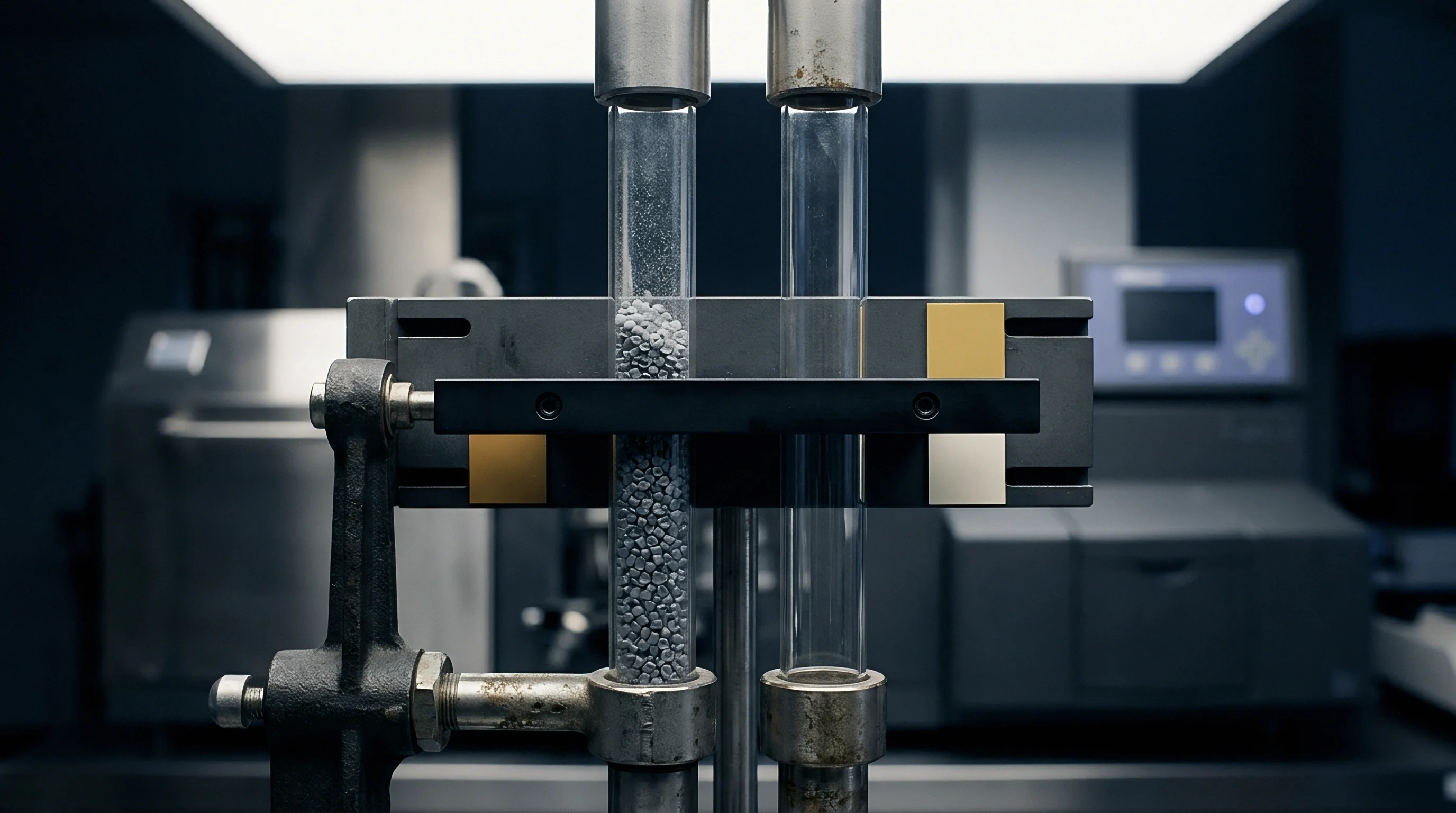
Pre-heating affected pellets prior to plasticization accelerates the erasure of low-temperature secondary crystalline structures. Running standard hopper dryers at elevated temperatures provides sufficient thermal energy to melt thin, secondary lamellae in the solid state, returning bulk density and thermal response closer to nominal reactor states over dryer residence times of up to four hours.
Pre-heating high-density polyethylene pellets at 80 °C to 90 °C for three to four hours inside desiccant hopper dryers relaxes the ordered amorphous phase and reduces bulk density variations before pellets enter the extruder feed throat section. This pre-heating step reduces the thermal enthalpy gradient (ΔH_m) required inside the extruder barrel, preventing solid-bed breakup instabilities and stabilizing barrel melt pressure.

Extruder Profile Tuning and Cooling Rate Control
Extrusion barrel temperature profiles must be adjusted upward to account for the elevated melting peak of thickened lamellae. Raising zone 1 and zone 2 barrel temperatures by 8 °C to 12 °C ensures complete melting of secondary crystalline structures in the solids conveying and transition zones, preventing un-melts from entering the die.
Because tooling geometry relies on stable resin density, technical personnel processing high-density drifted resin implement specific machine parameter adjustments to mitigate excess volumetric shrinkage in injection and blow molding machines:
- Feed zone temperature elevation increases heat transfer into dense pellets, ensuring complete melting before entering the metering section.
- Holding pressure duration extension compensates for increased volumetric contraction by packing additional polymer melt into the mold cavity during initial crystallization.
- Mold temperature reduction accelerates cooling rates through the crystallization window (120 °C down to 80 °C), limiting secondary crystallization growth inside the tool.
- Backpressure escalation inside the injection unit enhances shear heating and melt homogeneity, breaking down residual crystalline ordering.
Bimodal resin formulations with high molecular weight tie-molecule concentrations resist thermal relaxation far better than narrow-distribution unimodal grades.
Adjusting the feed zone temperature profile by ten degrees Celsius compensates for the elevated melting enthalpy of thickened lamellae.
Dossier
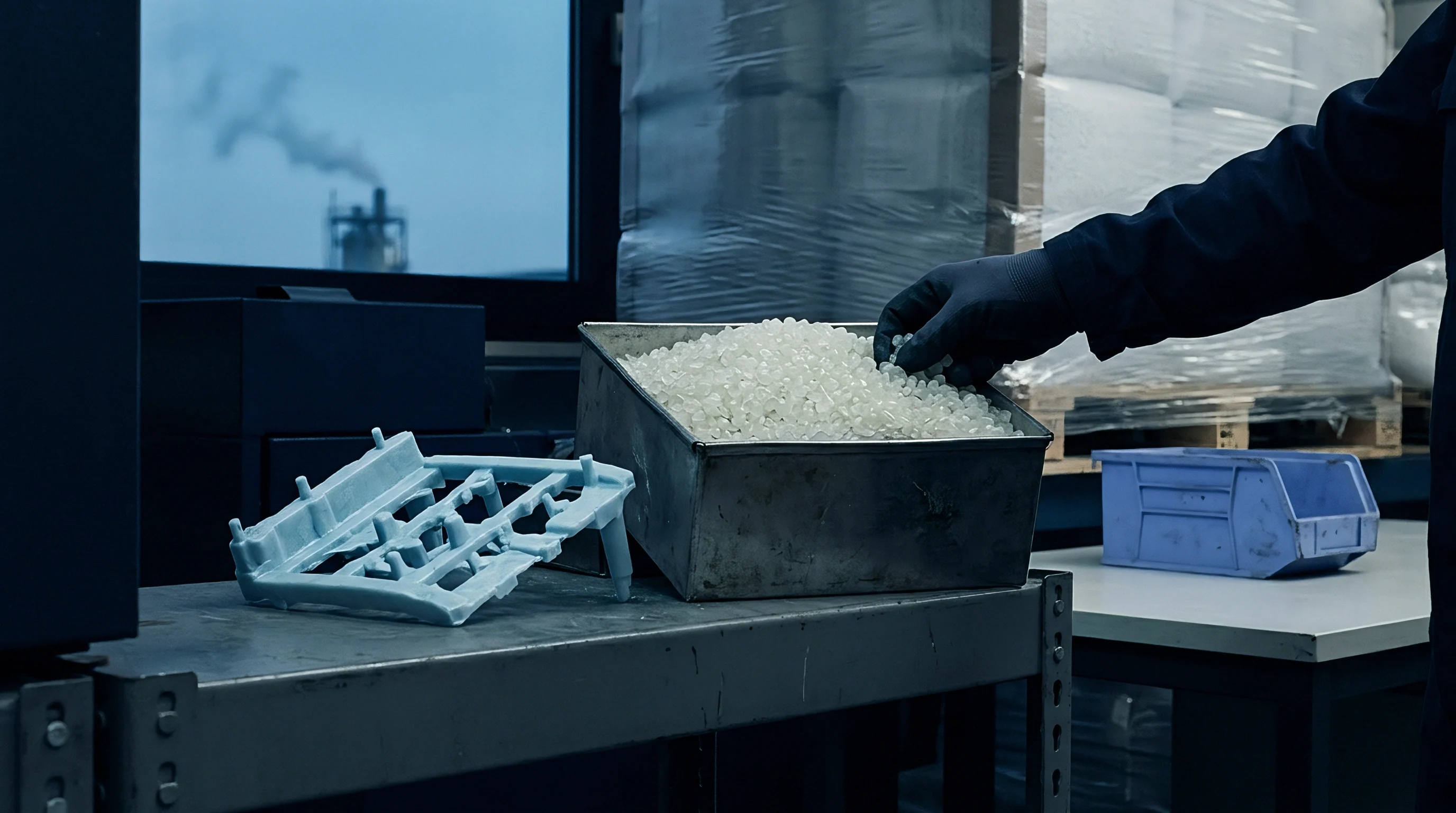
Commercial resolution of resin quality disputes hinges entirely on contract language definitions of polymer density standards. Resin sourcing agreements frequently fail to specify whether baseline density guarantees apply to pellets as-received or pellets tested after standardized thermal history erasure ~ creating major financial exposure when ocean transit causes secondary crystallization density drift.

Purchase Contract Specifications and Tolerance Clauses
Standard commercial sales specifications state a target density with a tolerance of ±0.0015 g/cm³ or ±0.0020 g/cm³. An ocean shipment of unimodal blow molding HDPE shipped at an origin density of 0.9520 g/cm³ that arrives at a destination port measuring 0.9558 g/cm³ exceeds commercial tolerance limits if evaluated strictly as-received. The buyer faces part dimensional failures, while the supplier claims the resin chemistry matches manufacturing specifications.
Legal dispute resolution requires clear contractual distinction between chemical non-conformance and physical transit drift. Contracts incorporating explicit ISO 17855-2 or ASTM D4703 thermal history reset protocols prior to incoming compliance testing protect both parties: if the resin density returns to 0.9520 g/cm³ following thermal conditioning, the shipment legally conforms to chemical specifications, transferring responsibility for processing adjustments or pre-conditioning to the converter.

Commercial Risk Allocation across Supply Chains
A worked financial assessment clarifies the economic impact of transit densification dispute allocation. Consider a 100-tonne shipment of bimodal blow-molding HDPE purchased at $1,200 per tonne delivered. If an unadjusted converting process yields a 6% dimensional reject rate due to neck finish undersizing caused by transit density drift, direct material scrap totals $7,200 plus $4,800 in lost machine hour overhead.
If the purchase contract defines density compliance exclusively via raw ISO 1183 testing without thermal history reset, the buyer files a $12,000 quality claim against the supplier or freight forwarder.
If the contract specifies ISO 17855-2 thermal reset prior to qualification testing, the claim against the supplier fails because the base polymer chemistry conforms to specification. The buyer absorbs the converting loss or mitigates cost by installing hopper pre-heating protocols costing approximately $15 per tonne in additional energy usage ($1,500 total cost for the 100-tonne lot). Clear contract specifications shift total financial exposure from a $12,000 scrap loss to a $1,500 pre-conditioning operational adjustment.
Incorporating standard conditioning clauses under ASTM D4703 into ocean shipping contracts legally binds resin suppliers to density baselines measured only after thermal history erasure.