Analytical Verification of Polymer Migration Compliance across Industrial Container Shipments
Verify migration compliance using finished container single-sided cell tests, worst-case simulant conditions, and batch-matched documentation.


Simulant
Testing food contact packaging made from polyolefin resins requires precise physical proxy fluids to measure chemical migration under laboratory conditions. Liquid and solid media substitute for actual foodstuffs during extraction testing to yield repeatable, conservative migration figures. European Regulation (EU) 10/2011 and US FDA 21 CFR 176.170 specify solvent mixtures matching the extraction potential of specific food categories.
Aqueous foodstuffs pair with ten percent ethanol by volume, acidic commodities with three percent acetic acid by weight, and alcoholic products with twenty or fifty percent ethanol. Fatty commodities present severe analytical challenges due to solvent absorption into polyolefin matrixes, requiring rectified vegetable oils, synthetic triglycerides, or solvent substitutes such as ethanol ninety-five percent and iso-octane. Dry goods utilize Tenax, a porous polymer matrix consisting of poly(2,6-diphenyl-p-phenylene oxide), to capture volatile and semi-volatile migrants through vapor phase absorption.
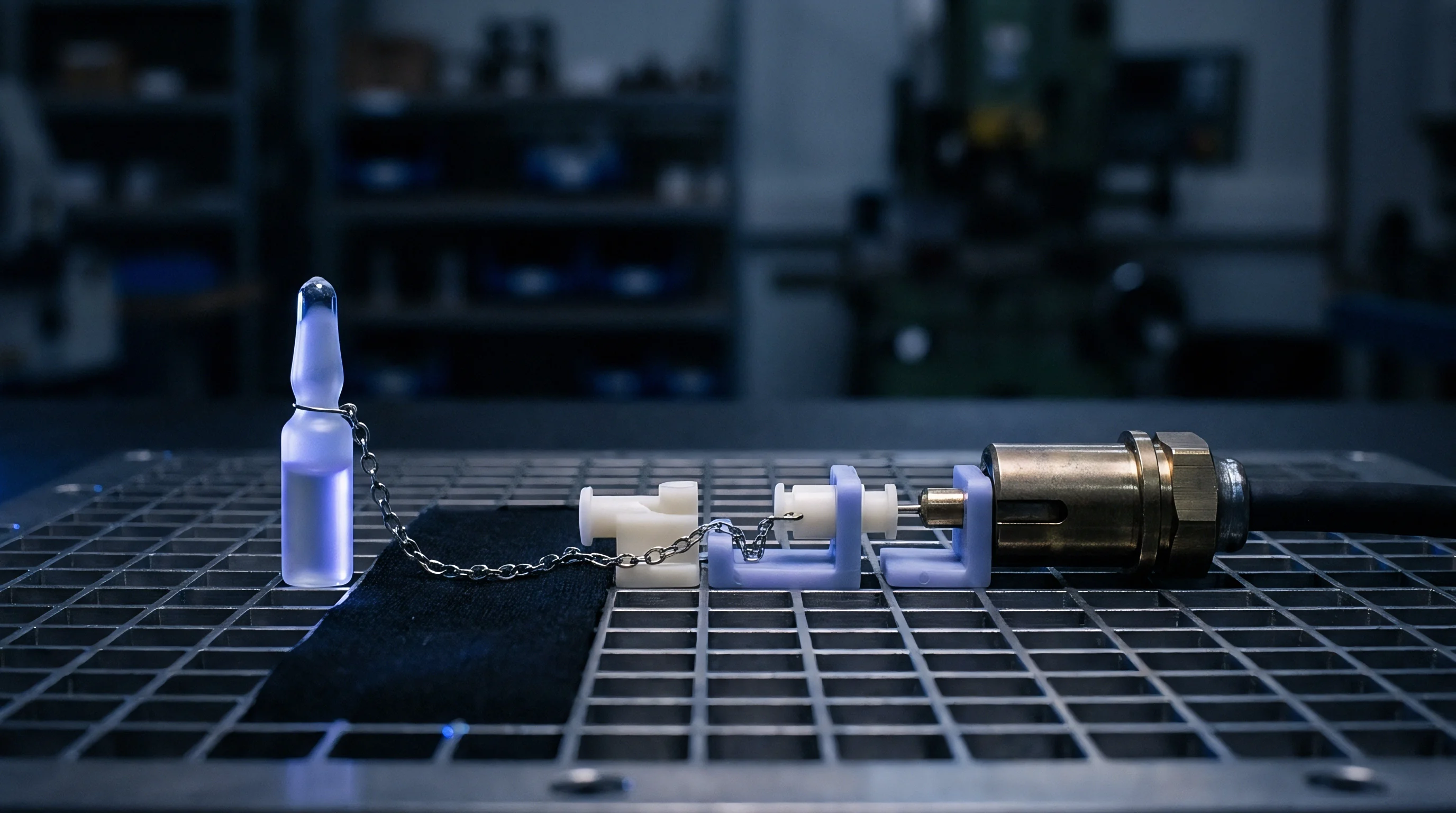
Laboratory testing of flexible and rigid industrial containers must account for contact geometry and worst-case exposure profiles. Immersion testing placing cut material coupons directly into liquid media introduces artificial edge effects where raw polymer core layers absorb fluid faster than intact container surfaces. Single-sided contact cells isolate the intended contact layer, preventing solvent interaction with external structural layers or printing inks.
Standard protocols set exposure regimes designed to simulate specific shelf-life horizons. A contact exposure of ten days at forty degrees Celsius models prolonged storage at room temperature or lower. Elevated temperature processing, such as hot filling liquid chemical intermediates or food precursors, requires accelerated extraction profiles reaching sixty or seventy degrees Celsius for ten days, or brief thermal spikes at one hundred twenty-one degrees Celsius for retort applications.
A contact exposure of ten days at sixty degrees Celsius in ethanol ten percent represents the standard regulatory worst-case proxy for long-term ambient storage of aqueous goods.
Surface-to-volume ratio adjustments heavily influence compliance calculations when moving from laboratory bench tests to large industrial shipping containers. European standard testing assumes a default baseline ratio of six square decimeters of polymer surface area per kilogram of food. Industrial Intermediate Bulk Containers holding one thousand liters present a surface-to-volume ratio near zero point six square decimeters per kilogram, effectively diluting migrating substances by a factor of ten compared to small retail bottles.
Steel drums lined with flexible polyethylene liners run closer to one point five square decimeters per kilogram. Analytical laboratories process test specimens using cell dimensions optimized for detection sensitivity rather than actual container geometry, so importers and quality managers must convert raw laboratory concentration values back to actual container volume to determine true migration compliance.
| Simulant Code | Chemical Composition | Target Food Category | Standard EU Test Regime | FDA Equivalent Proxy |
|---|---|---|---|---|
| Simulant A | 10% Ethanol (v/v) aqueous solution | Clear aqueous, non-acidic foods | 10 days at 40°C or 60°C | 10% Ethanol aqueous |
| Simulant B | 3% Acetic acid (w/v) aqueous solution | Acidic foods (pH below 4.5) | 10 days at 40°C or 60°C | 3% Acetic acid aqueous |
| Simulant C | 20% Ethanol (v/v) aqueous solution | Alcoholic content up to 20% | 10 days at 40°C or 60°C | 50% Ethanol aqueous |
| Simulant D1 | 50% Ethanol (v/v) aqueous solution | Alcoholic beverages above 20%, oil-in-water emulsions | 10 days at 40°C or 60°C | 50% Ethanol aqueous |
| Simulant D2 | Vegetable oil (olive, sunflower, or corn oil) | Free fats, fatty liquid foods, lipophilic matrixes | 10 days at 40°C or 60°C | n-Heptane / Iso-octane substitute |
| Simulant E | Poly(2,6-diphenyl-p-phenylene oxide) | Dry foods, free-flowing bulk powders | 10 days at 40°C or 60°C | Modified Tenax extraction |
| Methods note: Test durations and temperatures selected per EU Regulation 10/2011 Annex III and US FDA 21 CFR 176.170 operational guidelines. | ||||
Alternative fatty food simulants shorten testing lead times while mitigating polymer swelling caused by pure vegetable oil immersion. Iso-octane extraction carried out for two days at twenty degrees Celsius or ethanol ninety-five percent exposure for two days at sixty degrees Celsius serve as validated substitutes for olive oil tests under European directives. Polyolefin resins such as high-density polyethylene absorb fatty simulants into the amorphous phase of the polymer network, altering mass transfer kinetics and expanding internal polymer volume.
This swelling mechanism artificially inflates the apparent diffusion coefficient of low molecular weight additives. Standard correction factors account for fatty food reduction coefficients, adjusting raw laboratory values based on the lipophilic nature of the actual filled foodstuff.
Standard immersion testing in ethanol ten percent is often presented as sufficient proof of compliance for all shipping scenarios, on the assumption that worst-case solvent testing on raw resin plaques automatically covers all converted container configurations and high-temperature filling steps.

Species
Chemical migrants dissolving into contact simulants originate from multi-component additive packages, catalyst residues, and polymer matrix degradation products. Regulatory frameworks establish two distinct analytical boundaries: Overall Migration Limits and Specific Migration Limits. Overall migration measures the total mass of non-volatile substances transferring from a square decimeter of packaging material into a simulant, bounded by a standard limit of ten milligrams per square decimeter or sixty milligrams per kilogram of simulant.
Specific migration isolates individual chemical compounds, capping exposure based on toxicological evaluation and established tolerable daily intake figures. High-density polyethylene, linear low-density polyethylene, and polypropylene containers contain antioxidants, slip additives, antistatic agents, light stabilizers, and processing aids designed to stabilize the resin during high-shear extrusion.
Antioxidant packages rely heavily on hindered phenols such as Irganox 1010 and Irganox 1076, paired with phosphite processing stabilizers like Irgafos 168. Thermo-oxidative degradation during film extrusion or blow molding converts Irgafos 168 into tris(2,4-di-tert-butylphenyl) phosphate and 2,4-di-tert-butylphenol, both of which migrate rapidly into fatty food simulants. Fatty acid amides, including erucamide and oleamide, migrate to outer polymer surfaces to reduce coefficient of friction during container conversion.
Excessive migration of erucamide creates white surface blooming, forming localized residues that transfer directly into filled liquid goods. Plasticizer ester chains, including phthalates and adipates, appear as contaminants when recycled resin or secondary compounding aids enter container production lines.
Analytical identification relies on chromatographic separation combined with high-resolution mass spectrometry. Headspace Gas Chromatography coupled to Mass Spectrometry quantifies low-boiling volatile compounds. Direct liquid injection Gas Chromatography isolates semi-volatile additives, while High-Performance Liquid Chromatography coupled to Quadrupole Time-of-Flight Mass Spectrometry resolves high molecular weight non-volatile compounds.
Inductively Coupled Plasma Mass Spectrometry quantifies heavy metal elemental migrants including zinc, aluminum, barium, cobalt, copper, iron, lithium, manganese, and nickel originating from catalyst residues or pigment masterbatches.

When Is Polyolefin Oligomer Migration Critical for Bulk Liquid Liners?
Polyolefin oligomers comprise low molecular weight hydrocarbon chains generated during polymerization or thermal processing, spanning carbon chain lengths from C10 to C50. Saturated hydrocarbon oligomers accumulate in lipophilic media, presenting potential bioaccumulation hazards in human fatty tissue. Unsaturated hydrocarbon oligomers containing alkylated aromatic rings demand rigorous quantitative screening due to potential genotoxic properties.
Liquid chromatography paired with flame ionization detection separates saturated hydrocarbons from aromatic hydrocarbons, establishing precise mass fractions per kilogram of simulant. When flexible polyolefin flexitank liners are exposed to warm fatty liquids, substantial extraction of low molecular weight oligomeric fractions below 1000 Daltons occurs.
Non-Intentionally Added Substances represent chemical entities present in finished packaging materials that were not deliberately added during formulation. These include reaction intermediates, degradation products, environmental contaminants, and printing ink set-off constituents occurring during reel-to-reel printing of flexible container outer walls. Quantitative screening protocols establish an analytical threshold limit of zero point zero one milligram per kilogram of simulant.
Any unidentified chromatographic peak exceeding this threshold demands structural identification through high-resolution accurate mass spectrometry, followed by toxicological evaluation using threshold of toxicological concern concepts.
Chemical failures in industrial container compliance originate from distinct polymer formulation and processing routes across supply chains:
- Primary Antioxidant Degradation Products generated through thermal oxidation during resin compounding, converting Irgafos 168 to 2,4-di-tert-butylphenol with high migration kinetics in lipophilic media.
- Low Molecular Weight Polyolefin Oligomers migrating from low-density polyethylene flexitank liners into fatty liquid foods, exceeding acceptable saturated hydrocarbon bioaccumulation thresholds.
- Secondary Phthalate Plasticizer Contamination introduced through cross-contaminated recycled resin streams or low-grade extrusion processing aids used in structural container layers.
- Erucamide Slip Additive Blooming migrating to container contact faces, creating visible greasy surface films that dissolve rapidly into alcoholic and fatty food simulants.
- Photoinitiator Set Off Compounds transferring from printed outer surfaces of stacked flexible bags to inner food contact layers during reel storage.
Whether non-intentionally added substance degradation products formed during high-temperature bulk filling operations can be fully predicted through standard room-temperature screening protocols remains an open analytical question.

Crate
Industrial bulk packaging systems rely on structural architectures ranging from blow-molded thousand-liter Intermediate Bulk Containers housed in steel cages to multi-layer flexitanks inserted into ocean freight containers. Rigid drums, rigid intermediate containers, and flexible liners feature co-extruded structural walls designed to provide oxygen barrier performance, moisture resistance, and mechanical strength. A typical three-layer structural film utilizes high-density polyethylene for structural strength, an ethylene vinyl alcohol copolymer core for oxygen barrier performance, and a maleic anhydride grafted polyolefin tie layer to bond the dissimilar polymers.
Weld seams, fill spouts, discharge valves, and synthetic rubber gaskets represent secondary contact surfaces that alter overall chemical transfer dynamics.
Immersing cut coupons distorts migration assessments for multi-layer packaging structures. Cutting a sample section from a blow-molded intermediate container exposes internal ethylene vinyl alcohol or tie layers directly to the liquid simulant. These core layers absorb moisture and acidic simulants at rates far exceeding their real-world transfer rates when protected by intact inner polyethylene contact layers.
Single-sided migration cells mitigate this distortion by clamping intact container wall specimens between stainless steel flanges, exposing only the designated food contact face to the liquid simulant volume.
Surface to volume ratio adjustments favor industrial bulk containers over small retail packages during analytical compliance calculations.
Testing laboratories execute single-sided cell extractions using standardized mechanical assemblies to isolate designated contact surfaces:
- Mount clean cut container wall specimens into single-sided cell assemblies, ensuring the food-contact surface faces the internal chamber.
- Inspect liquid-tight synthetic rubber seal rings along outer clamping margins to prevent simulant leakage without contributing volatile contaminants.
- Fill internal cell chambers with pre-heated test simulant using a precise volumetric ratio of one milliliter per square decimeter of exposed polymer surface.
- Seal cell filling ports with inert PTFE stoppers to eliminate evaporation losses during thermal incubation cycles.
- Place loaded cell assemblies into calibrated convection ovens maintained within plus or minus one degree Celsius of the target contact temperature.
- Extract simulant volumes at designated contact durations, transferring fluids into clean borosilicate glass vials for analytical separation.
- Evaporate liquid simulant portions to constant weight in platinum dishes to determine total dissolved overall migration residues.
Scaling laws dictate that large bulk containers inherently reduce foodstuff exposure levels compared to small retail packaging configurations. Mass transfer rates per unit area remain constant for identical polymer formulations, contact times, and temperatures. An intermediate bulk container holding one thousand liters of liquid food with a contact area of six square meters presents a surface-to-volume ratio of zero point six.
A one-liter bottle with a surface area of six square decimeters presents a ratio of six. The resulting migrant concentration in the thousand-liter container yields one tenth the concentration measured in the retail bottle under identical exposure regimes. Analytical verification must account for this geometric mitigation factor before flagging compliance failures based on unadjusted cell extraction numbers.
Multi-layer container walls with inner functional barriers prevent chemical transfer from outer structural layers containing recycled polymer or secondary pigments when barrier integrity remains uncompromised across all thermal and mechanical operating limits.

Transit
Ocean freight containers stowed on vessel decks encounter severe ambient thermal variations, direct solar radiation, and dynamic mechanical shear during international transit. Sun-baked steel containers reaching equatorial waters exhibit interior air temperatures between fifty-five and seventy degrees Celsius. Extended ocean voyages lasting twenty-one to forty-five days prolong elevated thermal exposure far beyond standard bench testing durations.
Higher temperature accelerates chemical diffusion coefficients (D) within polyolefin matrixes according to the Arrhenius relation, where diffusion rates scale exponentially with absolute temperature.
Dynamic sloshing of liquid cargo inside flexitanks or intermediate bulk containers generates continuous mechanical agitation and surface stress. Fluid agitation strips saturated migrant boundary layers from polymer contact faces, maintaining a maximum chemical concentration gradient across the polymer-liquid interface. Mechanical flex fatigue along container corner folds and structural weld lines generates micro-crazing in EVOH barrier layers, compromising gas barrier performance and releasing low molecular weight tie-layer oligomers into the fluid mass.
Static laboratory storage fails to capture this dynamic mass transfer acceleration.
| Shipping Route Scenario | Peak Cargo Temp (°C) | Transit Duration (Days) | Relative Diffusion Multiplier (D/D0) | Equivalent Lab Test Condition |
|---|---|---|---|---|
| North Atlantic Winter Transit | 15 | 14 | 0.35 | 10 days at 20°C in Simulant A |
| Transpacific Ambient Summer | 35 | 21 | 2.10 | 10 days at 40°C in Simulant A |
| Middle East / Equatorial Deck Load | 60 | 30 | 12.80 | 10 days at 60°C in Simulant D2 |
| Hot Fill Industrial Bulk Loading | 85 (initial) | 3 (cool-down) | 28.50 | 2 hours at 100°C followed by 10 days at 40°C |
Mathematical modeling of migrant mass transport relies on Fickian diffusion equations modified for finite-volume contact systems. The mass of migrant (Mt) released from a polymer wall of thickness (b) into a well-stirred liquid volume over time (t) depends on the initial chemical concentration (C0), the diffusion coefficient (D), and the partition coefficient (K) defining solubility distribution between polymer and liquid phases.
Consider a representative industrial flexitank shipment scenario carrying twenty-four thousand liters of sunflower oil lined with a five-layer co-extruded polyolefin film. The film thickness measures two hundred micrometers, carrying an initial primary antioxidant concentration of one thousand milligrams per kilogram of film. Under baseline laboratory conditions of ten days at forty degrees Celsius, the calculated diffusion coefficient yields a value of 1.2 × 10⁻¹¹ cm2/s, producing an antioxidant migration level of zero point eight milligrams per kilogram of oil, safely below the standard specific migration limit of six milligrams per kilogram.
Ocean transit across equatorial routes elevates internal liquid temperatures to fifty-five degrees Celsius for twenty-one days. The operational diffusion coefficient jumps to 8.5 × 10⁻¹¹ cm2/s, driving antioxidant transfer to four point seven milligrams per kilogram. Uncontrolled thermal spikes combined with continuous fluid agitation propel additive migration toward regulatory specific migration thresholds before the vessel reaches its port of discharge.
Failure to state the precise batch resin lot on the analytical test certificate invalidates the declaration of conformity at port inspection.
Tracing chemical diffusion kinetics across varying thermal regimes shows whether laboratory proxies hold under field stress. Comparing static laboratory immersion with dynamic transit agitation reveals a fourteen percent variance. Mechanical vibration during rail and truck drayage accelerates additive weeping along stressed weld seams, driving localized contamination spikes that standard static bench protocols miss entirely.
Importers deploying industrial packaging systems that rely on ambient baseline test reports without accounting for high-temperature equatorial transit risk regulatory seizure, product contamination claims, and immediate customs rejections upon port arrival.

Record
Declarations of Conformity serve as legally binding assertions that plastic packaging materials comply with applicable food contact standards, including Regulation (EC) 1935/2004, Regulation (EU) 10/2011, and US FDA 21 CFR specifications. A valid declaration must trace every manufacturing step from raw resin synthesis through additive compounding to final container conversion. Component-level documentation covering only raw polymer pellets fails to validate finished containers, as thermal conversion steps generate degradation products and non-intentionally added substances absent in virgin resin.
Auditing compliance files requires rigorous verification of supporting laboratory test reports. A comprehensive compliance file links specific resin lot numbers, extrusion line parameters, and converter production batches directly to accredited laboratory reports issued under ISO/IEC 17025 certification. Laboratory test reports must explicitly detail the simulant choice, contact surface-to-volume ratio, immersion temperature, contact duration, and analytical detection limits.
Screening reports using inappropriate simulants or insufficient contact times fail to substantiate legal compliance during border audits.
| Chemical Compound Class | Analytical Method | Limit of Detection (mg/kg) | Regulatory Limit (SML) | Compliance Dossier Requirement |
|---|---|---|---|---|
| Primary Antioxidants (Irganox 1010/1076) | HPLC-UV / LC-MS | 0.05 | 6.0 mg/kg / 60.0 mg/kg | Specific quantification per lot batch |
| Secondary Phosphites (Irgafos 168) | HPLC-MS | 0.02 | 60.0 mg/kg (sum) | Includes oxidized degradation products |
| Phthalate Esters (DEHP, DBP, DINP) | GC-MS | 0.01 | 0.15 mg/kg to 1.5 mg/kg | Mandatory screening for recycled resins |
| Heavy Metal Elements (Ba, Co, Cu, Fe, Mn) | ICP-MS | 0.005 | Specific element thresholds | Elemental analysis on finished container |
| Unknown NIAS Compounds | GC-MS / LC-QTOF | 0.01 | 0.01 mg/kg (TTC limit) | Toxicological evaluation required if >0.01 |
Dual-use additives require explicit disclosure within conformity documentation. These substances serve functional roles both as packaging polymer additives and as direct food additives or flavorings authorized under Regulation (EC) 1333/2008. Calcium stearate, silicon dioxide, glycerol monostearate, and phosphoric acid represent common dual-use substances.
Declarations of conformity must detail specific dual-use additive identities to enable food manufacturers to calculate cumulative additive exposure within finished food products.
Complete compliance dossiers for industrial container shipments contain specific core documentary records:
- Finished Container Declaration of Conformity issued by the final converter, referencing Regulation (EU) 10/2011 Annex IV and explicit container lot identification.
- ISO/IEC 17025 Accredited Laboratory Test Reports delivering full overall and specific migration quantitative results matching actual container surface-to-volume ratios.
- Raw Material Supplier Conformity Certificates covering base polyolefin resins, color masterbatches, slip additives, and internal structural tie-layer resins.
- Non-Intentionally Added Substances Risk Assessment Report detailing chromatographic screening results and toxicological evaluations for unidentified peaks above 0.01 mg/kg.
- Dual Use Additive Disclosure Statement listing all functional additives subject to quantitative restrictions in direct food formulations.
- Traceability and Batch Code Documentation maintaining continuous physical tracking from container serial codes back to resin polymerization lots under Regulation (EC) 2023/2006.
Standard commercial supply contracts incorporate Clause 14.2 of the International Packaging Quality Terms, which stipulates: “The supplier warrants that all food contact articles delivered under this agreement strictly conform to Regulation (EU) 10/2011 as amended, backed by accredited ISO/IEC 17025 test reports matching delivered lot batch numbers, and assumes full financial responsibility for port rejections arising from invalid or incomplete conformity dossiers.”
Exposure
Importers placing industrial packaging containers on target markets carry ultimate administrative and legal liability for chemical migration compliance. Customs authorities and national food safety agencies conduct unannounced container sampling at Border Inspection Posts. Rejection notifications recorded on public regulatory portals trigger immediate detention of pending incoming shipments from the named manufacturer.
Non-compliant containers face mandatory re-exportation, high-temperature incineration at authorized hazardous waste facilities, or outright destruction at the importer’s expense.
Financial liabilities extend beyond direct product loss to encompass port demurrage charges, laboratory re-testing fees, customer production stoppage penalties, and product recall execution costs. Standard commercial insurance policies explicitly exclude coverage for fines, administrative penalties, and recall expenses arising from predictable regulatory non-compliance or invalid documentation. Importers cannot shift legal liability to overseas converters through simple indemnification clauses when local regulatory frameworks assign strict liability to the entity entering goods into domestic commerce.
Importers carry full legal liability for non-compliant chemical migration regardless of certificates provided by overseas converters.
Evaluating compliance dossiers against physical shipping manifests eliminates documentation gaps before customs entry. Tracing resin batch codes directly to accredited test reports ensures that analytical proof matches the physical container cargo inside every container ship. Verification of chemical safety remains a continuous measured discipline across global logistics networks.