Meaning
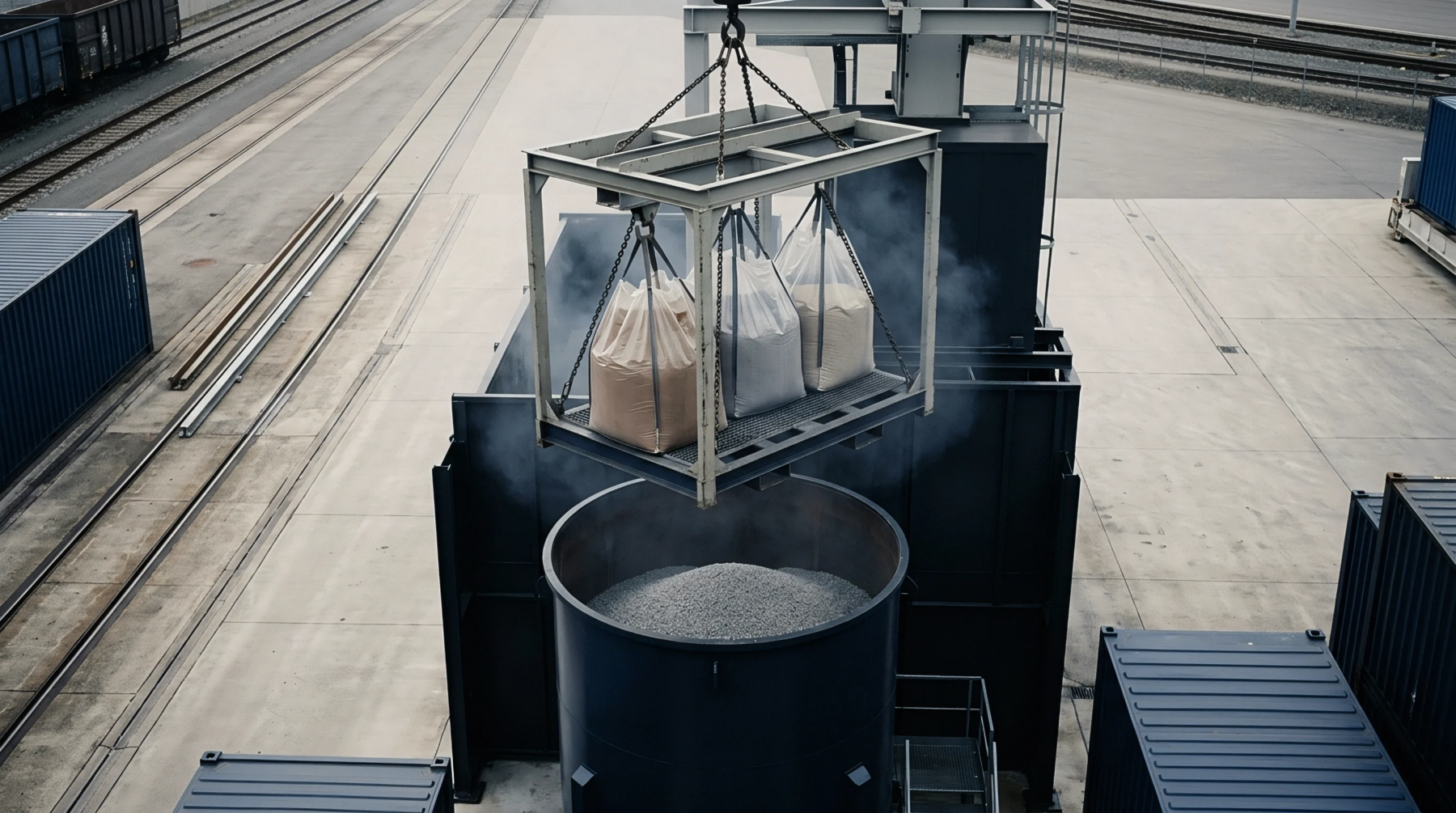
Industrial packaging units of standard volume provide secure storage and transport for granular polymer materials. Resin distributors utilize intermediate bulk containers to deliver pelletized engineering polymers directly to injection moulding workshops. These large rigid or flexible vessels occupy the middle ground between standard paper bags and massive bulk railcars.
Process Integration
Forklifts and overhead hoists position these vessels above raw material drying hoppers for gravity feeding. Handlers hook the bottom discharge spout of the vessel to the vacuum lines of the central material system of the plant. This setup minimizes manual handling and reduces the risk of spilling resin on the factory floor.
Continuous feeding allows high-volume moulding runs to proceed without interruption from manual bag dumping.
Contamination Control
Sealed liners inside the dry vessels prevent ambient moisture and airborne dust from settling on the polymer pellets before the extrusion process. When hygroscopic resins such as polycarbonate or polyamide are stored, any exposure to humid air degrades the polymer chains during moulding. This moisture absorption causes cosmetic splay marks or structural embrittlement in the final molded product.
Protective packaging ensures that the resin arrives at the press in the same dry state as it left the compounding extruder.
Logistics Cost
Reusable shipping containers offer superior shipping economics compared to single-use paper bags. These empty units fold flat to minimize return freight costs to the resin supplier. By reducing packaging waste, moulders lower their disposal costs and improve warehouse space utilization.