Verifying Mass Balance Ledgers for Chemical Recycled Polymers
Verifying chemical recycled polymer mass balance ledgers requires physical boundary mass-loss accounting, yield deductions, and batch-level credit transfer documentation.
Scale
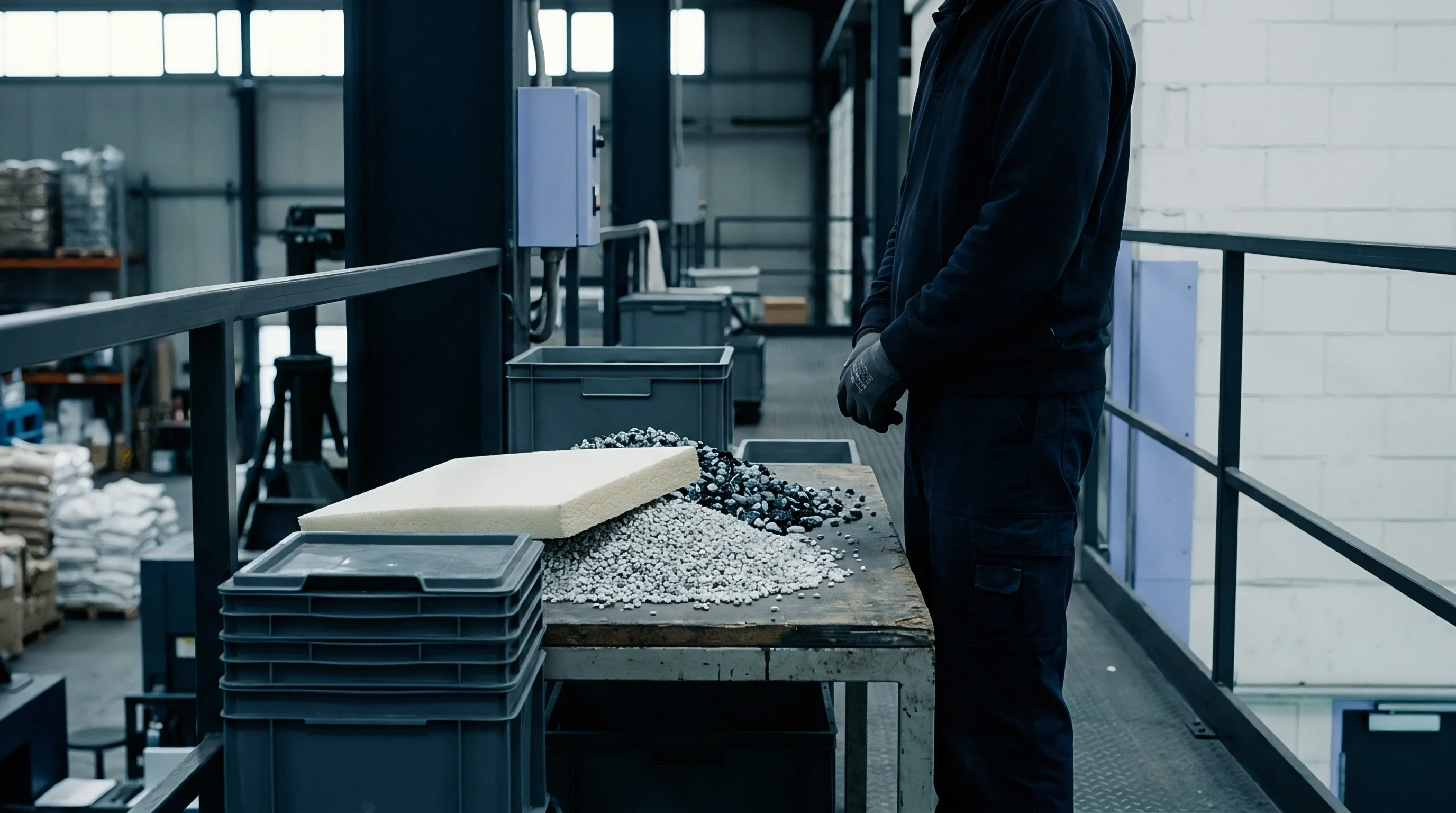
Thermal conversion units process post-consumer mixed polyolefins through high-temperature depolymerization, breaking solid polymers down into condensable liquid hydrocarbons, non-condensable synthesis gas, and solid carbonaceous residue. In evaluating chemical recycling claims, system boundaries define where waste stops being raw refuse and becomes secondary feedstock. Pyrolysis and gasification feeds carry non-polymeric contamination: moisture, calcium carbonate or titanium dioxide fillers, dirt, aluminum foil, and unwanted resins like polyvinyl chloride or polyethyleneterephthalate.
Ignoring these non-polymer fractions at the plant gate inflates credit claims before thermal conversion even begins.
Process boundaries need to isolate each physical transformation. Preparation units shred, wash, and dry post-consumer bales, dropping out heavy rejects and driven-off moisture. Dried polyolefin feed enters the primary reactor through an extruder or melting vessel.
Running between four hundred and eight hundred degrees Celsius in an oxygen-free environment, the reactor breaks polymer chains into volatile vapors and char. Condensers split these vapors into heavy pyrolysis oil, light naphtha, and non-condensable gas. The math is rigid: every kilogram of moisture, ash, or off-gas leaving the system directly cuts into the yield of circular oil available for cracking.
Tracking mass flow across boundaries depends on calibrated instruments. Weighbridges log incoming truck loads, inline belt scales track feed into the hopper, gas flowmeters record fuel sent to heaters, and mass meters measure oil pumped to storage. These physical readings form the baseline for verifying credit balances.
Without continuous calibration at every inlet and outlet, circular allocations are just book entries, completely detached from physical throughput.

Mass Conservation Boundaries in Thermal Cracking
Tracking carbon through a reactor relies on strict mass conservation: total mass entering must equal total mass exiting, plus or minus internal accumulation. For units cracking post-consumer polyethylene and polypropylene, thermal breakdown yields a wide boiling-point range of hydrocarbons, along with char and ash. The balance formula maps this across defined boundaries:
MassInput Waste = MassPyrolysis Oil + MassSyngas + MassChar + MassMoisture Losses + MassProcess Losses
Only the hydrocarbon fraction capable of replacing virgin fossil feedstocks in steam crackers or chemical synthesis qualifies for output credits. Char and inorganic ash are permanent mass losses that cannot generate circular monomer credits. Off-gas burned on-site for process heat counts as energy recovery; frameworks like ISCC PLUS and REDcert2 require deducting it from the credit pool unless the gas actually enters chemical production.
Moisture and dirt immediately alter these calculations. If a plant receives one hundred metric tons of post-consumer polyolefin bales carrying eight percent moisture and five percent inorganic contamination, net dry polymer entering the pyrolyzer is eighty-seven metric tons. At seventy percent liquid yield efficiency, those eighty-seven tons yield sixty point nine metric tons of raw pyrolysis oil, eighteen point two7 metric tons of non-condensable gas, and seven point eighty-three metric tons of solid char.
Entering the full one hundred metric tons of waste as circular feed manufactures thirty-nine point one metric tons of phantom credits.
| Stream Category | Physical Composition | Mass Fraction Range (%) | Mass Balance Eligibility | Verification Method |
|---|---|---|---|---|
| Incoming Waste Bale | Polyolefins, PET, PVC, Moisture, Dirt | 100.0 | Baseline Input | Calibrated Truck Weighbridge |
| Pre-treatment Rejects | Moisture, Ash, Non-target Plastics | 8.0 – 18.0 | Excluded Loss | Continuous Belt Scale & Moisture Meter |
| Raw Pyrolysis Oil | C5-C40 Hydrocarbon Mixture | 55.0 – 75.0 | Eligible Credit Input | Coriolis Mass Flow Meter |
| Non-condensable Gas | C1-C4 Hydrocarbons, Hydrogen | 12.0 – 25.0 | Deducted (Energy Use) | Thermal Mass Gas Flowmeter |
| Solid Reactor Residue | Carbon Char, Inorganic Fillers | 5.0 – 15.0 | Excluded Loss | Batch Drum Weight Scale |
| Data normalized across continuous stirred-tank and auger pyrolysis reactors processing mixed post-consumer packaging waste. | ||||

Chemical Conversion Routes and Physical Yield Ratios
Condensation produces three distinct output streams. Downstream steam crackers co-feed raw pyrolysis oil with fossil naphtha, gas oil, or ethane to produce ethylene, propylene, and butadiene. Steam cracking is never a one-to-one conversion.
High furnace temperatures convert liquid feeds into a mix of light olefins, aromatics, fuel oil, and methane, making secondary yield tracking vital for valid product claims.
When ten thousand metric tons of raw pyrolysis naphtha enter a cracker, olefin yields depend on furnace severity, residence time, and steam-to-hydrocarbon ratios. Under high severity, those ten thousand tons yield roughly three thousand metric tons of ethylene, one thousand five hundred metric tons of propylene, eight hundred metric tons of butadiene, and two thousand metric tons of pygas rich in benzene and toluene. The remaining fraction turns into methane, hydrogen, and heavy tar.
Tracing this mass flow requires tracking carbon from the pyrolyzer inlet clear through to finished resin.
Accounting rules govern how cracker losses enter the ledger. Under physical allocation, circular credits assigned to downstream polyolefins must reflect the furnace’s true olefin yield. Without adjustment factors, free allocation models can dump the full mass of incoming pyrolysis oil onto high-value polyethylene, inflating ledger balances.
Verification standards mandate yield adjustment factors so one metric ton of oil yields only its true monomer equivalent in circular credits.
- Feedstock Contamination Loss occurs when halogenated polymers, moisture, and non-polymeric contaminants volatilize or char during initial heating, driving down usable liquid hydrocarbon mass.
- Thermal Reactor Off-Gas Loss stems from cracking polymer chains into light methane, ethane, and propane gases that leave condensation trains without liquefying.
- Fractionation Bottoms Loss comes from heavy waxy paraffin residues and pitch accumulating, which must be separated before feeding liquid pyrolysis streams into steam cracker furnaces.
- Steam Cracker Co-Product Allocation occurs as liquid pyrolysis naphtha breaks down into non-polymer co-products like pyrolysis gasoline, fuel oil, and hydrogen gas during high-temperature cracking.
A ten percent ethanol simulant exposed to a polymer sample for ten days at forty degrees Celsius establishes the baseline overall migration threshold under European packaging standards.
Thermal loss calculations fluctuate with ambient temperature shifts during continuous gasification runs.


Yield
Carbon balances track recycled content from raw waste through to finished petrochemicals. Because pyrolysis plants usually feed into existing refineries where oil is blended with fossil naphtha at low ratios ~ typically one to ten percent of total throughput ~ physically segregating circular carbon inside the cracker is impossible. The resulting polymers contain a uniform mix of recycled and fossil carbon.
Mass balance accounting serves as the administrative bridge tracking circular claims across these co-processed streams.
How circular attributes are assigned across output streams lies at the heart of mass balance verification. When pyrolysis naphtha enters a site, outputs range from low-density and high-density polyethylene to polypropylene, synthetic rubber, aromatics, and industrial fuels. Certification standards dictate whether an operator can concentrate credits onto a single premium polymer or spread them across all co-products, directly altering the declared circular content of commercial resin.
System boundaries determine how credits travel between production units. A site might unload pyrolysis oil at a steam cracker, pipe ethylene to a distant polymerization unit, and produce circular resin. Auditors must verify that carbon equivalents are tracked and retired at each stop.
Because every conversion step incurs material loss, yield deductions must be applied before issuing certificates to buyers.
Which Calculation Method Validates Pyrolysis Oil Credit Allocation?
Chain of custody standards offer different ways to distribute circular attributes across co-products. The three primary models in mass balance accounting are proportional allocation, free allocation with fuel exclusion, and physical segregation ~ each setting its own terms for converting input credits into certified resin.
Proportional allocation divides attributes across all output streams by mass yield. If ten percent of furnace feed is pyrolysis oil, every output ~ ethylene, propylene, pygas, fuel gas ~ gets ten percent circular attribution. This stops producers from concentrating claims on premium resins.
If a plant yields one hundred tons of polypropylene, ten tons carry circular credits. While this matches actual chemistry, it restricts producers trying to market resins with a one hundred percent recycled claim.
Free allocation lets operators assign credits to selected products as they choose, as long as total credited mass stays within net circular inputs. Co-feeding one hundred tons of pyrolysis naphtha allows a producer to direct all credits onto a single polyethylene line ~ selling one hundred tons of one hundred percent circular resin ~ while assigning zero credits to co-produced fuels or aromatics. However, ISO 22095 and recent EU proposals mandate fuel exclusion clauses.
These prohibit shifting credits to streams burned for heat or sold as fuel; fuel fractions still claim their share of credits, but those credits are permanently retired rather than converted to resin.
| Allocation Methodology | Mathematical Allocation Rule | Fuel Credit Eligibility | Credit Concentration Allowed | Regulatory Acceptance Level |
|---|---|---|---|---|
| Proportional Allocation | Strict chemical yield ratio across all outputs | Yes (Proportional) | No | High (EU SUPD & PPWR Compliant) |
| Free Allocation (No Fuel Ex) | Arbitrary assignment up to total input mass | Yes (Unrestricted) | Yes | Low (Declining Standard Approval) |
| Free Allocation (Fuel Ex) | Concentration on non-fuel products only | No (Deduction Mandatory) | Yes (Chemicals Only) | Moderate to High (ISCC PLUS Standard) |
| Physical Segregation | 100% physical batch isolation without co-feed | Not Applicable | Not Applicable | Complete (Traditional Standard) |
Deduction Factors for Process Fuel and Heavy Residues
Energy recovery inside a plant consumes a significant share of incoming hydrocarbon mass. Pyrolysis requires high heat to break polymer bonds; when off-gas or heavy residues feed plant burners, that mass leaves the recycling chain. Ledgers must subtract energy recovery continuously to maintain integrity.
Determining mandatory deductions requires real-time metering on internal fuel lines. Consider a unit processing twenty thousand metric tons per year of polyolefin waste, yielding fourteen thousand metric tons of raw oil, three thousand metric tons of gas, and three thousand metric tons of char and water. If the plant burns all three thousand tons of gas in heaters to reach five hundred degrees Celsius, the ledger must log a three thousand metric ton energy deduction, capping circular credits at the fourteen thousand metric tons of liquid oil shipped off-site.
Losses continue into secondary refining. Raw pyrolysis oil carries olefins, dienes, chlorides, nitrogen, and silicones that poison cracker catalysts. Hydroprocessing strips these contaminants and saturates olefins, but leaves light gas losses and heavy bottoms.
If hydrotreating fourteen thousand tons of oil yields twelve thousand six hundred tons of cracker-grade naphtha, six hundred tons of fuel gas, and eight hundred tons of heavy vacuum gas oil burned on-site, eligible credits drop to twelve thousand six hundred metric tons. Ignoring hydrotreater losses leads directly to over-issued monomer credits.
Standard ISO 22095 Section 6.2 mandates that energy recovery streams must be deducted from total input mass before calculating circular credit allocations.
Misallocating gasification losses to polymer streams leaves brand owners vulnerable to tax surcharges and audit penalties.


Ledger
Chain of custody relies on accounting systems that match input credits against physical deliveries. A mass balance ledger functions like a bank account: circular attributes enter as deposits when verified shipments arrive and exit as withdrawals when certified polymers ship to buyers. Audits ensure balances remain positive and that every credit movement corresponds to physical material crossing site boundaries.
Integrity hinges on firm physical and temporal boundaries. Operators cannot issue credits against expected future waste deliveries; credits are generated only after physical feedstock arrives on-site, clears the weighbridge, and enters processing. Ledgers must also operate within fixed reconciliation windows to keep stale credits from accumulating on balance sheets.
Auditing credit ledgers against physical delivery invoices confirms that no double counting occurred during quarterly reconciliations. Physical segregation avoids allocation ambiguity altogether. Double counting happens when one batch of recycled oil generates multiple environmental claims ~ such as selling an ISCC PLUS polymer credit to a buyer while claiming a carbon offset or national recycling certificate on that same volume.
Auditors check ERP databases to ensure every mass unit carries a single digital identifier, retiring credits once the final customer invoice issues.

Reconciliation Windows and Rollover Credit Thresholds
Operators establish defined timeframes to balance acquired circular inputs against sold attributes. Frameworks typically set reconciliation windows at one month, three months, or twelve months. Window length dictates how plant throughput shifts affect credit supply.
In a three-month window, total credit sales cannot exceed verified inputs added during that period plus permitted carryover.
Rollover limits restrict how long unallocated credits can sit on the books. Seasonal shifts in waste collection or unplanned downtime create gaps between credit generation and resin sales. If a facility runs at full capacity in the first quarter but suffers a two-month outage in the second, carried-over credits maintain resin deliveries.
Even so, unlimited rollover distorts markets by decoupling physical production from environmental claims.
Certification rules set strict expiration timelines on mass balance credits. Under ISCC PLUS, credits remain valid for up to twelve months from generation. Unallocated credits reaching twelve months expire automatically and must be written off.
Ledgers cannot carry negative balances into a new period; doing so indicates an operator sold more credits than it held ~ an immediate compliance breach that invalidates claims.

Multi Site Allocation and Boundary Enforcement
Companies with multiple crackers often seek to consolidate credit balances across sites. Multi-site allocation lets an enterprise with three facilities unload pyrolysis oil at Site A while issuing certified credits at Site B or Site C. To prevent arbitrary credit transfers between unrelated supply chains, standards enforce strict geographic and physical connection rules.
Physical interconnectivity is mandatory for multi-site sharing. To transfer credits under ISO 22095 and ISCC PLUS, sites must share common ownership or a formal joint venture, alongside a verifiable physical transport link ~ such as a pipeline, dedicated rail tank routes, or established shipping lanes. Shifting credits across different economic zones without physical transport links is prohibited under strict regulatory interpretations.
Allocation rules dictate whether co-products can carry recycled claims, while boundary enforcement prevents international credit arbitrage. Regulations like the UK Plastic Packaging Tax and the EU Packaging and Packaging Waste Regulation impose strict territorial limits. Importing virgin resin while assigning mass balance credits generated at a domestic plant violates chain-of-custody rules.
Auditors cross-check transport records ~ such as bills of lading and customs entries ~ against the physical facilities listed in the network.
- Feedstock Purchase Invoices displaying certified seller identification, weighbridge receipts, and verified circular origin codes.
- Mass Balance Conversion Journals documenting physical reactor mass loss calculations, yields, and energy recovery deductions.
- Site Transfer Records showing physical hydrocarbon movements between crackers, hydrotreaters, and polymerization plants.
- Credit Deduction Summaries proving that issued customer declarations match exact credit retirements in the central enterprise ledger.
A rule of thumb for audit preparation is that every kilogram of circular resin claimed on a customer invoice must trace back to a retired credit entry created within the preceding twelve months.
ISCC PLUS System Document 203 Clause 4.3 mandates that unused credits expire twelve months after the end of the balance period, permanently clearing unallocated inventory from the ledger.


Reconciliation
Reconciling book claims against physical chemistry requires laboratory testing of circular feeds. While ledgers track credits on paper, analytical testing confirms whether hydrotreated pyrolysis oil meets cracker specifications. Lab analysis protects against contamination, off-spec shipments, and misreported secondary feeds, evaluating both hydrocarbon distribution and trace impurities.
Screening targets impurities that endanger plant safety, catalyst life, and resin compliance. Raw pyrolysis oil carries organic chlorine from residual PVC, organosilicons from seals, heavy metals from stabilizers, and reactive diolefins that foul heat exchangers. High impurity levels disrupt operations, forcing plants to run low co-feed ratios or invest in pre-treatment hydroprocessing.
Advanced testing also helps verify feedstock origin. Radiocarbon dating via ASTM D6866 measures the carbon-14 to carbon-12 ratio. Because both lack carbon-14, radiocarbon testing cannot distinguish post-consumer fossil plastic from virgin fossil resin, though it accurately measures bio-based fractions in mixed streams.
For synthetic polyolefins, chemical fingerprinting via two-dimensional gas chromatography and time-of-flight mass spectrometry maps hydrocarbon classes to confirm liquid feeds originated from depolymerization rather than straight-run gas oils.

Analytical Screening for Trace Chemical Impurities
Cracker furnaces demand pure hydrocarbon feeds to avoid coking, tube embrittlement, and catalyst poisoning. Trace contaminants at parts-per-million levels can trigger rapid failure, requiring thorough lab screening before pyrolysis oil tanks are cleared for co-processing. Organochlorines and silicon pose immediate operational risks.
Organochlorines are particularly hazardous. Thermal breakdown of residual PVC produces hydrochloric acid and organic chlorides such as chloroalkanes and chlorobenzene. In hydrotreaters, these release hydrochloric acid gas, causing stress corrosion cracking in stainless steel piping and columns.
In crackers, chlorinating compounds poison hydrogenation catalysts in acetylene converters. Inductively coupled plasma optical emission spectrometry and microcoulometric titration measure total halogens, maintaining a strict upper limit of ten milligrams per kilogram total chlorine in hydrotreated feeds.
Organosilicons ~ mainly polydimethylsiloxanes from packaging seals and defoamers ~ are equally damaging. Thermal cracking converts siloxanes into silica deposits that foul furnace tube walls and deactivate noble metal catalysts in hydrogenation reactors. Silica buildup reduces heat transfer and overheats tube walls.
Gas chromatography with atomic emission detection or mass spectrometry screens incoming feeds for siloxanes, enforcing a maximum threshold of two milligrams per kilogram total silicon.
| Contaminant Class | Primary Chemical Species | Steam Cracker Limit (mg/kg) | Standard Test Method | Operational Failure Mode |
|---|---|---|---|---|
| Organochlorines | Chloroalkanes, Chlorobenzene | < 5.0 - 10.0 | ASTM D7536 / EN 15408 | Corrosion & Catalyst Poisoning |
| Organosilicones | Polydimethylsiloxanes (PDMS) | < 1.0 - 2.0 | EN 17448 / GC-AED | Furnace Silica Coking |
| Heavy Metals | Lead, Cadmium, Arsenic, Mercury | < 0.1 - 0.5 | ICP-MS (EN 17294) | Hydrotreating Catalyst Poisoning |
| Conjugated Dienes | 1,3-Butadiene derivatives, Cyclopentadiene | Diene Value < 1.0 | UOP 326 (Maleic Anhydride) | Fouling & Pre-heater Gumming |
| Nitrogenates | Nitriles, Amines, Amides | < 10.0 - 20.0 | ASTM D4629 (Chemiluminescence) | Acid Center Catalyst Deactivation |
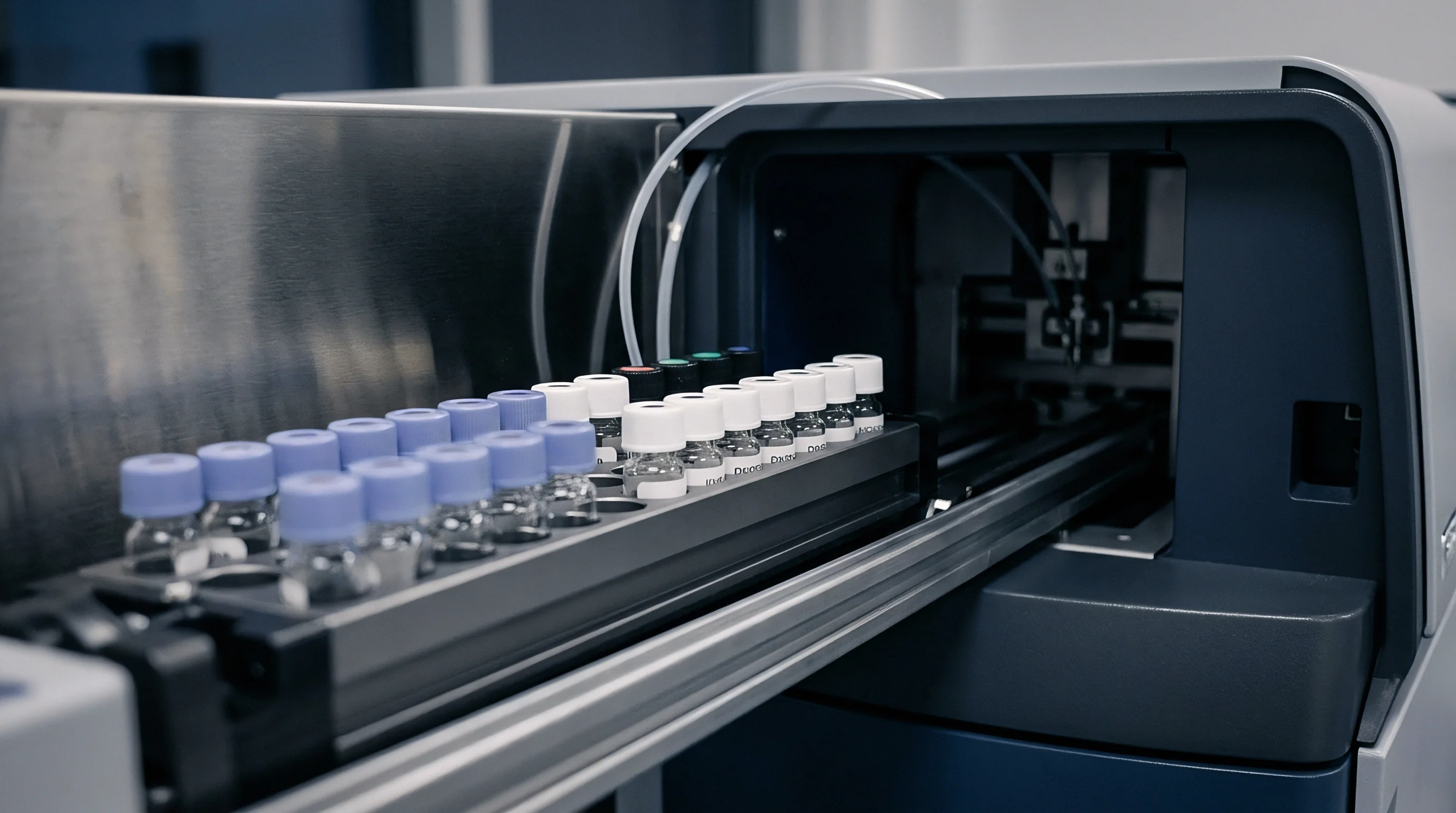
Non Intentionally Added Substances in Circular Monomers
Thermal breakdown of post-consumer waste generates unexpected chemical byproducts that survive refining. Non-intentionally added substances (NIAS) include degradation products, side-reaction compounds, and trace impurities that carry into final resin. Evaluating NIAS profiles in food-contact materials is mandatory under European Regulation (EU) 10/2011 and Good Manufacturing Practice rules in Regulation (EC) 2023/2006.
Pyrolysis and cracking break down legacy additives like brominated flame retardants, phenolic antioxidants, phthalate plasticizers, and UV stabilizers. Cleaving these molecules produces low-molecular-weight aromatics, halogenated phenols, and alkylated benzenes that can persist through steam cracking and polymerization into finished resin, creating migration risks in food packaging.
Compliance for food-contact resins requires migration testing using standardized food simulants. Laboratories expose samples to ten percent ethanol, three percent acetic acid, and vegetable oil or Tenax. Exposing samples to ten percent ethanol for ten days at forty degrees Celsius establishes overall migration, while high-resolution mass spectrometry coupled with liquid and gas chromatography screens for unknown NIAS.
Any non-regulated substance migrating above zero point zero one milligrams per kilogram triggers a toxicological evaluation under European Food Safety Authority guidelines.
Comparing raw pyrolysis naphtha inputs against final monomer allocations shows an unadjusted process loss of 38 percent.
Whether gas chromatography mass spectrometry can reliably quantify trace oxygenates below five milligrams per kilogram in complex pyrolyzed naphtha blends remains an open question in commercial labs.


Attestation
Compliance documentation connects polymer batches directly to verified environmental claims. A mass balance ledger carries no legal weight without third-party attestation certificates and declarations of conformity. Converters, brand owners, and regulators rely on these documents to confirm that purchased resin carries valid circular attributes across the supply chain.
System certification under recognized frameworks underpins mass balance claims. Auditors accredited under ISO/IEC 17065 conduct annual site inspections of recycling facilities, crackers, and polymerization units. These audits inspect physical ledgers, yield calculations, credit retirement logs, and meter calibrations, issuing certificates that allow operators to declare circular claims on sales documents.
Regulatory scrutiny surrounding mass balance declarations continues to rise. Authorities across the European Union and North America actively audit claims to prevent greenwashing and enforce packaging directives. Incomplete records invalidate declarations of conformity, exposing firms to back-taxes, administrative fines, and product recalls.

Documentary Alignment across Supply Chain Declarations
Downstream converters receive declarations specifying certification schemes and credit allocations. Every shipment of certified circular polymer must include a sustainability declaration or delivery note with standardized data fields. Verification involves cross-checking supplier declarations against physical delivery notes and invoices.
A compliant sustainability declaration must state the facility’s certificate number, scheme name, batch weight, and exact circular credit quantity. If a converter purchases twenty metric tons of polypropylene resin but the declaration credits only ten metric tons as ISCC PLUS material, the remaining ten metric tons must be logged as conventional virgin fossil polymer. Customs and tax authorities reject incomplete filings.
Document alignment extends into food-contact compliance. Under European Regulation (EU) 2022/1616 on recycled plastics for food contact, chemical recycling processes breaking polymers into basic building blocks require thorough documentation. Converters manufacturing food packaging from circular resins must maintain a Declaration of Compliance confirming that feedstocks underwent verified depolymerization and hydrotreating, migration testing met Regulation (EU) 10/2011 thresholds, and NIAS risk evaluations were completed.

Enforcement Risks and Financial Exposures in Mass Claims
Regulators in EU member states actively inspect packaging tax filings for invalid circularity claims. Unverified mass balance declarations present serious financial liabilities. Across several European jurisdictions, packaging taxes impose levies between eight hundred and over one thousand Euros per metric ton on non-recycled plastics.
Failing an audit results in retroactive revocation of tax exemptions.
Unverified credits trigger heavy penalties. When a tax authority rejects an invalid supplier declaration, back-taxes, interest, and administrative fines accumulate quickly, often doubling the bill. If a brand labeled packaging as recycled based on flawed attestations, consumer protection agencies can initiate fraud proceedings, forcing product recalls.
Mitigating financial risk requires strict mass balance clauses in supply contracts. Procurement teams should secure full audit rights, valid third-party certificates, and lot-specific declarations with every shipment. Contracts should incorporate indemnification terms, holding resin producers liable for tax back-charges, legal fees, and fines if their mass balance ledgers fail audit.
- Verify the current validity and scope of the supplier’s third-party chain of custody certification on the official scheme portal.
- Match physical batch shipment weights recorded on the transport bill of lading directly against circular mass credits stated on the sustainability declaration.
- Audit supplier conversion factors and yield deduction ratios to ensure chemical process losses were subtracted from credit balances.
- Cross-examine food-contact declarations of compliance to confirm migration testing and NIAS screenings were performed on the specific polymer lot.
- Archive all verified sustainability declarations, invoices, and test reports in a centralized compliance dossier for at least ten years to satisfy tax audit requirements.
Always match physical batch shipment weights against credited ledger deductions before signing a declaration of compliance.