Meaning
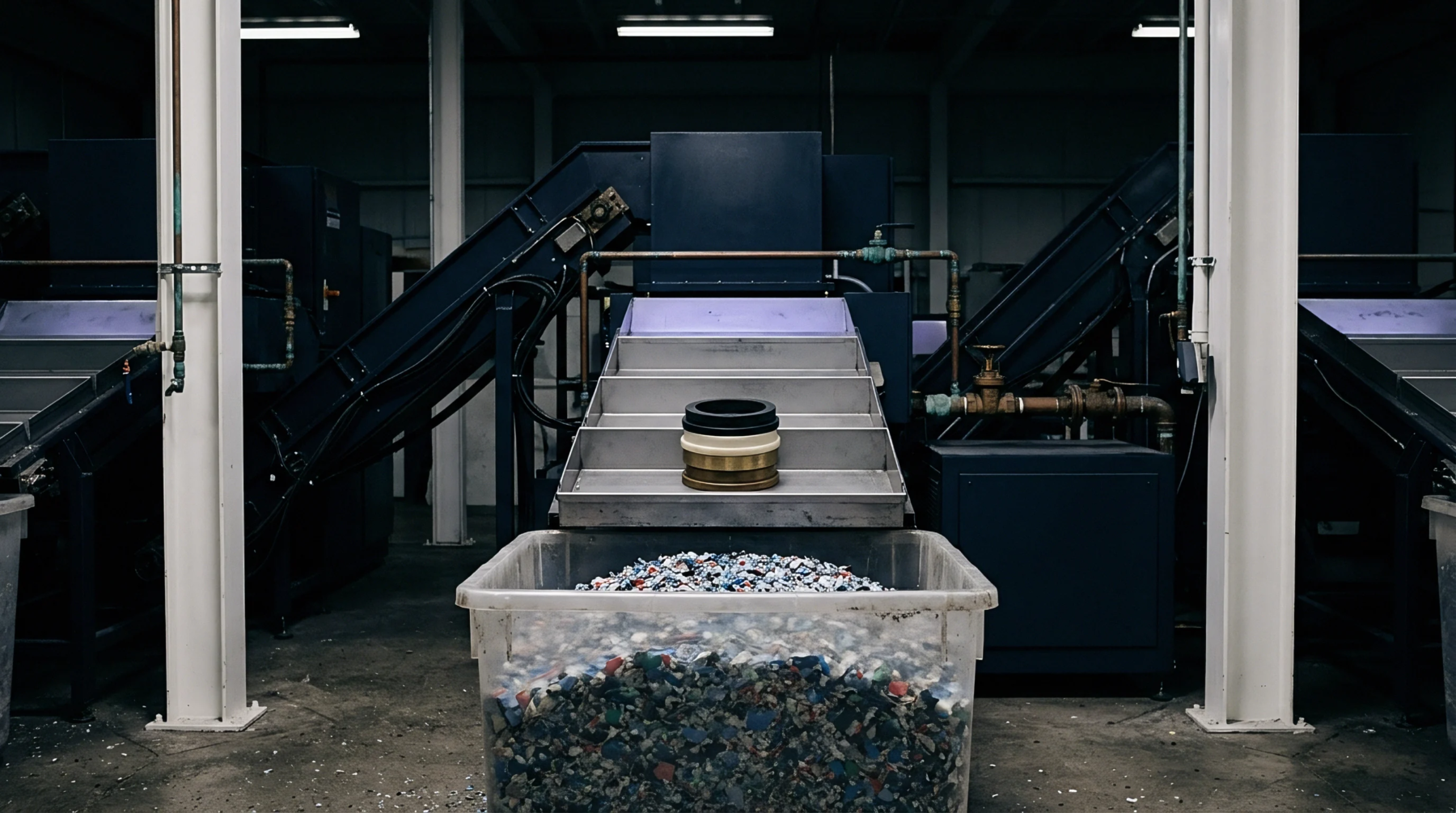
Post-consumer high density polyethylene resin consists of salvaged packaging materials that undergo mechanical processing to recover polymer chains for secondary industrial applications. In the circular economy, rHDPE operates as a feedstock substitute that mandates strict sorting criteria to maintain mechanical properties comparable to virgin counterparts. Production facilities gather waste streams from municipal collections or commercial returns to shred the material into fragments.
These flakes pass through wash tanks to remove contaminants such as paper labels, adhesive residue, or metallic particles that threaten the integrity of future moulds. Extrusion lines then melt and filter the cleaned plastic into pellets suitable for direct feeding into injection or blow moulding equipment. Manufacturers utilize this secondary resin in non-food contact containers, drainage pipes, and automotive components where base polymer purity requirements allow for slight variations in melt flow index or crystallinity.
Quality systems monitor these specific batches for oxidation levels because inconsistent heat histories degrade the molecular weight distribution of the material.
Polymer Rheology
The thermal processing window for recycled resins narrows during high shear cycles because shorter polymer chains change the viscosity profile. Injection moulding technicians observe that rHDPE demands precise temperature control to prevent thermal degradation during the plasticizing stage. Cooling rates also alter the shrinkage behavior of parts created from regrind compared to virgin resin batches.
Minor fluctuations in the melt flow rate trigger dimensional drift, which creates potential mismatch in assembly tolerances or thin-walled components that fail under internal pressure tests. Process validation requires sampling early in the production run to adjust the holding pressure and account for the modified flow characteristics of the recycled stock.
Economic Integration
Financial margins depend heavily on the price gap between virgin commodity pellets and the cleaned flake output. Supply chain stability suffers when the collection infrastructure for plastic bottles faces seasonal disruption or shifts in municipal recycling contracts. Procurement teams verify the consistency of the source material to avoid batch contamination that ruins entire moulding cycles and spikes production costs.
Large buyers prioritize stable supply channels over spot market prices to guarantee that machine settings do not require constant recalibration. Reliable sorting technology at the processing plant determines the premium price of the final product since higher levels of purity reduce the need for additive blending during secondary manufacturing.
Quality Specification
Mechanical datasheets often present values for rHDPE based on standardized test specimens that do not always match the performance of complex injection moulded geometries. Part specifications define the acceptable limits for impact strength and tensile modulus to ensure structural integrity across varied environmental conditions. Practitioners measure the ash content as a metric for inorganic impurities to prevent tool wear or blockages in high-cavitation moulds.
Datasheet values represent a baseline for material selection, whereas the actual performance inside the production mould remains subject to cooling gradients and internal stresses. Stable moulding of this material occurs when the feedstock composition maintains a consistent ratio of high-molecular-weight fractions throughout the entire production cycle.