Sampling Heterogeneity Model for Post Consumer Polyolefins
Composite compliance testing of post-consumer polyolefins fails without cryogenic milling and Gy sampling models to eliminate massive fundamental error.


Flaw
Post-consumer polyolefin bales carry an intrinsic particulate variability that defeats standard composite testing. When a testing program draws a single five-gram test specimen from an aggregate twenty-kilogram composite sample to quantify non-intentionally added substances or heavy metal markers, the analytical result reflects local sample selection rather than the bulk material concentration. Regulators operating under European Union food contact standards enforce migration limits across the finished article, yet recyclers routinely certify incoming hundred-tonne railcars or twenty-tonne sea containers based on micro-scale analytical extractions that ignore constitutional variance.
A single laboratory test report issued for an entire lot creates commercial exposure when secondary sub-sampling by an enforcement body extracts an unblended flake cluster carrying concentrated legacy additives or printing ink residues.
The core structural problem within mechanical recycling stems from Pierre Gy’s particulate sampling theory, specifically the fundamental sampling error. This error represents the minimum variance achievable when drawing particulate matter from an unsegregated population without operational bias. Virgin polymers exit compounding extruders with near-molecular homogeneity, displaying negligible constitutional variance across five-gram specimens.
Recycled polyolefins, comprising flakes derived from sorted post-consumer baled bottles, thermoforms, and flexible films, consist of discrete particles possessing radically distinct chemical histories. One high-density polyethylene flake in ten thousand carries organohalogen flame retardants, slip agents, brominated compounds, or aromatic hydrocarbons derived from industrial packaging.
Cadmium concentrations exceeding one hundred milligrams per kilogram in isolated post-consumer flakes trigger restriction alerts under REACH Annex XVII even when composite lot digests average two milligrams.
A testing laboratory analyzing a micro-sample either strikes this contaminant particle or misses it entirely. The analytical report certifies compliance when the particle is missed. The identical consignment triggers border seizure or criminal recall when an importing authority samples a different quadrant of the railcar and strikes a concentrated fragment.
The sampling protocol itself functions as the primary determinant of compliance or breach, rendering the certificate of analysis operationally void without an explicit variance model.
The resulting operational challenge requires moving past traditional acceptance sampling. Recyclers face severe financial penalties when consignments rejected at the receiving dock accumulate demurrage fees while waiting for secondary dispute testing. Without a sampling model based on particulate mass, fragment size distribution, and constituent liberated variance, the supply chain trades blind documentation rather than verified physical compliance.


Scale
Constitutional Heterogeneity and Mass Requirements
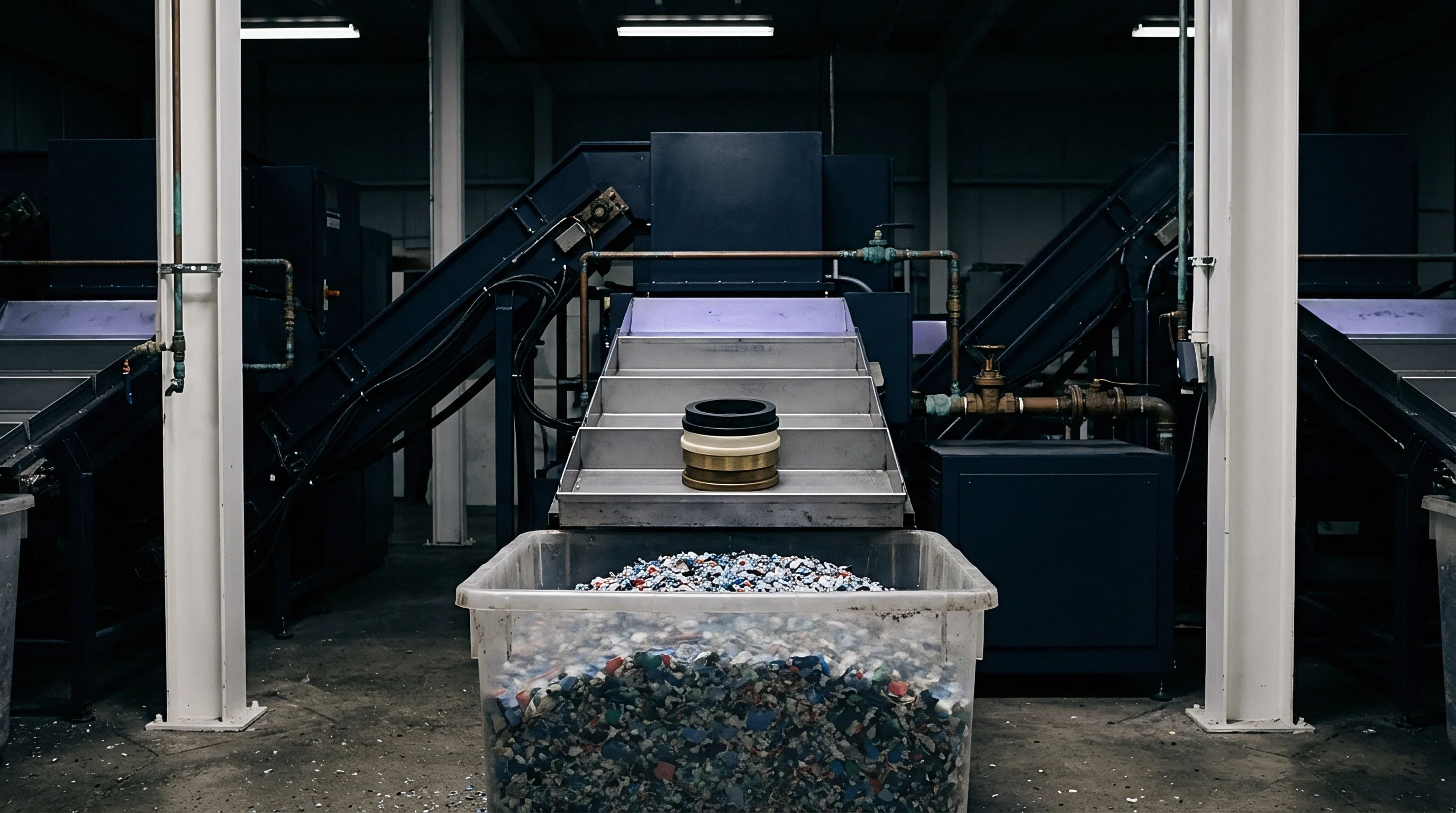
Constitutional heterogeneity represents the chemical and physical divergence among individual fragments within a post-consumer lot. In mixed post-consumer polypropylene and high-density polyethylene, every single flake retains the formulation parameters of its parent article, including masterbatch pigments, photo-oxidation products, and absorbed organic contaminants. The fundamental sampling error variance, denoted as the square of the coefficient of variation of the fundamental error, establishes the minimum sample mass necessary to keep sampling uncertainty within predetermined limits.
Gy expresses the fundamental sampling error variance through an equation connecting material liberation, shape, size distribution, and density to the nominal maximum particle diameter. Let the fundamental error variance be calculated using the relation:
Fundamental error variance equals the sampling constant multiplied by the cube of the maximum particle diameter, divided by the sample mass, minus the sampling constant multiplied by the cube of the maximum particle diameter, divided by the total lot mass.
The lot mass in maritime freight transactions routinely reaches twenty to forty tonnes, rendering the second term negligible. The governing expression simplifies to the sampling constant multiplied by the cube of the maximum particle diameter, divided by the target sample mass. The sampling constant integrates four fundamental physical properties of the post-consumer flakes:
- Mineralogical Composition Factor reflects the concentration and physical release of the target contaminant across the polymer phases. High contaminant concentrations in rare particles drive this value upward.
- Liberation Factor scales from zero to unity, representing whether the contaminant exists as an isolated particle or remains locked inside a clean polymer flake matrix. Flakes derived from multilayer coextrusions exhibit intermediate values.
- Particle Shape Factor accounts for flake geometry compared to a sphere, adopting a standard value of zero point two for thin, flat post-consumer flakes and zero point five for spherical melt pellets.
- Particle Size Distribution Factor adjusts for the breadth of the screen cut, adopting zero point twenty-five for wide commercial flake fractions and zero point fifty for calibrated uniform pellets.
When computing fundamental variance for heavy metals such as lead or cadmium, or targeted non-intentionally added substances like limonene or benzophenone, the mineralogical factor incorporates the density of the contaminant phase alongside the bulk polymer matrix density. Virgin resin compounding assumes a liberation factor approaching zero point zero one due to molecular dispersion. Post-consumer flake shredding generates a liberation factor approaching unity for localized surface contaminants, including cured cross-linked printing inks and adhesive residues.
| Particle State | Top Flake Size (mm) | Shape Factor | Target Variance (%) | Minimum Mass (kg) |
|---|---|---|---|---|
| Coarse Unwashed Flake | 16.0 | 0.20 | 5.0 | 8.450 |
| Standard Washed Flake | 10.0 | 0.20 | 5.0 | 2.060 |
| Fine Regrind Screen | 4.0 | 0.22 | 5.0 | 0.145 |
| Melt Homogenized Pellet | 3.0 | 0.50 | 2.0 | 0.082 |
| Cryogenic Micro-Pellet | 0.8 | 0.50 | 1.0 | 0.003 |
The table reveals the quantitative gap between analytical bench protocol and physical sampling theory. A laboratory digest using microwave-assisted acid digestion per EN 16711 or EN 1122 restricts initial specimen mass to zero point five grams or three hundred milligrams to avoid pressure venting in closed vessels. When a technician digests zero point five grams of standard ten-millimeter washed flakes, the sampling variance for an unliberated trace element exceeds forty percent.
An analytical result of ten milligrams per kilogram under these conditions carries an actual physical confidence interval spanning two to twenty milligrams per kilogram.
Analytical accuracy at the detector cannot resolve sampling inaccuracy at the scoop. Inductively coupled plasma mass spectrometry resolves parts per billion, yet that electronic precision measures only the chemical constitution of the digested vessel contents. If those contents reflect a single non-representative fragment, the analytical precision serves to confirm a physical sampling error with false analytical confidence.


Segregation

Distributional Heterogeneity and Gravitational Demixing
Distributional heterogeneity describes the spatial non-uniformity of particles within a bulk volume. Unlike constitutional heterogeneity, which depends on flake composition, distributional heterogeneity arises from particle segregation during mechanical conveyance, pneumatic transfer, and container transit. Mechanical recycling facilities transport flakes via cyclone separators and pneumatic ducting into storage silos.
As flakes tumble into storage silos or discharge hovers, density and aerodynamic drag drive spatial demixing.
Post-consumer flake streams contain variable polymer densities alongside structural inclusions. Polypropylene flakes possess a typical density between zero point nine zero and zero point nine one grams per cubic centimeter. High-density polyethylene flakes span zero point nine four to zero point nine six grams per cubic centimeter.
Degradation-derived mineral fillers, talc modifiers, and residual ethylene vinyl alcohol barrier layers elevate local flake densities beyond one point zero five grams per cubic centimeter. The heavier and thicker fragments gravitate toward the central discharge axis during silo filling, while thin, light-gauge printed films drift toward the silo perimeter.
Mechanical segregation in bulk transport bins elevates trace contaminant variance by three hundred percent between top-surface scoops and bottom-discharge valves.
Taking a sample from the upper access hatch of a twenty-tonne bulk shipping box yields an analytical profile dominated by lower-density film fragments. These film fragments carry higher surface-to-volume ratios, concentrating printing ink photoinitiators like 2-isopropylthioxanthone alongside acrylic adhesive monomers. Conversely, sampling from the bottom discharge gate captures rigid bottle base fragments containing heavy metal color masterbatches and organotin heat stabilizers.
Pneumatic transfer lines induce continuous vibrational segregation. Fine particulate dust, known as fines or angel hair, detaches from flake edges during transit. These fines absorb migrating hydrocarbons, plasticizer esters, and mineral oil hydrocarbons from the bulk air stream.
When an inspector draws an aggregated sample without capturing the proportional fines fraction, the certified migration profile underestimates mineral oil saturated hydrocarbons and aromatic hydrocarbons by factors exceeding five. Segregation errors can be eliminated only through mechanical stream-splitting of moving material during bulk transfer, rendering static probe sampling of settled containers structurally biased.


Drift
Constituent Variation across Successive Batches
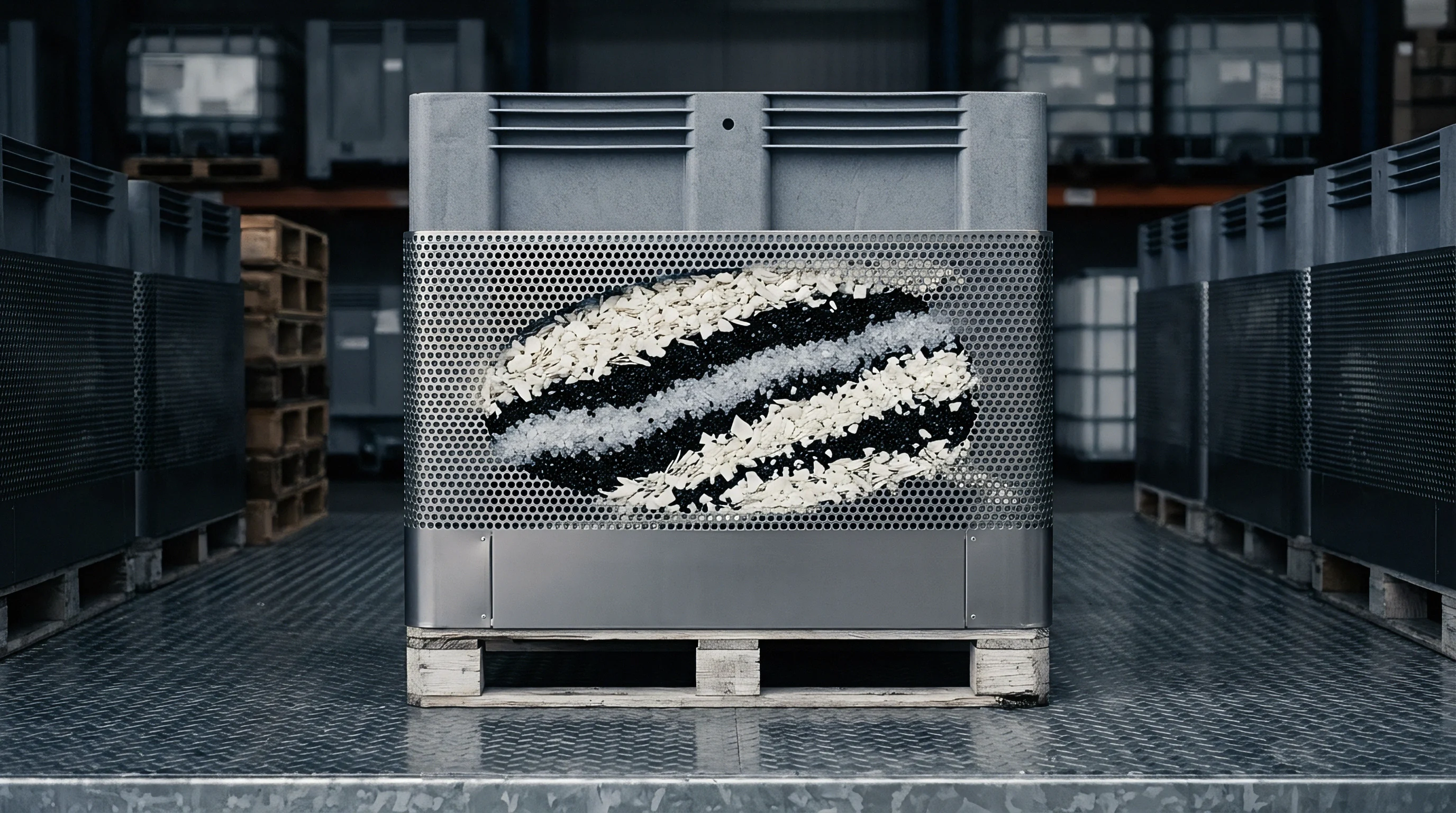
Material heterogeneity extends across temporal operating scales. Recyclers face raw material shifts driven by municipal collection schedules, seasonal consumption patterns, and regional waste sorting efficiencies. A wash plant operating on twenty-four-hour continuous runs experiences drift in contamination levels between morning and night shifts, between weekday residential feeds and industrial commercial collections, and across regional source origins.
A static composite sampling plan assumes stationary process variance. In post-consumer polyolefin reprocessing, the mean contamination level drifts continuously. If municipal sorting centers shift optical sorting settings to increase throughput, cross-contamination increases instantly.
Polyethylene terephthalate flakes break through into the polyolefin stream, degrading at polyolefin processing temperatures and forming volatile aldehydes, cyclic oligomers, and acidic degradation fragments.
- Process Drift Velocity tracks the rate of contamination alteration per operational hour, dictating increment extraction intervals. Rapid shifts in sorting efficiency necessitate compressed sampling windows.
- Short-Range Grouping Variance characterizes local clustering of contaminant fragments entering the reprocessor wash line within discrete processing intervals. Clusters reflect individual contaminated bales clearing the debaler.
- Long-Range Systematic Trend establishes baseline quality drift across multi-day production schedules. Seasonal shifts in packaging consumption patterns drive these macro-level variations.
- Periodic Variance Fluctuations emerge from cyclic process parameters, including wash tank water regeneration cycles, centrifuge screen blindings, and continuous melt-filter backflushing sequences. Filter backwashes transiently spike gel counts.
Addressing process non-stationarity requires time-integrated proportional increment sampling. Mechanical cross-stream cutters must traverse the falling material curtain at regular intervals linked to mass flow rather than elapsed time. If a wash line operates at four tonnes per hour, a cutter extracting a two-hundred-gram increment every five minutes generates a forty-eight-kilogram gross sample over a single twelve-hour shift.
This aggregate mass bridges temporal drift, yet it introduces a secondary reduction problem: how to crush, split, and homogenize forty-eight kilograms into the five grams required for gas chromatography screening without reintroducing segregation error.
Ignoring temporal drift produces false positives and false negatives in lot release. A single railcar loaded continuously over eighteen hours captures distinct contamination regimes. When quality control collects all increments during the final hour of filling, the resulting dossier reflects only the trailing process regime.
If the sorting optical air ejectors clogged ten hours prior, the uncaptured contaminated core travels straight to the manufacturing client.


Assay

Which Analytical Preparation Eliminates Fundamental Error?
Reducing bulk aggregate post-consumer samples down to analytical specimens requires a sequence of comminution and sub-sampling steps. Standard laboratory mills fail when processing ductile polyolefins at ambient temperatures. Mechanical blades shear flexible polyethylene, generating localized friction that elevates temperatures beyond ninety degrees Celsius.
This thermal rise drives off volatile organic contaminants, partially cross-links degrading chains, and melts low-density fragments into heterogeneous agglomerates.
Cryogenic embrittlement represents the only defensible preparation route for heterogeneously contaminated polyolefins. Flakes must be immersed in liquid nitrogen at minus one hundred ninety-six degrees Celsius prior to impact milling. At temperatures well below the glass transition point of both polypropylene (minus ten degrees Celsius) and high-density polyethylene (minus one hundred twenty degrees Celsius), the polymers fracture along crystalline boundaries rather than undergoing ductile deformation.
Cryogenic milling reduces coarse flakes to calibrated powders passing through five-hundred-micrometer stainless steel sieves.
| Preparation Method | Screen Size (mm) | Limonene Recovery (%) | Benzophenone Recovery (%) | Replicate CV (%) |
|---|---|---|---|---|
| Ambient Knife Milling | 2.0 | 34.2 | 81.4 | 28.6 |
| Dry Ice Rotor Milling | 1.0 | 68.9 | 92.1 | 14.2 |
| Liquid Nitrogen Impact | 0.5 | 96.5 | 98.8 | 2.8 |
| Solvent Dissolution Precipitation | N/A | 52.1 | 99.2 | 4.1 |
The comparative data illustrates the trade-off governing analytical sample preparation. Ambient milling strips more than sixty percent of volatile target markers like limonene through thermal evaporation, invalidating sensory-threshold compliance files for packaging applications. Solvent dissolution precipitation, dissolving the polyolefin in boiling toluene or xylene followed by methanol precipitation, yields excellent reproducibility for non-volatile compounds like antioxidants and UV stabilizers.
The thermal dissolution drive simultaneously volatilizes low-molecular-weight non-intentionally added substances into the laboratory exhaust system.
Cryogenic milling preserves volatile chemical identity while simultaneously lowering maximum particle size. Reducing the maximum particle diameter from ten millimeters to zero point five millimeters slashes Gy’s fundamental error variance by a factor of eight thousand for an identical sub-sample mass. A one-gram cryogenic powder specimen provides equal or superior statistical representativeness compared to an eight-kilogram physical flake aggregate.
Once the material achieves cryogenic powder form, automated rotary rifflers divide the powder into analytical test portions with variance coefficients under three percent.
Cryogenic impact pulverization at minus one hundred ninety-six degrees Celsius reduces physical fundamental sampling error by three orders of magnitude while preserving volatile non-intentionally added substances.
Secondary sub-sampling protocols must maintain rigorous split mechanics. Coning and quartering methods produce extreme operator bias, yielding variable split ratios across polyolefin dust fractions. Automated spinning rifflers with vibrating feeder troughs split cryogenic powders into analytical aliquots without inducing density-driven or size-driven demixing.
Chemical digestion or solvent extraction conducted on portions drawn without rotary micro-riffling invalidates the downstream instrument performance.


Audit

Reconciling Dossiers against Border Inspection Reality
The interface between laboratory compliance testing and legal placing on the market occurs at customs clearance and customer receiving docks. Under Regulation (EC) 1935/2004 Article 3, packaging materials may not transfer constituents to food in quantities that endanger human health or bring about an unacceptable change in food composition. In recycling, Regulation (EU) 2022/1616 requires decontamination processes to demonstrate suitable cleaning efficiencies, verified through challenge tests and continuous batch verification dossiers.
Regulatory authorities do not test twenty-tonne composite aggregates. Official control laboratories sample individual finished articles or pull targeted single containers from arriving pallets per national market surveillance guidelines. If the customs authority samples three finished milk bottles blown from a recycled HDPE batch and finds migration of a regulated substance exceeding specific migration limits, the recycler’s composite certificate of analysis provides zero regulatory shelter.
The legal standard attaches strictly to the placed article, not the mathematical mean of the manufacturing lot.
Consider an operational case involving a twenty-tonne lot of post-consumer polypropylene intended for cosmetic tub production. The lot contains an unblended legacy additive, such as the ultraviolet stabilizer 2-(2H-benzotriazol-2-yl)-4,6-di-tert-pentylphenol (UV-328), an SVHC listed under REACH Annex XIV. Assume a contamination rate where one flake in five thousand contains UV-328 at a concentration of three percent by weight from automotive trim scrap.
The arithmetic mean concentration across the twenty tonnes calculates to six milligrams per kilogram, safely below the zero point one percent by weight notification threshold.
A standard quality assurance check extracts three five-gram flake samples, dissolves them, and measures via liquid chromatography mass spectrometry. The probability of capturing the contaminated flake within fifteen grams of total testing is zero point zero zero three. The test report reads non-detect with a detection limit of one milligram per kilogram.
The declaration of conformity certifies absence. The client injects the material into four-cavity molds, producing forty thousand cosmetic tubs. The single contaminated flake enters one tub mold, generating an article with an isolated UV-328 concentration of fifteen hundred milligrams per kilogram.
An enforcement control audit screens ten tubs off the retail shelf, detects the restricted stabilizer, and initiates a safety gate recall across the entire manufacturing code.
The financial liability rests on the importer of record or the converter who signed the declaration of conformity. Under European product safety legislation, the certifying party holds direct liability for withdrawal costs, freight detention, and product destruction. The testing costs saved by skipping cryogenic powder homogenization pale against the cost of a formal product recall, which routinely exceeds two hundred thousand euros in direct logistical and administrative fees alone.
Purchasing agreements must abandon the single-line specification clause. Sourcing contracts require an articulated sampling and testing annex dictating increment counts, extraction mechanics, cryogenic preparation standards, and explicitly defined fundamental variance thresholds tied to lot acceptance criteria.

Verdict
Statistical compliance in post-consumer polyolefins cannot rest on assumptions of uniform distribution. When buyers and converters draft technical delivery specifications, the analytical methodology must link to particle size, increment volume, and the physical limitations of Gy’s sampling theorem. Every purchase order covering post-consumer resins requires explicit definitions of sample extraction mechanics, preparation parameters, and acceptable fundamental error limits.
A complete commercial compliance file contains four mandatory technical elements before authorization of payment:
- Mechanical Increment Log documenting extraction from moving material streams using automated cross-belt cutters, recording increment mass, interval timings, and aggregate primary gross weight.
- Comminution Chain Protocol verifying cryogenic embrittlement at temperatures below minus one hundred twenty degrees Celsius with sieve validation ensuring particle distribution curves peak below five hundred micrometers.
- Splitting Verification Record proving the execution of rotary micro-riffling during secondary and tertiary sample reduction steps, including measured mass balance accountability across all collection cups.
- Variance Bound Disclosure attaching a calculated fundamental sampling error range to all quantified migration limits and non-intentionally added substance concentrations on the final test report.
A supplier who refuses to disclose the mass reduction pathway from primary composite down to analytical specimen is concealing structural sampling variance behind false instrument precision. When an analytical laboratory reports non-detect for legacy contaminants without documenting the primary extracted mass and comminution protocol, the resulting certificate provides zero defense against regulatory challenge. The commercial risk remains entirely with the entity placing the finished article on the market.
Standard master service agreements must incorporate a definitive clause: Material acceptance requires testing dossiers executed on cryogenically pulverized aggregates prepared via automated spinning rifflers per verifiable fundamental sampling error models, with all analytical determinations reporting specific migration limits paired to their associated physical sampling variance ranges.