Quantifying Photoinitiator Contaminants in Recycled Polyolefin Food Packaging
Quantifying photoinitiator residues in recycled polyolefins demands solvent extraction and mass spectrometry to verify migration limits under European food contact rules.

Ink
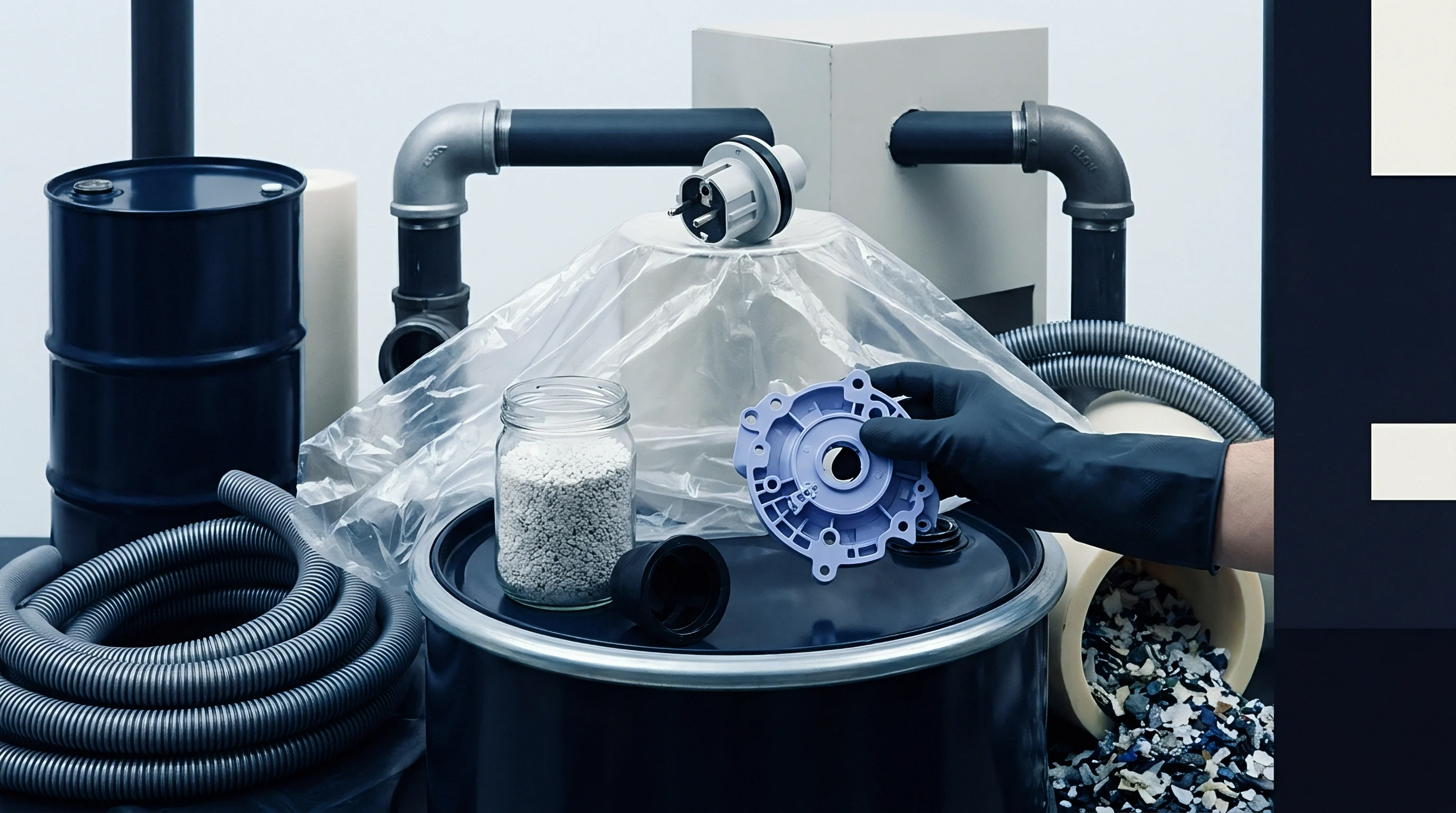
Post-consumer polyolefin streams carry residual UV-curable ink components from labels, printed overwraps, and decorated bottles. Mechanical recycling sorts, washes, and melts these plastics, but high-density polyethylene and polypropylene readily absorb persistent organic contaminants during service life and subsequent reprocessing. Inks applied to outer packaging enter the recycled melt through unremoved print, direct melting of decorated film scraps, and contact pressure during reel storage.
Among cured radiation formulations, photoinitiators are by far the most mobile low-molecular-weight fractions. They absorb UV light to initiate polymer cross-linking during printing, yet unreacted residues migrate easily through polyolefin matrices.
The specific photoinitiators detected in recycled polyolefins reflect the original converting methods and packaging formats. Type I systems undergo unimolecular cleavage under UV light, generating radicals directly. Type II systems rely on a bimolecular reaction, pulling hydrogen atoms from tertiary amine synergists.
Both chemistries feature aromatic structures and volatile groups that survive mechanical washing and extrusion heat. In baled post-consumer polyolefins, benzophenone, isopropylthioxanthone, 2-ethylhexyl-4-(dimethylamino)benzoate, and 4-methylbenzophenone show up regularly, driven by decades of widespread use in flexo and offset inks on cartons and films.
Recycled polyolefin flakes processed at two hundred forty degrees Celsius retain over sixty percent of their original benzophenone content through matrix entrapment.
Conventional mechanical recycling cannot strip these molecules because polyolefins are naturally lipophilic. Low-density polyethylene has substantial free volume, allowing photoinitiators to dissolve into the bulk polymer during washing and storage. Vacuum degassing in recycling extruders pulls off low-boiling volatile organic compounds, but heavier photoinitiators remain dissolved in the melt.
The resulting pellets contain parts-per-million levels of photoinitiators dispersed throughout the polymer matrix.

Type I and Type II Photoinitiators in Flexible Packaging
Alpha-cleavage photoinitiators like Irgacure 184 and Irgacure 651 split directly into free radicals on irradiation, leaving cleavage products like benzoyl radicals and alkyl fragments in the ink layer. Unreacted parent compounds also linger in cured print at concentrations between one and five percent by weight. Shredded printed films introduce these residues directly into the recycling extruder.
Meanwhile, Type II systems like benzophenone require amine synergists such as ethyl 4-(dimethylamino)benzoate to cure efficiently. Incomplete curing ~ often caused by uneven UV exposure across high-speed web presses ~ leaves substantial fractions of both the photoinitiator and synergist unconsumed.
Rigid post-consumer HDPE packaging, such as milk and detergent bottles, shows a different contamination pattern than printed film. Rigid containers use direct print, stretch sleeves, or pressure-sensitive adhesive labels. Float-sink tanks remove loose sleeves during density separation, but direct print and label adhesive residues carry straight through to the grinder.
Benzophenone contamination is widespread across post-consumer HDPE flake sorted from curbside household waste. In unblended post-consumer resin flakes, residual photoinitiator concentrations often exceed regulatory specific migration limits for food contact.
Set-Off Mechanisms in Roll-to-Roll Converting
Winding printed film tightly onto reels forces uncured ink chemistry from the outer surface against the unprinted, food-contact inner face. This set-off transfers photoinitiators directly to the contact layer long before the film is formed into packages or filled. When these flexible films are recycled, contaminants enter from both the printed exterior and the set-off interior.
Set-off migration during converting puts photoinitiators deep into the inner polymer layer, where surface wash cycles cannot reach them.
Extrusion heat during mechanical recycling further alters these ink residues. At melt temperatures between two hundred and two hundred sixty degrees Celsius, thermally sensitive photoinitiators break down. Isopropylthioxanthone generates secondary sulfur-containing decomposition products, while hydroxyacetophenones yield substituted benzoic acid derivatives.
Mechanical recycling turns known photoinitiator formulations into complex blends of parent molecules and uncharacterized non-intentionally added substances.
| Chemical Compound | CAS Registry Number | Molecular Mass (g/mol) | Specific Migration Limit (mg/kg food) | Primary Contamination Origin |
|---|---|---|---|---|
| Benzophenone | 119-61-9 | 182.22 | 0.60 | Offset ink set-off, paperboard coatings |
| 4-Methylbenzophenone | 134-84-9 | 196.25 | 0.60 (sum limit) | Flexographic film inks, surface print |
| 2-Isopropylthioxanthone (ITX) | 5495-84-1 | 254.35 | 0.05 | Screen and offset inks, rigid labels |
| 4-Isopropylthioxanthone (ITX) | 83846-86-0 | 254.35 | 0.05 (sum limit) | Screen and flexo inks, flexible film |
| Irgacure 907 (2-Methyl-1-4-methylthiophenyl-2-morpholinopropan-1-one) | 71868-10-5 | 279.40 | 0.05 | UV inkjet, high-speed flexo inks |
| Ethyl 4-(dimethylamino)benzoate (EDB) | 10287-53-3 | 193.24 | 0.05 | Co-initiator in Type II systems |
| Limits defined under European Commission Regulation EU 10/2011 Annex I as amended for plastic materials intended for food contact. | ||||
The accumulation of ink residues fundamentally compromises the chemical suitability of recycled polyolefins for regulated packaging. European food contact rules prohibit detectable migration of substances classified as carcinogenic, mutagenic, or reprotoxic. Furthermore, cross-contamination in collection bales introduces industrial print residues, wood finishes, and electronic packaging adhesives into post-consumer packaging streams, bringing in photoinitiators never authorized for food use.
Automated optical sorting cannot reliably isolate food-contact polyolefins from general household packaging. Near-infrared sorters readily differentiate PET, HDPE, and PP, but they cannot tell whether an HDPE container held fresh milk or motor oil. Consequently, heavily printed non-food containers pass directly into recycling lines alongside food packaging, elevating background photoinitiator levels in the finished pellets.
Photoinitiators enter post-consumer polyolefins through several distinct mechanisms across converting, product use, and recycling:
- Direct Ink Melting occurs when printed outer films and decorated labels pass uncleaned through grinding machinery directly into the primary extrusion feed hopper.
- Gas-Phase Transfer takes place inside storage silos where volatile benzophenone molecules evaporate from highly contaminated flakes and condense onto clean polyolefin surfaces.
- Solvent-Assisted Penetration happens during aqueous washing cycles when warm water and surfactants increase polyolefin swell ratios, enabling dissolved photoinitiators to migrate deeper into the polymer core.
- Mechanical Embedment results from high-shear compaction where rigid ink flakes are pressed physically into softened polyolefin particles prior to melt filtration.
Converters processing post-consumer resin must address the persistence of these compounds. Hot or cold water washes with alkaline detergents remove surface dirt and loose ink, but they leave the molecules absorbed within amorphous polyolefin domains untouched. High-temperature vacuum decontamination strips a fraction of the volatile load, but removing higher-molecular-weight photoinitiators entirely at commercial production speeds remains an unresolved engineering problem.
Low-level benzophenone signals are often dismissed as harmless legacy ink traces that disappear during thermal blow molding.


Vapor
Accurate extraction of organic migrants from high-density polyethylene requires swelling or dissolving the polymer. Ambient surface rinses recover less than five percent of internal photoinitiators from recycled pellets because crystalline domains hinder solvent penetration. Quantitative analysis requires an organic solvent system that expands the amorphous polyolefin structure without dropping heavy polymer chains out of solution during liquid chromatography.
Microwave-assisted solvent extraction, accelerated solvent extraction, and ultrasonic dissolution are the standard methods used to pull these analytes into solution prior to analysis.
Extraction efficiency depends on solvent polarity and how selectively the solvent swells the matrix. Non-polar solvents like hexane and cyclohexane swell polyolefins effectively, but they co-extract low-molecular-weight oligomers ranging from carbon-12 to carbon-40. These co-extracted waxes foul chromatographic columns, cause severe ion suppression in mass spectrometry sources, and produce baseline drift in GC detectors.
Conversely, polar solvents such as methanol or acetonitrile do not dissolve polyolefin waxes, but they fail to swell the matrix, resulting in poor photoinitiator recovery. Blends of dichloromethane and toluene offer a practical balance, swelling the polymer while maintaining solubility across Type I and Type II targets.
Microwave extraction using a two-to-one toluene and methanol solvent mixture at one hundred ten degrees Celsius yields complete recovery of embedded isopropylthioxanthone within twenty minutes.
Sample preparation requires thorough particle size reduction before extraction. Pellets ground to fine powders using cryogenic impact milling increase the polymer surface area by two orders of magnitude. Grinding under liquid nitrogen also protects thermally labile compounds like Irgacure 907 from frictional heating and prevents polymer gumming.
The resulting sub-millimeter powders shorten diffusion paths, cutting necessary solvent extraction times from twenty-four hours to under thirty minutes.
Microwave Assisted Solvent Extraction Protocols
Closed-vessel heating in dichloromethane or sub-critical ethanol speeds the extraction of entrapped UV absorbers from recycled flake. Microwave energy heats the solvent-polymer slurry rapidly under pressure, raising solvent temperatures twenty to forty degrees above their normal boiling points. At one hundred degrees Celsius, HDPE swells substantially, allowing entrapped photoinitiators to diffuse into the liquid phase.
Extraction vessel pressures must be controlled carefully to prevent rapid solvent vaporization.
Solvent-to-polymer ratios require careful balancing to achieve thorough extraction without excessive sample dilution. Ten milliliters of solvent per gram of cryo-milled powder provides an adequate concentration gradient for quantitative recovery. After microwave heating, the liquid extract is separated from insoluble polymer residues by PTFE membrane filtration.
Aliquots are then concentrated under a gentle stream of nitrogen prior to chromatographic injection.

Gas Chromatography Mass Spectrometry Parameters
Splitless injection maintained at two hundred eighty degrees Celsius prevents thermal degradation of fragile thioxanthone derivatives. Gas chromatography coupled with triple quadrupole mass spectrometry provides high sensitivity for volatile and semi-volatile photoinitiators such as benzophenone, 4-methylbenzophenone, and ethyl 4-(dimethylamino)benzoate. A non-polar five-percent phenyl-arylene methylpolysiloxane capillary column with high-purity helium carrier gas separates the target photoinitiators from co-extracted polyolefin oligomers based on boiling point and polarity.
Electron ionization at seventy electron volts produces reproducible fragmentation patterns for target identification. Selected reaction monitoring isolates compound-specific precursor-to-product ion transitions, filtering out background noise from co-extracted polyolefin waxes. Isotope dilution using deuterated standards, such as benzophenone-d10, compensates for analyte losses across extraction, evaporation, and injection.
Quantitative analytical workflows for extracting photoinitiators from post-consumer polyolefin resins follow a strict operational sequence:
- Cryogenic grinding of polyolefin pellets under liquid nitrogen to produce uniform powders passing a five-hundred-micrometer sieve.
- Accurate weighing of five hundred milligrams of milled powder into high-pressure PTFE microwave extraction vessels.
- Addition of internal standard spiking solution containing deuterated photoinitiators at known concentrations.
- Addition of ten milliliters of optimized dichloromethane and methanol extraction solvent mixture.
- Sealing vessels and executing microwave extraction at one hundred degrees Celsius for twenty minutes.
- Cooling vessels to room temperature and filtering extracts through zero-point-two-micrometer PTFE syringe filters.
- Concentrating filtrate under a gentle stream of dry nitrogen gas at thirty-five degrees Celsius.
- Reconstituting dried residue in one milliliter of chromatographic-grade acetonitrile prior to instrumental analysis.
Routine validation of gas chromatography methods shows recovery rates between seventy-eight and ninety-two percent for isopropylthioxanthone in spiked polypropylene samples. Solvent selection dictates recovery: moving from pure methanol to a dichloromethane-acetonitrile mixture eliminates analyte loss from vessel wall adsorption. Methods must be validated for HDPE, LDPE, and PP separately, as differing polymer crystallinities substantially alter diffusion kinetics.
Matrix effects in LC-MS/MS remain a major source of quantitation error. Atmospheric pressure chemical ionization consistently outperforms electrospray ionization for polyolefin extracts with high residual wax content. Electrospray sources suffer from severe signal suppression as co-eluting oligomers compete for charge in the droplet spray.
APCI vaporizes the mobile phase before chemical ionization takes place, providing stable signal response across varying resin grades.
Extraction yields improve when the solvent boiling point aligns closely with the polymer softening temperature without inducing total matrix collapse.


Migration
Mass transport of low-molecular-weight additives through polyolefins follows Fickian diffusion. Photoinitiators dissolved in HDPE or PP migrate toward the package surface and partition into food or simulant liquids. The rate of transfer depends on initial contaminant concentration, the diffusion coefficient in the specific polymer, storage temperature, and the partition coefficient between the polymer and food.
Compared to polar polymers like PET, polyolefins offer low barrier resistance to organic migrants because their flexible aliphatic chains and low glass transition temperatures allow high molecular mobility.
Diffusion modeling provides conservative migration estimates for regulatory exposure assessments. Fick’s second law, paired with Arrhenius temperature equations, models migration based on migrant molecular weight and polymer-specific diffusion parameters. These polymer barrier coefficients, or A-star values, are higher in polyethylene than in polypropylene, reflecting faster migrant transport under identical storage conditions.
When modeling photoinitiator migration from recycled layers, diffusion calculations typically assume complete solubility in the food matrix to reflect worst-case transfer.
Testing high-density polyethylene containing ten milligrams per kilogram of benzophenone into ten percent ethanol at forty degrees Celsius for ten days results in specific migration exceeding the regulatory limit of zero-point-six milligrams per kilogram.
Simulant selection determines the severity of migration testing under European rules. Ten percent ethanol simulates aqueous foods, three percent acetic acid models acidic foods, twenty percent ethanol represents alcoholic products and milk, while vegetable oil or poly(2,6-diphenyl-p-phenylene oxide), known as Tenax, serves as the simulant for dry, fatty foods. Polyolefins swell considerably when exposed to vegetable oil or high-ethanol mixtures.
This solvent swelling artificially accelerates migrant diffusion, leading to overestimates of real-world migration unless test parameters are carefully controlled.

Food Simulant Selection for Polyolefin Contact
Modified polyphenylene oxide is the standard solid sorbent for dry, fatty food contact testing under European protocols. Tenax traps volatile and semi-volatile photoinitiators at elevated temperatures without swelling the polyolefin test specimen. Exposure at sixty degrees Celsius for ten days simulates long-term ambient storage of dry fatty goods.
After testing, photoinitiators captured on the Tenax are extracted with diethyl ether or acetone for chromatographic quantitation.
Aqueous simulants like ten percent ethanol show low affinity for hydrophobic photoinitiators. Compounds like 2-ethylhexyl-4-(dimethylamino)benzoate are virtually insoluble in water, leaving the partition equilibrium heavily skewed toward the polymer phase. However, when ethanol concentrations reach fifty percent ~ simulating high-fat dairy or spirits ~ the partition coefficient drops sharply, driving rapid contaminant migration into the liquid.
Compliance dossiers must always specify the simulant used; passing a test in ten percent ethanol provides no evidence of safety for fatty food packaging.

Temperature and Exposure Time Profiles
Standard testing of ten days at forty degrees Celsius simulates ambient shelf life for liquid foods in polyolefin containers. Testing at seventy degrees Celsius for two hours represents hot-fill conditions, and one hundred degrees Celsius models retort sterilization. Increasing the test temperature accelerates diffusion according to Arrhenius behavior, but excessive heat can disrupt polyolefin crystalline structure and distort results.
HDPE undergoes significant structural annealing above eighty degrees Celsius, altering its free volume and changing migrant diffusion rates unpredictably.
Surface-area-to-volume conventions determine how measured migration values translate into regulatory compliance figures. European rules assume a standard ratio of six square decimeters of packaging per kilogram of food. In small-format packaging ~ such as single-serve condiment pouches or portion cups ~ the actual surface-area-to-volume ratio is much higher, which concentrates migrating photoinitiators in the food.
Compliance evaluations must calculate migration using the package’s actual geometry rather than relying on standard EU defaults.
Failure modes in polyolefin migration compliance stem from specific physical and chemical mechanisms:
- Partition Coefficient Underestimation occurs when analytical testing uses purely aqueous simulants for food products containing emulsified fat fractions, underestimating actual migrant transfer by orders of magnitude.
- Temperature-Induced Polymer Annealing happens during high-temperature testing when polyolefin crystalline domains re-orient, altering diffusion rates away from real-world shelf life behaviors.
- Functional Barrier Degradation takes place when thin virgin polyolefin capping layers dissolve or crack under environmental stress cracking agents, exposing contaminated recycled core layers directly to food media.
- Simulant Sorbate Saturation arises during Tenax exposure when high concentrations of volatile organic compounds saturate the porous polymer bed, preventing quantitative collection of migrating photoinitiators.
Functional barriers are designed to prevent contaminant transport from recycled polyolefin layers into food. Multi-layer coextrusion places a virgin polymer or barrier resin, such as EVOH, between the recycled core and the food contact surface. Barrier performance depends on layer thickness, ambient temperature, shelf life, and the diffusion coefficient of target photoinitiators in the barrier polymer.
While EVOH effectively blocks non-polar organic molecules, virgin polyolefin layers only delay migration. Low-molecular-weight photoinitiators like benzophenone break through a one-hundred-micrometer virgin PE layer in a matter of months at room temperature.
Miscalculating migrant diffusion rates across recycled polyolefin layers results in immediate rejection of food packaging lots at distribution centers, forcing expensive repackaging and product destruction.


Beam
Identifying target and non-target photolysis products requires high-resolution hybrid mass spectrometry. Gas chromatography with high-resolution time-of-flight mass spectrometry and liquid chromatography with orbitrap detection provide exact mass accuracy below two parts per million. This precision allows unambiguous formula assignment for unknown chromatographic peaks formed during printing and recycling.
Standard single-quadrupole instruments lack the resolving power to separate isomeric cleavage products or resolve target photoinitiators from co-eluting polyolefin matrix oligomers of identical nominal mass.
Non-target screening characterizes the complex chemical background of post-consumer polyolefins. Data-independent acquisition captures full-scan accurate precursor spectra and fragment ions simultaneously throughout the run. Automated deconvolution software separates overlapping signals and queries fragmentation patterns against commercial databases containing thousands of additives, inks, and photolysis products.
When database matches fail, structural identification relies on accurate fragment masses, isotopic abundance patterns, and collision cross-section data from ion mobility spectrometry.

Why Do Photoinitiator Degradation Products Elude Standard Screening?
Photolytic cleavage yields fragments that are absent from standard commercial mass spectral databases. During ink curing, Type I photoinitiators split into radical intermediates that recombine with oxygen, residual solvents, or resin additives. These secondary reactions form substituted alkylbenzoates, phenylglyoxylates, and chlorinated aromatics derived from wash-water sanitizers.
Because standard GC-MS libraries focus primarily on parent industrial chemicals, automated library matching often misidentifies these cleavage products or dismisses them as baseline noise.
Melt extrusion during recycling generates additional thermal decomposition products. High-shear heating in the extruder barrel triggers elimination reactions that produce volatile alkylaromatics and quinone derivatives. These compounds ionize readily in electron ionization sources but lack reference spectra in standard Wiley or NIST databases.
Consequently, non-target screening packages flag them as unassigned non-intentionally added substances (NIAS), requiring labor-intensive toxicological evaluation.
| Instrumental Technique | Target Compound Suitability | Limit of Quantitation (LOQ) | Matrix Interference Susceptibility | Primary Operational Constraint |
|---|---|---|---|---|
| GC-EI-MS/MS (Triple Quadrupole) | Volatile Type I & II photoinitiators (Benzophenone, MBP, EDB) | 0.005 mg/kg resin | Low (MRM mode eliminates wax background) | Thermal degradation of heat-sensitive analytes in injector port |
| LC-ESI-MS/MS (Triple Quadrupole) | Polar, high molecular weight photoinitiators (Irgacure 907, ITX) | 0.002 mg/kg resin | High (Ion suppression from co-extracted oligomers) | Requires extensive sample cleanup via solid phase extraction |
| GC-Q-TOF-MS (High Resolution) | Non-target screening of unknown photolysis fragments | 0.020 mg/kg resin | Moderate (Exact mass filters out matrix ions) | Complex data processing required for formula assignment |
| LC-Orbitrap-MS (High Resolution) | Non-volatile degradation products and NIAS identification | 0.010 mg/kg resin | Low to Moderate (High resolving power overcomes interferences) | High capital equipment cost and specialized operational expertise |
Quantitation Limits and Matrix Interferences
Co-extracted oligomers from recycled polypropylene obscure low-level analyte peaks in single-quadrupole mass detectors. Solvent extraction pulls out homologous series of unsaturated hydrocarbons that create dense background signals across low mass ranges. Triple-quadrupole tandem mass spectrometry in multiple reaction monitoring mode cuts through this interference by selecting a target precursor ion, fragmenting it with argon collision gas, and monitoring a specific product ion.
This double mass filtering delivers signal-to-noise ratios sufficient to quantify photoinitiators at part-per-billion levels directly in crude extracts.
Achieving limits of quantitation below zero-point-zero-one milligrams per kilogram for isopropylthioxanthone in post-consumer polypropylene requires triple quadrupole LC-MS/MS in positive electrospray mode with matrix-matched calibration standards.
Solid-phase extraction removes co-extracted waxes prior to LC-MS analysis. Passing crude polyolefin extracts through silica or reversed-phase C18 cartridges retains non-polar polymer oligomers while selectively eluting polar and semi-polar photoinitiators. This cleanup step prevents ion source fouling, reduces peak tailing, and extends analytical column lifetime from roughly fifty injections to over one thousand injections.
Method validation for recycled packaging analysis requires verifying linearity, matrix recovery, repeatability, and detection limits under standard analytical protocols. Solvent-only calibration curves give falsely optimistic quantitation due to matrix enhancement in MS sources. Analytical labs must use matrix-matched standards prepared in additive-free virgin polyolefin resins, or use stable-isotope dilution to ensure accurate quantification in enforcement testing.
Whether high-resolution mass spectrometry can definitively differentiate between harmless degradation fragments and toxic photolysis isomers in complex post-consumer matrices remains an active area of dispute among analytical chemists.


Paperwork
Demonstrating compliance for recycled food-contact plastics requires an unbroken chain of laboratory evidence. Under European Union Regulation EC 1935/2004, materials must not transfer constituents into food at levels that endanger human health or unacceptably change food composition. For recycled plastics, Commission Regulation EU 2022/1616 regulates recycling processes directly, requiring novel processes to undergo formal safety evaluation by the European Food Safety Authority.
Declarations of Compliance for recycled polyolefins must explicitly specify permitted conditions of use, including contact duration, temperature limits, and food types.
Statements accompanying recycled resins must define the operational scope and validation limits of the recycling process. Supporting documentation dossiers must contain full analytical screening reports covering both target photoinitiators and unidentified NIAS. A generic declaration asserting compliance with base polymer directives without lot-specific analytical data will not hold up during food authority inspections or port-of-entry audits.

Declarations of Compliance under European Rules
Declarations of Compliance for post-consumer polyolefin pellets must link the material directly to audited decontamination lines. The compliance file has to declare whether the resin comes from a closed-loop system, like returnable crates, or open-loop curbside collection. For open-loop polyolefins, testing must demonstrate that the decontamination process achieves at least ninety-nine percent cleaning efficiency across challenge surrogates representing various volatilities and polarities, including volatile organic compounds and semi-volatile photoinitiators like benzophenone.
Enforcement authorities audit the underlying technical dossier rather than accepting summary declarations at face value. The dossier must contain test reports from accredited laboratories following Regulation EU 10/2011 protocols. These reports must document the simulant used, surface-to-volume ratio, analytical limits of quantitation, and all target analytes screened.
Leaving regulated photoinitiators off the testing panel invalidates the declaration for food-contact applications.

Non-Intentionally Added Substances Threshold Calculations
Evaluating uncharacterized chromatographic peaks relies on the Threshold of Toxicological Concern (TTC) approach established by EFSA. Unidentified NIAS detected during GC-MS or LC-MS screening are assigned safety thresholds based on structural classification or worst-case toxicity assumptions. If an unknown substance cannot be structurally identified, it must be treated as a potential genotoxin, enforcing a specific migration threshold of zero-point-zero-one-five micrograms per kilogram of food.
| Chemical Classification | Assessment Framework | Migration Threshold (mg/kg food) | Toxicological Basis | Compliance Verification Action |
|---|---|---|---|---|
| Authorized Photoinitiators (Annex I EU 10/2011) | Specific Migration Limit (SML) | 0.05 to 0.60 | Subchronic toxicity studies and EFSA opinions | Targeted LC-MS/MS or GC-MS/MS quantification against certified standards |
| Cramer Class I (Low Toxicity) | Threshold of Toxicological Concern (TTC) | 1.80 | Simple chemical structures, rapid metabolism | Structural assignment via high-resolution MS and expert panel review |
| Cramer Class III (High Toxicity) | Threshold of Toxicological Concern (TTC) | 0.09 | Complex aromatic structures, reactive functional groups | Quantification below 0.09 mg/kg or chemical identification to lower class |
| Potential Genotoxins (Unidentified NIAS) | Genotoxic TTC Threshold | 0.00015 (0.15 µg/kg) | Structural alerts for DNA reactivity or unknown chemical structure | Exhaustive chemical identification or functional barrier implementation |
Calculating consumer exposure requires converting chromatographic peak areas into concentration estimates using surrogate response factors. When semi-quantifying unidentified photoinitiator fragments, analysts calibrate against low-responding compounds like dicyclohexyl phthalate to ensure conservative overestimation of contaminant concentrations. If the calculated migration of an unidentified peak exceeds the applicable toxicological threshold, the resin batch cannot be cleared for food contact without secondary structural characterization proving lower toxicity.
Audit verification procedures for post-consumer resin compliance files demand systematic review of four mandatory analytical documentation components:
- Chain of Custody Certificates confirming the post-consumer feedstock origin and verifying segregation from non-packaging industrial plastic waste streams.
- Challenge Test Validation Reports proving that the specific recycling equipment achieves required decontamination efficiency for volatile and semi-volatile chemical markers.
- Target Screening Analytical Certificates showing quantitative results for all photoinitiators listed in Annex I of Regulation EU 10/2011 using validated MS methods.
- Non-Target NIAS Evaluation Dossiers documenting high-resolution chromatographic screening and toxicological threshold calculations for all unassigned spectral peaks.
Declarations of compliance for recycled resins must account for secondary cleavage products alongside parent compounds. A declaration that lists only parent benzophenone while ignoring known cleavage products like methyl benzoate presents an incomplete safety profile that fails under regulatory cross-examination.
Inserting a requirement for lot-specific non-target LC-MS screening reports directly into raw material purchase contracts shifts the financial liability for non-compliant migration back onto the resin recycler.


Tariff
Placing non-compliant food packaging on European markets risks product recalls, customs rejections, and commercial penalties. National market surveillance authorities conduct retail sampling programs, analyzing packaging for unauthorized photoinitiator migration using high-resolution mass spectrometry. Detecting benzophenone migration in excess of zero-point-six milligrams per kilogram from a food container triggers mandatory product withdrawal, public safety alerts, and administrative fines scaled to the volume of non-compliant goods.
Importers bear primary legal responsibility for food-contact compliance when bringing packaging materials into the European Union. Under EU food law, the entity listed on the customs import declaration assumes liability for ensuring compliance with Regulation EC 1935/2004. Relying on an overseas vendor’s self-issued certificate provides no defense if border authorities find migrating photoinitiators during screening.
Importers must maintain accredited third-party test reports on file before submitting customs declarations.

Extended Producer Responsibility Fee Modulation
Packaging fees under Extended Producer Responsibility (EPR) schemes scale with the verified quality and food-contact compliance of the recycled content. European member states levy eco-contributions on packaging producers based on recyclability and post-consumer resin content. Packaging incorporating post-consumer polyolefins qualifies for fee reductions, provided the recycled content is certified for direct food contact.
Failing to verify photoinitiator compliance forfeits these discounts, raising producer fees by hundreds of Euros per metric ton of packaging placed on the market.
Member states also enforce non-recycled packaging levies, such as the European Union plastic packaging levy of eight hundred Euros per metric ton of non-recycled plastic waste. To qualify for tax exemptions, converters must prove that incorporated post-consumer resins meet food-contact safety standards. Material disqualified due to photoinitiator contamination is reclassified as non-recycled industrial grade, triggering retroactive tax bills and interest penalties across entire manufacturing runs.

Supply Chain Contract Mechanisms and Liability Clauses
Raw material supply contracts increasingly establish strict batch acceptance criteria and mandatory analytical testing frequencies for incoming recycled resin. Contracts between recyclers and packaging converters must define clear limits on total photoinitiator content. Standard agreements include rejection clauses allowing converters to refuse shipments if spot checks detect total benzophenone derivatives above one milligram per kilogram of resin.
Commercial risk allocation relies on indemnification terms tied directly to laboratory test results. Converters write indemnification clauses forcing resin suppliers to pay all costs associated with product recalls, packaging line downtime, and lost inventory if post-consumer polyolefins cause finished package migration failures. Without lot-specific analytical certificates attached to every commercial shipment, converters bear the entire financial exposure when food brands reject finished packaging lots.
Incorporating mandatory lot-by-lot photoinitiator screening clauses into post-consumer resin supply contracts increases raw material procurement costs by three percent but eliminates total exposure to retail product recall penalties.
The financial disparity between upfront batch testing and post-market failure is substantial. Running target and non-target photoinitiator screening on a composite resin sample costs around eight hundred Euros at an accredited testing laboratory. In contrast, recalling a contaminated food packaging batch from retail shelves exceeds five hundred thousand Euros in reverse logistics, product destruction, legal fees, and brand damage.
Investing in lot-level chromatographic testing is straightforward risk management for packaging converters.
The true landed cost of post-consumer polyolefins includes both base pellet pricing and compliance testing expenses. While post-consumer HDPE pellets trade at a discount compared to virgin resin, adding decontamination validation, challenge testing, and lot-by-lot mass spectrometry narrows that gap. Converters who skip analytical verification to protect margins face severe financial exposure when market surveillance authorities detect migrating photoinitiators in commercial packaging.
Managing compliance across post-consumer polyolefin streams relies on combining rigorous laboratory extraction data with strict supplier liability terms before resin enters the converter’s extrusion hopper.