Recycled Polyolefin Non Intentionally Added Substance Analytical Screening Frameworks
Recycled polyolefin screening couples non-targeted GC and LC mass spectrometry with TTC toxicological limits to clear unknown migrants for food packaging.

Extract
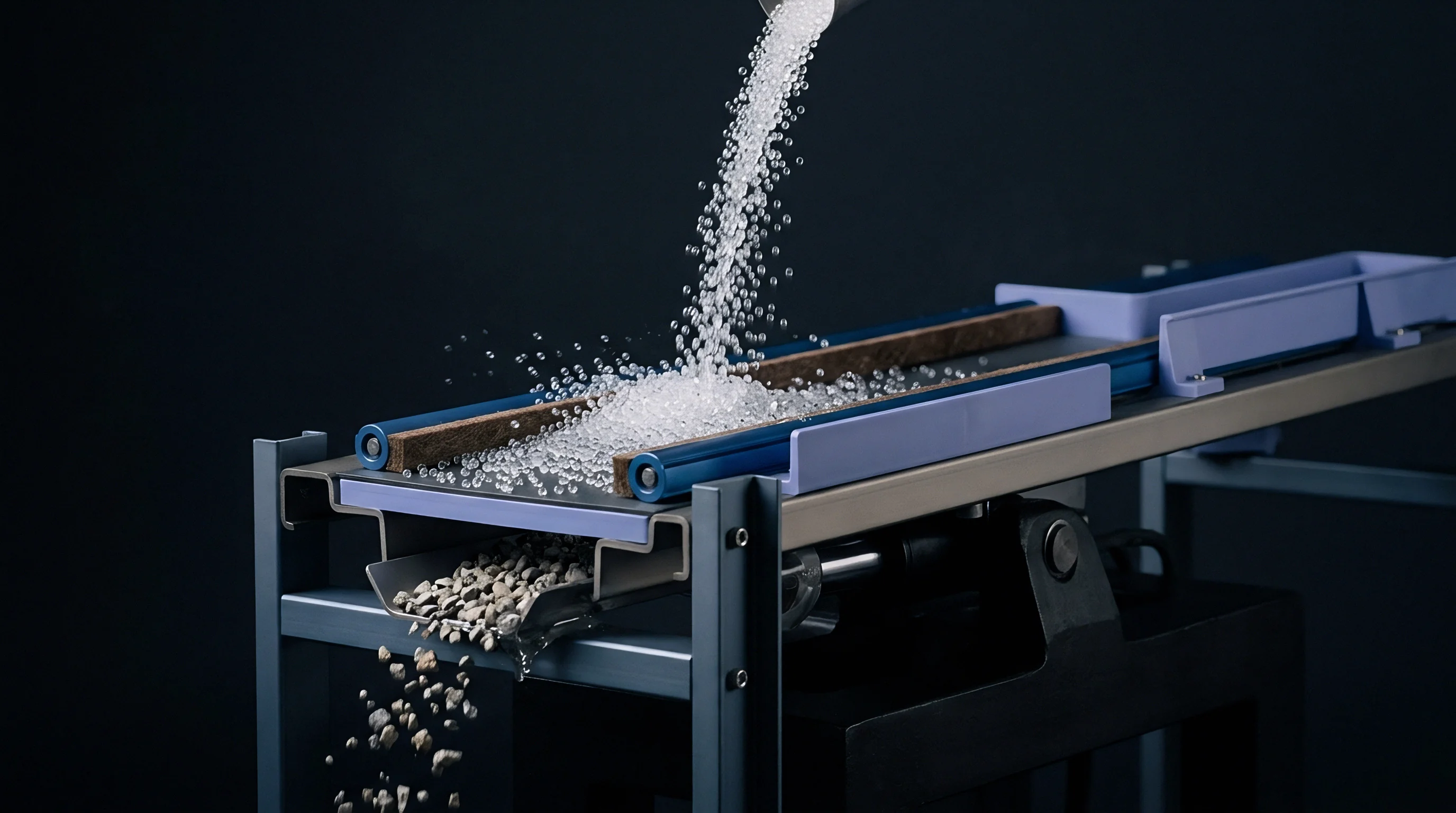
Analytical screening of recycled polyolefins for non-intentionally added substances encounters a fundamental barrier at the solvent boundary: polypropylene and polyethylene dissolve only in hot aromatic or chlorinated media, yet whole-polymer dissolution brings high-molecular-weight oligomeric waxes into the chromatographic injector. Gas chromatography coupled to high-resolution time-of-flight mass spectrometry requires an analyte transfer without the polymer matrix. Solid-liquid extraction using refluxing dichloromethane, ultrasonic extraction in methanol or hexane, and swollen-polymer extraction with isopropanol isolate volatile and semi-volatile substances while leaving the polyolefin backbone intact.
When an analytical laboratory dissolves a post-consumer polypropylene sample directly in 1,2,4-trichlorobenzene at 140 degrees Celsius for gel permeation chromatography, subsequent mass spectrometry of the raw liquor fouls the ion source within ten injections. Clean extraction chemistry balances solvent swell against additive stripping.
The matrix barrier determines how laboratories distinguish intentional polyolefin additives from degradation products and legacy contaminants. Direct liquid injection of polymer extracts deposits non-volatile oligomers that produce severe ghost peaks and chromatographic tailing. Headspace solid-phase microextraction captures volatile hydrocarbons below carbon number twelve, completely bypassing the non-volatile polyolefin fraction.
For semi-volatile species between carbon number ten and carbon number thirty-two, microwave-assisted extraction with dichloromethane for twenty minutes at 40 degrees Celsius balances extraction recovery against matrix co-elution. Post-consumer high-density polyethylene flakes subjected to pressurized liquid extraction using a mixture of acetone and cyclohexane yield concentrated extracts that preserve ester, amine, and phosphite transformation products for characterization.
A total migration limit of ten milligrams per square decimeter under Regulation EU 10/2011 provides no evidentiary safety margin when toxicological assessment thresholds sit at ten micrograms per kilogram of food.
Laboratories quantify identified and unknown chromatographic peaks using semi-quantitative surrogates. A single internal standard such as deuterated benzophenone or 2,6-di-tert-butyl-4-methylphenol serves as a response calibrator across vast chromatographic ranges. Electron ionization yields fragmentation spectra that permit matching against commercial spectral libraries, yet library match factors exceeding 800 frequently deliver incorrect isomer structures.
Liquid chromatography coupled to electrospray ionization quadrupole time-of-flight high-resolution mass spectrometry introduces ionization suppression from co-eluting oxidized oligomers, causing five-fold shifts in apparent substance concentrations. Accurate quantification demands standard additions or matrix-matched calibration curves.


Fraction

Chromatographic Separation Architectures
Chromatographic workflows split according to the physical properties of the target migrants. Comprehensive two-dimensional gas chromatography resolves the intense background hump of polyolefin oligomeric saturated hydrocarbons that routinely blinds single-quadrupole instruments. A mid-polarity primary column linked via a cryogenic quad-jet modulator to a non-polar secondary column disperses linear, branched, and cyclic oligomers along distinct retention coordinate planes.
Volatile contaminants such as residual limonene from consumer detergent packaging separate cleanly from synthetically derived C12 to C16 aliphatic series. Gas chromatography covers species up to approximately 500 Daltons, whereas liquid chromatography extends detection limits up to 1200 Daltons, capturing high-molecular-weight hindered amine light stabilizers and secondary phosphite degradants.
Reversed-phase ultra-high performance liquid chromatography paired with high-resolution orbitrap mass spectrometry tracks polar transformation species. Atmospheric pressure chemical ionization complements electrospray ionization, detecting non-polar alkylphenols and oxidized oligomers without extensive ion suppression. Mobile phases typically employ water and methanol modified with ammonium formate or formic acid to control adduct formation.
Acetonitrile induces crystallization of co-extracted wax fragments in narrow internal diameter tubing, causing system pressure trips during extended overnight sequence runs.

Spectral Deconvolution and Peak Annotation
Mass resolution exceeding 30,000 full width at half maximum at m/z 200 proves mandatory for unequivocal elemental composition assignment. The mass spectrometer resolves mass defects between isobaric organophosphorus compounds and oxygenated hydrocarbons, separating processing stabilizers from degradation pathways. Automated peak picking algorithms apply signal-to-noise cutoffs alongside chromatographic deconvolution parameters to avoid tracking thousands of polyolefin oligomer isomers as unique chemical entities.
The workflow aligns blank runs, virgin polymer references, and recycled feedstocks to flag peaks unique to post-consumer streams.
| Analyte Class | Sample Preparation | Instrument Configuration | Screening Detection Limit |
|---|---|---|---|
| Volatile organic compounds below C10 | Headspace solid-phase microextraction, 80 °C, 30 min | GC-MS with electron ionization | 0.005 mg/kg polymer |
| Semi-volatile contaminants C10 to C32 | Microwave-assisted extraction, CH2Cl2, 40 °C, 20 min | GCxGC-TOF-MS with transfer modulation | 0.02 mg/kg polymer |
| Polar degradation products and stabilizers | Ultrasonic extraction, isopropanol, 60 °C, 60 min | UHPLC-ESI-Orbitrap-HRMS | 0.01 mg/kg polymer |
| Oligomeric saturated hydrocarbons | Automated solvent evaporation, swollen n-hexane matrix | LC-GC-FID online coupling | 0.50 mg/kg polymer |
Identification confidence follows established evidentiary tiers. Retention time matching against authentic analytical reference standards establishes level one identification. Mass spectral fragmentation library matches cross-checked with retention indices provide level two identification.
Tentative identification through accurate mass elemental composition formulas without reference standards constitutes level three. Unknowns yielding reproducible accurate mass precursor and fragment patterns without unambiguous molecular formulas occupy level four. Risk assessors evaluate post-consumer recycled polyolefins heavily burdened with level three and level four unknowns.

Cleave

Thermal and Oxidative Degradation Mechanics
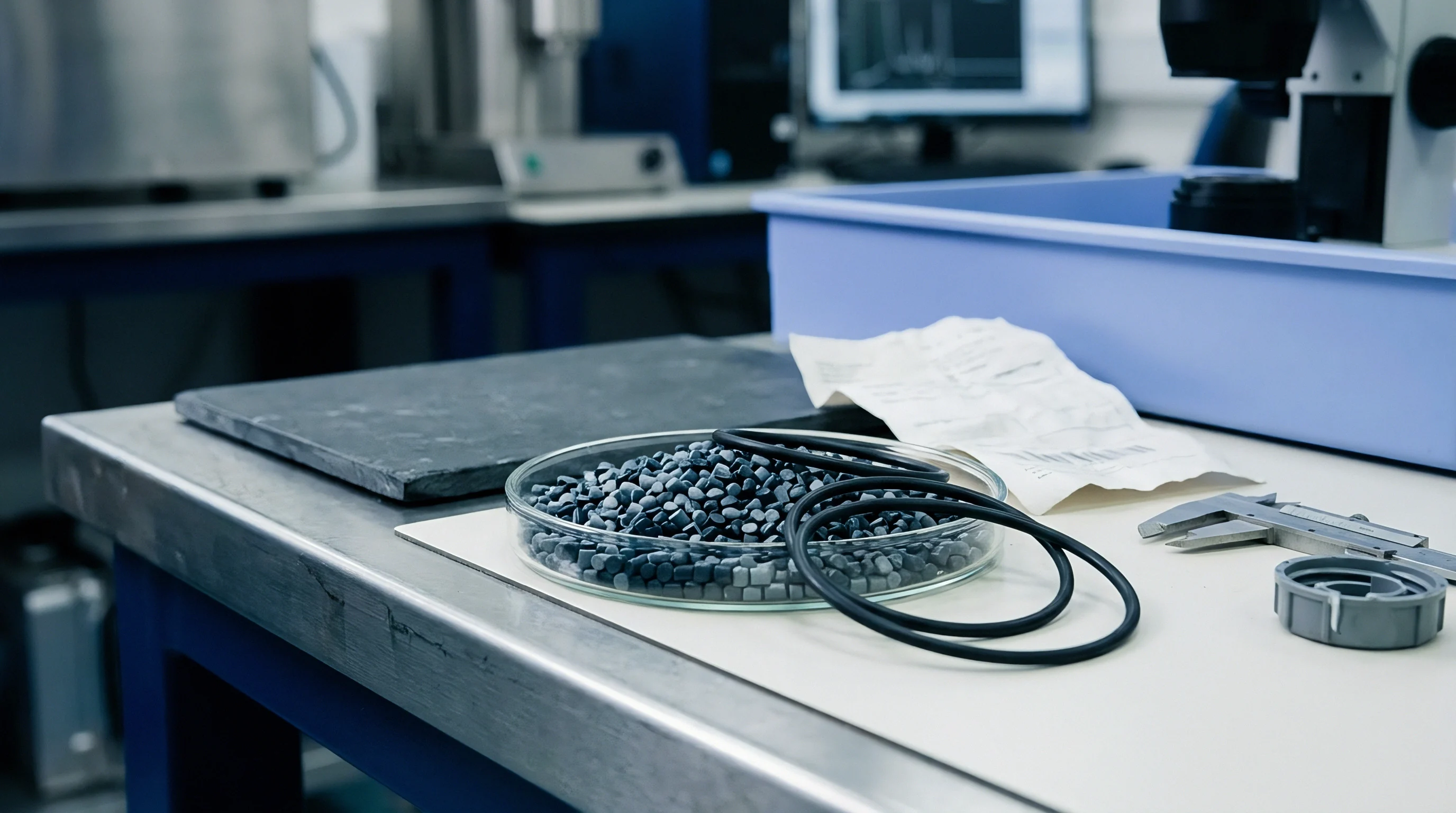
Repeated thermal compounding and extrusion mechanical shearing cleave polyolefin macromolecules, initiating free radical cascades. Secondary and tertiary carbon centers in polypropylene undergo hydrogen abstraction during processing, generating tertiary alkyl radicals. Reaction with dissolved oxygen forms unstable peroxy radicals that extract hydrogen from adjacent polymer backbones, generating hydroperoxides.
Homolytic cleavage of the hydroperoxide oxygen-oxygen bond produces alkoxy radicals, which subsequently undergo beta-scission. This scission breaks polymer chains and yields methyl ketones, aldehydes, and terminal vinyl groups.
Polyethylene exhibits a competing cross-linking mechanism alongside chain scission. Alkyl radicals combine through bimolecular termination reactions, creating long-chain branching structures that alter rheological melt flow indices. Processing stabilizers consume alkyl and peroxy radicals to halt chain breakdown.
Phenolic antioxidants, typified by pentaerythritol tetrakis(3-(3,5-di-tert-butyl-4-hydroxyphenyl)propionate), convert to quinone methides and oxidized bisphenols. Organophosphite process stabilizers, such as tris(2,4-di-tert-butylphenyl)phosphite, oxidize to corresponding phosphates through non-radical peroxide reduction. The presence of oxidized stabilizers directly proves that compounding cycles consumed functional antioxidant capacity.
A raw polymer screening report that records non-detectable migration without establishing the analytical limit of quantification relative to the specific migration threshold invalidates the packaging compliance declaration.
Decontamination extruders operating at 240 degrees Celsius to 280 degrees Celsius induce secondary degradation when residence times exceed three minutes. Volatile scission fragments vaporize under vacuum degassing systems, while higher-boiling rearrangement species concentrate in the bulk extrudate. Alkyl radical combinations yield unsaturated oligomers containing internal conjugated dienes, acting as reactive chromophores that impart yellow colorations to recycled resins.
Thermal de-volatilization zones fail to eliminate polar thermal transformation products that bind strongly to oxidized polymer matrices.

Exogenous Packaging Contaminants
Post-consumer polyolefin collection streams receive chemical burdens from packaged goods, printing inks, functional coatings, and logistics environments. Food-contact polyolefins absorb flavor compounds, personal care fragrance terpenes, and industrial chemicals during primary usage phases. Polypropylene containers absorb lipophilic limonene, linalool, and octanal, which penetrate the semi-crystalline amorphous zones and resist standard aqueous wash cycles.
Industrial waste fractions contribute plasticizers such as diisobutyl phthalate, flame retardants, printing photoinitiators, and biocides.
- Triaryl phosphate plasticizers originate from hydraulic fluid mists and polymer processing aids, introducing neurotoxic transformation hazards into non-food sorting streams.
- Benzophenone photoinitiators migrate from UV-curable printing systems applied to exterior surfaces of packaging films, transferring to inner contact layers during reel winding.
- Synthetic musk compounds persist from laundry detergents and personal care cosmetics, resisting high-temperature vacuum de-volatilization inside recycling extruders.
- Fatty acid methyl esters deposit from food residue lipid components, converting under thermal extrusion conditions into odorous aldehydes and conjugated volatile alkenals.
Cross-contamination during municipal sorting presents an acute technical obstacle. Polyolefin bottles previously containing non-food substances such as engine lubricants or agrochemicals pass near-infrared optical sorters if labeled incorrectly. Washing lines utilizing caustic soda at 85 degrees Celsius strip surface residues but cannot extract chemicals migrated deep into the plastic core.
Contaminants diffuse back toward the surface when recycled pellets undergo conversion into new packaging articles.


Hazard

Toxicological Thresholds and Structural Alerts
Evaluation of unidentified and semi-quantified substances depends upon the Threshold of Toxicological Concern concept formalised by regulatory food safety bodies. Substances with verified chemical structures are assigned to Cramer classes based on an established decision tree. Cramer Class I covers simple chemical structures with low oral toxicity profiles, carrying a human exposure threshold of 1800 micrograms per person per day, equivalent to 30 micrograms per kilogram of food assuming consumption of one kilogram of packaged food daily.
Cramer Class II covers intermediate toxicities with a threshold of 540 micrograms per person per day.
Cramer Class III encompasses complex chemical structures, reactive functionalities, and compounds containing heteroatoms, imposing an exposure threshold of 90 micrograms per person per day, or 1.5 micrograms per kilogram of food. Recycled polyolefin screening focuses intensely on substances displaying structural alerts for genotoxicity. Chemical entities containing aromatic amines, epoxides, alkyl halides, or alpha,beta-unsaturated carbonyls present potent mutagenic risks.
The threshold for potential genotoxic substances drops to 0.15 micrograms per person per day, translating into an analytical screening limit of 0.0025 milligrams per kilogram of food.

Exposure Calculations and Exposure Modeling
Migration evaluation requires quantitative translation from substance concentrations in the polymer matrix to potential exposure levels in consumed food. Migration modeling applies Fickian diffusion equations, using polymer diffusion coefficients and partition coefficients between the polymer and contact media. Low-density polyethylene exhibits high diffusion rates, allowing additives and contaminants to clear quickly into fatty food simulants.
High-density polyethylene and polypropylene display lower diffusion rates due to higher crystallinity and elevated glass transition temperatures, retaining higher-boiling migrants for prolonged periods.
| Cramer Classification / Structural Alert | TTC Exposure Limit (µg/person/day) | Dietary Migration Equivalent (µg/kg food) | Required Method Limit of Quantification (mg/kg polymer) |
|---|---|---|---|
| Cramer Class I (Simple, low toxicity) | 1800 | 30.0 | 0.50 |
| Cramer Class II (Intermediate toxicity) | 540 | 9.0 | 0.15 |
| Cramer Class III (Complex, heteroatomic) | 90 | 1.5 | 0.025 |
| Genotoxic Structural Alert (CoChDC alert) | 0.15 | 0.0025 | 0.00004 |
Reaching an analytical quantification limit of 0.00004 milligrams per kilogram of polymer for genotoxic unknowns exceeds the routine physical capabilities of non-targeted screening instrumentation. Liquid chromatography coupled with high-resolution mass spectrometry reaches limits near 0.01 milligrams per kilogram in raw polymer extracts without extensive pre-concentration. If pre-concentration techniques elevate concentration factors hundred-fold, chromatographic column fouling and severe ion suppression obscure real analyte signals.
Sourcing teams cannot declare total compliance for unknown peaks displaying uncharacterized chemical structures through raw screening data alone.
Bioassays offer orthogonal hazard identification by measuring total biological activity rather than resolving single chemical peaks. In vitro testing systems include the Ames fluctuation assay for bacterial reverse mutation, measuring base-pair substitutions and frameshift mutations directly from polymer migration extracts. Automated reporter gene assays screen for estrogen receptor and androgen receptor activation, detecting endocrine-disrupting chemicals migrating from detergent packaging residues.
The presence of significant mutagenic or endocrine activity in an extract disqualifies a recyclate stream, regardless of high-resolution chromatographic identification success.

Gate

Batch Variability and Representative Sampling
Post-consumer recycled polyolefins display acute chemical composition shifts across successive production campaigns. Unlike virgin polymerization reactors, post-consumer processing feeds on heterogeneous municipal waste that changes with seasonal waste collections, local sorting efficiencies, and conversion scrap balances. A compliance dossier based on an isolated ten-gram laboratory sample fails to provide legal or analytical coverage for a twenty-ton bulk resin order.
Quality assurance programs enforce statistical acceptance sampling based on ISO 2859-1 standards, pulling cross-sectional core samples from blending silos after mechanical homogenization.
Bulk homogenization silos with capacities between twenty and one hundred metric tons mitigate short-term contamination spikes. If an unwashed pesticide container slips past optical sorting, mechanical shredding distributes the residue across several tons of flake, diluting point-source contamination below acute toxicological limits while elevating baseline trace contaminant levels. Process qualification requires challenge tests: pilot recycling lines receive defined chemical spikes including volatile, semi-volatile, non-volatile, polar, and non-polar surrogates to quantify the decontamination efficiency of extrusion vacuum stages.

Do Analytical Screening Frameworks Ensure Regulatory Food Safety?
Analytical screening frameworks provide essential contaminant detection but fail to deliver absolute safety verification when implemented as standalone tools. Comprehensive gas and liquid chromatography configurations leave non-volatile, un-ionizable, or highly insoluble species completely unobserved. Low-molecular-weight polyolefin waxes saturate column phases, forcing analysts to dilute extracts and elevate instrument detection limits beyond the 0.0025 microgram per kilogram genotoxic safety threshold.
Non-targeted screening identifies chemical classes present, establishes batch consistency, and proves the removal of volatile contaminants, but it cannot catalog every trace toxicant hiding within post-consumer plastic.
Regulatory conformity under European food contact regulations mandates verified decontamination processes alongside input material control. European Commission Regulation EU 2022/1616 requires post-consumer plastics intended for food contact to originate from recycling processes formally authorized through European Food Safety Authority safety assessments, or operate within novel technology demonstration phases. Polyolefins present lower gas-barrier capabilities and higher diffusion properties than polyethylene terephthalate, reducing deep decontamination efficiency during standard vacuum stripping cycles.
Standalone analytical screening serves as a gatekeeping screen to detect process failure, not an absolute warranty of toxicological purity.
Contractual agreements between recyclate producers and packaging converters translate screening boundaries into explicit allocation clauses. Sourcing specifications mandate that suppliers provide non-targeted screening data for every blending silo, using defined extraction volumes and validated internal standard panels. If non-targeted liquid chromatography flags an unidentified peak exceeding twenty parts per billion without valid toxicological clearance, the buyer returns the lot at the recycler’s expense.

Dossier
Documentary Tracing and Supporting Evidence
A Declaration of Conformity for recycled packaging components requires a complete technical file spanning the full recycling chain. Downstream converters purchasing post-consumer polyolefin resin demand specific statements concerning input waste provenance, decontamination process authorization numbers, and compliance with overall and specific migration limits. Declarations asserting full legal compliance while omitting supporting laboratory test conditions or analytical detection thresholds fail standard regulatory audits.
Technical dossiers must match specific resin batch numbers against discrete migration test reports.
Migration test reports must state the food simulants used, the contact times, and the test temperatures alongside surface-to-volume ratios. For dry polyolefin packaging, modified polyphenylene oxide acts as simulant E under EN 14338. Aqueous food contacts require three percent acetic acid or ten percent ethanol, whereas fatty contact requires vegetable oil or alternative fat simulants including fifty percent ethanol and isooctane under EN 1186 protocols.
Testing a polyolefin lid intended for ambient oily food contact exclusively with aqueous simulant A at 40 degrees Celsius creates a documentary compliance gap that regulatory inspectors will penalize.
- Process validation documentation confirms that the recycling decontamination technology holds an active EFSA opinion or qualified authorization code verifying operational decontamination parameters.
- Batch traceability records trace individual delivery lots to specific homogenizer blending silos, confirming continuous temperature, vacuum pressure, and extruder residence time logging during pelletization.
- Analytical screening reports quantify volatile and semi-volatile substances by GC-MS and UHPLC-HRMS against internal standards, detailing exact sample preparation conditions and method limits of detection.
- Toxicological assessment logs evaluate detected substances against Cramer structural classes, recording Threshold of Toxicological Concern justifications for non-intentionally added compounds lacking specific migration limits.
- Downstream operational conditions define allowable food contact profiles, minimum functional barrier thicknesses, maximum intended service temperatures, and contact storage shelf-life boundaries for the converted packaging article.
A supplier who submits a declaration stating that the resin meets Regulation EC 1935/2004 without detailing non-intentionally added substance evaluations passes significant commercial liability down the manufacturing supply chain. If national market surveillance bodies inspect finished packaging on store shelves and detect non-cleared migrants exceeding Cramer Class III exposure thresholds, the brand owner named on the label bears primary product withdrawal liability. Brand owners face civil claims and warehouse scrap costs when forced to withdraw retail articles backed by inadequate supplier conformity dossiers.
A raw material supply declaration that restricts its analytical verification to intentional additives while excluding non-intentionally added transformation products shifts toxicological liability entirely onto the downstream packaging converter.
Technical compliance requires systematic harmonization between analytical evidence and written warranties. Converters avoid commercial exposure by requiring recyclers to disclose their full analytical protocols, target libraries, and unresolved chromatographic peaks. Quality managers review screening chromatograms for internal standard recoveries, ensuring that severe ion suppression did not mask high-toxicity degradation products.
Sourcing teams enforce rigorous batch testing protocols to prevent contaminated polyolefins from reaching production packaging lines.

Toll
Analytical verification costs and compliance failures carry direct balance sheet consequences. Executing a comprehensive non-targeted screening panel comprising headspace GC-MS, microwave-assisted GCxGC-TOF-MS, and UHPLC-Orbitrap-HRMS costs between 2,500 and 4,500 euros per composite sample. For a 40-tonne lot of high-density polyethylene recyclate priced at 1,400 euros per tonne, analytical testing fees add approximately 62 to 112 euros per tonne to raw material costs.
Converters attempting to dilute this expense across un-homogenized batches expose their operations to multi-thousand-tonne packaging recall events.
Packaging taxation mechanisms in key markets amplify commercial penalties for non-compliant recycled content claims. In the United Kingdom, the Plastic Packaging Tax imposes a levy of 217.85 pounds sterling per tonne on plastic packaging components containing less than thirty percent verified recycled material by weight. If tax authorities reject a converter’s technical file because the recycled polyolefin batch relied on fraudulent or analytically invalid supplier declarations, the importer forfeits the tax exemption and incurs substantial retroactive liability.
Financial auditors demand unassailable chain-of-custody documentation, certified mass balances, and valid migration compliance files.
When food safety authorities detect un-evaluated non-intentionally added substances migrating into consumer foods, direct product recall costs rapidly exceed raw material costs. Secondary impacts include warehouse quarantine charges, transport fees for disposal incineration, regulatory legal representation, and contractual penalties imposed by retail distributors. The financial exposure from a single retail product recall routinely crosses several hundred thousand euros.
Rigorous analytical screening frameworks and conservative toxicological threshold evaluations represent critical operational risk management tools in the circular polyolefin supply chain.
Material buyers who draft clear specifications protect working capital through strict testing protocols. Contracts must link invoice payment approvals directly to the receipt and internal technical verification of complete non-targeted screening dossiers. When a supplier cannot furnish valid chromatographic traces matching specific delivered lots, payment holds ensure that commercial leverage remains with the converter until analytical integrity is established.