Dynamic Storage Modulus Verification for Bimodal Polyethylene Pipe Processing Optimization
Dynamic storage modulus verification at low frequencies identifies bimodal PE parison sag risks that standard capillary melt index certificates fail to reveal.


Sag
Molten thick-wall polyethylene parisons deform under gravity as the extruded tube leaves the annular die. Gravitational pull draws melt toward the pipe bottom, thinning the crown below minimum design specifications before external cooling can freeze the profile. On SDR 11 and SDR 9 profiles with wall thicknesses over 50 millimeters, this dimensional imbalance is a recurring problem where melt strength governs bore geometry.
Traditional quality control based on melt mass-flow rate fails to predict the displacement, since capillary rheometry evaluates the polymer at shear rates far higher than those driving gravitational sag.

Parison Mechanics in Heavy Wall Production
Gravity pulls molten resin downward before the water spray solidifies the outer skin. This rate of downward mass flow depends on zero-shear viscosity and the dynamic storage modulus at very low angular frequencies. In bimodal high-density polyethylene, the high molecular weight fraction forms an entangled network that generates elasticity at near-zero deformation rates to resist gravitational deformation.
When this elastic response is strong enough, molecular entanglements act like temporary crosslinks to hold up the molten pipe crown during its transit from die face to vacuum calibrator sleeve.
Gravitational forces induce severe ovality in PE100 pipes exceeding 63 millimeters in wall thickness when the storage modulus at 0.01 radians per second falls below 1,200 Pascals at 190 degrees Celsius.
As wall thickness climbs from 25 millimeters to 100 millimeters and the parison pools downward, core melt remains semi-liquid for hours rather than minutes. Polyethylene is a poor thermal conductor ~ roughly 0.44 Watts per meter Kelvin when solid and under 0.20 Watts per meter Kelvin in the melt. Consequently, the outer skin freezes against the sizing sleeve while the inner core stays well above its 130 degrees Celsius crystallization temperature, allowing gravity to shift material toward the invert long after the pipe enters the cooling tank.

Limitations of Capillary Melt Flow Indices
Standard quality certificates list melt index values measured at 190 degrees Celsius under five-kilogram loads. Designated as MFR 190/5 under ISO 1133, this figure represents average flow velocity through a capillary die under high shear, giving little insight into low-shear parison behavior. High-load melt index values under 21.6 kilograms (HLMI 190/21.6) indicate shear-thinning trends via the flow rate ratio, but capillary testing still operates at shear rates above 100 reciprocal seconds where high pressure aligns molecular chains.
By contrast, gravitational sag occurs under shear rates between 0.001 and 0.01 reciprocal seconds, where polymer chains remain in random coils.
| Resin Grade Designation | MFR 190/5 (g/10 min) | HLMI 190/21.6 (g/10 min) | FRR (21.6 / 5) | G’ at 0.05 rad/s, 190 °C (Pa) | Maximum Extruded Wall Thickness (mm) |
|---|---|---|---|---|---|
| Standard PE100 Injection Grade | 0.45 | 14.0 | 31.1 | 420 | 18 |
| Standard PE100 Extrusion Pipe Grade | 0.25 | 8.5 | 34.0 | 1,150 | 45 |
| Advanced PE100-RC Low-Sag Grade | 0.22 | 6.2 | 28.2 | 1,850 | 85 |
| Specialty PE100-RC Ultra-Thick Grade | 0.18 | 5.1 | 28.3 | 2,450 | 130 |
Two resin lots with identical melt flow rates of 0.23 grams per 10 minutes can behave completely differently during extrusion. The variance stems from differences in molecular weight distribution. When the high molecular weight tail includes chains exceeding 1,000,000 grams per mole, low-frequency elasticity increases enough to prevent parison sag without altering the high-shear melt index.
Without adequate low-frequency elasticity, the crown thins past allowable tolerances, turning 400 meters of heavy-wall profile into regrind before the operator notices the drift.


Sweep
Oscillatory shear experiments evaluate viscoelastic response by measuring storage and loss components across frequency sweeps. Parallel-plate testing under small-amplitude oscillatory shear, per ISO 6721-10 and ASTM D4440, applies sinusoidal strain within the polymer’s linear viscoelastic region. The measured torque yields the storage modulus G’ (recoverable elastic energy) and the loss modulus G” (viscous dissipation).
Small-amplitude sweeps provide the direct laboratory measurement needed to evaluate the chain entanglements supporting heavy parisons during extrusion.

Low Frequency Storage Modulus Characterization
Angular frequencies between 0.01 and 0.1 radians per second isolate the response of the ultra-high molecular weight fraction. At low oscillation speeds, shorter chains relax rapidly and contribute mainly to viscous dissipation. Long chains stay entangled, storing elastic energy and forming a distinct plateau on the storage modulus curve.
Consequently, G’ at 0.05 radians per second and 190 degrees Celsius serves as the key benchmark for sag resistance in bimodal pipe resins.
Parallel plate testing under ISO 6721-10 exposes molecular weight distribution differences that standard capillary melt index instruments leave completely invisible.
Testing molten polyethylene outside its linear viscoelastic region disrupts physical entanglements and yields artificially low storage modulus values. For bimodal PE100-RC materials, a 5 percent strain amplitude avoids non-linear responses while maintaining adequate torque signals on 25-millimeter parallel plates. Running sweeps under a continuous dry nitrogen purge protects the melt from thermal oxidation, which triggers crosslinking or chain scission that skews modulus values and shifts the crossover point.
- Terminal storage modulus slope falls below 0.6 on a logarithmic scale, indicating an insufficient ultra-high molecular weight fraction to support the melt.
- Crossover frequency shifts above 8.5 radians per second at 190 degrees Celsius, increasing viscous flow before the pipe enters the calibration sleeve.
- Zero shear viscosity calculation drops below 250,000 Pascal-seconds, leading to rapid sag along lower pipe quadrants during thick-wall runs.
- Elastic recovery angle contracts under steady oscillatory strain, signaling unrelaxed chains that can cause surface tearing on outer pipe walls.

Relaxation Spectra and Molecular Weight Distribution
Bimodal polyethylene production uses two reactors in series. The first reactor generates a low-molecular-weight homopolymer fraction that provides melt flow and lubricity during extrusion. The second polymerizes a high-molecular-weight copolymer containing 1-hexene or 1-octene, supplying tie molecules, crack growth resistance, and melt elasticity.
Relaxation spectra calculated from dynamic frequency sweeps correlate directly with this dual-reactor structure.
| Test Parameter | Test Condition | Standard Specification | Target Range | Sag Failure Threshold |
|---|---|---|---|---|
| G’ (Storage Modulus) | 0.01 rad/s, 190 °C | ISO 6721-10 | 1,400 to 2,200 Pa | < 1,100 Pa |
| G’ (Storage Modulus) | 0.05 rad/s, 190 °C | ISO 6721-10 | 1,800 to 2,600 Pa | < 1,450 Pa |
| Crossover Frequency (G’ = G”) | 190 °C, 5% strain | ASTM D4440 | 3.5 to 6.5 rad/s | > 9.0 rad/s |
| Crossover Modulus (Gc) | 190 °C, 5% strain | ASTM D4440 | 18,000 to 24,000 Pa | > 28,000 Pa |
| Eta (Complex Viscosity) | 0.01 rad/s, 190 °C | ISO 6721-10 | 280,000 to 450,000 Pa·s | < 210,000 Pa·s |
| Methods note: Oscillatory measurements conducted on 25 mm diameter parallel plates at 190 °C in dry nitrogen under 5% strain within the linear viscoelastic envelope. | ||||
Shifting reactor balance changes the molecular weight distribution. Expanding the low-molecular fraction to boost throughput drops the low-frequency storage modulus, as the polymer matrix loses the high-mass chains required for dense entanglement. Whether low-frequency storage modulus measurements fully capture the non-linear extensional strain hardening occurring during parison drawdown remains debated among rheologists.


Sizing
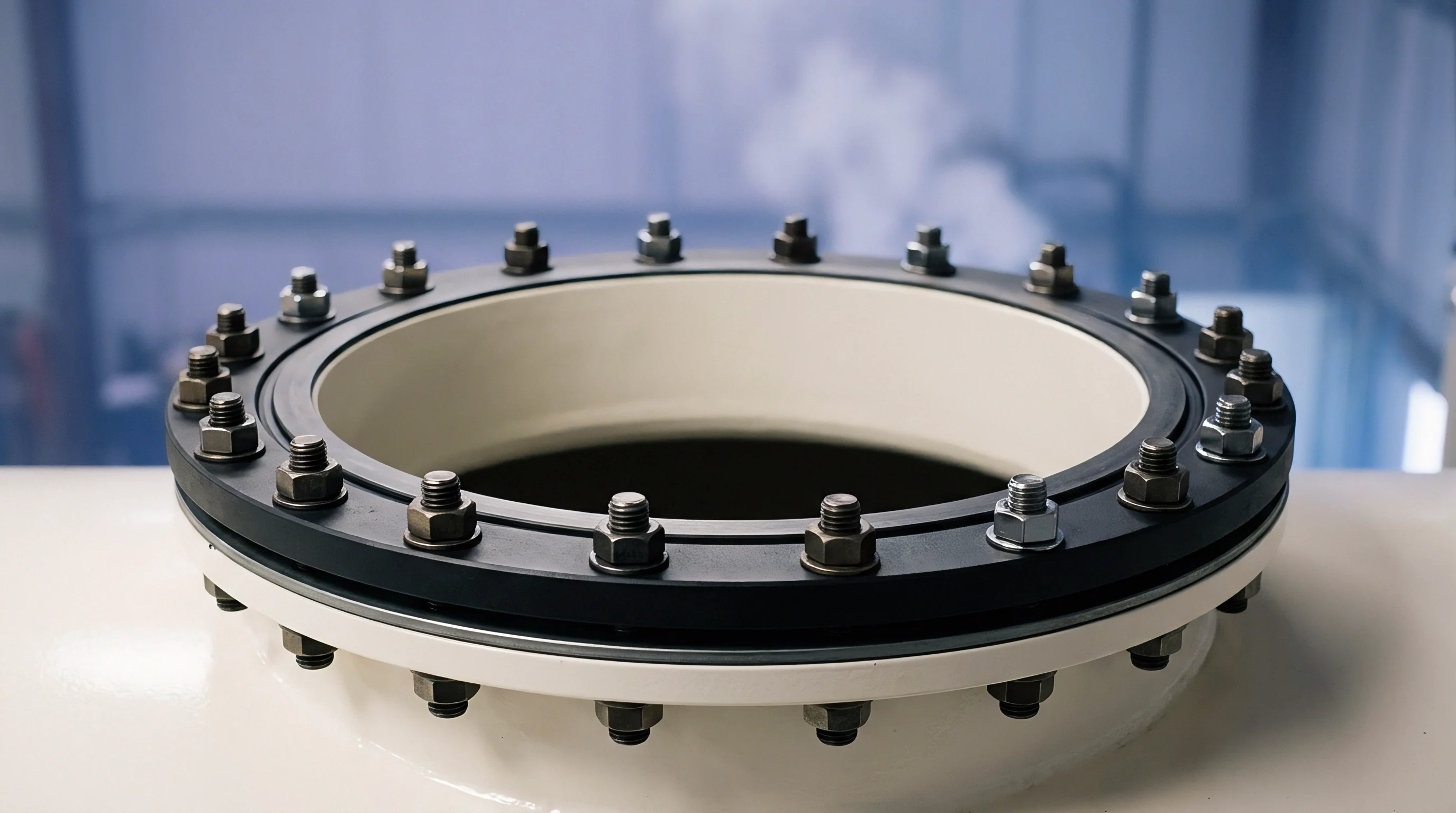
Vacuum calibrators hold the semi-solid outer skin against sizing sleeves while the core remains molten. On lines producing heavy pipe from 400 millimeters to 1,200 millimeters in diameter, external sizing sleeves support the outer dimension but exert no force on the interior bore. Cooling water flow, haul-off speed, and vacuum levels must be balanced against the natural relaxation kinetics of the polymer melt.
Can Vacuum Calibrators Compensate for Low Elasticity?
Differential pressure pulls the molten surface outward against calibrated bronze rings in the primary cooling trough. Increasing vacuum from 200 millibars to 450 millibars fixes the outer pipe boundary securely against the calibrator wall. However, higher vacuum also pulls more melt toward the exterior, worsening crown thinning if the resin lacks adequate storage modulus.
Mechanical hardware cannot substitute for the elastic forces provided by long-chain molecular networks.
Heavy pipe walls pull away from calibrator sleeves when melt elasticity fails to counterbalance gravity during initial vacuum contact.
Operators sometimes offset gravitational sag by misaligning the die mandrel. Biasing the pin upward delivers more molten resin to the crown, intentionally creating an eccentric parison that sags into a round profile as it cools in the water tank. However, this manual adjustment leaves high residual stress gradients across the wall, often causing early failures during hydrostatic pressure testing under ISO 1167.
- Extended vacuum calibration sleeve lengthens mechanical support along the top circumference where gravitational sag thins the profile.
- Eccentric die gap adjustment compensates for downward flow by biasing wall thickness toward upper quadrants during tooling setup.
- Intense spray cooling water flow drops surface temperatures below 125 degrees Celsius quickly, freezing the outer skin before internal sag distorts concentricity.
- Internal parison gas cooling passes chilled air or refrigerated nitrogen through the pipe core to pull heat from internal surfaces.

Thermal Gradients across Massive Annular Profiles
Because polyethylene thermal conductivity is low (around 0.44 Watts per meter Kelvin), core material in fifty-millimeter walls stays fluid for extended periods. While the outer 10 millimeters freeze into a rigid shell within three minutes in the cooling tank, internal temperature gradients persist. Mid-wall and inner core sections stay between 140 and 190 degrees Celsius for forty minutes or more as the pipe moves through downstream spray tanks.
During this extended cooling window, the molten core continues sagging under gravity. If incoming resin exhibits a storage modulus G’ below 1,500 Pascals at 0.05 radians per second, internal flow thins the crown and thickens the invert, producing an oval bore inside a round outer diameter. When resin elasticity drops, line speeds and melt temperatures must be lowered to maintain dimensional control, sacrificing throughput.


Lot
Bulk railcar shipments often exhibit batch-to-batch variations caused by reactor grade transitions. Polyethylene producers operating gas-phase or slurry loop reactors discharge polymer into blending silos while adjusting targets. Even within a certified prime production run, silo stratification and minor shifts in hydrogen split or comonomer addition alter the ultra-high molecular weight tail, which can destabilize melt strength while leaving standard melt flow rates within specification.

Will Parallel Plate Rheometry Detect Substituted Reprocessed Fractions?
Degraded polymer chains alter the terminal storage modulus slope. Blending industrial edge-trim, off-spec film flakes, or post-industrial reprocessed resin into prime pipe lots reduces raw material costs but damages viscoelastic performance. Mechanical recycling causes thermal-oxidative degradation that cuts long polymer backbones through chain scission.
Adding as little as five percent degraded reprocess can drop the low-frequency storage modulus at 0.01 radians per second by thirty percent, even while the five-kilogram melt flow rate remains well within commercial limits.
Bulk railcars hold up to 90 metric tonnes of resin across multiple hopper compartments. In transit, vibration causes size and density segregation among pellets of varying molecular weight, generating local rheological variations. Extrusion lines fed directly from unloader systems can experience rheological drift over a twenty-four-hour shift.
Without incoming dynamic testing, operators typically discover lot variation only after wall-thickness monitors flag out-of-spec pipe.
- Oscillatory frequency sweep rheogram displays storage and loss modulus curves across frequencies from 0.01 to 100 radians per second at 190 degrees Celsius.
- Capillary rheometer flow curve establishes wall shear viscosity at high shear rates between 100 and 1,000 reciprocal seconds under standard barrel temperatures.
- High load melt index certification records flow values under 21.6-kilogram loads alongside standard five-kilogram values per ISO 1133.
- Polydispersity index evaluation confirms molecular weight distribution width using gel permeation chromatography or dynamic mechanical relaxation spectra.

Incoming Inspection Criteria for Resin Silos
Receiving teams sample top, middle, and bottom hopper compartments before discharging railcars into plant silos. Rapid parallel-plate scans can be completed within fifteen minutes using compression-molded disks prepared directly from raw pellets. A five-point frequency sweep from 0.05 to 50 radians per second checks the low-frequency storage modulus G’.
If G’ at 0.05 radians per second falls below 1,600 Pascals, the batch is rejected for heavy-wall runs above SDR 17.
Standard certificates of analysis reporting density and MFR 190/5 are frequently treated as guaranteeing extrusion stability, with resin meeting published melt flow rate and density metrics regarded as fulfilling merchant obligations regardless of dynamic mechanical deviations. However, heavy-wall extrusion lines tolerate narrow rheological variances before parison sag affects pipe geometry.

Scrap
Wall eccentricity in extruded heavy-wall pipe invalidates pressure piping certification. Under ISO 4427-2 and ASTM F714, minimum thickness requirements apply continuously around the pipe circumference. If gravitational sag thins the crown by even two percent below the minimum limit, the entire length fails inspection and must be processed into low-value regrind.

Commercial Impact of Wall Thickness Rejects
Extrusion lines running large-diameter bimodal pipe process hundreds of kilograms per hour. For a 40-tonne lot of certified PE100-RC resin at 1,480 dollars per metric tonne on a line producing 630 millimeter SDR 11 pipe (57.2 millimeter nominal wall thickness) at 850 kilograms per hour, resin with an unverified storage modulus of 1,180 Pascals at 0.05 radians per second forces operators to increase average wall thickness by 6 percent to maintain minimum crown dimensions.
Extrusion lines waste thousands of kilograms of prime resin during steady-state operations when incoming batches exhibit fluctuating storage modulus profiles.
Running six percent overweight across a 40-tonne lot consumes 2,400 kilograms of resin unnecessarily, adding 3,552 dollars in unrecoverable raw material cost. If tooling offsets cannot stabilize the parison, scrap rates can reach four percent. Re-extruding heavy-wall regrind degrades long-chain branching, further lowering storage modulus and restricting the material to thin-wall, non-pressure applications.
| Resin Modulus Performance Level | G’ at 0.05 rad/s (Pa) | Extrusion Line Speed (m/min) | Dimensional Rejection Rate (%) | Compounded Resin Cost ($/tonne) | Effective Net Cost Per Good Meter ($/m) |
|---|---|---|---|---|---|
| Sub-Standard Lot (Severe Sag) | 1,050 | 0.14 | 8.5 | 1,420 | 218.40 |
| Marginal Prime Lot (Moderate Sag) | 1,380 | 0.17 | 3.8 | 1,460 | 194.20 |
| Verified Low-Sag Lot (Stable Parison) | 1,950 | 0.22 | 0.6 | 1,510 | 172.50 |
| Premium Ultra-Thick Lot (Zero Sag) | 2,400 | 0.25 | 0.2 | 1,560 | 168.10 |

Purchase Contract Terms for Melt Elasticity
Procurement contracts increasingly specify minimum dynamic storage modulus values at 0.05 radians per second alongside standard melt index limits to protect plant margins. Pipe manufacturers purchasing high volumes of bimodal resin protect operating performance by adding oscillatory shear requirements to purchase specifications. If a resin delivery fails dynamic modulus testing on arrival, the lot is rejected or debited for scrap losses.
Establishing a minimum storage modulus floor of 1,800 Pascals at 0.05 radians per second under ISO 6721-10 provides clear grounds for supplier credit when material causes dimensional non-conformance.