Resolving Kinetic Superposition in Ultra Low Moisture Polycarbonate Carrier Gas Desorption Coulometry under Dynamic Temperature Stepping Routine
Dynamic temperature stepping decouples water desorption from thermal degradation in ultra dry polycarbonate, preventing costly false moisture readings.


Melt
Hydrolytic Sensitivity in Ultra Dry Pellets
Processing optical grade bisphenol A polycarbonate at elevated temperatures causes severe chain scission when residual water exceeds twenty parts per million. Water acts as a reactant. At extrusion temperatures between 280°C and 320°C, a single water molecule cleaved from a polymer chain reduces the weight-average molecular weight, shifting melt flow rate dramatically.
Molders running high-precision automotive lenses or medical housings frequently target moisture thresholds below 0.002 percent by weight, equivalent to twenty milligrams of water per kilogram of resin. Measuring residual water at this level stretches classic Karl Fischer titration to its physical detection boundary.
Direct volumetric or coulometric insertion of solid resin into titration cells creates catastrophic electrode fouling. Polymer chains melt directly onto the platinum indicator electrodes, disabling the dead-stop bipotentiometric indication circuit. Laboratory practice relies on carrier gas desorption coulometry.
Heat applied to a glass oven tube volatilizes water from intact pellets, while a dry sweep gas transfers the vapor into an external coulometric cell filled with an iodid-based anode solution.
Precision governs processing stability. Standard carrier gas desorption executed at an isothermal target of 220°C generates kinetic superposition in ultra dry resin. At temperatures above 200°C, polycarbonate undergoes slow thermal cleavage of ester linkages, releasing non-water volatile compounds.
These compounds include phenol, bisphenol A monomers, cyclic oligomers, and trace carbon dioxide. Phenol reacts directly with electrogenerated iodine within the coulometric cell, consuming iodine electrons through aromatic substitution rather than water stoichiometry. The cell registers an artificial current spike, over-reporting water content by up to three hundred percent.
A moisture level exceeding twenty parts per million induces measurable hydrolytic degradation during polycarbonate melt processing at 300°C.
Thermal Cleavage and Interfering Volatiles
Quantifying moisture requires isolating true water evolution from degradation reaction kinetics. Water trapped within the amorphous polymer matrix diffuses outward under an concentration gradient, described by Fickian kinetics. Thermal decomposition follow an Arrhenius rate law, exhibiting a much higher activation energy than physical water desorption.
When an oven heats rapidly or holds at high temperature, water vapor diffusion overlaps directly with the onset of phenolic volatile generation.
Dynamic temperature stepping routines resolve this superposition by exploiting activation energy differences. Low heating steps extract surface water and weakly bound matrix water before thermal decomposition reactions activate. Secondary steps draw out core bulk moisture while keeping the pellet temperature below the threshold of chain scission.
Without stepped control, an analytical result of forty parts per million moisture may represent fifteen parts per million actual water and twenty-five parts per million interfering degradation products.
Unnecessary drying cycles ruin polymer quality. When test results incorrectly indicate high moisture, plant operators return dry resin to desiccant hoppers. Prolonged residence time at 120°C induces thermal yellowing through antioxidant exhaustion, increasing the yellowness index past tolerance boundaries while increasing production energy expenses.

Trap
Scrubber Media Selection and Retention Mechanisms
Carrier gas streams carrying desorbed volatiles from heated resin pellets pass through dedicated scrubber media before reaching the coulometric titration cell. The active gas flow carries both water vapor and organic thermal breakdown products generated inside the heating chamber. Installing a physical or chemical trap between the desorption furnace and the titration cell prevents phenolic interference while permitting unhindered water vapor transit.
Molecular sieves with precise pore diameters serve as selective physical filters. Type 3A crystalline aluminosilicates possess an effective pore opening of roughly 0.3 nanometers, which admits water molecules with a kinetic diameter of 0.26 nanometers while excluding larger aromatic structures like phenol, which measures over 0.6 nanometers. A secondary trap packed with granular silica gel impregnated with phosphoric acid neutralizes volatile basic additives, including amine-based slip agents or phosphite stabilizer fragments.
Liquid condensation traps maintained at minus 20°C freeze out heavy cyclic oligomers without capturing moisture, provided carrier gas residence times remain brief.
Anode reagent formulations within the coulometric cell dictate tolerance to volatile organic carryover. Methanol-free reagents based on diethylene glycol monoethyl ether prevent competitive esterification reactions. Traditional methanol solutions react with trace carboxylic acid volatiles, producing secondary water that creates persistent baseline drift during ultra-low moisture measurements.
| Polycarbonate Grade Type | Target Moisture Limit (ppm) | Desorption Step Temperature (°C) | Carrier Gas Flow Rate (mL/min) | Interference Trap Medium |
|---|---|---|---|---|
| Optical Disc / Lens Grade | 5 to 15 | 110 / 170 / 230 | 150 Dry Nitrogen | 3A Molecular Sieve + Acid Silica |
| Medical Transparent Housing | 10 to 30 | 120 / 180 / 240 | 200 Dry Argon | 3A Molecular Sieve |
| Automotive Lighting Outer | 20 to 50 | 120 / 190 / 250 | 200 Dry Nitrogen | Cryogenic Condenser (-20°C) |
| Flame Retardant Thin Wall | 15 to 35 | 110 / 175 / 235 | 175 Dry Nitrogen | 3A Molecular Sieve + Carbon Mesh |
| Test conditions: Carrier gas moisture content verified below 1 ppm H2O; sample size fixed at 3.0 grams intact unground pellets. | ||||
ISO 15512 Method D specifies carrier gas desorption coulometry for low moisture polycarbonates to eliminate direct melt contamination of electrodes.
Cell Reagent Degradation and Baseline Drift
Nitrogen carrier gas demands active scrubbing. Oxygen contamination above ten parts per million inside the carrier stream oxidizes the iodide ions in the cell reagent to iodine, causing continuous drift in the background titrator current. High background drift masks the microgram-level water signals typical of ultra-dry resins, yielding false low moisture readings when the instrument subtracts an elevated baseline.
Titration cells must maintain continuous chemical equilibrium before sample injection. Baseline drift stability under two micrograms of water per minute indicates a sealed analytical circuit. When volatile additives bypass the scrubber trap, baseline drift climbs erratically during heating cycles, destroying signal resolution.
Resin compounders frequently claim that high moisture readings stem entirely from additive evaporation rather than true water content. This assertion is routinely offered when incoming resin lots fail dry-as-received specifications at receipt inspection.
Profile

Dynamic Temperature Stepping Architecture
Isolating moisture evolution from background thermal decomposition relies on establishing controlled heating stages. Simple isothermal heating profiles at 220°C release water and volatiles concurrently, generating a single superposed coulometric current peak. Disentangling this merged signal requires dynamic temperature stepping, where the sample tube steps through specific thermal plateaus designed around polymer relaxation behavior.
Initial heating sets a step hold at 110°C to 120°C, remaining below the glass transition temperature of polycarbonate, which sits near 145°C. This lower temperature regime drives off surface-absorbed moisture and unbinds surface humidity acquired during sample transfer. Surface water desorbs rapidly within three to five minutes. Holding this temperature until the coulometric current returns to baseline establishes complete surface drying without initiating polymer chain mobility.
Secondary ramping accelerates the oven temperature to a plateau between 170°C and 180°C, well above the glass transition temperature but below the thermal decomposition onset. Matrix chain mobility increases dramatically, enabling core bulk water to diffuse out of the pellet bulk. Diffusion rate kinetics dominate this phase.
A final rapid step to 230°C confirms total moisture extraction, while signal processing algorithm isolate the sharp exponential curve signature of thermal degradation from the Gaussian mass-transfer profile of bulk moisture.
Bulk moisture diffusion accelerates rapidly once oven temperatures cross the glass transition threshold of amorphous resin.

Kinetic Rate Isolation and Arrhenius Modeling
Mathematical deconvolution relies on the stark difference in activation energy between physical moisture transport and chemical cleavage. Desorption of water from polycarbonate exhibits an activation energy between 40 and 52 kilojoules per mole. Thermal degradation and volatile phenolic cleavage exhibit activation energies exceeding 120 kilojoules per mole.
The coulometric current profile represents a sum of both rate equations.
Differential rate equations process the raw signal area. By fitting the first derivative of the coulometric signal during the 170°C step, the analytical software calculates the mass of water evolved per second. True water evolution reaches a peak and declines exponentially toward zero.
Degradation kinetics exhibit an accelerating rate curve over extended time at high temperature. Subtracting the calculated degradation rate curve from the total integrated charge isolates net water mass.
- Purge the empty glass sample vial with ultra-dry nitrogen gas at 200 milliliters per minute until cell drift drops below 1.5 micrograms per minute.
- Weigh exactly 3.5 grams of intact polycarbonate pellets into the purged sample vial using a fast-balancing analytical scale to prevent air exposure.
- Transfer the sealed vial into the furnace heating block maintained at an initial step temperature of 115°C.
- Maintain the 115°C temperature step for 360 seconds to fully collect and quantify surface-bound moisture.
- Ramp the oven temperature at 30°C per minute to the secondary hold plateau of 175°C.
- Hold at 175°C until the coulometric current returns to baseline, recording the integrated charge as bulk matrix moisture.
- Ramp to 230°C for 120 seconds to monitor degradation onset and verify complete moisture extraction.
| Desorption Phase | Temperature Window (°C) | Activation Energy (kJ/mol) | Dominant Chemical Volatile | Peak Morphology |
|---|---|---|---|---|
| Surface Moisture | 100 to 125 | 15 to 25 | Adsorbed Water Vapor | Sharp Gaussian, fast return |
| Bulk Matrix Water | 160 to 185 | 40 to 52 | Diffused Matrix Water | Broad Fickian distribution |
| Additive Volatilization | 190 to 210 | 70 to 90 | Phosphite / Slip Fragments | Asymmetric trailing tail |
| Thermal Degradation | 225 to 260 | 120 to 145 | Phenol / Bisphenol A | Exponential rising baseline |
Heating profiles must balance extraction speed against degradation thresholds, because lower hold temperatures extend test duration while higher temperatures introduce severe volatile interference.


Sampling

Where Does Ambient Humidity Compromise Test Samples?
Pellet collection from production silos or incoming shipping Gaylords introduces immediate exposure to atmospheric humidity. Polycarbonate is extremely hygroscopic at surface boundary layers. A dry pellet lot exposed to fifty percent relative humidity at 22°C absorbs ten parts per million of surface water within forty-five seconds.
Poor transfer protocols corrupt analytical results before the sample enters the instrument.
Sampling tools require pre-drying and sealed storage. Standard sampling spears made of cold metal condense moisture from air onto the metal surface, transferring water droplets directly to tested resin pellets. Aluminum or stainless steel sampling tubes must remain in an active drying oven at 100°C until immediately prior to insertion into the container core.
Sample vials demand dry argon flush prior to filling, sealing with PTFE-lined septa.
Laboratory ambient conditions alter sample integrity. Weighing unsealed pellets on an open balance pan allows continuous moisture absorption. Technicians running ultra-low moisture evaluations utilize enclosed balance chambers purged with dry air, completing sample transfer in under fifteen seconds.
A thirty-second atmospheric exposure of ultra-dry polycarbonate pellets adds ten parts per million of artificial surface moisture.
Failure Modes and Quality Acceptance Criteria
Evaluating incoming shipments or compounder lots relies on clean data capture. Misinterpreting test artifacts causes improper lot rejections or releases degraded polymer into molding operations.
- Unscrubbed Phenolic Contamination causes persistent positive baseline drift, inflating measured water figures and causing unnecessary rejection of acceptable dry resin.
- Septa Core Clogging occurs when repeated needle penetrations degrade the sample vial cap, allowing ambient air ingress during high temperature desorption steps.
- Insufficent Oven Purge Time leaves atmospheric air trapped inside the heating chamber, registering a massive initial water peak unrelated to pellet moisture content.
- Reagent Depletion occurs when continuous exposure to high moisture or sulfur additives exhausts the sulfur dioxide and imidazole content of the coulometric anode solution.
- Pellet Grinding Shear Heat generates local thermal degradation and releases structural water when technicians grind pellets to speed up diffusion, corrupting bulk moisture readings.
Lot release specifications require clear operational definitions. Quality assurance dossiers should state exact testing parameters alongside numerical water limits to prevent supplier disputes.
- Incoming Moisture Verification requires sampling from three distinct container depths using pre-heated sampling tools.
- Vial Headspace Purge Verification requires verifying dry sweep gas flow for two minutes before starting the temperature ramp.
- Baseline Stability Check requires holding drift under two micrograms per minute for a minimum of five continuous minutes prior to sample drop.
- Desorption Curve Separation requires confirming distinct peak separation between the 115°C surface hold and the 175°C bulk hold.
- Melt Flow Index Cross Check requires verifying that tested pellets exhibit less than a five percent MFI change after exposure to molding temperatures.
Standard purchase contracts specify that moisture disputes must be resolved using ISO 15512 Method D carrier gas coulometry under a agreed multi-step heating profile, overriding single-temperature test reports generated by raw material sellers.

Margin
Energy Expenses and Re-Drying Economics
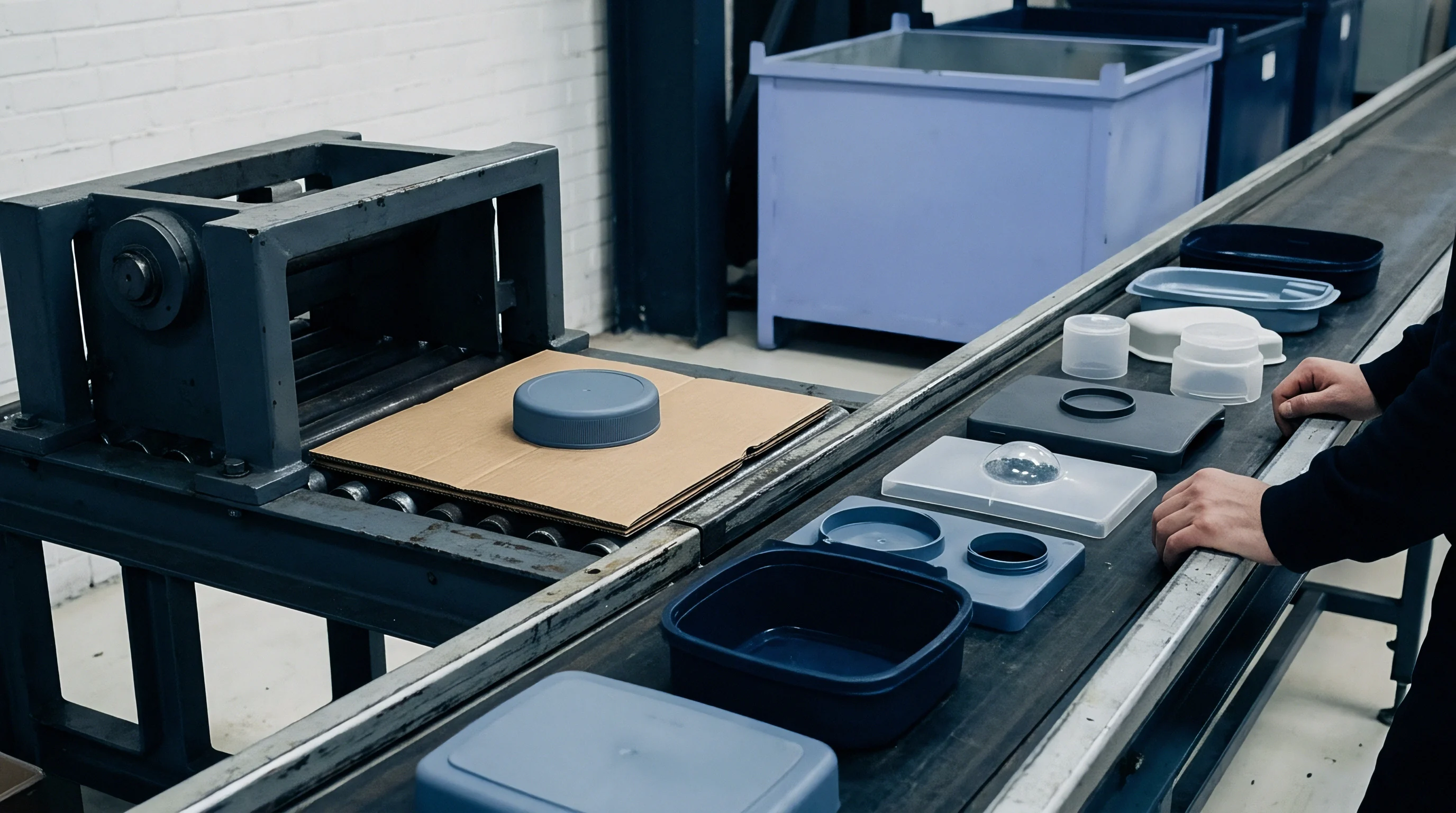
False positive moisture readings drive unnecessary resin re-drying cycles that waste energy and cause polymer discolouration. Operating a standard desiccant hopper dryer consuming forty kilowatts per hour costs significant money over extended drying runs. When an inaccurate test report claims resin contains seventy parts per million moisture instead of an actual fifteen parts per million, plant supervisors force a second four-hour drying pass at 120°C.
Extra drying hours damage polymer optics and compound integrity. Prolonged heat exposure depletes primary phosphite antioxidants, leaving the resin vulnerable to thermal degradation during subsequent molding cycles. Yellowing index rises, light transmission drops, and molecular weight distribution broadens.
The financial cost spans wasted electricity, delayed machine uptime, and degraded end-product optical clarity.
| Error Type | Analytical Deviation | Direct Operational Consequence | Cost Impact per Tonne |
|---|---|---|---|
| False Positive (High) | +35 ppm H2O recorded | Unnecessary 4-hour re-drying pass at 120°C | $45 Energy + Machine Downtime |
| False Negative (Low) | -25 ppm H2O recorded | Processing wet resin; severe hydrolytic scission | $1,200 Scrapped Molded Parts |
| Reagent Contamination | Unstable Baseline Drift | Continuous test re-runs; lost lab productivity | $18 Reagent Loss + Labor |
| Thermal Scission Ignored | Over-reported Water | Unjustified lot rejection and shipping disputes | $350 Freight & Demurrage |
Conversely, false negative readings allow wet resin into molding barrels, causing catastrophic hydrolytic degradation. A part molded from resin carrying sixty parts per million moisture loses up to thirty percent of its notched Izod impact strength. Entire production lots end up scrapped at final inspection or fail in field service under mechanical stress.
Capital Investment in Precision Analytical Tools
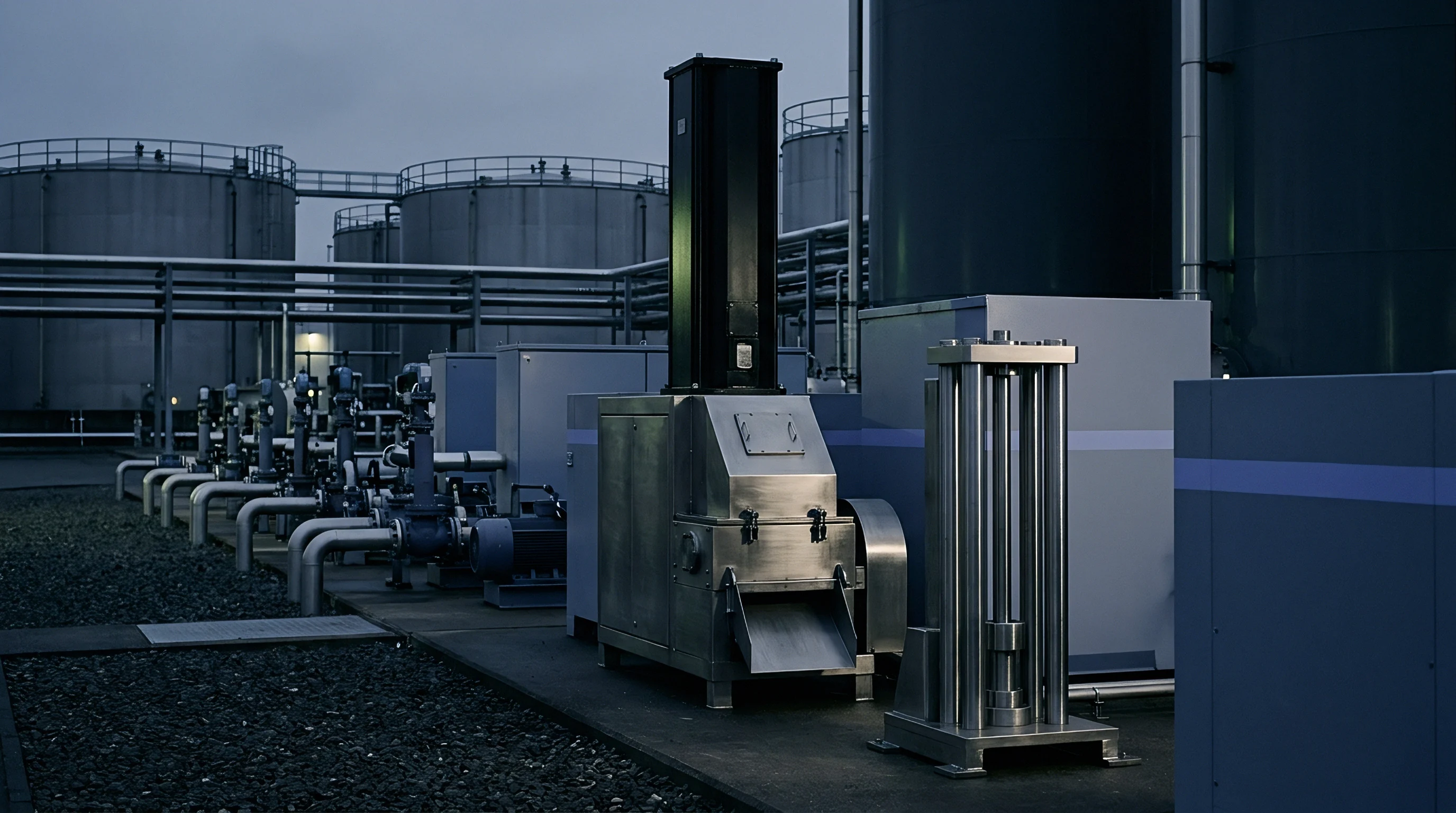
Deploying dynamic temperature stepping coulometers demands initial capital outlay for specialized ovens, precise gas scrubbers, and automated software modules. Standard single-step coulometers cost significantly less than multi-step dynamic system setups. Sourcing practices evaluate this expenditure against the ongoing losses caused by improper resin drying and lot rejection disputes.
Compounding plants processing high volumes of optical or medical grades recover the capital cost of dynamic step coulometry within months by eliminating false lot rejections. Operational precision protects profit margins across volatile polymer supply chains.
Whether carrier gas coulometry can be completely automated using online continuous headspace sampling without human transfer intervention remains an open technical challenge for resin compounders.