Basic Thermodynamic Principles Governing Volatile Desorption in Recycled Polyethylene Terephthalate Melt
Volatile desorption in recycled PET melt is governed by thermodynamic phase equilibria and diffusion limits, requiring deep vacuum and rapid surface renewal.

Partition
Thermodynamic liquid-vapor equilibria dictate the theoretical upper limit of volatile contaminant removal from post-consumer recycled polyethylene terephthalate during melt processing. At typical processing temperatures between 275 °C and 300 °C, post-consumer resin flakes carry a complex spectrum of volatile impurities, including water, residual ethylene glycol, acetaldehyde, limonene, alpha-pinene, and cyclic PET oligomers. Mass transfer halts at equilibrium.
The chemical potential of a volatile species dissolved in the molten polymer matrix equals its chemical potential in the adjacent vapor phase when phase equilibrium is reached. Quantifying this boundary requires evaluating the partial pressure of the contaminant above the melt, expressed through Henry’s Law at low solute concentrations:
Pi = KH,i · ci
where Pi represents the partial pressure of volatile component i in the gas phase, ci is the weight fraction or concentration of species i in the molten PET matrix, and KH,i represents the temperature-dependent Henry’s Law constant. Higher processing temperatures elevate Henry’s constants, increasing the equilibrium partial pressure and enhancing the thermodynamic driving force for volatile evaporation into the vacuum exhaust.
Deviations from ideal solution behavior become pronounced when volatile molecules differ significantly in size, polarity, and cohesive energy density from the ester backbone of polyethylene terephthalate. The activity coefficient γi quantifies these non-ideal thermodynamic interactions, allowing the equilibrium relationship to be written as:
Pi = γi · xi · Pisat
where xi represents the mole fraction of the contaminant in the polymer phase and Pisat is the saturation vapor pressure of the pure volatile liquid at the prevailing processing temperature. Non-polar organic contaminants like limonene exhibit high infinite-dilution activity coefficients in polar PET melts, favoring rapid migration into the gas phase once thermodynamic equilibrium is established.

Thermodynamics of Volatile Phase Equilibria in PET
Phase equilibrium calculations require explicit thermal data for each migrant family encountered in post-consumer streams. Acetaldehyde, formed via thermal degradation and vinyl ester end-group reaction pathways during previous processing cycles, exhibits high volatility and low solubility in the polymer phase. Polar migrants like water participate in reversible hydrolytic reactions with the polymer backbone while simultaneously undergoing phase separation into the gas phase.
Mass transfer kinetics depend entirely on maintaining a chemical potential gradient between the bulk polymer and the surrounding atmosphere.
Water cleavage of ester links occurs concurrently with moisture vaporization. The hydrolytic equilibrium reaction between water and ester bonds in molten PET is expressed as:
-COO- + H2O ⇌ -COOH + -OH
The thermodynamic equilibrium constant Keq for this hydrolytic reaction dictates that residual moisture levels above 50 parts per million by weight induce severe ester chain scission within seconds at 280 °C. Lowering the partial pressure of water vapor above the melt drives the equilibrium toward ester linkage preservation, halting intrinsic viscosity loss during processing.
Activity Coefficients and Flory Huggins Interaction Parameters
The thermodynamic mixing behavior of volatile species with molten polyethylene terephthalate is rigorously described using Flory-Huggins solution theory extended to polymer-solvent binary systems. The dimensionless Flory-Huggins interaction parameter χ12 characterizes the net energy of interaction between polymer chain segments and migrant molecules:
ln(γ1∞) = ln(v1 / x1) + 1 – (v1 / x1) + χ12
where v1 is the molar volume ratio of the volatile component relative to the polymer repeating unit. Positive values of χ12 exceeding 0.5 denote thermodynamic immiscibility and high activity coefficients, indicating that non-polar flavor compounds and printing solvent residues desorb rapidly from molten PET under reduced pressure.
High melt temperatures increase volatile saturation pressures while simultaneously lowering matrix melt viscosity to accelerate liquid-phase departure.
Infinite dilution activity coefficient figures establish the thermodynamic baseline for plant design and cleaning efficiency calculations. The infinite dilution activity coefficient of limonene (γ∞ = 18.5) at 285 °C is measured by inverse gas chromatography. This value rests on an amorphous PET melt calibration at zero percent crystallinity, and moves up to 24.1 if 15 percent residual crystalline domains survive un-melted in the extruder shear field.
Higher activity coefficients increase the driving force for desorption, making complete melting of crystalline flake fragments essential for consistent volatile removal.
| Volatile Species | Molecular Weight (g/mol) | Saturation Pressure Psat (bar) | Activity Coefficient γ∞ | Henry’s Constant KH (bar/wt%) |
|---|---|---|---|---|
| Water | 18.02 | 67.8 | 2.1 | 142.4 |
| Acetaldehyde | 44.05 | 42.5 | 3.8 | 161.5 |
| Ethylene Glycol | 62.07 | 8.4 | 0.82 | 6.89 |
| Limonene | 136.24 | 3.1 | 18.5 | 57.35 |
| PET Cyclic Trimer | 576.52 | 0.012 | 1.15 | 0.014 |
Thermodynamic limits establish the minimum theoretical concentration of contaminants attainable at a given vacuum pressure and melt temperature. Achieving lower residual contaminant levels requires either increasing the surface area of the melt or lowering the operating pressure inside the devolatilization chamber. Compounders selecting devolatilization hardware evaluate equilibrium partial pressures against the residence time available in the degassing zone to determine processing parameters.


Flux
Molecular transport of volatile contaminants through high-viscosity PET melt represents the primary kinetic bottleneck in devolatilization operations. While thermodynamics defines the concentration of volatiles at equilibrium, mass flux across the liquid-gas interface dictates the rate at which contaminants depart the bulk melt. The zero-shear viscosity of polyethylene terephthalate melt at 285 °C ranges from 150 to 350 Pa·s depending on intrinsic viscosity, creating significant resistance to molecular diffusion.
Fickian diffusion governs mass transport within stagnant or laminar melt films, where volatile flux Ji is proportional to the local concentration gradient:
Ji = -Di · (∂ci / ∂z)
where Di represents the mutual diffusion coefficient of volatile species i in the molten polymer and z denotes the spatial coordinate along the diffusion pathway toward the exposed interface.

Fickian Diffusion Kinetics in Macromolecular Melts
Mutual diffusion coefficients in macromolecular melts display strong temperature dependence governed by Arrhenius relationship equations:
Di(T) = D0,i · exp(-Ea,i / R · T)
where D0,i is the pre-exponential diffusion factor, Ea,i is the activation energy for diffusion through the entangled PET polymer network, R is the universal gas constant, and T is the absolute temperature in Kelvin. Small molecules such as water and acetaldehyde possess high diffusion coefficients in the range of 10-8 to 10-9 m2/s at 280 °C. Larger organic molecules like limonene, surrogate flavor compounds, and printing ink constituents exhibit diffusion coefficients two to three orders of magnitude lower, typically between 10-10 and 10-12 m2/s under identical thermal conditions.
The underlying mathematics of volatile mass transfer in molten polymers parallel the atmospheric degassing mechanisms observed in basaltic lava channels during volcanic eruptions. In both regimes, high matrix viscosity restricts bubble growth, forcing mass transport through thin boundary films. Boundary layer thickness controls the total diffusion time required for volatile molecules to reach the melt surface.
Diffusion time scales scale quadratically with melt film thickness δ, as described by the characteristic diffusion relationship tdiff ≈ δ2 / Di. A quiescent melt layer with a film thickness of 2 millimeters requires over 100 seconds for limonene to diffuse from the core to the surface at 285 °C. Extrusion devolatilization zones provide total residence times of only 5 to 15 seconds, making stationary diffusion insufficient for deep decontamination of post-consumer PET.
Shear Rates and Dynamic Liquid Film Renewal
Mechanical shearing inside devolatilization hardware overrides stationary diffusion limitations by continually wiping, smearing, and re-folding the polymer melt. High shear rates generated by screw rotation induce intense velocity gradients that thin the liquid boundary layer and re-establish high volatile concentration gradients at the interface. Penetration theory models mass transfer in sheared polymer melts by introducing a surface renewal rate s, defined as the frequency at which fresh bulk melt replaces the depleted surface layer:
KL = 2 · √(Di · s / π)
where KL is the overall liquid-phase mass transfer coefficient. Screw speeds ranging from 200 to 500 revolutions per minute in co-rotating twin-screw extruders generate surface renewal frequencies between 10 and 50 Hz, increasing volatile desorption rates by several orders of magnitude over static melt degassing.
At 280 °C, the mutual diffusion coefficient of limonene in recycled polyethylene terephthalate melt reaches 3.4 x 10^-11 m^2/s under atmospheric baseline conditions.

Bubble Nucleation and Vapor Phase Transport
Boiling devolatilization occurs when the cumulative partial pressure of dissolved volatile contaminants exceeds the ambient vacuum pressure inside the processing chamber. Under these conditions, volatile desorption switches from pure surface evaporation to bubble nucleation and growth within the bulk melt. Homogeneous bubble nucleation requires overcoming critical thermodynamic energy barriers, whereas heterogeneous nucleation occurs readily at the surfaces of solid non-melting contaminants, un-melted pigment particles, or inorganic filler additives present in recycled flake streams.
The critical bubble radius r required for stable growth is governed by the Young-Laplace equation:
r = 2 · σ / (Pv – P0)
where σ represents the melt-vapor surface tension (approximately 0.028 N/m for PET melt at 285 °C), Pv is the internal vapor pressure of the volatile phase, and P0 is the ambient vacuum pressure. Rapid expansion of nucleated bubbles creates a cellular foam structure that increases the specific surface area available for mass transfer while simultaneously reducing the diffusion distance required for volatiles to reach a gas-liquid interface.
Failure modes arising during kinetic mass transport impair cleaning efficiency and degrade mechanical performance when devolatilization conditions drift outside prescribed operating windows:
- Melt foaming foamover occurs when excessive bubble growth expands the melt density beyond chamber volume limits, clogging vacuum vents with liquid polymer.
- Diffusion rate starvation develops when low screw speeds produce thick melt films, leaving volatile contaminants trapped inside the central core of un-renewed polymer streams.
- Thermal chain scission accelerates when elevated processing temperatures intended to boost diffusion coefficients simultaneously promote thermal breakdown of ester linkages.
- Oligomer vapor condensation arises when vaporized cyclic trimers deposit onto cold vent surfaces, forming solid blockages that degrade vacuum stability.
Consider a worked mass transport comparison evaluating limonene removal from post-consumer PET melt at 285 °C within a devolatilization screw zone. Assume a initial limonene concentration c0 of 500 milligrams per kilogram, a diffusion coefficient Di of 3.4 × 10⁻¹¹ m2/s, and a vacuum port length providing a total residence time of 8 seconds. Under scenario A, representing a simple single-screw vent with poor surface renewal (film thickness δ = 1.5 mm, surface renewal frequency s = 0.5 Hz), the mass transfer coefficient KL yields a residual limonene concentration of 342 mg/kg.
Under scenario B, representing a co-rotating twin-screw extruder with optimized flight geometry (film thickness δ = 0.2 mm, surface renewal frequency s = 25 Hz), the mass transfer coefficient increases by a factor of 7.07, reducing residual limonene content to 2.1 mg/kg. Processing without high surface renewal leaves high levels of residual contaminants in the matrix, causing parts molded from the resulting resin to fail food-contact migration limits.

Vent
Hardware architecture in industrial degassing systems dictates the mechanical efficiency of volatile extraction from recycled PET melt. Extrusion equipment must continuously generate high specific surface area, maintain stable low-pressure zones, and limit thermal exposure to prevent hydrolytic and oxidative chain scission. Multi-vent co-rotating twin-screw extruders, ring extruders, and specialized high-surface melt reactors represent the primary hardware choices for post-consumer PET decontamination.

Screw Geometry and Melt Surface Area Generation
Twin-screw extruders utilize specialized screw geometries to achieve rapid surface renewal and thin-film generation within devolatilization zones. Multi-flight forward and reverse kneading blocks split and recombine the melt stream, while eccentric multi-lobe transitional elements spread the polymer into thin liquid films along the barrel wall. Deep flight depths in degassing sections lower the fill degree to between 10 and 30 percent, leaving substantial free space for vapor phase expansion and transport toward the vacuum port.
Vent ports positioned downstream of high-shear melting sections allow volatile gases to flash off cleanly without polymer entrainment.
Volatile extraction efficiency benchmark figures reach 99.95 percent at a 1.5 mbar vacuum level during twin-screw devolatilization. This value rests on a 1.2 minute residence time at 280 °C with screw speed at 300 rpm, and drops to 98.4 percent if melt temperature decreases by 10 °C or screw speed falls below 200 rpm due to reduced surface renewal rate. Maintaining constant screw speed and uniform thermal input prevents concentration spikes in the finished resin.

When Does Deep Vacuum Accelerate Polymer Degradation?
Operating vacuum levels below 1.0 mbar significantly increases the driving force for volatile evaporation, but simultaneously introduces operating risks. Absolute pressure levels inside the vent dome govern the thermodynamic partial pressure gradient of all volatile species according to Dalton’s Law. At ultra-low absolute pressures, residual water vapor flashes off instantly, protecting the melt from hydrolytic scission.
Extreme vacuum levels combined with long residence times pull low-molecular-weight oligomers and residual additives directly out of the polymer matrix, shifting the molecular weight distribution and altering the rheological behavior of the refined melt.
| Reactor Topology | Specific Surface Area (m2/kg) | Vacuum Range (mbar) | Residence Time (s) | Typical IV Retention (%) | Decontamination Efficiency |
|---|---|---|---|---|---|
| Single-Screw Multi-Vent | 0.12 – 0.25 | 5.0 – 20.0 | 30 – 60 | 82 – 88 | Moderate (EFSA conditional) |
| Co-Rotating Twin-Screw | 0.85 – 1.60 | 0.5 – 5.0 | 10 – 25 | 92 – 96 | High (EFSA food-grade) |
| Multi-Ring Extruder | 2.10 – 3.80 | 0.1 – 2.0 | 15 – 35 | 95 – 98 | Very High (FDA full hurdle) |
| High-Surface Rotating Disk | 4.50 – 8.00 | 0.05 – 1.0 | 120 – 300 | 97 – 102 (with SSP) | Maximum (Super-clean target) |
Selecting appropriate extrusion devolatilization parameters requires systematically balancing vacuum depth, thermal energy input, and mechanical energy dispersion. System operators rely on structured decision frameworks to configure processing lines for post-consumer recycled PET flake streams:
- Melt temperature stabilization prior to entering the vacuum zone prevents localized thermal degradation and ensures uniform fluid viscosity.
- Screw speed adjustment establishes optimal surface renewal rates while avoiding excessive shear heating that degrades molecular weight.
- Vacuum pressure calibration aligns absolute dome pressure with contaminant partial pressures to drive volatile evaporation.
- Melt seal maintenance using dynamic restrictive screw elements prevents atmospheric air ingress into reduced-pressure barrel zones.
- Condenser temperature regulation prevents oligomers from clogging vacuum piping while catching volatile fraction streams cleanly.
Compliance with EFSA challenge test criteria requires reducing surrogate contaminant concentrations below three milligrams per kilogram of recycled polymer.
Equipment manufacturers frequently assert that high-capacity vacuum pumps alone guarantee complete decontamination regardless of incoming flake contamination levels. Process experience shows that vacuum depth cannot overcome insufficient surface renewal or inadequate melt residence time within the degassing section. Machine configurations lacking sufficient active surface generation leave volatile migrants trapped in the bulk melt regardless of pump performance.


Detection
Analytical verification confirms that volatile removal processes satisfy regulatory standards for food-contact plastics. Residual volatile testing quantifies trace levels of non-intentionally added substances, flavor compounds, printing residues, and degradation products remaining in the post-devolatilization polymer matrix. Demonstrating process efficacy requires pairing sensitive analytical chemistry protocols with standardized intrinsic viscosity measurements to track resin structural integrity.

Quantification Protocols for Residual Organic Volatiles
Gas chromatography paired with mass spectrometry serves as the benchmark methodology for identifying and quantifying volatile migrants in recycled PET. Multiple Headspace Extraction Gas Chromatography isolates volatile species from the solid matrix without requiring complete polymer dissolution, preventing matrix interferences while providing total contaminant quantification. Thermal desorption GC-MS techniques vaporize residual volatiles directly from pulverized pellet samples heated to 150 °C, enabling detection limits below 0.1 milligrams per kilogram for volatile aromatics and aliphatic hydrocarbons.
Karl Fischer coulometric titration conducted at 180 °C determines residual moisture content in processed pellets. Saturated moisture content inside post-consumer flake feedstocks reaches 3000 to 5000 parts per million prior to processing. Effective melt devolatilization lowers residual water content below 50 parts per million, preventing hydrolytic chain scission during subsequent molding stages.
Intrinsic viscosity testing via capillary viscometry using phenol and 1,2-dichlorobenzene solvent mixtures at 25 °C validates molecular weight retention across the degassing process.

Food Contact Migration Limits and Surrogate Cleaning Verification
European Food Safety Authority guidelines and US Food and Drug Administration protocols require challenge tests to prove that recycling technology removes chemical contamination reliably. Virgin PET flakes are intentionally spiked with high concentrations of surrogate contaminants representing different chemical functionalities: toluene for volatile non-polar organics, chlorobenzene for semi-volatile non-polar species, phenylcyclohexane for non-volatile compounds, limonene for flavor substances, and benzophenone for printing inks. Processing spiked feeds through the devolatilization line must yield cleaning efficiencies exceeding 99.9 percent to earn food-contact compliance approval.
Saturated moisture inside un-dried recycled PET melt reduces molecular weight within seconds through ester bond cleavage.
The precise partitioning constant of cyclic PET trimers between molten polymer and high-vacuum phase at 290 °C remains unconfirmed in published literature, varying across reported trials from 1.2 × 10⁻³ to 4.8 × 10⁻³ bar-1. A resin buyer facing this uncertainty specifies maximum residual oligomer content in incoming pellets via Soxhlet extraction rather than relying on supplier vacuum throughput estimates.
| Parameter / Volatile Target | Standard Test Method | Detection Limit | Target Threshold for Food Grade rPET |
|---|---|---|---|
| Residual Acetaldehyde | ASTM F2013 / EN 13130-4 | 0.1 mg/kg | < 1.5 mg/kg (bottle grade) |
| Residual Limonene | MHE-GC-MS / DIN 53314 | 0.05 mg/kg | < 0.5 mg/kg |
| Total VOC Content | Headspace GC-FID at 150 °C | 1.0 mg/kg | < 10.0 mg/kg total carbon |
| Residual Moisture | ISO 15512 Method B (Karl Fischer) | 10 mg/kg (ppm) | < 50 mg/kg (ppm) |
| Intrinsic Viscosity (IV) | ISO 1628-5 (Solvent Viscometry) | 0.01 dL/g | 0.76 – 0.84 dL/g (±0.02 dL/g tolerance) |
Compliance documentation for food-grade recycled polyethylene terephthalate must include specific standard clauses detailing testing conditions and lot acceptance limits. Resin purchase contracts incorporate standard specifications that define clear quality criteria:
- Challenge test clearance certificates must document a minimum 99.9 percent removal efficiency for all surrogate classes specified in FDA and EFSA guidance documents.
- Acetaldehyde generation limits dictate that post-processing headspace concentrations remain below 1.5 milligrams per kilogram when measured after 24 hours at 150 °C.
- Intrinsic viscosity tolerances specify that delivered pellet lots remain within a band of plus or minus 0.02 deciliters per gram relative to the nominal specification sheet value.
- Non-intentionally added substance screening reports must confirm total unidentified chromatographic peak areas correspond to less than 0.01 milligrams per kilogram in ethanol food simulants.
Contractual agreements specifying ISO 1628-5 intrinsic viscosity testing procedures bind the supplier to replace any resin lot where hydrolytic degradation drops the melt viscosity below 0.72 deciliters per gram, shifting financial liability for thermal damage back to the compounder.


Yield
Energy consumption, volatile mass loss, and polymer degradation kinetics determine the commercial economics of melt devolatilization systems. Compounders compare high-vacuum melt degassing extruders directly against traditional solid-state polymerization processes to establish landed cost structures per tonne of food-grade recycled resin. Solid state processing adds capital expenditure.
Melt-phase devolatilization eliminates the secondary pellet crystallization, drying, and long-duration thermal conditioning stages required by solid-state reactors, reducing electrical power consumption from 0.42 kWh/kg to 0.24 kWh/kg of finished polymer.
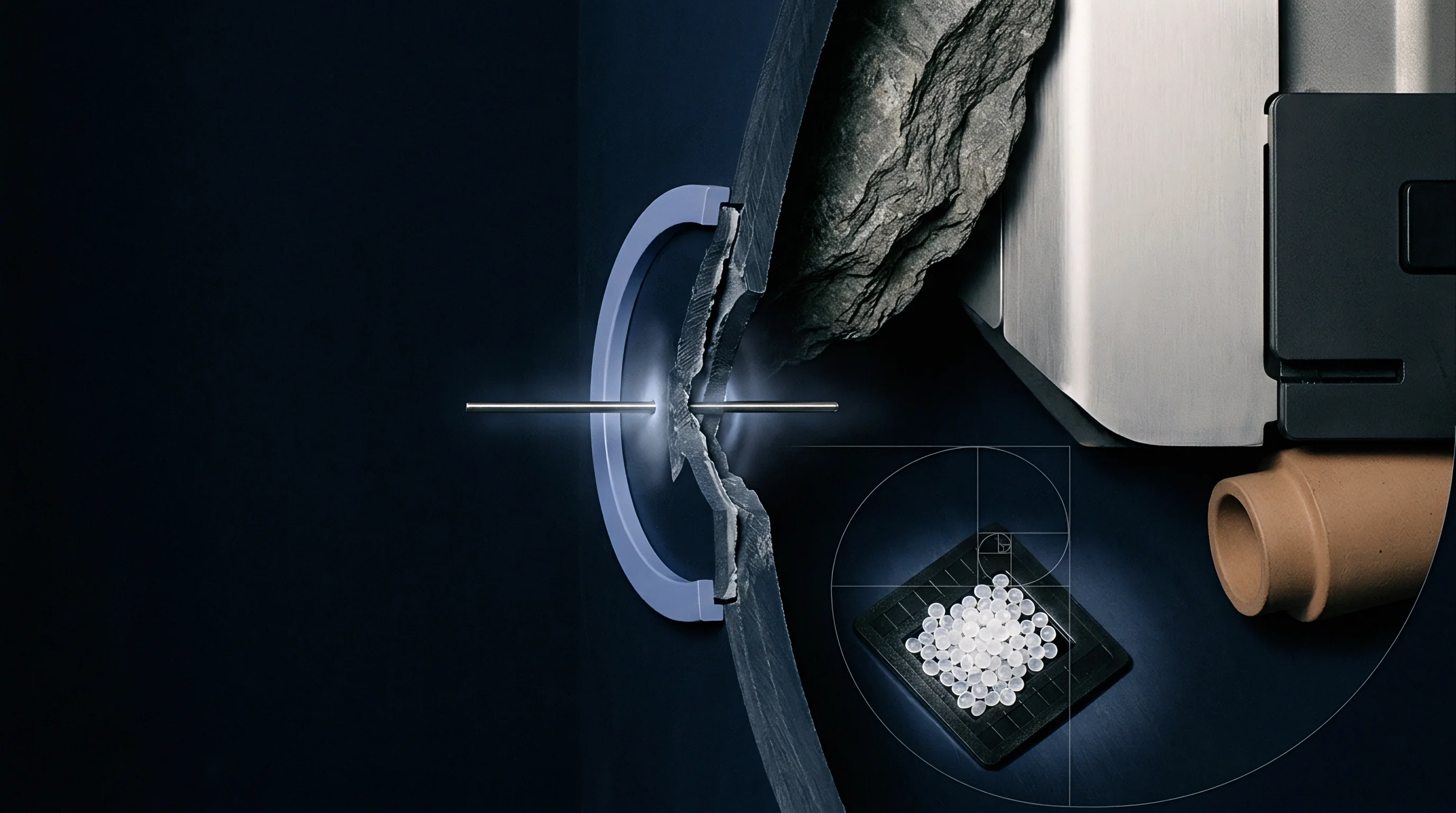
Energy Balance of Melt Devolatilization versus Solid State Polymerization
Thermal energy input during melt devolatilization is supplied directly by mechanical shear dissipation from the extruder motor and barrel heater bands. Avoiding the cooling and re-heating steps inherent to solid-state processing yields significant energy savings, but places stringent demands on vacuum system efficiency. Steam ejectors and liquid ring vacuum pumps consume auxiliary electricity and water, requiring heat recovery heat exchangers to capture latent heat from vaporized volatile streams.
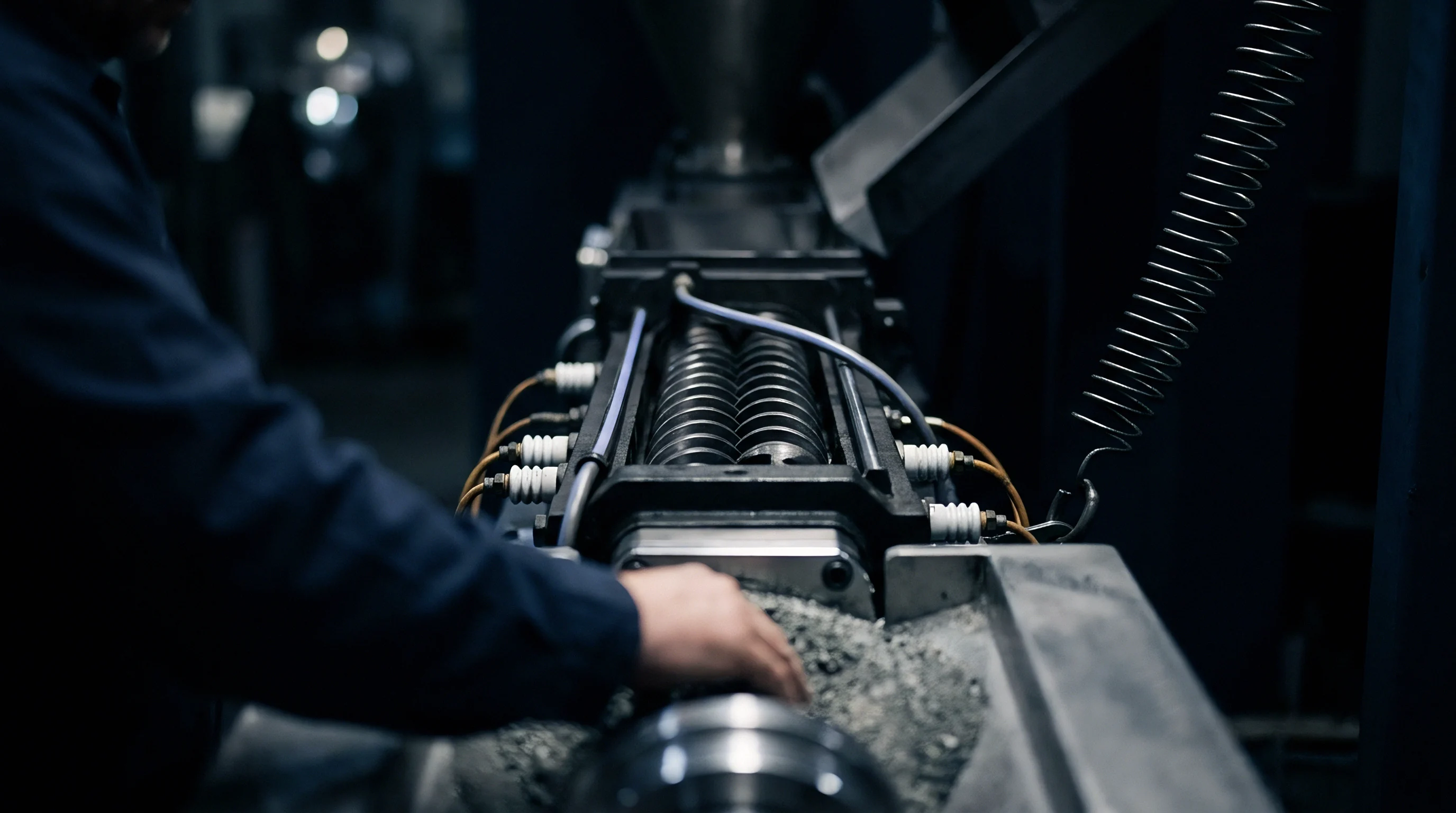
Economic Mass Losses and Landed Pellet Costs
Mass loss during vacuum degassing directly impacts material yield calculations. Volatile organic contaminants represent less than 0.2 percent of incoming flake mass, but entrained low-molecular-weight oligomers, moisture, and fine polymer dust removed by vacuum suction increase overall process mass loss to between 1.2 and 2.5 percent by weight. oligomers condense in cold exhaust piping. Compounders factor this yield reduction directly into raw material cost conversions when converting post-consumer flake prices into landed pellet costs.
Consider a 1000-kilogram lot of recycled PET flake purchased at 1100 Euros per tonne. Extrusion devolatilization at 285 °C and 1.5 mbar vacuum incurs a 1.8 percent mass loss due to moisture evaporation, volatile extraction, and oligomer carryover, yielding 982 kilograms of refined resin. Electrical power consumption adds 0.24 kWh per kilogram at a power cost of 0.18 Euros per kWh, representing 43.20 Euros in direct energy expenses.
Operational labor, maintenance, and nitrogen purging add 35.00 Euros per tonne. The total production cost reaches 1178.20 Euros for 982 kilograms of finished product, establishing an effective landed pellet cost of 1199.80 Euros per tonne before packaging and transport. Factor in a 2 percent off-spec reject rate, and the final unit cost rises to 1224.29 Euros per tonne of saleable food-contact resin.
Process engineers continue to debate whether future EFSA chemical purity thresholds can be met purely through high-vacuum melt devolatilization without incorporating a short-duration solid-state thermal polishing stage upstream of the injection molding machine.