Polyethylene Screening Methodologies for Food Contact Material Safety Verification
Polyethylene safety verification requires screening for non-intentionally added substances via chromatographic mass spectrometry tied to batch declarations.

Melt
Extrusion processing at temperatures reaching 240 degrees Celsius breaks low-molecular-weight polyolefin backbones into volatile aliphatic hydrocarbon chains. Linear low-density polyethylene and high-density polyethylene undergo thermal stress during pelletization and film conversion.

Thermal History and Degradation Chemistry
Polymer processing equipment subjects virgin resin to combined shear forces and elevated temperatures. Thermomechanical degradation splits polymer chains through random radical scission, producing short-chain alpha-olefins, alkanes, and aldehydes.
When processing temperatures exceed recommended limits, the concentration of volatile fractions below 1000 Daltons rises exponentially. These non-intentionally added substances move freely within the amorphous regions of the polymer structure, creating potential migrants that transfer into food contact media during packaging storage.
Additive Transformation Products in Polyolefin Processing
Phenolic antioxidants protect polyolefin chains during conversion but generate secondary chemical species. Hindered phenols react with alkyl peroxy radicals, forming quinone methides and oxidized transformation products. Phosphite secondary antioxidants oxidize into phosphate esters.
- Polymerization Residue Extraction Solvent washing of virgin pellets isolates residual organometallic catalyst compounds before heat application creates secondary breakdown fragments.
- Thermal Scission Characterization Pyrolysis steps identify low molecular weight wax fractions that form during high shear film extrusion steps.
- Antioxidant Consumption Tracking High performance liquid chromatography measures remaining active phosphite stabilizers versus oxidized phosphate byproducts.
- Oligomeric Mass Mapping Mass spectrometry profiles cyclic oligomer populations between C12 and C36 that diffuse readily into fatty foods.
Polyethylene processing converts primary antioxidants into secondary quinone degradation species that alter migration profiles.
Recycled resins introduce risk. Post-consumer recycling streams accumulate degraded polymer chains, thermal degradation products, and cross-contaminated volatile compounds from prior packaging lifecycles.


Chromatogram
High-resolution analytical instruments turn complex chemical mixtures into discrete signal peaks along a baseline. Non-targeted screening of polyethylene requires resolving broad homologous series of hydrocarbon oligomers alongside trace additive breakdown products.

Non-Targeted Screening Workflows for Unknown Substances
Laboratory analysts couple gas chromatography with mass spectrometers to resolve unlisted chemical signals. Headspace solid-phase microextraction captures volatile compounds residing in the resin pore volume, while thermal desorption isolates volatiles. For non-volatile and polar compounds, liquid chromatography coupled to quadrupole time-of-flight mass spectrometry provides high mass accuracy measurements that enable molecular formula assignment for unknown migrants.
Non-target analytical workflows rely on electron ionization and electrospray ionization to detect substances down to 10 micrograms per kilogram of food simulant. Identification confidence depends on matching experimental spectra against standard reference databases or calculating theoretical isotopic patterns.
| Method | Target Analytes | Detection Limit | Extraction Solvent |
|---|---|---|---|
| Headspace GC-MS | Volatile hydrocarbons, residual monomers (C4-C10) | 0.005 mg/kg | None (Thermal Desorption) |
| Direct Injection GC-FID | Semi-volatile oligomers, slip agents (C10-C32) | 0.05 mg/kg | Dichloromethane |
| LC-QTOF-MS | Polar additives, antioxidant degradation products | 0.001 mg/kg | Isopropanol / Ethanol |
| Pyrolysis-GC-MS | Polymer structural fragments, synthetic waxes | 0.10 mg/kg | None (Pyrolysis at 550°C) |
Gas and Liquid Chromatographic Ionization Modes
Electron ionization yields reproducible mass spectral fragmentation patterns for compound library identification. Chemical ionization provides soft fragmentation, preserving molecular ion species necessary for identifying high molecular weight cyclic oligomers. Non-polar polyolefin oligomers exhibit poor ionization efficiency in liquid chromatography electrospray sources, demanding atmospheric pressure chemical ionization to detect non-polar fragments accurately.
- Irganox 1010 Degradation Products Formation of 2,6-di-tert-butyl-1,4-benzoquinone occurs during high-temperature resin oxidation, yielding a volatile compound that imparts off-odors and exceeds non-target screening action limits.
- Phosphite Oxidation Intermediates Hydrolysis of Irgafos 168 produces 2,4-di-tert-butylphenol, a regulated migrant with strict quantitative threshold limits across food simulants.
- Erucamide Slip Agent Set-Off Uncured print surfaces transfer primary amides to the food-contact layer during reel storage, generating unexpected surface migration peaks.
- Unreacted Low Molecular Weight Hydrocarbons Polyethylene waxes below 1000 Daltons migrate directly into fatty food media, compromising overall migration limits under standard test conditions.
Data processing algorithms filter baseline noise and separate overlapping chromatographic peaks. Peak area threshold criteria dictate whether an unknown peak warrants formal structure elucidation or remains logged as an unidentified substance below toxicological concern limits. Industry analytical groups continue to debate whether semi-quantitative response factors calculated from internal standards provide sufficient structural confidence when evaluating toxicological threshold compliance for completely unidentified cyclic oligomers.


Assay
Targeted analytical measurements quantify specific chemical entities against verified reference standards. Once screening identifies specific substances of interest, quantitative testing establishes exact mass concentration values for food contact compliance files.
What Triggers Targeted Volatile Quantification in Polyethylene Resins?
Detector peak areas exceeding ten parts per billion force compliance auditors to transition from broad qualitative evaluation to calibrated measurement. Targeted analytical protocols build calibration curves using authentic reference standards of known purity. Chromatographic retention times and mass-to-charge ratios confirm analyte identity before quantitation proceeds.
Specific migration limits for caprolactam and secondary slip additives mandate analytical detection capabilities down to 0.01 milligrams per kilogram of food simulant after 10 days exposure at 40 degrees Celsius.

Mathematical Modeling versus Empirical Simulant Extraction
Diffusion transport formulas estimate chemical migration rates without performing wet laboratory contact tests. Mathematical migration models based on the Piringer diffusion equation assume maximum potential migration by treating the polymer matrix as a homogenous solvent medium. The calculation uses initial substance concentration in the polymer, material thickness, contact surface area, food contact temperature, and exposure duration to predict upper-bound migration values.
| Evaluation Parameter | Piringer Mathematical Model | Empirical Simulant Immersion |
|---|---|---|
| Time Required | Under 1 Hour | 10 Days Exposure |
| Conservative Over-Estimation Factor | 2x to 10x Over-Prediction | Direct Physical Measurement |
| Substance Applicability | Known Molecular Weight and Concentration | All Extractable Compounds |
| Cost Structure | Low Computational Overhead | High Analytical Instrument Cost |
| Regulatory Acceptance | EU Screening Proof Only | Definitive Legal Defense Data |
A worked comparative calculation illustrates the screening mechanic. Assume a 50-micron linear low-density polyethylene film containing 500 milligrams per kilogram of the antioxidant transformation product 2,4-di-tert-butylphenol. Under European Union mathematical modeling parameters for ten days storage at 40 degrees Celsius contacting a fatty food simulant, the calculated worst-case migration yields 0.48 milligrams per kilogram of food.
The published specific migration limit for this substance stands at 0.05 milligrams per kilogram. The mathematical screening model indicates a potential compliance breach, forcing the buyer to perform wet chemistry empirical testing.
Empirical laboratory extraction of the actual film under standard simulant conditions (95 percent ethanol for 10 days at 40 degrees Celsius) yields a measured migration of 0.03 milligrams per kilogram. High polymer crystallinity and incomplete partitioning into the simulant restrict mass transport well below the mathematical worst-case model prediction. The empirical result establishes physical compliance under Regulation EU 10/2011 Annex I, overriding the conservative screening calculation.
Accepting a generic mathematical model report for a barrier film containing active light stabilizers risks immediate customs detention and expensive inventory re-testing upon arrival at destination ports.

Diffusion
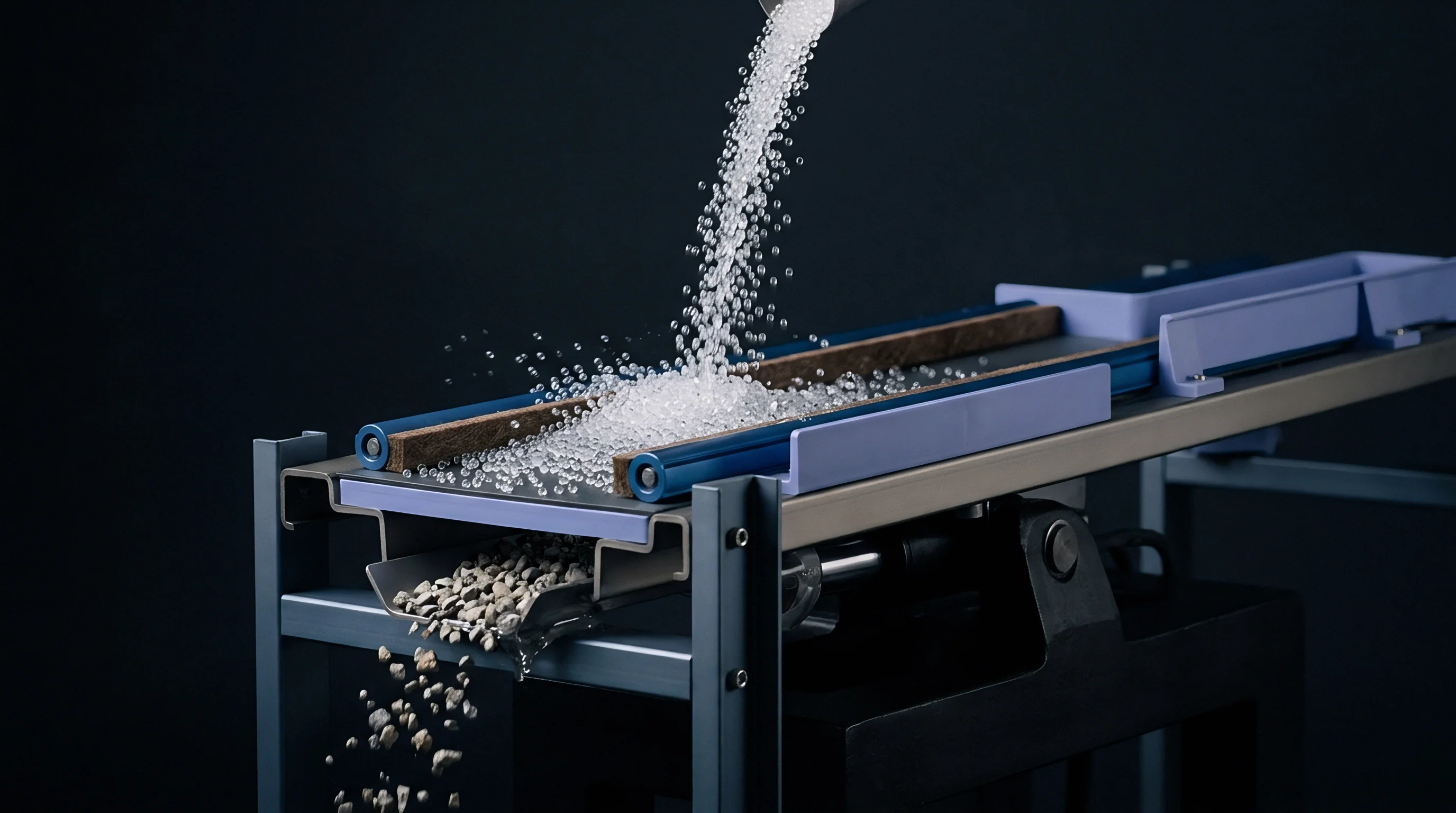
Polymer morphology determines how rapidly unbonded chemical species migrate through the bulk resin matrix. Polyethylene chains contain crystalline domains surrounded by amorphous zones. Migrant molecules move through the amorphous regions where free volume allows structural displacement.

Oligomer Migration Dynamics across Polyethylene Densities
Crystallinity levels govern mass transfer rates of low molecular weight hydrocarbons through polymer walls. High-density polyethylene features high crystallinity ranging between 60 and 80 percent, creating tortuous diffusion pathways that retard chemical transport. Linear low-density polyethylene exhibits lower crystallinity, allowing rapid diffusion of aliphatic waxes and secondary additives.
Crosslinking alters diffusivity ratios.

Matrix Swelling and Accelerated Elution Testing
Organic solvents penetrate amorphous resin regions and expand internal free volume spaces. Ethanol at 95 percent concentration and isooctane cause matrix swelling in low-density polyethylene formulations, accelerating chemical elution.
- Density Threshold Verification High density polymers demand adjusted diffusion parameters in Piringer model calculations due to restricted chain mobility.
- Thickness Partitioning Calculation Wall dimensions dictate the total chemical reservoir available for mass transfer into food contact surfaces over extended shelf life.
- Solvent Compatibility Check Isooctane exposure causes artificial polymer expansion, requiring mathematical correction factors to match real vegetable oil migration rates.
- Temperature Scaling Validation Storage testing above 60 degrees Celsius risks altering polymer morphology, generating invalid diffusion coefficients for ambient shelf life claims.
High density polymers with elevated crystallinity restrict structural diffusion rates far more effectively than linear low density film grades.
Temperature dictates the kinetic energy of both the polymer matrix and the migrating species. Raising contact temperatures during screening tests accelerates diffusion, enabling shortened test durations that simulate long-term ambient storage. Thicker polyolefin walls store greater absolute quantities of potential migrants, but higher polymer density slows their migration rate into contact media.


Vessel
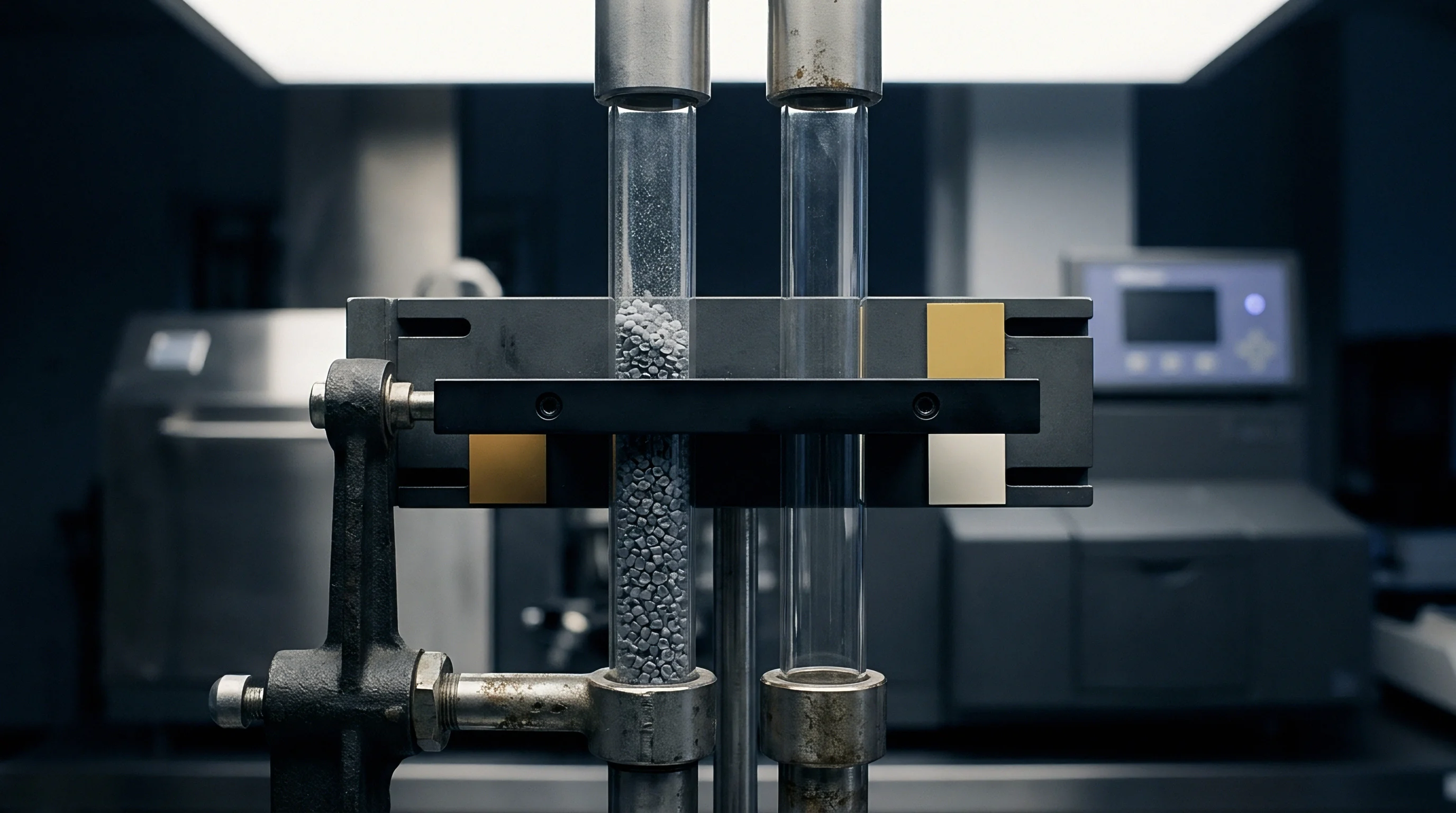
Testing geometry holds liquid media against polymer film surfaces during controlled thermal exposure cycles. Sealed extraction cells prevent volatile loss while maintaining uniform liquid contact across the declared exposure area.

Simulant Selection for Fatty and Aqueous Food Contact
European compliance standards specify distinct liquid media to mimic different food properties. Simulant A uses 10 percent ethanol for aqueous foods. Simulant B employs 3 percent acetic acid to simulate acidic foodstuffs.
Simulant C utilizes 20 percent ethanol for alcoholic media. Simulant D2 uses plant oil, or substitute solvents like 95 percent ethanol and isooctane, to simulate fatty food contact.
| Food Type | Standard Simulant | Standard Test Condition | Intended Contact Application |
|---|---|---|---|
| Aqueous Food | 10% Ethanol (Simulant A) | 10 Days at 40°C | Ambient storage beyond 30 days |
| Acidic Food | 3% Acetic Acid (Simulant B) | 10 Days at 40°C | Fruit juice, vinegar packaging |
| Fatty Food | Vegetable Oil (Simulant D2) | 10 Days at 40°C | Dairy, meat, vegetable oil wrap |
| Dry Food | Poly-2,6-diphenyl-p-phenylene oxide (Tenax) | 10 Days at 60°C | Cereal, flour, dry bakery contact |

Surface-to-Volume Ratio Standardizations
Compliance calculations standardize test specimen area against liquid volume ratios to normalize migration results. European Union reference conventions specify a surface-to-volume ratio of six square decimeters of material per kilogram of food simulant. Deviations in real packaging dimensions demand mathematical scaling to verify whether actual filled containers comply with overall migration limits set at 10 milligrams per square decimeter of surface area.
- Secure raw material formulation disclosure sheets directly from the resin producer before converting finished film.
- Perform gas chromatography screening on every resin batch showing altered melt flow index values.
- Reconcile specific migration calculations against specific migration limits listed under Commission Regulation EU 10/2011 Annex I.
- Archive complete analytical chromatograms alongside the formal declaration of conformity within the technical compliance file.
Article 15 of Regulation EC 1935 2004 voids compliance certificates whenever conversion operations alter the underlying chemical purity profile of the polymer matrix.
Single-sided exposure cells isolate the intended food-contact layer of multilayer laminates. Isolating the contact face prevents outer layer printing inks or adhesive components from dissolving directly into test simulants during immersion steps. Clause 6.2 of EN 1186-1 binds repeat-use compliance to the third consecutive migration exposure period, automatically invalidating test certificates generated from single-immersion laboratory trials.

Obligation
Regulatory responsibility rests on the commercial entity that places finished packaging onto target markets. Declarations of conformity provide legal proof that an imported plastic article meets established safety thresholds across its supply chain.
Declarations of Conformity and Batch Traceability Files
Legal compliance documentation requires signed structural descriptions and traceable manufacturing records. A valid declaration names the base polyethylene resin grade, lists regulated substances subject to specific migration limits, confirms compliance with good manufacturing practice under Regulation EC 2023/2006, and defines dual-use additive content. Supporting analytical screening reports must align directly with the production lot numbers shown on shipping invoices.

Border Inspection Protocols and Customs Clearance Risks
Port entry control authorities extract physical samples from incoming packaging containers for regulatory compliance verification. Importers who rely on generic supplier datasheets without lot-specific screening data face commercial delays when border laboratories detect unlisted non-intentionally added substances.
Compliance documentation audits trace every additive back through supplier statements to verify specific migration limits. When customs authorities flag imported film reels for non-compliant antioxidant degradation products, the importer absorbs quarantine storage fees, re-testing expenses, and complete cargo destruction charges.