Non Targeted Screening Methodologies for Food Contact Polymer Extractables
Non-targeted screening uses high-resolution mass spectrometry and toxicological thresholds to isolate and clear unknown migrants in food-contact polymers.


Peak

Chromatographic Signals in Finished Article Declarations
A high-resolution total ion chromatogram generated from a polyolefin migration extract displays dozens of unassigned mass spectral responses above baseline noise. Regulatory verification under Article 19 of Regulation (EU) 10/2011 demands risk assessment for these unlisted entities, known technically as non-intentionally added substances. Standard targeted analysis monitors preselected analytes against authentic commercial reference compounds.
Non-targeted screening evaluates every detectable molecular signal within an analytical window without initial bias toward positive identification. Polymeric materials release degradation products of primary antioxidants, oligomeric fragments resulting from incomplete polymerisation, catalyst residues, and secondary reaction chemicals created during high-temperature extrusion.
The analytical challenge centres on the absolute identity and quantity of these unexpected chemical migrants. Converting a detector count into toxicological risk involves systematic deconvolution of chromatographic data, exact mass measurement, isotope distribution verification, and structural elucidation. A single injection of food simulant extract into a modern high-resolution spectrometer yields gigabytes of raw instrumentation files.
Converting raw mass data into an actionable compliance dossier determines whether a converter signs an enforceable Declaration of Conformity or faces commercial rejection at audit.
Chromatographic peaks without structural confirmation cannot support an exposure assessment under food packaging compliance rules.
Laboratories operate under distinct chemical detection thresholds depending on ionization mechanics, sample concentration factors, and instrument background signals. The detection limit of a screening method determines whether an article complies with safety thresholds defined under Article 3 of Framework Regulation (EC) 1935/2004. False negatives destroy commercial filings.
When an unassigned signal masks a toxic degradation product below an arbitrarily chosen peak threshold, the technical dossier fails regulatory review.
Every untargeted chromatographic peak represents an uncharacterized commercial liability until an analytical chemist classifies the signal within an established toxicological boundary.

Flake

Solvent Swelling and Controlled Extraction Pressures
Solid polymer matrices present severe physical barriers to rapid chemical screening. Direct migration testing into liquid food simulants under accelerated conditions defined by EN 1186, such as ten days at sixty degrees Celsius in ethanol mixtures, simulates real shelf life. Complete characterization of extractable substances often requires accelerated total solvent extraction using aggressive media under elevated pressure or temperature.
Solvent choice determines whether an analytical chemist measures actual diffusible migrants or creates laboratory artifacts through polymer backbone degradation.
Extraction solvents swell polymer backbones differently. Solvents like dichloromethane, hexane, and acetone penetrate amorphous polymer fractions, lowering glass transition temperatures and expediting additive dissolution. Polyolefins swell considerably in refluxing toluene or hot cyclohexane, releasing trapped catalyst components, synthetic waxes, and antioxidant breakdown cascades.
In contrast, semi-crystalline polyethylene terephthalate resists non-polar solvent intrusion, requiring chlorinated solvents or fluorinated alcohols to dissolve or swell the polyester matrix. Extraction duration shifts equilibrium.
| Polymer Matrix | Extraction Solvent | Contact Condition | Matrix Swelling Index (Percent Mass Gain) | Extractable Yield Range (Milligrams Per Kilogram) | Dominant Extractable Classes |
|---|---|---|---|---|---|
| High-Density Polyethylene | Dichloromethane | 40 Degrees Celsius, 24 Hours | 8.4 | 120 to 450 | Linear oligomers, Irgafos 168 degradation products, erucamide |
| Polypropylene Homopolymer | Hexane | 60 Degrees Celsius, 4 Hours | 14.2 | 310 to 890 | Cyclic oligomers, oxidized Irganox 1010 fragments, slip waxes |
| Polyethylene Terephthalate | Dichloromethane and Hexafluoroisopropanol (90:10) | 25 Degrees Celsius, 48 Hours | 1.8 | 45 to 160 | Cyclic trimers, cyclic tetramers, residual diethylene glycol esters |
| Polyamide 6 | 95 Percent Aqueous Ethanol | 60 Degrees Celsius, 6 Hours | 5.6 | 280 to 920 | Caprolactam monomer, cyclic dimer, cyclic trimer, sebacate plasticizers |
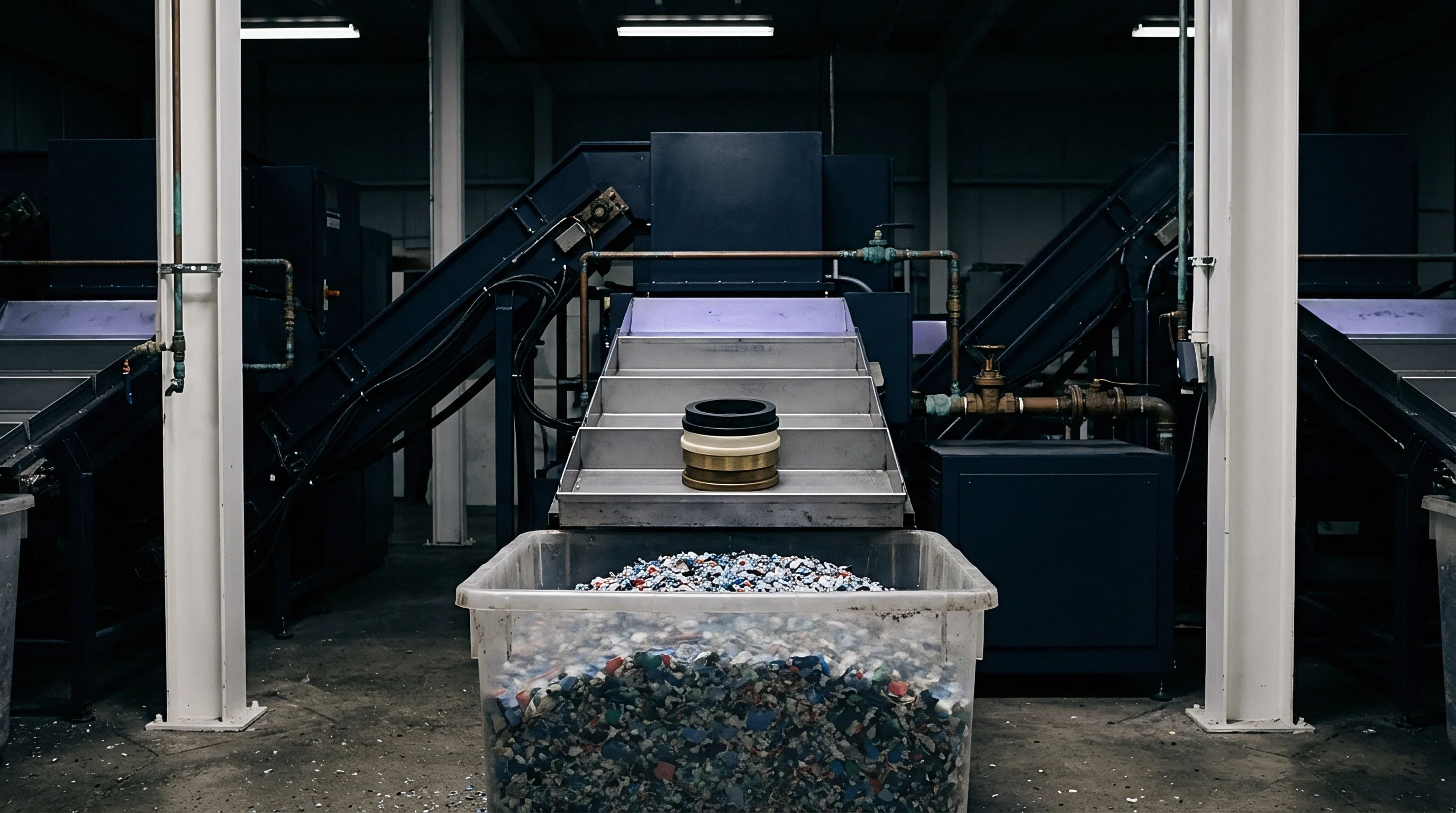
Mechanical preparation of polymer articles changes mass transfer rates. Pellets, blow-moulded bottles, and thin films yield disparate extraction efficiencies when subjected to identical solvent regimens. Cryogenic milling of post-industrial flake converts solid material into fine particulate with high surface-to-volume ratios, eliminating diffusion limitations.
The milling step introduces thermal degradation risks if liquid nitrogen cooling fails to maintain batch temperatures below minus one hundred degrees Celsius.
- Thermal matrix pyrolysis generates artificial volatile peaks during accelerated headspace extraction when oven temperatures exceed the resin vicat softening point.
- Solvent transesterification produces non-native ester migrants during reflux extraction of polyesters in methanol or ethanol under acidic residual catalyst presence.
- Additive cross-reaction converts phenolic antioxidants into quinoid derivatives when extracts sit exposed to ambient oxygen and ultraviolet light on laboratory autosamplers.
- Polymer re-precipitation trapping locks high-molecular-weight oligomers back inside matrix crystallites during uncontrolled cooling of pressurized solvent extractions.
A fifty-micrometer polypropylene film exposed to ninety-five percent ethanol for ten days at sixty degrees Celsius yields higher oligomer concentrations than an identical mass of pelletized resin extracted under identical volume ratios.
The processing history of recycled polymer flake introduces additional analytical complications. Post-consumer materials contain legacy additives, flavour compounds absorbed from previous contents, printing ink constituents, and secondary contamination from collection systems. Sourcing teams frequently evaluate declarations where suppliers claim undetectable volatile levels based on pellet extraction, while subsequent testing of extruded thin film reveals hundreds of thermal breakdown products generated during processing.
The resin converter routinely states that secondary chromatographic responses represent unreactive synthetic processing aids that cannot migrate under real conditions of consumer use.


Tandem

Coupled Mass Spectrometry Platforms and Collision Regimes
Comprehensive characterization of extractable profiles requires dual orthogonal analytical systems. Volatile and non-polar semi-volatile migrants travel through gas chromatography coupled to high-resolution quadrupole time-of-flight mass spectrometry with electron ionization or chemical ionization. Polar, non-volatile, and thermally labile chemicals pass through reversed-phase ultra-high performance liquid chromatography connected to electrospray ionization or atmospheric pressure chemical ionization mass spectrometry.
Gas chromatography addresses molecules below five hundred Daltons, while liquid chromatography captures polyolefin oligomers, ethoxylated surfactants, and high-molecular-weight organophosphite stabilizers up to twelve hundred Daltons.
Mass accuracy alone proves nothing. Low-resolution quadrupole instruments lack the resolving capability to separate isobaric compounds sharing identical nominal mass values. Time-of-flight spectrometers and electrostatic orbitrap mass analyzers achieve mass resolving powers exceeding thirty thousand and one hundred thousand full width at half maximum, respectively.
Isobars confound low-resolution quadrupole filters. High resolving power allows laboratories to calculate precise elemental compositions within a mass tolerance window below five parts per million.
| Target Extractable Class | Separation Mechanism | Ionization Source | Analyzer Geometry | Mass Accuracy Window (Parts Per Million) | Analytical Blind Spot |
|---|---|---|---|---|---|
| Residual Solvents and Monomers | Gas Chromatography (Capillary Wax Column) | Electron Ionization (70 eV) | Single Quadrupole or Time-of-Flight | Less than 10 | Non-volatile processing aids and high-molecular-weight slip agents |
| Slip Additives and Plasticizers | Gas Chromatography (Non-polar 5 Percent Phenyl Column) | Positive Chemical Ionization | Quadrupole Time-of-Flight | Less than 3 | Insoluble metal stearates and heavily oxidized antioxidant complexes |
| Primary Hindered Phenols | Reversed-Phase Liquid Chromatography (C18) | Electrospray Ionization (Negative Mode) | Quadrupole Orbitrap | Less than 2 | Highly volatile degradation aldehydes and light alkane fragments |
| Cyclic Oligomers | Reversed-Phase Liquid Chromatography (C8 or Phenyl-Hexyl) | Electrospray Ionization (Positive Mode) | Quadrupole Time-of-Flight | Less than 3 | Permanent gases, water-soluble organic acids, and inorganic salts |
| Mass accuracy windows represent performance metrics achieved during continuous internal fluoropolymer lock-mass calibration. | |||||

Where Stalls Algorithmic Identification in High Resolution Spectra?
Automated feature deconvolution software algorithms process mass spectrometry datasets by identifying chromatographic peaks, grouping related adducts, and deconvoluting overlapping spectra. A single parent compound running through electrospray ionization produces protonated molecules, sodium adducts, potassium adducts, ammonium adducts, and dimerization products. Deconvolution algorithms must successfully link these disparate m/z values back to a single neutral precursor mass.
Algorithmic identification halts when experimental fragmentation patterns do not align with commercial mass spectral databases.
Chemical identification proceeds through established confidence frameworks. Analysts classify structural assignments into five distinct evidentiary tiers:
- Level one confirmed structure requires direct comparison of retention time, accurate precursor mass, and tandem mass fragmentation spectra against an authentic commercial chemical standard run on the same instrument under identical parameters.
- Level two probable structure matches experimental accurate tandem mass spectra and diagnostic fragmentation against curated public or commercial spectral libraries without direct retention time alignment against an authentic reference standard.
- Level three candidate structure provides an unambiguous elemental chemical formula based on exact mass and isotopic abundance ratios, accompanied by plausible fragment substructures, while leaving exact positional isomerism unconfirmed.
- Level four distinct molecular formula establishes a definitive chemical formula using exact monoisotopic mass and isotope pattern scoring without resolving potential candidate structures from chemical databases.
- Level five exact mass interest isolates a reproducible chromatographic peak with accurate mass-to-charge value above baseline noise without sufficient spectral detail to calculate an elemental formula.
Confidence in structural identification drops sharply whenever an extraction feature cannot reach confirmation against an authentic reference standard injected under identical liquid chromatography conditions.
Database matching routines generate misidentifications when applied to commercial polymer additives. Public spectral libraries contain millions of environmental, pharmaceutical, and natural product spectra, yet remain sparse regarding synthetic industrial polymer additives, ester wax blends, and complex thermal breakdown products. An automated search frequently matches an unknown polyolefin degradation product with a marine natural toxin or a pharmaceutical metabolite possessing an identical elemental formula.
Expert interpretation of diagnostic fragment losses, such as the loss of tert-butyl groups (mass fifty-seven Daltons) characteristic of hindered phenolic antioxidants, eliminates automated misidentifications.
A mass spectrometer identifies only the ions that clear its transfer optics, leaving neutral species and poorly ionized molecules entirely invisible to the detector.

Threshold

Toxicological Benchmarks and Semiquantitative Surrogacy
Analytical laboratories cannot procure authentic commercial reference standards for hundreds of unknown extractables identified during high-resolution screening. Quantifying unconfirmed substances requires a semiquantitative framework using structurally related internal reference standards added to the food simulant prior to extraction. Semiquantitative estimation assumes that the unknown extractable exhibits a detector response factor identical to the chosen internal standard.
Ionization efficiency varies wildly. In electrospray ionization mass spectrometry, two molecules sharing identical molecular weights and chemical formulas display response factors differing by two orders of magnitude due to minor variations in basicity, hydrophobicity, or molecular shape.
Response factors deviate across orders. To balance quantification uncertainty against human safety, toxicologists evaluate non-targeted screening data using the Threshold of Toxicological Concern concept. Toxicological thresholds classify organic molecules into structural categories using the Cramer decision tree.
Cramer Class I covers simple structures with known low oral toxicity, carrying an intake threshold of one thousand eight hundred micrograms per person per day. Cramer Class II covers intermediate substances, capped at five hundred forty micrograms per person per day. Cramer Class III contains complex structures, reactive functional groups, or aromatic rings, restricting human exposure to ninety micrograms per person per day.
Potential genotoxicants carrying structural alerts, such as unhindered aromatic amines or epoxides, receive an intake threshold of 0.15 micrograms per person per day.
Converting human exposure limits into an actionable Analytical Evaluation Threshold (AET) requires mathematical modelling of packaging geometry, food contact surface area, and consumer intake assumptions. Consider a worked regulatory evaluation for a polypropylene tray packaging one kilogram of food:
The calculation assumes standard European packaging defaults, where an adult consumes one kilogram of food packaged in six square decimetres of plastic contact area daily. For an unknown substance with no structural identification, an analytical team assigns the default genotoxic threshold of 0.15 micrograms per person per day. This equates to an extraction migration limit of 0.15 micrograms per kilogram of food.
If the analytical procedure concentrates a two hundred millilitre food simulant extract into one millilitre of solvent prior to injection, the concentration factor equals two hundred. The instrument detection threshold must reach 0.03 milligrams per kilogram in the final injected solution. Incorporating an analytical uncertainty factor of two to account for response factor variability halves the target threshold, demanding an instrument limit of 0.015 milligrams per kilogram.

Is Semiquantitative Surrogacy Legally Defensible in Border Audits?
Regulatory authorities and customs testing laboratories routinely challenge semiquantitative estimates during import audits. A supplier who clears an article based on a semiquantitative screening calculation using deuterated benzophenone as an internal standard risks border rejection if the authority re-analyzes the extract using a specific standard for an identified substance and discovers the true concentration is five times higher. Response factor variation undermines safe assumptions.
To defend compliance files during analytical audits, packaging converters apply verification steps before signing conformity declarations:
- Structural alert exclusion demands running high-resolution fragmentation spectra through structural evaluation software to rule out genotoxic functional alerts before applying Cramer Class III thresholds.
- Internal standard array matching distributes multiple internal standards across the chromatographic gradient, matching unknown peaks to standards with similar retention times, molecular weights, and functional chemistries.
- Response factor uncertainty buffering applies a mandatory downward correction divisor of five or ten to semiquantitative values whenever an unknown compound lacks authentic calibration standards.
- Worst-case total migration cap testing calculates theoretical maximum migration assuming one hundred percent of the substance present inside the polymer migrates into the packaged foodstuff.
Article 19 of Regulation EU 10 2011 assigns legal responsibility to the manufacturer for identifying and risk-assessing any non-intentionally added substance present in the final food contact material.
Supply agreements routinely dictate how laboratories handle semiquantitative screening data. Sourcing contracts specify that any extractable peak exceeding ten micrograms per kilogram in food must undergo identification to at least Level Two confidence, with toxicological review demonstrating an exposure margin below applicable Cramer boundaries.
Clause 14.2 of the European Plastics Packaging Standard requires full toxicological justification dossiers for any unknown migrant peak exceeding the Analytical Evaluation Threshold, precluding reliance on generic clearance certificates.

Port

Customs Infiltration and Analytical Dossier Gaps
Containers arriving at import terminals face document verification alongside physical border inspection. Customs authorities within the European Union check declarations of conformity against requirements laid down in Regulation (EC) 1935/2004 and Regulation (EU) 10/2011. Port inspectors cross-reference declared raw materials against border notification databases such as the Rapid Alert System for Food and Feed (RASFF).
When an import file contains a declaration referencing an outdated overall migration test report while omitting non-targeted screening data for recycled content or multi-layer barrier adhesives, inspectors flag the cargo for border hold.
Quarantine bills accumulate daily. Demurrage charges compound rapidly. A shipment detained at an import container terminal accrues demurrage, terminal storage, and sampling fees ranging from two hundred to six hundred euros per day.
If a customs laboratory runs non-targeted liquid chromatography high-resolution screening on an unverified polyolefin article and detects an unlisted primary aromatic amine or a photoinitiator breakdown product exceeding regulatory limits, border authorities issue a formal rejection notification. Customs inspectors reject incomplete files.
Trace impurities trigger quarantine holds. A chemical absent from the formulation recipe can enter the article through contaminated printing solvent, recycled polymer flake, or degraded processing equipment. Batch records settle border disputes.
Accredited spectra protect declared shipments. When customs audits verify an entry, a complete analytical dossier containing chromatograms, mass spectral libraries, and toxicological justification files secures cargo release.
A buyer who accepts a superficial certificate of compliance without the underlying high-resolution screening data assumes direct legal and financial liability for mandatory warehouse quarantines, product recalls, and disposal fees when border authorities intercept unauthorized chemical migrants in the shipment.