Recycled Polyolefin Non Target Screening Screening Limit Derivation Methods
Non-target screening limits derive from toxicological exposure caps adjusted for packaging contact geometry, simulant transfer, and detector response factor variance.
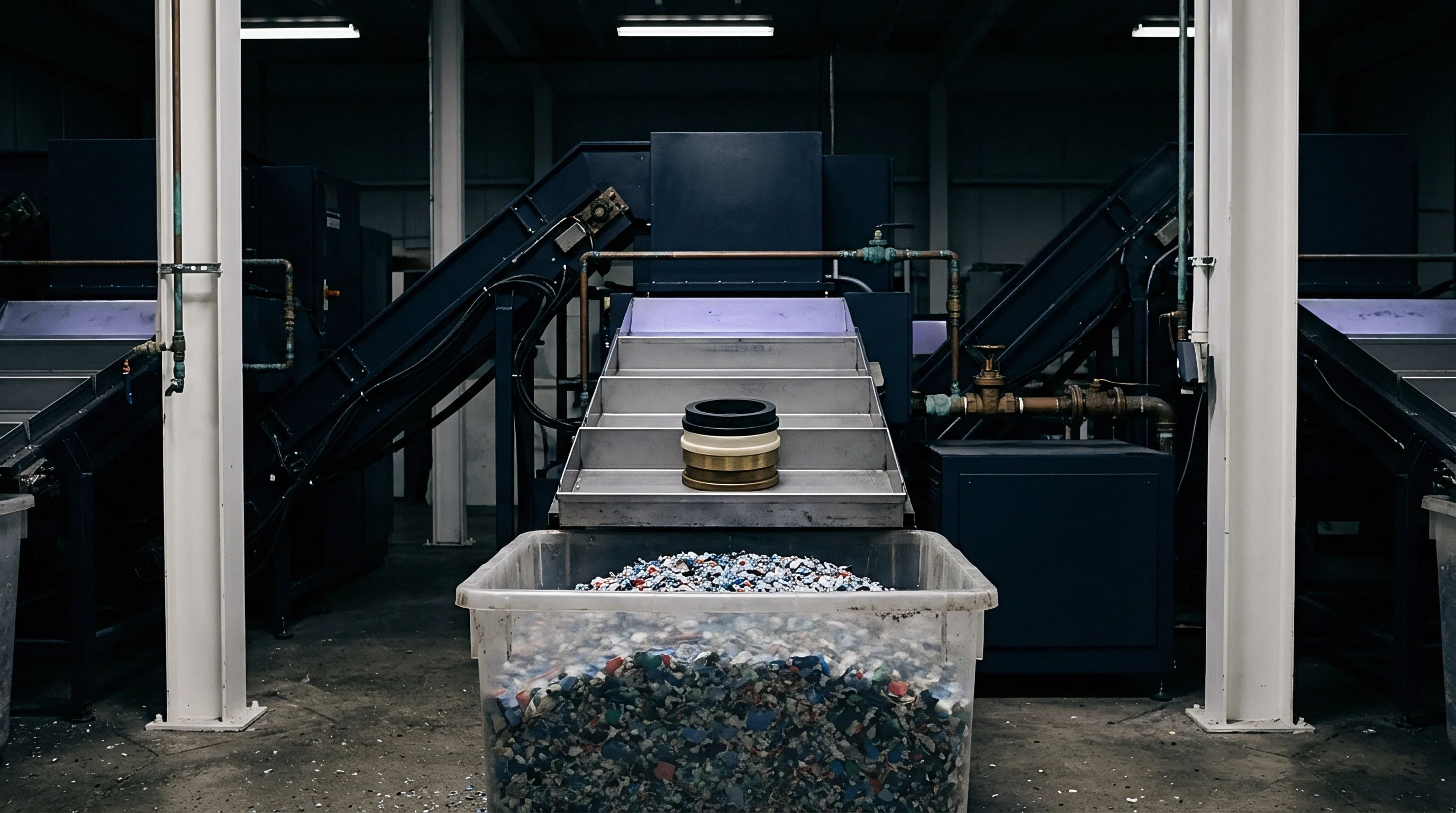

Threshold
Non-target screening of post-consumer recycled polyolefins operates under a severe analytical reality: unknown mass spectral peaks appear by the hundreds in food-contact recyclates, yet toxicological clearance demands a defensible concentration limit for every chromatographic feature detected. Food contact compliance under Regulation (EC) 1935/2004 Article 3 and Regulation (EU) 2022/1616 insists that migrating substances do not endanger human health. For intentionally added substances, listed specific migration limits govern clearance.
For non-intentionally added substances and unidentified contaminants in recycled high-density polyethylene and polypropylene, the analytical screening limit derives directly from toxicological thresholds translated through packaging geometry and food intake assumptions.
The standard baseline for an unidentified organic compound relies on the Threshold of Toxicological Concern concept formalised by the European Food Safety Authority. When a mass spectral peak exhibits no confirmed identification, toxicologists treat the migrant under the most restrictive toxicological tier: DNA-reactive carcinogens. This tier fixes human exposure at 0.0025 micrograms per kilogram body weight per day.
Assuming a standard adult body weight of 60 kilograms and a daily consumption of one kilogram of packaged food, this exposure cap translates into a maximum dietary concentration of 0.00015 milligrams per kilogram of food, equivalent to 0.15 micrograms per kilogram or 0.15 parts per billion. This level sits two orders of magnitude below the standard 10 micrograms per kilogram detection limit routinely cited for functional barriers under Regulation (EU) 10/2011.
Tenax contact for ten days at sixty degrees Celsius defines the worst-case migration scenario for non-polar volatile contaminants moving into dry fatty foods.
Analytical chemists frequently debate whether this extreme threshold governs every unconfirmed chromatographic peak in recycled resin batches. If testing excludes genotoxic structural alerts through in silico tools or in vitro testing, the threshold shifts upward to Cramer Class III, which permits 1.5 micrograms per kilogram body weight per day, yielding a migration limit of 0.09 milligrams per kilogram of food. If the compound groups into Cramer Class I, the limit rises to 30 micrograms per kilogram body weight per day, which equates to 1.8 milligrams per kilogram of food.
The derivation route from toxicological intake to chromatographic response determines whether a recycler passes or fails a batch.

Can Cramer Classification Apply to Tentative Peaks?
Classification depends on structural certainty. When high-resolution mass spectrometry yields a tentative library match below 90 percent spectral similarity, assigning a Cramer structural class introduces toxicological vulnerability. In silico assessment tools such as the Derek Nexus expert system or the OECD QSAR Toolbox demand validated chemical structures.
Applying Cramer Class III to an ambiguous identification leaves the compliance dossier exposed if toxicological authorities reassess that spectrum as an alkylating agent, an aromatic amine, or an N-nitroso compound. Laboratories that unilaterally assign Cramer Class III to unconfirmed peaks risk total dossier invalidation during competent authority audits.
The calculation converting a migration screening limit into an analytical limit of quantification inside the polymer matrix depends on migration modeling and severe extraction ratios. For complete mass transfer from a package with a thickness of 500 micrometers, a density of 0.95 grams per cubic centimeter, and a conventional packaging surface-to-volume ratio of 6 square decimeters per kilogram of food, a concentration of 0.15 micrograms per kilogram in food corresponds to a maximum concentration of 0.05 milligrams per kilogram in the polyolefin matrix. Matrix concentrations below 50 parts per billion present immense analytical challenges in gas chromatography and liquid chromatography coupled with orbitrap or time-of-flight mass spectrometry.
Laboratories that calibrate instruments to a generic 10 parts per billion matrix cut-off without confirming the absence of genotoxic structural alerts systematically misstate regulatory safety. The toxicological boundary remains whether a peak represents a mutagen or an inert oligomer until experimental fragmentation proves the molecular skeleton.

Flake
Mechanical recycling lines receive post-consumer polyolefin bales containing consumer product residues, printing inks, cross-contaminating industrial chemicals, and thermal degradation products. Flakes ground from sorted containers undergo washing with hot caustic solutions, surface decontamination, and vacuum degassing. Sorting efficiency controls input purity.
Volatile and semi-volatile contaminants survive mechanical decontamination at varying rates. Volatiles with boiling points below 150 degrees Celsius evaporate during melt filtration and vacuum extrusion. Heavier migrants remain trapped within the polyolefin matrix.
Degradation products from primary antioxidants, including oxidized phosphites such as oxidized tris(2,4-di-tert-butylphenyl)phosphite, generate persistent non-target signals across both recycled polyethylene and recycled polypropylene. Polyolefin degradation yields aliphatic hydrocarbons, branched aldehydes, ketones, and carboxylic acids that generate broad chromatographic humps.
The table below presents the primary contaminant classes encountered in post-consumer polyolefin flake streams, their characteristic source routes, and the typical screening limits applied during analytical qualification.
| Contaminant Class | Primary Stream Origin | Typical Matrix Concentration (mg/kg) | Toxicological Threshold Route | Target Screening Limit (mg/kg Food) |
|---|---|---|---|---|
| Polyolefin Oligomeric Saturated Hydrocarbons | Thermal polymer cleavage | 150.0 to 1200.0 | Classified structural groups | 0.050 (Fraction below 1 kDa) |
| Secondary Alkylbenzenes | Detergent residue set-off | 0.8 to 15.0 | Cramer Class I | 1.800 |
| Aliphatic Aldehydes (C6 to C12) | Hydroperoxide breakdown | 2.5 to 45.0 | Organoleptic odor threshold | 0.020 |
| Terpenoids (Limonene, Alpha-Pinene) | Fragrance absorption | 5.0 to 80.0 | Cramer Class I | 1.800 |
| Photoinitiators (Benzophenone, ITX) | Ultraviolet ink migration | 0.1 to 4.2 | Specific restriction listing | 0.050 |
| Industrial Plasticizers (Phthalates) | PVC sorting cross-contamination | 0.5 to 12.0 | Restricted group limits | 0.050 |
Evaluating migration from recycled flake batches demands clear verification protocols. The analyst faces three primary physical parameters controlling migrant loss:
- Diffusion coefficient within polymer dictates the speed at which small molecules navigate amorphous regions between crystalline lamellae during storage. High-density polyethylene exhibits significantly lower diffusivity than low-density polyethylene or polypropylene.
- Partition coefficient at interface controls the thermodynamic equilibrium between the polymer surface and the food simulant. Highly lipophilic migrants favor migration into vegetable oil simulant D2 over aqueous simulant A.
- Thermal history during re-granulation drives the breakdown of original polymer chains into secondary low-molecular-weight oligomers. Excessive shear forces in degassing extruders create fresh unsaturated hydrocarbons that elute across the entire analytical window.
Batch variability represents the central obstacle in deriving universal screening limits for recycled flakes. Pelletizing operations introduce varying decontamination residence times. A lot processed at 240 degrees Celsius under 5 millibars vacuum yields a clean volatile profile, while a lot run at 260 degrees Celsius under 30 millibars retains high residual solvent loads and forms additional thermal scission markers.
Converters that purchase recycled flakes without demanding lot-specific non-target gas chromatography profiles accept hidden migration liabilities that surface only when finished articles undergo statutory contact verification.


Instrument
Screening post-consumer recyclates demands coupling complementary analytical platforms to detect non-target migrants spanning diverse polarities, molecular weights, and volatilities. Gas chromatography coupled with high-resolution time-of-flight mass spectrometry captures volatile and semi-volatile substances below 500 Daltons. Liquid chromatography coupled with electrospray high-resolution mass spectrometry captures polar, non-volatile additives, oxidized oligomers, and degradation products extending to 1200 Daltons.
A laboratory report lacking instrument response factor corrections across structural families understates actual migrant concentrations.
Deriving an analytical screening limit requires translating a toxicological food-concentration target into an instrument response threshold. In targeted analysis, authentic reference standards establish precise calibration curves. In non-target screening, the chemical structures of detected peaks remain unknown until after acquisition.
Analysts must select an internal surrogate standard to quantify unknown peaks.
The choice of internal standard introduces immense response factor variation. In electron ionization gas chromatography, response factors for hydrocarbons, esters, and chlorinated compounds vary by a factor of three to five. In electrospray liquid chromatography, ionization efficiencies vary across three orders of magnitude between readily ionizable quaternary amines and poorly ionizing non-polar oligomers.

Can Semi-Quantitative Response Factors Protect Compliance?
Relying on a single internal standard to quantify hundreds of unknown chromatographic peaks produces severe systematic error. If a toxicologically significant contaminant ionizes poorly, its apparent concentration calculated against a well-ionizing surrogate will fall below the derived screening limit, generating a false-negative clearance. Applying a relative response factor safety buffer resolves this vulnerability.
Methodologies established for food-contact non-target screening apply a response factor uncertainty factor of 10 or 20 to the analytical screening limit.
Let the toxicological migration target be 0.010 milligrams per kilogram of food. The packaging ratio represents 6 square decimeters per kilogram of food. Migration testing utilizes 95 percent ethanol as an aggressive alternative simulant to vegetable oil under condition OM3: two hours at 70 degrees Celsius.
Ten percent of the polymer migrant mass transfers to the simulant under these conditions. The target concentration in the extract equates to 10 micrograms per liter.
When the mass spectrometer displays an ionization variation factor of 10 across known structural test sets, the analytical screening limit must adjust downward. The instrument detection threshold must reach 1.0 microgram per liter to guarantee that a substance with a low response factor triggers toxicological investigation.
Failure to calibrate this analytical window against worst-case response factors renders screening reports legally indefensible when regulatory enforcement laboratories re-examine identical packaging lots with multi-standard quantification matrices.

Toxicology
Converting an unidentified analytical signal into an operational clearance decision relies on toxicological risk assessment. Under European Union rules, substances entering food must undergo safety evaluation proportionate to exposure. Recycled polyolefins break conventional assessment paths because input streams contain compounds lacking intentional addition dossiers.
Toxicologists bridge this gap using structural grouping, chemical characterization, and tiered exposure limits.
Deriving the operational screening limit follows a strict sequence of toxicological decision gates:
- Mutagenicity alert interrogation screens high-resolution accurate mass fragmentation spectra against databases of DNA-reactive substructures. The presence of aromatic amines, epoxide rings, or nitroso moieties forces the assessment into the 0.00015 milligrams per kilogram dietary concentration limit.
- Cramer structural classification evaluates confirmed or tentatively identified non-genotoxic molecular structures through branching tree logic. Molecules sort into Class I low toxicity, Class II intermediate toxicity, or Class III high toxicity, setting migration caps at 1.8, 0.54, or 0.09 milligrams per kilogram of food.
- Organoleptic threshold screening verifies whether migrating substances alter the taste or odor of food under Regulation (EC) 1935/2004 Article 3(1)(c). Volatile degradation products such as (E)-2-nonenal possess sensory detection thresholds down to 0.00005 milligrams per kilogram of food, overriding toxicological safety limits with consumer acceptability limits.
- Polyolefin oligomer grouping isolates linear and branched saturated hydrocarbons into unified migration blocks. When structural confirmation confirms aliphatic oligomers between C10 and C30, the cumulative toxicological threshold applies to the entire chromatographic envelope rather than isolated peaks.
Consider a practical derivation scenario for a recycled high-density polyethylene milk bottle intended for repeat-use beverage dispensing. The evaluation assumes a contact area of 4.5 square decimeters holding 1.0 kilogram of liquid food. Migration testing runs in 50 percent ethanol for 240 hours at 40 degrees Celsius.
Non-target gas chromatography detects twelve unresolved peaks in the semi-volatile retention region.
High-resolution mass spectra provide empirical formulae but fail to deliver conclusive single-isomer library matches. The derivation workflow establishes the following values for this analytical batch:
| Derivation Step | Toxicological Input Metric | Simulant Extract Target (micrograms/L) | Instrument Limit Target (micrograms/L) | Operational Decision |
|---|---|---|---|---|
| Genotoxic Baseline | 0.0025 micrograms/kg bw/day | 0.15 | 0.015 | Exclusion threshold if alerts detected |
| Alert Clearance (Negative Ames) | QSAR alert absence verified | N/A | N/A | Permits progression to Cramer classification |
| Cramer Class III Default | 1.5 micrograms/kg bw/day | 90.00 | 9.000 | Screening limit for non-mutagenic unknowns |
| Response Factor Buffer | Tenfold ionization uncertainty | 90.00 | 0.900 | Quantification threshold for peak integration |
| Odor Constraint Check | Sensory degradation threshold | 15.00 | 1.500 | Binding cap for unsaturated carbonyls |
The progression demonstrates that applying the conservative mutagenicity limit requires instrument sensitivity rarely attainable during routine quality control. Decontaminators clear this hurdle by combining clean post-consumer streams with challenge testing that proves high decontamination factors for volatile surrogates. A decontamination factor of 99.9 percent allows toxicologists to discount high matrix burdens of potential volatile mutagens.
Under supply specifications referencing Regulation (EU) 2022/1616, non-target chromatograms without explicit Cramer tier justifications trigger batch rejection at goods receipt.
When toxicological derivation paths clash with analytical limits of detection, converters face commercial exposure. A finished package releasing 0.05 milligrams per kilogram of an uncharacterized migrant passes Cramer Class III thresholds but violates the general safety mandate if subsequent laboratory investigation uncovers an endocrine-disrupting alkylphenol.
The supplier defended the lot by asserting that unidentified peaks below 10 parts per billion in 10 percent ethanol required no toxicological characterisation under standard packaging declarations.

Conformity
The technical dossier carrying a recycled polyolefin article into the European market must bind the laboratory screening limit directly to the Declaration of Conformity. Under Regulation (EU) 2022/1616, decontamination processes must operate under authorized recycling schemes with proven decontamination efficiency. Quality assurance systems established under Regulation (EC) 2023/2006 demand that screening methodologies monitor batch-to-batch variation in input feedstocks and decontamination performance.
Declarations that cite compliance with Regulation (EU) 10/2011 without detailing the evaluation of non-intentionally added substances present catastrophic commercial liabilities. Customs authorities and competent health inspectorates routinely challenge generic conformity claims when imported articles contain recycled polyolefins. The enforcement officer checks whether non-target screening verified the absence of unauthorized recycling contaminants.
Traceability documentation must connect the physical resin lot number to the precise mass spectrometry screening report. When an accredited laboratory issues a report, the conformity dossier must state the screening cut-off used during data processing. If the laboratory calibrated its non-target integration cut-off at 0.05 milligrams per kilogram of food simulant, the dossier must provide toxicological justification proving that no genotoxic substances could present hazards at or below that threshold.
Disputes frequently center on sample preparation methods. Headspace solid-phase microextraction captures volatile odorous compounds, whereas total matrix dissolution in hot toluene followed by methanol precipitation isolates polymer additives and non-volatile impurities. Simulant migration extracts reflect real-world transfer kinetics, while aggressive total extraction measures absolute resin burden.
An importer claiming compliance based solely on aqueous simulant A testing for an article intended to hold oily dressings commits an elementary compliance breach.
A supplier contract line specifying that recycled polyolefin resins must comply with all migration limits fails to allocate liability for unknown contaminants discovered during downstream non-target screening audits.