Predicting Long Term Thermal Oxidation Degradation Limits in Post Consumer Polyethylene Compounds under Variable Stabilizer Letdown Ratios
Predict post-consumer polyethylene thermal oxidation limits by tracking active phosphite depletion via high-pressure DSC and Arrhenius modeling under verified letdowns.


Flake
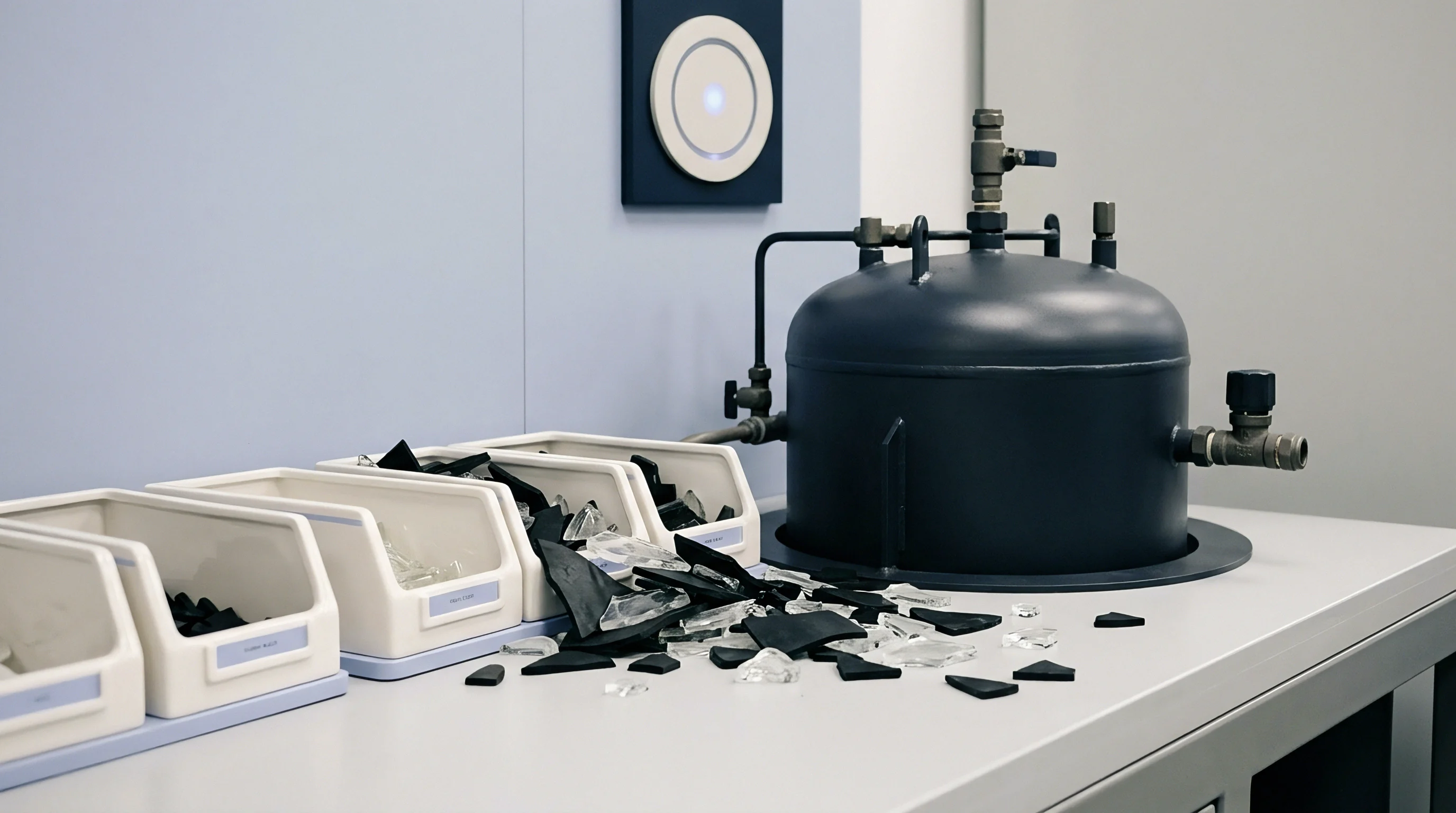
Incoming post-consumer polyethylene regrind arrives with a built-in thermal history from previous conversion cycles, service life, and mechanical shredding. Each prior extrusion step shifts the chemical baseline of the resin before any virgin stabilizer enters the feed throat. Post-consumer high-density polyethylene sorted from rigid packaging carries varying fractions of blow-molded homopolymer and injection-molded copolymer.
Unwashed labels introduce acidic glues. Detergent residues remain trapped within micro-pores. These impurities generate catalytic sites that accelerate the consumption of phenolic and organophosphite antioxidants during re-compounding.
Thermal stability evaluation cannot treat post-consumer compounds as clean baseline polymers. A post-consumer lot displaying a melt flow rate of 0.8 grams per 10 minutes at 190 degrees Celsius under a 2.16 kilogram load often conceals significant internal hydroperoxide accumulation. When compounders adjust additive letdown feeders to minimize raw material expenses, they risk creating batches with insufficient protective reserves.
The resin survives initial pelletization, yet it carries a terminal vulnerability to long-term heat and oxygen.
A purchase order mandating oxidation induction times above thirty minutes under ISO 11357-6 at 200 degrees Celsius prevents suppliers from diluting additive masterbatch beyond nominal letdown ratios.
The physical composition of the shredded flake dictates initial stabilization demand. Rigid flake streams contain distinct contaminant profiles that interact aggressively with processing stabilizers:
- Pigmentary metal oxides accelerate radical propagation reactions by decomposing hydroperoxides into reactive alkoxy radicals.
- Residual fatty acid esters from consumer wash chemicals react directly with phosphite processing stabilizers, converting active phosphites to non-protective phosphates.
- Polypropylene contamination fractions introduce tertiary carbons along the polymer backbone, lowering the activation energy for hydrogen abstraction.
- Printing ink carriers generate crosslinking reactions during twin-screw compounding, skewing rheological measurements and disguising chain scission.
Compounders frequently assert that incoming flake color variance and minor melt index shifts have zero effect on finished product stabilization.

Decay
Thermal oxidation proceeds through a radical-driven autoxidation chain initiated by mechanically severed carbon-carbon bonds and decomposed hydroperoxide groups. In uninhibited polyethylene compounds, alkyl radicals react with dissolved molecular oxygen at near diffusion-controlled rates. This addition creates peroxy radicals.
Peroxy radicals abstract tertiary hydrogens. This creates fresh alkyl radicals alongside unstable polymer hydroperoxides.
Oxygen diffuses through amorphous regions. The dense crystalline lamellae exclude oxygen molecules, concentrating degradation reactions within the amorphous tie-chain zones. Chain scission across these load-bearing tie molecules reduces ductility long before tensile strength declines.
A compound maintaining adequate yield stress can shatter under modest impact loading once tie molecules separate.

Why Do Prior Heat Cycles Depress Antioxidant Efficiency?
Previous thermal exposure populates the polymer backbone with latent oxygenated structures that consume active phosphite molecules during initial melting. As secondary antioxidants neutralize resident hydroperoxides, the protective system suffers premature depletion during the compounder’s own melt filtration process. Hydroperoxides decompose across subsequent passes.
The remaining primary hindered phenols must shoulder both processing stabilization and service-life protection.
Extruder shear generates localized hot spots. These localized zones exceed the indicated barrel setpoints by fifteen to thirty degrees Celsius, driving the rapid homolytic cleavage of peroxides into hydroxyl and alkoxy radicals. Carbonyl absorption shifts baseline infrared transmission.
The cumulative formation of ketones, aldehydes, and carboxylic acids tracks the progressive consumption of the resin’s molecular weight integrity.
| Extrusion Pass | MFR at 190 C and 2.16 kg (g/10 min) | Carbonyl Index (ASTM D5576) | Hydroperoxide Content (mmol/kg) | Tensile Strain at Break (ISO 527-2) |
|---|---|---|---|---|
| Virgin Pellet Baseline | 0.75 | 0.02 | 0.4 | 680 percent |
| Pass 1 (Post-Consumer Flake) | 0.68 | 0.14 | 3.8 | 520 percent |
| Pass 2 (Twin-Screw Pelleted) | 0.61 | 0.28 | 8.2 | 310 percent |
| Pass 3 (Converter Simulation) | 0.49 | 0.46 | 14.6 | 95 percent |
| Pass 4 (Severe Regrind Spike) | 0.38 | 0.71 | 22.1 | 18 percent |
Chain termination consumes active radicals. In high-density polyethylene, macroradical combination leads to high-molecular-weight branch formation, lowering the melt flow rate under ISO 1133 conditions. In linear low-density polyethylene, beta-scission frequently dominates, driving the melt flow index upward while reducing melt strength.
Both pathways document unchecked oxidative chain degradation. Parts molded from severely degraded compounds suffer sudden environmental stress cracking, prompting costly field recalls and permanent customer disqualification.
Masterbatch
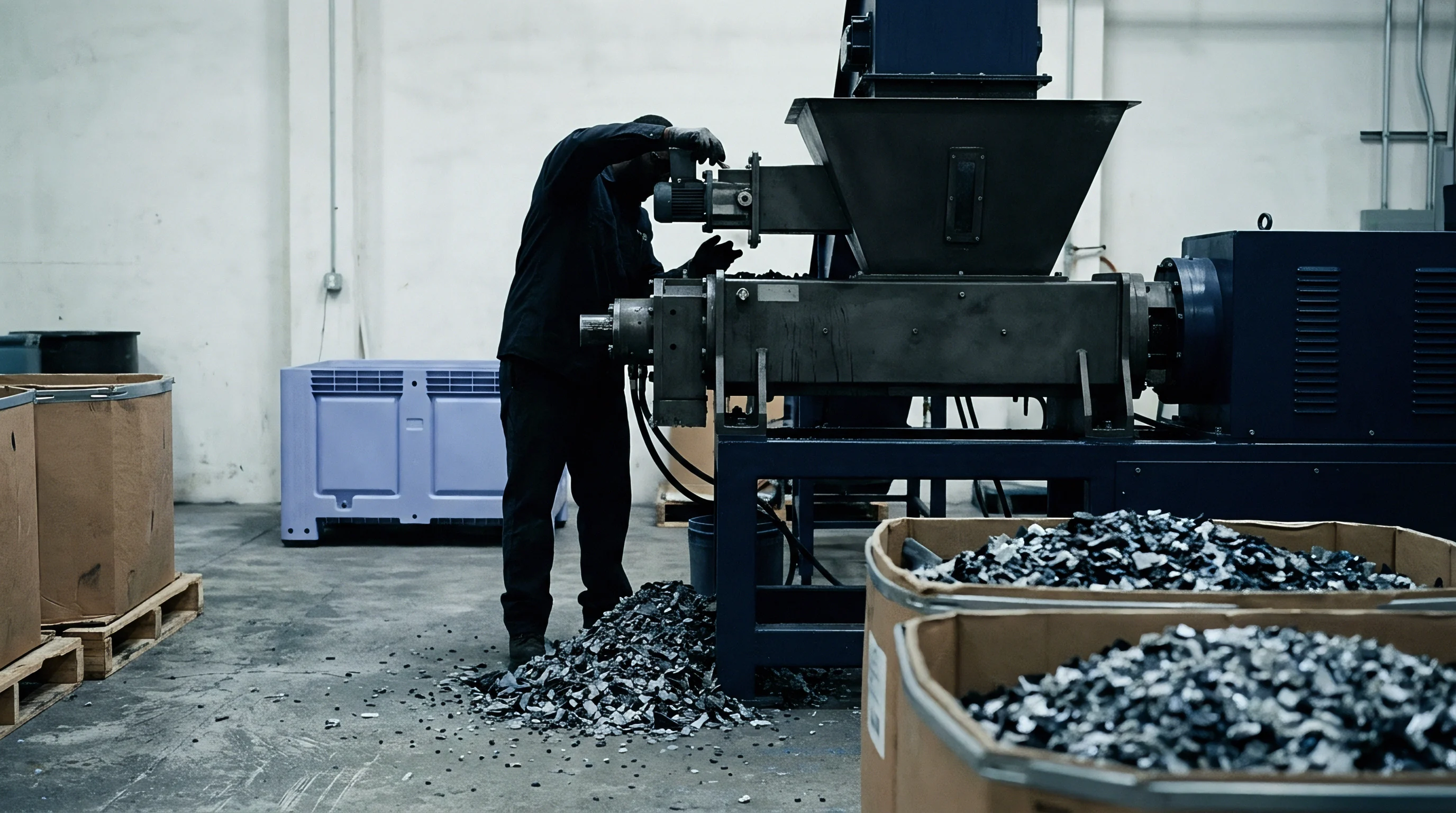
Compounding extruders inject additive concentrates through gravimetric side-feeders to arrest oxidative radical propagation. Standard stabilization formulations for post-consumer polyethylene pair a high-molecular-weight hindered phenolic antioxidant, such as tetrakismethylene(3,5-di-tert-butyl-4-hydroxyhydrocinnamate), with an organophosphite processing stabilizer, such as tris(2,4-di-tert-butylphenyl) phosphite. The phenolic component traps chain-propagating peroxy radicals through hydrogen atom transfer.
The phosphite reduces reactive hydroperoxides to stable alcohols, becoming oxidized to an inert phosphate in the sequence.
Secondary phosphites sacrifice themselves during the melt phase so primary sterically hindered phenols survive into solid service.
Letdown ratio variability destabilizes this protective balance. Masterbatch pellets carrying a ten percent active stabilizer package are metered into raw flake at nominal letdowns between one and three percent by weight. Gravimetric feeder screw pulsing, pellet bridging in feed hoppers, and bulk density disparities between masterbatch pellets and shredded flakes create letdown drifts of twenty to forty percent across a compounding shift.
Volatile antioxidants evaporate during devolatilization.
Letdown fluctuations expose compounds to distinct failure zones depending on the specific additive ratios utilized in the formulation:
- Sterically hindered phenols deliver radical-trapping capacity in the finished article, yet excessive additions above 2500 parts per million provoke yellowing through quinonoid conversion products.
- Organophosphite processing aids prevent polymer crosslinking inside the compounding barrel, with additions below 800 parts per million leading to rapid viscosity drift during subsequent converter injection molding.
- Hindered amine light stabilizers provide secondary thermal protection below 120 degrees Celsius, but their basic amine functionalities deactivate under exposure to acidic catalyst residues from original polymer synthesis.
Consider a practical processing scenario. Take a compounding run blending post-consumer blow-molding grade high-density polyethylene with a target two-percent letdown of a 1:1 phenolic-phosphite masterbatch. If the feeder drifts to a 1.2 percent letdown, the total active antioxidant concentration drops from 2000 parts per million to 1200 parts per million.
The initial extruder pass consumes 700 parts per million of the organophosphite to counter resident hydroperoxides. The pellets emerge with only 100 parts per million of active phosphite and 600 parts per million of phenolic antioxidant. Solid-state thermal endurance falls precipitously.
| Nominal Letdown (wt %) | Actual Letdown (wt %) | Active Phenolic (ppm) | Active Phosphite (ppm) | Oxidative Induction Time at 200 C (min) |
|---|---|---|---|---|
| 3.0 | 2.85 | 1425 | 1425 | 62 |
| 2.5 | 2.35 | 1175 | 1175 | 48 |
| 2.0 | 1.90 | 950 | 950 | 34 |
| 2.0 | 1.30 | 650 | 650 | 14 |
| 1.5 | 1.05 | 525 | 525 | 6 |
Phosphite levels balance processing melt stability while phenolic components defend solid state longevity.

Calorimetry
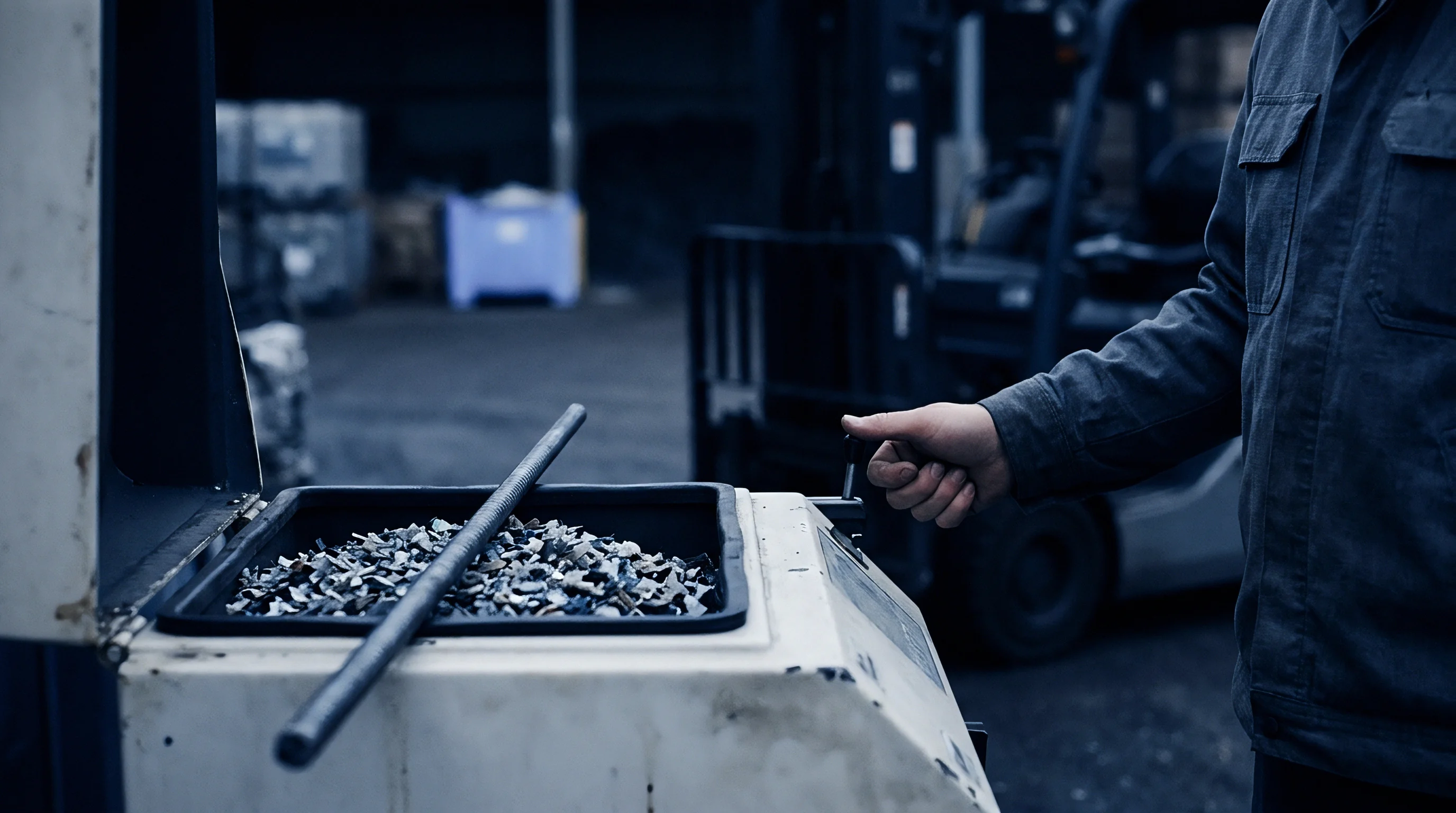
Differential thermal analysis profiles the exhaustion of active antioxidant packages under controlled thermal stress. Standard oxidation induction time measurements under ISO 11357-6 or ASTM D3895 heat a specimen to a constant temperature, typically 200 degrees Celsius, in a high-purity nitrogen atmosphere. The instrument switches the purge gas to pure oxygen at a fixed flow rate of 50 milliliters per minute.
The elapsed time from oxygen introduction to the onset of the exothermic degradation signal quantifies remaining stabilizer efficiency.
Standard atmospheric induction testing encounters severe limitations in post-consumer polyolefins containing volatile contaminants or low-molecular-weight degradation fractions. At 200 degrees Celsius, volatile phenolic antioxidants can physically evaporate from the open sample pan before reacting with oxygen. High-pressure differential scanning calorimetry under ASTM D5885 resolves this artifact by operating inside a sealed vessel pressurized to 3.5 megapascals with oxygen.
The elevated pressure lowers the test temperature to 150 degrees Celsius, suppressing additive volatilization and mirroring solid-state autoxidation mechanisms.
High-density polyethylene compounds aged at 100 degrees Celsius retain less than thirty percent of original tensile elongation once active phosphite falls below 150 parts per million.
Analytical verification requires combining thermal measurements with direct chromatographic extraction to distinguish active stabilizers from their inert oxidized reaction products:
- Cryogenic milling reduces incoming pellets to particles below 500 microns to maximize solvent contact surface area.
- Total solvent extraction utilizing boiling dichloromethane or toluene in a microwave-assisted extraction cell pulls both active and consumed additives out of the polyethylene matrix.
- High-performance liquid chromatography resolves primary phenols from secondary phosphites, their corresponding phosphates, and oxidized quinone derivatives against known analytical standards.
- Fourier transform infrared spectroscopy confirms relative carbonyl index growth at 1715 reciprocal centimeters alongside trans-vinylene unsaturation consumption at 965 reciprocal centimeters.
Specifying ASTM D3895 test conditions at 200 degrees Celsius with a twenty-minute minimum induction floor legally entitles the buyer to issue debit memos on sub-par railcars.

Extrapolation
Service lifetime projections translate accelerated thermal endurance figures into ambient operational durability. Accelerated aging programs suspend micro-tensile specimens inside forced-draft ovens at elevated temperatures, typically 110, 100, and 90 degrees Celsius, under continuous air circulation. Specimen sets undergo destructive tensile testing under ISO 527-2 at regular weekly intervals.
The industry benchmark for mechanical thermal oxidation failure is the time required to lose fifty percent of original elongation at break.
Arrhenius modeling relies on plotting the natural logarithm of time to mechanical failure against the reciprocal of absolute exposure temperature. The slope yields the experimental activation energy of degradation. For clean virgin high-density polyethylene, this activation energy generally lands between 100 and 115 kilojoules per mole.
In post-consumer compounds, residual metal residues and varied polymer history depress the activation energy to ranges between 75 and 90 kilojoules per mole.
Where Do Standard Arrhenius Models Break Down?
Physical phase changes across the polyethylene melting transition alter oxygen diffusion rates and radical termination kinetics. Data points gathered above the polymer melting point, such as 200-degree differential thermal data, cannot be linearly projected downward to predict 40-degree field performance on a single slope. The crystalline volume fraction increases as temperature drops, restricting oxygen mobility to the amorphous channels.
At lower temperatures, antioxidant diffusion slows drastically, creating local micro-domains starved of stabilizer molecules despite adequate bulk analytical concentration.
Brittleness tracks declining elongation limits. Dormant peroxide bonds trigger rapid failure. A post-consumer compound formulated with an inadequate masterbatch letdown exhibits a severe shortening of its induction stage.
Once primary hindered phenols fall beneath a threshold value, typically 50 to 100 parts per million, degradation cascades rapidly without an observable transition period.
| Compound Grade And Letdown | OIT at 200 C (ASTM D3895) | Time to 50% Elongation at 100 C | Calculated Activation Energy | Projected Lifetime at 40 C Continuous |
|---|---|---|---|---|
| Virgin Pipe Grade (Reference) | 55 min | 4,800 hours | 108 kJ/mol | 38.4 years |
| PCR HDPE with 2.5% Letdown | 42 min | 3,100 hours | 92 kJ/mol | 14.8 years |
| PCR HDPE with 2.0% Letdown | 28 min | 1,950 hours | 86 kJ/mol | 7.2 years |
| PCR HDPE with 1.5% Letdown | 12 min | 820 hours | 81 kJ/mol | 2.4 years |
| PCR HDPE with 1.0% Letdown | 3 min | 190 hours | 76 kJ/mol | 0.4 years |
Industrial piping and conduit networks buried underground experience steady soil temperatures, yet above-ground installations encounter cyclic solar loading and seasonal air fluctuations. The mathematical models assume uniform additive dispersion. When twin-screw compounding lines operate with poor dispersive mixing elements, stabilizer masterbatch agglomerations leave uninhibited resin pockets that fail prematurely.
Whether low levels of halogenated catalyst residues from original polymer synthesis accelerate secondary phosphite hydrolysis in outdoor humid exposures remains an unresolved physical problem.

Settlement
Commercial purchasing agreements hinge on verifiable physical limits rather than generic supplier certifications. Off-spec letdowns elevate warranty claims. When an enterprise sources post-consumer polyethylene compounds for multi-year outdoor applications, raw material line items must incorporate strict chemical defense thresholds.
A supplier quoting an attractive price per metric ton frequently offsets tight processing margins by shaving masterbatch addition rates from two percent down to one percent.
Extruder barrel temperatures above 240 degrees Celsius destroy secondary phosphites through thermal cleavage before pellets ever enter the pelletizer water bath.
The cost difference between an adequate stabilization package and an under-stabilized matrix represents a small fraction of finished part economics. Take a railcar order of 90 metric tons of compound priced at 1,200 dollars per ton. A standard 1:1 phenolic-phosphite additive masterbatch trades near 6.50 dollars per kilogram.
Diluting the letdown ratio from 2.0 percent to 1.2 percent saves the compounder 46.80 dollars per metric ton of compound, totaling roughly 4,212 dollars across the railcar. That minor procurement savings introduces catastrophic field liability for the buyer, whose finished molded products face warranty obligations spanning five to ten years.
Receiving inspection procedures must isolate and quarantine incoming lots before pellets drop into bulk storage silos. Composite core sampling across railcar compartments provides the test material for rapid thermal screening. Sourcing contracts should explicitly link invoice settlement to Certificate of Analysis validation, demanding both high-pressure oxidation induction times above forty minutes under ASTM D5885 at 150 degrees Celsius and chromatographic confirmation of active phosphite above 600 parts per million.
Nitrogen purging retards thermal autooxidation. Final purchase contracts linking invoice clearance to independent lab verification of phenolic content safeguard working capital across high-volume production schedules.