Determining Monomer Ratios in Polyolefin Customs Entry Files
Customs polyolefin entry relies on spectroscopic quantification of monomer mass fractions after deducting non-polymeric additive mass from the total matrix.


Pellet
Cross-border shipments of polyolefin resins frequently run into customs holds when entry paperwork uses commercial trade names instead of regulatory tariff definitions. Under Chapter 39 of the Harmonized System, polyolefins are classified by the exact weight percentage of monomer units chemically incorporated into the polymer backbone. A resin declared as polyethylene under subheadings 3901.10 or 3901.20 must contain at least 95 percent ethylene by weight relative to total polymer content, calculated on the dry resin matrix.
Misclassifications occur when filings rely on commercial grade names rather than measured comonomer mass fractions, triggering audits, tariff reassessments, and mandatory laboratory sampling at the port of entry.
Polymerization processes introduce comonomers like 1-butene, 1-hexene, or 1-octene into linear low-density polyethylene to disrupt chain symmetry and reduce density. Propylene-ethylene random and block copolymers similarly incorporate secondary monomers to adjust impact strength and clarity. Customs authorities enforce Note 4 to Chapter 39 strictly: any comonomer present at 5 percent or more by weight moves the resin into a copolymer tariff code, changing the duty rate and trade preference eligibility.
Entry documents listing a single commercial grade name without specifying comonomer identity and mass fraction routinely trigger red flags in automated screening systems.
A comonomer content exceeding five percent by weight reclassifies a homopolymer entry file into a copolymer tariff line under Harmonized System Chapter 39 Note 4.
Whether a material is an additive masterbatch, a physical blend, or a true reactor copolymer dictates its entry pathway. Physical blends of polyethylene and polypropylene fall under heading 3902 or 3901 based on which monomer predominates by weight, while reactor-grade random copolymers require spectroscopic proof of chemical bonding. Border authorities do not rely on sales invoices or broker datasheets.
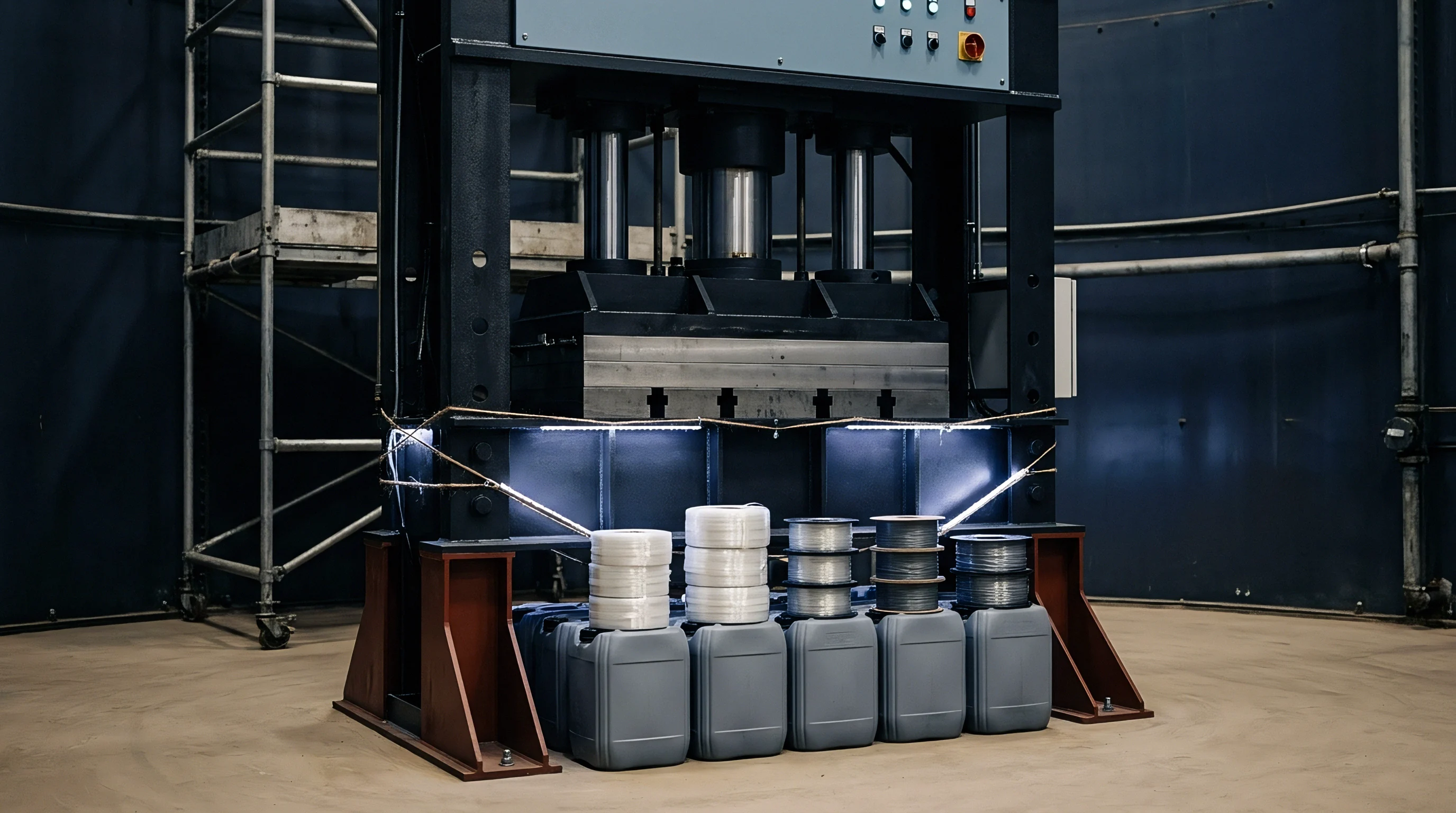
When a container arrives at the terminal, inspectors take physical samples directly from gaylords or bulk railcars and send sealed jars to regional customs laboratories for spectroscopic testing.
Discrepancies often stem from how non-polymeric components are handled. Pigments, mineral fillers, halogenated flame retardants, and thermal stabilizers add to the gross weight of shipped pellets, but they must be deducted before calculating monomer weight ratios. If a compound contains 20 percent calcined talc by weight, calculating monomer proportions against total gross mass yields incorrect comonomer percentages and an invalid tariff code.
Documentation must break down the full formulation, separating the active polymer matrix from auxiliary additives.
Commercial contracts frequently specify target melt flow indices and mechanical properties while leaving comonomer tolerances unstated. Many shipments arrive at customs with valid manufacturer datasheets that simply fail to disclose minor hexene or octene levels above the five percent regulatory threshold.

Spectroscopy
Determining comonomer mass fractions in polyolefins requires analytical techniques capable of distinguishing structural monomer units inside the chemical chain. High-resolution solution-state Carbon-13 Nuclear Magnetic Resonance spectroscopy serves as the definitive referee method across international customs laboratories. Standardized under ASTM D5017, Carbon-13 NMR quantifies the triad and triad-sequence distributions within ethylene-higher alpha-olefin copolymers, providing absolute molar concentration values without requiring empirical calibration curves.
Samples dissolve in deuterated 1,2,4-trichlorobenzene at 130 degrees Celsius, and spectral acquisition requires high temperatures to prevent polymer crystallization inside the probe tube during spin-lattice relaxation measurement.
Fourier Transform Infrared spectroscopy provides a rapid, cost-effective secondary method for routine customs screening. Governed by ASTM D5576 for ethylene-butene and ethylene-hexene copolymers, and ASTM D3900 for ethylene-propylene rubber formulations, FTIR quantifies characteristic vibrational absorbances. Methyl group rocking vibrations at 1378 wave numbers indicate propylene content, while ethyl and butyl branches show isolated bending modes at 770 and 720 wave numbers.
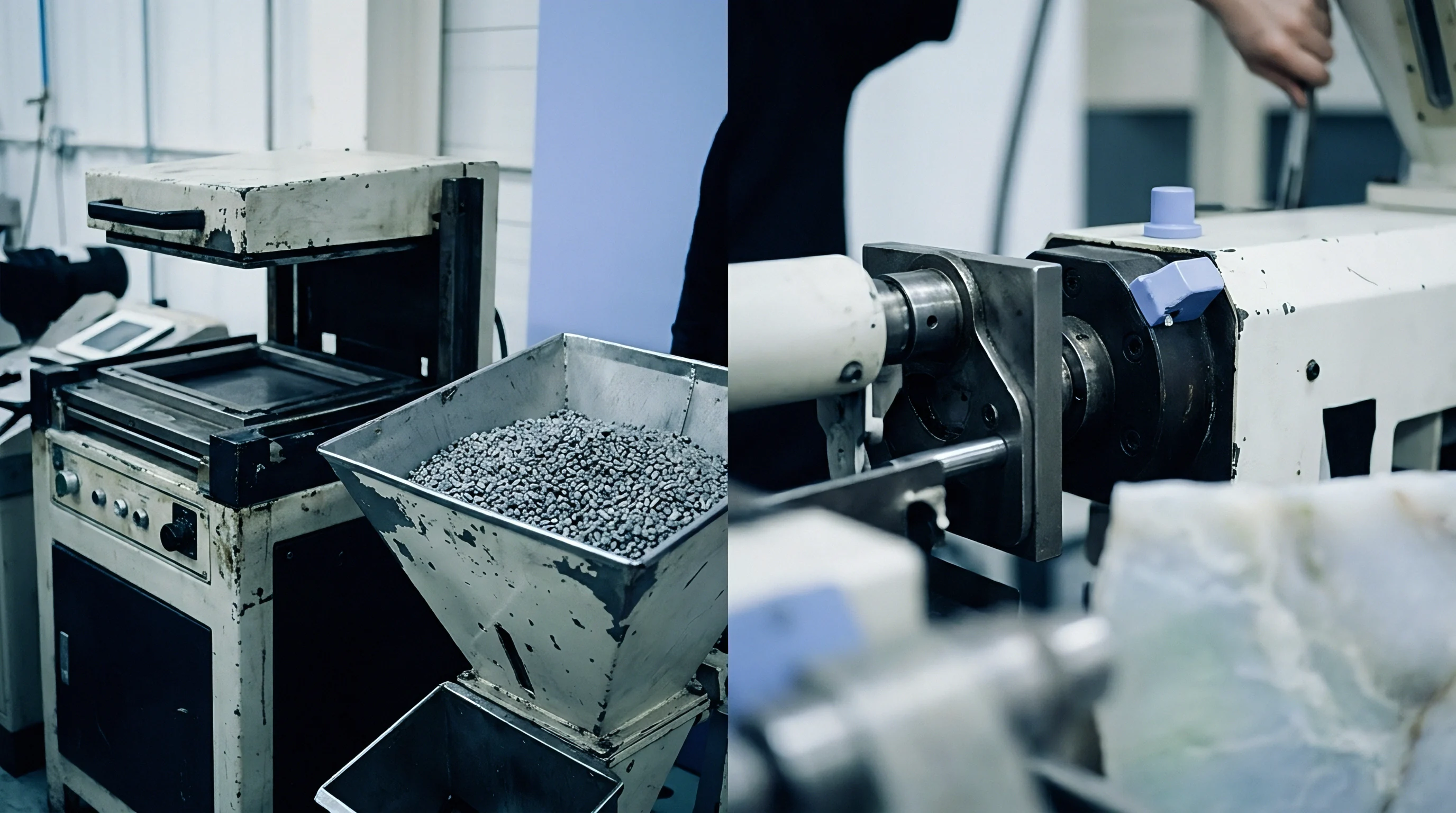
Transmission FTIR demands precise film preparation, where resin pellets are hot-pressed at 170 degrees Celsius into uniform plaques between 50 and 150 microns thick to avoid detector saturation in strong absorption bands.
| Test Method | Target Chemistry | Primary Measurement Band | Sample Condition | Detection Limit |
|---|---|---|---|---|
| ASTM D5017 | Ethylene-Alpha Olefin Copolymers | Carbon-13 Chemical Shifts (10-50 ppm) | Solution in TCB at 130 C | 0.1 mol percent |
| ASTM D5576 | Ethylene-Butene / Hexene Copolymers | Infrared Absorbance (720-770 cm-1) | Hot-pressed film (100 micron) | 0.5 wt percent |
| ASTM D3900 | Ethylene-Propylene Copolymers / EPDM | Infrared Absorbance Ratio (1378/720 cm-1) | Melt-cast compression plaque | 1.0 wt percent |
| ISO 11357-3 | Polypropylene Block / Impact Copolymers | Differential Scanning Melting Peaks | Solid pellet (5-10 mg nitrogen) | 2.0 wt percent |
Differential Scanning Calorimetry offers supporting evidence regarding phase morphology but cannot serve as a standalone monomer quantification tool for customs files. ISO 11357-3 heat-flux DSC scans disclose double melting peaks in high-impact polypropylene copolymers, reflecting distinct homopolymer polypropylene and ethylene-propylene rubber domains. Thermal transitions indicate the presence of distinct phases rather than precise mass fractions.
Dynamic mechanical thermal analysis similarly identifies glass transition temperatures for separate rubbery phases, yet fails to provide the gravimetric accuracy demanded by customs entry auditors when validating single percentage point boundaries.
Solution-state Carbon-13 NMR at 130 degrees Celsius remains the ultimate referee method for customs monomer ratio verification when FTIR absorption curves show spectral overlap.
Attenuated Total Reflectance accessories simplify sample preparation by eliminating the need to press thin films, but ATR-FTIR introduces depth-of-penetration variations that distort quantitative ratios. Because infrared beam penetration depth depends on wavelength, refractive index matching between the diamond or germanium crystal and the polyolefin matrix changes across the mid-infrared spectrum. Uncorrected ATR spectra underreport methyl branching content in high-density polyethylene modifications.
Customs laboratories reject entry documentation backed solely by uncalibrated ATR-FTIR scans when monomer ratios sit within two percentage points of a tariff boundary line.
Analytical precision drops significantly when examining filled or crosslinked polyolefin compounds. Carbon black obscures infrared transmission, requiring pyrolytic extraction or specialized photoacoustic detection prior to spectral interpretation. Inorganic fillers such as calcium carbonate produce broad infrared absorption bands around 1420 and 875 wave numbers, masking methyl group deformation peaks used for polypropylene quantification.
When analyzing unknown customs samples containing inorganic additives, the laboratory isolates the pure polymer fraction via solvent extraction using boiling xylene, recovers the dissolved resin through methanol precipitation, and performs spectroscopic measurement on the dried residue.
Laboratory equipment calibration drifts without regular verification against certified reference materials. A spectrometer calibrated on random ethylene-octene copolymers produces systematic mass fraction errors when applied to block ethylene-butene resins.
Threshold
Establishing customs compliance for polyolefin entry files demands calculating monomer mass ratios exclusively on the total weight of the polymer constituent. Harmonized Tariff Schedule rules require stripping away non-polymeric additives before evaluating whether ethylene, propylene, or another monomer reaches the governing thresholds. Importers often make errors by calculating monomer percentages against the total gross invoice mass of the compound, leading to misstated tariff classifications on filled, colored, or flame-retarded resin grades.

Which Test Standard Resolves Customs Polyolefin Monomer Classification?
When monomer classification disputes arrive at regulatory appeal boards, ASTM D5017 solution-state Carbon-13 NMR stands as the single analytical protocol recognized by customs authorities to overrule secondary screening errors. The standard quantifies sequence distribution and absolute molar concentrations directly from polymer chain structure. Secondary infrared methods under ASTM D5576 require calibration against certified NMR standards, making FTIR secondary evidence in formal classification challenges.
Consider an imported industrial resin compound declared under a single invoice price. The physical shipment comprises 1000 kilograms of pellets containing an ethylene-octene polymer matrix, calcined talc filler, carbon black masterbatch, and a primary antioxidant package. To prepare the customs entry file correctly, the sourcing engineer must calculate the pure polymer matrix mass before applying the 95 percent tariff threshold under Chapter 39 Note 4.
- Gross Shipment Mass 1000.0 kilograms of total compounded pellets delivered to the port of entry.
- Inorganic Filler Fraction 180.0 kilograms of calcined talc determined via ash content testing under ISO 3451-1 at 600 degrees Celsius.
- Carbon Black Loading 20.0 kilograms of furnace carbon black measured through pyrolytic nitrogen degradation under ASTM D1603.
- Additive Package Content 5.0 kilograms of phenolic antioxidant and phosphite stabilizer package quantified via solvent extraction.
- Pure Polyolefin Matrix Mass 795.0 kilograms of total base resin isolated from non-polymeric components.
Laboratory analysis via Carbon-13 NMR demonstrates that the isolated base polymer matrix contains 727.42 kilograms of ethylene units and 67.58 kilograms of 1-octene units. Evaluating the ethylene weight fraction against the total gross compound mass yields 72.74 percent ethylene, which creates a false profile of the material composition. Evaluating the ethylene weight fraction against the isolated pure polyolefin matrix yields 91.50 percent ethylene and 8.50 percent 1-octene by weight.
Because the 1-octene comonomer exceeds 5.0 percent by weight of the pure polymer matrix, the resin cannot be classified under heading 3901.10 as pure polyethylene. The material must enter under subheading 3901.40 as an ethylene-alpha-olefin copolymer. Filing the shipment under homopolymer polyethylene codes to secure lower duty rates constitutes a tariff misdeclaration, exposing the importer to retroactive penalty assessments and mandatory port inspections across subsequent import dockets.
Failing to perform additive deductions before monomer ratio calculation results in incorrect tariff code selection, leading to container seizures, anti-dumping duty penalties, and the loss of customs filing privileges.

Docket
A resilient customs entry dossier bridges the gap between commercial sales terms and regulatory analytical mandates. Importers must build documentation packages that survive post-clearance audits up to five years after entry. Overseas suppliers often issue generic Certificates of Analysis listing nominal target properties rather than measured lot-specific chemistry.
Relying on nominal manufacturer claims leaves the importer defenceless when customs laboratories test incoming lots and find comonomer variances that breach tariff cutoffs.
- Confirm that the manufacturer Certificate of Analysis states measured comonomer mass fractions alongside the specific standardized test protocol applied, such as ASTM D5017 or ASTM D5576.
- Verify that the Certificate of Analysis explicitly lists total filler, pigment, and additive weight percentages, referencing ash content test results under ISO 3451-1.
- Match lot numbers listed on incoming gaylords, bags, or railcars directly against the batch identifiers printed on the analytical test reports accompanying the shipment.
- Cross-reference the declared Harmonized System code against current regional tariff schedules, checking whether minor comonomer additions shift the rate from duty-free status to ad valorem tariffs.
- Archive raw spectroscopic files, calibration curves, and thermal analysis traces provided by the supplier laboratory for every production campaign included in the customs entry.
Complications expand when importing masterbatches or proprietary compound formulations where overseas vendors keep exact additive formulations secret to protect intellectual property. Customs officials do not accept non-disclosure excuses as a valid reason for submitting incomplete monomer and filler breakdown files. When full chemical disclosure cannot be included in public entry forms, the supplier must submit a confidential master file directly to the customs authority’s technical tariff division before the vessel arrives.
Reactor-grade copolymers and physical masterbatch let-down blends require distinct entry declarations. In a reactor-grade random polypropylene copolymer, ethylene monomer is distributed within the polymerizing chain inside the chemical reactor. In a physical let-down blend, polypropylene homopolymer pellets are dry-blended with an ethylene-propylene rubber masterbatch prior to bagging.
Customs auditors perform selective dissolution and solvent fractionation to separate physical blends, treating each polymer component as an individual line item if the components are not chemically bound prior to import.
Discrepancies frequently surface when comonomer contents under six percent are treated as trade secrets exempt from customs entry disclosure.
Arbitration
When border authorities issue a formal notice of action detention due to disputed monomer ratios, the importer enters a strict administrative appeal window. Retaining independent, accredited testing laboratories becomes necessary to challenge official customs lab findings. Re-sampling must follow recognized statistical protocols, such as ASTM D1898, drawing representative samples across multiple containers or lot batches to account for potential heterogeneity in large resin shipments.
Customs laboratories typically employ rapid screening methods during initial border checks, using ATR-FTIR or gross thermal analysis to manage high sample volumes. These rapid methods carry higher uncertainty margins than high-temperature Carbon-13 NMR. If a customs hold stems from a rapid FTIR scan that shows an ethylene comonomer level of 5.2 percent in a high-density resin file, the importer should request formal re-testing using solution NMR to resolve spectral overlap between additive signals and monomer absorption bands.
A formal re-testing petition must specify that Carbon-13 NMR according to ASTM D5017 will serve as the sole binding arbitration method to overrule initial screening holds.
Post-clearance audits focus heavily on historical entry files where polyolefin tariff lines carry preferential duty rates under bilateral trade agreements. Tariff preference rules often dictate specific rules of origin based on where chemical synthesis occurred. If a copolymer entry file relies on regional value content rules, proving the exact monomer ratio demonstrates whether sufficient chemical transformation occurred within the partner country.
Incorrect monomer declarations invalidate regional origin certificates, exposing historical import dockets to retroactive duty adjustments.
Sourcing agreements must incorporate explicit regulatory compliance obligations into purchase contracts. Purchase orders should state that final payment remains contingent upon the shipment passing customs analytical verification using standardized spectroscopic test methods. The contract clause must establish that the supplier bears all demurrage charges, laboratory re-testing fees, and administrative penalties arising from discrepancies between shipped monomer ratios and entry file declarations.