Discrepancies between Chemical Recycling Mass Balance Allocations and Customs Physical Isotopic Inspection
Customs physical isotopic testing measures physical molecules rather than mass balance credits, exposing importers to packaging tax reassessments and tariff duties.

Allocation
Mass balance accounting in chemical recycling turns virtual recycled inputs into marketable credit claims. Under frameworks like ISO 22095 and ISCC PLUS certification, steam cracker operators feed post-consumer plastic pyrolysis oil into conventional petrochemical streams along with virgin fossil naphtha. Cracking units co-process these mixed hydrocarbon feeds at high temperatures ~ typically between seven hundred fifty and eight hundred fifty degrees Celsius ~ breaking complex alkanes down into ethylene, propylene, butadiene, and aromatic fractions.
The resulting output moves directly to polymerization without physical segregation. Synthetic resin molecules produced this way are chemically identical whether their carbon came from virgin petroleum or pyrolyzed post-consumer polyolefins.
Bookkeeping systems handle this physical mixing through either proportional or free credit assignment. Certification schemes let facilities run a virtual ledger that balances incoming circular feedstocks against outgoing resin batches. A plant taking in ten metric tons of certified post-consumer pyrolysis oil over a thirty-day run earns ten metric tons of recycled credit minus process losses.
These losses vary depending on heavy-metal contamination and aromatic levels in the feed, usually taking twelve to twenty-two percent off the yield in gas and coke deductions. Certification rules then allow operators to allocate those net credits across their product catalog as they see fit.
Proportional allocation models spread credit balances across all output fractions based on stoichiometry and carbon yield. Free allocation models, by contrast, allow plants to concentrate credits onto high-value resin grades ~ attributing one hundred percent of their circular credits to a single run of food-grade polypropylene while leaving remaining co-products labeled as standard virgin material. Accounting rules under standard ISCC PLUS provisions also allow facilities to bank credits for up to twelve months, separating the physical date of pyrolysis oil conversion from when the credit actually appears on a resin certificate of analysis.
Bookkeeping Allocations in Steam Cracking
Accounting ledgers track mass flows at the plant boundary rather than inside the furnace itself. Petrochemical facilities figure circular feedstock conversions using yield factors derived from mass balance calculations across the cracker complex. Raw liquid pyrolysis oil varies in its hydrocarbon makeup, containing paraffinic, olefinic, naphthenic, and aromatic compounds.
Heteroatom impurities like organic chlorine, nitrogen, silicon, and trace metals have to be treated or diluted before entering the furnace. In practice, dilution ratios often drop pyrolysis oil concentrations down to between one and five percent of total furnace feed to avoid tube coking and prevent downstream catalyst poisoning.
| Attribution Model | Credit Transfer Mechanics | Maximum Credit Banking Horizon | Fuel and Energy Deductions | Customs Regulatory Status |
|---|---|---|---|---|
| Proportional Allocation | Linear distribution across all stoichiometric chemical co-products | 12 Months | Mandatory mass loss subtraction | Accepted under standard tariff rules |
| Free Allocation | Flexible concentration onto designated high-value polymer runs | 12 Months | Deducted per total cracker energy balance | Challenged by tax enforcement bodies |
| Fuel-Exempt Allocation | Credits restricted from energy co-products and off-gases | 6 Months | Excludes fuel gas and heavy pyrolysis pitch | Required by EU packaging mandates |
| Batch-Segregated Stream | Physical campaign run with dedicated feed tanks and lines | None (Physical Lot) | Direct physical yield measurement | Fully verified under physical audit |
| Source data compiled from ISO 22095 chain of custody definitions and ISCC PLUS system documentation v3.4. | ||||
System boundaries determine how energy recovery fractions are deducted from credit totals. Fuel gases, methane off-gases, and heavy liquid residues produced during cracking account for thirty to forty percent of total furnace carbon output. Under ISO 22095, facilities must subtract these non-polymer fractions from their transferable recycled credit totals unless local regulations explicitly allow energy-equivalent substitution.
European packaging rules increasingly mandate fuel-exempt calculations, stopping operators from assigning credits to resin outputs if those feedstock fractions ended up as plant fuel gas or process heat.
Standard EN 15343 verification rules require batch-level mass balance credit transfers to match physical plant intake logs within thirty days of production.
Credit transfer documentation relies on sustainability declarations passed downstream from refiners to compounders and converters. Certificates list the total mass balance recycled content as a percentage of batch weight, stating that a given mass of resin carries credit equivalence for customer carbon accounting and regulatory reporting. These declarations verify administrative compliance across certified supply chains, but they make no claim that any actual molecules in the delivered lot came from recycled waste.

Operational Limits of Credit Mass Transfer
Discrepancies occur when market participants treat mass balance balance sheets as physical composition reports. A chain of custody certificate confirms that a certified plant processed an equivalent mass of circular feed, even though the resin delivered to a buyer may consist entirely of fossil naphtha fed during that same production window. Tracing chain of custody certificates from the steam cracker output log back to the pyrolysis oil intake ledger shows that while the paper balance is flawless under certification guidelines, testing container contents reveals no chemical or atomic difference from standard virgin stock.
Site-level boundaries allow credit transfers between separate units within an integrated manufacturing complex. Complexes trade mass balance credits across ethylene oxide plants, styrene monomer units, and low-density polyethylene reactors using internal ledgers. A credit earned by processing pyrolysis oil in a naphtha cracker in Building A can legally be assigned to a polypropylene batch made in Building B, even if Building B runs on a separate propane dehydrogenation line.
Administrative rules allow this cross-allocation as long as the entire site operates under a single closed carbon ledger.
At bottom, the allocation remains a virtual ledger entry. National packaging tax authorities and border customs officials evaluate imported goods on their physical characteristics rather than administrative bookkeeping. Petrochemical vendors argue that molecular indistinguishability justifies treating fossil and circular hydrocarbon streams as interchangeable units across regional accounting ledgers.

Isotopes
Analytical isotope testing offers a physical way to assess the origin and biogenic content of synthetic polymers. Carbon occurs naturally as two stable isotopes ~ carbon-12 and carbon-13 ~ and one radioactive isotope, carbon-14. Carbon-14 forms in the upper atmosphere through cosmic radiation acting on nitrogen, entering the global carbon cycle via photosynthesis at a steady atmospheric baseline.
Biogenic feedstocks like contemporary bio-based polymers, agricultural residues, and organic waste reflect these modern radiocarbon levels. Fossil feedstocks, buried underground for millions of years, contain no active carbon-14 because of its five thousand seven hundred thirty year half-life.
Radiocarbon protocols standardized under ASTM D6866 Method B use Accelerator Mass Spectrometry to count carbon-14 ions relative to stable carbon isotopes. In the lab, solid polymer samples are combusted to carbon dioxide gas at nine hundred degrees Celsius in pure oxygen. The resulting gas undergoes catalytic reduction to elemental graphite over iron powder at six hundred degrees Celsius.
Accelerators charge the graphite targets, fire focused carbon ions through high-voltage electrostatic fields, and measure isotopic abundances down to zero point zero one percent modern carbon.
Results are reported as percent modern carbon or fraction modern carbon, normalized against the oxalic acid reference standard SRM 4990C. Polymer samples derived entirely from petroleum naphtha show zero point zero disintegrations per minute per gram of carbon, giving a value of zero percent modern carbon. Polymers made from recent plant material yield values near one hundred percent modern carbon.
This detection sensitivity lets testing labs quantify bio-based content in polymer blends to within plus or minus one percent relative uncertainty.
Radiocarbon Decay and Accelerator Mass Spectrometry
Physical testing runs into clear limits when applied to chemically recycled post-consumer plastics. Post-consumer polyolefins, originating from fossil oil, contain zero carbon-14. When post-consumer polyethylene waste undergoes thermal pyrolysis, the oil produced carries the exact same zero-radiocarbon signature as crude petroleum naphtha.
Processing post-consumer fossil polyolefins through chemical recycling yields virgin-quality resin that gives an identical radiocarbon reading of zero percent modern carbon under Accelerator Mass Spectrometry.
Radiocarbon testing separates bio-based feedstocks from fossil feedstocks, but it cannot tell fossil-derived chemically recycled plastic from virgin petroleum. If a recycling facility co-processes waste polyolefins alongside fossil naphtha, Accelerator Mass Spectrometry on the finished resin returns a flat zero. The instrument detects no physical difference between molecules originating from pyrolyzed plastic waste and those synthesized from virgin crude.
- Isotopic Identity Blindness occurs when post-consumer fossil plastics yield zero-radiocarbon signals identical to virgin naphtha.
- Fractionation Shift Distortions emerge during high-temperature pyrolysis, altering delta carbon-13 ratios by up to two per mil relative to raw waste feedstocks.
- Heteroatom Matrix Interference introduced by trace silicon compounds destabilizes elemental carbon graphite targets during mass spectrometry ion extraction.
- Deuterium Fractionation Variance caused by thermal cracking hydrogen transfer reactions obscures feed source differentiation in stable isotope mass spectrometry.
Stable isotope ratio mass spectrometry measures carbon-13 relative to carbon-12, expressed as delta carbon-13 values in per mil against the Vienna Pee Dee Belemnite standard. Chemical, thermal, and biological processes cause isotopic fractionation, shifting the balance toward lighter or heavier carbon isotopes based on bond energies. Petroleum deposits show characteristic delta carbon-13 values between minus twenty-six and minus thirty-two per mil, driven by the source rock’s organic origin and ancient deposition conditions.

Stable Isotope Ratio Spectroscopy of Petrochemical Feeds
Thermal cracking alters stable isotope balances through kinetic fractionation. Breaking carbon-carbon bonds during high-temperature pyrolysis takes less activation energy for carbon-12 homolytic cleavage than for carbon-13 bonds. As a result, methane, ethane, and light gases from pyrolysis units become slightly enriched in carbon-12, while heavy tars and liquid residues retain higher concentrations of carbon-13.
The resulting pyrolysis oil thus shows small isotopic shifts compared to the raw plastic waste feed.
Measuring stable isotopes in finished resins via elemental analyzer isotope ratio mass spectrometry offers insight into thermal history. Combusting sub-milligram polymer samples generates carbon dioxide gas, which passes through gas chromatography capillaries into a magnetic sector mass spectrometer. Ion detectors collect mass-to-charge ratios forty-four, forty-five, and forty-six simultaneously, tracking carbon-12 dioxide, carbon-13 dioxide, and oxygen-18 species.
Precision instruments measure delta carbon-13 values with repeatability better than zero point one per mil.
Isotope ratios reflect fossil origins, but differences in delta carbon-13 values between virgin fossil naphtha and post-consumer pyrolysis oil fall within narrow, overlapping bands. Middle Eastern virgin naphtha shows delta carbon-13 values around minus twenty-seven per mil, whereas European post-consumer polyolefin waste averages around minus twenty-eight point five per mil. When pyrolysis oil is co-fed at low blending ratios into high-throughput crackers, these slight isotopic variations disappear into the background.
Physical isotopic measurements record atomic mass fractions, not contractual ownership certificates.


Divergence
The gap between mass balance bookkeeping and isotopic analysis stems from fundamentally different verification methods. Mass balance systems operate as virtual accounting models, tracking credit units on book-and-claim balance sheets. Border customs inspections sample actual physical goods at import terminals and run combustion mass spectrometry on their atomic composition.
When an importer declares a container of polyethylene resin as carrying one hundred percent chemically recycled content under an ISCC PLUS sustainability declaration, inspectors pull physical samples for laboratory verification.
Lab testing of a fossil-derived chemically recycled resin lot returns zero percent modern carbon under ASTM D6866 radiocarbon analysis. Stable isotope ratio mass spectrometry gives a delta carbon-13 value of minus twenty-eight per mil, landing squarely inside the standard reference range for virgin petroleum polyolefins. Customs authorities compare these test results against the customs declaration.
The laboratory report shows the polymer consists entirely of fossil-derived carbon, with no biogenic markers or chemical features separating it from conventional virgin resin.
Regulators across multiple jurisdictions treat this outcome as a mismatch between declared claims and measured chemical properties. Customs classifications and national packaging tax exemptions often require physical proof of recycled content. An importer claiming tax relief on virtual mass balance credits faces rejection when physical testing detects no difference from conventional virgin material.

The Co-Processing Dilution Paradox
Co-processing low concentrations of post-consumer pyrolysis oil inside industrial steam crackers makes analytical verification even harder. Take a commercial steam cracker operating at a total feed rate of fifty metric tons per hour. The plant co-feeds one point five metric tons per hour of post-consumer pyrolysis oil alongside forty-eight point five metric tons per hour of straight-run fossil naphtha, setting a physical recycled input ratio of three percent by mass.
Running continuously for seven days, the cracker consumes two hundred fifty-two metric tons of pyrolysis oil and eight thousand one hundred forty-eight metric tons of virgin naphtha, yielding six thousand seven hundred metric tons of polymer. Under ISCC PLUS free allocation rules, the operator calculates net circular credits generated over the run, taking a fifteen percent deduction for furnace gas losses. That leaves net transferable mass balance credits totaling two hundred fourteen point two metric tons.
The facility then allocates one hundred percent of those accumulated credits to a single, dedicated run of one hundred fifty metric tons of high-density polyethylene resin destined for export. The operator issues an ISCC PLUS Sustainability Declaration with the shipping documents, declaring the one hundred fifty metric ton lot to contain one hundred percent chemically recycled polyolefin under free allocation bookkeeping.
The physical composition of the molecules in that one hundred fifty metric ton lot tells a different story. Because the furnace feed contained only three percent pyrolysis oil, every kilogram of resin produced during that window contains roughly three percent carbon from waste plastic and ninety-seven percent carbon from virgin naphtha. The free allocation model legally shifted virtual credits onto one specific batch, but physical mixing in the furnace dispersed the actual molecules across the entire six thousand seven hundred metric ton run.
Radiocarbon measurements below zero point twelve disintegrations per minute per gram of carbon confirm zero biogenic fraction under ASTM D6866 Direct AMS analysis.
Laboratory testing of a sample drawn from that exported one hundred fifty metric ton lot confirms this molecular reality. Accelerator mass spectrometry returns zero percent modern carbon because both the pyrolysis oil and the virgin naphtha originated from fossil deposits. Stable carbon isotope analysis yields a delta carbon-13 value of minus twenty-eight point four per mil, identical within margin of error to virgin control samples.
Physical testing of commercial polypropylene shipments declared as hundred percent chemically recycled under mass balance certificates detects no measurable difference between the mass-balanced samples and standard virgin petrochemical controls.
Can Physical Testing Validate Virtual Mass Balance?
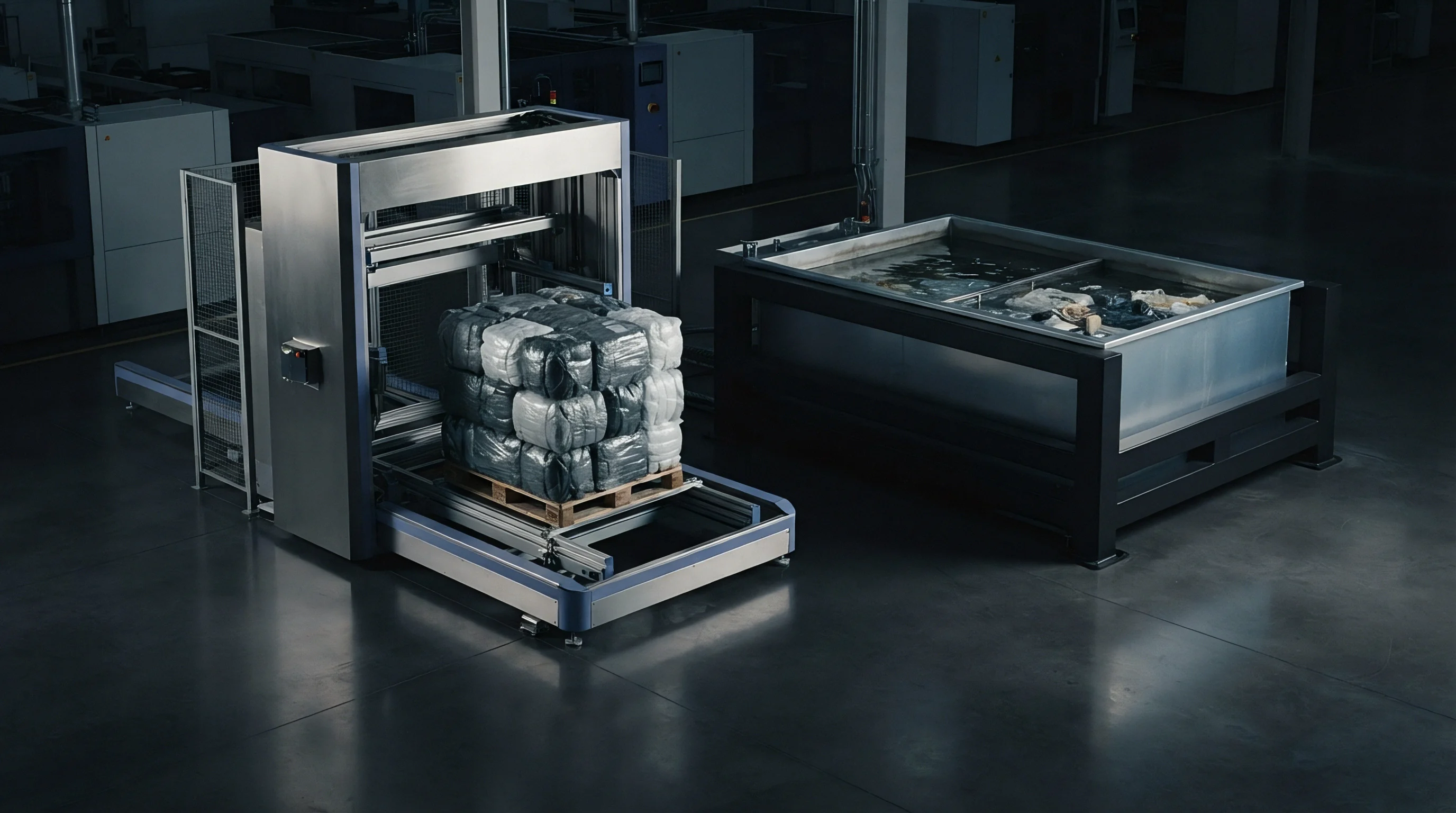
Physical testing alone cannot confirm mass balance bookkeeping credits. Analytical chemistry measures physical components, atomic ratios, chemical structures, and trace impurities in a sample. Mass balance compliance, by contrast, relies on documentary audits of accounting ledgers, purchase invoices, delivery logs, and transfer certificates across multi-site supply chains.
No lab measurement can determine whether a specific container of fossil polyolefin resin carries an administrative credit transferred from a furnace run six months earlier at a different plant.
Paper certificates leave no isotopic footprint. Customs officials sampling containers at import ports face a hard divide between physical evidence and paper attribution. Where customs legislation requires lab testing to confirm declared recycled content for duty relief or tax exemptions, mass balance paperwork fails to satisfy physical test requirements.
Importers relying entirely on sustainability declarations risk non-compliance when border authorities enforce physical verification standards. Testing labs can certify that a resin sample exhibits specific physical properties, but they cannot verify whether virtual credits were properly allocated under certification rules. Whether regulators will eventually establish statistical sampling allowances for co-processed fossil recycled polymers remains an open question in trade law.

Dock
Import terminals serve as enforcement points where administrative declarations meet physical border controls. Customs officers inspect incoming resin shipments using risk analysis algorithms targeted at high-value entries, tax exemption claims, and country-of-origin classifications. Containers carrying polymers declared under chemically recycled mass balance credits face verification procedures under regional customs codes and national tax directives.
Importers present entry paperwork including Harmonized System tariff declarations, commercial invoices, bills of lading, and ISCC PLUS sustainability certificates. Customs officials check whether declared HS codes ~ like 3901.10 for polyethylene with a specific gravity under zero point nine four ~ accurately describe the cargo and whether local tax exemptions apply. In jurisdictions with virgin plastic packaging taxes, such as the UK Plastic Packaging Tax charging two hundred seventeen pounds and sixty-nine pence per metric ton on components with less than thirty percent recycled plastic, physical testing determines tax liability.
Border inspectors reject unverified credit claims. When risk models flag a shipment claiming high recycled content based on mass balance allocations, customs officers draw representative samples from Gaylord boxes, super-sacks, or bulk hopper trailers using ISO 5824 protocols. Those samples move under formal chain of custody seal to official customs laboratories for analysis.

Border Control Sampling of Imported Polymer Lots
Customs laboratories run standardized testing programs to evaluate imported resins. Analysis begins with physical property characterization, including melt flow index tests per ISO 1133, density gradient column measurements per ISO 1183, and differential scanning calorimetry per ISO 11357 to confirm polymer identity and thermal transitions. Secondary screening checks for additives, antioxidant packages, heavy metals, and residual volatile organic compounds using gas chromatography-mass spectrometry and inductively coupled plasma mass spectrometry.
| Jurisdiction | Enforcement Authority | Primary Physical Test Method | Mass Balance Legal Acceptance Status | Non-Compliance Financial Penalty |
|---|---|---|---|---|
| United Kingdom | HM Revenue and Customs | ASTM D6866 Radiocarbon / Chemical Audit | Accepted only with physical audit trail | 217.69 GBP per ton tax plus interest |
| European Union | National Customs Administrations | ECICS Spectroscopy / EN 15343 Audit | Varies by Member State implementation | Tariff reclassification plus civil fines |
| United States | Customs and Border Protection | CBP Technical Center FTIR / Mass Spectrometry | Not recognized for tariff duty offsets | Duty assessment plus Section 592 penalties |
| Japan | Ministry of Finance Customs Bureau | Thermal Analysis / Solvent Extraction | Requires direct batch chain of custody | Full import duty reassessment |
Government labs use protocols designed to detect trace markers of recycled content. Mechanically recycled polyolefins historically carried distinct contamination signatures ~ degradation products, oxidized species, limonin residues from consumer packaging, volatile organic acids, and small cross-polymer traces like polypropylene in polyethylene streams. Chemically recycled polymers produced through high-temperature pyrolysis and hydrotreatment undergo heavy purification before polymerization, removing those physical markers.
Lab testing simply confirms high chemical purity, identical to virgin fossil resin.
Customs labs then run radiocarbon testing under ASTM D6866. When tests return zero percent modern carbon, the lab report states that the sample contains zero biogenic carbon and shows no physical features distinguishing it from virgin petroleum resin. Auditors contrast that report against the importer’s declaration of one hundred percent chemically recycled content backed by mass balance credits.
- Customs issues a formal Notice of Action detaining the container at the port of entry.
- The importer receives an administrative request to submit physical lab test reports demonstrating recycled content within thirty calendar days.
- The importer submits ISCC PLUS sustainability certificates, site audit reports, and mass balance ledger sheets from the overseas manufacturer.
- Customs legal authorities review the filings and rule that virtual mass balance allocations do not satisfy statutory physical recycled content definitions.
- The customs authority issues a final assessment reclassifying the shipment as standard virgin polymer, levying back packaging taxes, duty differentials, and penalty interest.
Documentary mass balance cannot alter molecular structure. Tariff regulations in many jurisdictions define goods strictly by their physical state at importation. Under Rule 1 of the General Rules for the Interpretation of the Harmonized System, classification depends on the terms of the headings and relative section or chapter notes.
Where a tariff heading offers lower duties or exemptions for recycled polymers, customs rules can require physical proof of recycled composition inside the container.
Customs auditors accept laboratory spectroscopic proofs while disregarding unverified book-and-claim balance sheets.
Reclassification Risks under National Packaging Taxes
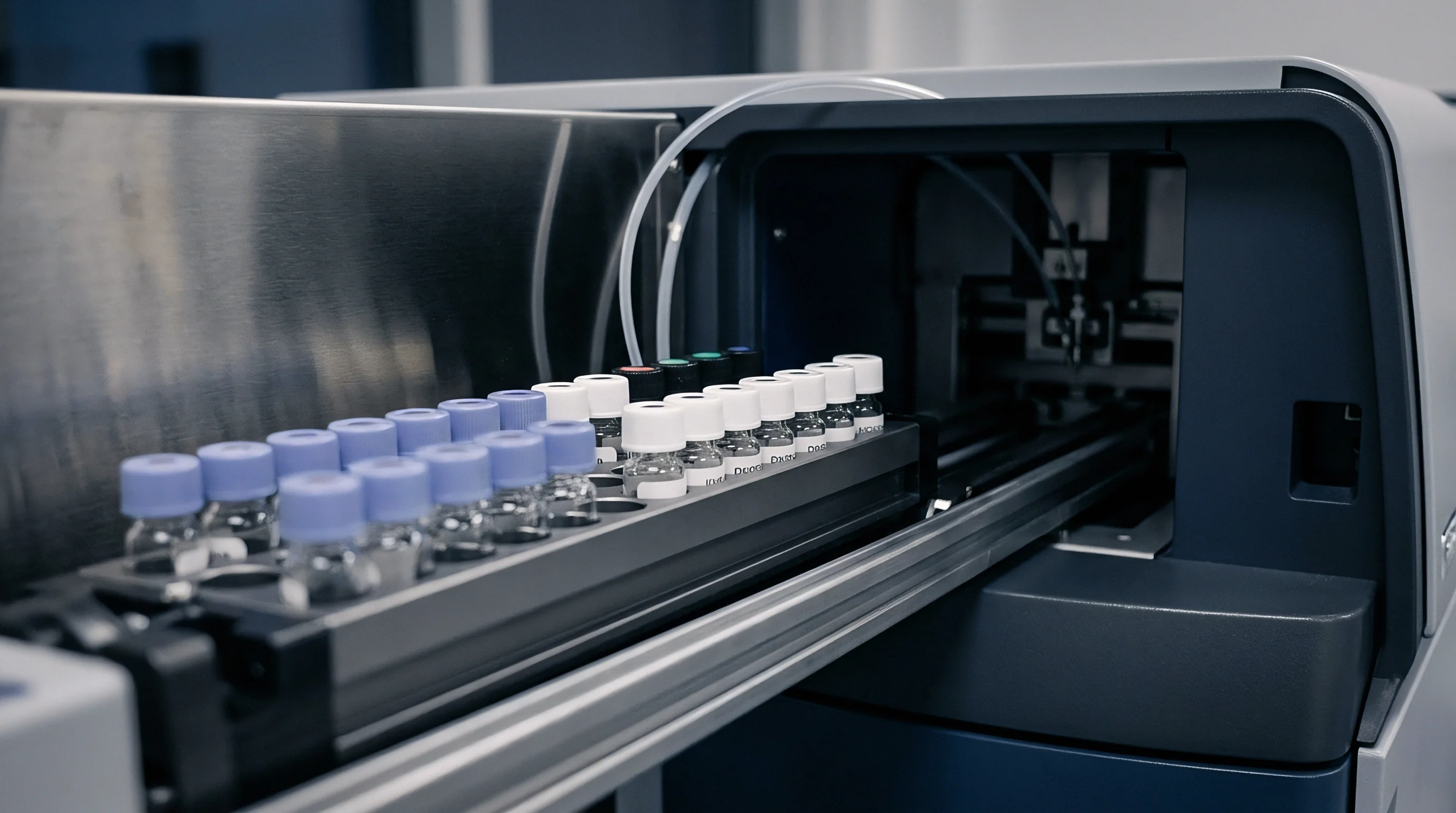
Reclassifying an imported polymer shipment creates immediate financial risk for importers, converters, and brand owners. When customs rejects mass balance allocations, the importer faces retrofitted tariff liabilities, packaging tax assessments, demurrage fees, and potential legal penalties. Demurrage at major container terminals can exceed three hundred euros per container per day while documentation disputes drag through administrative review.
Demurrage and storage charges mount rapidly when defending disputed credit transfer dossiers at port terminals. At a Northern European container terminal, customs authorities refused to release high-density polyethylene resin containers when radiocarbon testing yielded zero percent modern carbon, overriding the ISCC PLUS mass balance certificates attached to the entry summary declaration. Importers ultimately bear the duty penalty.


Reconciliation
Bridging the gap between physical customs testing and mass balance bookkeeping requires structured compliance filings. Importers and compliance managers have to structure declarations around both administrative credit transfers and analytical testing limits. Documentation packages must clearly distinguish between physical segregation, bio-based circular allocations, and co-processed fossil chemical recycling ledgers.
Compliance reconciliation begins with clear chain of custody protocols under ISO 22095 standards. Facilities choose a chain of custody model suited to their operational setup. Identity Preserved models maintain strict physical separation of recycled feedstocks through processing, compounding, and conversion, enabling direct lab verification.
Segregated models allow blending of certified circular feeds from multiple sources while preventing mix-ins of virgin petrochemicals. Mass Balance models permit co-processing with virgin feeds, relying on administrative accounting to maintain ledger integrity.
Importers submitting mass balance claims to customs need a comprehensive compliance dossier rather than just a cover certificate. The dossier has to trace the credit allocation back to furnace balance logs, detailing total circular inputs, calculated process losses, credit generation records, and transfer receipts linking the specific lot number to the production batch.

Chemical Markers and Traceability Additives
Physical verification of co-processed recycled polymers can be achieved by adding chemical markers. Polymer manufacturers can inject tracer molecules into post-consumer pyrolysis oil before furnace co-processing or into the resin during compounding. Suitable markers include rare earth complexes, isotopically labeled organic compounds, fluorescent dyes, or unique oligomeric signatures detectable down to parts per billion.
Tracer systems added to pyrolysis oil feeds must withstand furnace conditions. Organometallic markers engineered for high thermal stability survive temperatures above eight hundred degrees Celsius, partitioning into liquid streams or the polymer matrix. Lab technicians can then detect these markers in finished resin using inductively coupled plasma mass spectrometry, gas chromatography-tandem mass spectrometry, or optical fluorometers.
- Feedstock Mass Balance Audit Logs confirming daily pyrolysis oil injection rates into specific cracking furnace feed lines.
- Batch Conversion Loss Calculations documenting furnace gas, methane off-gas, and heavy pitch credit deductions per plant rules.
- Physical Lot Traceability Certificates linking container batch numbers directly to certified production runs.
- Independent Accreditation Reports executed by certified third-party bodies under ISO 17065 auditing guidelines.
- Isotopic Screening Dossiers containing radiocarbon and stable carbon isotope baseline data for virgin control streams and feedstock inputs.
Traceability additives provide physical proof that a polymer lot contains molecules processed through a certified recycling facility. Adding physical markers bridges the gap between paper ledgers and customs inspections. When border labs detect certified markers in a sample, the test report confirms the cargo actually contains material from the certified circular supply chain.

Verification Gaps in Chain of Custody Audits
Chain of custody audits frequently miss allocation errors because of scope limits in third-party site inspections. Standard certification audits verify that a facility maintains valid mass balance ledgers, balancing purchased circular feedstocks against sold product credits over a twelve-month window. Auditors verify paper accounting systems, but they rarely sample outgoing resin containers to test physical composition or verify marker concentration.
Combining audit logs with physical testing closes the gap. Incorporating physical analysis into quality management systems under ISO 9001 and ISO 17025 laboratory accreditation standards builds much stronger compliance files. Importers should run routine baseline testing on incoming lots ~ radiocarbon analysis, stable isotope profiling, elemental impurity screening, and additive checks.
Keeping lab test reports on file alongside mass balance declarations provides solid proof of due diligence if customs audits a packaging claim.
Purchase contract clause ISO 22095-MB-4 shifts full tariff liability and secondary testing fees to the supplier whenever physical isotopic variance exceeds declared feedstock ratios by more than five percent.


Remedy
Managing commercial liabilities from mass balance discrepancies requires clear risk allocation clauses in polymer procurement contracts. Sourcing teams, compliance managers, and legal counsel must draft supply agreements that explicitly address the difference between physical composition guarantees and administrative credit allocations. Standard purchase orders that state a recycled content percentage without specifying allocation methods leave buyers exposed to regulatory non-compliance, tax reassessments, and border delays.
Supply agreements for chemically recycled polymers need to state the exact chain of custody framework governing the transaction. Contracts should specify whether recycled claims rest on physical segregation, proportional mass balance, or free credit allocation. If free allocation is permitted, the contract must establish whether the seller indemnifies the buyer against administrative fines, duty reclassifications, or packaging taxes imposed when customs rejects paper credit claims.
Procurement contracts must include explicit representations and warranties covering third-party certification validity, ledger accuracy, and compliance with local import laws. Buyers should secure contractual audit rights that let independent third-party auditors inspect seller ledgers, furnace feed logs, and conversion calculations behind certified credit allocations.

Contractual Allocation Risk Transfer
Commercial contracts need explicit financial remedies for cases where customs detains shipments or rejects recycled content declarations. Provisions should clearly assign financial responsibility for port storage, container demurrage, re-export costs, legal representation, and back-tax liabilities resulting from regulatory challenges to mass balance documentation.
| Compliance Risk Event | Primary Regulatory Exposure | Standard Contract Allocation | Recommended Buyer Mitigation Clause |
|---|---|---|---|
| Customs Border Detention | Demurrage, terminal storage, container hold fees | Buyer bears all port costs | Seller pays demurrage if caused by certification rejection |
| Packaging Tax Reassessment | Back taxes plus statutory penalty interest | Importer of Record bears liability | Full seller indemnity backed by escrow or performance bond |
| Tariff Reclassification | Higher import duty rate retroactively applied | Importer of Record legally liable | Price adjustment clause offsetting duty differential |
| Certification Invalidation | Loss of circularity claims across scope accounting | Seller issues credit note for premium | Mandatory repurchase of non-compliant inventory at landed cost |
Indemnity clauses should operate independently of standard limitations of liability in commercial contracts. Sellers typically try to cap liability for breach at the net purchase price of the delivered resin lot. But importers face potential packaging taxes, customs fines, and supply chain disruptions that far exceed the purchase price of the raw polymer.
Buyers need to negotiate un-capped indemnity protection or significantly higher liability limits for regulatory non-compliance claims stemming from rejected mass balance credits.
Audit Rights and Supplier Data Access
Effective risk management requires continuous access to supplier mass balance records. Supply contracts should require sellers to provide batch-specific attribution certificates detailing exact furnace run dates, raw material intake batch numbers, process conversion losses, and ledger deduction entries for every container lot shipped. Requiring batch-level records prevents suppliers from assigning historic credit balances to current shipments produced during furnace maintenance or routine virgin naphtha runs.
Procurement teams should establish clear operational protocols for managing customs disputes. When border authorities detain a container during a mass balance audit, the importer must immediately notify the seller and request full backup accounting records within five business days. Setting strict contractual response timelines ensures the importer can meet tight customs appeal deadlines, keeping demurrage down and preventing automatic container forfeiture.
Importers need to align commercial procurement contracts, quality assurance protocols, and customs compliance into a unified risk mitigation strategy. As customs administrations and tax authorities refine physical testing methods and update legal definitions of recycled content, market participants must adapt supply chain contracts to survive analytical verification at the border.