Differential Scanning Calorimetry and Spectroscopic Verification of Post Industrial Compounds
Infrared spectroscopy identifies contaminant chemistries while differential scanning calorimetry quantifies polymer blend fractions and thermal degradation state.


Spectra
Attenuated total reflectance Fourier transform infrared measurement isolates functional group vibrations within the initial two micrometers of a polymer pellet surface. Infrared beams passing through a high refractive index crystal, such as diamond or zinc selenide, generate an evanescent wave that penetrates the sample interface. Absorption occurs at characteristic wavelengths corresponding to chemical bond stretching and bending modes.
Evaluating post-industrial streams requires establishing baseline absorbance bands for the primary polymer matrix before evaluating secondary peaks.

Infrared Absorption and Carbonyl Index Quantification
Chemical degradation in post-industrial polyolefins creates oxygenated species along the backbone during thermal processing cycles. Carbonyl absorption centered between 1715 and 1735 reciprocal centimeters tracks ketone, carboxylic acid, and ester formation caused by shear and thermal exposure. Calculating the carbonyl index involves dividing the peak height or integrated area of the carbonyl band by an invariant reference peak, such as the methylene bending vibration at 1460 reciprocal centimeters for polypropylene.
An infrared baseline offset exceeding 0.08 absorbance units between 1800 and 2000 reciprocal centimeters indicates surface oxidation or filler scattering in recycled polyolefin sheet.
Pellets absorb ambient moisture quickly. The hydroxyl region between 3300 and 3600 reciprocal centimeters indicates hydroperoxide accumulation or unevaporated surface water. Secondary processing without adequate drying converts these hydroperoxides into chain-scission products, reducing overall molecular weight.

Vibrational Modes of Polymer Contaminants
Interfering polymer phases generate distinct absorbance bands outside the primary matrix footprint. Unblended polyolefin regrind frequently carries cross-contamination from film backing layers, coextruded barrier structures, or misclassified scrap streams.
- Carbonyl Region Absorption peak centered at 1715 wave numbers reveals carboxylic acid formation from thermal breakdown during extrusions.
- Hydroxyl Stretch Band centered at 3400 wave numbers marks hydroperoxide accumulation and absorbed moisture in polyamide regrind.
- Polyethylene Crystallinity Band split at 720 and 730 wave numbers identifies linear chain packing within polyolefin flake samples.
- Ester Linkage Peak positioned at 1725 wave numbers confirms polyethylene terephthalate contamination in recycled polybutylene terephthalate streams.
- Trans-Vinylene Unsaturation band at 966 wave numbers signals thermal degradation in post-industrial polybutadiene modified compounds.
Fourier transform infrared instruments operating in attenuated reflectance mode evaluate surface chemistry but miss internal core contamination when pellet coatings or surface treatments obscure the bulk matrix. Transmission spectroscopy on microtomed thin sections remedies surface bias, rendering core phase distributions accessible for quantitative absorbance mapping. Whether chemical modification during re-extrusion masks the infrared absorption signature of low-density polyethylene inside a high-density matrix remains unclear without secondary extraction testing.


Enthalpy
Differential scanning calorimetry measures heat capacity changes and phase transitions as a function of controlled temperature ramps. Nitrogen gas purges the cell at fifty milliliters per minute to prevent oxidation during thermal cycling. Enthalpic transitions correspond to primary thermodynamic events, including glass transition, cold crystallization, and crystalline melting.
The area under the melting peak yields the heat of fusion, which correlates directly with crystalline fraction when divided by the theoretical enthalpy of a one hundred percent crystalline reference polymer.

Calorimetric Traces and Phase Transitions
Thermal transitions in semi-crystalline polymers reflect the physical history and crystalline domain purity of the resin lot. First heating scans display the thermal history imparted by previous extrusion, cooling rates, and mechanical stress. Controlled cooling at ten degrees Celsius per minute removes thermal history, establishing a standardized state for subsequent analysis.
The second heating scan reveals inherent polymer morphology, co-monomer content, and phase separation in polymer blends.
| Resin System | Glass Transition Tg (C) | Melting Point Tm (C) | Crystallization Tc (C) | Heat of Fusion (J/g) | Reference Crystallinity (%) |
|---|---|---|---|---|---|
| -10 to -5 | 162 to 167 | 112 to 118 | 95 to 105 | 46.0 to 50.7 | |
| -12 to -3 | 158 to 164 | 115 to 122 | 82 to 92 | 39.6 to 44.4 | |
| -120 to -110 | 131 to 136 | 116 to 119 | 180 to 200 | 61.4 to 68.3 | |
| 48 to 55 | 218 to 223 | 168 to 176 | 65 to 78 | 28.3 to 33.9 | |
| Data measured according to ISO 11357-3 at a heating and cooling rate of 10 C per minute. Theoretical 100 percent crystalline enthalpy values: Polypropylene 207 J/g, High Density Polyethylene 293 J/g, Polyamide 6 230 J/g. | |||||
Double melting peaks appearing in polypropylene scans indicate discrete population distributions of crystalline lamellae thickness or distinct secondary resin phases. High-density polyethylene present above 0.5 percent by weight generates a distinct endothermic peak near 132 degrees Celsius, sitting clear of the primary polypropylene melting endotherm between 160 and 165 degrees Celsius. Integrating the area of this secondary endotherm yields a quantitative estimate of polyethylene concentration down to 0.2 percent sensitivity.
Double melting peaks in a nominal homopolymer signify unblended secondary resin phases that reduce impact toughness.

Oxidation Induction Time Evaluation
Isothermal measurement under pure oxygen at elevated temperatures establishes the remaining active antioxidant package in post-industrial lots. ISO 11357-6 specifies holding the sample at two hundred degrees Celsius under nitrogen before switching the purge gas to pure oxygen at fifty milliliters per minute. The time elapsed between oxygen exposure and the onset of exothermic oxidation defines the oxidation induction time.
Primary antioxidants, including hindered phenols, scavenge free radicals during thermal processing, preserving oxidation induction time values above thirty minutes in virgin polyolefin compounds. Successive compounding passes consume these additives, dropping oxidation induction time values below ten minutes in un-stabilized post-industrial lots. Re-stabilizing recycled compound lots with secondary phosphites and hindered phenolic blends restores oxidation induction time, preventing premature degradation during secondary conversion.
A broad crystallization exotherm during controlled cooling indicates wide molecular weight distribution and unpredictable mold shrinkage.


Trace
Low concentrations of foreign polymers disrupt the crystalline morphology and mechanical performance of reprocessed compounds. Shear forces in single-screw extruders fail to break down immiscible polymer droplets when interfacial tension remains high. Droplet coalescing leads to phase separation during cooling, creating internal stress risers that nucleate micro-cracks under tensile impact loading.

Cross-Contamination Thresholds in Recycled Olefins
Polypropylene containing nominal fractions of high-density polyethylene exhibits depressed impact strength at sub-zero temperatures. At polyethylene concentrations below two percent by weight, the secondary phase disperses as sub-micron domains that maintain moderate ductile behavior. Concentrating polyethylene above three percent causes phase inversion or domain growth exceeding five micrometers, triggering premature brittle failure in cold drop-impact tests.
Polyamide contamination inside polyolefin streams causes immediate melt filtration blockages. Un-melted polyamide particles sitting above two hundred forty degrees Celsius pass into polyolefin melt streams operating at two hundred degrees, remaining solid and clogging thirty-five mesh screen packs within two hours of continuous compounding. Secondary resins introduce unpredictable shrinkage rates during injection molding cycles.

Additive Package Depletion and Secondary Processing
Thermal stabilizers degrade progressively across repeated extrusion passes. Primary phenolic antioxidants convert into quinone methide structures during radical scavenging, imparting a yellow tint to clear and white post-industrial pellet lots.
- Impact Toughness Loss occurs when immiscible secondary resin droplets exceed two micrometers in diameter.
- Melt Pressure Instability develops when cross-linked gel particles lodge in extruder breaker plates during conversion.
- Color Shift Progression accelerates once primary phenolic antioxidants consume completely during compounding passes.
- Mold Deposit Accumulation increases when low molecular weight degradation products migrate to core surfaces during injection cycles.
A shift in oxidation induction time under ISO 11357-6 below fifteen minutes revokes the thermal stability warranty for automotive interior compounds.
Quantitative evaluation of inorganic filler content uses thermogravimetric furnace burning alongside infrared spectral verification to distinguish calcium carbonate from talc or glass fiber reinforcement. Accepting post-industrial compounds with unverified secondary polymer contamination causes unexpected part failure under mechanical fatigue in field applications.


Sieve
Incoming quality control relies on representative sampling to capture physical variance across large post-industrial resin deliveries. Bulk shipping containers and gaylord boxes exhibit vertical and horizontal particle segregation resulting from transport vibration. Dust, fine regrind flakes, and heavy pellets separate into distinct zones, rendering single-point sampling non-representative of the entire lot.

When Should Thermal Screening Override Infrared Signature?
Calorimetric analysis takes precedence over surface reflection methods when dark pigments or mineral fillers attenuate light absorption. Carbon black concentrations exceeding 0.5 percent absorb infrared radiation, causing complete signal loss across the spectrum. Calorimetric cell heat flow remains unaffected by carbon black pigments, allowing accurate identification of polymer matrix melting points and crystalline fractions regardless of colorant loading.
Silicone surface contaminants, anti-block additives, and slip agents like erucamide accumulate on pellet exteriors, skewing surface reflectance spectrums. Attenuated reflectance measurements on such samples yield false readings dominated by the surface additive layer. Calorimetric melting traces capture bulk phase transitions across the entire sample mass, bypassing surface additive bias.
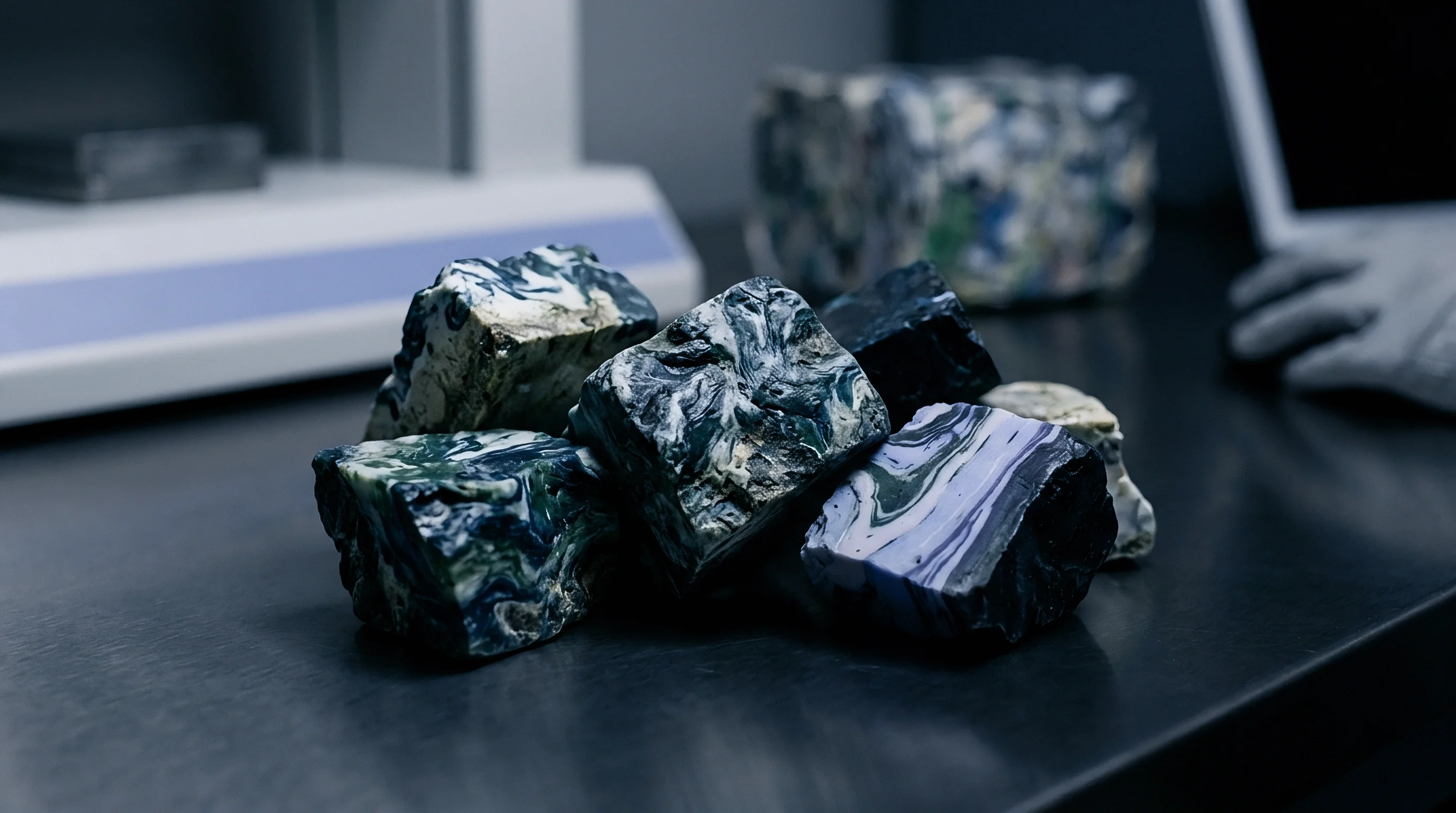
Sampling Mechanics for Heterogeneous Bulk Lots
Pellet sampling from octabins mandates multi-point core extraction to account for particle size segregation during transport. Sampling probes penetrate to full container depth, withdrawing increments from five distinct locations per container.
- Extract ten representative samples from top, middle, and bottom sections of every third gaylord in the delivery lot.
- Composite the extracted pellets into a single five-hundred-gram master sample per shipment.
- Run duplicate differential scanning calorimetry heating scans from thirty to three hundred degrees Celsius at ten degrees per minute.
- Perform attenuated total reflectance infrared measurements on ten individual pellets selected at random from the master sample.
- Compare measured melting enthalpy and absorption peaks against the reference certificate of analysis limits.
Inconsistent thermal traces between top and bottom container samples indicate blended lot sources where compounders mixed disparate post-industrial streams without adequate melt homogenization. Melting peak anomalies are frequently linked to minor batch-to-batch variations in original virgin catalyst packages.

Tariff
Cross-border shipments of post-industrial polymers require explicit chemical classification under standardized customs nomenclature. Tariff items distinguish clean reprocessed single-polymer pellets from mixed waste streams carrying higher trade duties or import restrictions. Importers carry full legal liability for customs declarations based on verified material composition analytical data.

Customs Classification and Recyclate Certification
Customs authorities evaluate pure reprocessed polymer against scrap waste definitions using analytical lab test receipts. Harmonized System Code 3901 covers polyethylene in primary forms, requiring secondary polymer contamination to remain below one percent by weight. Shipments failing this purity threshold face reclassification under HS 3915 as plastic waste, triggering mandatory environmental import permits and potential entry rejections at border control points.
Certificates of analysis verifying recyclate purity protect importers from punitive tariff reclassifications. Spectroscopic characterization showing clean polymer matrix bands alongside calorimetric proof of uniform melting behavior satisfies customs audit requirements, demonstrating that the material underwent complete mechanical re-refining into a standardized primary form product.

Regulatory Compliance Dossiers for Landed Compounds
Import documentation mandates verified laboratory evidence establishing chemical purity and recycled origin. European Union Plastic Packaging Tax regulations mandate verified twenty-thirty percent minimum post-consumer or post-industrial recycled content declarations supported by audited chain-of-custody documentation.
- Harmonized System Code Declaration specifies whether the material enters as reprocessed resin pellets or unground scrap waste.
- Differential Scanning Calorimetry Trace Report proves homopolymer purity or identified blend compositions to customs inspectors.
- Recyclate Content Certificate quantifies post-industrial material percentage for regional plastic packaging tax exemptions.
- Heavy Metal Analysis Dossier verifies compliance with restricted substance limits under international environmental regulations.
Customs authorities reclassify reprocessed polymer shipments under virgin tariff lines when secondary resin contamination drops below detectable spectroscopic thresholds.
Non-compliant resin lots face holding penalties at port terminals, generating demarrage costs that erode trade margins. Standard international supply contracts include a chemical purity clause that shifts import duty liabilities to the vendor upon laboratory rejection.


Invoice
Commercial settlement for reprocessed polymer lots depends on calculating actual usable resin content against processing scrap overhead. Unverified contamination increases scrap rates during final part conversion, turning discounted raw material purchases into net operating losses. Valuation models adjust the delivered price per tonne according to verified purity metrics established upon lot arrival.

Worked Cost Model for Contaminated Feedstocks
Evaluating a forty-tonne shipment of post-industrial polypropylene containing two percent polyethylene contamination illustrates the financial impact on mold yield. Assuming a base price of 1,100 EUR per tonne for prime reprocessed polypropylene, unblended polyethylene contamination increases part rejection rates at the molding machine from a baseline of 1.5 percent to 4.5 percent due to drop-impact failures.
Consider the production costs associated with converting this forty-tonne lot into finished technical components weighing two hundred grams each:
Forty tonnes yields two hundred thousand potential parts. A baseline 1.5 percent defect rate generates three thousand scrap parts, representing six hundred kilograms of lost resin. An elevated 4.5 percent defect rate yields nine thousand scrap parts, representing 1,800 kilograms of ruined production.
At a conversion processing cost of 1.80 EUR per part, the additional six thousand defective parts destroy 10,800 EUR in machine time and labor costs.
| Polyethylene Contaminant Fraction (%) | Molding Scrap Rate (%) | Effective Good Part Yield | Scrap Loss Cost per Tonne (EUR) | Adjusted Landed Value per Tonne (EUR) |
|---|---|---|---|---|
Dividing the 10,800 EUR processing loss across forty tonnes imposes a 270 EUR per tonne financial penalty on the raw material lot. The adjusted commercial value drops from 1,100 EUR to 830 EUR per tonne delivered.
Contractual Penalty Mechanisms and Financial Settlement
Commercial contracts enforce price deductions based on lab testing thresholds for contamination and thermal degradation. Automated debit notes issue when oxidation induction times fall below agreed parameters, compensating buyers for re-stabilization additive masterbatch additions during compounding.
Purchase agreements specify clear price rejection thresholds: contamination levels exceeding 3.0 percent trigger full shipment rejection at seller expense, including round-trip freight charges and warehouse holding fees. Adjustment calculations applied directly to final payment schedules ensure that resin buyers pay solely for effective polymer yield while covering compounding scrap penalties.