Meaning
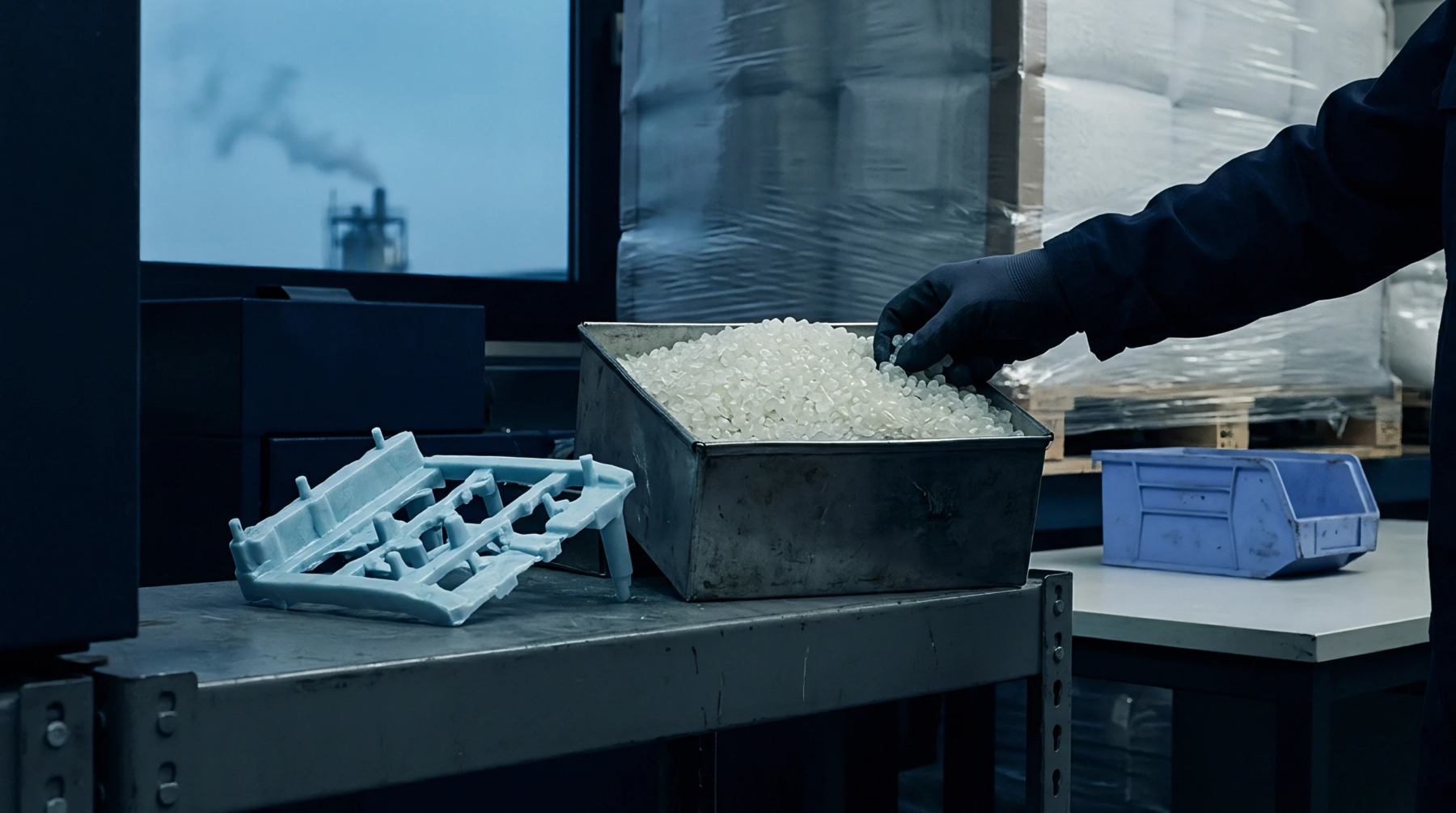
Manufacturing residues redirected from the production line back into the feedstock stream constitute post-industrial recyclate. This material originates from runners, purges, or off-spec parts that never entered the supply chain for consumer use. Because these scraps remain within the factory environment, their chemical history stays documented and their polymer contamination levels remain low.
Material processors categorize these scraps as pre-consumer content because the plastic avoids the waste stream entirely. Such recovered streams function as secondary inputs that reduce the reliance on virgin resins. Each batch remains bound to the specific original formulation of the parent part.
Quality control protocols distinguish these internal regrinds from external post-consumer waste through the maintenance of a closed loop system.
Sourcing Integrity
Factory technicians manage the collection of these scraps through dedicated granulation stations positioned beside the moulding press. Uniformity of the regrind size prevents uneven melting profiles in the barrel of the injection machine. When particle sizes drift, the fill rate of the cavity becomes inconsistent across the production run.
Moulders monitor the percentage of regrind added to the virgin pellets to avoid degradation of the molecular weight. Excessive thermal cycles weaken the polymer chains and lower the impact strength of the finished product. Proper blending ratios ensure the physical properties of the component stay within the narrow tolerance defined by the technical datasheet.
Material Economics
Procurement managers track the cost difference between raw virgin resin and the internal reclaim. Using off-cut scraps displaces the need for fresh material, which lowers the unit price for high volume production runs. This substitution creates a financial advantage while reducing the physical volume of scrap that requires disposal.
Economical operation depends on keeping the regrind free from floor dirt or lubricants that compromise the structural performance of the part. Contaminated regrind acts as a defect catalyst that causes brittle failures in thin-walled housings. Savings realized through this loop offset the initial capital expenditure of the shredding equipment.
Processing Limits
Injection moulding machines require stable melt temperatures to handle the variable density of reprocessed plastic. Standard settings for virgin resin often fail when the proportion of recyclate exceeds the capacity of the heating elements to achieve a uniform viscosity. Melt index fluctuations occur when the thermal history of the material accumulates over multiple passes.
Technicians calculate the max ratio of reclaim to virgin inputs to prevent shifts in the shrink rate of the moulded geometry. If the shrinkage exceeds the tool specifications, the finished parts fail to meet dimensional requirements. Every cycle of heat exposure reduces the ability of the polymer to withstand mechanical stress.
Consistent oversight of the melt flow rate keeps the quality of the output aligned with the required technical standards. Post-industrial recyclate represents the most reliable grade of reprocessed plastic available for industrial manufacturing applications.