Post Consumer Resin Decontamination Efficiency Testing for Food Contact Compliance
Decontamination efficiency testing verifies recycled resin safety by measuring surrogate chemical removal yields against strict regulatory dietary exposure limits.


Spike
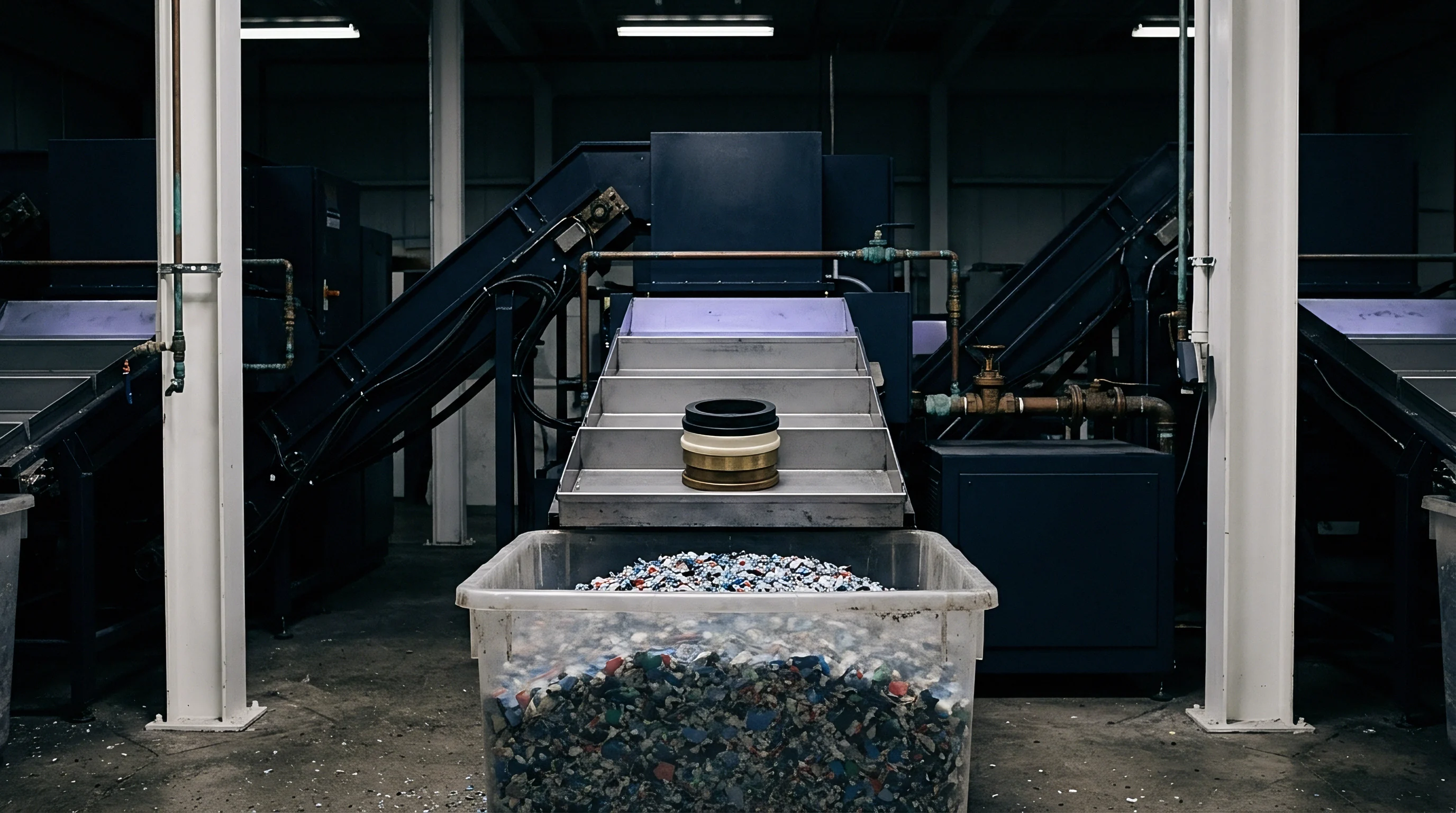
Surrogate chemical selection dictates the validity of challenge testing for recycling processes. When evaluating secondary plastic streams for direct food contact, testing relies on intentionally contaminating un-decontaminated flake or pellets with a broad spectrum of model contaminants. These chemicals represent diverse molecular weights, volatilities, polarities, and solubility profiles, mirroring potential post-consumer misuse and environmental absorption.
Standard evaluation protocols specified by regulatory agencies require a challenge cocktail comprising volatile non-polar, volatile polar, non-volatile non-polar, and non-volatile polar substances. Model chemicals frequently selected include toluene, chlorobenzene, methyl salicylate, phenylcyclohexane, benzophenone, tetradecane, and methyl stearate.
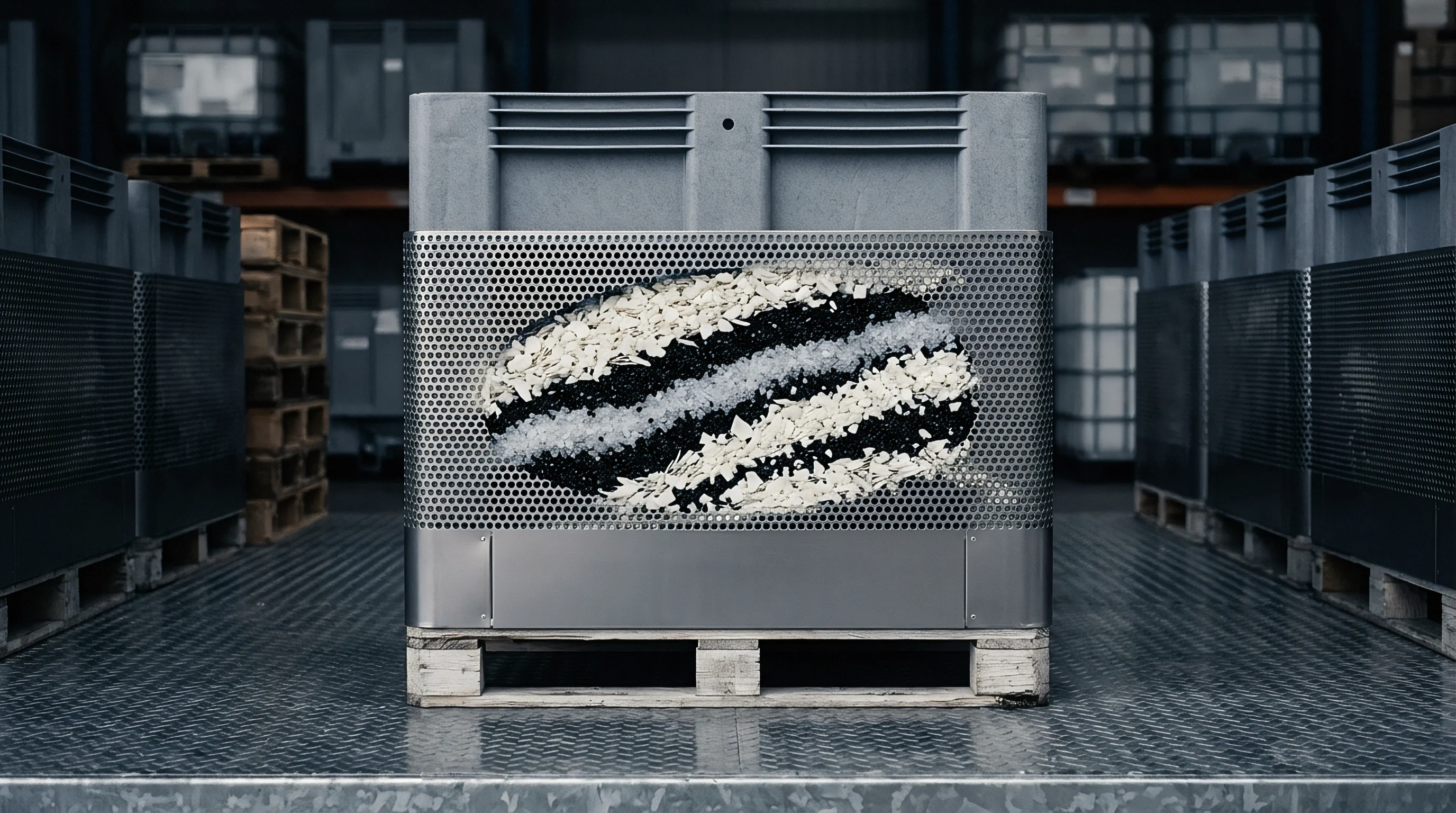
Preparing test polymer samples involves controlled absorption procedures. Polymer flake undergoes immersion in the contaminant cocktail under defined thermal and temporal parameters to ensure deep matrix sorption rather than surface-level coating. Volatiles migrate rapidly.
Solvent carriers are subsequently evaporated under mild ambient conditions to prevent premature devolatilization of volatile surrogates. Measuring initial contaminant levels prior to running the recycling equipment establishes the baseline input concentration, denoted as initial concentration C0. baseline levels usually target concentrations ranging between 100 mg/kg and 1000 mg/kg for each surrogate compound, ensuring sufficient analytical signal following decontamination while remaining representative of worst-case post-consumer input loads.
Surrogate Selection Standards
Challenge cocktails combine compounds with distinct chemical properties. Non-volatile non-polar surrogates such as tetradecane assess the mechanical equipment’s capacity to remove heavy hydrocarbon fractions, whereas volatile polar surrogates like methyl salicylate evaluate stripping efficiency against polar, medium-boiling compounds. Polarity alters sorption behavior.
High-density polyethylene absorbs non-polar compounds rapidly into its amorphous regions, whereas polyethylene terephthalate demonstrates much tighter matrix resistance due to its higher glass transition temperature and aromatic backbone structure.

Validation Protocol Execution
Preparing test batches requires uniform dispersion of active chemicals across un-decontaminated polymer flake. Execution follows a rigorous physical sequence to ensure reproducibility across analytical runs.
- Substrate Homogenization Blending post-consumer flake lots produces a consistent polymer baseline free from structural moisture pockets that distort chemical absorption rates.
- Cocktail Inoculation Submerging polymer samples in the volatile and non-volatile contaminant solution forces deep matrix penetration over a continuous 14-day thermal exposure cycle at 40 degrees Celsius.
- Solvent Removal Washing the spiked substrate with cold solvent removes superficial surface residues without stripping absorbed molecules from the amorphous polymer core.
- Baseline Quantification Solvent extraction followed by chromatographic analysis determines the exact starting concentration for every surrogate chemical prior to decontamination processing.
- Process Execution Feeding the spiked flake lot through the decontamination system under standard production settings subjects the material to vacuum, heat, and gas sparging parameters.
- Residual Extraction Analyzing output resin pellets establishes final surrogate concentrations to calculate absolute cleaning removal percentages.
A decontamination process operating at 200 degrees Celsius under 1 mbar vacuum for four hours achieves a toluene removal efficiency exceeding 99.8 percent in post-consumer polyethylene terephthalate.
Equipment manufacturers frequently assert that incoming flake contamination never exceeds historical baseline averages, rendering full surrogate challenge re-validation unnecessary after minor mechanical modifications.


Torr
Devolatilization kinetics inside continuous reactors depend heavily on thermal mass transfer and reduced pressure. Vacuum systems operating below 1 mbar reduce the boiling point of entrapped volatile organic compounds, accelerating their migration from the interior of polymer particles to the boundary layer. Thermal energy breaks bonds.
In solid-state polymerization and vacuum-assisted twin-screw extrusion, temperatures are maintained above the glass transition temperature and frequently near the melting point for semi-crystalline polymers. Polyethylene terephthalate flake processing typically runs between 190 degrees Celsius and 230 degrees Celsius under deep vacuum conditions to promote concurrent chain extension and volatile removal.
Mass transfer governs devolatilization. Fickian diffusion dictates contaminant transport from the interior of the flake to the outer surface, where convective gas flow or vacuum evacuation removes the volatilized compounds. The diffusion coefficient depends exponentially on temperature following an Arrhenius relationship.
Vacuum level dictates yield. Operating at deep vacuum increases the concentration gradient between the polymer matrix and the gas phase, increasing mass transfer rates. Gas flow carries volatiles.
Nitrogen sparging in solid-state reactors lowers the partial pressure of target contaminants, preventing re-absorption into molten or solid polymer phases.

Mass Transfer Kinetics in Polymeric Flake
Molecular diffusion through amorphous regions governs contaminant removal rates. Polyolefin matrices present high diffusion coefficients, allowing rapid contaminant migration but also facilitating deep absorption during initial consumer use. Matrix density restricts flow.
Polyethylene terephthalate exhibits diffusion coefficients several orders of magnitude lower than polyethylene or polypropylene, meaning contaminants remain near the surface, enabling high removal yields during thermal devolatilization.

Thermal and Pressure Operating Parameters
Solid-state polymerization reactors maintain elevated temperatures while stripping residual organics. Residence time limits throughput. Process conditions vary depending on the target polymer and mechanical reactor design, balancing thermal degradation against devolatilization performance.
| Technology Type | Polymer Matrix | Temperature Range | Vacuum Level | Residence Time | Toluene Yield |
|---|---|---|---|---|---|
| Solid-State Polymerization | PET Flake | 190 – 220 °C | 0.5 – 2.0 mbar | 4 – 12 hours | > 99.9% |
| Vacuum Twin-Screw Extrusion | PET Pellets | 260 – 280 °C | 1.0 – 5.0 mbar | 2 – 5 minutes | 98.5% – 99.5% |
| Gas-Sparging Thermal Reactor | HDPE Flake | 100 – 120 °C | Atmospheric (N2) | 2 – 6 hours | 95.0% – 98.0% |
| Rotary Vacuum Dryer | PP Flake | 120 – 140 °C | 2.0 – 10.0 mbar | 3 – 8 hours | 96.0% – 98.5% |
Diffusivity in polyolefins surpasses that of semi-crystalline polyesters, demanding aggressive thermal devolatilization to eliminate non-volatile surrogates.
Higher process temperatures consistently yield superior devolatilization performance compared to extended residence times at reduced thermal energy.


Detection
Chromatographic quantification establishes whether processing machinery meets target cleaning yields. Headspace Gas Chromatography coupled with Flame Ionization Detection or Mass Spectrometry measures volatile organic compounds remaining in processed resin pellets. Non-volatile surrogates demand liquid solvent extraction followed by direct liquid injection Gas Chromatography-Mass Spectrometry or Liquid Chromatography-Tandem Mass Spectrometry.
Solvent choice alters recovery. Extraction protocols must dissolve or swell the polymer matrix without degrading target analyte molecules, using solvents such as dichloromethane, hexafluoroisopropanol, or toluene.
Peak integration demands care. Analytical sensitivity must achieve limits of detection below 0.1 mg/kg for individual surrogate compounds to verify decontamination efficiency exceeding 99.5 percent. Limits of detection rule.
Calculating efficiency uses the baseline concentration C0 and final concentration Cf in the formula E = ((C0 – Cf) / C0) × 100. Evaluating post-consumer polyolefins introduces background interference from oligomers, thermal degradation products, and additives, requiring spectral deconvolution to distinguish surrogate spikes from secondary matrix signals.

Which Analytical Techniques Quantify Ultra-Low Surrogate Residues?
Gas chromatography coupled with flame ionization or mass spectrometry serves as the primary evaluation method. High-sensitivity headspace analysis quantifies volatile surrogates without complex sample preparation, preventing analyte loss during evaporation steps. Dissolving polyolefin samples in boiling xylene followed by precipitation with methanol liberates non-volatile surrogates like benzophenone and methyl stearate for full quantitative recovery.

Screening Protocols for Non Intentionally Added Substances
High-resolution mass spectrometry identifies unexpected degradation compounds formed during thermal processing. Screening for non-intentionally added substances combines full-scan gas chromatography time-of-flight mass spectrometry with semi-quantification relative to internal standards like deuterated naphthalene. Failure modes during testing compromise compliance data integrity.
- Insufficient Matrix Swelling Solvent extraction steps fail to fully penetrate crystalline polymer structures, leading to falsely low residual contaminant measurements and overstated decontamination efficiency calculations.
- Thermal Surrogate Degradation Excessive extrusion temperatures decompose heavy surrogate molecules like methyl stearate into lighter fragments, creating false positives for volatile species while masking incomplete physical cleaning.
- Background Oligomer Co-Elution Polymer degradation products generate chromatographic peaks that overlap with target surrogate compounds, preventing accurate peak area integration.
- Incomplete Volatilization in Headspace Vials Inadequate equilibrium heating temperatures prevent high-boiling volatiles from partitioning into the gas headspace prior to injection.
- Cross-Contamination in Analytical Instrumentation Carryover of elevated concentration baseline samples into post-treatment analytical runs obscures low-level detection results.
Consider a practical validation scenario involving post-consumer high-density polyethylene flake processed through a vacuum degassing extruder. Assume a 50-tonne batch of flake spiked with 500 mg/kg of benzophenone as a non-volatile polar surrogate. Solvent extraction followed by gas chromatography analysis of the finished resin pellets reveals a residual benzophenone concentration of 0.85 mg/kg.
Decontamination efficiency calculation:
E = ((500 mg/kg – 0.85 mg/kg) / 500 mg/kg) × 100 = 99.83%
To evaluate food contact safety, convert residual resin concentrations to estimated dietary intake. Using the United States Food and Drug Administration default packaging assumptions, 1 kg of food contacts 600 square centimeters of packaging film, with a polymer thickness yielding a mass-to-area ratio of 244 g/m^2. Assume full migration of the residual 0.85 mg/kg benzophenone into food.
The resulting concentration in food Cfood is calculated directly from resin concentration Cresin and packaging weight fraction.
Cfood = Cresin × (Packaging Mass / Food Mass) = 0.85 mg/kg × 0.0146 = 0.0124 mg/kg = 12.4 ppb
Applying the polyolefin consumption factor of 0.13 yields an estimated daily intake calculation:
Diηry Concentration = 12.4 ppb × 0.13 = 1.61 ppb
This calculated value sits above the 0.5 ppb Threshold of Regulation cutoff applied by North American regulators, indicating that the processing plant must optimize vacuum degassing levels or increase thermal residence time to lower residual benzophenone concentrations below 0.26 mg/kg in the output resin.
Analytical recovery rates for heavy polar surrogates drop significantly when solvent extraction precedes chromatographic injection without matrix dispersion.
Analytical chemistry has yet to establish whether cyclic oligomers generated during extrusion re-contamination cycles should be evaluated under standard specific migration limits or categorized entirely as reactive process non-intentionally added substances.
Simulant
Regulatory evaluation measures the migration potential of lingering impurities into food models. European standards under Regulation EU 10/2011 mandate physical migration testing into standardized food simulants or validated diffusion mathematical modeling. Simulant selection depends on the intended food contact application.
10 percent ethanol (Simulant A) models aqueous foods, 3 percent acetic acid (Simulant B) models acidic media, and vegetable oil or ethanol 95 percent (Simulant D2 substitute) represents fatty food contact. Poly-2,6-diphenyl-p-phenylene oxide (Tenax, Simulant E) evaluates dry food packaging applications at elevated temperatures.
European Union requirements set specific migration limits alongside a toxicological threshold framework. Unidentified non-intentionally added substances migrating from recycled plastics must comply with the Threshold of Toxicological Concern approach. Compounds lacking genotoxicity data must not exceed a migration limit of 0.0025 mg/kg food for high-potency mutagenic structures, or 0.15 mg/kg food for organ-specific toxicity classes under Cramer Class III rules.
North American FDA regulations enforce a strict 0.5 ppb dietary concentration threshold for recycled resin approval via No Objection Letters.

Migration Modeling against Experimental Exposure
Diffusion mathematical models estimate worst-case transfer rates without costly physical contact trials. Piringer diffusion equations use polymer-specific matrices constants Ap and upper-bound activation energies to calculate migration coefficients. Modeling assumes total mass transfer when residual concentrations are known, providing a conservative screening mechanism for compliance clearance.

Regulatory Thresholds and Compliance Evaluation
European and American authorities enforce distinct dietary concentration cutoffs for recycled materials. Testing regimes align with specific food contact categories and operating temperature thresholds.
| Regulatory Jurisdiction | Applicable Standard | Primary Test Simulants | Standard Exposure Conditions | Maximum Exposure Threshold |
|---|---|---|---|---|
| European Union | Regulation EU 10/2011 / EU 2022/1616 | 10% Ethanol, 3% Acetic Acid, Tenax | 10 Days at 60 °C / 10 Days at 40 °C | 0.01 mg/kg (Functional Barrier) / SML |
| United States | FDA 21 CFR 176.170 / Chemistry Guidance | 10% Ethanol, 95% Ethanol, Isooctane | 2 Hours at 100 °C / 10 Days at 40 °C | 0.5 ppb Dietary Concentration (TOR) |
| Mercosur | GMC Res. No 56/92 / Res. 32/10 | 3% Acetic Acid, 10% Ethanol, Olive Oil | 10 Days at 40 °C | 50 mg/kg Overall Migration Limit |
| Methods note: Migration test conditions select worst-case time-temperature scenarios reflecting maximum intended shelf life. | ||||
Documenting process verification demands maintaining complete compliance dossiers. Standard documentation contains critical technical components.
- Challenge Test Qualification Report Documentation of surrogate spiking protocols, analytical recovery data, baseline input values, and final calculated decontamination yields.
- Recycling Process Description Engineering schematics defining temperature profiles, pressure limits, screw configurations, gas flow rates, and minimum physical residence times.
- Input Feedstock Specification Quality acceptance standards limiting non-food container fractions, polyolefin cross-contamination, and maximum incoming moisture levels.
- Migration Testing Certificates Laboratory reports detailing specific and overall migration results across standard food simulants under defined contact times and temperatures.
- Statement of Compliance Formal signed declaration binding the resin manufacturer to EU Regulation 1935/2004, Regulation EU 2022/1616, or relevant FDA No Objection Letter boundaries.
Under Regulation EU 2022/1616, operating a recycling process without a validated challenge test report invalidates the declaration of compliance for every downstream packaging lot.
Article 14 of Regulation EU 2022/1616 binds the converter to maintain lot-level traceability linking finished food contact articles directly to the decontamination batch qualification report.


Margin
Financial penalties for distributing non-compliant recycled polymers cascade across converter supply lines. Product recalls triggered by non-compliant chemical migration consume capital and damage brand reputation. Importers and packaging converters carry strict regulatory liability for placing non-compliant materials on regional markets.
Testing every production lot via full surrogate challenge testing is economically impossible, forcing recyclers to rely on continuous operational monitoring linked directly to initial challenge test validation envelopes.
Operating outside validated parameters invalidates compliance declarations. Minor deviations in extrusion temperature, vacuum pressure drops, or increased flake thickness compromise decontamination efficiency. Verification frameworks establish operational control limits around critical parameters established during initial challenge testing.
Maintaining continuous sensor logs for temperature, pressure, and vacuum levels creates the legal foundation for lot release authorization.
Batch Qualification and Quality Assurance Architecture
Quality control frameworks integrate continuous monitoring with periodic challenge validation. Recyclers execute secondary screening routines, including ongoing total volatile organic compound measurements via automated headspace gas chromatography on every production shift. Batch traceability holds liability.
Deviations in volatile profiles flag potential decontamination degradation before resin enters customer conversion processes.
Commercial Liabilities and Recall Economics
Contractual agreements assign financial exposure when contaminated resin triggers market withdrawals. Sourcing contracts specify indemnification clauses covering conversion downtime, packaging destruction, and legal defense costs arising from regulatory enforcement actions. Establishing clear testing protocols within supply agreements protects converters against unverified feedstock shifts.
Disregarding batch-to-batch decontamination verification leads directly to commercial product recalls, full customs seizures, and total forfeiture of regional market access under strict liability provisions.