Harmonizing Cross Border Test Standards for Recycled Polyolefin Sourcing Contracts
Harmonize cross-border recycled polyolefin contracts by designating one governing test standard, mandating ISO 17025 referee labs, and defining penalty bands.
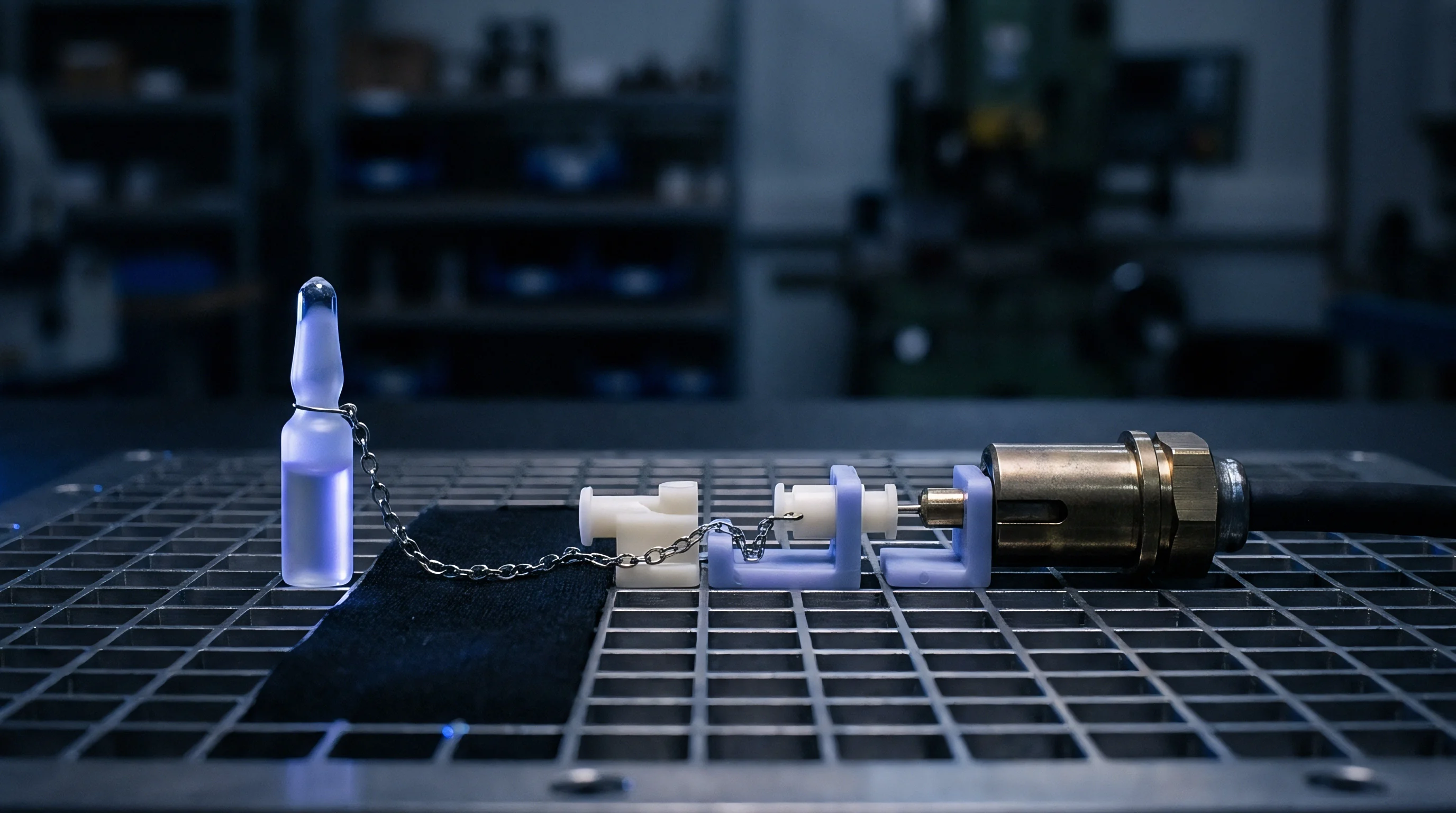

Mismatch
A certificate of analysis arriving with an ocean container of recycled polypropylene copolymer frequently states a melt flow rate of 12.0 grams per 10 minutes under ISO 1133 at 230 degrees Celsius with a 2.16 kilogram load. The receiving injection molding plant in Ohio mounts the tooling, loads the hopper from the bulk bag, sets barrel zones to 215 degrees Celsius, and discovers flashing at the parting line within forty cycles. Subsequent incoming bench verification run under ASTM D1238 Procedure A yields 14.8 grams per 10 minutes.
The compounder in Antwerp did not ship fraudulent material. The laboratory in Antwerp followed Procedure A of ISO 1133-1:2022 with a preheating time of five minutes and a nominal die length of 8.000 millimeters, whereas the receiving facility operated ASTM D1238-20 with a seven-minute preheat duration and manual cutting intervals that exposed degraded polymer chains to prolonged thermal oxidation inside the barrel. The resin moved across jurisdictions while the measurement mechanism shifted beneath it.
Discrepancies between international test regimes multiply when post-consumer polyolefins replace prime resins. Prime virgin polymers possess tightly distributed molecular weights and uniform thermal histories. Post-consumer polyolefins carry heat stabilizers of unknown vintage, multi-generation regrind fractions, residual low-density polyethylene cross-contamination within polypropylene streams, and particulate ash that alters viscous dissipation during capillary flow.
When these materials cross international borders, specifications written under ASTM International standards collide with testing performed under International Organization for Standardization documents or Guobiao standards from the Standardisation Administration of China.
ISO 1133-1 testing at 230 degrees Celsius with a 2.16 kilogram load yields melt volume rates up to twenty percent lower than ASTM D1238 Procedure A on post-consumer polypropylene copolymer lots.
Procurement teams attempting to reconcile these testing ecosystems frequently commit the error of applying static conversion factors found in academic handbooks. A compounding technician cannot multiply an ISO melt flow rate by a uniform scalar to generate a compliant ASTM certification. Non-Newtonian shear thinning in contaminated recycled streams destroys linear mathematical correlations.
Post-consumer high-density polyethylene blow-molding regrind contains high molecular weight fractions that exhibit pronounced pseudoplastic behavior under varying shear rates. If the capillary entrance geometry or the timing of the piston displacement differs between two regulatory methods, the recorded output departs from predicted values.

Capillary Geometry and Thermal Dwell Disparities
Standard testing methods diverge in their physical dimensions, operational tolerances, and mandatory sample conditioning schedules. In ISO 1133-1, the cylinder bore diameter stands at 9.550 plus or minus 0.007 millimeters, matching the 9.5504 plus or minus 0.0076 millimeters designated in ASTM D1238. The divergence begins in the preheating protocol and cut timing mechanics.
Polymer chains in recycled high-density polyethylene undergo thermal degradation during prolonged residence within the heated barrel. ISO 1133-1 permits a preheating duration of 300 plus or minus 15 seconds before the test mass is released onto the piston. ASTM D1238 mandates a preheat sequence spanning 420 plus or minus 30 seconds.
In recycled polymers containing depleted primary hindered phenolic antioxidants, those extra two minutes under 190 degrees Celsius induce molecular chain scission in polypropylene or cross-linking in polyethylene. The viscosity shifts before the extrudate exits the orifice.
The orifice geometry alters the result.
Chinese national standards introduce further divergence. GB/T 3682.1-2018 mirrors ISO 1133-1 in general dimensional constraints, yet laboratory execution across domestic Chinese reprocessors routinely relies on manual extrudate timing rather than optical or mechanical cut-off devices. A manual cut executed with a hand-held spatula introduces operator reaction delay.
When testing high-melt materials above 25 grams per 10 minutes, a variance of 0.4 seconds across a five-second collection window produces an experimental error exceeding eight percent.
| Parameter | ISO 1133-1:2022 Method A | ASTM D1238-20 Procedure A | GB/T 3682.1-2018 Method A |
|---|---|---|---|
| Cylinder Bore Diameter (mm) | 9.550 ± 0.007 | 9.550 ± 0.008 | 9.550 ± 0.025 |
| Die Length (mm) | 8.000 ± 0.025 | 8.000 ± 0.025 | 8.000 ± 0.025 |
| Die Orifice Diameter (mm) | 2.095 ± 0.005 | 2.095 ± 0.005 | 2.095 ± 0.005 |
| Piston Foot Diameter (mm) | 9.475 ± 0.007 | 9.474 ± 0.007 | 9.475 ± 0.015 |
| Mandatory Preheat Time (s) | 300 ± 15 | 420 ± 30 | 300 ± 15 |
| Piston Travel Measurement Range (mm) | 10.0 to 20.0 | 6.35 to 25.4 | 10.0 to 20.0 |
| Permissible Temperature Drift (°C) | ± 0.2 | ± 0.2 | ± 0.5 |
Disagreements over lot acceptance regularly terminate when the overseas seller insists that the pellet batch conformed strictly to the parameters documented on its domestic test certificate prior to loading.


Die
Capillary wall shear stress during plastometer testing forces entrained particulate contamination to alter polymer flow velocity profiles. Recycled polyolefin pellets derived from post-consumer packaging retain micro-particulate contaminants that evade melt filtration screens. When compounding lines utilize 150-mesh continuous screen changers, particles up to 104 microns pass directly into the pelletized compound.
In an injection molding machine with a 1.5-millimeter nozzle orifice, these inclusions flow without causing catastrophic freeze-off. Inside an extrusion plastometer tungsten carbide die possessing an internal diameter of 2.095 millimeters, particulate contamination generates localized shear disturbances.
Calcium carbonate filler particles, residual aluminum flakes from barrier packaging, and unmelted polyethylene terephthalate specks lodge against the entrance angle of the die. Virgin polyolefin testing presumes laminar flow through an unobstructed capillary. Recycled polyolefin flow experiences periodic wall slip and erratic entrance pressure drops.
When cross-border trade contracts fail to designate whether tests must employ ISO Method B displacement recording or ASTM Procedure B piston travel transducers, volumetric calculations amplify this physical error.
Moisture boils inside the barrel.
Post-consumer flake washed in cold-water sink-float tanks absorbs moisture along internal micro-voids. Standard hot-air desiccant drying at 80 degrees Celsius removes surface moisture but leaves internal moisture bound within hygroscopic paper residues and polyamide multilayer fragments. When the test sample drops into the 230-degree barrel of the plastometer, this internal moisture vaporizes into steam pockets.
The resulting extrudate shows foaming, localized surface tearing, and premature drool. An automated optical cutter measures the mass of an aerated filament, under-reporting the true density of the polymer matrix.

Mechanical Sampling Protocols and Lot Integrity
Cross-border commercial disputes over recycled pellet rheology frequently originate on the warehouse loading dock rather than the analytical bench. A 20-tonne sea bulk liner or a 1,000-kilogram octabin exhibits profound particulate stratification after 6,000 kilometers of maritime transport. Mechanical vibrations sort pellets by bulk density, surface coefficient of friction, and geometry.
Technicians drawing grab samples from the top hatch of a bulk container capture only the lightest, most irregular pellets that migrated upward during ocean transit. These top-tier pellets often carry higher void fractions and lower bulk densities, yielding erratic melt flow readings. A valid sampling procedure requires multi-point core sampling through the full material column or continuous automated cross-cut sampling during container discharge.
- Thief probe insertion occurs at five distributed points across the container surface, penetrating to a depth of at least 1.5 meters to capture stratified pellet layers.
- Composite sample homogenization takes place inside an inert tumbling vessel where at least ten individual core draws combine into a unified twenty-kilogram master sample.
- Riffle splitting reduction divides the master composite into four identical 500-gram analytical portions, retaining three sealed archive samples for dispute arbitration.
- Pre-drying treatment exposes the test aliquot to a circulating desiccant air hopper at 70 degrees Celsius for 180 minutes to eliminate ambient maritime condensation.
Failure to execute this physical isolation sequence invalidates subsequent rheological arguments. The receiver tests the dust layer while the seller tested the core.

Shear Rate Regimes in Recycled Polyolefins
Plastometer test barrels subject polymer melts to low, unrepresentative shear rates ranging from 1 to 50 inverse seconds. Processing machinery operating in modern fabrication plants subjects material to substantially higher shear fields. Injection mold gates routinely subject polyolefins to shear rates between 1,000 and 100,000 inverse seconds, while twin-screw compounding extruders operate between 500 and 2,000 inverse seconds.
Recycled high-density polyethylene possessing broad molecular weight distributions exhibits distinct shear-thinning slopes compared to narrow-distribution materials. Two grades of recycled blow-molding HDPE exhibiting an identical melt index of 0.35 grams per 10 minutes at 190 degrees Celsius under a 2.16-kilogram load diverge when pushed into a spiral flow mold at processing speeds. One resin maintains high melt strength and processes smoothly through parison extrusion.
The alternate resin, compounded with off-spec injection molding regrind to elevate its low-load melt flow, exhibits catastrophic melt fracture at the extrusion head.
The melt fractures under load.
High molecular weight fractions carry the bulk of mechanical performance, providing resistance to environmental stress cracking and low-temperature impact. When a reprocessor blends low-viscosity fractional-melt scrap with high-melt injection regrind to meet a customer’s nominal melt index requirement, the low-shear plastometer test fails to expose this bimodal distribution. True verification requires high-pressure capillary rheology curves conducted across four decades of shear rate, or high-load melt flow determinations under ASTM D1238 Condition 190/21.6 or ISO 1133-1 Condition 190/21.6.
Pellets produced from mixed post-consumer packaging flakes show up to a thirty-five percent drop in effective viscosity between 100 and 10,000 inverse seconds without exhibiting shifts in baseline 2.16-kilogram melt index values.
High-load melt index testing measures the flow rate under an augmented driving force, providing an indirect metric for high-molecular-weight fraction content. Dividing the high-load value by the standard low-load value yields the melt flow ratio, an essential operational indicator of molecular weight distribution breadth. Contracts specifying merely a single-point MFI leave the buyer blind to processing stability.
Uncalibrated capillary dies yield reproducible illusions of compliance.


Plaque
Preparing test specimens from recycled polyolefin pellets requires transforming bulk granules into isotropic, void-free plaques suitable for mechanical punching or direct injection molding. The method chosen to produce these plaques dictates the mechanical properties measured by the laboratory. Tensile yield strength, flexural modulus, and notched impact resistance are structural properties dictated by processing thermal history, molecular orientation, and cooling kinetics.
International standards divide sharply on sample preparation rules. ISO 178 for flexural testing and ISO 527 for tensile testing require specimens prepared according to ISO 293 for compression molding or ISO 294-1 for injection molding. In North America, ASTM D638 for tensile performance and ASTM D790 for flexure demand preparation via ASTM D4703 for compression molding or ASTM D4101 for polypropylene injection molding.
A European supplier providing ISO 527 Type 1A multipurpose dog-bone specimens injection molded on an electric press measures a materially different tensile modulus than a North American buyer punching ASTM D638 Type I bars from a compression-molded plaque.
Injection molding induces distinct molecular orientation along the flow path. Polymer chains align in the skin layer, elevating tensile yield values and suppressing elongation at break. Compression molding produces isotropic plaques with random chain orientation, yielding lower tensile strength numbers and significantly higher notched impact values.
Comparing an ISO datasheet generated from injection-molded specimens against an incoming ASTM verification performed on compression-molded plaques creates false non-conformance claims.

How Do Specimen Preparation Differences Distort Tensile Yield?
Specimen cooling rates govern the formation of crystalline spherulites within semi-crystalline polyolefins. Slower cooling cycles permit polymer chains to fold into dense, ordered lamellae, driving up final density, tensile stiffness, and flexural modulus while lowering impact toughness. Rapid quenching freezes amorphous configurations in place, yielding ductile, flexible parts with low yield stress.
ISO 293 Method C mandates cooling under pressure at a controlled rate of 15 plus or minus 5 degrees Celsius per minute. ASTM D4703 Procedure C specifies cooling at 15 plus or minus 2 degrees Celsius per minute, while Procedure B permits rapid water cooling at up to 15 degrees Celsius per minute with broader swings. In post-consumer polypropylene copolymer, a shift from 15 degrees Celsius per minute cooling to rapid quenching reduces flexural modulus from 1,350 megapascals to 1,080 megapascals, while increasing Charpy impact resistance by forty percent.
Polypropylene homopolymer behaves differently.
Homopolymers possess higher intrinsic crystallization rates than impact copolymers containing rubber phases. When testing post-consumer streams containing unsegregated polyethylene contamination, the cooling rate alters co-crystallization dynamics. Polyethylene fractions solidify at roughly 115 to 120 degrees Celsius, forming nucleating sites that accelerate surrounding polypropylene crystallization.
The resulting inter-spherulitic boundaries become embrittled failure paths under impact loads.
| Mechanical Property | ISO Protocol Parameters | ASTM Protocol Parameters | Physical Divergence Vector |
|---|---|---|---|
| Tensile Properties | ISO 527-2 Type 1A bar; test speed 50 mm/min for yield; gauge length 75 mm | ASTM D638 Type I bar; test speed 50 mm/min; gauge length 50 mm | Different gauge lengths and shoulder radii alter localized strain distribution and yield calculation. |
| Flexural Modulus | ISO 178; 3-point bend; span length 64 mm; crosshead speed 2 mm/min | ASTM D790; 3-point bend; span-to-depth ratio 16:1; crosshead speed calculated by strain rate | ISO calculates secant modulus between 0.05% and 0.25% strain; ASTM typically reports tangent modulus. |
| Notched Izod Impact | ISO 180/1A; notch radius 0.25 mm; specimen width 4.0 mm; striking velocity 3.5 m/s | ASTM D256; notch radius 0.25 mm; specimen width 3.2 or 6.4 mm; striking velocity 3.46 m/s | ISO expresses impact energy in kilojoules per square meter; ASTM reports energy per unit notch length in Joules per meter. |
| Charpy Impact | ISO 179-1; edgewise impact; span 62 mm; notch type A (0.25 mm radius) | ASTM D6110; flatwise or edgewise; span 101.6 mm; notch radius 0.25 mm | Span geometry and support configuration induce distinct stress concentrations during fracture. |
Impact test unit conversions introduce persistent operational friction. ISO 180 expresses Izod impact resistance as impact energy absorbed per unit of cross-sectional area, yielding units of kilojoules per square meter. ASTM D256 expresses Izod toughness as impact energy divided by the length of the notch, yielding Joules per meter or foot-pounds per inch.
Technicians cannot convert Joules per meter to kilojoules per square meter by dividing by the specimen thickness alone. The notch cutting process introduces micro-cracks in notch-sensitive recycled polyolefins containing fine mineral dust. A dull cutter blade on a broaching machine tears the polymer base, inducing notch blunting and artificially elevating recorded toughness by twenty to fifty percent.
Contaminants concentrate along the boundary.
Contaminant inclusions inside recycled polyolefins alter mechanical testing repeatability. In prime virgin resins, ten tensile pulls display a coefficient of variation below three percent. In post-consumer polyolefin specimens, tensile pulls frequently display coefficients of variation spanning ten to twenty-five percent.
If a 90-micron cellulose fiber or unplasticized polyvinyl chloride fragment sits inside the narrow gauge length of an ISO Type 1A specimen, the bar experiences premature brittle failure long before reaching its natural yield point. If the same inclusion sits within the wide clamping tab, the specimen yields normally, recording nominal tensile values.
Specimens evaluated under ISO 178 flexural testing demonstrate modulus values seven to eleven percent higher than ASTM D790 testing on identical recycled polypropylene homopolymer plaques due to calculation differences between secant and tangent slopes.
Cross-border agreements that establish rejection criteria based on single-specimen failures guarantee commercial deadlock. Contracts must establish statistical bounds incorporating standard deviations calculated across at least ten tested specimens, coupled with explicit rules for discarding outliers containing visible foreign inclusions within the fracture plane.
Omitting explicit specimen preparation protocols from the contract guarantees that the party controlling the molding press controls the financial outcome of every dispute.


Stipulation
Commercial sourcing contracts governing cross-border recycled polyolefin movements frequently fail because they treat technical datasheets as legal warranties. A standard sales confirmation stating that recycled resin meets a generic technical data sheet provides zero operational protection during an incoming rejection event. A seller operating in Europe supplies material conforming to ISO test certificates, while an American buyer subjects the lot to ASTM receiving inspections.
When the values fail to align, neither party has breached the contract unless the document formally establishes a cross-system compliance hierarchy.
The contract specifies five percent.
Drafting an enforceable technical annex requires precise designation of primary and secondary testing authorities, conditioning parameters, tolerance bands, and laboratory accreditation baselines. If a dispute arises regarding melt flow rate, the legal instrument must designate which physical method governs the adjudication. If the document designates ISO 1133-1:2022 as the governing standard, the North American buyer must contractually agree to test incoming lots under ISO conditions or maintain a verified correlation algorithm executed on identical equipment.

Why Do Capillary Rheology Discrepancies Trigger Delivery Disputes?
Disputes intensify when incoming testing uncovers wide property variance between railcars or sea containers within the same delivery lot. Virgin resin contracts operate with narrow tolerance bands of plus or minus five percent around nominal melt flow values. Recycled polyolefin sourcing requires broader, contractually defined tolerance bands that account for raw waste stream variability while safeguarding the buyer’s cycle times.
The buyer rejects the delivery.
A buyer operating automated high-cavitation thin-wall tooling cannot tolerate melt flow swings exceeding plus or minus fifteen percent without experiencing flash or short shots. The sourcing contract must replace broad claims with tight tolerance corridors linked directly to economic penalties and reject thresholds. Furthermore, contracts must explicitly ban unnotified compound modifications, such as introducing high-density polyethylene waxes to elevate melt flow or adding fine calcium carbonate to suppress nominal shrinkage.
- Governing standard designation identifies the single international testing standard and specific procedure edition applicable to each critical physical property, superseding all conflicting regional rules.
- Environmental conditioning parameters establish the precise temperature, relative humidity, and minimum dwell duration required for all specimens prior to physical testing.
- Sampling and retention protocol defines the mechanical extraction method, split volume, chain of custody documentation, and storage requirements for duplicate arbitration samples.
- Variance tolerance windows outline acceptable lot-to-lot and container-to-container statistical deviations, setting clear numerical thresholds for commercial price adjustments.
- Independent referee laboratory assignment pre-selects an agreed ISO/IEC 17025 accredited third-party facility whose testing decisions act as final, legally binding arbitration on both parties.
The referee laboratory protocol functions as the ultimate commercial firebreak. When buyer and seller testing facilities generate conflicting certificates of analysis, sending samples to an unvetted local testing house escalates legal costs. Sourcing agreements must name two or three mutually accepted, internationally recognized polymer testing laboratories located in neutral jurisdictions, complete with explicit instructions on sample conditioning, standard execution, and cost allocation.

Worked Financial Adjustment Mechanics
Consider a cross-border procurement arrangement involving a 100-tonne shipment of post-consumer polypropylene copolymer intended for automotive interior trim components. The agreed baseline contract price stands at 1,200 dollars per metric tonne delivered duty paid to the processing facility. The agreed governing technical specification mandates a melt flow rate of 18.0 grams per 10 minutes under ISO 1133 at 230 degrees Celsius with a 2.16-kilogram load, an ash content maximum of 3.0 percent under ISO 3451-1, and an ISO 178 flexural modulus minimum of 1,200 megapascals.
Upon discharge of five 20-tonne sea bulk containers, the buyer executes composite core sampling per the contract. Incoming inspection tests conducted on three containers reveal a melt flow rate of 23.5 grams per 10 minutes, an ash content of 5.2 percent, and a flexural modulus of 1,020 megapascals. The elevated melt flow rate threatens part flashing, while the high ash content accelerates mold cavity erosion and reduces flexural performance below OEM internal thresholds.
Ash content determines tool erosion.
Without an explicit financial adjustment schedule written into the contract, the buyer faces a binary choice: shut down production lines and enter complex international litigation, or swallow the off-spec compound and absorb downstream part rejection costs. A properly structured technical contract contains an explicit matrix translating verified physical variance into direct commercial settlements.
| Material Parameter | Contract Baseline Value | Tested Lot Mean Value | Commercial Consequence Schedule |
|---|---|---|---|
| Melt Flow Rate (ISO 1133) | 18.0 ± 2.0 g/10 min | 23.5 g/10 min | Variance exceeds 20.0 g/10 min: 4.0% price deduction per 1.0 g/10 min above threshold ($168/t penalty). |
| Ash Content (ISO 3451-1) | ≤ 3.0 wt% | 5.2 wt% | Exceeds 3.0 wt%: $25/t deduction per 0.5 wt% excess ash ($110/t penalty). |
| Flexural Modulus (ISO 178) | ≥ 1,200 MPa | 1,020 MPa | Deficit between 1,000 and 1,150 MPa: 8.0% flat invoice discount ($96/t penalty). |
| Cumulative Penalty | $0.00 / t | Non-compliant | Total price deduction of $374/t applied against affected 60 tonnes ($22,440 recovery). |
| Testing verified by mutually agreed ISO/IEC 17025 accredited facility using ISO 1133-1 Method A and ISO 178 injection-molded specimens. | |||
The contract stipulates that if the cumulative penalty on any single container exceeds thirty percent of the delivered value, or if key mechanical values drop below absolute safety thresholds, the buyer possesses the unconditional right to reject the container at the seller’s expense. For the remaining off-spec tonnage that can be blended down with virgin resin or run on less demanding secondary tools, the pre-agreed debit note settles automatically against outstanding supplier invoices.
The buyer writes into the master purchase agreement that the governing test method for incoming material verification defaults unconditionally to ISO 1133-1:2022 Method A utilizing a 300-second preheat, and that this choice automatically supersedes conflicting regional laboratory standards during payment reconciliations.

Recourse
Customs authorities and tax agencies cross borders with independent classifications that can disrupt recycled polyolefin shipments before containers reach processing plants. A material classified by the seller in Western Europe as non-hazardous plastic scrap under Basel Convention entry B3011 can arrive at an Asian or North American discharge port only to face sudden impoundment by local customs officials as controlled municipal solid waste. The physical composition of the pellets directly governs customs clearance and tariff liabilities.
The supplier pays the freight.
Tariff codes depend heavily on analytical polymer identification. Harmonized System Chapter 39 differentiates sharply between prime virgin polymers, reprocessed granules, and plastic waste or scrap. Under HS Code 3901 for polyethylene and HS Code 3902 for polypropylene, customs laboratories deploy Differential Scanning Calorimetry per ISO 11357-3 and Fourier Transform Infrared Spectroscopy per ASTM E1252 to evaluate lot purity.
If a shipment declared as pure recycled polypropylene homopolymer reveals a secondary melt peak at 128 degrees Celsius corresponding to linear low-density polyethylene in quantities exceeding ten percent, customs inspectors reclassify the container under mixed polymer scrap headings. Such reclassification exposes the importer to heavy customs fines, retroactive tariff liabilities, and immediate port quarantine.
The test method fixes the value.
Density measurements reflect rubber content.
Extended Producer Responsibility laws in the European Union, the United Kingdom, and various American states introduce chemical verification requirements that extend beyond physical rheology. The European Plastic Packaging Levy imposes an excise duty of 800 Euros per metric tonne on non-recycled packaging plastic, driving demand for verified post-consumer recycled content. Sourcing contracts must clearly define compliance routes, establishing whether recycled content fractions are audited through EN 15343:2007 mass-balance traceability schemes, certified by third-party post-consumer content verification audits, or verified via physical tracer technologies.
Discrepancies in analytical testing protocols can compromise legal compliance under these producer responsibility programs. If an international supplier uses volatile organic compound solvent extraction under a proprietary national method to claim ninety-five percent recycled content, but the importing jurisdiction mandates carbon-14 bio-based isotope verification or strict chain of custody mass balance documentation, the buyer remains legally liable for uncollected plastic packaging taxes. The sourcing contract must bind the seller to supply auditable traceability dossiers satisfying the importing nation’s statutory verification standards, accompanied by indemnification clauses covering potential regulatory fines.
The third laboratory arbitrates the payout.
Cross-border sourcing arrangements maintain viability only when commercial contracts establish an unbroken operational chain running from dockside thief sampling, through standardized barrel preheat schedules, to legal arbitration clauses. The gap between an ISO certificate generated in one country and an ASTM verification conducted across the ocean remains a constant technical and financial trap for unprepared buyers.
Whether future international trade frameworks will establish universal mathematical correlation algorithms across divergent polyolefin test standards remains an open question for global polymer supply chains.