Decontamination Process Challenge Testing for Secondary Packaging Material Conformity
Challenge testing verifies recycled polymer decontamination by measuring surrogate contaminant removal across reactors to prove secondary packaging conformity.

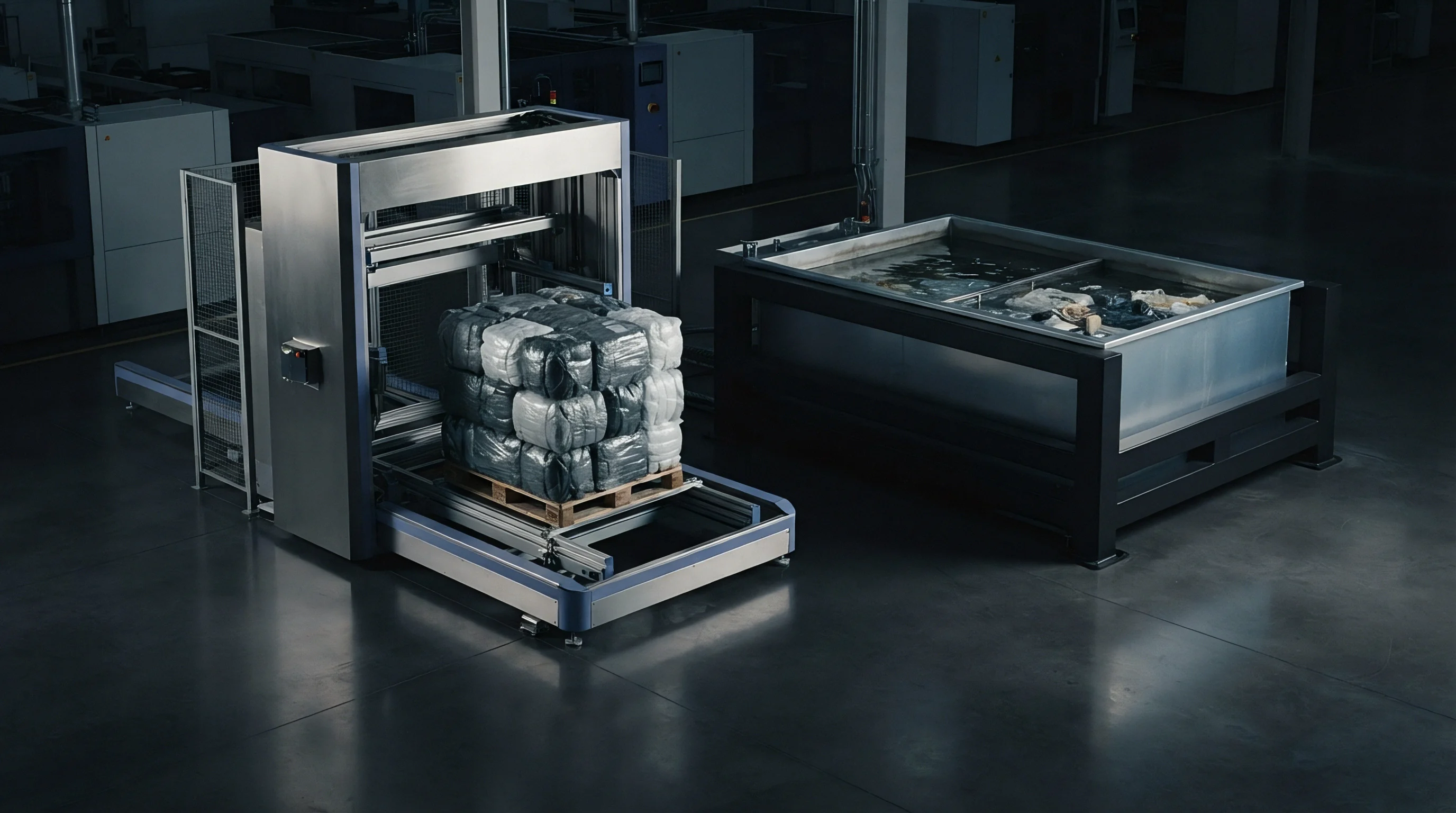
Flake
Post-consumer polymer streams intended for secondary packaging carry complex mixtures of volatile compounds, legacy additives, and absorbed consumer residues. Turning post-consumer high-density polyethylene, polypropylene, or polyethylene terephthalate into functional secondary packaging ~ like transport crates, industrial totes, or protective outer layers ~ requires solid verification of cleaning efficiency. Contaminants trapped inside the polymer matrix migrate during thermal processing and storage, creating risks for packaged goods or handling personnel.
Challenge testing is the standard empirical method used to prove that a decontamination line reliably removes absorbed chemicals down to safe concentration thresholds.
Feedstock quality shifts quickly from one municipal waste batch to the next. Converters sourcing post-consumer flake run the constant risk of unexpected chemical spikes entering the extrusion line. Industrial detergents, automotive fluids, pesticides, and polymer degradation products are routinely found in post-consumer polyolefin flake.
Physical washing with water and alkaline detergents cleans off surface dirt, but molecules absorbed into the amorphous regions of the polymer remain mostly untouched. Stripping out these embedded compounds requires thermal decontamination, vacuum degassing, or solid-state processing.
| Chemical Class | Surrogate Compound | Molecular Weight (g/mol) | Boiling Point (°C at 1 atm) | Polarity Index | Target Spike Level (mg/kg) |
|---|---|---|---|---|---|
| Volatile Non-Polar | Toluene | 92.14 | 110.6 | 2.4 | 500 to 1000 |
| Volatile Polar | Chlorobenzene | 112.56 | 131.7 | 2.7 | 500 to 1000 |
| Volatile Polar Acid | Phenylcyclohexane | 160.26 | 237.5 | 1.8 | 300 to 600 |
| Semi-Volatile Non-Polar | Benzophenone | 182.22 | 305.4 | 3.2 | 300 to 500 |
| Non-Volatile Non-Polar | Methyl Stearate | 298.51 | 443.0 | 1.5 | 100 to 300 |
| Volatile Flavor Residue | Limonene | 136.23 | 176.0 | 1.9 | 500 to 1000 |
A valid challenge protocol starts with selecting representative input materials. In a typical test, virgin or clean recycled flake is deliberately spiked with high concentrations of model chemicals, known as surrogates, that match the physical and chemical behavior of real post-consumer contaminants. This spiked feedstock is run through the complete decontamination process under defined worst-case operating parameters.
Measuring surrogate levels before and after treatment determines the system’s exact log-reduction cleaning efficiency.
Running unvalidated secondary polyolefin feeds through an extruder risks regulatory rejection. Basic mechanical recycling without dedicated devolatilization stages rarely reduces high-boiling semi-volatile surrogates below target thresholds. Regulators require documented proof that recycled secondary packaging stays within acceptable contamination limits to prevent off-odors, cross-contamination, and toxicological hazards.
Recycled polyolefin flakes spiked with toluene at 1000 mg/kg require a minimum decontamination efficiency of 99.5 percent to achieve safe residual levels below 5 mg/kg.
High-vacuum twin-screw extruders are often assumed to remove all volatile organic compounds during melt processing. Laboratory challenge testing shows otherwise: high-boiling surrogates like methyl stearate and benzophenone frequently pass through short-residence extrusion stages with less than forty percent reduction, leaving significant chemical loads in the finished packaging material.
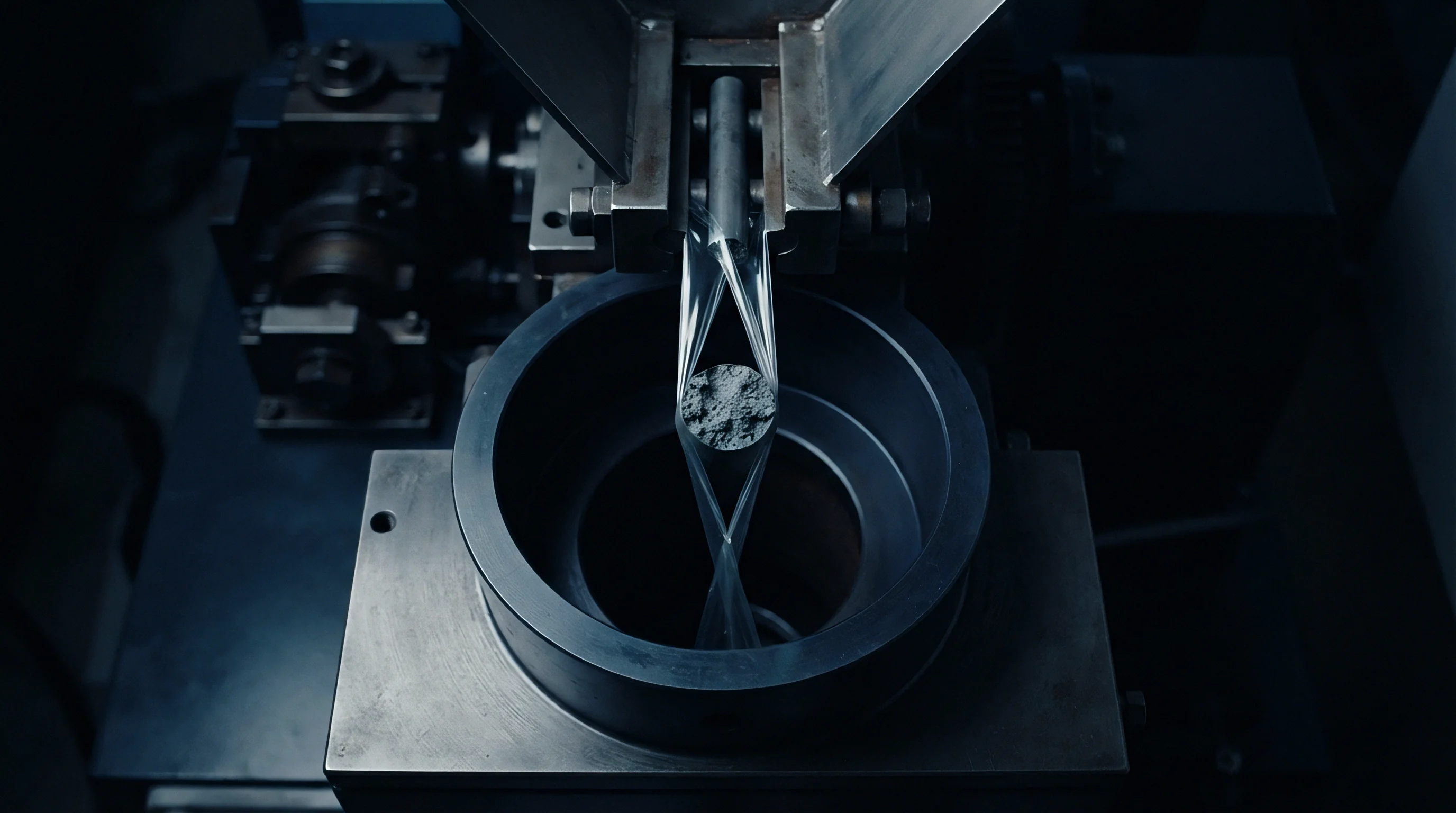

Surrogate
Model compounds for decontamination validation must cover a broad range of molecular weights, volatilities, polarities, and solubility parameters. Both European Food Safety Authority guidance and US Food and Drug Administration recycling recommendations specify particular chemical families for testing equipment. Using inappropriate surrogates skews the calculated cleaning efficiency and creates false confidence in reactor performance.
Volatile surrogates test how effectively degassing ports and vacuum systems remove light organics. Toluene and chlorobenzene represent low-molecular-weight solvents that absorb quickly into polyolefin matrices. Because of their high vapor pressures, they desorb rapidly at elevated temperatures.
If a reactor cannot strip volatile compounds like toluene to non-detectable levels, the vacuum or gas-stripping unit lacks sufficient mass transfer surface area.
Semi-volatile and non-volatile surrogates are the real test for decontamination hardware. Benzophenone (a photoinitiator and UV absorber) and methyl stearate (a fatty acid ester representing oils and lipids) have low vapor pressures and high diffusion resistance in semi-crystalline polymers. Removing them requires sustained high temperatures and extended residence times.
Systems relying only on brief melt-extrusion devolatilization struggle here, as the slow diffusion of heavy molecules within the polymer melt limits mass transport to the vacuum stream.

Surrogate Impregnation Methodologies
Spiking surrogates into test feedstocks demands strict procedures to ensure uniform absorption throughout the polymer matrix. Simply coating the surface of virgin pellets with liquid surrogates yields misleading results, because surface-bound molecules evaporate quickly during initial pre-heating without encountering matrix diffusion resistance.
- Liquid soaking technique immerses polymer flakes in a solvent mixture of surrogates at elevated temperatures below the polymer melting point for seven to fourteen days, achieving saturated bulk absorption.
- Melt-compounding masterbatch method compounds target surrogates directly into clean resin at low temperatures, producing uniformly spiked masterbatch pellets that represent fully absorbed, worst-case contamination.
- Gas-phase vapor exposure exposes flakes to volatile surrogate vapors in closed pressurized vessels, reaching equilibrium absorption without altering the polymer’s crystalline structure.
Measuring surrogate loss before material enters the reactor prevents overestimating process efficiency. Volatiles can easily evaporate during ambient storage, transport, or pre-drying. Checking the surrogate concentration right at the reactor inlet establishes the true baseline input (Cinit).
Cleaning efficiency (Edecon) is then calculated against the post-treatment concentration (Cfin) through a basic mass balance equation.
Decontamination efficiency calculation follows the expression:
Edecon = left( 1 – fracCfinCinit right) × 100
Achieving a three-log reduction (99.9 percent efficiency) for volatile surrogates ensures that post-consumer flake with high solvent levels can be processed into compliant secondary packaging. Semi-volatile surrogates generally show lower removal efficiencies, typically 85 to 98 percent depending on dwell time and vacuum levels.
For surrogates with molecular weights above 300 g/mol, matrix diffusion ~ rather than surface evaporation ~ governs the overall decontamination rate in solid-phase reactors.


Diffusion
Mass transport inside decontamination equipment depends directly on temperature, molecular size, polymer crystallinity, and pressure gradients. Solid-state reactors and continuous vacuum dryers rely on solid-state diffusion to drive absorbed surrogates out of polymer flakes, whereas melt-devolatilization extruders rely on surface renewal to strip volatiles from thin liquid films. Understanding these mechanisms helps quality engineers judge whether a lab-scale challenge test reflects commercial production realities.
Diffusion inside solid polymers follows Fick’s second law, relating local concentration changes over time to spatial diffusion gradients. The diffusion coefficient (Dp) increases exponentially with temperature via the Arrhenius equation:
Dp = D0 expleft( -fracEaR T right)
where D0 is the pre-exponential factor, Ea is the activation energy for diffusion, R is the universal gas constant, and T is absolute temperature in Kelvin. Running a decontamination vessel just five degrees below validated conditions sharply drops the diffusion coefficient, leaving higher residual surrogate concentrations in the processed flake.
| Polymer Matrix | Reactor Architecture | Operating Temperature (°C) | System Pressure (mbar) | Residence Time (min) | Toluene Removal (%) | Benzophenone Removal (%) |
|---|---|---|---|---|---|---|
| rHDPE Flake | Continuous Hot Air Dryer | 100 | 1013 (Atmospheric) | 120 | 88.2 | 42.5 |
| rHDPE Flake | Vacuum Solid-State Reactor | 120 | 1.5 | 240 | 99.8 | 91.4 |
| rPP Flake | Twin-Screw Vacuum Extruder | 230 | 5.0 | 2 | 96.5 | 68.0 |
| rPP Flake | Nitrogen Devolatilization Tower | 140 | 1013 (Gas Stream) | 360 | 99.9 | 94.2 |
| rPET Pellets | Vacuum Solid-State Polymerization | 210 | 0.5 | 480 | 99.99 | 98.7 |
Melt extrusion involves short dwell times, usually between thirty seconds and three minutes. To achieve effective devolatilization in that window, extruders rely on specialized screw geometries with multi-stage degassing zones and high-vacuum pumps pulling below 5 mbar. Rotating screw elements continually expose fresh polymer melt to the vacuum interface.
If melt viscosity rises due to feedstock variation, surface renewal slows down, reducing mass transfer and lowering decontamination efficiency.
Solid-phase reactors operate below the polymer melting point but offer longer residence times, typically two to twelve hours. Polymer flakes move through continuous hopper columns under vacuum or counter-current dry inert gas. The high surface-area-to-volume ratio of thin flake shortens the diffusion path length (L), accelerating surrogate removal according to the diffusion time relationship:
τ = fracL2Dp
Thicker flake fractions in municipal streams require significantly longer to reach target cleanliness levels. Variations in flake thickness are a major source of batch non-conformity in secondary packaging production.
Process Deviations Invalidate Validated Challenge Claims
A surrogate challenge test qualifies a specific equipment setup operating within defined limits. Shifts in operating parameters during routine production invalidate the original challenge report and leave finished packaging exposed to non-compliance issues.
- Flake size distribution drift increases average particle thickness, extending the diffusion path length beyond what was validated.
- Vacuum pressure loss raises partial vapor pressures in the reactor headspace, weakening the driving force for phase transfer.
- Thermal zone temperature drops reduce the internal diffusion coefficient (Dp), slowing surrogate movement from the polymer core to the surface.
- Extruder throughput increases shorten melt residence time in devolatilization zones, preventing high-boiling surrogates from reaching the vacuum interface.
A practical calculation illustrates how residual surrogate levels dictate regulatory conformity. Consider a recycled polypropylene (rPP) transport container made from flake processed in a vacuum solid-state reactor. Challenge testing sets an initial benzophenone spike (Cinit) of 450 mg/kg.
Post-treatment testing shows a residual concentration (Cfin) of 18 mg/kg, giving a decontamination efficiency of 96.0 percent.
To verify compliance, engineers evaluate potential migration into packed goods using diffusion modeling or worst-case mass balance assumptions. For a 500-gram secondary container holding a 5-kilogram payload, maximum potential transfer (Cmigration) assuming 100 percent migration is calculated as:
Cmigration = frac18 mg/kg × 0.5 kg5 kg = 1.8 mg/kg
If the specific migration limit for benzophenone is 0.6 mg/kg under applicable regulations, the container fails verification despite the 96.0 percent decontamination efficiency. The converter must extend residence time, increase operating temperature, or restrict incoming feedstock contamination to bring migration values below the legal threshold.
Contractual supply specifications must explicitly tie batch acceptance to continuous monitoring records showing reactor temperatures and vacuum levels remained within five percent of parameters validated during formal challenge testing.
Under standard supply terms, any continuous deviation lasting more than ten minutes in core temperature or vacuum pressure automatically voids the compliance statement for all material produced during that window.

Chromatography
Measuring residual surrogates after decontamination requires high sensitivity, low detection limits, and reliable extraction methods. Volatile and semi-volatile surrogates are typically quantified using gas chromatography with mass spectrometry or flame ionization detection. Non-volatile surrogates like methyl stearate require liquid chromatography coupled to triple quadrupole mass spectrometry or specialized high-temperature GC methods.
Headspace gas chromatography is the standard method for volatile surrogates such as toluene, chlorobenzene, and limonene. Polymer samples are cryo-ground using liquid nitrogen so frictional heat doesn’t drive off volatile organics. The resulting powder is weighed into sealed glass vials, heated to equilibrium, and injected onto capillary columns.
GC conditions must achieve complete baseline separation of surrogates from background matrix degradation products and polymer additives.
Solvent extraction isolates semi-volatile and non-volatile surrogates from rigid polyolefins. Dissolving the polymer in hot xylene or toluene and precipitating it with cold methanol releases target surrogates into solution. Microwave-assisted or pressurized liquid extraction using dichloromethane can also extract surrogates without fully dissolving the matrix.
Labs must validate recoveries for each compound, targeting recoveries between 85 and 115 percent for compliant reporting.

Analytical Sample Preparation Protocol
Quantifying residual surrogates requires strict sample handling to maintain precision and prevent volatile loss during lab preparation.
- Cryogenically grind five grams of decontaminated flake to a uniform particle size below 500 micrometers using liquid nitrogen.
- Weigh exactly 1.00 gram of ground powder directly into a 20 mL headspace vial and seal immediately with a PTFE-lined silicone septum.
- Inject internal standard solution containing deuterated surrogate analogs through the septum to compensate for matrix effects during MS detection.
- Incubate the sealed vial at 140 °C for 60 minutes in the headspace sampler to reach gas-solid equilibrium before injection.
- Inject 1.0 mL of headspace gas into a GC-MS equipped with a 30-meter 5% phenyl-methylpolysiloxane capillary column.
- Quantify surrogate peak areas against five-point matrix-matched calibration curves established with clean virgin resin blanks.
Why Do Volatile Surrogates Micro-Evaporate during Storage?
Volatile surrogates have high vapor pressures and low desorption activation energies, causing them to evaporate continuously from exposed flake surfaces at room temperature. Samples collected right after reactor discharge lose measurable toluene and chlorobenzene within hours if unsealed. Leaving test samples in polyethylene bags or open jars lets volatile compounds escape into ambient air before grinding.
Testing compromised samples gives artificially low residual values and overstates decontamination performance. Protocols require immediate sample sealing in zero-headspace aluminum foil laminate bags or glass containers stored below minus twenty degrees Celsius.
Non-intentionally added substances (NIAS) screening is run alongside surrogate quantification during challenge evaluations. Heat processing of post-consumer plastics generates degradation products like alkanes, alkenes, aldehydes, ketones, and oligomers. Spectral libraries (NIST/EPA/NIH) identify unknown chromatographic peaks in the post-decontamination extract.
Checking NIAS levels ensures the process isn’t creating toxic thermo-oxidative breakdown products while stripping out original contaminants.
Analytical methods for residual surrogate quantification must establish limits of quantification equal to or below 0.1 mg/kg resin to verify compliance with strict migration thresholds.
Poor chromatographic resolution between volatile surrogate peaks and background pyrolysis products leads to integration errors, producing false compliance certificates that expose distributors to liability claims.

Filing
Documentation for secondary packaging compliance must incorporate decontamination challenge reports into a unified technical file. EU Regulation 2022/1616 and US FDA No-Objection Letter frameworks establish strict rules for recycled content in packaging. Importers, converters, and brand owners remain legally liable for ensuring that the supporting challenge report matches the exact equipment configuration used in commercial production.
A compliant technical file requires far more than a summary certificate from a testing lab. Auditors expect raw chromatographic data, calibration curves, extraction recovery figures, equipment dimensions, and continuous operational logs from the challenge run. The dossier must demonstrate that commercial production stays strictly within the operating limits validated during testing.
| Regulatory Jurisdiction | Primary Governing Regulation | Required Challenge Testing Criteria | Mandatory Technical Dossier Components | Re-Validation Trigger Requirements |
|---|---|---|---|---|
| European Union | EU 2022/1616 / Regulation (EC) 1935/2004 | EFSA challenge test protocol; minimum 4 surrogate classes; log-3 volatile reduction | Full challenge report, operational logs, batch traceability records, DoC referencing suitable technology listing | |
| United States | US FDA 21 CFR / FDA Recycling Guidance | FDA surrogate challenge guidelines; exposure calculation based on secondary application | Surrogate challenge protocol, extraction data, estimated daily intake (EDI) calculations, FDA NOL copy | |
| United Kingdom | Plastic Packaging Tax Regulations / GB Food Contact | Equivalent to EFSA / FDA challenge standards; evidence of recycled content origin | Challenge test verification, mass balance audit trail, Declaration of Conformity with chemical migration proof |
Declarations of Conformity for secondary packaging must specify the exact recycling process, the technology’s regulatory registration number, and the maximum percentage of post-consumer recycled content. Leaving operating limits off the Declaration leaves buyers unable to substantiate compliance during audits.
Technical Dossier Audit Verification Steps
Auditors use structured checklists to verify that challenge test documents support commercial supply chains.
- Equivalence assessment verifies that commercial reactor dimensions, heating zones, and vacuum hardware match the schematic specs in the challenge file.
- Boundary check compares daily production logs (temperatures, pressure, residence time) against the minimum operating parameters validated during challenge testing.
- Surrogate recovery validation confirms that analytical reports show acceptable extraction recoveries (85 to 115 percent) across all surrogate classes.
- Migration threshold mapping checks that calculated residual surrogate levels align with end-use exposure models for secondary transport or outer packaging.
- Traceability verification confirms that batch numbers on pallets link directly to production records backed by a valid compliance file.
Discrepancies between the equipment used in a lab challenge test and the machinery operating on the plant floor are the leading cause of regulatory rejection. Modifications like increasing screw diameter, moving vacuum vents, or pushing higher throughput void existing approvals and require full re-validation.
Declarations of Conformity lacking specific reference to the validated operational boundaries of the decontamination challenge test fail to satisfy EU market access requirements.
How do quality managers verify that post-consumer polyolefin feedstocks from emerging collection networks stay within the contamination limits assumed during the original challenge validation?
Duty
Contracts for recycled secondary packaging must explicitly allocate financial and legal liability for decontamination failures. Generic purchasing specifications fail to protect buyers when imported materials trigger customs holds or regulatory action. Modern sourcing practices require explicit clauses compelling suppliers to provide accredited challenge test reports matching current operational settings.
Recycled packaging that fails chemical compliance creates significant financial liabilities. Importers of record are legally responsible for non-compliant packaging placed on the market. Enforcement can mean mandatory market withdrawals, inventory destruction at port, penalties under plastic tax laws, and civil claims from clients whose goods suffer contamination.
Including indemnity clauses in supply agreements shifts non-compliance costs back to the converter or resin vendor. Contracts should state that supplying material produced outside validated challenge parameters constitutes a material breach, triggering full reimbursement of freight, duty, testing costs, and replacement stock. Batch testing by accredited labs provides the empirical proof needed to enforce these remedies.
Plastic packaging tax regimes in many jurisdictions base tax rates on certified recycled content percentages. Using unverified post-consumer resin to reduce tax liability exposes companies to fraud investigations if the decontamination process lacks valid challenge testing. Any upfront savings from cheap recycled packaging vanish quickly when tax authorities reject unvalidated claims, applying retroactive penalties and maximum tax rates across past import volumes.
Quality assurance programs rely on routine testing of commercial production batches to audit ongoing performance. Periodic surrogate screening or NIAS fingerprinting on incoming shipments verifies that the decontamination line operates within validated safety margins. Testing three samples per fifty-ton lot establishes a defensible record for border authorities and regulatory inspectors.
Clear contractual definitions for validated decontamination protect cross-border supply chains from regulatory disruption. Specifying challenge test standards, target log-reductions, and analytical methods turns packaging compliance from a general assurance into a legally binding, measurable requirement.