Detecting Virgin Polypropylene Contamination through Standard Melt Flow Testing
Detecting subtle virgin polypropylene contamination requires dual-load melt flow indexing and extended thermal dwell testing to expose shear and stability shifts.


Rheology
Inside a melt flow index barrel, capillary extrusion reduces complex molecular structure to a single mass flow number. Standard test conditions for polypropylene ~ specified under ISO 1133-1 Condition M and ASTM D1238 Condition 230/2.16 at 230 °C under a 2.16 kg load ~ use a fixed die geometry measuring 2.095 mm in internal diameter and 8.000 mm in length. Under these parameters, neat virgin homopolymer polypropylene exhibits predictable pseudoplastic shear thinning.
But if a second virgin polypropylene fraction with a distinct melt flow rate (MFR) or chain architecture enters the lot, the rheological response shifts away from simple linear weight averaging.
Zero-shear viscosity in polymer melts is governed by chain entanglement density. High molecular weight chains present in low MFR virgin fractions dominate viscous resistance inside the standard barrel, suppressing mass discharge rates disproportionately during capillary transport. Adding as little as five percent of a 0.8 g/10 min fractional melt PP into a 20 g/10 min injection molding grade drops the observed melt flow index well below the arithmetic blend line.
Single-weight melt flow rates for polypropylene blends deviate up to eighteen percent from linear logarithmic predictions when component melt indices differ by more than a factor of five at 230 °C under 2.16 kg loading.
The shear response of polypropylene melts depends heavily on the polydispersity index. Homopolymers produced via Ziegler-Natta catalysis typically display a moderate molecular weight distribution, with a polydispersity index between 3.5 and 5.0. Metallocene-catalyzed virgin polypropylenes exhibit narrow distributions with polydispersity indices near 2.0 to 2.5.
Cross-grade contamination between different catalyst families alters non-Newtonian flow behavior under pressure without necessarily pushing the single-point MFR outside standard certificate of analysis limits.
Random and block copolymers introduce further rheological complexity during thermal capillary extrusion. Ethylene-propylene rubber phases dispersed within an impact copolymer matrix exhibit distinct elasticity compared to rigid homopolymer matrices. Standard melt index testing records total mass output per ten minutes but fails to differentiate between matrix flow and rubber domain deformation unless shear stress conditions vary across multiple test weights, particularly when chain scission shifts the flow curve.

Load
Multi-weight testing widens the diagnostic capability of standard capillary indexers. Measuring mass flow under a single load condition masks underlying molecular weight distribution anomalies. Testing a single sample sequentially or across identical barrels under loads of 2.16 kg, 5.0 kg, and 10.0 kg generates a flow rate ratio that isolates grade contamination.
Flow Rate Ratio (FRR) expresses the sensitivity of polymer melt viscosity to increasing shear stress. The ratio of MFR measured under a 10.0 kg load to MFR measured under a 2.16 kg load at 230 °C provides a direct indicator of molecular weight broadening. Neat fractional melt virgin PP maintains a stable FRR baseline, but contamination from high-flow virgin resin depresses zero-shear viscosity while altering high-stress flow velocity, pulling the FRR value upward beyond standard statistical process control thresholds.
| Polypropylene Grade Composition | MFR 2.16 kg (g/10 min) | MFR 5.0 kg (g/10 min) | MFR 10.0 kg (g/10 min) | Flow Rate Ratio (10.0 kg / 2.16 kg) |
|---|---|---|---|---|
| Neat Homopolymer (3.0 MFR Baseline) | 3.05 | 10.22 | 28.98 | 9.50 |
| Neat Homopolymer (12.0 MFR Baseline) | 12.10 | 39.33 | 108.90 | 9.00 |
| Homopolymer (3.0 MFR) + 10% Homopolymer (0.8 MFR) | 2.41 | 8.68 | 26.27 | 10.90 |
| Homopolymer (3.0 MFR) + 10% Homopolymer (25.0 MFR) | 4.12 | 14.83 | 40.38 | 9.80 |
| Homopolymer (12.0 MFR) + 15% Impact Copolymer (2.0 MFR) | 9.15 | 31.57 | 96.08 | 10.50 |
Relying on a single test weight forces inspectors to assume uniform chain structure throughout the pellet shipment. Systematic multi-load evaluations reveal subtle grade substitutions before material charges injection tooling or film extrusion equipment.
- High-Stress Flow Departure occurs when low-MFR virgin resin contamination increases shear sensitivity, driving elevated mass discharge under 10.0 kg loads while maintaining acceptable limits under 2.16 kg weights.
- Elastic Die Swell Anomaly manifests as structural swelling at the capillary exit orifice, indicating broad molecular weight distributions resulting from unannounced lot blending upstream.
- Temperature Sensitivity Shift arises when copolymer fractions exhibit non-linear melt density changes across standard test temperature bands from 190 °C to 230 °C.
- Antioxidant Induced Rheology Drift appears when stabilizer levels vary between virgin streams, altering thermal degradation speed during extended barrel preheat cycles.
What structural mechanism prevents single-load capillary plastometers from identifying identical MFR blends composed of asymmetrical molecular weight fractions?

Variance
Thermal stability profiles inside the heating barrel offer a secondary detection axis during melt flow analysis. ISO 1133-2 mandates precise control over thermal history and material dwell time prior to extrusion. Virgin polypropylene pellets containing fully active primary hindered phenol and secondary phosphite antioxidant systems remain thermally stable throughout standard six-minute preheat windows at 230 °C. Contaminated or re-compounded virgin lots often suffer partial antioxidant depletion, accelerating thermo-oxidative degradation while sitting inside the test cylinder.
Extending barrel dwell time highlights differences in degradation kinetics between clean virgin lots and contaminated shipments. Comparative MFR measurements taken at standard 6-minute preheat times versus extended 12-minute and 18-minute dwell times reveal rate-of-change metrics that expose blended resin streams and hidden chain variations.
Thermal dwell time extensions past twelve minutes reveal chain scission rates exceeding five percent per minute in stabilizer-depleted polypropylene blends at 230 °C.
Thermal degradation during extrusion reduces average molecular weight through free-radical chain scission, causing progressive melt flow index elevation across sequential timed cuts. Clean virgin resin maintains tight, repeatable cut weights across the full charging stroke of the test piston.
| Sample Identification | MFR 6 Min Dwell (g/10 min) | MFR 12 Min Dwell (g/10 min) | MFR 18 Min Dwell (g/10 min) | Total Dwell Drift (%) |
|---|---|---|---|---|
| Prime Virgin Homopolymer (Batch A) | 3.10 | 3.12 | 3.15 | +1.61 |
| Prime Virgin Homopolymer (Batch B) | 11.80 | 11.85 | 11.92 | +1.02 |
| Virgin Lot + 15% Reprocessed Virgin Off-Spec | 3.18 | 3.45 | 3.88 | +22.01 |
| Prime Homopolymer Blended with High-MFR Transition Virgin | 12.20 | 12.95 | 14.10 | +15.57 |
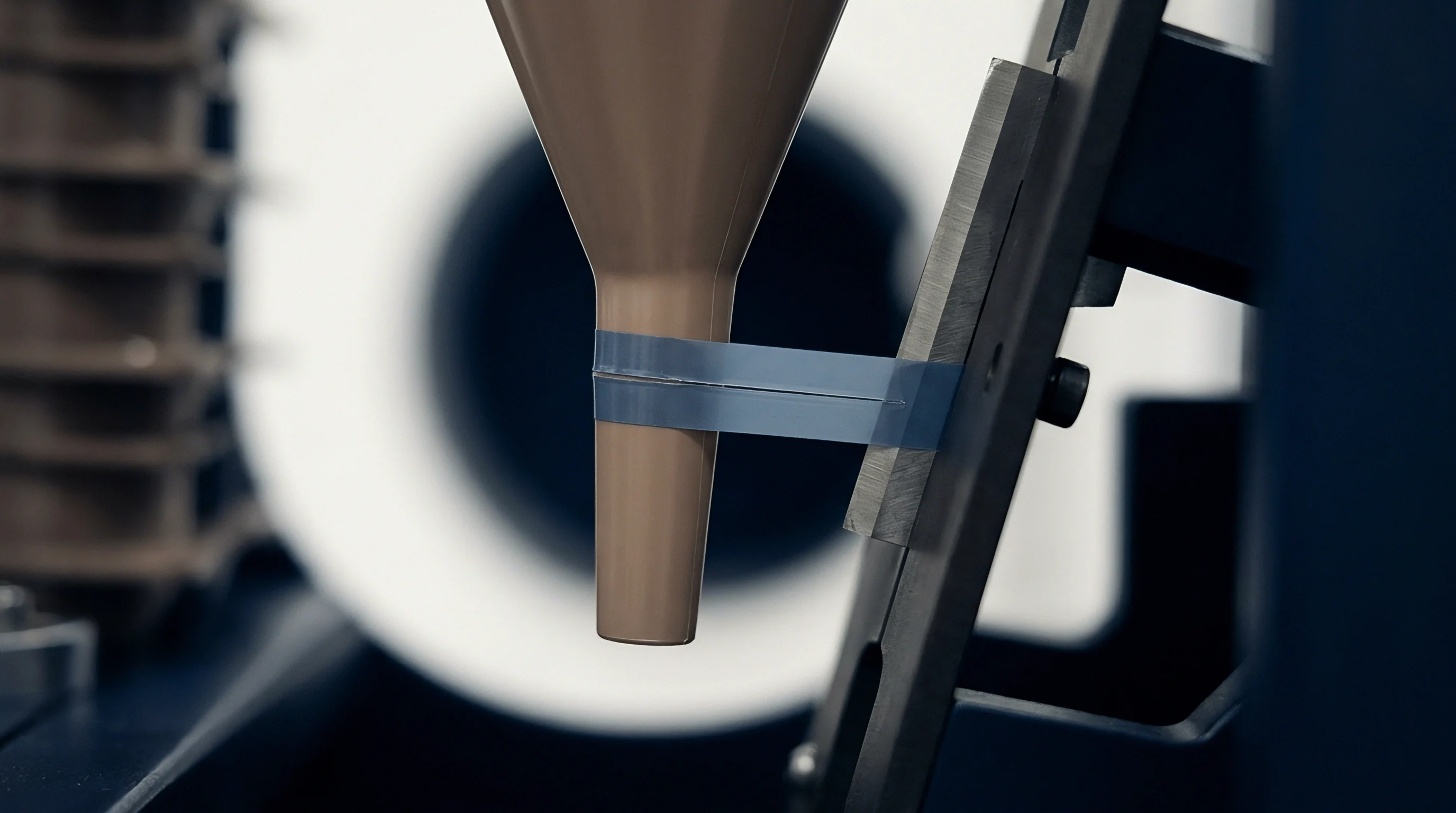
Weighing individual extrudate cuts on an analytical balance identifies physical lot heterogeneity. A single test charge of thirty to forty pellets can combine material from distinct polymer synthesis runs. If those pellets possess differing melt flow characteristics, individual extrudate segments produced early in the piston stroke reflect material packed near the lower nozzle, while later segments reflect pellets resting near the top of the barrel.
Variations in cut mass exceeding three percent across a single barrel charge signal physical pellet-to-pellet contamination within the box or bag.
Minor fluctuations in melt index across sequential barrel cuts may reflect ordinary temperature gradients within the heating cylinder rather than material contamination.

Protocol
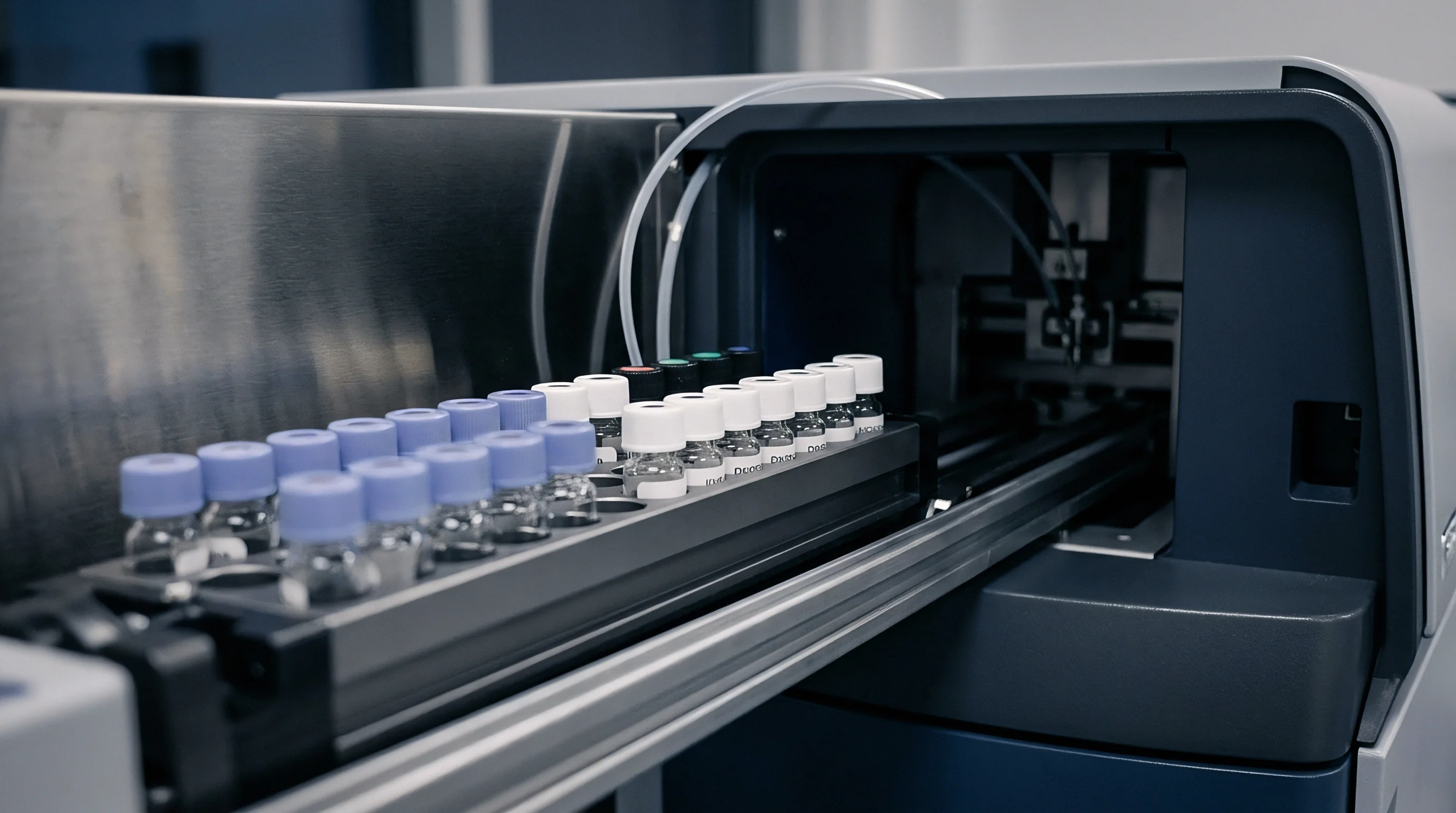
Verifying incoming virgin polypropylene shipments requires a strict, structured sampling and testing workflow designed to isolate minor contaminant fractions. Single-bag sampling fails to capture lot variance across bulk railcars or multi-pallet sea shipments. Standard statistical sampling strategies under ISO 2859-1 govern lot selection prior to specimen preparation.
Where Does Standard Melt Indexing Fail Contamination Checks?
Standard single-point melt flow testing fails to catch contamination when the average melt index of a blend happens to match the nominal target specification. For instance, an equal mix of 2 g/10 min and 18 g/10 min polypropylene can yield a combined melt flow rate near 8 g/10 min under a 2.16 kg load, masking shear sensitivity on standard datasheets because high shear conceals broad distribution. In processing tooling, however, this bimodal mixture separates into low-viscosity flow fronts and high-viscosity unmelts, inducing severe part warpage, gate blush, and unpredictable cycle times.
Contractual rejection clauses based on single-weight ISO 1133 tests remain unenforceable unless multi-point flow rate ratios are specified directly in purchase agreements.
- Extract representative primary samples from top, middle, and discharge locations of incoming bulk containers using a multi-zone thief sampler to capture spatial density variations.
- Homogenize primary samples in a clean, non-contaminating tumble blender for five minutes to ensure uniform pellet distribution prior to analytical specimen division.
- Purge the extrusion plastometer barrel using brass cleaning tools and high-temperature cleaning compound at 230 °C until optical cleanliness is confirmed.
- Pack exactly 4.0 grams plus or minus 0.1 grams of homogenized pellets into the preheated cylinder using a calibrated tamping rod to eliminate trapped air pockets.
- Apply the standard 2.16 kg load assembly and initiate the standardized six-minute thermal preheat sequence under automated software control.
- Execute automated optical or physical cutoffs at precisely 30-second intervals across the travel distance between 46.0 mm and 20.0 mm above the die surface.
- Weigh individual extrudate cuts on a calibrated analytical balance accurate to 0.0001 grams, recording mass variation across early, middle, and late stroke segments.
- Repeat the test sequence on an identical sample charge using a 10.0 kg load to calculate the definitive Flow Rate Ratio for the shipment.
Skipping multi-weight validation steps allows off-spec resin lots into production lines, causing tooling balance failures, unexpected cavity flashing, and part structural cracking during end-use service life.

Coverage
Protecting commercial operations from unannounced virgin grade contamination requires framing technical melt flow requirements within legally binding procurement specifications. Purchase contracts relying solely on supplier certificates of analysis leave buyers exposed to processing losses. Certificates of analysis routinely report average lot properties generated prior to bulk loading, obscuring contamination introduced during transfer or packaging operations.
Unannounced shifts in melt flow rate alter mould cavity fill rates, holding pressure requirements, and volumetric shrinkage, destroying tight tolerances. In high-speed thin-wall injection molding applications, a ten percent change in MFR shifts cavity filling balances, leading to short shots or flash on multi-cavity tools.
| Operational Parameter | Nominal Specification (12 MFR) | Contaminated Spec (+25% MFR Drift) | Contaminated Spec (-25% MFR Drift) |
|---|---|---|---|
| Required Injection Pressure (bar) | 1,150 | 920 | 1,380 |
| Mold Fill Time (seconds) | 0.85 | 0.68 | 1.12 |
| Part Volumetric Shrinkage (%) | 1.45 | 1.62 | 1.28 |
| Scrap Rate Baseline (%) | 0.50 | 4.20 | 6.80 |
| Financial Loss per 30-Tonne Lot ($) | $0.00 | $3,850.00 | $6,210.00 |
Commercial agreements must establish explicit statistical control boundaries for incoming melt flow characteristics. Defining acceptable variance ranges around nominal MFR targets protects part weight, limits financial exposure, and enforces supplier accountability.
- Multi-Load MFR Limits define explicit acceptable boundaries for both 2.16 kg and 10.0 kg test conditions, enforcing strict Flow Rate Ratio compliance on every delivered lot.
- Thermal Stability Tolerances establish maximum allowable melt flow rate increase after extended twelve-minute barrel dwell times, preventing arrival of antioxidant-depleted resins.
- Intra-Lot Variance Ceilings set strict standard deviation limits across multiple container samples, prohibiting shipment of blended off-spec production runs.
- Independent Lab Arbitrate Terms identify accredited testing facilities and standardized reference protocols used to settle technical disputes regarding off-spec material rejections.
Standard procurement documentation includes the standard clause requiring that all delivered polypropylene lots shall exhibit a 230 °C / 2.16 kg melt flow rate within plus or minus eight percent of the agreed datasheet target, while maintaining a 10.0 kg to 2.16 kg Flow Rate Ratio between 9.0 and 10.2 as verified by incoming dual-load capillary plastometry.