Analytical Protocol Limits for Detecting Undisclosed Polyolefin Recyclate
Standard protocols detect polyolefin recyclate down to five percent, while dilution below three percent demands paired chromatographic and elemental screening.


Peak
Spectroscopic examination of compression-moulded plaques encounters a definite physical threshold when evaluating lot purity. Polyolefin adulteration typically occurs via the clandestine introduction of post-consumer or post-industrial flake into prime virgin pellet silos. When recycled high-density polyethylene enters a prime polypropylene stream at concentrations below three percent by weight, the analytical signal generated by standard benchtop instrumentation merges into the chemical baseline noise of the host resin.
Incoming inspection departments relying solely on single-point melt flow verification or rapid infrared transmission frequently clear contaminated resin lots straight into production.
Analytical detection thresholds define the boundary between commercial compliance and silent mechanical failure. A virgin resin matrix possesses uniform molecular architecture derived from controlled reactor kinetics. Introducing post-consumer polyolefins injects heterogeneous polymer chains, degraded stabilizer residues, pigment particles, and cross-linked gels.
Detection thresholds depend on baseline clarity. Standard laboratory protocols operate under distinct sensitivity envelopes, establishing strict lower limits for reliable recyclate identification.
Calibrated transmission infrared instruments fail to resolve post-consumer polyethylene in virgin homopolymer polypropylene lots when contamination falls below 1.2 percent by weight at standard plaque thicknesses of 200 micrometers.

Vibrational Absorption Ceilings in Transmission Spectra
Fourier transform infrared instruments operating in transmission mode quantify molecular bonds by measuring light attenuation across calibrated film thicknesses. Quantifying polyethylene contamination inside a polypropylene homopolymer relies upon the methylene rocking doublet appearing at 720 and 731 cm-1. In pristine polypropylene, these bands remain absent.
Clean spectra simplify quantification. However, when examining industrial grades containing impact modifiers or slip formulations, baseline absorption severely complicates integration.
Pellet surfaces oxidize during compounding. The carbonyl absorption region spanning 1710 to 1745 cm-1 serves as the primary indicator for heat-degraded and weather-aged recyclate. Virgin polyolefins display near-zero absorption within this band unless formulated with ester-based processing aids or stearate lubricants.
Measuring low concentrations of recycled resin requires distinguishing secondary oxidation ketones from virgin additive ester packages. Standard laboratory transmission FTIR following ASTM E168 yields a practical detection limit between 0.50 and 1.20 percent by weight for oxidized recyclate fractions. Below this band, the signal-to-noise ratio renders quantification statistically invalid.
- Interference from hindered phenol stabilizer esters introduces absorbance bands at 1740 cm-1 that overlap with secondary ketone formations generated during commercial extrusion.
- Specimen thickness variation across compression plaques alters optical path lengths, creating baseline shifts that obscure contaminant absorption peaks below two percent concentration.
- Co-crystallization phenomena at polymer phase boundaries modify vibrational coupling, dampening the expected absorbance intensity of isolated ethylene segments inside propylene matrices.
- Impact modifier background signals in reactor heterophasic grades contribute intrinsic ethylene sequences that mask the presence of post-consumer packaging recyclate.

Thermal Transitions in Polypropylene Polyethylene Admixtures
Differential scanning calorimetry traces heat flow during controlled heating ramps of 10 degrees Celsius per minute. Under ISO 11357-3 procedures, identifying high-density polyethylene inside a polypropylene matrix depends on recording a distinct melting endotherm between 124 and 132 degrees Celsius, well below the 160 to 166 degrees Celsius melting point of the host polypropylene. When recycled polyethylene content drops below 1.5 percent by weight, the enthalpy of fusion for the polyethylene fraction falls below 2.0 Joules per gram.
At this low energy level, instrument baseline curvature swallows the peak entirely.
Secondary cooling ramps reveal further analytical limitations. Rapid quenching creates co-crystallization or forced miscibility at the droplet-matrix boundary, shifting peak melting temperatures downward and broadening peak widths. When post-consumer fractions consist of linear low-density polyethylene with broad short-chain branching, the melting distribution spreads from 105 to 125 degrees Celsius, flattening the endothermic trace into undetectable undulations along the instrument baseline.
| Analytical Method | Target Chemical Marker | Detection Boundary | Limiting Interference |
|---|---|---|---|
| FTIR Transmission (ASTM E168) | Carbonyl Index (1710 to 1745 cm-1) | 0.50 to 1.20 wt% | Primary antioxidant ester absorption bands |
| DSC Melting Enthalpy (ISO 11357-3) | PE Endotherm in PP Matrix (128 C) | 1.50 to 3.00 wt% | Ethylene-propylene elastomer copolymer phases |
| High-Temperature SEC (140 C TCB) | Low-MW Scission Tail (log M below 3.8) | 4.00 to 6.50 wt% | Reactor polydispersity breadth in Ziegler grades |
| ICP-OES Ash Acid Digestion | Total Calcium from Mineral Fillers | 15 to 30 ppm | Synthetic calcium stearate release additives |
| TD-GC-MS (Desorption at 200 C) | Limonene and Terpene Fragrance Markers | 0.05 to 0.20 wt% | Process masterbatch carrier oil volatiles |
Compounding facilities frequently defend anomalous secondary endotherms by claiming minor reactor grade-switching residue occurred during prime synthesis campaigns.


Chromatography
Solution-based separation yields the definitive distribution of macromolecular chain lengths inside a pellet sample. High-temperature size exclusion chromatography dissolves polyolefins in recirculating 1,2,4-trichlorobenzene stabilized with butylhydroxytoluene at temperatures between 140 and 160 degrees Celsius. While virgin blow-moulding and pipe grades demonstrate unimodal, tightly controlled molecular weight distributions, post-consumer lots exhibit distorted polydispersity indices.
Repeated thermal cycles break polymer backbones via beta-scission in polypropylene or induce chain branching via radical recombination in polyethylene. Detecting these shifts depends on resolving subtle deviations in the distribution wings.
Chromatographic columns face hydrodynamic constraints when analyzing dilute blends. Low-molecular-weight fragments generated during thermal degradation elute near the total permeation volume of the column packings. Column temperature governs separation speed.
If an undisclosed post-consumer polyolefin inclusion makes up less than five percent of the total sample mass, the scissioned polymer fraction produces a slight tail rather than a distinct secondary peak. Column dispersion broadens peak shapes, washing out small shifts in the number-average molecular weight.
Chain scission from uncontrolled re-extrusion shifts high-shear rheological flow long before low-strain thermal analysis signals the presence of secondary polymer.

High Temperature Size Exclusion Resolving Boundaries
Solubilizing polyolefins requires harsh organic solvents such as 1,2,4-trichlorobenzene held at 150 degrees Celsius to prevent premature gelation. Refractive index detection measures polymer concentration across elution slices, while multi-angle light scattering determines absolute molar masses. In prime high-density polyethylene film grades, polydispersity ratios remain within a predictable range of 5.5 to 7.0 under Ziegler-Natta catalysis.
Incorporating post-consumer milk-bottle flake shifts the high-molecular-weight distribution through cross-linking, elevating the z-average molecular weight.
Light scattering detectors possess exceptional sensitivity to ultra-high-molecular-weight fractions, detecting micro-gel domains down to 0.1 percent concentration. Conversely, differential viscometry detectors struggle to quantify the corresponding low-molecular-weight degradation fractions. Solvent purity alters retention volume.
When post-consumer fractions share similar average molecular weights with the virgin matrix, size exclusion chromatography cannot isolate the foreign material, reporting identical aggregate distribution curves.

Thermal Effluent Fractionation for Linear Architectures
Crystallization analysis separation distributes chains strictly according to crystallizability rather than hydrodynamic volume. Crystallization Elution Fractionation isolates polymer chains by cooling a dissolved sample onto an inert column bed at controlled rates, followed by isothermal solvent elution during a programmed temperature ramp up to 120 degrees Celsius. Branching shifts crystallite thickness.
High-density polyethylene homopolymers elute cleanly above 98 degrees Celsius, while branched copolymers elute at lower temperatures determined by their short-chain branching frequency.
Resolving secondary post-consumer resin relies upon detecting multi-modal elution profiles across the 80 to 95 degrees Celsius window. The experimental limit of detection for Crystallization Elution Fractionation sits at 3.5 percent by weight for distinct linear components, calibrated against a 2.0 milligram per milliliter solution in trichlorobenzene. This threshold moves upward if column ramp speeds increase from 2 to 4 degrees Celsius per minute, demonstrating that instrumental operational parameters directly dictate contamination discovery limits.
Chromatographic fractionation delivers molecular architectural confirmation, isolating short-chain branching variations that remain completely invisible to standard melt indexers.


Oxidation
Degradation signatures establish the thermal and environmental history that virgin synthesis resins never encounter. Pristine polymer chains emerging from slurry or gas-phase reactors carry zero exposure to sunlight, wash-line water chemistry, or ambient atmospheric oxygen. Post-consumer polyolefins accumulate free radicals throughout their lifecycle, triggering auto-oxidation cascades that alter chemical stability.
Even after extensive compounding with fresh stabilizers, secondary raw materials carry distinctive degradation footprints that differentiate them from virgin pellets.
Thermal stability tests evaluate the residual longevity built into the polymer stabilizer system. Virgin high-density injection grades incorporate primary hindered phenol stabilizers alongside secondary phosphite scavengers in precise stoichiometric ratios. Scission accelerates under high heat.
Processing post-consumer resin converts active phosphites into inert phosphates, exhausting the antioxidant reservoir before the resin ever reaches a conversion moulder. Measuring stabilizer ratios provides indirect evidence of secondary processing history.
Virgin polymer reactors introduce virgin stabilizer packages in fixed stoichiometric ratios that post-consumer wash lines cannot replicate across consecutive production lots.
Oxidative Induction Time and Stabilizer Degradation
Standardized furnace testing under pure oxygen measures the remaining capacity of synthetic inhibitors to withstand thermal excitation. Following ISO 11357-6, a pellet specimen heats to 200 degrees Celsius under nitrogen flow, followed by immediate switching to pure oxygen. The time elapsing before an exothermic oxidation signal appears defines the Oxidative Induction Time.
Virgin pipe-grade high-density polyethylene achieves induction times between 40 and 90 minutes. Incorporating fifteen percent post-consumer pellet drops this endurance value below 20 minutes due to pre-existing peroxide consumption.
Compounders frequently mask recyclate inclusion by adding fresh secondary antioxidant masterbatches during re-granulation. This practice restores the overall Oxidative Induction Time to nominal values, creating an apparent compliance signal. High-performance liquid chromatography coupled with ultraviolet detection resolves this deception by separating active Tris(2,4-di-tert-butylphenyl) phosphite from its oxidized phosphate counterpart.
Antioxidants exhaust during multiple meltings. In virgin resin, the phosphate-to-phosphite ratio remains below 0.05, whereas re-compounded recyclate blends routinely yield ratios above 0.35.

Thermal Desorption Signatures of Secondary Processing
Direct mass spectrometry reveals volatile compounds trapped within the glassy or semi-crystalline matrix. Thermal desorption gas chromatography coupled to mass spectrometers heats solid pellets to 200 degrees Celsius inside a closed desorption tube, sweeping emitted volatile organic compounds directly onto a cryogenic trap. Similar analytical thermal stripping protocols govern automotive cabin emissions testing and devulcanized rubber validation.
Post-consumer packaging fractions outgas characteristic fragrance residues, printing ink breakdown products, and ester plasticizers that never exist in reactor-grade polyolefins.
- Cryogenic pellet milling under liquid nitrogen pulverizes incoming polymer pellets into uniform powders without frictional heat, preventing the premature volatilization of delicate organic contaminants.
- Solvent extraction in boiling dichloromethane isolates dissolved synthetic stabilizer packages while precipitating insoluble high-molecular-weight polyolefin backbones for chromatographic separation.
- Chromatographic separation on reverse-phase columns differentiates pristine phosphite antioxidant molecules from oxidized phosphate degradation products to compute the degradation conversion ratio.
- Thermal desorption mass spectrometry profiling identifies consumer fragrance terpenes, cleaning detergent esters, and ink decomposition fragments absent from prime synthesis reactors.
Whether mobile processing aids and recycled carrier waxes can ever be cleanly differentiated from low-level reactor wax fractions remains an open debate in industrial laboratory consensus.
Sieve
Mechanical filtration and high-temperature calcination separate pure organic backbones from entrenched non-polymeric debris. Post-consumer collection systems introduce unavoidable mineral, metallic, and cross-polymer impurities into recyclate streams. Industrial wash plants employ float-sink tanks and optical sorters, yet microscopic particulates pass through standard melt filters.
Screen packs measuring 100 mesh allow particles smaller than 140 micrometers to enter the final reprocessed pellet. Isolating these trapped particulates exposes undisclosed recyclate additions.
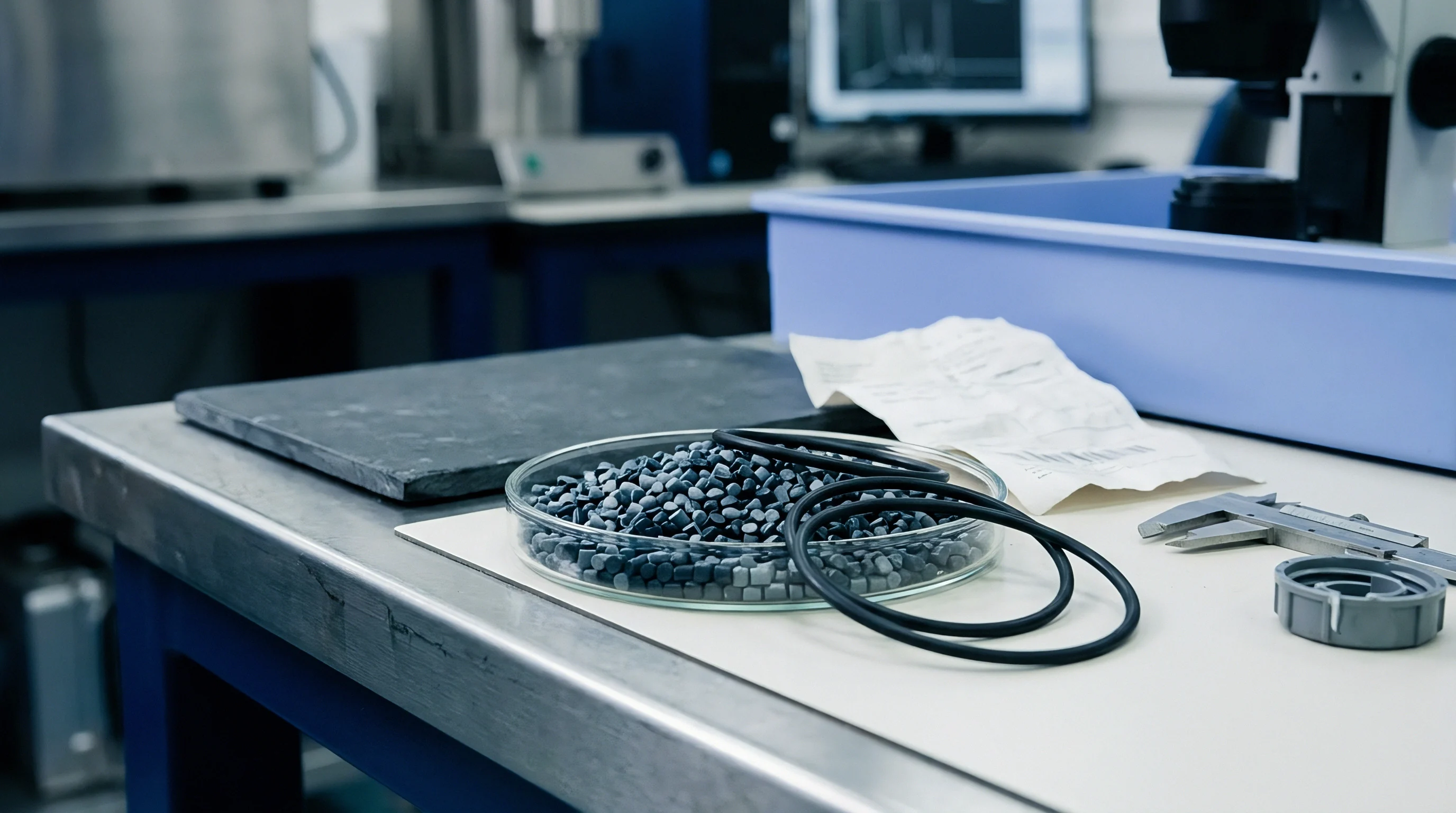
Ash residue quantification under ISO 3451-1 provides the first screening indicator for inorganic adulteration. Clean virgin polyolefins contain negligible ash, leaving mass fractions below 0.015 percent following complete incineration at 600 degrees Celsius. In contrast, post-consumer blends contain calcium carbonate from film masterbatches, talc from rigid polypropylene crates, and titanium dioxide from opaque containers.
Ash residue exposes mineral loading. When total ash exceeds 0.05 percent in an unpigmented, unfilled virgin grade, secondary contamination has occurred.
Ash Residue Thresholds and Fillers
Muffle furnaces heated to 600 degrees Celsius burn away hydrocarbons, leaving behind incombustible inorganic particulates. In virgin film grades, residual ash consists strictly of inactive catalyst support debris, primarily silica, magnesium, and aluminum compounds at levels rarely surpassing 100 parts per million. Re-granulated post-consumer packaging carries mineral loading that increases total calcined residues to 300 to 5,000 parts per million.
Talc particles nucleate spherulites prematurely.
Infrared analysis of the calcined ash identifies specific mineral filler classes. Calcium carbonate yields prominent carbonate stretching bands at 1420 cm-1 and 875 cm-1. Talc displays sharp magnesium-hydroxyl vibrations at 3676 cm-1.
While compounders can dilute recycled materials down to three percent additions to keep total ash below 0.03 percent, elemental spectroscopy uncovers these diluted inorganic fingerprints.

Trace Elemental Signatures via Inductively Coupled Plasma
Digesting mineral remnants in concentrated hydrofluoric and nitric acids converts insoluble oxides into ionized aqueous solutions. Inductively coupled plasma optical emission spectrometry measures light emission from excited atoms at characteristic wavelengths, resolving trace metals down to parts-per-billion limits. Virgin Ziegler-Natta or Phillips catalyst systems leave predictable metallic residues, primarily titanium, aluminum, and chromium.
Catalyst residues remain chemically inert.
Secondary polyolefins carry industrial contaminants that prime polymerization processes never introduce. Zinc stearate processing aids elevate zinc concentrations above 20 parts per million. Antimony traces originate from polyester packaging flakes processed in shared wash plants.
Elemental aluminum levels present an analytical ambiguity: baseline aluminum carryover in unpurged tubular reactors ranges between 15 and 85 parts per million depending on co-catalyst feed rates, rendering aluminum an unreliable sole indicator of scrap contamination. Buyers verify suspicious lots by correlating aluminum with foreign elements.
| Element Marker | Virgin Baseline Concentration | Recycled Wash Stream Baseline | Analytical Protocol | Primary Contamination Source |
|---|---|---|---|---|
| Calcium (Ca) | 2 to 20 ppm | 180 to 2,200 ppm | EN ISO 11885 (ICP-OES) | Filler masterbatch and detergent salts |
| Titanium (Ti) | 1 to 15 ppm | 60 to 850 ppm | EN ISO 11885 (ICP-OES) | Titanium dioxide white pigment residue |
| Zinc (Zn) | 0.5 to 5 ppm | 35 to 280 ppm | ISO 17294-2 (ICP-MS) | Zinc stearate internal mould release |
| Iron (Fe) | 0.2 to 4 ppm | 20 to 160 ppm | EN ISO 11885 (ICP-OES) | Granulator blade attrition and baling wire |
| Antimony (Sb) | 0.01 to 0.1 ppm | 2 to 45 ppm | ISO 17294-2 (ICP-MS) | Polyester flake flotation cross-contamination |
- Elevated aluminum levels exceeding seventy parts per million signal possible wash-tank contamination from shredded aluminium foil laminates rather than alkyl aluminium catalyst residues alone.
- Detectable antimony concentrations above two parts per million confirm cross-contamination with polyethylene terephthalate packaging flakes passed through industrial wash float-sink tanks.
- Anomalous lead and cadmium readings above five parts per million expose legacy pigment contamination from historical flexible packaging or rigid crates manufactured prior to heavy metal bans.
- Barium sulfate tracer signatures uncover industrial film scrap derived from medical radiation shielding or dense construction barrier membranes.
Accepting contaminated resin lots results in catastrophic stress cracking across pressure-pipe installations, premature environmental failure in thin-wall containers, and immediate loss of international food-contact sanitary certifications.


Tolerance
Commercial supply agreements establish numerical parameters that govern lot acceptance and define contractual breach. Sourcing managers frequently assume that standard datasheets protect operations from clandestine material substitutions. Datasheets define typical performance ranges for melt index, density, and tensile strength, leaving wide operational windows that conceal substantial secondary polymer incorporation.
Margin compression encourages substitution. Compounders exploit these loose contractual limits by blending lower-cost reprocessed regrind into prime virgin orders.
Melt flow rate tolerances under ISO 1133 permit variation of plus or minus fifteen to twenty percent from nominal datasheet values. A prime blow-moulding high-density polyethylene grade with a nominal melt flow rate of 0.30 grams per 10 minutes at 190 degrees Celsius and 2.16 kilograms can absorb eight to twelve percent of scissioned extrusion recyclate without breaching the 0.36 upper limit. Verifying lot purity requires establishing tighter analytical boundaries within purchasing contracts.
Supply agreements stipulating standard commercial grade descriptions without explicit spectroscopic purity thresholds allow compounders to legally deliver up to ten percent reprocessed industrial scrap under prime invoices.
Commercial Exposure in Regulated Supply Chains
Packaging manufacturers operating under pharmaceutical or food regulations face severe liabilities when foreign polymer fractions infiltrate approved resin formulations. Non-intentionally added substances derived from secondary packaging recyclate introduce volatile hydrocarbons, plasticizer residues, and cyclic oligomers. These migratory species compromise toxicological clearance under European Commission Regulation 10/2011 or United States FDA food contact notifications.
If an unverified resin lot enters production, entire manufacturing campaigns face regulatory recall.
Physical defects mirror the regulatory hazard. Parisons tear during extrusion blow. Undisclosed post-consumer fractions induce micro-phase separation, generating interfacial voids that serve as initiation sites for slow crack growth.
In pressure-pipe applications governed by ISO 4427, secondary resin inclusions reduce brittle failure resistance under hydrostatic pressure from thousands of hours down to several hundred hours. Stress cracking degrades service life.

Financial Mechanics of Clandestine Dilution
Raw material economics dictate the precise threshold where secondary polymer incorporation yields clandestine profits. Financial spreads drive material adulteration. Sourcing arithmetic reveals the powerful incentive driving unauthorized substitution across high-volume processing lines.
Take a 40-tonne delivery of blow-moulding grade high-density polyethylene invoiced at 1,480 EUR per metric tonne. Assume a rogue compounder introduces 12 percent by weight of washed post-consumer flake purchased at 780 EUR per metric tonne. The raw material cost for the virgin fraction equates to 1,302.40 EUR, while the recycled fraction costs 93.60 EUR, bringing the composite batch cost to 1,396 EUR per metric tonne.
This unauthorized dilution yields a hidden margin windfall of 84 EUR per metric tonne, or 3,360 EUR per truckload delivery.
The operational cost transferred to the unsuspecting converter rapidly outstrips these illicit compounding margins. Downstream processing of the 40-tonne lot produces 250,000 hollow detergent containers. The foreign recyclate content shifts the parison swell ratio, forcing machine operators to raise barrel temperatures to eliminate parison roughing.
Elevated temperatures extend cycle times by 0.4 seconds, reducing hourly machine output by 3.8 percent.
Particulate contaminants and cross-linked gels elevate parison blow-out scrap rates from a baseline 0.8 percent to 4.2 percent, discarding 8,500 finished bottles. When subjected to full environmental stress crack resistance screening under ASTM D1693 condition B in ten percent Igepal CO-630 solution, containers produced from the diluted lot fail at 48 hours instead of passing the mandatory 200-hour threshold. Scrapping defective production batches, absorbing downtime overhead, and performing emergency silo purges costs the converter 38,400 EUR.
The compounding entity collected 3,360 EUR in illicit spread, while the converter absorbed eleven times that value in commercial damages.
Screening incoming deliveries requires balancing analytical precision against logistics velocity. Full ICP-OES elemental analysis, high-temperature size exclusion chromatography, and thermal desorption testing require four days of laboratory lead time and cost approximately 850 EUR per composite sample. Railcars and bulk tankers incur demurrage penalties if held on transit sidings pending exhaustive laboratory clearance.
Deploying rapid FTIR and DSC screening catches coarse adulteration above five percent within two hours of delivery, but stealth additions below three percent pass undetected without comprehensive secondary testing protocols.
Incorporating standard purity specification clauses with mandated secondary melting endotherm thresholds below 0.50 Joules per gram shifts the financial burden of analytical verification directly onto the delivering compounder before unloading proceeds.